

 Home
Home Chiang Mai(










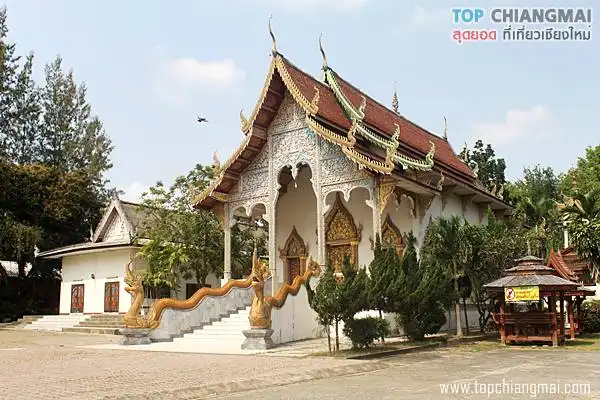
Wat Fa Lang
Rating: 3/5 (8 votes)
 Search By
  Map
Map 
 Have Map
  No Map
Chiang Mai attractions
Attractions in Thailand
Open Days: Daily
Opening Hours: Recommended 08.00–17.00
Wat Fa Lang is located in Ban San Hin (formerly known as “Ban Muang Ngam”), No. 191, Moo 1, Doi Lo Subdistrict, Doi Lo District, Chiang Mai Province 50160. The temple sits right along the Chiang Mai–Hot Road at approximately kilometer marker 37.5, which makes it an easy stop for anyone driving south from Chiang Mai city toward the Chom Thong–Hot area, or for travelers who want to trace older temples along the southern Ping River corridor. The first impression upon arrival is the atmosphere of a community temple that gently invites you to pause—shaded, quiet, and welcoming, without being staged as a “tourist landmark.” It feels grounded in local life.
Local accounts often describe Wat Fa Lang as an old temple with an age of around 400 years. It is said to have been abandoned for a long period before gradually coming back to life in later times. What makes the temple especially compelling is not just its age, but the way the name “Wat Pa Fa Lang” appears in the context of legends and older literary works connected to Chiang Mai—particularly in the Phra That Si Chom Thong legend and the poetic chronicle known as *Mantara Rob Chiang Mai*. These references helped preserve the temple’s name as a place tied to layers of time, memory, and networks of Lanna monastic learning, rather than simply a roadside temple people pass without noticing.
When reading these legends alongside the explanations provided by scholars who translated and interpreted the texts, it becomes clear that mentions of the “forest abbot of Pa Fa Lang” are more than narrative decoration. They suggest a respected monk figure associated with the movement of knowledge and scriptures into Lanna, with stories describing him as someone who brought the legend of the Great Relic (Phra Maha That Chao) from Pagan (Bagan) during a period in Lanna history. In this sense, visiting the temple is not only about worship. It can feel like standing at a crossroads of faith, political history, and the long-distance travel of Buddhist knowledge across regions.
In terms of landscape and geography, Wat Fa Lang sits along a major route connecting Chiang Mai with its southern districts. Because of this, the temple has long received many kinds of visitors: local residents, travelers passing through, and pilgrims making merit along routes tied to the Ping River basin. The distinctive quality of a temple like this is that it is a “stop along the road that does not rush you.” It is easy to reach, yet it encourages a slower rhythm—ideal for those who want to step away from crowded, mainstream attractions and experience Chiang Mai in a quieter, more reflective way, with space to observe and ask questions.
From a local historical perspective, the fact that the temple may have been abandoned for a long period is not unusual in Lanna. Many temples across the region went through disruption and decline due to warfare, community migration, epidemics, and later administrative changes. As a result, it is common to find temples that once “disappeared from active use” and then returned when communities became strong enough to restore them and reestablish religious life. Wat Fa Lang can therefore be read through both a “legendary” lens and a “social history” lens: a place where devotion once faded, then was replenished by the faith and effort of later generations.
For visitors coming primarily to worship, what makes Wat Fa Lang worth stopping for is the calm setting that suits a simple, respectful visit. There is no need for complex ritual. Dress modestly, walk mindfully through the grounds, and if you happen to visit during community merit-making events (such as annual temple ceremonies, Kathina, or Pha Pa), you will see the temple’s role as a community center much more clearly. Temples of this kind often function as a stage where community relationships are renewed—where people reinforce kinship, belonging, and the shared identity of living in the same place.
Another way to deepen the visit is to “read the names” of the temple and the area. The name “Fa Lang” and the village’s former name, “Muang Ngam,” often make visitors wonder about their origins. Even if there are multiple strands of local explanation, asking these questions is precisely what keeps temple travel in Chiang Mai from becoming mere check-ins. It opens doors to language history, geography, and community memory.
Getting There If you are driving from Chiang Mai city, take the Chiang Mai–Hot Road (Highway 108) heading south. Pass through the Hang Dong–Saraphi area and enter Doi Lo District. Watch for kilometer marker 37.5 near Ban San Hin, then turn into the local access road following temple signage or community entry points. Traveling by private car is the most convenient. It is wise to allow extra time during rush hours and to check weather conditions during the rainy season, especially if there is heavy rainfall.
| Place Name | Wat Fa Lang |
| Location | No. 191, Moo 1, Ban San Hin (formerly Ban Muang Ngam), Doi Lo Subdistrict, Doi Lo District, Chiang Mai Province 50160 (Chiang Mai–Hot Road, Km. 37.5) |
| Open Days | Daily |
| Opening Hours | Recommended 08.00–17.00 |
| Main Features | An old temple along the southern Ping River corridor of Chiang Mai; referenced in Lanna legends and classical chronicles connected to Chiang Mai and Phra That Si Chom Thong; quiet atmosphere suited for a respectful stop along the road |
| Estimated Period | Believed to be around 400 years old (said to have been abandoned for a period before returning to active use) |
| Key Historical References | Mentions of the name “Wat Pa Fa Lang” in legends and classical chronicles associated with Chiang Mai (used as a foundation for explaining the temple’s place in historical memory) |
| Name Origin | The names “Wat Fa Lang” and the former “Wat Pa Fa Lang” appear in local legendary contexts (best understood alongside the village’s former name “Muang Ngam”) |
| Access | By car: Drive from Chiang Mai city via Highway 108 (Chiang Mai–Hot Road) toward Doi Lo District. At Km. 37.5 near Ban San Hin, turn into the community access road to the temple. |
| Current Status | Open for worship and visits (actual hours may vary depending on temple activities or season) |
| Contact Phone | 053-367-490 |
| Nearby Attractions (with distance) | Wat Phra That Doi Noi (approx. 10–20 km) Wat Phra That Si Chom Thong (approx. 25–40 km) Ob Luang National Park (approx. 35–55 km) Chom Thong District / Route to Doi Inthanon (approx. 35–60 km) Wiang Kum Kam (approx. 25–40 km) |
| Popular Restaurants Nearby (distance + phone) | Krua Doi Lo Restaurant (approx. 5–15 km), Tel. 081-026-4699 Tigmother Cafe (approx. 5–15 km), Tel. 096-685-1742 Ice Coffee (approx. 5–15 km), Tel. 093-589-4729 Ta Ton Yon Coffee Bar (approx. 5–15 km), Tel. 052-000-566 Pang Na Ban (Mae Khan Market) (approx. 5–20 km), Tel. 094-603-7614 |
| Popular Accommodations Nearby (distance + phone) | De Aerng Boutique Hotel (approx. 15–30 km), Tel. 053-106-150 Doi Lo Riverside Resort (approx. 10–25 km), Tel. 092-978-7332 Ban Din Resort (approx. 10–25 km), Tel. 053-360-189 Green Tree Resort CNX. (approx. 15–35 km), Tel. 063-383-3183 Chiang Mai Inthanon Golf & Natural Resort (approx. 20–40 km), Tel. 053-106-862 |
Frequently Asked Questions (FAQ)
Q: Is Wat Fa Lang open every day?
A: Generally yes. Visiting between 08.00 and 17.00 is recommended, though actual hours may vary depending on temple activities.
Q: Where is Wat Fa Lang located along the Chiang Mai–Hot route?
A: It is in Ban San Hin, Doi Lo District, directly along the Chiang Mai–Hot Road at approximately kilometer marker 37.5.
Q: Why is the name Wat Fa Lang mentioned in historical contexts?
A: Local tradition says the former name “Wat Pa Fa Lang” appears in Lanna legends and classical chronicles connected to Chiang Mai and Phra That Si Chom Thong, giving the temple a strong place in historical memory.
Q: Which route should I take if I drive from Chiang Mai city?
A: Take Highway 108 (Chiang Mai–Hot Road) south toward Doi Lo District. Watch for Km. 37.5 near Ban San Hin, then follow the community access road to the temple.
Q: How can I contact the temple for more information?
A: You can contact the temple at 053-367-490.
 Tel: 053367490
 Wat Fa Lang Map
 Category:
  Group:
  Tag: ●Wat Fa Lang●wat fa lang ●wat pa fa lang ●doi lo temple ●temples in chiang mai ●chiang mai road 108 ●chiang mai to hot road ●northern thailand temple ●doi lo attractions ●chiang mai cultural travel ●chiang mai hidden temple Last Update: 2 MonthAgo
Comment
 Nearby Attractions
| Keyword (Advance) |
 Region
|
 Muang Chiang Mai(
 Copyright 2012,