
lovethailand home >North Travel Attractions >Chiang Mai Travel Attractions >Chiang Dao >Chiang Dao > Ban Hua Thung
TL;DR: Ban Hua Thung, open Daily (it is recommended to contact the community in advance if you wish to, hours Open all day (recommended 08.00–17.30 to allow time for activities and to.

Ban Hua Thung
Open Days: Daily (it is recommended to contact the community in advance if you wish to join learning activities, study visits, or stay overnight in a homestay)
Opening Hours: Open all day (recommended 08.00–17.30 to allow time for activities and to return before dark)
Ban Hua Thung is a headwater community in Chiang Dao District, Chiang Mai Province, whose well-known slogan clearly reflects its identity: “Ban Hua Thung – renowned for herbs, recognized for community economy, rooted in bamboo craftsmanship, united in harmony, and driven by generosity and development.” This slogan is not merely symbolic; it reflects years of real practice in managing local resources to build livelihood security without harming forests or water sources. The village consists of around 150 households with approximately 454 residents, representing diverse ethnic groups—Lua, Tai Lue, and Khon Yong—living together in harmony. This social diversity has become strong “social capital” that enables effective and long-term community management.
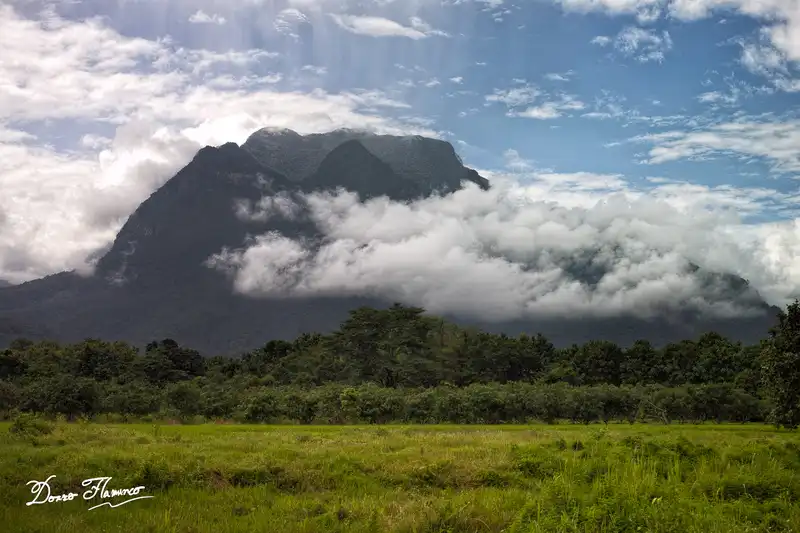
Geographically, Ban Hua Thung is located on a lowland plain at the foothills bordering the Doi Chiang Dao Wildlife Sanctuary and serves as a headwater area for Huai Mae Lu and Huai Lakhon, both flowing into the Ping River. Visitors often remember the village for its open, tranquil landscape, with expansive forested mountains forming the western backdrop. From many points in the community, Doi Chiang Dao and Doi Nang can be clearly seen, creating a daily visual reminder of why protecting the surrounding forest is essential to local life.
What makes Ban Hua Thung distinctive as a learning and travel destination is not spectacular attractions, but its ability to turn complex challenges into practical systems. These include community forest conservation and watershed management, the establishment of herbal learning groups, vetiver grass planting projects for soil and water conservation, household-level biogas initiatives, coffee cultivation suited to upland environments, and most notably, the development of economic bamboo projects that support the community’s bamboo weaving tradition.
When people think of Ban Hua Thung, two words often stand out: “herbs” and “basketry.” Local herbs are not merely wild plants but a body of knowledge tied to self-care, respectful use of forest resources, and value creation without heavy capital investment. The community has established herbal learning groups that guide harvesting, usage, and processing under shared principles—knowing the source, seasonality, appropriate quantities, and fair benefit sharing within the community. As a result, visitors do not simply buy herbal products but gain insight into why each item holds real value.
Another defining feature of Ban Hua Thung is its community forest management and cooperation with conservation zones. The Ban Hua Thung Community Forest behind the village serves as a seasonal food source, herbal resource, and protective buffer for headwaters. Instead of choosing between livelihoods and forest preservation, the community has created shared rules—limiting forest product collection, protecting watershed zones, and coordinating with conservation authorities—to ensure that the forest remains healthy for future generations.
The community’s strength lies not in the number of projects it runs, but in how these projects are interconnected. Vetiver grass planting stabilizes soil and water, supporting agricultural productivity. Improved agricultural stability strengthens income from coffee and other crops. Stable livelihoods reduce pressure to expand farmland into forest areas. Meanwhile, biogas systems lower household expenses and manage waste more sustainably. Together, these initiatives form a practical, system-based model of a sufficiency economy—not as an abstract idea, but as a functioning framework.
The standout economic activity that has positioned Ban Hua Thung as a model study area is bamboo cultivation and the weaving of “kuai” baskets (traditional bamboo baskets). The village is recognized as one of the first communities to organize bamboo cultivation collectively for handicraft production. Bamboo here is both a shared resource and a lesson in cooperation—from planting and care to harvesting and crafting finished products. Basketry has become a supplementary household income that can coexist with other occupations, leading Ban Hua Thung to host study visits from government agencies, private organizations, and international groups interested in sustainable community resource management.
From a tourism perspective, Ban Hua Thung is ideal for travelers seeking “slow but meaningful” experiences rather than quick check-ins. Visitors can walk through the village, observe farming and basketry practices, learn about local herbs, and speak directly with community members. With advance coordination, some visitors may also observe weaving processes or material preparation. In this way, everyday community life itself becomes the main attraction.
As a headwater community, certain etiquette is essential. Visitors should respect farmland and private spaces, avoid entering forest areas without permission, refrain from collecting plants or herbs, and never dispose of waste in streams or along paths—especially plastic or food waste, which can directly harm ecosystems. Those planning study visits or learning activities are encouraged to coordinate in advance, allowing the community to prepare appropriately while minimizing disruption to daily routines.
The most popular visiting season is from late rainy season to early winter, when the weather is pleasant and mountain views are clear. However, for visitors seeking deeper engagement and quieter interactions, weekdays often provide better opportunities to experience authentic daily life. During the rainy season, allow extra travel time, watch for slippery roads, and wear suitable footwear for walking in natural areas.
Getting There Ban Hua Thung is located in Village No. 14, Chiang Dao Subdistrict, Chiang Dao District, Chiang Mai Province. From Chiang Mai city, drive north along Highway 107 toward Chiang Dao. Upon reaching the Chiang Dao area, turn onto the bypass road and continue past Thung Lakhon village for a few kilometers until you reach the Ban Hua Thung headwater community. Visitors are advised to drive carefully and plan to arrive before dark, especially if coordinating activities or homestay arrangements.
| Place Name | Ban Hua Thung (Village No. 14, Chiang Dao Subdistrict, Chiang Dao District, Chiang Mai 50170) |
| Key Characteristics | Headwater community near the Doi Chiang Dao conservation area, known for herbal knowledge, learning groups, community forest conservation, vetiver grass planting, biogas systems, coffee cultivation, and bamboo-based basketry economy |
| Ethnic Groups / Population | Lua, Tai Lue, and Khon Yong communities (approximately 150 households, 454 residents) |
| Sustainability Highlights | Community forest and watershed protection, herbal learning groups, renewable energy (biogas), upland-appropriate agriculture (coffee), and bamboo-based handicraft economy |
| Community Coordination | Chiang Dao Subdistrict Administrative Organization Tel. 053-455-552 (for general coordination) / Local homestay contact Tel. 093-130-8526 / Community tourism contact Tel. 086-184-9559 |
| Nearby Attractions (approx.) | Chiang Dao Cave – approx. 10–20 km – Tel. 053-456-630 Chiang Dao Wildlife Sanctuary – approx. 15–30 km – Tel. 053-456-623 Wat Tham Pha Plong – approx. 12–22 km – Tel. 053-456-604 Pha Daeng National Park – approx. 30–60 km (depending on site) – Tel. 053-046-370 Chiang Dao Cave area cafés/bars – approx. 10–20 km – Tel. 081-892-0531 |
| Nearby Restaurants (approx.) | Krua Chiang Dao – approx. 10–25 km – Tel. 053-455-133 Krua Chiang Dao (Khao Kha Moo & Mantou) – approx. 10–25 km – Tel. 081-883-4790 Chiang Dao Khao Kha Moo (classic shop) – approx. 10–25 km – Tel. 053-455-093 Chiang Dao Goodview – approx. 12–30 km – Tel. 053-106-189, 085-916-9490 Poo Long Tong – approx. 10–25 km – Tel. 053-455-733 |
| Nearby Accommodations (approx.) | Chiang Dao Inn Hotel – approx. 10–25 km – Tel. 053-455-132 Azalea Village Chiang Dao – approx. 12–30 km – Tel. 053-456-168, 086-359-4244 Chiang Dao Roundhouses – approx. 10–25 km – Tel. 062-329-6241 Chiang Dao Hill Resort – approx. 12–30 km – Tel. 081-881-6879 The Cave Bar & Guesthouse – approx. 10–20 km – Tel. 081-892-0531 |
Frequently Asked Questions (FAQ)
Q: Where is Ban Hua Thung located?
A: Ban Hua Thung is located in Village No. 14, Chiang Dao Subdistrict, Chiang Dao District, Chiang Mai Province, near the Doi Chiang Dao conservation area.
Q: What is Ban Hua Thung best known for?
A: It is best known for herbal knowledge, bamboo basket weaving (kuai baskets), and integrated community forest and headwater conservation.
Q: How can I arrange a study visit or learning activity?
A: It is recommended to coordinate in advance through the Chiang Dao Subdistrict Administrative Organization or local community contacts to allow proper preparation.
Q: How should visitors prepare for visiting a headwater community?
A: Dress respectfully, avoid disturbing farmland or forests, do not collect plants without permission, keep noise low, and take all waste out of the area.
Q: Is Ban Hua Thung difficult to access?
A: The village is accessible by standard vehicles via the Chiang Dao route. Visitors should allow sufficient time and aim to arrive before dark.
Mobile : 0871748812
 Mobile : 0871748812
 Category: ●Suburban Living
 Group: ●Village, Community
Last Update : 9 MonthAgo
 Last Update : 9 MonthAgo
 Click to Access the Navigation Map GPS
Ban Hua Thung Map
Recommend

 Art, Culture and Heritage
 Historical Sites and Monuments(8)
 Landmarks and Memorials(5)
 Royal Palace(2)
 Art, Craft Centres, Tradition(43)
 Museums(24)
 Educational Places
 Museum for Study(2)
 Educational Gardens, Farm(5)
 Training Center(1)
 Places of Worship
 Temple(79)
 Mosque(2)
 Other Sacred Sites(17)
 Research and Development
 Royal Project(44)
Village, Community(41)
Royal Project(44)
Village, Community(41)
 Local Market(14)
 Nature and Wildlife
 National Parks and Marine Reserves(16)
 Mountain (Doi)(21)
 Dam, Reservoir, Lake(26)
 Waterfalls(43)
 Hot Springs(12)
 Caves(11)
 River, Canal(6)
 Other natural attractions(14)
 Entertainment and Agricultural
 Zoos and Aquariums(2)
 Animal camps and shows(3)
 Stadium(1)
 Farms, Parks and Ecotourism(19)
 Waterpark(2)
 Theater(1)
 Outdoor and Adventure Activities(10)
 Shopping
 Shopping and Night Market(6)
 Restaurant
 Michelin Star(1)
 Michelin Guide(23)
 Call Customer Service in Tourism
 Call Customer Service in Tourism(1)
 Travel Articles, Recipes
 Travel Review, Food Review(15)
 Food Menu, North Recipes(30)
 Thai Desserts, North Recipes(17)


