

 Home
Home Chiang Mai(










Wat Kong Kan
Rating: 4.2/5 (5 votes)
 Search By
  Map
Map 
 Have Map
  No Map
Chiang Mai attractions
Attractions in Thailand
Open Days: Daily
Opening Hours: 09.00–17.00
Wat Kong Kan is an important temple in Mae Chaem District, Chiang Mai Province, located in Mae Suek Subdistrict, approximately 2 kilometers from Wat Phuttha En. For generations, this temple has served as a spiritual center for the people of Mae Chaem because its viharn enshrines Phra Chao Ton Luang, the sacred Buddha image regarded as the guardian and symbolic heart of the district. The reverence shown to this image has continued uninterrupted for hundreds of years.
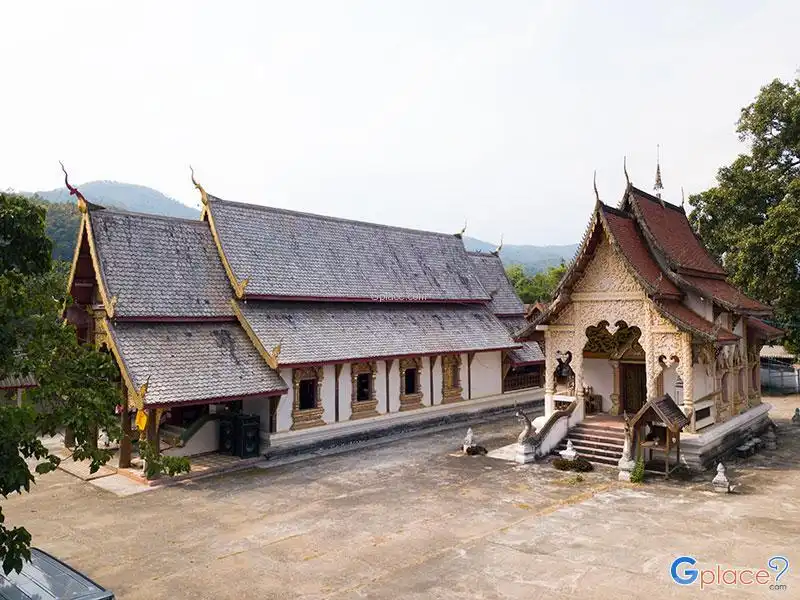
The surrounding setting of Wat Kong Kan clearly reflects the character of a traditional Lanna community temple. Rather than being grand or monumental, the temple grounds feel calm, modest, and closely connected to everyday village life. The viharn is constructed entirely of wood and covered with an old-style overlapping wooden shingle roof. This architectural form not only demonstrates local craftsmanship and adaptation to the climate, but also reinforces a sense of humility that naturally draws attention toward the sacred presence of the principal Buddha image inside.
Phra Chao Ton Luang is a brick-and-stucco Buddha image in the Maravijaya posture, with a lap width of 10 sok and 9 inches, making it the largest Lanna-style Buddha image in Mae Chaem District. In terms of Buddhist iconography, the image displays characteristics highly valued in Lanna belief: a full and well-balanced body, gentle proportions, and an expressive face. The Buddha’s face is softly smiling, with downcast eyes that convey compassion and serenity. Many devotees describe a feeling of warmth and reassurance when paying respects before the image.
From an artistic perspective, Phra Chao Ton Luang exemplifies classical Lanna aesthetics. Unlike the more restrained symmetry often seen in central Thai Buddha images, Lanna images emphasize fullness, approachability, and a nurturing presence. This reflects a worldview in which the Buddha is perceived as a compassionate protector—almost like a moral parent—watching over the community rather than a distant, unreachable ideal.
The legend surrounding the creation of Phra Chao Ton Luang is deeply embedded in the collective memory of the Mae Chaem community. It is said that during the construction of the image, the craftsmen were unable to shape the Buddha’s face into a pleasing and harmonious form despite repeated attempts. Believing that human effort alone was insufficient, they organized a ritual offering to invite the help of guardian spirits and deities.
According to local tradition, after the ritual had been performed, a young novice monk of unknown origin appeared and assisted in shaping the Buddha’s face until it achieved the serene and benevolent expression seen today. Once the work was completed, the novice mysteriously vanished. The villagers came to believe that he was Indra in disguise, descending to ensure the successful completion of the sacred image. This belief strengthened the perception of Phra Chao Ton Luang as an image created through extraordinary spiritual merit.
Over time, periods of social unrest caused many residents to leave the area. The temple, then known as Wat Sri Mueang Ma, was abandoned, and its buildings deteriorated until the site became overgrown with forest. Even so, Phra Chao Ton Luang remained standing unharmed, though entwined with vines and vegetation. In local belief, this episode reinforced the idea that the Buddha image was a guardian of the land, enduring even when the community itself had temporarily disappeared.
During the 23rd Buddhist century (around the late 19th century CE), settlers gradually returned to the Mae Chaem area. Upon rediscovering the Buddha image in the abandoned temple, they felt deep reverence and collectively cleared the land, restored the image, and rebuilt the viharn. A significant omen remembered from this restoration period involved devotees bringing offerings carried on wooden shoulder poles, which were then stacked in large piles. The term “kong kan,” referring to these gathered poles, eventually became the name of the restored temple.
Today, Wat Kong Kan continues to function as both a religious and cultural center for the Mae Chaem community. One of its most important traditions is the ritual bathing of Phra Chao Ton Luang during the Songkran Festival. Each year, local residents gather to gently pour water over the image as an act of purification, renewal, and blessing for the coming year. Another key observance takes place on the full moon of the eighth lunar month in the northern Lanna calendar (known as the “Eighth Peng”), a day dedicated specifically to making merit and honoring Phra Chao Ton Luang.
In local belief, Phra Chao Ton Luang is also associated with moral accountability. Stories are told that individuals burdened by grave wrongdoing may be unable to see the image clearly when they come to pay respects, requiring guidance from others to approach it. Rather than instilling fear, this belief serves as a reminder of ethical conduct and personal responsibility within the community.
Getting There From Mae Chaem town, visitors can drive toward Mae Suek Subdistrict using local roads. Wat Kong Kan is located approximately 2 kilometers from Wat Phuttha En, making it convenient to visit both temples in one trip. Travelers coming from Chiang Mai city typically follow the Chiang Mai–Hot route before continuing toward Mae Chaem. The mountainous roads include steep and winding sections, so extra travel time and cautious driving are recommended, especially during the rainy season.
Visiting Wat Kong Kan feels less like a conventional sightseeing stop and more like an encounter with the spiritual heart of Mae Chaem. Those who take a moment to sit quietly inside the viharn often sense that the temple’s sacred atmosphere does not come from grandeur or elaborate decoration, but from the enduring faith and shared traditions of the local community. This living continuity is what gives Wat Kong Kan its distinctive and lasting charm.
| Name | Wat Kong Kan (Mae Suek Subdistrict, Mae Chaem District, Chiang Mai) |
| Location | Village No. 7, Mae Suek Subdistrict, Mae Chaem District, Chiang Mai |
| Highlights | Wooden viharn with traditional shingle roof, enshrining Phra Chao Ton Luang, the guardian Buddha image of Mae Chaem |
| Key Features | Phra Chao Ton Luang (brick-and-stucco Buddha image in Maravijaya posture, lap width 10 sok 9 inches) and traditional Lanna wooden viharn |
| Main Traditions | Songkran ritual bathing of Phra Chao Ton Luang; merit-making on the full moon of the eighth northern lunar month (Eighth Peng) |
| Admission | No admission fee (donations welcome) |
| Facilities | Temple grounds and basic parking typical of a community temple (availability may vary during festivals) |
| Contact | 053-248-604, 053-248-607 |
| Nearby Attractions + Distance | 1) Wat Phuttha En (water ordination hall / Uthokasima) — approx. 2 km — Tel. 053-485-358 2) Mae Chaem town area — approx. 7–10 km — (no specific contact) 3) Huen Lai Mueang Chaem (textiles and community crafts) — approx. 10–15 km — Tel. 084-739-8378, 089-559-3928 4) Doi Inthanon National Park (Mae Chaem access routes) — approx. 35–50 km (depending on destination) — Tel. 053-286-729 5) Pa Bong Piang rice terraces (Mae Suek area) — approx. 25–35 km — Tel. 062-415-6034 |
| Popular Restaurants Nearby + Distance + Contact | 1) Krua Mae Chaem Hotel — approx. 8–12 km — Tel. 053-485-477 2) Mae Chaem Gate — approx. 8–12 km — Tel. 085-671-3061 3) Krua Him Mueang — approx. 8–15 km — Tel. 084-367-2254, 093-139-8433 4) Hug Camp Café — approx. 8–15 km — Tel. 061-212-2868 5) Baan Suan Puen Ka Lang (Northern dishes) — distance varies — Tel. 097-948-8772 |
| Popular Accommodations Nearby + Distance + Contact | 1) Hug Khao at Mae Chaem Homestay — approx. 10–18 km — Tel. 093-140-1254 2) Hot Coffee Guest House & Resort — approx. 20–35 km — Tel. 081-163-2525 3) Maechaem Hotel & Resort — approx. 8–12 km — Tel. 053-828-025 4) Kowit Farmstay — distance varies — Tel. 091-858-4546 5) Ma-Nhuer Pool Villa — distance varies — Tel. 081-174-8630 |
Frequently Asked Questions (FAQ)
Q: What is Wat Kong Kan best known for?
A: It is best known for Phra Chao Ton Luang, the guardian Buddha image of Mae Chaem, enshrined in a traditional Lanna wooden viharn.
Q: What makes Phra Chao Ton Luang special?
A: The image is exceptionally large for a Lanna-style Buddha, with a gentle smiling face symbolizing compassion and protection, and it has been revered as the spiritual heart of Mae Chaem for centuries.
Q: When is the best time to experience local traditions at the temple?
A: During Songkran, when the ritual bathing of Phra Chao Ton Luang takes place, and on the full moon of the eighth northern lunar month (Eighth Peng).
Q: Are there any etiquette guidelines for visitors?
A: Visitors should dress modestly, remove shoes before entering the viharn, speak quietly, and avoid touching wooden structures or the Buddha image to help preserve the site.
 Wat Kong Kan Map
 Category:
  Group:
  Tag: ●Wat Kong Kan●wat kong kan ●wat kong kan mae chaem ●phra chao ton luang ●mae chaem temple ●lanna temple chiang mai ●temples in chiang mai ●northern thailand temples ●mae chaem attractions ●buddhist temple thailand Last Update: 2 WeekAgo
Comment
 Nearby Attractions
| Keyword (Advance) |
 Region
|
 Muang Chiang Mai(
 Copyright 2012,