
lovethailand home >Northeastern Travel Attractions >Nakhon Phanom Travel Attractions >That Phanom >Don Nang Hong > Wat Marukkhanakhon
TL;DR: Wat Marukkhanakhon is located at Ban Don Nang Hong Tha, Moo 7, Don Nang Hong Subdistrict, That Phanom District, Nakhon Phanom Province 48110, open Daily, hours 06.00 – 18.00.
Wat Marukkhanakhon
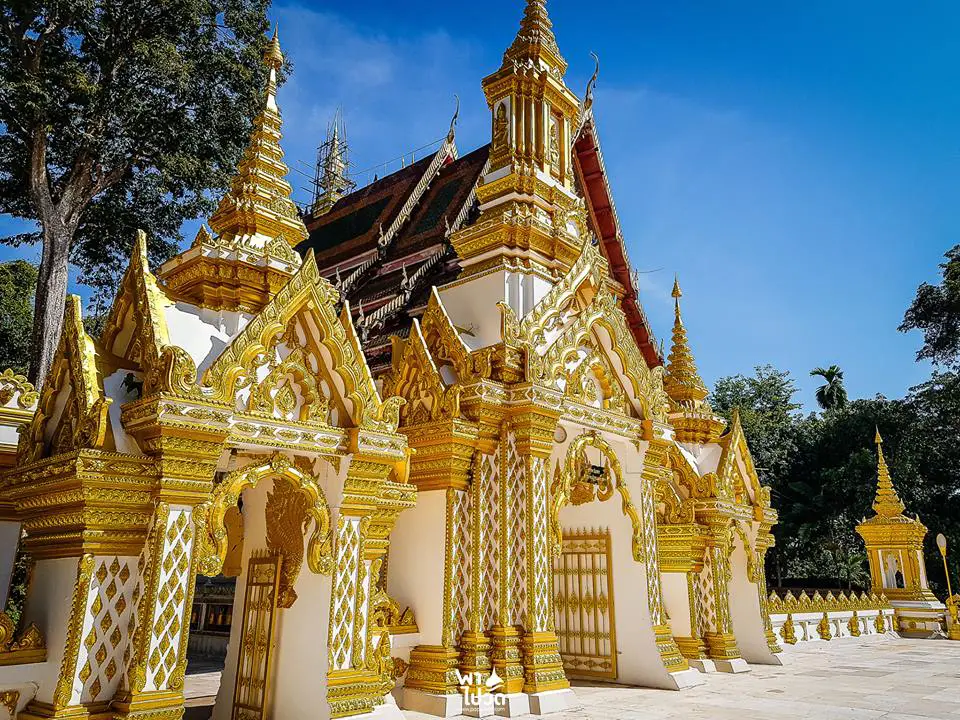
Open Days: Daily
Opening Hours: 06.00 – 18.00
Admission Fee: Free admission
Wat Marukkhanakhon in Nakhon Phanom Province is an important Buddhist temple, a meditation center, and a historic site closely connected with the former town of Marukkhanakhon. The temple stands at Ban Don Nang Hong Tha, Moo 7, Don Nang Hong Subdistrict, That Phanom District, Nakhon Phanom Province, beside Highway 212, also known as Chayangkun Road, one of the principal routes following the Mekong River. Covering a little over 20 rai, the temple is home to Phra That Marukkhanakhon, a square-based golden stupa measuring approximately 20 meters on each side and about 50.9 meters in height. It is regarded as the birth-day stupa for people born on Wednesday night and is also the youngest satellite stupa associated with Phra That Phanom along Nakhon Phanom’s birth-day stupa pilgrimage route.
Wat Marukkhanakhon is notable not only for the beauty of its golden stupa, which can be seen clearly from the main road, but also for the way it brings together religion, the history of an ancient town, the beliefs of Mekong riverside communities, and the temple’s role in supporting spiritual development. Visitors can pay respect to sacred Buddhist relics, worship at their birth-day stupa, make merit, meditate, and learn about the former town of Marukkhanakhon within a single destination. The atmosphere is peaceful, shaded, and markedly different from that of large, crowded tourist temples, making it suitable for travelers who prefer an unhurried visit.
The history of Wat Marukkhanakhon reaches back almost 300 years and is closely linked with Marukkhanakhon, once an important settlement in the Mekong River basin. The town was originally located around Thakhek on the left bank of the Mekong. Around 1757 (B.E. 2300), Phra Borom Racha, the local ruler, moved the town center to the right bank of the river near the mouth of Huai Bang Huak. This area corresponds to present-day Ban Don Nang Hong and nearby communities, making the landscape around the temple an important part of Nakhon Phanom’s local urban history.
After the town was established near the mouth of Huai Bang Huak, the community built several temples to serve as centers of religious life and daily activity. Local accounts mention Wat Don Kong, Wat Dong Khwang Tha, Wat Khon Kaen, and Wat Na Thon Tha, or the area known as Don San Chao, among the important temples of the old town. These religious sites indicate that Marukkhanakhon was not merely a small residential settlement. It had an organized community structure, ceremonial spaces, and temples that formed essential components of the town, consistent with settlement patterns found throughout the Mekong basin.
Marukkhanakhon prospered for a period before undergoing major change around 1777 (B.E. 2320). Riverbank erosion affected the riverside area, while an epidemic caused many deaths. The inhabitants subsequently relocated to Ban Nong Chan in Tha Kho Subdistrict, now within Mueang Nakhon Phanom District. The new settlement retained names connected with the former town, while the original Don Nang Hong area gradually declined in importance. Several religious sites were abandoned, leaving building foundations, brick remains, and sacred places preserved in local memory.
Evidence of the original Wat Marukkhanakhon has been found near Don Nang Hong Songkhro School, opposite the present temple across Huai Bang Huak. The ruins consist of a rectangular brick foundation whose form and materials correspond to the late Ayutthaya and early Rattanakosin periods. In 1996 (B.E. 2539), bricks were laid around the surviving structure to define its boundary and protect the original remains. The area is valuable as an archaeological site, evidence of the former town’s location, and a place for learning how Mekong riverside communities changed over time.
A visit to Wat Marukkhanakhon is best understood by considering both sides of Huai Bang Huak together. On one side stands the restored and redeveloped temple, centered on the golden stupa. On the other are archaeological remains recalling the period when the original town and temple were still active. Connecting these two areas reveals that the present temple was not created without historical roots. Rather, it represents the revival of the old town’s memory and the continuation of a sacred community landscape.
During the modern restoration of the temple, Phra Pariyat Thirakhun, a former abbot of Wat Marukkhanakhon, played an important role in collecting accounts of the old town, improving the site, and promoting understanding of the temple’s value. His name therefore appears in many earlier records and descriptions of Wat Marukkhanakhon. Following changes in the temple’s administration, the current abbot and head of Nakhon Phanom Provincial Meditation Practice Center No. 1 is Phra Khru Sophon Phawananusit, who oversees the temple, meditation activities, and development of the religious complex in cooperation with monks, the local community, and Buddhist devotees.
A major turning point came with the plan to construct a stupa within the former town of Marukkhanakhon as a center of faith and a symbol of the temple’s revival. Construction of Phra That Marukkhanakhon began in 1993 (B.E. 2536) using brick-and-mortar construction. Its overall form was influenced by Phra That Phanom, although the proportions were adapted to the site and the objectives of the project. The work received support from prominent individuals and Buddhist devotees from several regions, including M.L. Thaweesan Ladawan, Khunying Mae Bunsri Sonthayangkun, and donors from across Thailand.
The stupa cost approximately 35 million baht to build and was completed in 1996 (B.E. 2539), during celebrations marking the 50th anniversary of King Rama IX’s accession to the throne. Its height of approximately 50.9 meters is interpreted symbolically: the number 50 represents 50 years of the reign, while the number 9 refers to King Rama IX. The monument therefore carries both Buddhist significance and meaning as a memorial to an important national occasion.
Phra That Marukkhanakhon has a square base measuring approximately 20 meters on each side. The main body rises through strong vertical lines and gradually narrows toward the tiered finial at the summit. Its form creates an impression of stability and dignity and makes the structure visible from a considerable distance. The exterior is primarily gold, accented by white details and decorative elements based on Buddhist artistic traditions. When morning or late-afternoon sunlight falls across the surface, the gold changes in brightness according to the angle of the light, making the stupa one of the most striking photography locations along the That Phanom travel route.
Although the stupa is a modern structure, its design was intentionally connected with Phra That Phanom, the major spiritual center of the Mekong basin. Phra That Marukkhanakhon is therefore included among Nakhon Phanom’s birth-day stupas and is considered the youngest satellite stupa in the group. Worship here is often included in a province-wide pilgrimage linking Phra That Phanom, Phra That Renu, Phra That Si Khun, Phra That Maha Chai, Phra That Prasit, Phra That Tha Uthen, and Phra That Nakhon.
The interior of the stupa is arranged as a hall for worship and meditation. Golden Buddha images are placed around the inner space, while richly adorned principal Buddha images occupy the main directions. The interior is quieter than the grounds outside and is suitable for chanting, meditation, and mental rest. Visitors should speak softly, silence mobile phones, and avoid walking directly in front of people who are bowing or meditating, thereby preserving the calm of the sacred space and respecting those engaged in religious practice.
Phra That Marukkhanakhon is the birth-day stupa for people born on Wednesday night according to Nakhon Phanom’s local tradition. Devotees commonly present flowers, incense, candles, or other suitable offerings before making wishes for mindfulness, wisdom, careful judgment, and stability in life. Local belief often connects worship at the stupa with progress, intelligence, successful negotiation, and commerce. The central purpose of the visit, however, remains remembrance of the Triple Gem and the application of Buddhist principles in everyday life.
People who were not born on Wednesday night are equally welcome to worship at the stupa. Entry is not restricted by birth day or personal belief. Many travelers come to admire the architecture, learn about the history of the old town, or stop during a journey between Nakhon Phanom and That Phanom. Visitors with a particular interest in Buddhism may spend longer inside the stupa hall chanting and meditating. This range of purposes makes Wat Marukkhanakhon suitable for faith-based tourism, historical travel, and personal spiritual development.
Belief in the Naga is another element present in the temple landscape and local narratives. Because the temple is located near waterways connected with the Mekong River, riverside communities have long associated the Naga with guardianship of water, protection of Buddhism, and fertility. Naga motifs and related features within the temple therefore serve not only as decoration but also as expressions of the worldview of people whose lives have been closely connected with the Mekong for generations.
Visitors should distinguish between history supported by archaeological evidence and traditional beliefs passed down within the community. Both have value, but in different ways. Brick remains, building foundations, and the location of the former town help explain historical development, while stories of Nagas, guardian spirits, and sacred power reveal the emotional and spiritual relationship between the community and the site. Respectful attention to both dimensions gives a visit to Wat Marukkhanakhon greater meaning than simply photographing the stupa.
Wat Marukkhanakhon also has an important role as Nakhon Phanom Provincial Meditation Practice Center No. 1. It provides space for meditation training, mindfulness practice, Dhamma instruction, and Buddhist study. The grounds therefore accommodate both ordinary visitors and participants in organized retreats. Facilities include chanting areas, rooms or halls for sitting meditation, paths for walking meditation, and accommodation for groups. The relatively quiet surroundings, away from dense commercial districts, support reflection and focused practice.
Temple practice programs include daily chanting, listening to Dhamma sermons, sitting meditation, walking meditation, loving-kindness practice, and ethical training according to schedules set by the temple. A Sunday family meditation program generally operates from about 09.00 to 15.00, allowing parents, guardians, young people, and members of the public to study Buddhist principles together. Those wishing to attend a particular session or arrive as a group should contact the temple in advance, since schedules, participant numbers, and the use of facilities may change according to religious activities taking place at the time.
The temple’s role is not limited to meditation instruction for adults. It also provides moral education for children and young people. Activities are based on the Five Precepts, responsibility, gratitude, discipline, and awareness of emotions. Participants learn not only through lectures but also through communal living, maintaining cleanliness, sharing duties, keeping to schedules, and behaving with restraint. In this way, the temple functions as a place of social and emotional learning as well as a religious institution.
Wat Marukkhanakhon has hosted training programs for civil servants, officials, provincial agencies in Nakhon Phanom, and groups from neighboring provinces. Holding such programs at the temple allows participants to step away from their normal workplace environment and reconsider their responsibilities through Buddhist principles such as honesty, accountability, patience, non-harm, and mindful decision-making. The training is intended to connect Dhamma with work and daily life rather than limit it to religious ceremonies.
Accommodation for meditation practitioners can support approximately 300 participants during large programs, but every overnight stay must be arranged with the temple in advance. The meditation center is not a conventional hotel. Participants must follow temple regulations, dress modestly, observe schedules, abstain from alcohol, avoid noisy activities, and help care for shared spaces. Bringing personal necessities, regular medication, suitable practice clothing, and a reusable drinking-water container will make participation more convenient.
Entering the temple from Chayangkun Road, visitors first encounter the principal religious area before continuing into the different sections of the grounds. The main points of interest can be divided into the Phra That Marukkhanakhon zone and worship courtyard, the hall inside the stupa, the ordination hall and chanting areas, the meditation center and practitioners’ accommodation, shaded places for quiet rest, and the historic area extending toward the remains of the former temple on the opposite side of Huai Bang Huak. Allowing at least 1–2 hours makes it possible to see the main areas without rushing.
The stupa zone is where most visitors spend the greatest amount of time. It is possible to walk around the monument, observe the proportions of its square base, decorative motifs, and tiered finial, and then enter to worship inside. The courtyard is most comfortable for walking and photography when the sunlight is less intense. Visitors should move respectfully, avoid climbing onto the base or leaning against decorative elements, and keep belongings away from entrances and worship paths. When ceremonies are taking place or monks are conducting religious duties, visitors should wait in an appropriate area and follow temple guidance.
The ordination hall and chanting areas are used for monastic ceremonies, daily services, and Buddhist activities. Before entering, visitors should check whether a ceremony is underway. When the doors are open and no restriction is posted, visitors may enter to pay respect to the principal Buddha image. Shoes should be removed and placed neatly, and visitors should avoid sitting with their feet pointing toward Buddha images. Flash photography should not be used indoors, and people who are chanting or meditating should not be photographed without permission.
The meditation area serves a different purpose from an ordinary tourist zone. Conversation should be kept quiet, and visitors walking past a group of practitioners should take care not to disturb their concentration. Residential quarters and areas reserved for monks should not be entered without permission. Visitors wishing to meditate briefly may choose a permitted location, sit comfortably, and focus simply on the breath. Even 10–15 minutes of quiet rest can provide a deeper understanding of the temple’s spiritual role.
The archaeological remains near Don Nang Hong Songkhro School should be visited with care because the site is connected with an educational institution and contains fragile archaeological evidence. Interested visitors should ask for directions or request permission from the responsible staff before entering. Bricks should not be moved, fragments should not be removed, and visitors should not step onto the ancient foundations. Preserving the original condition of the ruins is more important than obtaining a photograph that requires close contact with the structure.
The value of an archaeological site does not depend only on completeness or monumental scale. Surviving brick foundations can reveal the position of buildings, construction methods, and the way space was used in the past. Considered together with the relocation of the town, riverbank erosion, and the epidemic, these remains help explain how Mekong communities adapted to natural forces and social events. Conservation at Wat Marukkhanakhon therefore includes both newly built religious structures and older evidence preserved within the modern community.
The most comfortable times to visit are approximately 06.30–09.00 in the morning or after 15.30 in the afternoon, when temperatures are lower and the light is favorable for viewing the stupa. The courtyard can become very hot around midday, particularly from March to May. Visitors should carry an umbrella, hat, and drinking water and wear shoes that are easy to remove. Those planning to chant or meditate should allow more time than travelers making a brief photography stop.
During the rainy season, roughly from May to October, the surrounding landscape becomes lush and the air is cooler after rainfall, although paths may be slippery and showers can occur intermittently. The cool season from November to February is comfortable and suitable for visiting several stupas in a single day. On major Buddhist observance days, Makha Bucha Day, Visakha Bucha Day, Asalha Bucha Day, the Buddhist Lent and End of Buddhist Lent periods, and during the Kathin season, more merit-makers may visit than usual.
The temple organizes activities according to the Buddhist calendar, including chanting, candlelit circumambulation, merit-making on holy days, Kathin ceremonies, water-pouring rituals during Songkran, and moral training programs. Dates and times vary according to the lunar calendar and temple announcements. Anyone wishing to attend a particular ceremony should contact the temple or check its official page before traveling in order to arrive on time and prepare suitable clothing or offerings.
Visitors should dress modestly. Shirts should have sleeves and cover the shoulders, while trousers or skirts should extend below the knees. Tight or transparent clothing should be avoided. Shoes and hats must be removed before entering religious buildings, voices should be kept low, and visitors should not sit with the soles of their feet directed toward Buddha images or monks. Foreign travelers are welcome, but should observe local practice and follow signs within the temple grounds.
Photography is generally permitted outside the stupa, but visitors should behave respectfully. Buddha images and the stupa should not be used as backdrops for inappropriate poses, structures should not be climbed, and drones should not be operated without permission. Inside buildings, check for photography restrictions before taking pictures. Permission should be requested when monks, meditation practitioners, or people taking part in a ceremony would appear in the frame, and close-up photography should be avoided. Respectful conduct helps preserve the atmosphere and maintain a positive relationship between visitors and the community.
Temple facilities include parking, toilets, pavilions or rest areas, spaces for religious activities, and facilities for meditation participants. Older visitors can reach the main areas with assistance from companions, although some places may have raised thresholds, steps, or outdoor surfaces that become hot or slippery depending on the weather. Wheelchair users should contact the temple in advance to ask about the most suitable entrance and accessible areas.
Getting There from central Nakhon Phanom, follow Highway 212 south toward That Phanom District for approximately 35–40 kilometers. The temple is beside Chayangkun Road in Don Nang Hong Subdistrict and is easily reached by private car. The journey usually takes about 40–50 minutes depending on traffic. As you approach, look for the golden stupa and temple signs from the main road. Reduce speed before reaching the entrance and turn carefully, as Highway 212 carries interdistrict traffic throughout the day.
From Wat Phra That Phanom Woramahawihan, follow Highway 212 toward Nakhon Phanom for approximately 18–19 kilometers, a journey of about 20–25 minutes. From Renu Nakhon District, join the main road and continue toward Don Nang Hong Subdistrict for approximately 10–12 kilometers. This route is suitable for a one-day itinerary combining Wat Phra That Renu, Wat Marukkhanakhon, and Wat Phra That Phanom.
Travelers without a private vehicle may use buses or passenger vans operating between Nakhon Phanom, That Phanom, and Mukdahan along Highway 212 and ask the driver to stop near Wat Marukkhanakhon. After leaving the vehicle, check the walking distance and the safety of any road crossing. Services and stopping points may change over time. A hired car with driver or a chartered vehicle from Nakhon Phanom or That Phanom is more convenient for travelers planning to visit several temples in one day.
For air travelers, Nakhon Phanom Airport is north of the city and there is no regular public transport service directly to the temple. The most convenient options are renting a car, hiring a vehicle with driver, or arranging transport through accommodation. The route passes through the city before continuing south on Highway 212 and takes about 1 hour depending on traffic. For groups, a full-day vehicle makes it easier to combine Phra That Renu, Phra That Marukkhanakhon, Phra That Phanom, and Mekong riverside attractions.
A sample one-day itinerary can begin in Nakhon Phanom in the morning, arriving at Wat Marukkhanakhon before the heat intensifies. Spend approximately 1–2 hours viewing the stupa, chanting, and learning about the old town. Continue to Wat Phra That Renu and the Renu Nakhon community to experience Phu Tai culture, stop for lunch, and then visit Wat Phra That Phanom Woramahawihan in the afternoon. The day can end with a walk along the Mekong or at That Phanom Walking Street when it is open.
Travelers more interested in history than in collecting many destinations should spend a full morning exploring Wat Marukkhanakhon carefully. Begin with the stupa and its interior hall, continue to the ordination hall and meditation center, and then ask for directions to the former temple ruins near Don Nang Hong Songkhro School. This sequence shows the continuity between the ancient town, abandoned religious sites, modern restoration, and the construction of the new stupa.
The restaurants closest to the temple are mainly local establishments along the route between Don Nang Hong, Renu Nakhon, and That Phanom. Travelers should plan meals in advance, particularly in the afternoon or on weekdays, when some restaurants may close earlier than expected. Local choices include northeastern Thai food, noodles, khao pun nam wua, Thai dishes, Vietnamese food, and restaurants overlooking the Mekong. Calling ahead to confirm opening hours and table availability helps prevent disruption to the travel plan.
Accommodation near the temple is distributed between Renu Nakhon District and central That Phanom. Travelers seeking a quiet atmosphere and convenient access to Phra That Renu may prefer to stay around Renu Nakhon. Those wanting restaurants, the Mekong riverside, the walking street, and the ability to walk to Wat Phra That Phanom should stay in central That Phanom. Rooms should be reserved in advance during the Phra That Phanom worship festival, long weekends, and the Kathin season, since small local properties have limited capacity.
Responsible travel at Wat Marukkhanakhon begins with respectful use of the site. Do not leave litter, make excessive noise, touch or remove archaeological material, or disturb meditation activities. Buying food and products from local businesses, using community transport services, and making voluntary donations without placing demands on the temple are practical ways to distribute the benefits of tourism throughout the surrounding area.
The temple and community must care for both modern religious structures and fragile remains of the old town. Erosion, moisture, vegetation growing among the bricks, use of the area, and visitor numbers all affect conservation. Avoiding climbing on ancient foundations, refraining from writing on walls, and informing staff when damage is noticed are immediate ways visitors can help. These small actions contribute to the long-term survival of historical evidence.
Wat Marukkhanakhon is therefore much more than a temple with an attractive golden stupa. It tells the story of a town’s relocation, natural disaster and epidemic, the abandonment of religious sites, the recovery of community memory, and the creation of a meditation center that remains active today. Visitors can experience history, art, faith, and tranquility in one place without rushing or trying to complete numerous activities.
For travelers planning a journey through Nakhon Phanom, Wat Marukkhanakhon is particularly well suited to a Mekong riverside stupa route, especially in combination with Wat Phra That Renu and Wat Phra That Phanom Woramahawihan. Learning about the former town before worshipping at the stupa gives the journey greater historical context, while sitting quietly inside the stupa hall or meditation area allows the visit to become more than a collection of photographs. It can instead offer time for reflection and a deeper appreciation of local heritage.
| Name | Wat Marukkhanakhon and Phra That Marukkhanakhon |
| English Name | Wat Marukkhanakhon / Phra That Marukkhanakhon |
| Location | Ban Don Nang Hong Tha, Moo 7, Don Nang Hong Subdistrict, That Phanom District, Nakhon Phanom Province 48110 |
| Road | Chayangkun Road, Highway 212 |
| Coordinates | Approximately 17.0967, 104.7623 |
| Site Area | A little over 20 rai |
| Current Status | Open and operating normally as a Buddhist temple, religious attraction, archaeological site, and Nakhon Phanom Provincial Meditation Practice Center No. 1 |
| Abbot / Head of Meditation Center | Phra Khru Sophon Phawananusit |
| Former Abbot of Major Importance | Phra Pariyat Thirakhun played an important role in restoring the temple, collecting accounts of the old town, and developing the site during a significant period of its revival. |
| History in Brief | The temple is connected with the ancient town of Marukkhanakhon, which was relocated to the mouth of Huai Bang Huak around 1757 (B.E. 2300). Riverbank erosion and an epidemic affected the town around 1777 (B.E. 2320), after which the community moved to a new settlement. |
| Archaeological Evidence | A rectangular brick religious foundation dating approximately from the late Ayutthaya to early Rattanakosin periods stands near Don Nang Hong Songkhro School, opposite the present temple. |
| Name Origin | The name derives from the ancient town of Marukkhanakhon, once located around the mouth of Huai Bang Huak and the present Don Nang Hong community. |
| Important Stupa | Phra That Marukkhanakhon, the birth-day stupa for people born on Wednesday night and a satellite stupa associated with Phra That Phanom |
| Construction Began | 1993 (B.E. 2536) |
| Completed | 1996 (B.E. 2539) |
| Stupa Dimensions | Square base measuring approximately 20 meters on each side; approximately 50.9 meters high |
| Meaning of the Height | The number 50 represents the 50th anniversary of the reign, while the number 9 refers to King Rama IX. |
| Architectural Style | A square brick-and-mortar stupa whose form is connected with Phra That Phanom, distinguished by its golden exterior and tiered finial |
| Important Features Inside the Stupa | Sacred Buddhist relics, golden Buddha images placed around the interior, and richly adorned principal Buddha images facing the main directions |
| Main Areas / Zones | 1. Phra That Marukkhanakhon and the worship courtyard 2. Hall inside the stupa 3. Ordination hall and chanting areas 4. Meditation center and practitioners’ accommodation 5. Shaded grounds and rest pavilions 6. Archaeological remains of the former temple near Don Nang Hong Songkhro School |
| Main Activities | Stupa worship, chanting, sitting meditation, walking meditation, Dhamma instruction, moral training for young people, family meditation programs, and activities on important Buddhist days |
| Capacity for Meditation Practitioners | The center can accommodate groups of approximately 300 participants, subject to advance arrangements with the temple. |
| Facilities | Parking, toilets, rest pavilions, chanting areas, meditation facilities, and accommodation for participants whose stay has been arranged with the temple in advance |
| Open Days | Daily |
| Opening Hours | 06.00 – 18.00 |
| Admission Fee | Free admission; visitors may make a voluntary merit donation. |
| Recommended Visit Duration | Approximately 1–2 hours, or longer when joining chanting or meditation activities |
| Recommended Time of Day | 06.30–09.00 in the morning or after 15.30 in the afternoon |
| Travel from Nakhon Phanom | Follow Highway 212 toward That Phanom District for approximately 35–40 km; travel time is about 40–50 minutes. |
| Travel from Phra That Phanom | Follow Highway 212 toward Nakhon Phanom for approximately 18–19 km; travel time is about 20–25 minutes. |
| Visitor Guidelines | Dress modestly, speak quietly, remove shoes before entering buildings, do not climb on or touch archaeological remains, and avoid disturbing meditation practitioners. |
| Main Contact Number | 083-752-8109 |
| Official Page | Wat Marukkhanakhon – Nakhon Phanom Provincial Meditation Practice Center No. 1 |
| Nearby Tourist Attractions | 1. Archaeological remains of the former Wat Marukkhanakhon near Don Nang Hong Songkhro School, approximately 1 km 2. Phra That Noi Si Bun Rueang, approximately 9 km 3. Wat Phra That Renu, Renu Nakhon District, approximately 11 km 4. That Phanom Walking Street, approximately 17 km 5. Wat Phra That Phanom Woramahawihan, approximately 18 km 6. Wat Phra That Phanom Archives, approximately 18 km |
| Nearby Restaurants | 1. Khao Pun Nam Wua Khun Yai Son, Branch 1, approximately 6 km 2. Rueang Fa Noodle Shop, approximately 9 km 3. Krua Rim Khong View & Resort, approximately 15 km; Tel. 063-428-9415 4. Ueang Kham Restaurant, approximately 17 km; Tel. 089-843-4537, 086-241-9441 5. Dao Thong Vietnamese Restaurant, approximately 18 km; Tel. 081-380-1769 |
| Nearby Accommodations | 1. Mueang We Garden Ville, approximately 10 km; Tel. 089-181-9190 2. Zone Stations That Phanom, approximately 15 km; Tel. 097-165-7999 3. Wimon Nat Homestay, approximately 16 km; Tel. 090-289-5516 4. That Phanom River View Hotel, approximately 17 km; Tel. 042-541-555 5. Na That Phanom Place Hotel, approximately 18 km; Tel. 042-532-148, 081-504-7899 |
Frequently Asked Questions (FAQ)
Q: Where is Wat Marukkhanakhon located?
A: Wat Marukkhanakhon is at Ban Don Nang Hong Tha, Moo 7, Don Nang Hong Subdistrict, That Phanom District, Nakhon Phanom Province. It stands beside Highway 212, or Chayangkun Road, between central Nakhon Phanom and That Phanom District.
Q: What are Wat Marukkhanakhon’s opening hours, and is there an admission fee?
A: The temple is open daily from 06.00 to 18.00. Admission is free, although visitors may make a voluntary donation to support the care of the religious site.
Q: Which day of birth is associated with Phra That Marukkhanakhon?
A: Phra That Marukkhanakhon is the birth-day stupa for people born on Wednesday night and is one of Nakhon Phanom Province’s important birth-day stupas.
Q: How tall is Phra That Marukkhanakhon?
A: The stupa has a square base measuring approximately 20 meters on each side and stands about 50.9 meters high. The number 50.9 is associated with the 50th anniversary of King Rama IX’s accession to the throne.
Q: Who is the current abbot of Wat Marukkhanakhon?
A: The current abbot and head of Nakhon Phanom Provincial Meditation Practice Center No. 1 is Phra Khru Sophon Phawananusit. Phra Pariyat Thirakhun was a former abbot who played an important role in the temple’s earlier restoration and development.
Q: What are the main things to see inside Wat Marukkhanakhon?
A: The principal attractions include Phra That Marukkhanakhon, the worship hall inside the stupa, golden Buddha images, the ordination hall, chanting areas, the meditation center, and the remains of the former temple near Don Nang Hong Songkhro School on the opposite side of Huai Bang Huak.
Q: Can visitors join meditation activities at Wat Marukkhanakhon?
A: Yes. The temple is a provincial meditation practice center and organizes chanting, sitting meditation, walking meditation, Dhamma instruction, and moral training. Visitors wishing to stay overnight or attend as a group should contact the temple in advance at 083-752-8109.
Q: How much time should visitors allow for Wat Marukkhanakhon?
A: Allow approximately 1–2 hours to see the stupa, worship, and walk through the main areas. More time is recommended for meditation, detailed study of the old town’s history, or a visit to the original archaeological remains.
 Category: ●Places of Worship
 Group: ●Temple
Last Update : 3 WeekAgo
 Last Update : 3 WeekAgo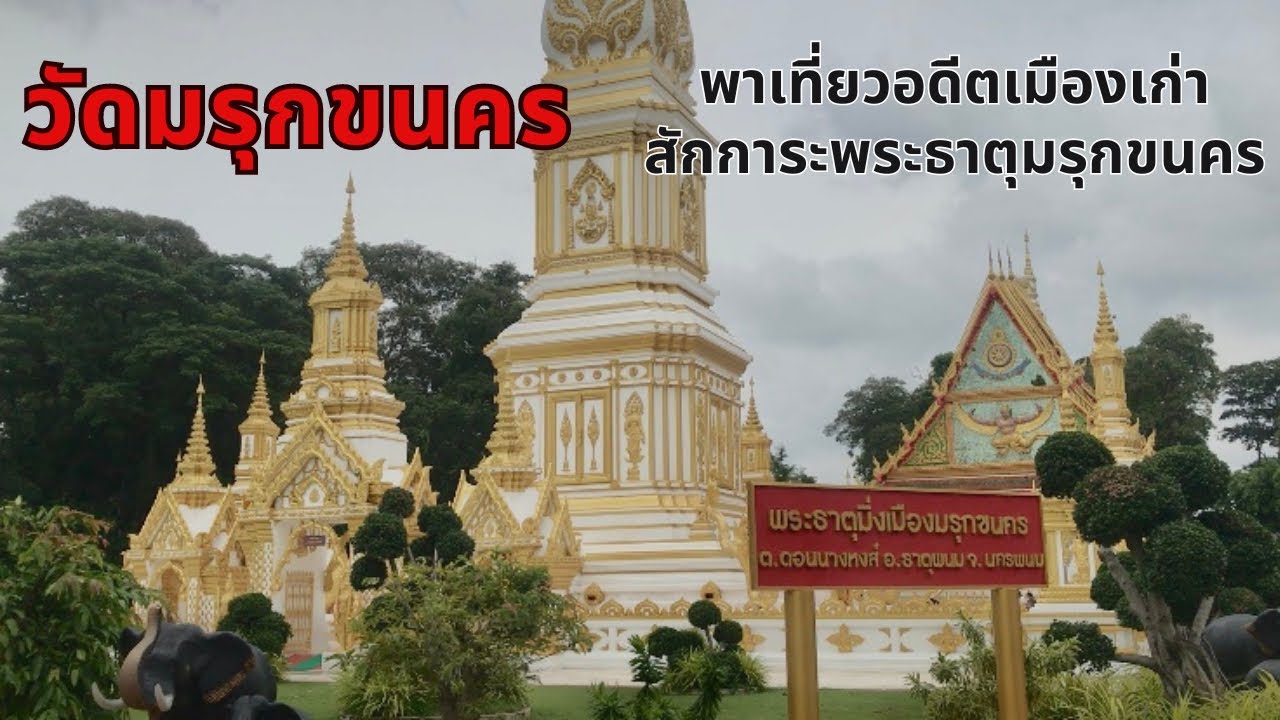
 Click to Access the Navigation Map GPS
Wat Marukkhanakhon Map
Recommend

 Art, Culture and Heritage
 Historical Sites and Monuments(3)
 Landmarks and Memorials(2)
 Art, Craft Centres, Tradition(3)
 Museums(3)
 Educational Places
 Library(1)
Temple(23)
Library(1)
Temple(23)
 Church(1)
 Other Sacred Sites(11)
 Suburban Living
 Village, Community(5)
 Nature and Wildlife
 National Parks and Marine Reserves(1)
 Dam, Reservoir, Lake(5)
 Waterfalls(2)
 River, Canal(3)
 Bays and Beaches(3)
 Other natural attractions(2)
 Entertainment and Agricultural
 Zoos and Aquariums(1)
 Farms, Parks and Ecotourism(2)
 Shopping
 Shopping and Night Market(1)


