
lovethailand home >Northeastern Travel Attractions >Chaiyaphum Travel Attractions >Muang Chaiyaphum >Na Sieow > Wat Phra Phutthabat Phu Faet
TL;DR: Wat Phra Phutthabat Phu Faet is located at Ban Sai Ngam, Na Siao Subdistrict, Mueang Chaiyaphum District, Chaiyaphum Province, open Daily, hours 08.30 – 16.30.

Wat Phra Phutthabat Phu Faet
Open Days: Daily
Opening Hours: 08.30 – 16.30
Wat Phra Phutthabat Phu Faet in Chaiyaphum Province is a peaceful Buddhist temple and sacred hill site located in Ban Sai Ngam, Na Siao Subdistrict, Mueang Chaiyaphum District. The temple is about 23 km from Chaiyaphum city center, along Highway 201 on the Chaiyaphum – Kaeng Khro route, the same direction as Wat Sila At Phu Phra. Its main spiritual highlight is a Buddha footprint set in natural stone on a low hill, a feature that reminds many Thai visitors of the revered Buddha footprint in Saraburi. Surrounded by trees and a quiet rural landscape, the temple is ideal for travelers who want a calm cultural stop, a place for merit-making, and a meaningful introduction to local Buddhist faith in Chaiyaphum.
The temple is especially suitable for travelers who prefer quiet places away from crowded city attractions. The road leading into the temple is lined with trees, creating a shaded and serene approach before visitors reach the main worship area. This simple but beautiful entrance is one of the memorable qualities of Wat Phra Phutthabat Phu Faet. It gives the feeling of moving gradually from the outside world into a space of faith, nature, and contemplation.
The importance of the temple centers on the Buddha footprint on the stone surface. In Thai Buddhist belief, Buddha footprints are powerful symbols of the Buddha’s presence, the path of Dhamma, and the memory of enlightenment. For local people and pilgrims, paying respect to the footprint is an act of devotion and mindfulness. The visit is not only about seeing an unusual natural mark in stone; it is also about entering a sacred space and reflecting on Buddhist values in a quiet hill setting.
The name Phu Faet is associated with the hill landscape and the sacred footprint within the temple area. Unlike large urban temples, this site has a strong connection with natural ground, rock, trees, and a gentle hill. The sacred character of the temple comes from this combination of landscape and faith. Visitors can feel that the stone, the hill, the trees, and the religious structures all work together to create a distinctive spiritual atmosphere.
Inside the temple, several areas are worth visiting. The Buddha footprint shrine is the most important point of worship. Nearby, visitors can see a large golden Buddha image in the Naga-protected posture, flanked by impressive Naga sculptures. This area is one of the most photogenic parts of the temple, but it should be approached with respect because it is also an active place of devotion. The combination of the golden Buddha, Naga figures, open courtyard, and hilltop setting gives the temple a striking visual identity.
The large Naga sculptures are deeply connected with the religious imagination of northeastern Thailand. In Buddhist art, the Naga is often seen as a guardian figure and a symbol of protection. In the Isan region, Naga belief is especially strong and appears in temple architecture, local legends, and sacred art. At Wat Phra Phutthabat Phu Faet, the Naga figures add a sense of protection and grandeur to the main worship area, making the temple visually different from many other local temples in Chaiyaphum.
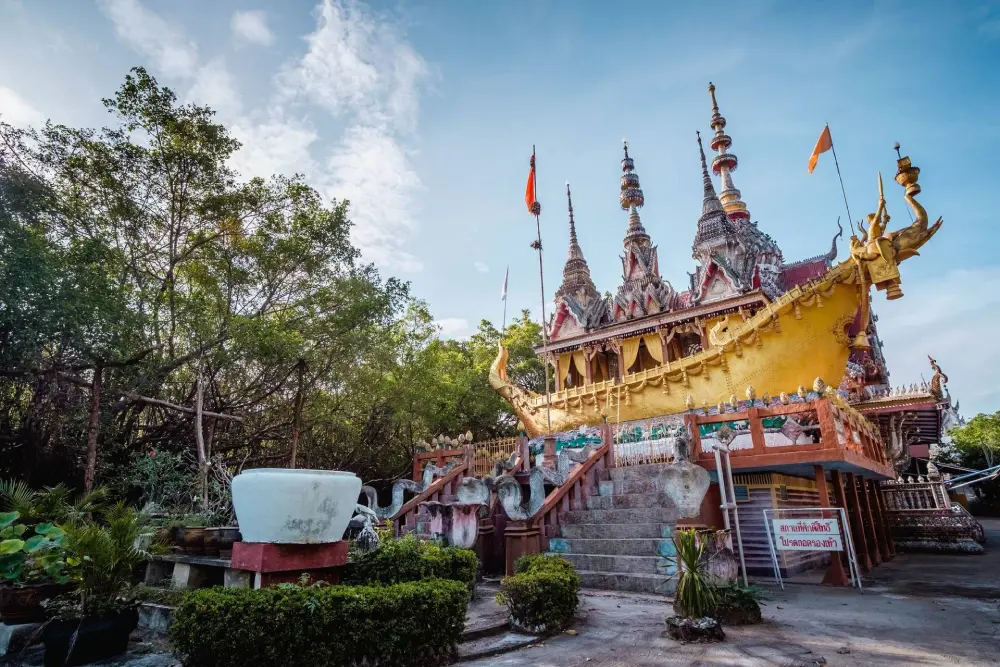
Another memorable feature is the golden junk boat structure. Its unusual form makes the temple stand out. In symbolic terms, a boat can represent a spiritual journey, the crossing from suffering toward peace, and the carrying of merit. For visitors, the golden boat is both beautiful and meaningful. It also provides one of the most distinctive photo points in the temple, especially when seen together with the golden Buddhist structures around it.
The glass chedi is another highlight that adds a contemporary Buddhist art element to the temple. Visitors can walk around the area calmly and observe its decorative details. Together with the Buddha image, Naga figures, footprint shrine, and golden boat, the chedi helps make Wat Phra Phutthabat Phu Faet more than a single-point attraction. It is a temple with several connected spaces for worship, photography, and quiet reflection.
Travelers should remember that this is a Buddhist temple first and a tourist attraction second. Dress modestly, speak softly, remove shoes where required, avoid climbing on sacred structures, and do not pose in ways that are disrespectful to Buddha images or the footprint. These simple actions help preserve the dignity of the site and make the visit more meaningful for both Thai and foreign travelers.
Morning is one of the best times to visit. The temperature is more comfortable, the light is soft, and the temple atmosphere is usually calmer. Since parts of the temple are on open stone or exposed ground, visiting in the late morning or hot afternoon can be less comfortable. Travelers who want to take photographs should also consider early morning or late afternoon, when the light is more gentle and the golden structures appear especially beautiful.
Wat Phra Phutthabat Phu Faet can be combined naturally with Wat Sila At Phu Phra, another important religious and historical site in Na Siao Subdistrict. Wat Sila At Phu Phra is known for ancient sandstone Buddha images carved into a rock shelter and is one of Chaiyaphum’s notable cultural attractions. Visiting both places in one trip gives travelers a fuller understanding of Buddhist faith in this area, from sacred footprints on a hill to ancient carved Buddha images on stone.
The temple is also suitable for families. Children can learn how to behave respectfully in a temple, how to remove shoes before entering sacred areas, and how Buddhist symbols such as Buddha images, footprints, and Naga guardians appear in local religious culture. A visit here can become a simple outdoor lesson in Thai culture, Buddhist manners, and respect for sacred places.
For photographers, the temple offers several attractive compositions: the tree-lined entrance, the hill setting, the golden Buddha image, the large Naga sculptures, the golden boat, the footprint shrine, and the glass chedi. However, photography should always be done with respect. Do not block people who are praying, do not step into restricted areas, and avoid using poses that may be inappropriate in front of sacred objects.
Getting There is easiest by private car. From Chaiyaphum city center, take Highway 201 toward Kaeng Khro and Na Siao Subdistrict. The temple is about 23 km from the city and lies on the same general route as Wat Sila At Phu Phra. Travelers should follow signs toward Ban Sai Ngam and the temple entrance. Public transport is limited in this rural area, so visitors without a private vehicle should hire a local car or taxi from Chaiyaphum city and agree on the return trip in advance.
A good half-day itinerary is to leave Chaiyaphum city in the morning, visit Wat Phra Phutthabat Phu Faet first, continue to Wat Sila At Phu Phra, and then return to the city for lunch or further sightseeing. In the city, travelers can continue to Phraya Phakdi Chumphon Monument, Tamnak Khiao, Prang Ku Chaiyaphum, or Chaiyaphum Night Bazaar. This route combines faith, history, local culture, and city life in one practical day trip.
Travelers with a full day can extend the route to Tat Ton National Park or Tat Ton Waterfall after visiting the temples. This creates a balanced trip that includes a sacred hill temple, an ancient Buddhist rock site, city landmarks, and natural scenery. Chaiyaphum is a province where cultural and natural attractions can be combined easily if the route is planned well.
Older visitors should wear comfortable shoes that are easy to remove, since some areas require removing footwear before entering. Clean socks may be useful when walking on warm stone surfaces. Bringing a hat, drinking water, and a small umbrella can also make the visit more comfortable, especially during the hot season.
The temple reflects how Buddhist faith in northeastern Thailand is often tied to landscape. Hills, rocks, caves, forests, and natural ground are frequently transformed into sacred spaces through stories, footprints, Buddha images, and local devotion. Wat Phra Phutthabat Phu Faet is a good example of this relationship between nature and faith. The stone footprint gives the hill religious meaning, while the temple structures help visitors access and honor that meaning.
Although the temple has impressive visual elements, its deeper value lies in its peaceful atmosphere and local devotion. Visitors who move slowly, observe respectfully, and spend time at each worship area will gain more from the visit than those who come only for quick photographs. The temple invites a slower pace, making it suitable for travelers who want a quiet and reflective experience in Chaiyaphum.
In summary, Wat Phra Phutthabat Phu Faet is a meaningful temple destination in Chaiyaphum Province. It is close enough to the city for a convenient day trip, yet quiet enough to feel removed from urban activity. Its Buddha footprint, low hill setting, tree-lined entrance, golden Buddha image, Naga sculptures, golden boat, and glass chedi make it a distinctive place for worship, cultural learning, and peaceful travel. For visitors planning a temple route in Chaiyaphum, this temple pairs especially well with Wat Sila At Phu Phra and the historical attractions of Chaiyaphum city.
| Name | Wat Phra Phutthabat Phu Faet / Wat Pa Phu Faet, Chaiyaphum Province |
| Location | Ban Sai Ngam, Na Siao Subdistrict, Mueang Chaiyaphum District, Chaiyaphum Province |
| Address | Wat Phra Phutthabat Phu Faet, Ban Sai Ngam, Na Siao Subdistrict, Mueang Chaiyaphum District, Chaiyaphum 36000, Thailand |
| Coordinates | 15.90167, 102.16472 |
| Highlights | Buddha footprint on natural stone, large Naga-protected Buddha image, paired Naga sculptures, golden junk boat, Buddha footprint shrine, and glass chedi |
| History | A local Buddhist temple and sacred hill site centered on a Buddha footprint in stone, later developed with shrines, Buddha images, chedi structures, and contemporary Buddhist art elements |
| Name Origin | The name is associated with Phu Faet hill and the sacred Buddha footprint found within the temple area |
| Distinctive Features | A peaceful hill temple with a tree-lined approach, sacred stone footprint, golden Buddhist structures, Naga art, and a quiet natural atmosphere suitable for worship and reflection |
| Travel Information | From Chaiyaphum city, take Highway 201 toward Kaeng Khro and Na Siao Subdistrict. The temple is about 23 km from the city and lies on the same route as Wat Sila At Phu Phra |
| Current Status | Open as a Buddhist temple and faith-based attraction in Na Siao Subdistrict, Mueang Chaiyaphum District |
| Open Days | Daily |
| Opening Hours | 08.30 – 16.30 |
| Fees | No admission fee |
| Facilities | Parking area, worship areas, Buddha footprint shrine, pavilions, rest areas, and shaded temple surroundings |
| Main Areas / Zones | 1. Buddha Footprint Shrine 2. Stone Hill And Phu Faet Area 3. Large Naga-Protected Buddha Image 4. Paired Naga Worship Courtyard 5. Golden Junk Boat 6. Phuttha Anathawanaram Pavilion 7. Glass Chedi 8. Tree-Lined Temple Entrance |
| Caretaker | Wat Phra Phutthabat Phu Faet, the monastic community, and Ban Sai Ngam local community in Na Siao Subdistrict |
| Local Information Contact | Na Siao Subdistrict Administrative Organization, Tel. 044-884-111 |
| Official Website / Official Page | Tourism information is available through the Tourism Authority of Thailand and Thailand Tourism Directory listings |
| Nearby Tourist Attractions | 1. Wat Sila At Phu Phra, about 8 km 2. Phraya Phakdi Chumphon (Lae) Monument, about 23 km 3. Tamnak Khiao, Chaiyaphum, about 23 km 4. Chaiyaphum Night Bazaar / City Area, about 23 km 5. Prang Ku Chaiyaphum, about 25 km 6. Chao Pho Phaya Lae Shrine at Nong Pla Thao, about 27 km 7. Tat Ton National Park / Tat Ton Waterfall, about 30 km |
| Nearby Restaurants | 1. Banmali Cafe and Restaurant, Kaeng Khro, about 22 km, Tel. 065-416-3929, 062-592-2987 2. Le Pain, about 23 km, Tel. 085-763-2959 3. Duang Thai Food, about 23 km, Tel. 083-721-1101 4. Roti Riski Chaiyaphum, about 23 km, Tel. 061-053-5509 5. SAYA Cafe & Restaurant, about 25 km, Tel. 081-918-4640 6. Lakeside Coffee & Cuisine, about 27 km, Tel. 084-589-1616 7. 234 Cafe’ Cake and Coffee, Kaeng Khro, about 30 km, Tel. 099-416-0666 |
| Nearby Accommodations | 1. Green Village Resort, Kaeng Khro, about 22 km, Tel. 093-532-0764, 086-230-8268 2. Banmali Hill Residence / Banmali Kaeng Khro, about 22 km, Tel. 065-416-3929, 062-592-2987 3. Lertnimit Hotel Chaiyaphum, about 23 km, Tel. 044-811-522, 080-165-9494 4. Siam River Resort, about 24 km, Tel. 044-811-999 5. Dee Prom Hotel Chaiyaphum, about 24 km, Tel. 044-822-222, 088-591-0210 6. Tonkhoon Hotel, about 24 km, Tel. 044-816-881 |
Frequently Asked Questions (FAQ)
Q: Where is Wat Phra Phutthabat Phu Faet located?
A: It is located in Ban Sai Ngam, Na Siao Subdistrict, Mueang Chaiyaphum District, Chaiyaphum Province, about 23 km from Chaiyaphum city center.
Q: What is Wat Phra Phutthabat Phu Faet known for?
A: It is known for its Buddha footprint in natural stone, large Naga-protected Buddha image, Naga sculptures, golden junk boat, glass chedi, and peaceful hill setting.
Q: What are the opening hours?
A: The temple is open daily from 08.30 to 16.30.
Q: Is there an admission fee?
A: No. There is no admission fee, although visitors may make merit or donations according to their faith.
Q: How can travelers get to the temple?
A: From Chaiyaphum city, take Highway 201 toward Kaeng Khro and Na Siao Subdistrict. The temple is about 23 km from the city and lies on the same route as Wat Sila At Phu Phra.
Q: What should visitors wear?
A: Visitors should dress modestly and wear shoes that are easy to remove, as some worship areas require removing footwear before entering.
Q: What nearby attractions can be combined with this temple?
A: Travelers can combine the visit with Wat Sila At Phu Phra, Phraya Phakdi Chumphon Monument, Tamnak Khiao, Prang Ku Chaiyaphum, Chao Pho Phaya Lae Shrine at Nong Pla Thao, and Tat Ton National Park.
Q: How long should visitors spend at Wat Phra Phutthabat Phu Faet?
A: Most visitors should allow about 1 – 2 hours to worship the Buddha footprint, see the Buddha images, Naga sculptures, golden boat, chedi, and enjoy the peaceful surroundings.
 Category: ●Places of Worship
 Group: ●Temple
Last Update : 4 MonthAgo
 Last Update : 4 MonthAgo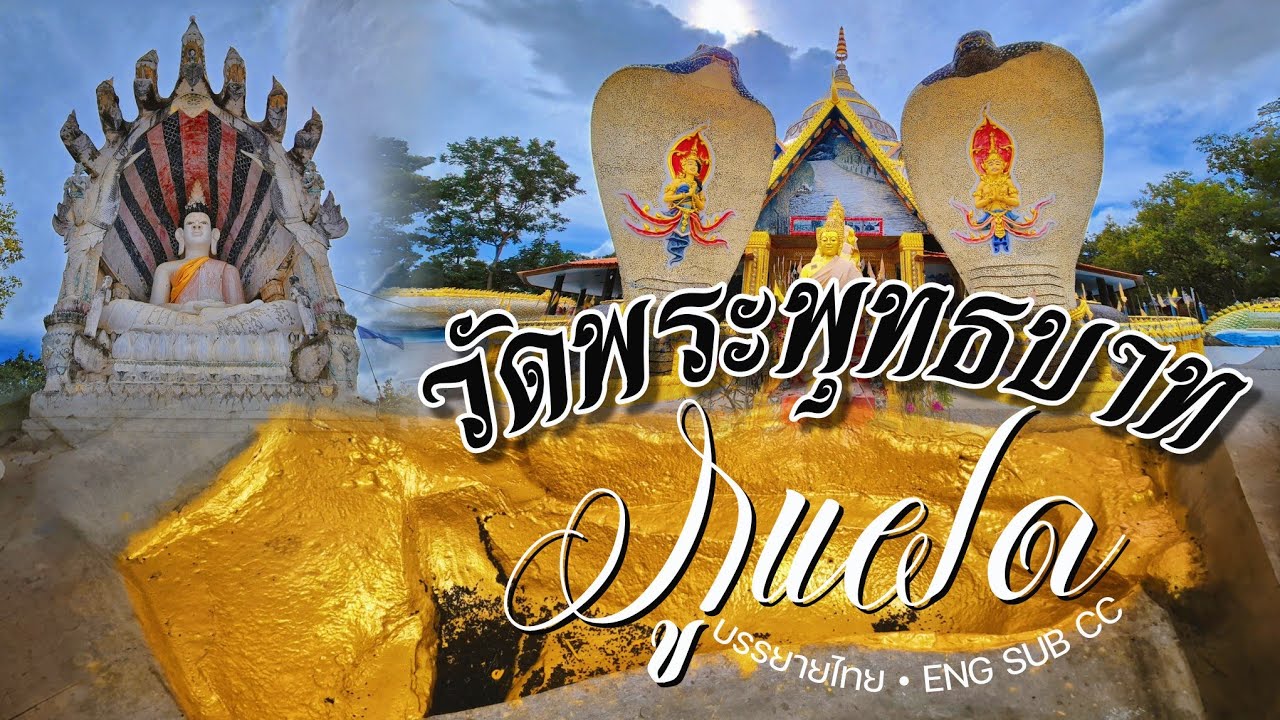
 Click to Access the Navigation Map GPS
Wat Phra Phutthabat Phu Faet Map
Recommend

 Art, Culture and Heritage
 Historical Sites and Monuments(1)
 Landmarks and Memorials(3)
 Royal Palace(1)
 Art, Craft Centres, Tradition(3)
 Educational Places
 Educational Gardens, Farm(1)
Temple(141)
Educational Gardens, Farm(1)
Temple(141)
 Other Sacred Sites(8)
 Suburban Living
 Village, Community(4)
 Nature and Wildlife
 National Parks and Marine Reserves(7)
 Mountain (Doi)(5)
 Dam, Reservoir, Lake(10)
 Waterfalls(15)
 Caves(5)
 River, Canal(4)
 Other natural attractions(1)
 Entertainment and Agricultural
 Farms, Parks and Ecotourism(2)
 Waterpark(2)
 Travel Articles, Recipes
 Travel Review, Food Review(1)


