
lovethailand home >Central Travel Attractions >Nonthaburi Travel Attractions >Bang Yai >Sao Thong Hin > Wat Sao Thong Hin
TL;DR: Wat Sao Thong Hin is located at Moo 1, Ban Khlong Om, Sao Thong Hin Subdistrict, Bang Yai District, Nonthaburi, open Daily, hours 08.00 – 16.30.
Wat Sao Thong Hin
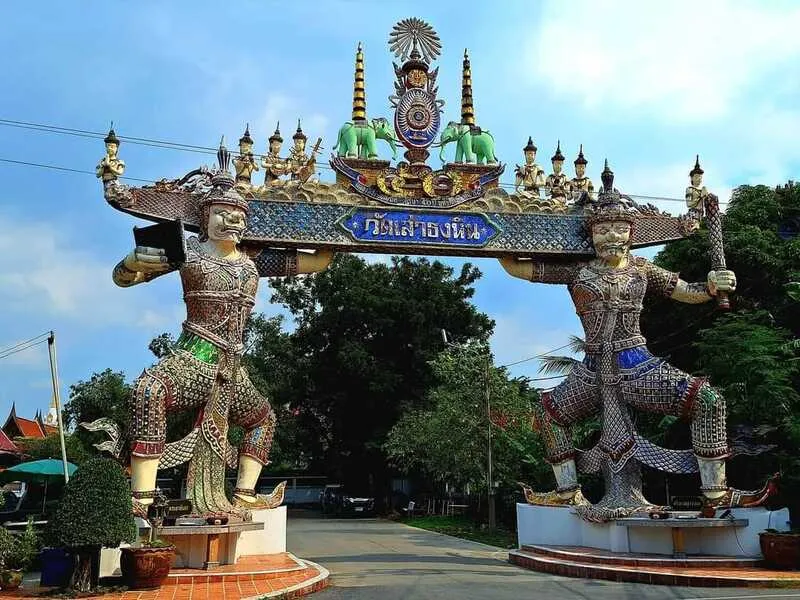
Open Days: Daily
Opening Hours: 08.00 – 16.30
Wat Sao Thong Hin in Sao Thong Hin, Bang Yai District, Nonthaburi, is an old canal-side temple with strong links to late Ayutthaya history and a local legend connected to King Taksin the Great. Originally known as Wat Sak, the temple later became known as Wat Sao Thong Hin, a name tied to the story of a military flagpole supported with stones. Today, it remains a meaningful place for merit-making, heritage travel, and local historical exploration.
For travelers interested in temples that offer more than architecture alone, Wat Sao Thong Hin is especially rewarding. It is one of those places where the identity of the temple is shaped just as much by oral history and community memory as by physical structures. That makes a visit here feel different from a standard temple stop. You are not only entering a religious space, but also stepping into a local narrative that has been preserved across generations in Bang Yai.
The temple is located in Moo 1, Ban Khlong Om, Sao Thong Hin Subdistrict, Bang Yai District, Nonthaburi, near the old Bang Yai pier and along Khlong Om Non. Like many old temples in Nonthaburi, its waterside setting is central to its character. In earlier times, canals were the main routes of travel and settlement, so a temple by the water was not only a religious center but also an important meeting point for the surrounding community.
Official tourism references place the founding of Wat Sao Thong Hin at around B.E. 2310 in the late Ayutthaya period. Local tradition, however, emphasizes that the temple existed from the Ayutthaya era under its earlier name, Wat Sak. The old name is commonly explained by the presence of teak and resin trees in the area. Although complete documentary evidence from the earliest period is limited, the temple’s surviving materials, old structures, and sacred images all support the belief that this is genuinely an old temple with deep historical roots.
The most famous part of the temple’s story concerns King Taksin the Great. According to local oral tradition, when he led troops during the campaign to restore Siam, he passed through Wat Sak and chose the site as a place for the army to rest and regroup. A military flag was planted in the ground, and large stones were brought to support the flagpole so it would not fall. That location became known among soldiers and local residents as “Sao Thong Hin,” meaning the stone-supported flagpole. Over time, the name remained in use and eventually became the name of both the temple and the subdistrict.
The legend goes on to say that King Taksin noticed that the temple was in poor condition and intended to have it restored after the war. In the local telling, his trusted people and villagers later helped rebuild the temple, including the principal Buddha image and attendant disciple figures, so that the temple could once again serve Buddhist life in the area. Whether viewed as local legend or historical memory, this narrative is now inseparable from the identity of Wat Sao Thong Hin and is one of the main reasons the temple continues to attract cultural interest.
Architecturally, Wat Sao Thong Hin also supports its reputation as an old temple. The principal Buddha image in the old ordination hall is described in temple tradition as cast in metallic alloy associated with older Ayutthaya workmanship, accompanied by images of Moggallana and Sariputta. The ordination hall itself, together with surviving construction materials such as large bricks and old stucco methods, reinforces the sense that the site preserves features typical of older temple building traditions in central Thailand. Decorative use of old ceramic wares on the gables is another detail that adds heritage value.
What makes the temple especially appealing is the combination of visible age and living memory. Even if some early details survive mainly through oral accounts, the atmosphere of the temple remains consistent with those stories. Visitors do not experience it as an abstract archaeological site. Instead, it feels like a temple where the past still has a place in everyday devotion and local identity.
The temple is still active today. Public-facing sources show continuing temple activity and confirm that it remains open to visitors. This matters because it means Wat Sao Thong Hin is not only a heritage stop, but also a functioning community temple. That living continuity gives greater meaning to the visit, especially for travelers who want to understand how old temples continue to serve present-day communities in Nonthaburi.
The symbol of the “stone flagpole” remains one of the temple’s most memorable elements. It represents more than a name. It is a marker of shared local identity, connecting the temple, the subdistrict, and the oral history of the area. That makes Wat Sao Thong Hin particularly valuable for travelers interested in how place names in Thailand often emerge from stories that blend military memory, sacred geography, and community experience.
In travel terms, Wat Sao Thong Hin works well for visitors who enjoy older local temples, waterside atmosphere, and historically layered places. It is not a highly commercialized destination, which allows the temple to retain a slower and more genuine feel. Visitors can spend time paying respect, walking the grounds, enjoying the canal-side setting, and reflecting on the stories associated with the site.
The temple can also be included easily in a wider Bang Yai itinerary. Nearby stops include Wat In, Wat Sakae, Wat Amphawan, Central Westgate, and IKEA Bang Yai. This makes Wat Sao Thong Hin suitable for a half-day temple route or a broader day trip that combines culture, merit-making, and local dining.
Getting There is fairly convenient. By private car, the temple can be reached via the canal-side roads in Sao Thong Hin and the wider Kanchanaphisek road network. Public transport users can take the MRT Purple Line to Talad Bang Yai or Sam Yaek Bang Yai Station and continue by taxi or motorcycle taxi. This easy access is one reason the temple works well for visitors who want an old temple experience without complicated travel logistics.
The best time to visit is from morning to afternoon, when the weather is easier for walking and the temple remains open for worship and visits. As with any active Thai temple, respectful dress and quiet behavior are recommended, especially when ceremonies or community events are taking place.
Wat Sao Thong Hin is therefore one of Bang Yai’s most evocative old temples. Its late-Ayutthaya roots, waterside location, King Taksin legend, old sacred images, and continued religious life combine to create a place that is historically rich and emotionally resonant. For travelers looking for a temple in Nonthaburi with atmosphere, story, and local depth, it is well worth a visit.
| Name | Wat Sao Thong Hin |
| Location | Moo 1, Ban Khlong Om, Sao Thong Hin Subdistrict, Bang Yai District, Nonthaburi |
| Address | 38 Moo 1, Soi Rim Khlong, Khlong Om Road, Sao Thong Hin, Bang Yai, Nonthaburi 11140 |
| Highlights | Old canal-side temple, King Taksin legend, Ayutthaya-style principal Buddha image and disciple figures, historic atmosphere along Khlong Om Non |
| History | Founded around B.E. 2310 in the late Ayutthaya period; originally called Wat Sak |
| Name Origin | Originally known as Wat Sak; the later name comes from the local story of a military flagpole supported by stones, which became known as “Sao Thong Hin” |
| Distinctive Features | Old ordination hall, Ayutthaya-style sacred images, large historic bricks and stucco methods, ceramic ornament on the gables, traditional waterside temple character |
| Travel Information | Accessible by private car via Khlong Om canal-side roads; public transport users can connect from MRT Talad Bang Yai or Sam Yaek Bang Yai and continue locally |
| Current Status | Open daily and active as a community temple |
| Open Days | Daily |
| Opening Hours | 08.00 – 16.30 |
| Facilities | Parking, temple grounds, worship spaces, community event areas |
| Main Areas / Zones | Old Ordination Hall, Principal Buddha Area, Stone Flagpole Symbol Area, Canal-side Temple Grounds |
| Abbot / Caretaker | Phra Khru Nontapanyaporn |
| Main Contact Number | 02-595-1449 |
| Official Website / Official Page | Facebook: Wat Sao Thong Hin, Bang Yai, Nonthaburi |
| Nearby Tourist Attractions | 1) Wat In – about 1 km 2) Wat Sakae – about 6 km 3) Wat Amphawan – about 9 km 4) Central Westgate – about 4 km 5) IKEA Bang Yai – about 4 km |
| Nearby Restaurants | 1) Sumrub Kap Khao 99 – about 5 km, Tel. 096-289-5925 2) Sukishi Korean Charcoal Grill Central Westgate – about 4 km, Tel. 092-281-0900 3) Maria Pizzeria & Restaurant Ratchaphruek – about 11 km, Tel. 02-927-3564, 02-927-3565, 089-455-9477 4) Baan Rabiang Nam – about 14 km, Tel. 089-182-7100, 02-968-1481 5) Krua Apsorn Ratchaphruek – about 12 km |
| Nearby Accommodations | 1) Westgate Residence Hotel – about 7 km, Tel. 02-924-7711 2) Oblique Apartment Bang Yai – about 6 km 3) Maleewana Hotel & Resort – about 11 km, Tel. 02-447-6781, 080-817-9955 4) Riverine Place Hotel & Residence – about 16 km 5) Grand Richmond Stylish Convention Hotel – about 17 km |
Frequently Asked Questions (FAQ)
Q: Where is Wat Sao Thong Hin located?
A: Wat Sao Thong Hin is located at 38 Moo 1, Soi Rim Khlong, Khlong Om Road, Sao Thong Hin, Bang Yai, Nonthaburi.
Q: When was Wat Sao Thong Hin founded?
A: Official tourism information places the temple’s founding at around B.E. 2310 in the late Ayutthaya period.
Q: What was the original name of the temple?
A: The temple was originally called Wat Sak.
Q: What is the main highlight of Wat Sao Thong Hin?
A: Its main highlights are the old canal-side setting, the King Taksin legend, and the Ayutthaya-era sacred images in the old ordination hall.
Q: What are the opening hours of Wat Sao Thong Hin?
A: The temple is open daily from 08.00 to 16.30.
Q: Who is the current caretaker or abbot?
A: Public contact information identifies Phra Khru Nontapanyaporn as the temple’s current clerical contact.
Q: What kind of visit is Wat Sao Thong Hin suitable for?
A: It is ideal for merit-making, old temple exploration, local history travel, and half-day cultural trips around Bang Yai.
 Category: ●Places of Worship
 Group: ●Temple
Last Update : 6 MonthAgo
 Last Update : 6 MonthAgo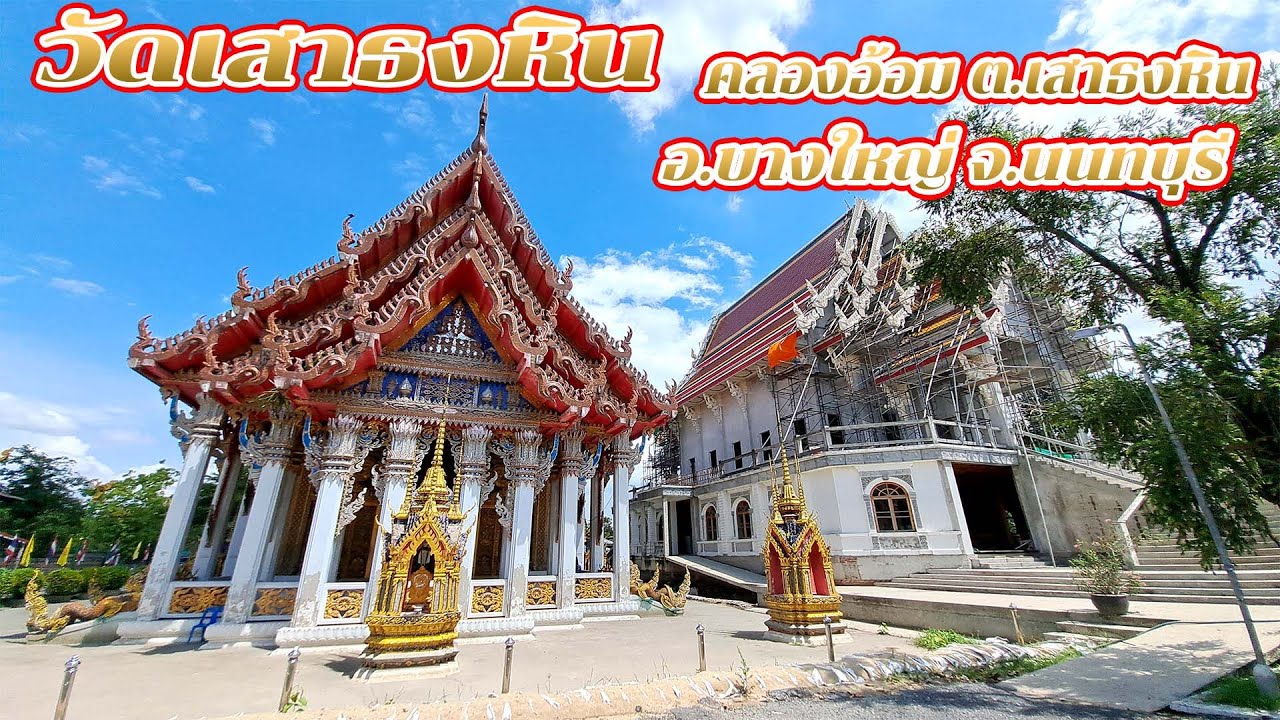
 Click to Access the Navigation Map GPS
Wat Sao Thong Hin Map
Recommend

 Art, Culture and Heritage
 Royal Palace(1)
 Art, Craft Centres, Tradition(2)
 Museums(3)
 Historic Homes and Cities(1)
 Art Gallery(1)
 Educational Places
 Museum for Study(2)
Temple(52)
Museum for Study(2)
Temple(52)
 Mosque(11)
 Other Sacred Sites(2)
 Suburban Living
 Village, Community(2)
 Floating Market(3)
 Nature and Wildlife
 National Parks and Marine Reserves(1)
 Flower Field(1)
 River, Canal(2)
 Islands(1)
 Entertainment and Agricultural
 Animal camps and shows(1)
 Farms, Parks and Ecotourism(8)
 Shopping
 Shopping and Night Market(1)


