
lovethailand home >Central Travel Attractions >Ang Thong Travel Attractions >Pho Thong >Kham Yat > Phra Tamnak Kham Yat
TL;DR: Phra Tamnak Kham Yat is located at Kham Yat Subdistrict, Pho Thong District, Ang Thong Province, open Daily, hours 08.00 a.m. – 04.00 p.m.
Phra Tamnak Kham Yat
Open Days: Daily
Opening Hours: 08.00 a.m. – 04.00 p.m.
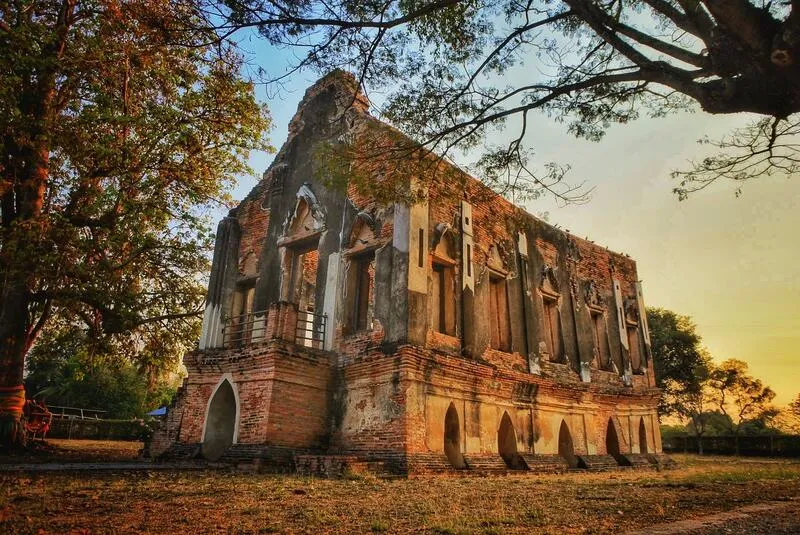
Phra Tamnak Kham Yat is one of the most striking historic sites in Pho Thong District, Ang Thong Province. Even though what remains today is only four brick-and-mortar walls, the building’s solitary presence in an open field amid rural rice plains creates an unexpectedly powerful atmosphere. The first impression is that time has been paused, allowing later generations to step in and read the past through visible traces of Ayutthaya-period craftsmanship—proportions, openings, and the deliberate hand of artisans. The beauty of Phra Tamnak Kham Yat is not the polished completeness of a fully restored palace; it is the dignity of a noble ruin, ideal for travelers who enjoy cultural journeys, architectural photography, or quiet places that offer both knowledge and calm within a single trip.
As a travel destination, Phra Tamnak Kham Yat fits the idea of Ang Thong attractions perfectly for a half-day outing. The visit does not take long, yet the stories are dense and memorable. You can stop for photographs, walk around to study window arches and brick surfaces, then continue on a one-day route to major temples and local markets without the pressure of queues or timed activities. Its strength lies in the simplicity of the setting: the structure is clearly visible from afar, modern buildings do not intrude on the scene, and the sense of being “in the middle of the fields” gives the experience and photographs a character that differs from historic sites in crowded urban areas.
The monument is located in Kham Yat Subdistrict, Pho Thong District, Ang Thong Province. The surrounding context is rural community life and agricultural land, which makes the visit notably quiet. That quietness is precisely why many visitors feel they can almost “hear the past” more than at major tourist sites filled with constant noise. On arrival, you will see the brick building standing alone on open ground. The placement suggests that it was designed to be a destination in itself, not an auxiliary structure hidden behind later development. Although the roof and upper elements have long disappeared, the remaining wall lines still communicate the building’s proportions and architectural mood with surprising clarity.
What makes Phra Tamnak Kham Yat compelling is the way the “standing structure” still supports imagination. The building is constructed of brick and mortar, and is commonly described as approximately 10 meters wide and 20 meters long. It was built on a raised base with an undercroft, featuring pointed-arch openings beneath, a form that recalls late Ayutthaya architectural vocabulary where arches were used to create depth and elegance. The most rewarding area to examine is around the openings and windows, because traces of decorative frames and motifs remain. Even in incomplete condition, these remnants are enough to confirm that the building was crafted with refinement, not thrown up quickly as a temporary shelter to be abandoned.
Walking around the structure, you will sense the difference between an ordinary ruin and a ruin that once served as a royal residence. The surviving details still communicate aesthetic intention. Accounts mention red-earth finishing inside, consistent with Ayutthaya preferences for surface treatment and color, and local narratives also describe the original floor as wooden planks. Taken together, these elements help the visitor read the function: it is unlikely to have been built as an emergency military outpost, and far more plausible as a residence or resting place designed for order, comfort, and the dignity appropriate to high-status occupants in its time.
Yet the site’s historical weight goes beyond architectural appeal. It is closely linked in popular storytelling to the late Ayutthaya period and to King Uthumphon, widely remembered as “Khun Luang Ha Wat.” The most common narrative portrays him as a monarch who did not cling to the throne, choosing spiritual peace over royal power. This association has caused Phra Tamnak Kham Yat to be remembered as a place of retreat or a temporary residence. Such storytelling gives the site the feel of a living backdrop, making history tangible: visitors are not simply reading names and dates from a book, but standing in a real place that local memory has repeatedly connected to those figures and events.
To understand Phra Tamnak Kham Yat more deeply, it helps to accept that historical narratives often exist in layers. Some parts come from official records, some from interpretation meant to explain what remains, and some from local collective memory repeated until it becomes the dominant image. A key point that distinguishes this site from many small monuments is the widely cited account that King Chulalongkorn (Rama V) visited Phra Tamnak Kham Yat in 1908 (B.E. 2451) and offered an assessment or explanation that shifted how later audiences interpreted the “builder” and the “purpose” of the structure. This matters because it indicates the monument was not only preserved in community storytelling, but was also considered seriously at a national level.
According to commonly circulated accounts, an early view suggested the building might be connected with Khun Luang Ha Wat (Prince Uthumphon, Krom Khun Phonphinit), who was said to have ordained at Wat Pho Thong and to have built this residence for monastic retreat due to the suitability of the location. However, when the building’s refined craftsmanship was observed, that interpretation was reconsidered. The reasoning was straightforward: a structure intended merely as a temporary residence or a wartime stronghold would be unlikely to be executed with such careful beauty. This led to another line of interpretation—that the building may have been constructed in the reign of King Borommakot as a royal resting place, aligned with Ayutthaya customs of establishing out-of-capital residences for royal travel. In that frame, the monument’s refinement becomes a form-based clue that explains itself, since heavy investment in aesthetic design typically corresponds to elite use and the need for a dignified residential setting.
Beyond these interpretations, some travel media and reviews have also connected Phra Tamnak Kham Yat to other Ayutthaya-era monarchs or princes, such as linking it to King Prasat Thong in the context of royal sojourns in provincial areas. This variety of viewpoints shows that the site still invites more than one reading, and that is not a weakness. On the contrary, it is part of the charm of cultural travel here: visitors are not forced into a single memorized answer, but can learn to read architectural evidence alongside historical narratives, then decide which frame feels most convincing when compared with what the eyes can verify on the ground.
Whichever interpretation you favor, the most important takeaway is the reason this building was made with such refinement. That is the key that separates Phra Tamnak Kham Yat from ordinary brick ruins. Studying the window frames, wall joints, pointed arches beneath, and the front-and-back projecting sections reinforces the sense that this structure once carried the dignity of a residential retreat. When you connect that physical evidence with the story of Khun Luang Ha Wat, the monument gains further depth: it becomes more than an old building. It becomes a symbol of a turbulent late-Ayutthaya turning point, and a quiet prompt to reflect on how the pursuit of inner peace by an individual in history has been tied to this serene rural landscape.
Another reason the site remains culturally alive is that Ang Thong Province and local networks sometimes organize cultural activities that reference the legend of Phra Tamnak Kham Yat. This means the monument is not left as a silent ruin, but becomes a public memory space where people gather to remember and learn together. When a place is used in this shared way, its value is not only its age, but its ability to serve as a bridge between past and present, helping newer generations feel that heritage is not distant or irrelevant.
For a fuller visitor experience, begin by standing at some distance to take in the overall proportions, then move closer to collect details around openings, windows, and decorative frames. The beauty here is the beauty of traces: the closer you look, the more you notice the intent of the craftsmen. Morning is especially suitable because the light is softer and the air is more comfortable. The open field means late morning to afternoon sun can be intense. If you want documentary-style photographs, strong daylight can make the wall lines and shadow contrasts more dramatic, but you should bring water, a hat, and comfortable walking shoes so that circling the building does not become unnecessarily tiring.
Phra Tamnak Kham Yat works well for different types of travelers in the same trip. History lovers can enjoy connecting late-Ayutthaya narratives to what they see in front of them. Photography enthusiasts can capture the solitary brick structure in the fields with a classic, story-driven mood. Those seeking a quiet escape will appreciate the simplicity, since the site is not heavily commercialized. You can take your time without queues, walk slowly, and leave feeling both rested and well-informed—with enough concrete details to share the story with others.
Getting There If you travel by private car, use “Pho Thong District – Kham Yat Subdistrict” as your main reference, then drive along local roads that connect communities in this area. A private car is the most convenient option because the site is rural and public transport is not as frequent as in the town center. If you travel by public transport, it is recommended to reach Ang Thong town or Pho Thong district center first, then continue by local hired transport to Kham Yat Subdistrict. Plan your timing according to real pickup points on the day, especially if you want to arrive in the morning for photography.
If you want to make the most of a one-day trip, Phra Tamnak Kham Yat is a strong opening stop, after which you can connect to major temples and local markets in Ang Thong. The province offers historic temples, well-known religious landmarks, and community areas where you can see contemporary local life. You can start at the monument in the morning for photographs and reflection, then continue to a temple visit or market walk nearby, and finish with local food in Ang Thong town before returning to Bangkok. This route keeps the day comfortable rather than packed, while still delivering architecture, narrative, and the charm of a smaller province that retains a gentle pace.
Ultimately, the reason Phra Tamnak Kham Yat deserves a place on an Ang Thong attractions list for cultural travelers is that, although it is only a ruin, the ruin is not silent. It speaks through form, through traces of ornament, and through the intention embedded in its construction—then sends a question back to the present: what made people of that era build such a graceful residence in the middle of the fields, and what might the late-Ayutthaya stories tied to this place still reveal about Thai society today? If you prefer travel that invites thought beyond the photograph, Phra Tamnak Kham Yat delivers exactly that.
| Name | Phra Tamnak Kham Yat |
| Address | Kham Yat Subdistrict, Pho Thong District, Ang Thong Province |
| Open Days | Daily |
| Opening Hours | 08.00 a.m. – 04.00 p.m. |
| Fees | No admission fee |
| Contact Number | 035-525-867 |
| Place Summary | A brick-and-mortar monument standing alone in open fields. Only four walls remain, yet the structure still shows readable late-Ayutthaya features and is widely linked to late-Ayutthaya narratives and Khun Luang Ha Wat, with additional interpretive context from a royal visit in the reign of Rama V. |
| Highlights | A photogenic brick ruin in the middle of rice fields, pointed-arch openings beneath the raised base and projecting front–back sections, remaining window-frame traces, layered historical storytelling and interpretation, ideal for a quiet half-day cultural visit. |
| Period | Associated with the late Ayutthaya period; a key reference point is the visit by Rama V in 1908 (B.E. 2451). |
| Key Evidence | Publicly published opening information and contact number; monument condition and interpretive frameworks linked to Rama V’s visit; nearby places listed with travel-distance references. |
| Name Origin | Named after “Kham Yat,” the local subdistrict where the monument is located. |
| Travel | Most convenient by private car using Pho Thong District – Kham Yat Subdistrict as the reference; public transport requires reaching Ang Thong town or Pho Thong center first, then continuing by local hired transport. |
| Current Status | Open to visitors |
| Facilities | Outdoor site; bring drinking water and sun protection; parking depends on real conditions around the access point. |
| Nearby Tourist Attractions (Approx. Distance) | 1) Wat Muang, Ang Thong – 8.4 km 2) Wat Khun Inthapramun – 9.9 km 3) Talat San Chao Rong Thong – 7.2 km 4) Wat Tha It – 8.5 km 5) Wat Nang Nai Thammikaram – 7.2 km |
| Popular Restaurants Nearby (Approx. Distance + Phone) | 1) Krua Kamthorn – approx. 18 km – Tel. 035-612-288 2) Ruea Klang Suan Restaurant – approx. 16 km – Tel. 081-195-9744 3) Krua Tao Than – approx. 20 km – Tel. 082-407-5095 4) Krua Thong Tae – approx. 22 km – Tel. 092-610-3572 5) Krua Nopha (Pho Thong) – approx. 12 km – Tel. 084-311-3392 |
| Popular Accommodations Nearby (Approx. Distance + Phone) | 1) Wiset Sabai Resort – 7.2 km – Tel. 081-587-5993 2) Baan Suan Rim Nam Homestay – 8.3 km – Tel. 089-923-2095 3) Mee Dee Resort – 6.3 km – Tel. 094-131-8081 4) OK Resort – 7.0 km – Tel. 035-631-401 5) Smile Resort – 7.5 km – Tel. 083-713-9405 |
Frequently Asked Questions (FAQ)
Q: Where is Phra Tamnak Kham Yat located?
A: It is in Kham Yat Subdistrict, Pho Thong District, Ang Thong Province, in a rural field setting in the Pho Thong area.
Q: What are the opening days and hours?
A: It is open daily from 08.00 a.m. to 04.00 p.m.
Q: Is there an admission fee?
A: No. There is no admission fee.
Q: What are the main highlights on site?
A: You will see the remaining four walls of the brick structure standing in open fields, with readable features such as the pointed-arch openings beneath the raised base, projecting front–back sections, and traces of window-frame ornament.
Q: Who is the site associated with historically?
A: It is popularly linked to King Uthumphon (“Khun Luang Ha Wat”) in late-Ayutthaya narratives, and it is also discussed through interpretive frameworks connected to a visit by Rama V in 1908 (B.E. 2451).
Q: When is the best time to take photos?
A: Morning is ideal because the light is softer and the weather is more comfortable. In strong midday sun, bring water and sun protection because the area is very open.
Q: Where can I go next on a nearby one-day route?
A: You can connect to Wat Muang, Wat Khun Inthapramun, Talat San Chao Rong Thong, Wat Tha It, or Wat Nang Nai Thammikaram; see the approximate distances in the summary table.
 Category: ●Art, Culture and Heritage
 Group: ●Royal Palace
Last Update : 7 MonthAgo
 Last Update : 7 MonthAgo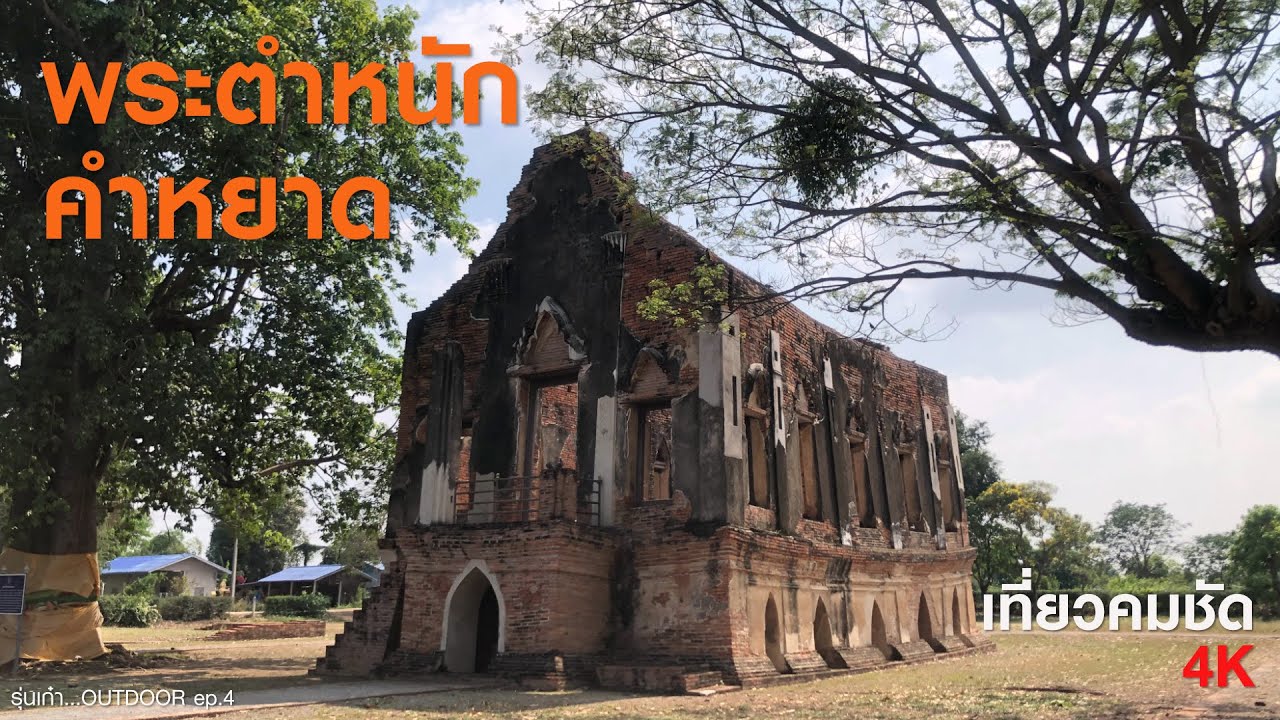
 Click to Access the Navigation Map GPS
Phra Tamnak Kham Yat Map
Recommend

 Landmarks and Memorials(2)
Royal Palace(1)
Landmarks and Memorials(2)
Royal Palace(1)
 Art, Craft Centres, Tradition(2)
 Museums(2)
 Historic Homes and Cities(1)
 Educational Places
 Educational Gardens, Farm(1)
 Places of Worship
 Temple(64)
 Other Sacred Sites(4)
 Research and Development
 Royal Project(2)
 Suburban Living
 Village, Community(16)
 Local Market(1)
 Floating Market(1)
 Nature and Wildlife
 River, Canal(5)
 Other natural attractions(3)
 Entertainment and Agricultural
 Farms, Parks and Ecotourism(4)
 Outdoor and Adventure Activities(1)
 Shopping
 Shopping and Night Market(1)
 Travel Articles, Recipes
 Travel Review, Food Review(1)
 Central Thai Cuisine, Central Thai food recipes(1)


