
lovethailand home >North Travel Attractions >Tak Travel Attractions >Muang Tak >Mae Tho > Wat Somdej Phra Narai Maharat
TL;DR: Wat Somdej Phra Narai Maharat is located at Khao Kaeo Hill, Mae Tho Subdistrict, Mueang Tak District, Tak Province, open Daily, hours Daytime visits are recommended.

Wat Somdej Phra Narai Maharat
Open Days: Daily
Opening Hours: Daytime visits are recommended
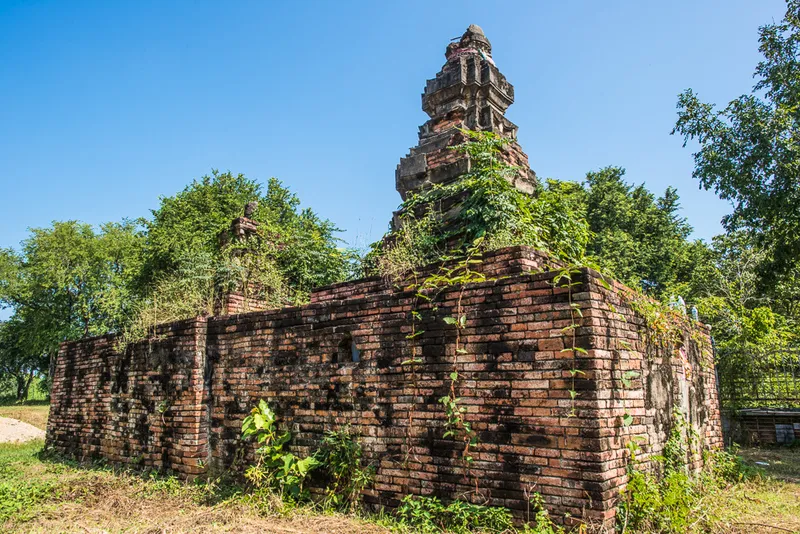
Wat Somdet Phra Narai Maharat in Tak Province, also known in some sources as Wat Phra Narai Maharat, is an important historic site on Khao Kaeo Hill in Mae Tho Subdistrict, Mueang Tak District. Located on the western side of the Ping River, the site preserves the remains of an old ordination hall, a double consecrated boundary, a surrounding sacred wall, and small lamp niches on all 4 inner sides of the wall. These details make the site especially meaningful for travelers interested in Ayutthaya-period architecture, King Narai the Great, and the historical importance of Tak along the Ping River route.
This site is not a fully active temple in the same way as many modern temples in Tak town. Its value lies in the surviving remains of an ancient religious structure and the historical interpretation connected with King Narai the Great. For visitors who enjoy historic ruins, architectural clues, and cultural landscapes, Wat Somdet Phra Narai Maharat offers a quiet but highly significant experience.
The temple stands on Khao Kaeo Hill in Mae Tho Subdistrict. Its elevated location gives the site a different atmosphere from temples located directly within Tak town or along the riverbank. Hills and elevated ground were often chosen for important religious sites because they created a sense of sacred separation and visual prominence. Even though the site is now a ruin, its location still helps visitors understand why it may once have been an important sacred place.
The most important remains are the old ordination hall and the double consecrated boundary. In Thai Buddhism, the consecrated boundary marks the sacred area where important monastic acts are performed. The presence of a double boundary suggests that the site was not an ordinary small community temple. Together with the surrounding sacred wall, it points to a carefully planned religious structure with special significance.
The sacred wall surrounding the ordination hall is another key feature. Along the inner side of the wall are small niches on all 4 sides. These niches were used for lighting lamps, creating a sacred illuminated atmosphere around the ordination hall during religious ceremonies. When imagined in its original condition, the site would have been visually impressive, with many small lights surrounding the sacred space.
These lamp niches are the main reason the site is often associated with King Narai the Great. Their form resembles lamp niches found at Phra Narai Ratchaniwet in Lopburi, one of the most important royal complexes of King Narai’s reign. Because of this architectural similarity, Prince Damrong Rajanubhab suggested that the temple may have been built or patronized by King Narai the Great.
In 1922, Prince Damrong Rajanubhab traveled down the Ping River and reached Khao Kaeo. He went up to examine the site and observed the lamp niches around the ordination hall wall. Based on these architectural details, he proposed that King Narai the Great may have ordered the construction of the temple to commemorate his victory after the campaign to Chiang Mai and his return in 1662.
This interpretation gives the site strong historical value. It connects Tak not only with local history, but also with the wider political and military history of the Ayutthaya Kingdom. Tak was an important town along the Ping River route, linking the central plains, the northern region, and strategic movement toward Chiang Mai. The presence of an Ayutthaya-period royal-related religious site in this area helps demonstrate Tak’s historical role.
The architectural remains show the craftsmanship of the Ayutthaya period. The ordination hall plan, the double boundary, the sacred wall, and the lamp niches all reflect a sophisticated understanding of sacred space. They also show how Buddhist architecture, ritual lighting, and royal symbolism could be combined in one site.
Wat Somdet Phra Narai Maharat is also meaningful when considered together with nearby historic sites in Mae Tho Subdistrict. Wat Doi Khoi Khao Kaeo is associated with King Taksin the Great and his divination of royal merit, while Wat Somdet Phra Narai Maharat is connected with King Narai the Great and Ayutthaya-period royal patronage. Visiting both areas helps travelers understand how Mae Tho preserves several layers of Thai royal history.
For visitors, the best way to experience the site is to walk slowly and observe the remains carefully. The most important details are not large monuments but the surviving architectural clues: the line of the ordination hall, the sacred wall, the double boundary, and the small lamp niches. These features are what allow the site to speak about its past.
Because the site is a historic ruin, visitors should behave carefully. Do not climb on old walls, touch fragile materials unnecessarily, move stones or historic fragments, or leave rubbish behind. A ruin may look quiet and simple, but each remaining piece is part of the site’s historical evidence.
Getting There is most convenient by private car or local transport from Tak town. Travel toward Mae Tho Subdistrict and the Khao Kaeo Hill area on the western side of the Ping River, near the group of historic sites around Wat Doi Khoi Khao Kaeo. Because the site is not a major commercial tourist attraction with frequent public transport, independent transportation is the most practical option.
The best time to visit is in the morning or late afternoon. The weather is more comfortable, and the softer light helps visitors see details of the wall, lamp niches, and old structural remains. Travelers should wear comfortable walking shoes and bring water, a hat, or an umbrella because the site is largely an outdoor historic area.
For photographers, the most meaningful shots are those that show the relationship between the ordination hall remains, the sacred wall, and Khao Kaeo Hill. Close-up images of the lamp niches can help communicate the site’s importance. However, photography should never involve climbing onto ancient structures or touching the remains.
For families and students, the site can serve as an outdoor history lesson. It shows how historians and archaeologists interpret the past through physical evidence such as walls, niches, boundaries, and building plans. The site helps make Ayutthaya history more tangible by connecting it with a real place in Tak Province.
Wat Somdet Phra Narai Maharat is especially suitable for travelers who want to explore Tak beyond the usual city attractions. It can be combined with Wat Doi Khoi Khao Kaeo, Wat Klang Suan Dok Mai, King Taksin the Great Shrine, Wat Bot Mani Si Bun Rueang, and Ban Chin Alley to create a rich historical route through Tak.
Overall, Wat Somdet Phra Narai Maharat is a valuable historic site because it preserves traces of Ayutthaya-period sacred architecture and is strongly associated with the historical memory of King Narai the Great. Its remaining ordination hall, double consecrated boundary, sacred wall, and lamp niches allow visitors to read the past directly from the landscape. For anyone interested in Thai history, Ayutthaya architecture, and the role of Tak along the Ping River route, this is a site worth visiting with care and attention.
| Name | Wat Somdet Phra Narai Maharat / Wat Phra Narai Maharat |
| Location | Khao Kaeo Hill, Mae Tho Subdistrict, Mueang Tak District, Tak Province |
| Address | Mae Tho Subdistrict, Mueang Tak District, Tak Province 63000, Thailand |
| Approximate Coordinates / Area | Khao Kaeo Hill, Mae Tho Subdistrict, west of the Ping River, Mueang Tak District, Tak Province |
| Highlights | Ruins of an ordination hall with a double consecrated boundary, surrounding sacred wall, lamp niches on all 4 inner sides, and Ayutthaya-period architectural features associated with King Narai the Great |
| History | Ayutthaya-period historic site believed to have been built or patronized by King Narai the Great to commemorate his victory after the campaign to Chiang Mai and his return in 1662 |
| Name Origin | The name is connected with the interpretation that King Narai the Great may have ordered or patronized the construction of this religious site |
| Distinctive Features | Abandoned temple and historic ruin on Khao Kaeo Hill, preserving an old ordination hall, sacred wall, lamp niches, and evidence of Ayutthaya craftsmanship |
| Historic Objects / Key Features | Ruined ordination hall with double consecrated boundary, sacred wall around the hall, and small lamp niches on all 4 inner sides of the wall |
| Important Historical Story | Prince Damrong Rajanubhab inspected the site in 1922 and observed the lamp niches around the ordination hall wall, leading to the interpretation that the site may be associated with King Narai the Great |
| Travel Information | Travel from Tak town toward Mae Tho Subdistrict and Khao Kaeo Hill on the western side of the Ping River, near the historic site group around Wat Doi Khoi Khao Kaeo. Private car or local transport is recommended. |
| Current Status | Abandoned temple and historic site in Mae Tho Subdistrict. Visitors should explore carefully and respect historic-site conditions. |
| Open Days | Daily |
| Opening Hours | Daytime visits are recommended |
| Facilities | Outdoor historic-site area; visitors should prepare water, sun protection, and comfortable walking shoes |
| Main Areas / Zones | Ruined ordination hall, sacred wall, lamp niches, Khao Kaeo Hill area, and surrounding historic-site landscape |
| Caretaker | Abandoned temple and historic site in Mae Tho Subdistrict; visitors should follow historic-site preservation guidelines and contact local authorities for area information |
| Local Authority | Mae Tho Subdistrict Administrative Organization, Tel. 094-363-5199 |
| Nearby Tourist Attractions | 1. Wat Doi Khoi Khao Kaeo, about 1 km 2. Wat Klang Suan Dok Mai, about 2 km 3. King Taksin the Great Shrine, about 4 km 4. Wat Bot Mani Si Bun Rueang, about 4 km 5. Ban Chin Alley, about 5 km |
| Nearby Restaurants | 1. Pad Thai Trok Ban Chin, about 5 km, Tel. 055-511330 2. Im Aroi Khao Tom Mueang Tak, about 5 km, Tel. 062-6156415 3. Khao Tom Mueang Tak Im Aroi, about 5 km, Tel. 081-8872438 4. TARA Kaffee&Patisserie, about 6 km 5. Tiengna Coffee and Bakery Farm, about 10 km, Tel. 096-805-0363 |
| Nearby Accommodations | 1. Viang Tak Riverside Hotel, about 5 km, Tel. 055-512507, 055-512508 2. Berich Hotel Tak, about 6 km, Tel. 082-4446242 3. HOP INN Tak, about 7 km, Tel. 02-0802222 4. White House Hotel Tak, about 8 km, Tel. 099-2347774 5. BanRai ChernMa Resort, about 11 km, Tel. 055-893030 |
Frequently Asked Questions (FAQ)
Q: Where is Wat Somdet Phra Narai Maharat located?
A: Wat Somdet Phra Narai Maharat is located on Khao Kaeo Hill in Mae Tho Subdistrict, Mueang Tak District, Tak Province, on the western side of the Ping River.
Q: Why is Wat Somdet Phra Narai Maharat important?
A: It is an Ayutthaya-period historic site with remains of an ordination hall, a double consecrated boundary, a sacred wall, and lamp niches associated with the architectural style of King Narai the Great’s period.
Q: Why is the site associated with King Narai the Great?
A: The lamp niches around the ordination hall wall resemble those at Phra Narai Ratchaniwet in Lopburi. Prince Damrong Rajanubhab therefore suggested that the site may have been built or patronized by King Narai the Great after his victory in the Chiang Mai campaign.
Q: Is Wat Somdet Phra Narai Maharat an active temple?
A: It is currently an abandoned temple and historic site. Visitors should explore carefully and avoid damaging the ancient remains.
Q: What are the main highlights of the site?
A: The main highlights are the ruined ordination hall, double consecrated boundary, sacred wall, and small lamp niches on all 4 inner sides of the wall.
Q: What nearby places can be visited with Wat Somdet Phra Narai Maharat?
A: Nearby places include Wat Doi Khoi Khao Kaeo, Wat Klang Suan Dok Mai, King Taksin the Great Shrine, Wat Bot Mani Si Bun Rueang, and Ban Chin Alley.
Q: How should visitors behave at the historic site?
A: Visitors should dress modestly, walk carefully, avoid climbing on the ruins, avoid touching or moving historic materials, keep the area clean, and respect the sacred atmosphere of the site.
Q: What is the best time to visit?
A: Morning or late afternoon is recommended because the weather is more comfortable and the light helps reveal details of the sacred wall, ruins, and lamp niches.
 Category: ●Places of Worship
 Group: ●Temple
Last Update : 3 WeekAgo
 Last Update : 3 WeekAgo
 Click to Access the Navigation Map GPS
Wat Somdej Phra Narai Maharat Map
Recommend

 Art, Culture and Heritage
 Historical Sites and Monuments(2)
 Landmarks and Memorials(3)
 Art, Craft Centres, Tradition(6)
 Historical Houses and The Ancient City(2)
 Educational Places
 Educational Gardens, Farm(2)
Temple(22)
Educational Gardens, Farm(2)
Temple(22)
 Other religious and spiritural sites(9)
 Suburban Living
 Village, Community(5)
 Local Market(3)
 Nature and Wildlife
 National Parks and Marine Reserves(9)
 Mountain (Doi)(9)
 Dam, Reservoir, Lake(14)
 Waterfalls(23)
 Hot Springs(2)
 Caves(6)
 River, Canal(1)
 Bays and Beaches(1)
 Islands(1)
 Other natural attractions(1)
 Entertainment and Agricultural
 Farm, Parks, Gardens and Ecotourism(5)
 Outdoor and Adventure Activities(4)


