

 Home
Home Chiang Mai(










Wat Doi Mae Pang
Rating: 4.6/5 (7 votes)
 Search By
  Map
Map 
 Have Map
  No Map
Chiang Mai attractions
Attractions in Thailand
Open Days: Daily
Opening Hours: 08.00–17.00
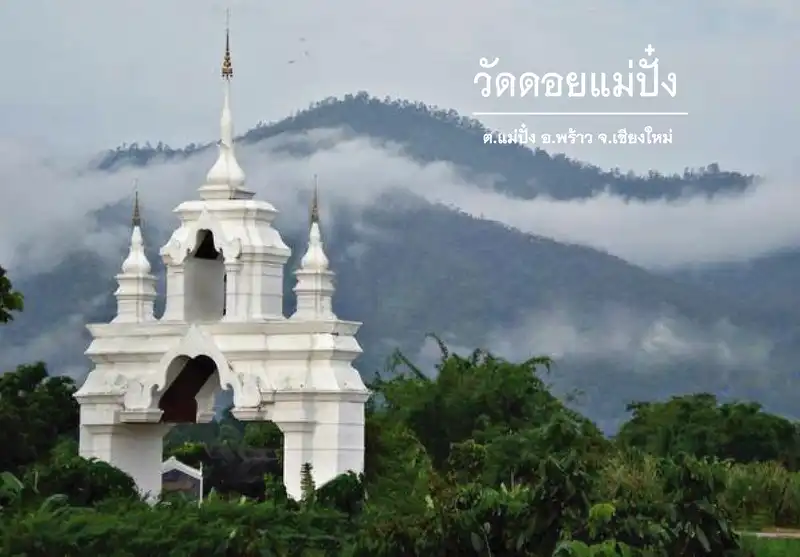
Wat Doi Mae Pang is a forest meditation temple located in Moo 5, Mae Pang Subdistrict, Phrao District, Chiang Mai Province. Nestled on a quiet mountain slope surrounded by forests, the temple lies approximately 75 kilometers from Chiang Mai city via the Chiang Mai–Mae Jo–Phrao route (Highway No. 1001). Although it is not a mainstream tourist attraction known for grand architecture, Wat Doi Mae Pang holds profound significance in the history of Northern Thailand’s forest meditation tradition.
In the past, the Mae Pang area was a remote mountainous forest, lacking infrastructure and modern conveniences. The establishment of a temple here was not driven by accessibility, but by the search for a secluded environment suitable for mental training and meditation practice. Wat Doi Mae Pang thus emerged as a true forest temple, where nature itself becomes an essential part of spiritual discipline, encouraging practitioners to confront their own defilements directly.
The history of Wat Doi Mae Pang is inseparably connected to Luang Pu Waen Sujinno, one of the most respected forest meditation masters in Thailand. Luang Pu Waen resided at this temple from 1962 until his passing in 1985, a period spanning more than 20 years. During this time, Wat Doi Mae Pang became a major center of faith and practice for disciples and lay practitioners devoted to the meditation path.
Luang Pu Waen Sujinno was renowned for teaching through lived practice rather than eloquent discourse. His teachings were simple, direct, and consistently pointed back to awareness of the mind. He emphasized that meditation is not an escape from problems, but a way to see suffering clearly without being overwhelmed by it. This principle is deeply embedded in the atmosphere and way of life at Wat Doi Mae Pang.
The structures within the temple reflect this philosophy of simplicity. The wooden ordination hall is modest and unadorned. Luang Pu Waen’s kuti (monk’s dwelling) has been preserved in its original form. Another distinctive structure is the wooden hut known as the “Defilement-Roasting Hut” or “Fire Hut,” which was used as a training space for endurance and mindfulness. This hut was never intended for self-mortification, but rather as a means for practitioners to observe restlessness, aversion, and the urge to escape discomfort as they arise in the mind.
The temple also houses a vihara containing a life-sized statue of Luang Pu Waen. The statue conveys a sense of calm, stability, and inner stillness. Many visitors find that simply sitting quietly before it encourages a return to present-moment awareness without the need for words or formal instruction.
The overall atmosphere of Wat Doi Mae Pang is defined by silence. Natural sounds—wind, birds, and rustling leaves—dominate the environment. This quiet does not feel oppressive; rather, it creates space for visitors to hear their own thoughts and emotions more clearly. Many who come here are not seeking answers from others, but instead gain deeper understanding through stillness and reflection.
Within the broader context of Northern Thailand’s forest tradition, Wat Doi Mae Pang stands as an important landmark. It is a place where Luang Pu Waen’s teachings were transmitted through everyday conduct rather than ceremony. The temple emphasizes mindfulness, perseverance, and honesty with oneself, rather than ritual complexity or architectural grandeur.
Wat Doi Mae Pang also maintains a close relationship with the Mae Pang community. Local villagers continue to view the temple as a spiritual anchor and a place of inner refuge. The temple’s simple way of life, integrated with the surrounding community rather than separated from it, preserves the slow-paced rural atmosphere that aligns naturally with the principles of forest meditation practice.
Getting There From Chiang Mai city, travel along the Chiang Mai–Mae Jo–Phrao route (Highway No. 1001) for approximately 75 kilometers. Upon reaching Phrao District, follow local signs toward Mae Pang Subdistrict. The final stretch involves uphill roads with curves and slopes. Caution is advised, especially during the rainy season.
| Name | Wat Doi Mae Pang |
| Location | Moo 5, Mae Pang Subdistrict, Phrao District, Chiang Mai Province |
| Setting | Forest meditation temple on a mountain, surrounded by nature |
| Temple History | Developed as a major meditation center during Luang Pu Waen Sujinno’s residence from 1962–1985 |
| Important Figure | Luang Pu Waen Sujinno |
| Key Sites | Wooden vihara, Luang Pu Waen’s kuti, Defilement-Roasting Hut, Vihara with life-sized statue of Luang Pu Waen |
| Nearby Restaurants | Krua Phrao Restaurant (20 km) Tel. 053-475-115 Baan Suan Khao Soi, Phrao (19 km) Tel. 081-960-9447 Phrao View Restaurant (21 km) Tel. 089-950-3235 Huen Him Doi Restaurant, Phrao (22 km) Tel. 084-045-6995 Baan Suan Coffee, Phrao (18 km) Tel. 086-116-9499 |
| Nearby Accommodations | Baan Suan Mae Pang Homestay (6 km) Tel. 081-724-5589 Mae Pang Hill Resort (8 km) Tel. 087-178-8890 Phrao Ville Resort (20 km) Tel. 053-475-355 Phrao Inn Resort (21 km) Tel. 053-475-078 Suan Son Phrao Resort (23 km) Tel. 081-784-2299 |
| Admission Fee | Free |
Frequently Asked Questions (FAQ)
Q: Where is Wat Doi Mae Pang located?
A: It is located in Moo 5, Mae Pang Subdistrict, Phrao District, Chiang Mai Province, along the Chiang Mai–Mae Jo–Phrao route.
Q: Why is Wat Doi Mae Pang important?
A: It is a forest meditation temple where Luang Pu Waen Sujinno resided for over 20 years, making it a significant center of meditation practice and spiritual heritage.
Q: What is the Defilement-Roasting Hut?
A: It is a wooden meditation hut designed to help practitioners cultivate endurance and mindfulness by observing mental reactions to discomfort.
Q: Who is Wat Doi Mae Pang suitable for?
A: It is ideal for those seeking peace, interested in forest meditation practice, or wishing to step away from fast-paced daily life.
 Wat Doi Mae Pang Map
 Category:
  Group:
  Tag: ●Wat Doi Mae Pang●wat doi mae pang ●forest meditation temple chiang mai ●luang pu waen sujinno ●temples in chiang mai ●phrao district ●northern thailand temple ●meditation retreat chiang mai ●thai forest tradition Last Update: 1 WeekAgo
Comment
 Nearby Attractions
| Keyword (Advance) |
 Region
|
 Muang Chiang Mai(
 Copyright 2012,