
lovethailand home >Northeastern Travel Attractions >Si Sa Ket Travel Attractions > 20 Best Places to Visit in Sisaket Northeastern Th..
TL;DR: 20 Best Places to Visit in Sisaket Northeastern Thailand.
20 Best Places to Visit in Sisaket Northeastern Thailand
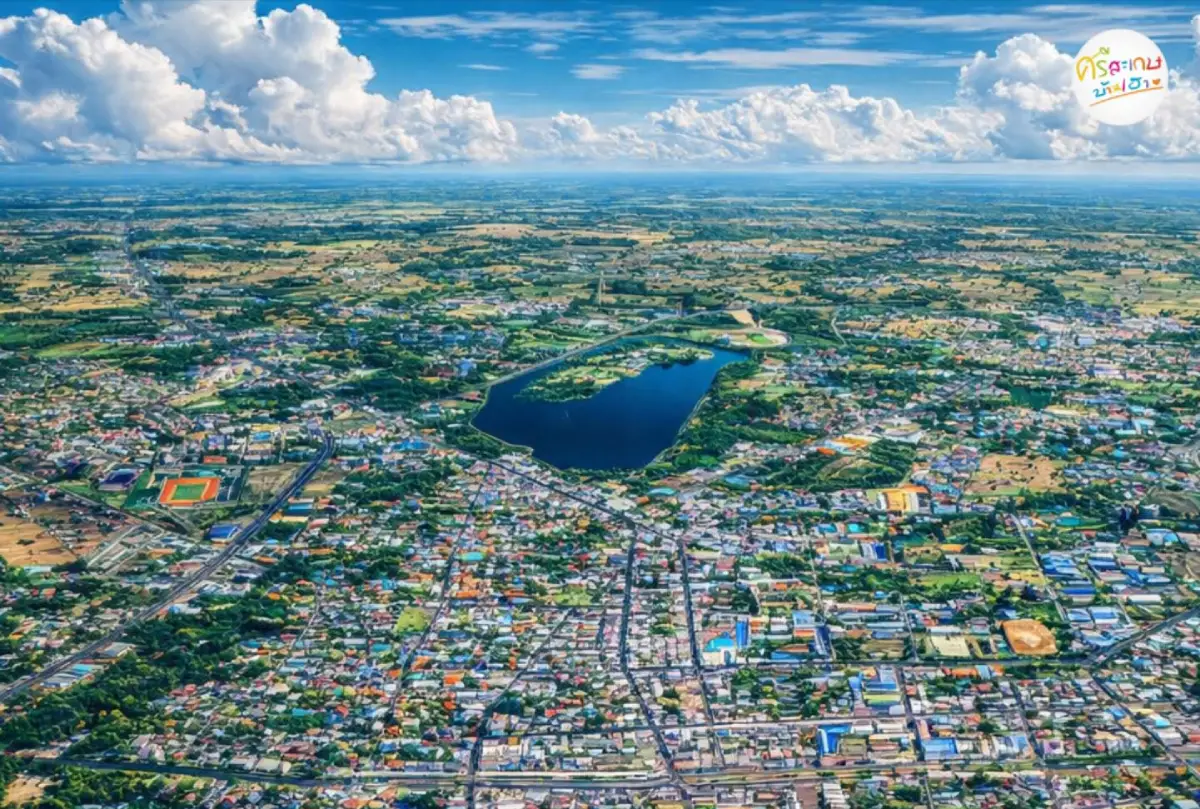
20 Best Places to Visit in Sisaket – Popular and Relaxing Attractions in Northeastern Thailand Sisaket is one of the most distinctive destinations in southern Isan, bringing together ancient history, Khmer culture, Buddhism, ethnic traditions, natural scenery, and an agricultural way of life within a single province. Its appeal goes far beyond ancient stone sanctuaries. Visitors will also find revered temples, a museum dedicated to the province’s four major ethnic groups, public parks, an aquarium, waterfalls, the Phanom Dong Rak mountain range, Kuy or Suay communities, Khmer communities, and many attractions closely connected with the everyday life of people in southern northeastern Thailand.
If this is your first trip to Sisaket, a practical way to begin is in the provincial capital with Wat Maha Phuttharam, Phra That Rueang Rong, Sisaket Aquarium, and Somdet Phra Srinagarindra Park. From there, continue along the Khmer archaeological route to Prasat Wat Sa Kamphaeng Yai, Prasat Wat Sa Kamphaeng Noi, Prasat Ban Prasat, Prasat Ta Leng, and Prasat Prang Ku. The journey can then extend to the Million Bottle Temple, waterfalls, and natural attractions in the southern part of the province. With 3–5 days, travellers can cover several zones at a comfortable pace without rushing.
Sisaket has a long historical background and once formed part of the wider cultural sphere influenced by Khmer civilization. Important archaeological evidence survives in numerous stone sanctuaries and sacred monuments scattered across districts such as Uthumphon Phisai, Huai Thap Than, Prang Ku, Khukhan, and Khun Han. This makes the province particularly rewarding for travellers interested in the archaeology and history of southern Isan.
Prasat Wat Sa Kamphaeng Yai is among the province’s most prominent archaeological complexes, while Prasat Wat Sa Kamphaeng Noi reflects the concept of the Arokayasala, or ancient hospital, established during the reign of King Jayavarman VII. Prasat Ta Leng, Prasat Prang Ku, and Prasat Ban Prasat further demonstrate that Khmer religious sites in Sisaket were not concentrated in a single location but formed a much wider network connected with ancient communities and travel routes.
In terms of Buddhism, Wat Maha Phuttharam, also known locally as Wat Phra To, is an important spiritual center in Sisaket city. Phra That Rueang Rong combines a shrine for sacred Buddhist relics with a museum devoted to the province’s four major cultural groups: Lao, Kuy or Suay, Khmer, and Yoe. Wat Pa Maha Chedi Kaew, widely known as the Million Bottle Temple, represents another dimension of contemporary Buddhist art through the use of more than one million recycled glass bottles to decorate religious buildings and structures.
Families and travellers looking for a slower pace can spend time at Sisaket Aquarium, Somdet Phra Srinagarindra Park, and the Huai Nam Kham area in the city. These attractions are suitable for recreation, exercise, and family activities, making Sisaket city a convenient base for day trips to surrounding districts.
Sisaket’s cultural identity is also shaped by its ethnic diversity. Lao, Kuy or Suay, Khmer, and Yoe communities each maintain their own language, beliefs, cuisine, clothing, traditions, and crafts. One particularly important tradition is Saen Don Ta, practiced by Thai people of Khmer descent as a ritual of remembrance and respect for ancestors and regarded as a major cultural tradition across southern Isan.
For efficient travel, Sisaket is best divided into zones: Sisaket city, Uthumphon Phisai–Huai Thap Than, Prang Ku–Khukhan, Khun Han, Kantharalak, and Phu Sing. Exploring one zone at a time reduces unnecessary backtracking and makes a 3–5 day itinerary much more practical than selecting attractions scattered randomly across the province.
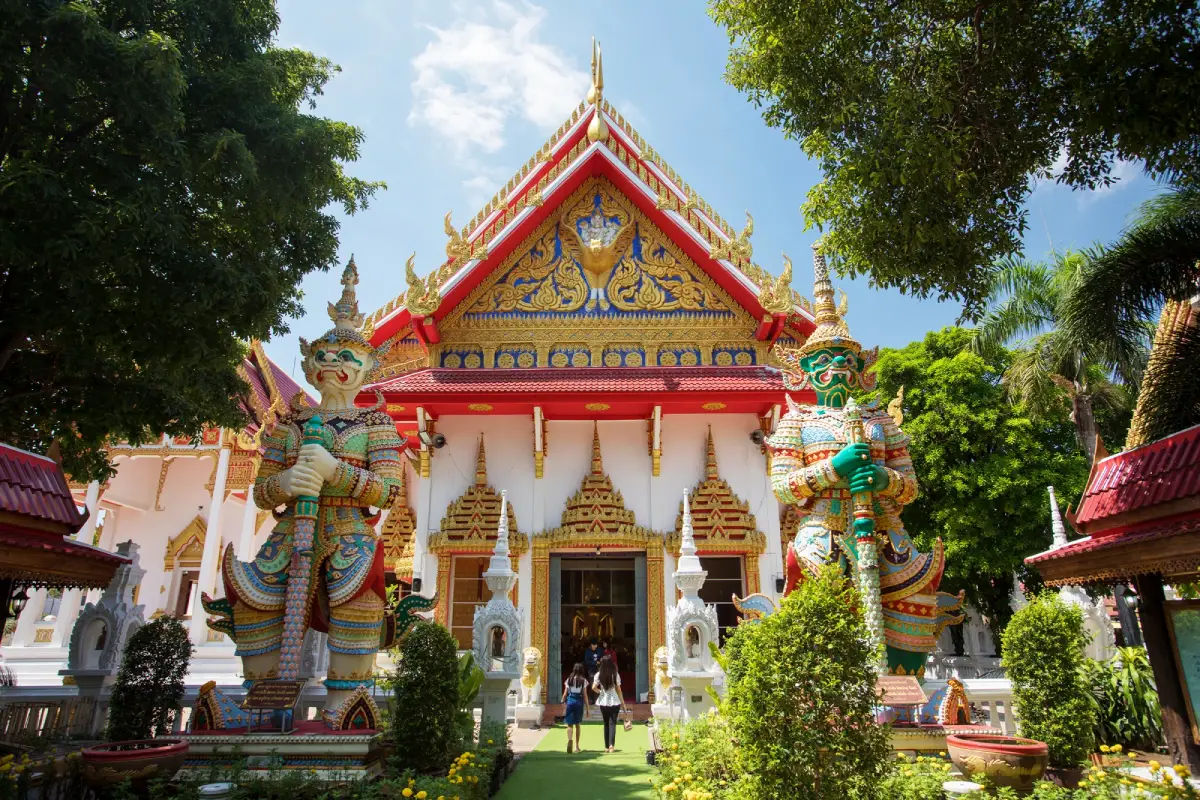
1. Wat Maha Phuttharam, commonly known among local residents as Wat Phra To, is a royal temple and one of the principal spiritual landmarks of Sisaket. It is located at Ban Pa Daeng on Khukhan Road in Mueang Nuea Subdistrict, Mueang Sisaket District. Inside the main viharn is Luang Pho To, or Phra Phuttha Maha Muni, a large Buddha image in the subduing-Mara posture that is deeply revered by local residents.
Highlights: Luang Pho To, the large viharn, murals depicting the life of the Buddha, heaven, hell, and the Vessantara Jataka, as well as the temple’s continuing role as an important center of Buddhism and provincial religious ceremonies.
The temple’s history is connected with the early development of Sisaket city. According to local memory, Luang Pho To was discovered in the Pa Daeng forest area before a temple was established on the site. The temple became known locally as “Wat Phra To” or “Wat Pa Daeng” before eventually taking the official name Wat Maha Phuttharam.
Luang Pho To is a large seated Buddha image in the subduing-Mara posture, measuring approximately 6.85 meters from the base to the top of the head and around 3.50 meters across the lap. Its calm yet imposing appearance has made it both a major sacred object and an enduring symbol of faith in Sisaket city.
The viharn also contains mural paintings that make a visit more than simply an act of worship. They provide an opportunity to study Buddhist art and moral teachings. Visitors should dress respectfully, remove shoes where required, and avoid using flash photography near the murals.
Because of its central location, Wat Maha Phuttharam is an excellent starting point for a Sisaket itinerary before continuing to Huai Nam Kham, Sisaket Aquarium, Phra That Rueang Rong, and Somdet Phra Srinagarindra Park.
Getting There: The temple is located at Ban Pa Daeng on Khukhan Road, Mueang Nuea Subdistrict, Mueang Sisaket District. It is open daily from 08:00–17:00. Admission is free, while donations may be made voluntarily.
Map (GPS): https://www.google.com/maps/dir/?api=1&destination=15.118240,104.328498&travelmode=driving
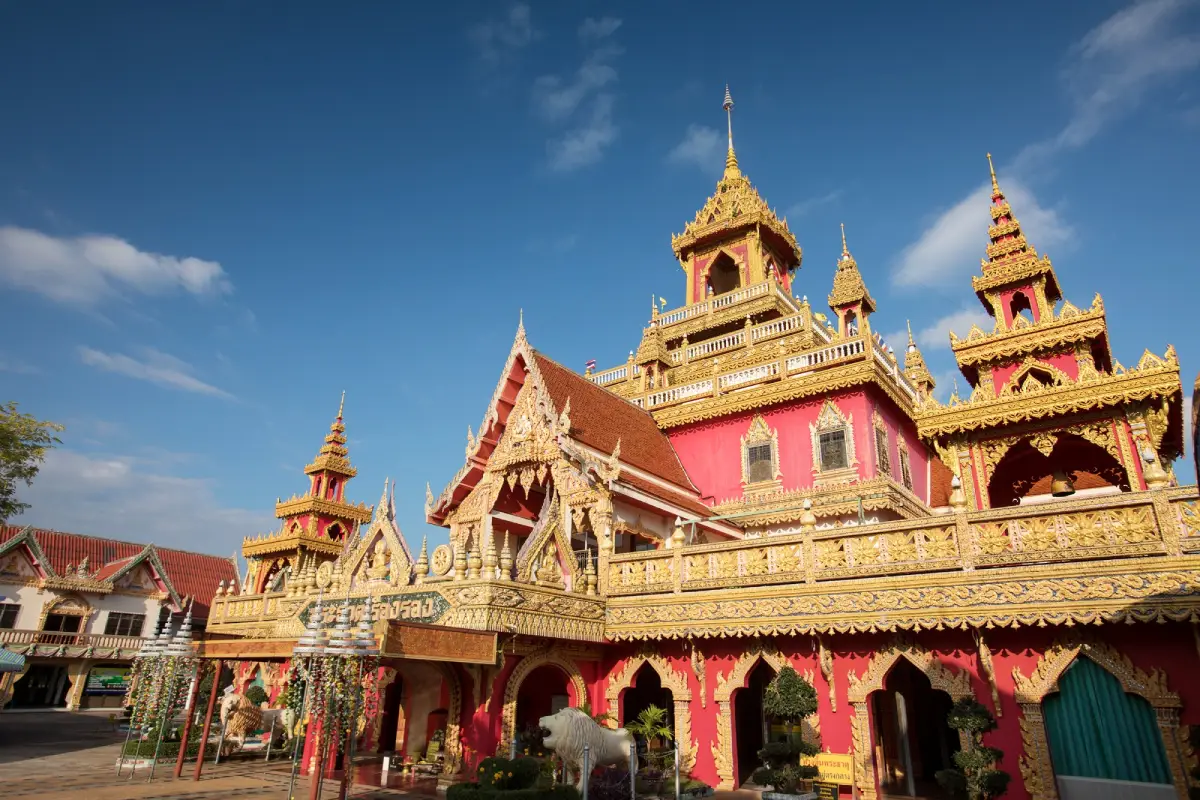
2. Phra That Rueang Rong is located inside Wat Ban Sang Rueang at Ban Sang Rueang, Ya Plong Subdistrict, Mueang Sisaket District. The site combines sacred Buddhist relics, southern Isan architecture, and a museum dedicated to the province’s four principal cultural groups within a single structure.
Highlights: The approximately 49-meter-high chedi, 6-storey structure, museum exhibitions on Lao, Kuy or Suay, Khmer, and Yoe culture, sacred Buddhist relics, and panoramic views over rural areas surrounding Sisaket city.
Phra That Rueang Rong was constructed in 1982 under Luang Pu Thamma Phithaksa as a place to enshrine sacred Buddhist relics and serve as a spiritual center for Buddhists in southern Isan. At the same time, the building was designed to preserve and present the cultural stories of the different ethnic communities living together in Sisaket.
The architectural design incorporates local artistic forms and cultural symbolism. As visitors move through the different floors, they encounter displays of traditional objects, household tools, clothing, and cultural knowledge associated with the province’s ethnic communities. This makes the site especially valuable for travellers who want to understand Sisaket beyond its major tourist landmarks.
The upper levels of the chedi function as both sacred spaces and viewpoints overlooking surrounding communities, agricultural land, and the wider landscape. The climb through several floors should be taken at a comfortable pace, particularly for older visitors or anyone with limited mobility.
Phra That Rueang Rong is only around 7–8 km from central Sisaket, making it easy to combine with Wat Maha Phuttharam and other attractions in the city area.
Getting There: The site is located within Wat Ban Sang Rueang, Ya Plong Subdistrict, Mueang Sisaket District, along the Sisaket–Yang Chum Noi route. It is open to visitors daily and admission is free. Donations may be made according to personal faith.
Map (GPS): https://www.google.com/maps/dir/?api=1&destination=15.165755,104.298663&travelmode=driving
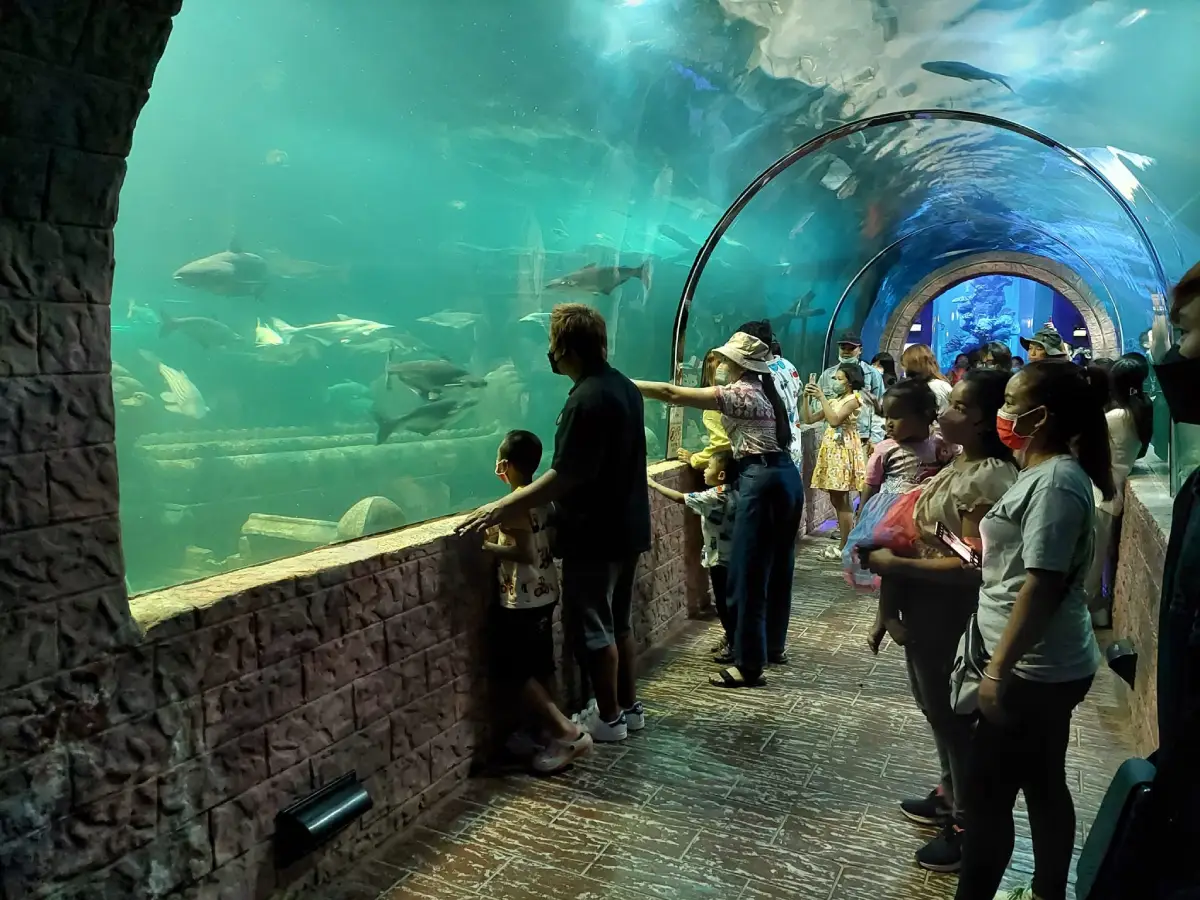
3. Sisaket Aquarium is an educational and family attraction located in the Huai Nam Kham island area of Mueang Sisaket District. The aquarium displays a variety of aquatic species, with an emphasis on Thailand’s freshwater fish and other exhibits designed to introduce children and visitors to aquatic ecosystems in an accessible way.
Highlights: Fish display tanks, an underwater viewing tunnel, freshwater ecosystem exhibits, learning areas for children, and a location inside the Huai Nam Kham public recreation area where several nearby attractions can be explored together.
The aquarium provides a very different experience from Sisaket’s temples and archaeological sites. It is particularly suitable for families who want to vary their itinerary and also works well on hot or rainy days because most activities take place indoors.
After visiting the aquarium, travellers can walk around Huai Nam Kham Island, visit Ho Si Lamduan, explore the landscaped park, or enjoy views across the reservoir. This makes it possible to spend several hours in the area without driving between distant attractions.
Getting There: Sisaket Aquarium is located in the Huai Nam Kham Island area, Nong Khrok Subdistrict, Mueang Sisaket District, only a few kilometers from the city center. It is easily reached by car, motorcycle, or local transport. Visitors should check the aquarium’s operating hours on the day of travel because building hours are separate from those of the Huai Nam Kham public park.
Map (GPS): https://www.google.com/maps/dir/?api=1&destination=15.090749,104.328800&travelmode=driving
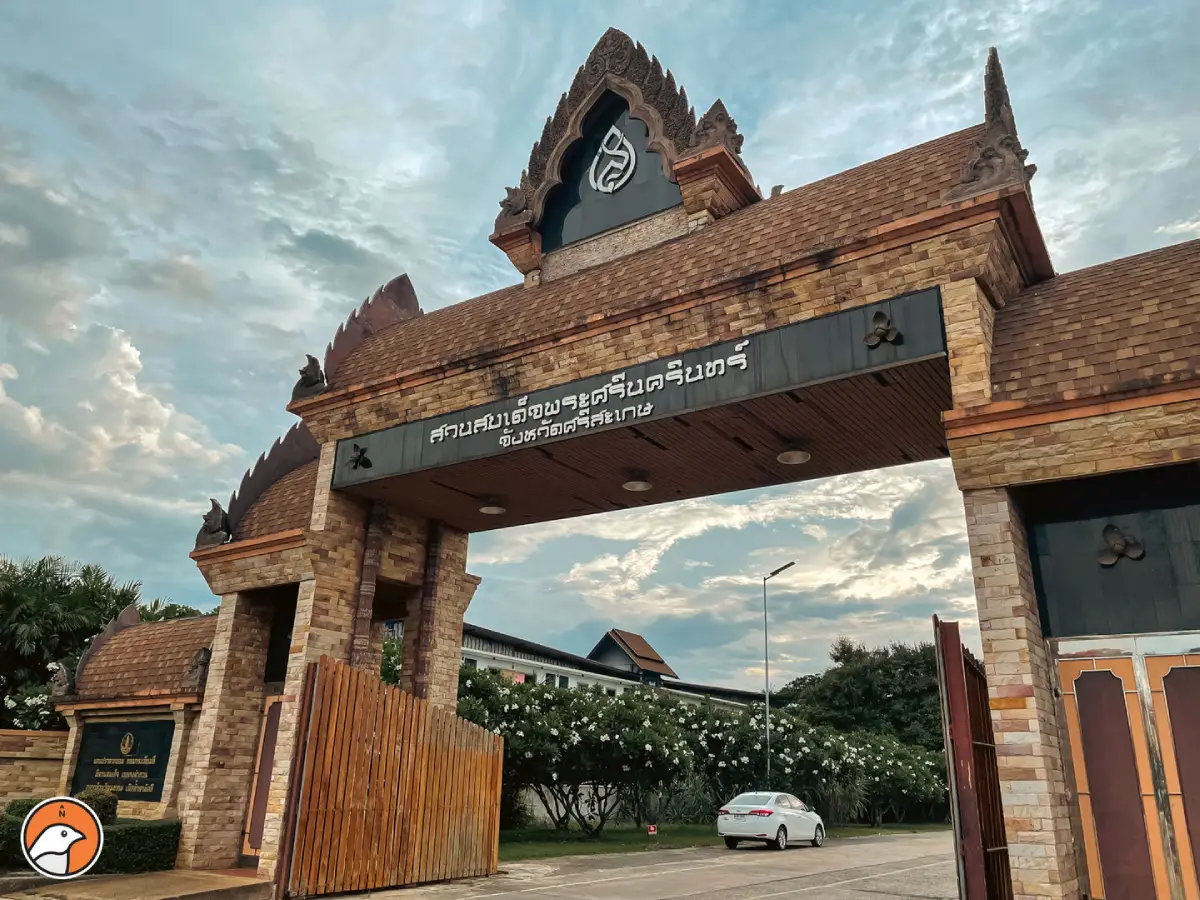
4. Somdet Phra Srinagarindra Park is a large public park and one of the major green spaces in Sisaket. Located in Mueang Sisaket District, the park contains numerous Lamduan trees and is one of the places that best represents Sisaket’s long-established identity as the “Land of Lamduan.”
Highlights: Groves of Lamduan trees, landscaped gardens, walking paths, recreation areas, exercise spaces, and a shaded environment suitable for families and older travellers.
The Lamduan tree has long been closely associated with the identity of Sisaket Province. Its flowers are pale yellow and have a distinctive fragrance, especially in the evening and at night. When large numbers of Lamduan trees bloom at the same time, the park develops a particularly atmospheric character and becomes an excellent place for a relaxed nature walk.
The park is ideal for unhurried travel. It can be used as a rest stop between temples, museums, and urban attractions or as a place for an evening walk before dinner in the city.
For families travelling with children or older relatives, Somdet Phra Srinagarindra Park is easier to access than mountain or waterfall destinations and adds a gentler, more relaxed element to a Sisaket itinerary.
Getting There: The park is located in Mueang Sisaket District and can be reached easily from the city center by private car or local transport.
Map (GPS): https://www.google.com/maps/dir/?api=1&destination=15.105406,104.307412&travelmode=driving
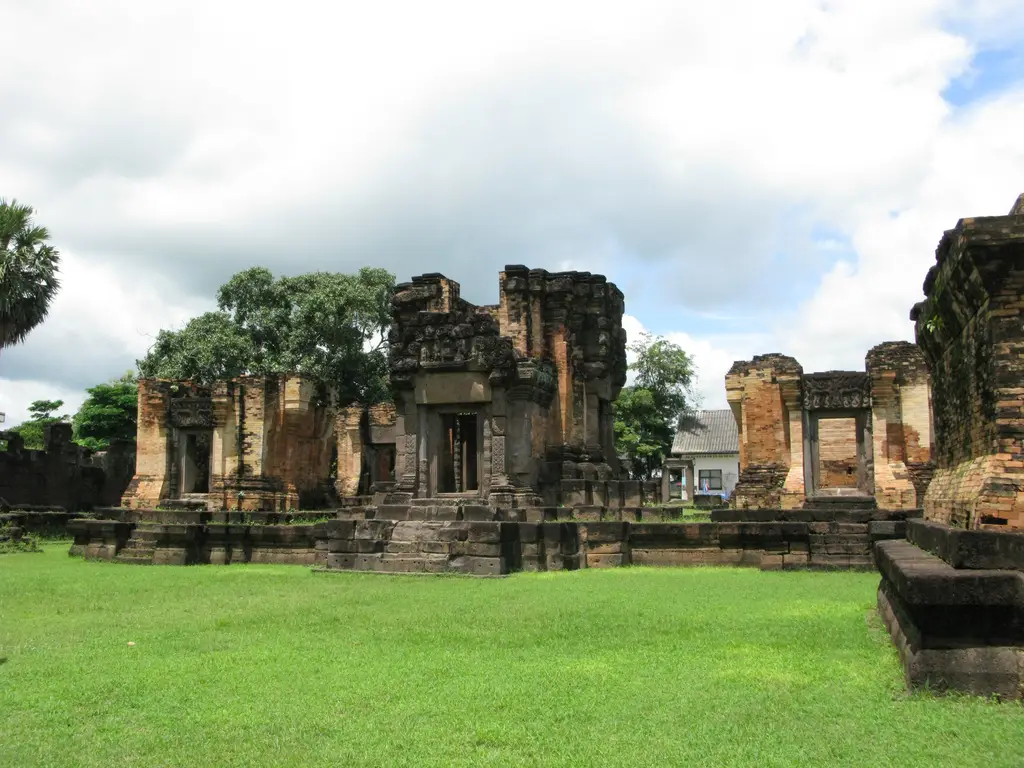
5. Prasat Wat Sa Kamphaeng Yai is located in Sa Kamphaeng Yai Subdistrict, Uthumphon Phisai District, and is one of the largest and most important Khmer archaeological complexes in Sisaket. The monument stands within a Buddhist temple compound and preserves a clearly visible sacred layout, principal sanctuary, and several architectural components.
Highlights: A group of several Khmer sanctuary structures, the principal tower, libraries, surrounding galleries, sandstone lintels and pediments, and artistic remains that demonstrate the historical importance of southern Isan within the wider Khmer cultural sphere.
The sanctuary complex developed over several periods and was originally associated with Hindu religious beliefs before the site was later adapted within a Buddhist context. This makes it an excellent place to observe the continuity of sacred use across different historical periods.
The carved lintels and sandstone architectural elements deserve close attention because they reveal the religious symbolism, deities, beliefs, and craftsmanship of Khmer civilization more clearly than a distant view of the buildings alone.
Because of its size and level of preservation, Prasat Wat Sa Kamphaeng Yai is an ideal centerpiece for a Sisaket archaeological route and can be combined in the same day with Prasat Wat Sa Kamphaeng Noi and Prasat Ban Prasat.
Getting There: The archaeological site is located inside Wat Sa Kamphaeng Yai, Sa Kamphaeng Yai Subdistrict, Uthumphon Phisai District. From Sisaket city, travel west toward Uthumphon Phisai.
Map (GPS): https://www.google.com/maps/dir/?api=1&destination=15.101940,104.128236&travelmode=driving
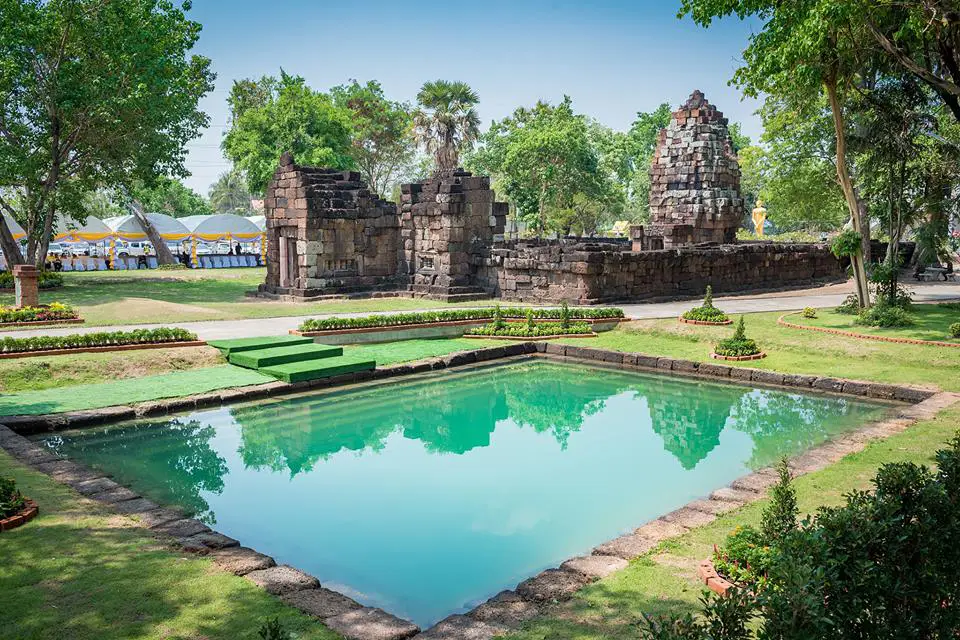
6. Prasat Wat Sa Kamphaeng Noi is located in Khayung Subdistrict, Uthumphon Phisai District. This Khmer archaeological monument is particularly important for understanding the Arokayasala, or ancient hospital system, established during the reign of King Jayavarman VII along important routes and settlements within the Khmer Empire.
Highlights: Principal sanctuary, library, laterite enclosure wall, entrance gateway, and reservoir, all characteristic elements associated with religious sites connected to the Arokayasala network.
The significance of Prasat Wat Sa Kamphaeng Noi lies less in its physical size than in its historical function. It demonstrates how King Jayavarman VII developed a network of religious buildings and hospitals across important settlements and transportation routes.
The main structures are built primarily from laterite and sandstone. Walking around the site reveals the relationship among the sanctuary, enclosure wall, gateway, and reservoir, making it especially valuable for visitors interested in archaeology and Khmer architecture.
The site is best visited together with Prasat Wat Sa Kamphaeng Yai because both are located in Uthumphon Phisai District. Seeing them on the same day helps visitors understand the difference between a major religious complex and an Arokayasala site.
Map (GPS): https://www.google.com/maps/dir/?api=1&destination=15.146054,104.246628&travelmode=driving
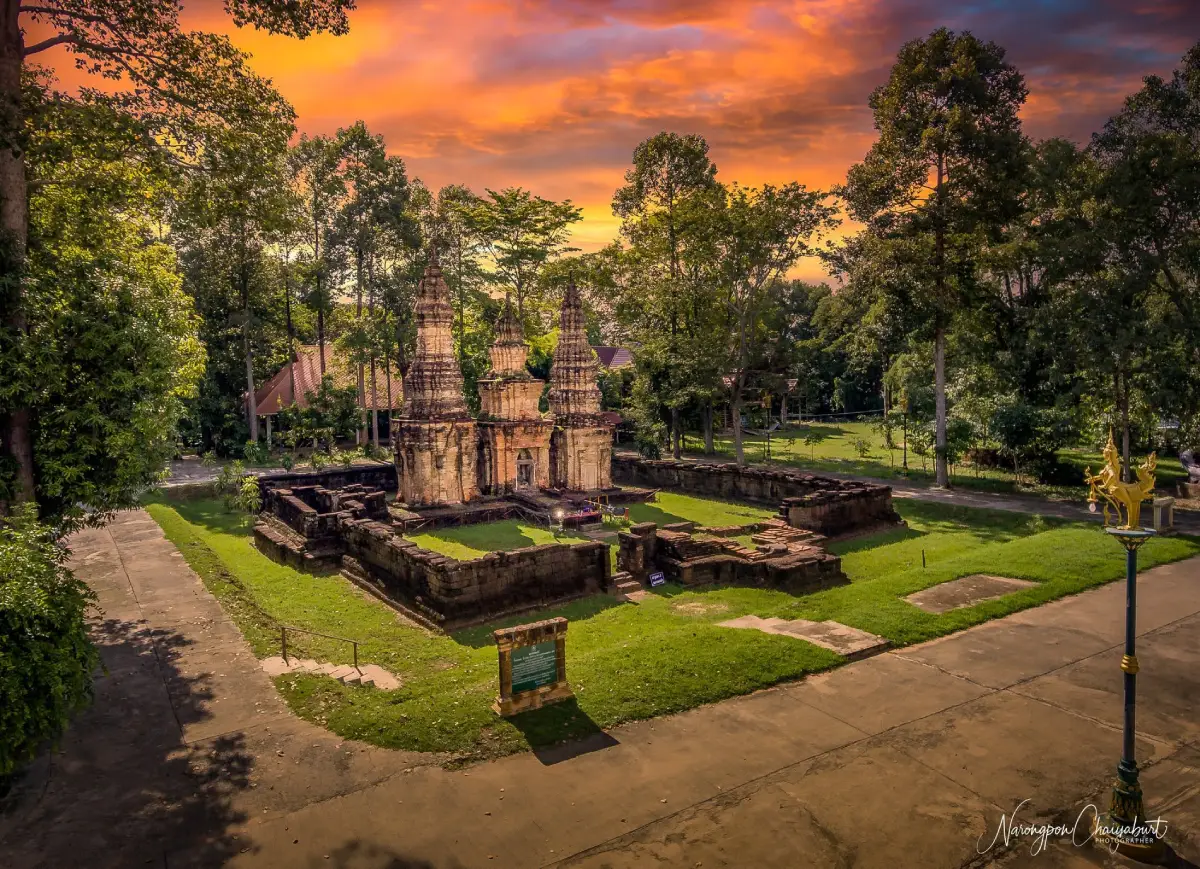
7. Prasat Ban Prasat, also known as Prasat Huai Thap Than, is located in Prasat Subdistrict, Huai Thap Than District. It is another important Khmer archaeological site in Sisaket and helps connect the archaeological route between Uthumphon Phisai and the western districts of the province.
Highlights: Brick and laterite sanctuary structures, archaeological remains, sandstone fragments, and a quiet setting where ancient architecture remains closely integrated with the surrounding community.
The site represents a medium-sized Khmer religious sanctuary associated with an ancient settlement. Although smaller than Prasat Wat Sa Kamphaeng Yai, it demonstrates how sacred architecture was distributed across routes and local communities throughout southern Isan.
Part of the appeal of Prasat Ban Prasat is its quiet atmosphere and the opportunity to observe the ancient structure from close range. Visitors should avoid climbing on the monument or moving stones and archaeological fragments.
When travelling from Uthumphon Phisai toward Huai Thap Than, this site can be visited naturally after Prasat Wat Sa Kamphaeng Yai and Prasat Wat Sa Kamphaeng Noi.
Map (GPS): https://www.google.com/maps/dir/?api=1&destination=15.109791,104.027693&travelmode=driving
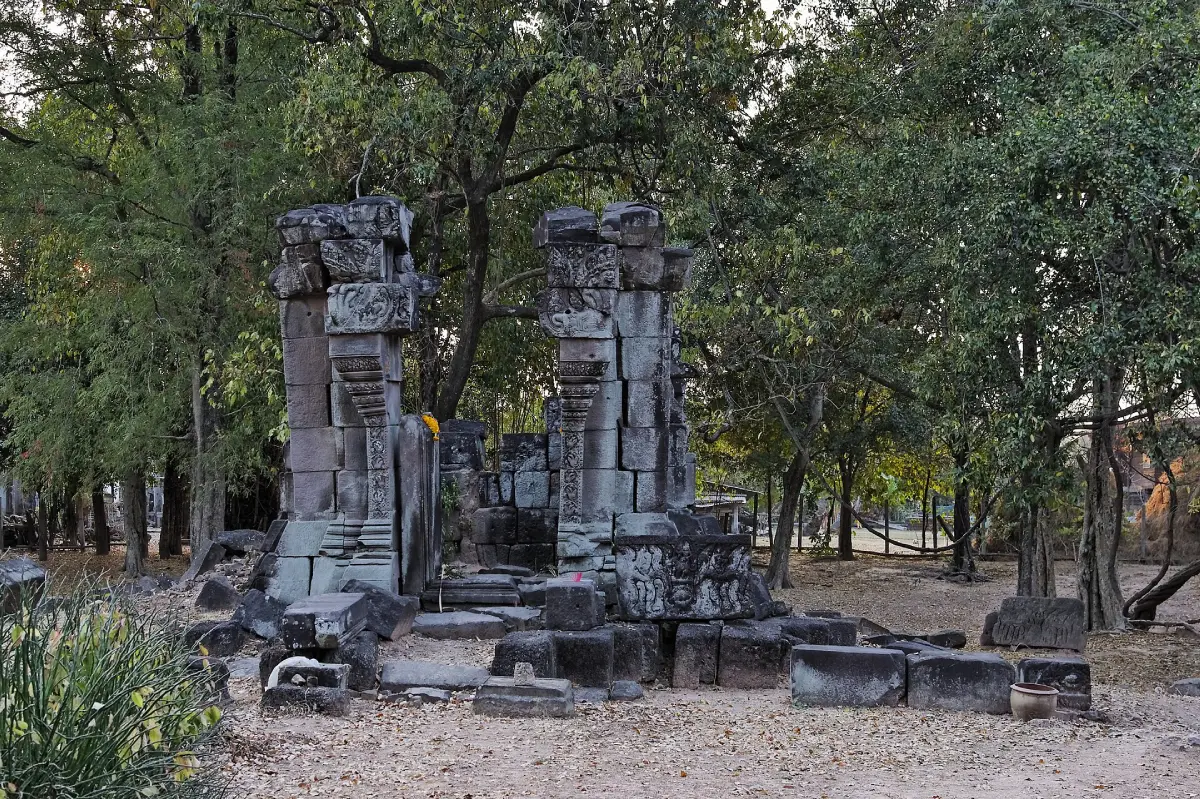
8. Prasat Ta Leng is located in Kanthararom Subdistrict, Khukhan District. This Khmer archaeological monument is particularly notable for its carved sandstone and architectural elements. Although relatively small in scale, its artistic details are valuable for understanding the historical development of southern Isan.
Highlights: Ancient sanctuary tower, sandstone lintels, decorative doorframe columns, Khmer artistic motifs, and the rural atmosphere of Khukhan District.
Prasat Ta Leng demonstrates the long historical relationship between Khukhan and Khmer culture. Sandstone fragments and decorative architectural elements found around the site reflect the skills of ancient craftsmen and the religious concepts that shaped the building’s design.
Travellers interested in art history should take time to study the lintels and stone components from an appropriate distance because these pieces provide important clues for determining the monument’s artistic style and period.
A visit to Prasat Ta Leng can be combined with cultural attractions in Khukhan and routes through Thai-Khmer communities, giving the journey both an archaeological dimension and exposure to living culture.
Map (GPS): https://www.google.com/maps/dir/?api=1&destination=14.728871,104.021790&travelmode=driving
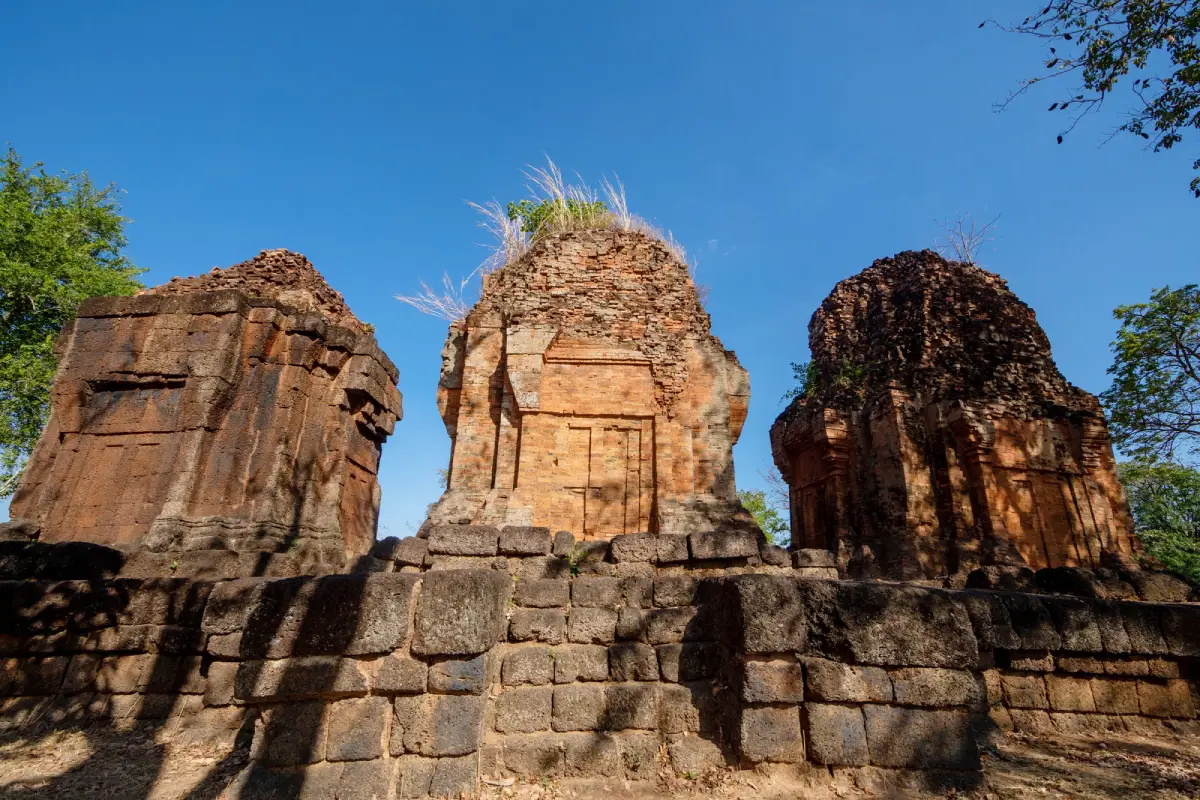
9. Prasat Prang Ku is located at Ban Ku, Ku Subdistrict, Prang Ku District. The ancient Khmer religious complex consists of 3 sanctuary towers aligned north–south on a shared laterite base, all facing east, with a large reservoir positioned in front.
Highlights: Three sanctuary towers, laterite platform, reservoir, a lintel depicting Indra riding the three-headed elephant Airavata, Kala motifs, garlands, scrolling foliage, and Naga-head decoration.
The monument is generally dated to around the late 11th to early 12th centuries CE and preserves evidence of Hindu religious beliefs, particularly associations with Shaivism, reflected in both the architectural plan and surviving sculptures.
The reservoir in front of the sanctuary gives Prasat Prang Ku a distinctive landscape compared with many other Khmer monuments. During some seasons, waterbirds can also be seen around the reservoir, adding a natural dimension to the historic setting.
The sanctuary is surrounded by a local community and is easy to explore on foot. It is suitable for visitors who prefer to examine an archaeological site at a relaxed pace and observe building materials, brickwork, and the positioning of the structures in detail.
Getting There: Prasat Prang Ku is located in Ku Subdistrict, Prang Ku District, approximately 10 km from the district center. It is open daily from 08:30–16:30. Admission is free.
Map (GPS): https://www.google.com/maps/dir/?api=1&destination=14.852663,103.984452&travelmode=driving
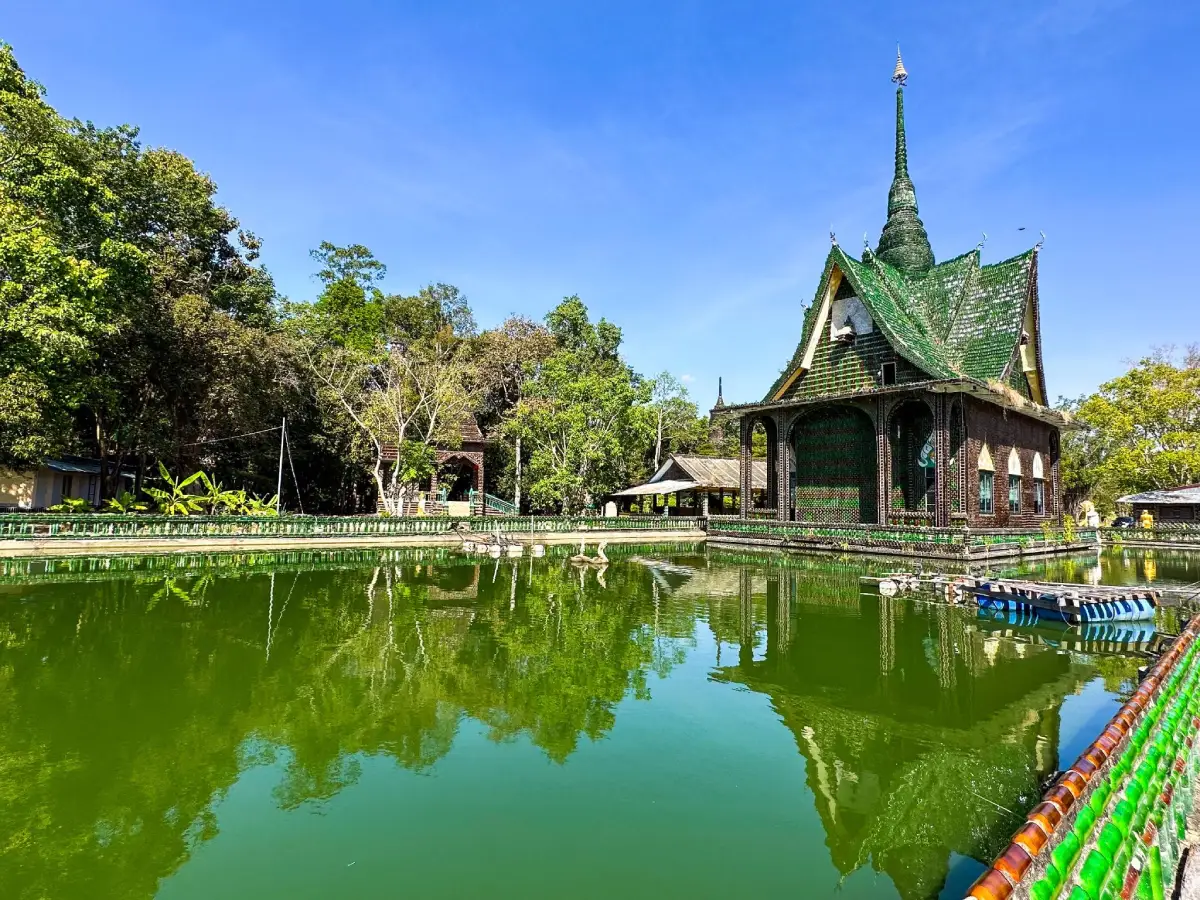
10. Wat Pa Maha Chedi Kaew (Wat Larn Kuad) is located at Ban Don, Non Sung Subdistrict, Khun Han District. It is one of Thailand’s most distinctive temples, famous for using more than 1.5 million colorful glass bottles to decorate religious buildings and structures throughout the temple grounds, creating a striking example of contemporary Buddhist art based on reused materials.
Highlights: Than Somo Maha Chedi Kaew pavilion, ordination hall over water, white jade Buddha image, bottle-covered buildings, bell tower, monks’ residences, crematorium, and Buddhist narrative images created from bottle caps.
The temple’s distinctive identity is closely associated with Phra Khru Wiwek Thammachan, or Luang Pho Rot, who saw large quantities of discarded glass bottles and began reusing them as decorative building materials. What started as a modest idea gradually developed into a large community effort, with bottles donated by local residents and devotees until the collection grew into the millions.
The significance of the temple therefore extends beyond its unusual appearance. It demonstrates how discarded materials can be transformed into something valuable. Bottles that would otherwise have become waste now form parts of walls, columns, roofs, and decorative artworks, expressing creativity, reuse, and religious devotion at the same time.
The ordination hall standing over a pond is one of the most visually memorable parts of the temple. The structure is decorated extensively with glass bottles, while a white jade Buddha image is enshrined inside. Reflections of the building on the water add to the calm atmosphere.
Another detail worth examining is the use of bottle caps to create Buddhist narrative scenes and decorative patterns. Viewed up close, the artwork is clearly composed of hundreds or thousands of small pieces, but from a distance they form recognizable religious images and designs.
Wat Pa Maha Chedi Kaew remains an active Buddhist temple cared for by monks and the local community, not simply a photography attraction. Visitors should dress respectfully, avoid climbing on architectural bases, refrain from touching or moving bottle decorations, and maintain appropriate behavior around areas used for religious activities.
Getting There: The temple is located at Ban Don, Moo 2, Non Sung Subdistrict, Khun Han District. From Sisaket city, travel through Phayu and Phrai Bueng toward Khun Han. It is open daily from 08:00–17:00. Admission is free, while donations may be made voluntarily.
Map (GPS): https://www.google.com/maps/dir/?api=1&destination=14.618516,104.418962&travelmode=driving
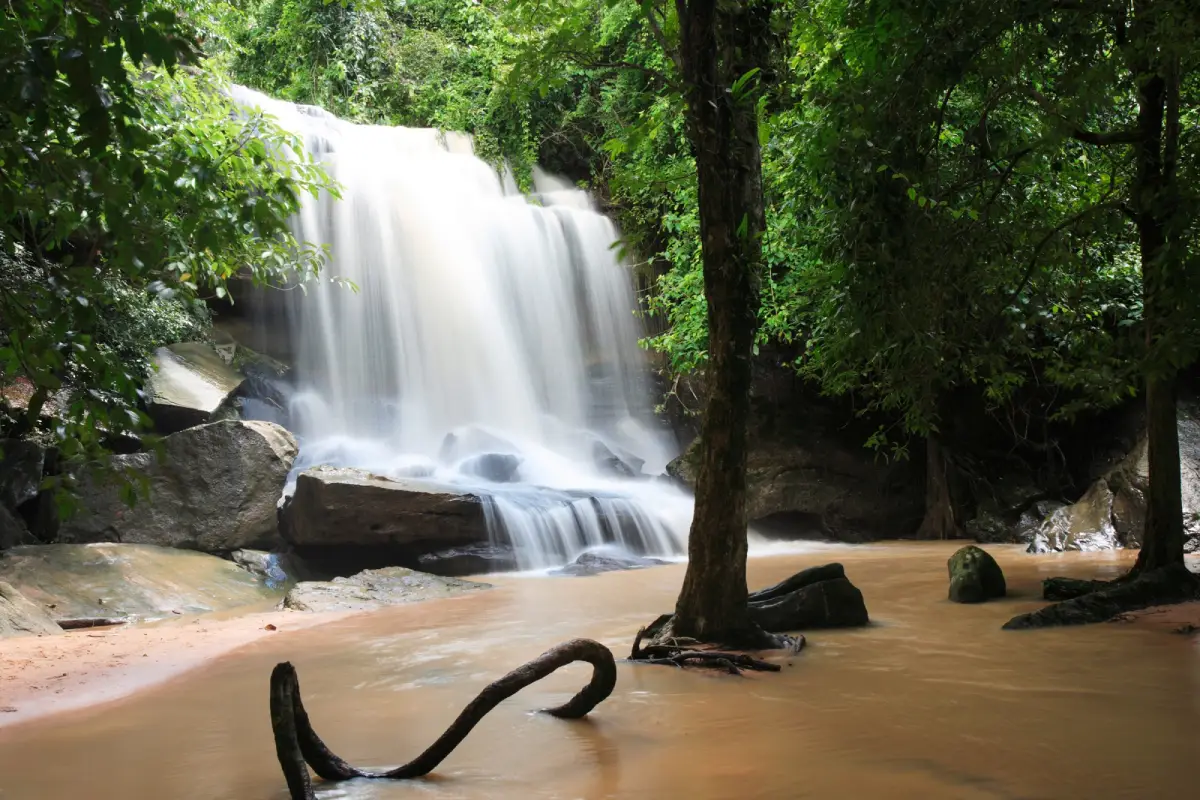
11. Samrong Kiat Waterfall, formerly known as Devil Waterfall, is located at Ban Samrong Kiat, Bak Dong Subdistrict, Khun Han District. It is a natural waterfall in the Phanom Dong Rak mountain range, originating from Kan Thung Mountain, and is one of the major natural attractions in Khun Han.
Highlights: A medium-sized waterfall approximately 8 meters high, a stream flowing across broad rock slabs above the cliff, Phanom Dong Rak forest scenery, and a shaded atmosphere suitable for recreation from the rainy season through winter.
The waterfall flows over a sandstone cliff before collecting in the area below. Above the main drop, the stream passes across wide rock surfaces, creating a different atmosphere from waterfalls defined by a single high vertical plunge. The setting is well suited to visitors who enjoy relaxed nature walks and resting beside flowing water.
The former name “Devil Waterfall” was associated with the nickname of a ranger unit that once used the area as an operational base. In 2006, the name was changed to Samrong Kiat Waterfall after the nearby village as the site was developed for tourism.
The waterfall is generally at its best from around September to February, when water levels are good and the surrounding forest remains green. During the dry season, water volume decreases noticeably, so the season should be considered when planning a visit.
The area has rest spaces, nature-viewing points, toilets, and some camping areas. It can be combined conveniently with Wat Pa Maha Chedi Kaew and Prasat Tamnak Sai in a 1-day Khun Han itinerary.
Getting There: From Sisaket city, travel toward Khun Han District via Highway 2111 and continue on Highway 2127 toward Samrong Kiat. The waterfall is open daily from 08:30–16:30.
Map (GPS): https://www.google.com/maps/dir/?api=1&destination=14.509963,104.485921&travelmode=driving
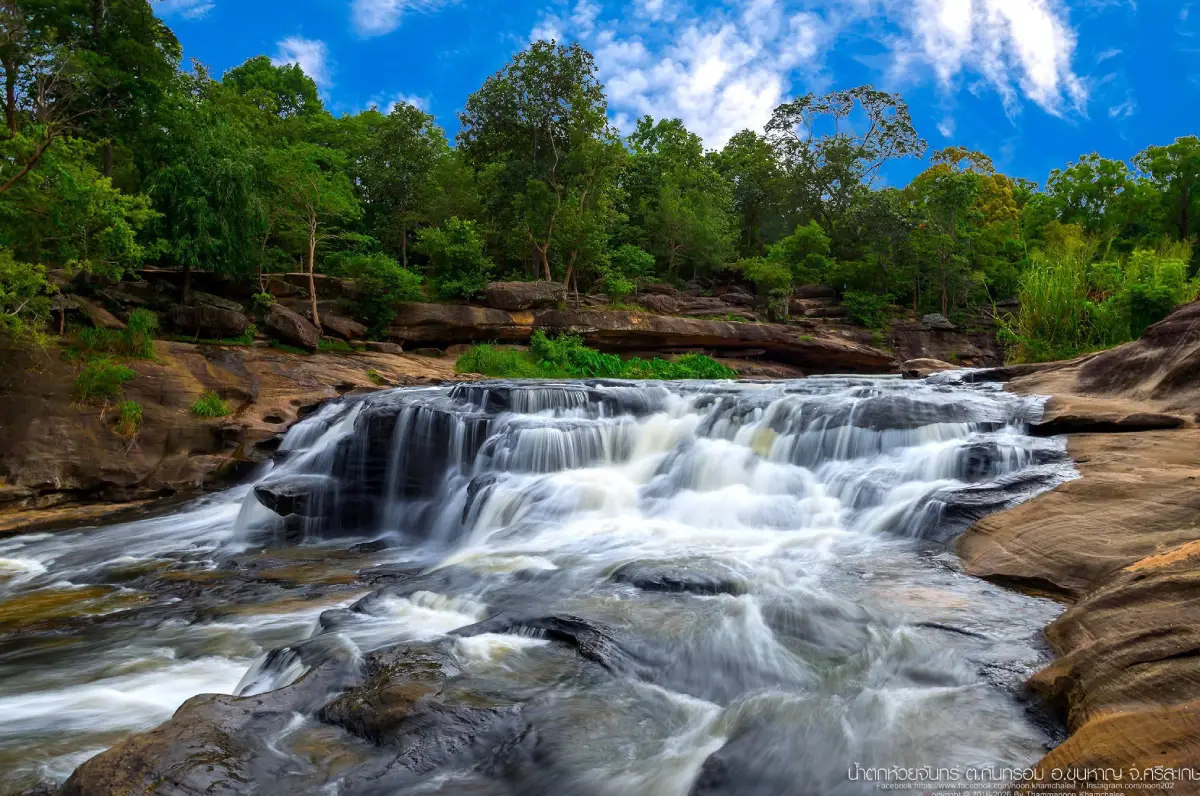
12. Huai Chan Waterfall, also known as Kanthrom Waterfall, is located at Ban Nam Tok Huai Chan, Huai Chan Subdistrict, Khun Han District. The waterfall is popular with local residents and visitors because it is relatively easy to access and has broad rock terraces, pools, and shaded areas suitable for relaxation.
Highlights: Cascading water over rock layers, natural pools, broad rock platforms, shaded forest, shops, restaurants, and riverside pavilions.
The waterfall originates from the Phu Sala area of the Phanom Dong Rak range. Water flows over broad rock surfaces before joining the wider river system of southern Isan. The terrain is more suitable for relaxed recreation than for demanding long-distance trekking.
The name Huai Chan is associated with red and white sandalwood trees that once grew extensively in the area, while “Kanthrom” is an older local name that remains in use alongside the current name.
The rainy season through early winter is the best period to visit because water levels are higher and the surrounding forest is lush. During heavy rain, visitors should watch for rapidly rising water and slippery rock surfaces.
Basic visitor facilities near the entrance include parking, food stalls, restaurants, toilets, and pavilions, making the site suitable for families who want to enjoy nature without a difficult walking route.
Getting There: From Khun Han District, follow Highway 2128 toward Ban Krabao and then turn toward Ban Huai Chan. The waterfall is open daily from 08:30–16:30. Admission is free.
Map (GPS): https://www.google.com/maps/dir/?api=1&destination=14.531305,104.358949&travelmode=driving
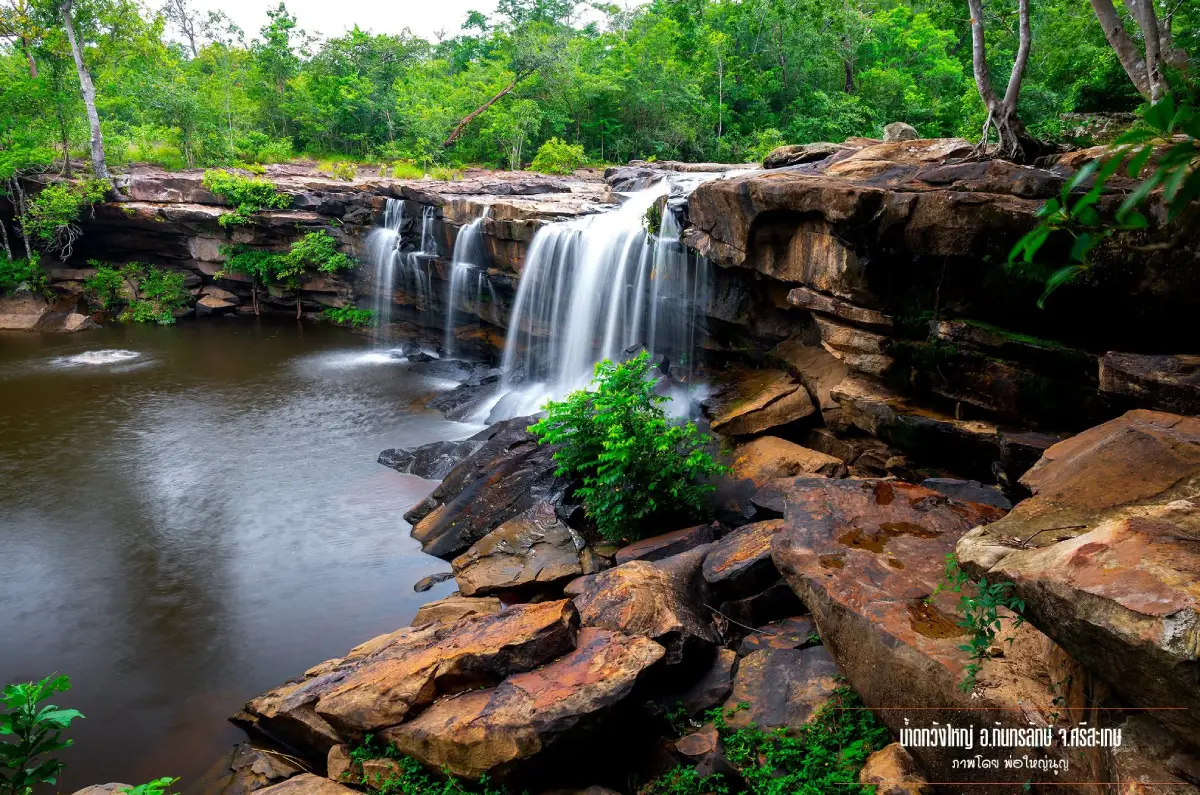
13. Huai Wang Yai Waterfall is located at Ban Ko, Moo 7, Lalai Subdistrict, Kantharalak District, within the Phanom Dong Rak Wildlife Sanctuary area. The waterfall is not especially high but spreads broadly across the rocks, with pools, boulders, and shade from large trees.
Highlights: A broad rock waterfall approximately 5 meters high, pools below the falls, a large banyan tree, rock terraces above the cascade, butterflies, and medicinal plants within the Phanom Dong Rak ecosystem.
The site is particularly suitable for travellers who prefer a natural forest atmosphere rather than a heavily developed waterfall attraction. The surrounding area retains a relatively natural character, providing space to sit quietly, listen to flowing water, and observe local plant diversity.
The rainy season brings stronger water flow and lush green forest, while winter provides cooler temperatures for walking and relaxing. During periods of heavy rain, visitors should avoid deep pools and slippery rock areas.
Because the waterfall lies within a conservation landscape, visitors should avoid disturbing wildlife, collecting plants, or leaving rubbish behind.
Getting There: From Sisaket city, travel toward Kantharalak District and continue to Lalai Subdistrict and Ban Ko. The waterfall is open daily from 08:00–17:00.
Map (GPS): https://www.google.com/maps/dir/?api=1&destination=14.443563,104.494785&travelmode=driving
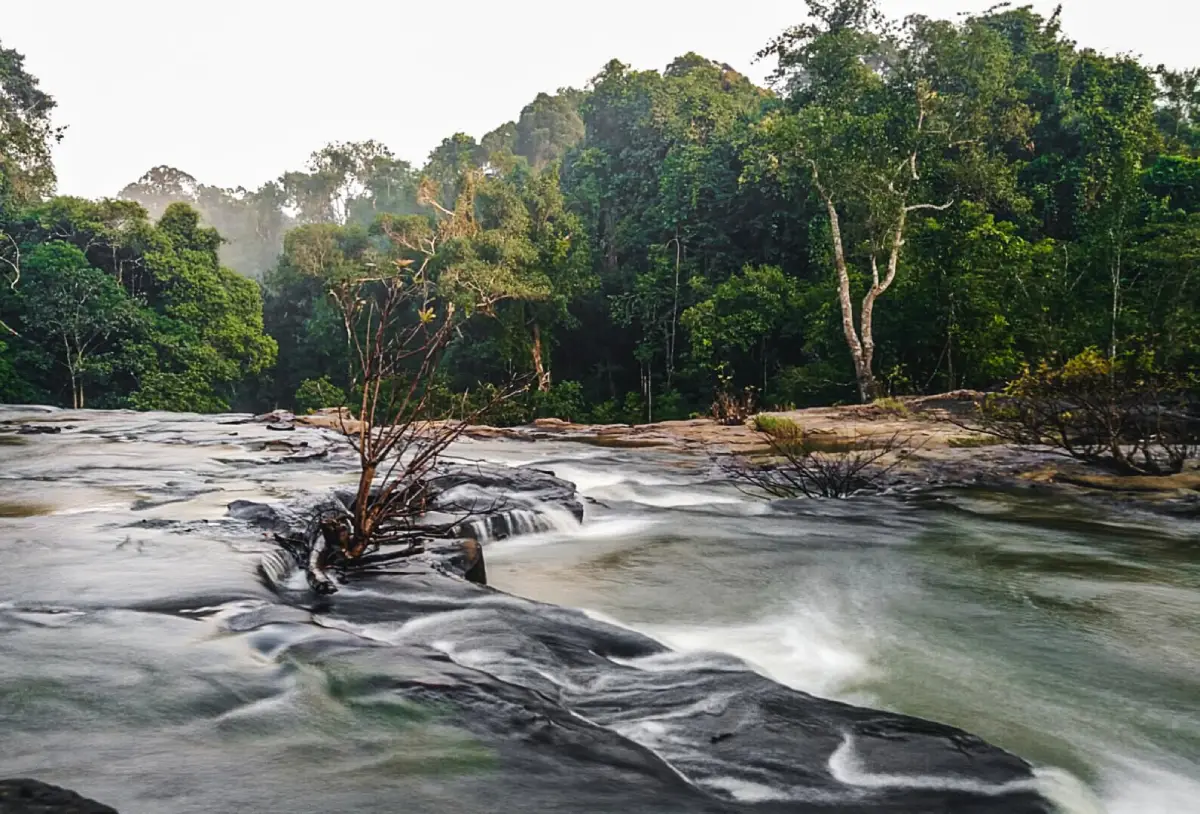
14. Phu La Or Waterfall is located in Sao Thong Chai Subdistrict, Kantharalak District. It is a natural waterfall in the Phanom Dong Rak mountain range, suitable for travellers who want to experience forest, streams, and the quieter natural environment of southern Sisaket.
Highlights: Natural streams, lush forest, rock terraces, seasonal waterfall scenery, and the peaceful atmosphere of the Phanom Dong Rak range.
The attraction lies in a relatively natural forest setting where water flows over rock layers and along streams. Its appearance changes considerably according to rainfall and seasonal water levels.
The rainy season through early winter is generally the best period to visit because the waterfall has more water and the forest is at its greenest. During the dry season, water levels may fall considerably and the waterfall may not appear at full flow.
Visitors should wear footwear suitable for wet ground, carry drinking water, and check weather conditions before travelling because natural areas along the Phanom Dong Rak range can be affected by heavy rainfall and changing road or trail conditions.
Map (GPS): https://www.google.com/maps/dir/?api=1&destination=14.453564,104.654037&travelmode=driving
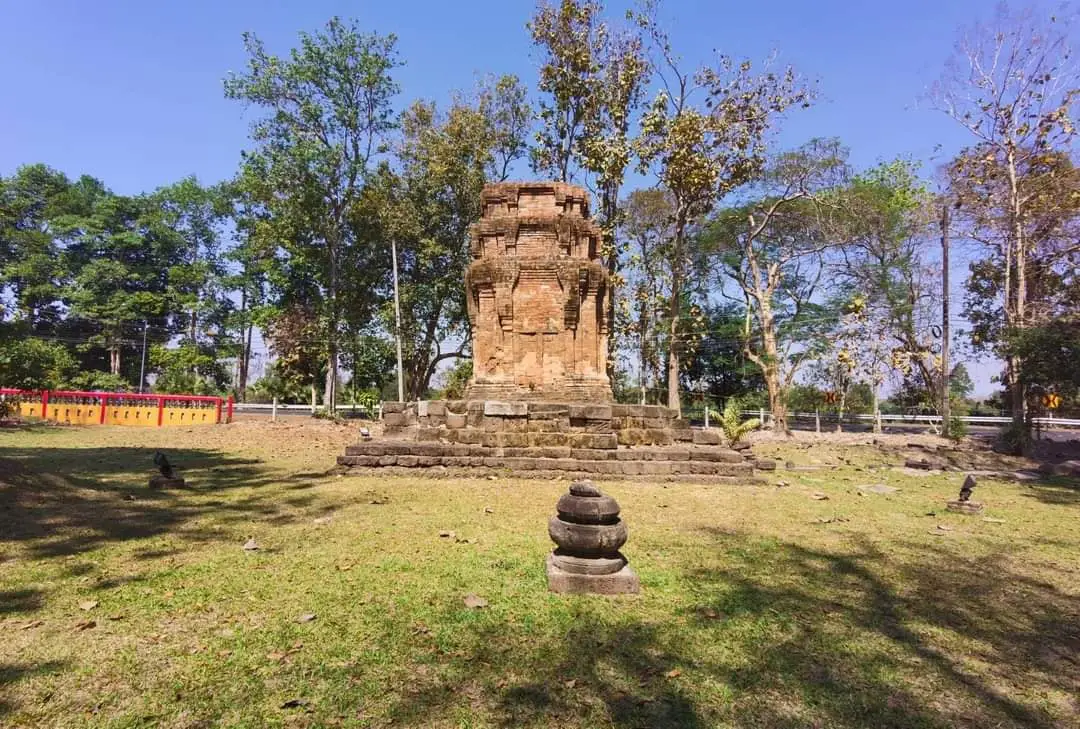
15. Prasat Tamnak Sai, also known as Prasat Tham Chan, is located at Ban Tamnak Sai, Bak Dong Subdistrict, Khun Han District. It is a compact brick sanctuary built on a sandstone base and is another important example of ancient Khmer art in southern Sisaket.
Highlights: A single brick sanctuary, square plan with recessed corners, true entrance facing east, 3 false doors, carved lion figures near the entrance, and the history of the Vishnu Anantasayin lintel once associated with the site.
The sanctuary measures approximately 4 meters by 4 meters and is constructed of brick on a sandstone base. Its layout, with a single functional entrance on the east and false doors on the other 3 sides, is characteristic of many Khmer religious monuments.
The site was once associated with a lintel depicting Vishnu reclining on the cosmic serpent, with Lakshmi seated at his feet and Brahma emerging from his navel. This important lintel is now preserved at Phimai National Museum.
The sanctuary dates to around the 11th–12th centuries CE and originally functioned as a Hindu shrine, helping to complete the picture of Khmer civilization along the Khun Han route in southern Sisaket.
Getting There: Follow Highway 2127 from Khun Han toward Ban Samrong Kiat. The sanctuary is approximately 20 km from Khun Han District center. It is open daily from 08:30–16:30.
Map (GPS): https://www.google.com/maps/dir/?api=1&destination=14.540391,104.484753&travelmode=driving
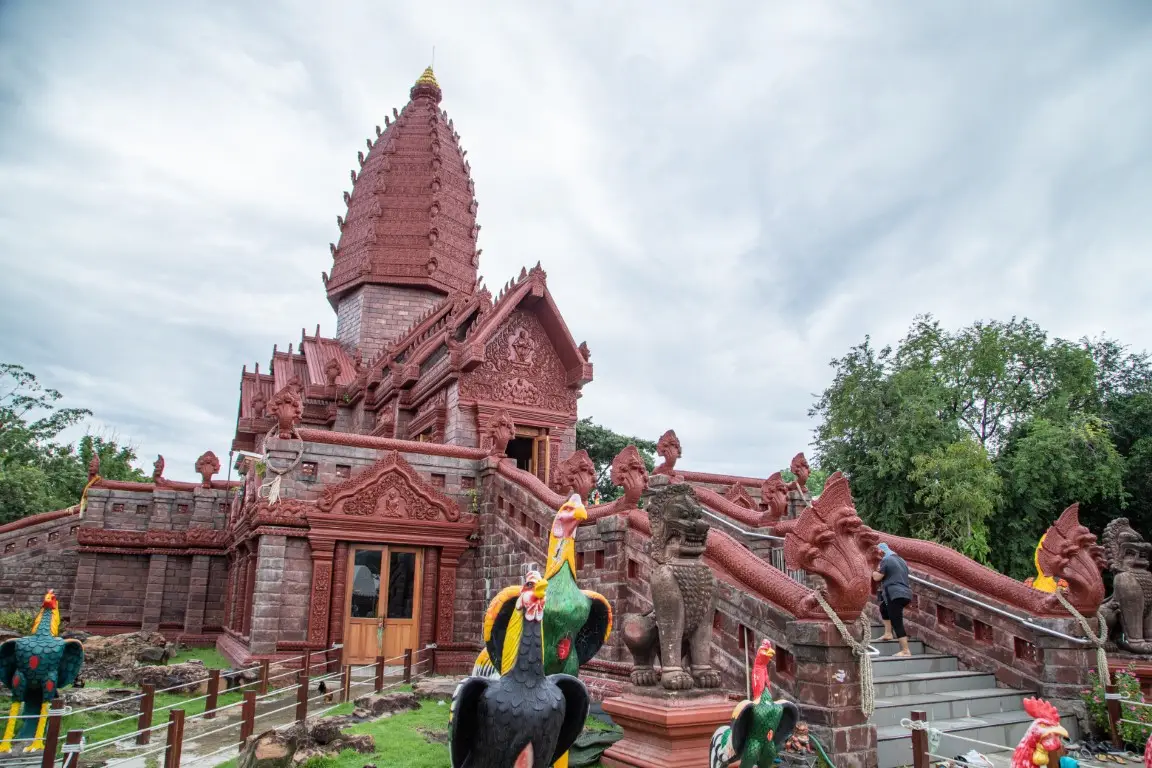
16. Wat Phrai Phatthana, also known as Wat Ban Phrai Phatthana or the Luang Pu Suang Temple, is located in Phrai Phatthana Subdistrict, Phu Sing District. It is an important pilgrimage center for devotees of Luang Pu Suang, a revered monk remembered by his followers as the “walking angel” of southern Isan.
Highlights: Luang Pu Suang Prasat Mondop, the preserved body of Luang Pu Suang in a glass coffin, sacred Buddhist relics, statues of Luang Pu Suang, the ritual passage beneath the glass coffin, Wat Phrai Phatthana market, and red-brick architecture inspired by Khmer artistic forms.
Luang Pu Suang was a meditation monk who practiced in areas close to the Thai–Cambodian border. He lived simply and often stayed in small huts, forests, and natural settings. Communities in Sisaket and nearby provinces continue to hold him in very high regard.
After Luang Pu Suang passed away in 1999, his disciples placed his preserved body in a glass coffin inside the mondop so that devotees could continue to pay their respects. The temple subsequently became one of the province’s major pilgrimage destinations.
Beyond its religious significance, the temple also contains a community market, a Buddhist scripture school, and areas used for religious activities. It therefore plays important roles in faith, education, and the local economy.
Visitors should dress respectfully, remain quiet inside the mondop, and avoid touching the glass coffin or the preserved body without permission.
Getting There: Wat Phrai Phatthana is located at 111 Moo 10, Phrai Phatthana Subdistrict, Phu Sing District. It is open daily from 06:00–20:00. Admission is free, while donations may be made voluntarily.
Map (GPS): https://www.google.com/maps/dir/?api=1&destination=14.466668,104.071660&travelmode=driving
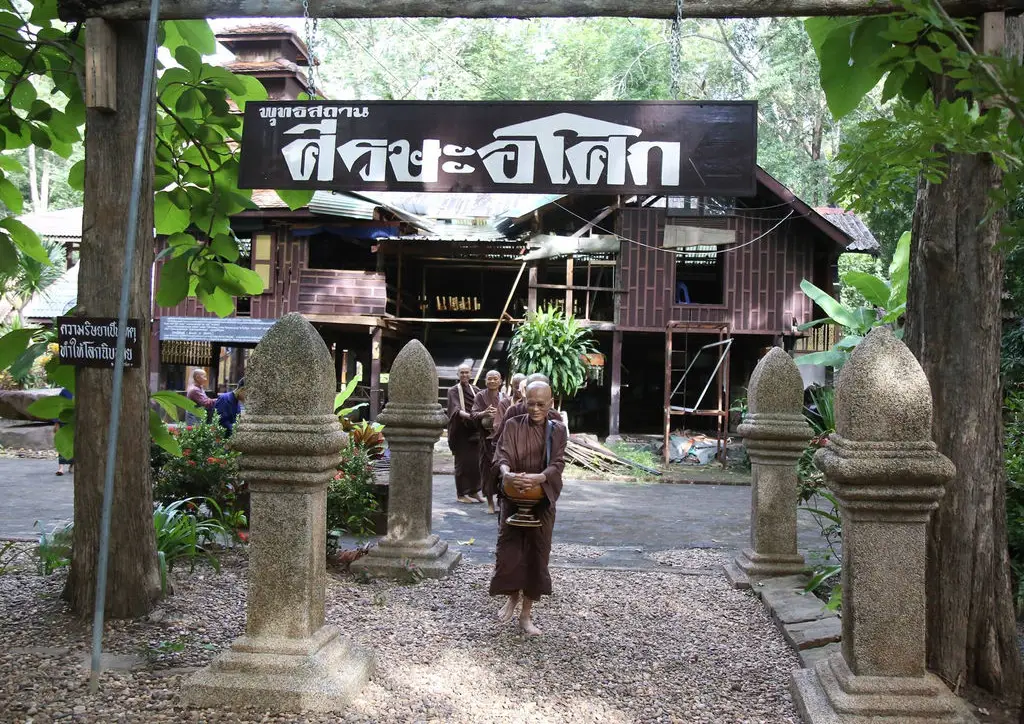
17. Sisa Asoke Buddhist Center is located at Ban Sisa Asoke, Moo 15, Krachaeng Subdistrict, Kantharalak District. It is a Buddhist practice community and learning center based on the Bun Niyom way of life, emphasizing simplicity, observance of moral precepts, reduced consumption, and self-reliance.
Highlights: Bun Niyom community life, vegetarian food, chemical-free agriculture, simple living, the home–temple–school system, and activities focused on self-reliance.
Sisa Asoke differs from conventional tourist attractions because its main interest does not lie in monumental architecture or entertainment. Instead, visitors can observe how religious ideas are applied directly to everyday community life.
Life in the community links Buddhist practice with collective work, chemical-free farming, food preparation, maintenance of shared spaces, and reduced use of unnecessary resources. The site is therefore particularly relevant to visitors interested in alternative communities, organic agriculture, and practical models of self-sufficient living.
Visitors should enter with respect for the community’s way of life, dress modestly, and avoid disturbing religious practice or daily activities.
Getting There: Sisa Asoke Buddhist Center is located at Ban Sisa Asoke, Krachaeng Subdistrict, Kantharalak District, approximately 5 km from Kantharalak town. It is open daily from 06:00–17:00.
Map (GPS): https://www.google.com/maps/dir/?api=1&destination=14.662762,104.590416&travelmode=driving
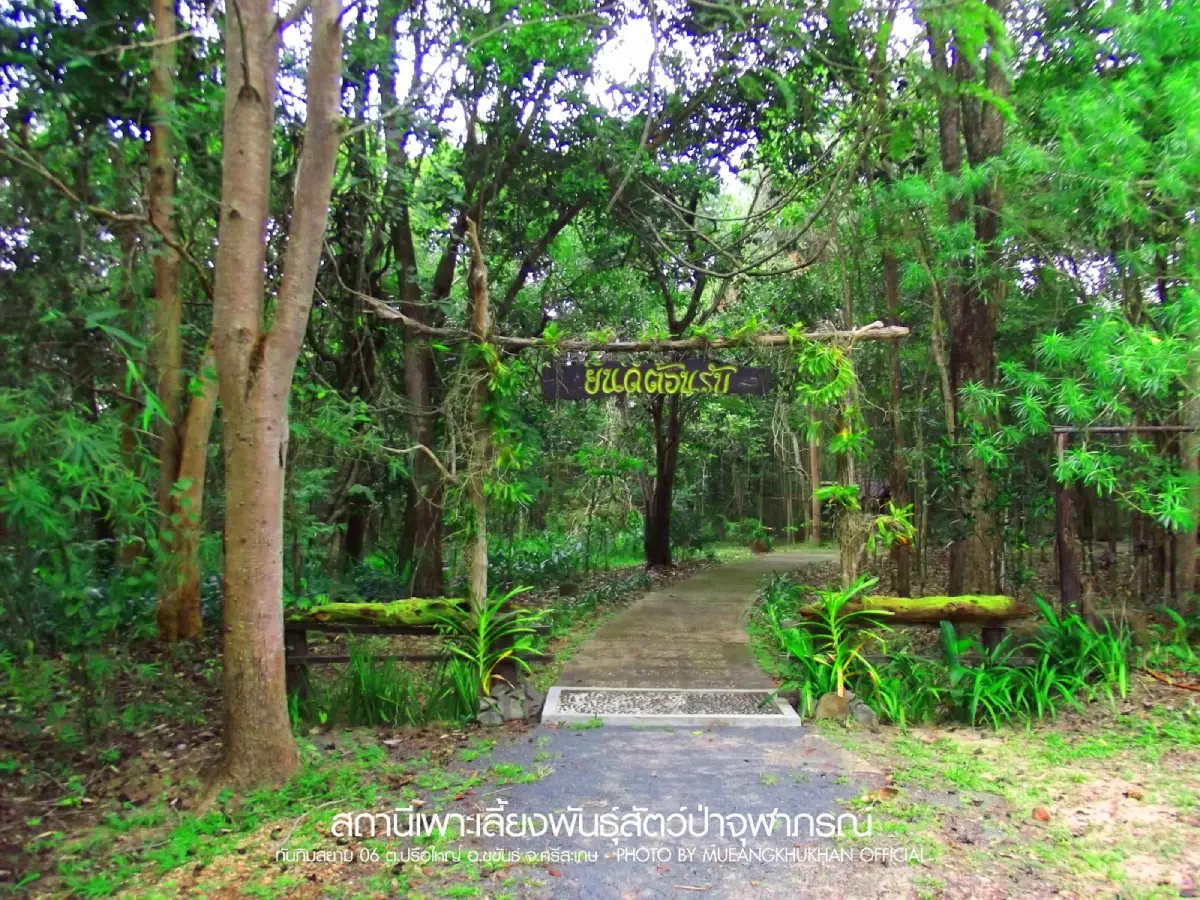
18. Chulaphorn Wildlife Captive Breeding Center is located at Ban Na Cha Ria, Prue Yai Subdistrict, Khukhan District, within the Thapthim Siam 06 Project. The center breeds, rehabilitates, and prepares wildlife for eventual release back into natural habitats while also serving as a conservation-learning site.
Highlights: Wildlife undergoing breeding and rehabilitation, ecosystem education, an area covering more than 6,000 rai, and conservation work connected with the Phanom Dong Rak landscape.
The center developed from wildlife-conservation work in Sisaket and joined the Thapthim Siam 06 Project in 1993, when it was given the name “Chulaphorn Wildlife Captive Breeding Center.”
Its primary purpose is not to operate as an entertainment-focused zoo. Instead, the center works on captive breeding, rehabilitation, and preparing selected wildlife species for possible return to natural habitats. Visitors should therefore view the site principally as a conservation and environmental-learning facility.
General public visits are limited to specified days and hours, so advance planning is important, particularly for travellers coming from Sisaket city because the center is located a considerable distance away.
Getting There: The center is located at 5 Moo 13, Ban Na Cha Ria, Prue Yai Subdistrict, Khukhan District. General visitors are admitted on Saturday–Sunday from 10:00–15:00. Admission for Thai visitors is 30 baht for adults and 20 baht for children.
Map (GPS): https://www.google.com/maps/dir/?api=1&destination=14.523130,104.275097&travelmode=driving
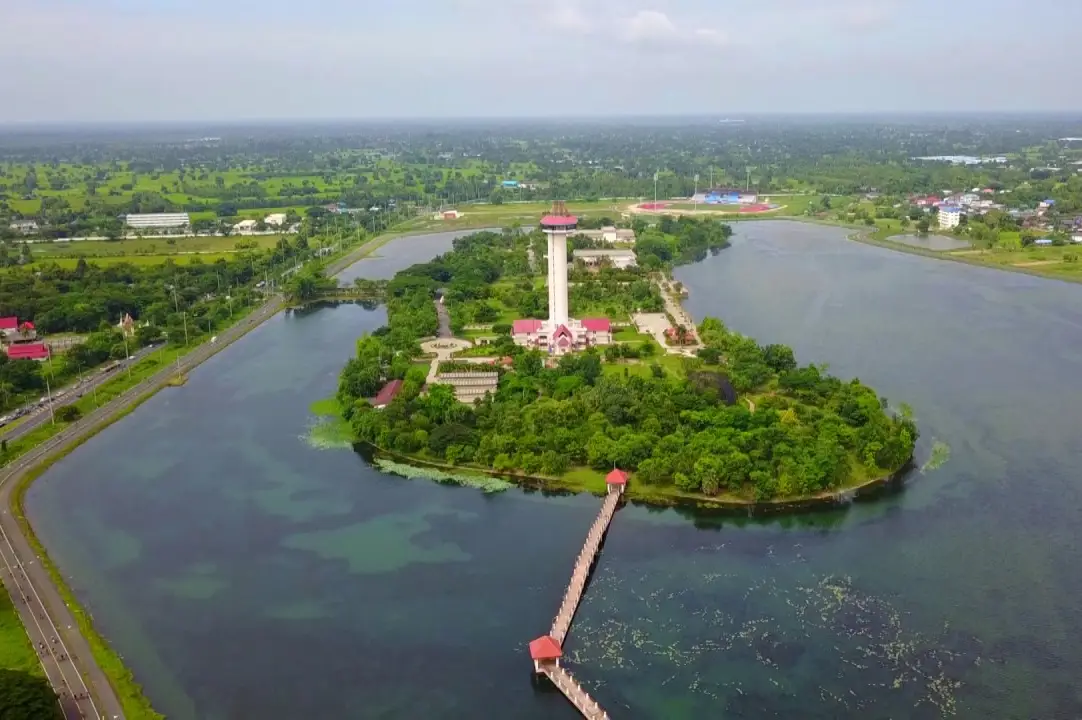
19. Huai Nam Kham, also known as Huai Nam Kham Island, is located in Nong Khrok Subdistrict, Mueang Sisaket District. It is a major urban green space and recreation area developed around Huai Nam Kham Reservoir. The site includes the 80th Birthday Anniversary Park, Sisaket Aquarium, Ho Si Lamduan, activity areas, and exercise paths.
Highlights: Island setting within the reservoir, public park, Ho Si Lamduan, Sisaket Aquarium, viewpoints, exercise paths, and sunset scenery beside the water.
The appeal of Huai Nam Kham comes from its open lakeside environment close to the city. In the morning, local residents use the area for walking, jogging, and exercise, while evenings are ideal for relaxing and photographing reflections across the reservoir.
Families can combine several activities in a single visit by starting at Sisaket Aquarium, walking through the park around the island, and visiting Ho Si Lamduan when it is open. This makes the area especially convenient for travellers who want multiple activities without driving between distant locations.
The public park itself has no admission fee. Some individual facilities within the area, such as the aquarium or observation tower, may have separate opening hours and charges, so visitors should check each facility before entering.
Getting There: Huai Nam Kham is located in Nong Khrok Subdistrict, Mueang Sisaket District, approximately 4–5 km from the provincial hall. The public park is open daily from 05:00–20:00. There is no admission fee for the park area.
Map (GPS): https://www.google.com/maps/dir/?api=1&destination=15.096836,104.329008&travelmode=driving
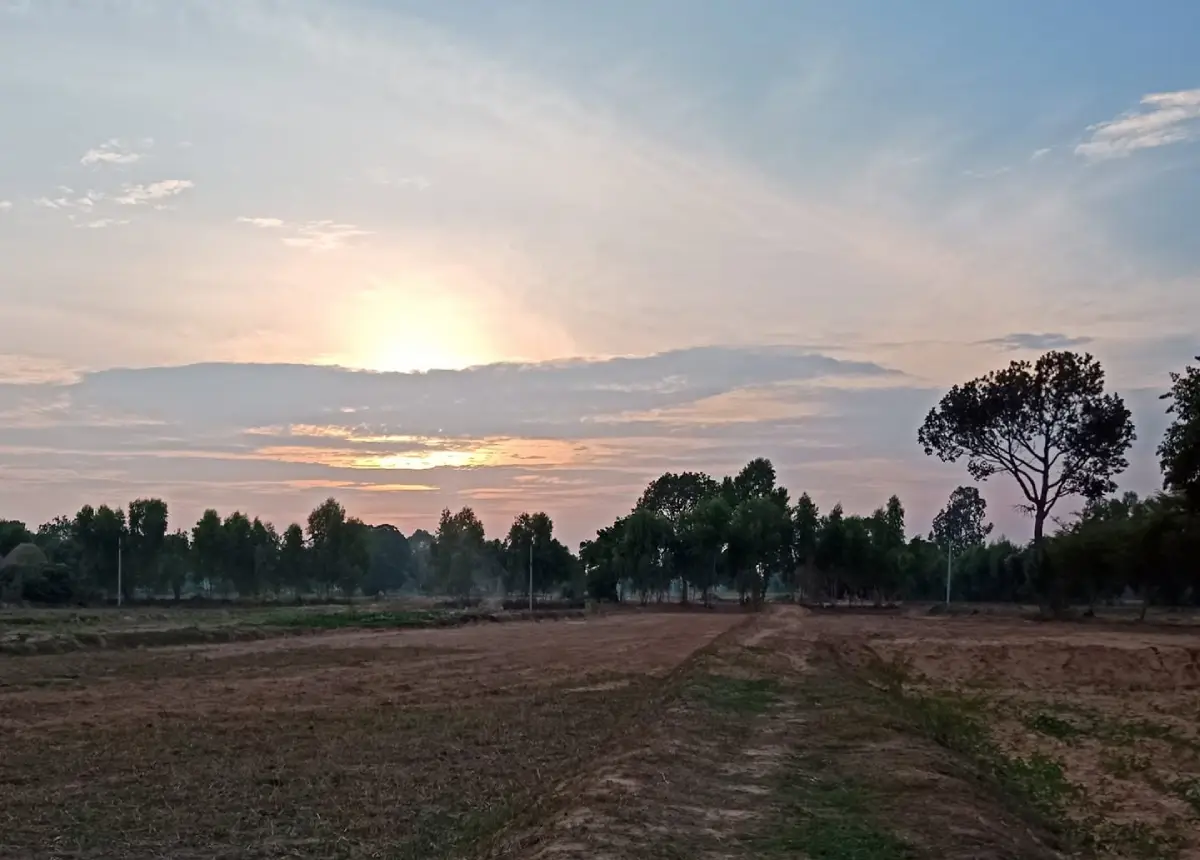
20. Nong Yai is located at Ban Sawai, Moo 2, Phrai Bueng Subdistrict, Phrai Bueng District. It is a community reservoir and recreation area with a broad water surface, a road around the reservoir, nature-viewing points, and a quiet atmosphere suitable for ending a journey at a slower pace.
Highlights: Broad reservoir views, paved road around the water, lakeside recreation areas, waterbird watching, and a peaceful community atmosphere away from the province’s major tourist sites.
Nong Yai serves both as a water resource and a public recreation area for local residents. Visitors can drive or walk around the reservoir, stop at suitable points, and observe everyday community life in the surrounding area.
Morning and evening are more comfortable than midday because temperatures are lower and light across the water is more attractive for photography and birdwatching.
The main appeal of Nong Yai is its simplicity. There are no large-scale attractions or major structures, making it suitable for travellers who want to experience a local community recreation area and see another side of Sisaket beyond temples, Khmer sanctuaries, and waterfalls.
Getting There: Nong Yai is located at Ban Sawai, Moo 2, Phrai Bueng Subdistrict, Phrai Bueng District. The public area is open daily and can be visited throughout the day.
Map (GPS): https://www.google.com/maps/dir/?api=1&destination=15.190431,104.036259&travelmode=driving
| Topic | Details |
| Province Overview | Sisaket is an important province in southern northeastern Thailand, offering Buddhism, Khmer cultural heritage, archaeological sites, ethnic communities, waterfalls, the Phanom Dong Rak mountain range, wildlife conservation areas, and relaxing urban attractions. Visitors can spend 1 day exploring Sisaket city or 4–5 days travelling across several districts. |
| 20 Attractions in This Guide | 1. Wat Maha Phuttharam 2. Phra That Rueang Rong 3. Sisaket Aquarium 4. Somdet Phra Srinagarindra Park 5. Prasat Wat Sa Kamphaeng Yai 6. Prasat Wat Sa Kamphaeng Noi 7. Prasat Ban Prasat 8. Prasat Ta Leng 9. Prasat Prang Ku 10. Wat Pa Maha Chedi Kaew (Wat Larn Kuad) 11. Samrong Kiat Waterfall 12. Huai Chan Waterfall 13. Huai Wang Yai Waterfall 14. Phu La Or Waterfall 15. Prasat Tamnak Sai 16. Wat Phrai Phatthana 17. Sisa Asoke Buddhist Center 18. Chulaphorn Wildlife Captive Breeding Center 19. Huai Nam Kham 20. Nong Yai |
| Top 10 for First-Time Visitors | 1. Wat Maha Phuttharam 2. Phra That Rueang Rong 3. Prasat Wat Sa Kamphaeng Yai 4. Prasat Wat Sa Kamphaeng Noi 5. Wat Pa Maha Chedi Kaew 6. Samrong Kiat Waterfall 7. Huai Chan Waterfall 8. Wat Phrai Phatthana 9. Prasat Ta Leng 10. Huai Nam Kham |
| Sisaket City Zone | 1. Wat Maha Phuttharam 2. Phra That Rueang Rong 3. Sisaket Aquarium 4. Somdet Phra Srinagarindra Park 5. Huai Nam Kham Suitable for a 1-day trip focused on temples, culture, families, recreation, and city attractions. |
| Uthumphon Phisai–Huai Thap Than Zone | 1. Prasat Wat Sa Kamphaeng Yai 2. Prasat Wat Sa Kamphaeng Noi 3. Prasat Ban Prasat Ideal for exploring Khmer archaeological sites and understanding the development of ancient religious architecture in southern Isan. |
| Prang Ku–Khukhan Zone | 1. Prasat Prang Ku 2. Prasat Ta Leng 3. Chulaphorn Wildlife Captive Breeding Center Suitable for travellers interested in archaeology, southern Isan culture, and wildlife conservation. |
| Khun Han Zone | 1. Wat Pa Maha Chedi Kaew (Wat Larn Kuad) 2. Samrong Kiat Waterfall 3. Huai Chan Waterfall 4. Prasat Tamnak Sai Ideal for a 1-day route combining Buddhist art, ancient architecture, and nature. |
| Kantharalak Zone | 1. Huai Wang Yai Waterfall 2. Phu La Or Waterfall 3. Sisa Asoke Buddhist Center Suitable for Phanom Dong Rak nature and learning about an alternative Buddhist community lifestyle. |
| Phu Sing Zone | 1. Wat Phrai Phatthana Ideal for devotees of Luang Pu Suang and travellers interested in the faith traditions of southern Isan’s border communities. |
| Phrai Bueng Zone | 1. Nong Yai Suitable for lakeside relaxation, birdwatching, photography, and experiencing a quieter community atmosphere. |
| Temples and Faith Route | 1. Wat Maha Phuttharam – Luang Pho To 2. Phra That Rueang Rong 3. Wat Pa Maha Chedi Kaew – Million Bottle Temple 4. Wat Phrai Phatthana – Luang Pu Suang 5. Sisa Asoke Buddhist Center |
| History and Archaeology Route | 1. Prasat Wat Sa Kamphaeng Yai 2. Prasat Wat Sa Kamphaeng Noi 3. Prasat Ban Prasat 4. Prasat Ta Leng 5. Prasat Prang Ku 6. Prasat Tamnak Sai |
| Nature and Waterfall Route | 1. Samrong Kiat Waterfall 2. Huai Chan Waterfall 3. Huai Wang Yai Waterfall 4. Phu La Or Waterfall 5. Nong Yai 6. Huai Nam Kham |
| Family-Friendly Attractions | Sisaket Aquarium, Somdet Phra Srinagarindra Park, Huai Nam Kham, Huai Chan Waterfall, and Nong Yai are suitable for families because they provide accessible activities without requiring particularly difficult trails. |
| Cultural Learning Route | 1. Phra That Rueang Rong – museum of the four major cultural groups 2. Wat Phrai Phatthana – devotion to Luang Pu Suang 3. Sisa Asoke Buddhist Center – Bun Niyom lifestyle and self-reliance 4. Wat Pa Maha Chedi Kaew – Buddhist art created from recycled materials |
| Suitable for Older Travellers | Wat Maha Phuttharam, Phra That Rueang Rong, Sisaket Aquarium, Somdet Phra Srinagarindra Park, and Huai Nam Kham are generally easier to access than waterfalls or natural areas along the Phanom Dong Rak Mountains. |
| Best Time for Waterfalls | The rainy season through early winter is generally the best period for Samrong Kiat Waterfall, Huai Chan Waterfall, Huai Wang Yai Waterfall, and Phu La Or Waterfall because water levels are higher and surrounding forests are greener. Water flow may decline considerably during the dry season. |
| 1 Day in Sisaket City | Morning: Wat Maha Phuttharam – Phra That Rueang Rong Afternoon: Sisaket Aquarium – Huai Nam Kham Evening: Somdet Phra Srinagarindra Park |
| 2 Days / 1 Night | Day 1: Wat Maha Phuttharam – Phra That Rueang Rong – Sisaket Aquarium – Huai Nam Kham Day 2: Prasat Wat Sa Kamphaeng Noi – Prasat Wat Sa Kamphaeng Yai – Prasat Ban Prasat |
| 3 Days / 2 Nights | Day 1: Sisaket city Day 2: Uthumphon Phisai – Huai Thap Than – Prang Ku Day 3: Wat Pa Maha Chedi Kaew – Samrong Kiat Waterfall – Huai Chan Waterfall – Prasat Tamnak Sai |
| 4 Days / 3 Nights | Add the Khukhan–Phu Sing route with Prasat Ta Leng, Wat Phrai Phatthana, and Chulaphorn Wildlife Captive Breeding Center on a day when the center is open to visitors. |
| 5 Days / 4 Nights | Add the Kantharalak zone for Huai Wang Yai Waterfall, Phu La Or Waterfall, and Sisa Asoke Buddhist Center, with Nong Yai or a city recreation area included according to the return route. |
| Best Time to Visit | November–February is generally the most comfortable period for travelling around Sisaket because temperatures are cooler. Travellers focusing on waterfalls should visit from the rainy season into early winter and check weather and road conditions before travelling. |
| Ethnic and Cultural Heritage | Sisaket is home to Lao, Kuy or Suay, Khmer, and Yoe communities. Each group has its own language, cuisine, clothing, rituals, and traditions. Phra That Rueang Rong is one of the best places for an introduction to these cultural identities. |
| Saen Don Ta Tradition | Saen Don Ta is an important ancestral worship tradition practiced by Thai people of Khmer descent in Sisaket and other southern Isan provinces. It reflects long-standing relationships among family, community, ancestry, and traditional belief. |
| Getting Around Sisaket | City attractions can be reached using local transport or private vehicles. For Uthumphon Phisai, Khun Han, Kantharalak, Prang Ku, Khukhan, and Phu Sing, a private car, rental car, or hired vehicle with driver is considerably more convenient because attractions are spread across several districts. |
| Food to Try | Southern Isan cuisine, traditional Khmer and Kuy dishes, larb, koi, som tam, kaeng om, grilled chicken, fish dishes, local foods, and seasonal agricultural produce from Sisaket. |
| Souvenirs | Community products, traditional woven textiles, handicrafts, processed foods, and famous agricultural products such as Sisaket volcanic durian when in season. |
| Waterfall Safety | Avoid entering the water during heavy rainfall or flash-flood conditions. Take care on slippery rocks, avoid deep pools unless conditions are clearly safe, and follow all signs and instructions issued by officials in conservation areas. |
| Responsible Archaeological Travel | Do not climb sanctuary structures, move stones or archaeological fragments, write on ancient surfaces, or leave designated visitor paths. These measures help protect archaeological evidence for the long term. |
| Border-Area Travel Note | Before travelling to southern areas near the international border, check current conditions and official government announcements on the day of travel because access restrictions may apply to some areas at certain times. |
Frequently Asked Questions (FAQ)
Q: What are the must-visit attractions in Sisaket?
A: First-time visitors should consider Wat Maha Phuttharam, Phra That Rueang Rong, Prasat Wat Sa Kamphaeng Yai, Prasat Wat Sa Kamphaeng Noi, Wat Pa Maha Chedi Kaew, Samrong Kiat Waterfall, Huai Chan Waterfall, Wat Phrai Phatthana, and Huai Nam Kham. Together, they cover religion, history, culture, and nature.
Q: Where should I go if I have only 1 day in Sisaket?
A: Focus on the city. Begin at Wat Maha Phuttharam, continue to Phra That Rueang Rong, visit Sisaket Aquarium and Huai Nam Kham in the afternoon, and finish the day at Somdet Phra Srinagarindra Park.
Q: How many days are recommended for visiting Sisaket?
A: 3 days are suitable for Sisaket city, the Khmer archaeological route, and Khun Han. Travellers who want to cover all 20 attractions, including Khukhan, Phu Sing, Kantharalak, and the natural areas, should allow around 4–5 days.
Q: Which temple is an important spiritual landmark of Sisaket city?
A: Wat Maha Phuttharam, also known as Wat Phra To, is one of the city’s major sacred temples. It houses Luang Pho To, or Phra Phuttha Maha Muni, a Buddha image deeply revered by local residents.
Q: What is interesting about Phra That Rueang Rong?
A: Phra That Rueang Rong combines a shrine for sacred Buddhist relics with a museum devoted to Sisaket’s four major cultural groups: Lao, Kuy or Suay, Khmer, and Yoe. It is one of the most useful places for understanding the province’s cultural diversity.
Q: Which Khmer archaeological sites should I visit in Sisaket?
A: Major choices include Prasat Wat Sa Kamphaeng Yai, Prasat Wat Sa Kamphaeng Noi, Prasat Ban Prasat, Prasat Ta Leng, Prasat Prang Ku, and Prasat Tamnak Sai. Together, they demonstrate different forms and functions of Khmer religious architecture.
Q: Why is Prasat Wat Sa Kamphaeng Noi historically important?
A: The site is associated with the Arokayasala network, or ancient hospitals established during the reign of King Jayavarman VII. It is therefore important for understanding not only religion and architecture but also the medical and administrative systems of the Khmer Empire.
Q: Is the Million Bottle Temple really made from bottles?
A: Yes. More than 1.5 million glass bottles have been used to decorate pavilions, the ordination hall, monks’ residences, the bell tower, crematorium, and other structures. Bottle caps have also been arranged into Buddhist narrative scenes and decorative designs.
Q: When is the best time to visit waterfalls in Sisaket?
A: The rainy season through early winter is generally the best period because Samrong Kiat Waterfall, Huai Chan Waterfall, Huai Wang Yai Waterfall, and Phu La Or Waterfall have better water flow and the surrounding forests are greener.
Q: Which waterfall in Sisaket is suitable for families?
A: Huai Chan Waterfall is a convenient choice because access is relatively easy and the area has parking, food stalls, restaurants, toilets, pavilions, and riverside recreation areas. Children should still be closely supervised near the water.
Q: Why is Wat Phrai Phatthana important?
A: Wat Phrai Phatthana is an important pilgrimage center for devotees of Luang Pu Suang. The temple contains a mondop, his preserved body in a glass coffin, and several areas where visitors can pay their respects.
Q: Who would be interested in Sisa Asoke Buddhist Center?
A: The center is suitable for visitors interested in Buddhist practice, Bun Niyom community life, vegetarian food, chemical-free agriculture, reduced consumption, and self-reliance.
Q: Is Chulaphorn Wildlife Captive Breeding Center open every day?
A: No. General visitors are admitted on Saturday–Sunday from 10:00–15:00. Travellers should plan ahead and reconfirm visiting conditions before travelling.
Q: Which Sisaket attractions are suitable for children?
A: Sisaket Aquarium, Huai Nam Kham, Somdet Phra Srinagarindra Park, Huai Chan Waterfall, and Chulaphorn Wildlife Captive Breeding Center provide suitable variety for families travelling with children.
Q: Where should I go for a relaxing trip in Sisaket?
A: Huai Nam Kham, Somdet Phra Srinagarindra Park, Nong Yai, and quieter waterfall areas are good choices for travellers who want a slower pace and more time in natural surroundings.
Q: What ethnic cultures are found in Sisaket?
A: Sisaket is home to Lao, Kuy or Suay, Khmer, and Yoe communities, each with distinctive languages, clothing, cuisine, rituals, and traditions. Phra That Rueang Rong presents an introduction to these four cultural groups.
Q: What is the Saen Don Ta tradition?
A: Saen Don Ta is an ancestral worship tradition practiced by Thai people of Khmer descent in southern Isan. Families prepare offerings and rituals to remember their ancestors and strengthen relationships among relatives and the wider community.
Q: Can I travel around Sisaket without a private car?
A: City attractions can be reached by local transport, but travelling to Uthumphon Phisai, Khun Han, Kantharalak, Prang Ku, Khukhan, and Phu Sing is considerably easier with a private car, rental car, or hired vehicle with driver.
Q: How should I plan a Sisaket itinerary to avoid backtracking?
A: Divide the province into zones: Sisaket city, Uthumphon Phisai–Huai Thap Than, Prang Ku–Khukhan, Khun Han, Kantharalak, and Phu Sing. Complete the main attractions in one zone before moving to the next.
Q: What is the best season to visit Sisaket?
A: November–February is generally the most comfortable period because temperatures are cooler. Travellers interested in waterfalls should consider the rainy season through early winter and check weather conditions before travelling.
 Category: ●Travel Articles, Recipes
 Group: ●Travel Review, Food Review
Last Update : 3 WeekAgo
 Last Update : 3 WeekAgo

 Art, Culture and Heritage
 Historical Sites and Monuments(12)
 Landmarks and Memorials(1)
 Art, Craft Centres, Tradition(8)
 Places of Worship
 Temple(13)
 Other Sacred Sites(3)
 Suburban Living
 Village, Community(2)
 Nature and Wildlife
 National Parks and Marine Reserves(2)
 Dam, Reservoir, Lake(7)
 Waterfalls(5)
 River, Canal(5)
 Bays and Beaches(2)
 Entertainment and Agricultural
 Zoos and Aquariums(1)
 Farms, Parks and Ecotourism(3)
Travel Review, Food Review(1)


