
lovethailand home >Northeastern Travel Attractions >Si Sa Ket Travel Attractions >Prang Ku >Ku > Prasat Prang Ku
TL;DR: Prasat Prang Ku is located at Ban Ku, Ku Subdistrict, Prang Ku District, Si Sa Ket Province, open Daily, hours 08.30 – 16.30.
Prasat Prang Ku
Open Days: Daily
Opening Hours: 08.30 – 16.30
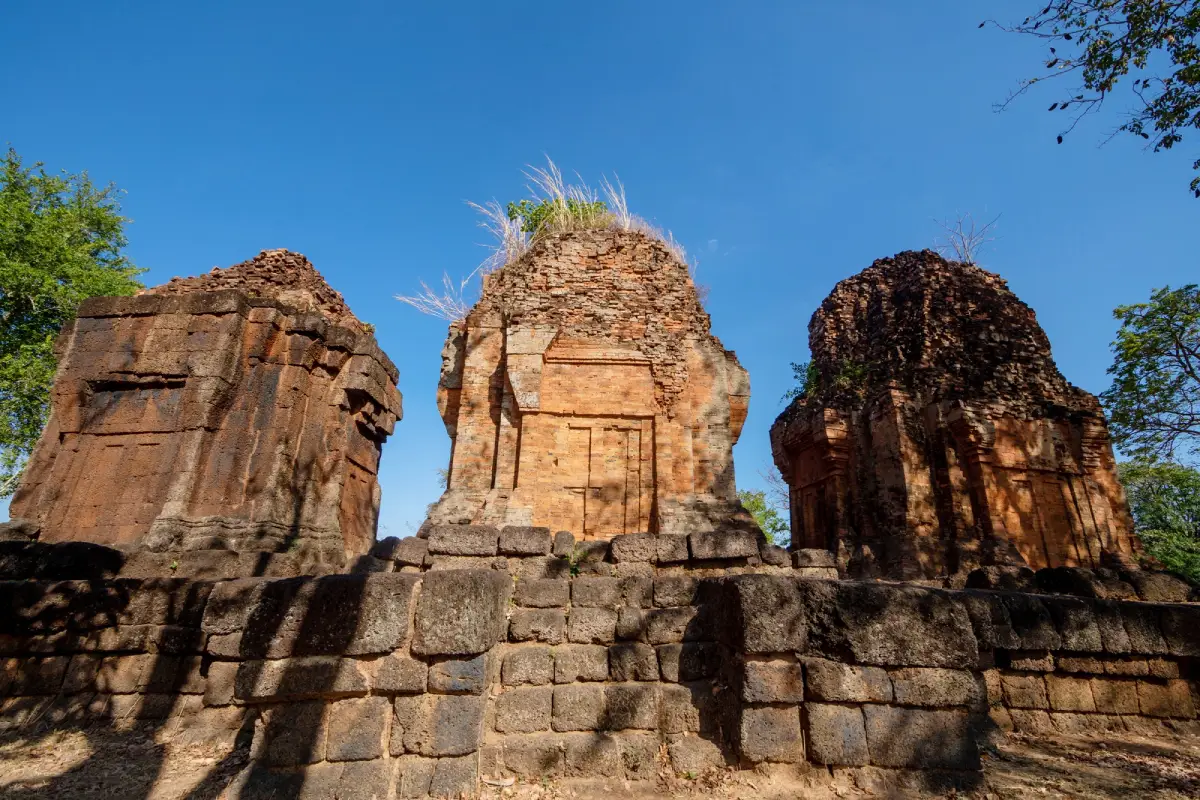
Prasat Prang Ku in Si Sa Ket Province is an ancient Khmer archaeological site located at Ban Ku, Ku Subdistrict, Prang Ku District. The monument is known for its 3 sanctuary towers arranged on a north-south axis, all standing on a shared laterite base and facing east. Built with large bricks, laterite, and sandstone, the site reflects the architectural and religious influence of the ancient Khmer world in Lower Northeastern Thailand. With its large pond in front of the sanctuary, its carved lintel depicting Indra riding Airavata, and its peaceful village setting, Prasat Prang Ku is one of the most meaningful cultural attractions in Si Sa Ket for travelers interested in Khmer art, archaeology, local history, and community heritage.
Prasat Prang Ku is more than a ruined brick monument. It is a cultural landmark that gives its name and identity to Prang Ku District itself. In local usage, the word “ku” often refers to an ancient sacred structure or old sanctuary, while “prang” refers to the tower-like form of the monument. Together, the name clearly expresses the historical character of the area. The site stands within a living rural community, allowing visitors to experience the relationship between ancient architecture and present-day local life.
The most distinctive feature of Prasat Prang Ku is its group of 3 sanctuary towers arranged from north to south on one laterite platform. All 3 towers face east, following the symbolic orientation commonly found in ancient Khmer religious architecture. In many Khmer sanctuaries, the east represents light, ritual entry, renewal, and the sacred direction associated with important deities. This alignment gives the monument a clear ceremonial axis and helps visitors understand how the builders organized space according to religious meaning.
The sanctuary was built using large bricks, laterite, and sandstone. The use of large brick blocks gives Prasat Prang Ku a visual similarity to Prasat Sikhoraphum in Surin Province, another important Khmer-style sanctuary in the region. The laterite base provides structural strength, while sandstone was used for important architectural and decorative elements such as lintels and door frames. Even though some parts of the structure have collapsed or weathered over time, the remaining brickwork still preserves the mass, proportion, and sacred orientation of the original complex.
The central and southern towers are mainly built of brick, while the northern tower uses laterite from the base up to the pediment area before continuing with brick toward the upper section. This variety of materials shows that Prasat Prang Ku was not a simple structure. It combines different construction techniques within one sacred space. The main entrance is on the eastern side, while the other sides contain false doors, a common feature in Khmer architecture. These false doors were not meant for everyday movement but helped complete the symbolic and visual balance of the sanctuary.
One of the most important artistic remains at Prasat Prang Ku is the group of 3 lintels associated with the 3 sanctuary towers. The lintel of the main tower is especially significant because it depicts Indra riding the elephant Airavata. Indra appears above a kala face, which releases garlands from its mouth. The carved garlands, scrolling foliage, and ornamental details show the skill of ancient Khmer artisans and the religious symbolism behind the monument. In Hindu tradition, Indra is the guardian deity of the east, which corresponds meaningfully with the east-facing orientation of the sanctuary.
Based on its archaeological evidence and iconography, Prasat Prang Ku is understood as a Hindu sanctuary within the ancient Khmer cultural sphere, especially connected with Shaivite belief. Local accounts and archaeological interpretation point to the former presence of a Shiva linga and yoni base, symbols closely associated with the worship of Shiva. This helps explain the site not merely as an old structure but as a ritual place that once served the religious needs of the ancient community in this part of Si Sa Ket.
The monument is dated to the late 16th to early 17th Buddhist centuries, broadly around the 17th Buddhist century. This period corresponds to a time when Khmer cultural influence was strongly visible across Lower Northeastern Thailand, including present-day Si Sa Ket, Surin, Buriram, and neighboring areas. Many archaeological sites in this region show the spread of Khmer religious art, architectural techniques, symbolic landscape planning, and ritual systems. Prasat Prang Ku is therefore part of a wider historical network rather than an isolated monument.
Although Prasat Prang Ku is not as large as Phimai Historical Park or Phanom Rung Historical Park, its smaller scale is part of its appeal. Visitors can walk around the laterite base, examine the brickwork, observe the surviving sandstone details, and understand the monument at close range. The site is quiet, accessible, and easy to explore. Its value lies in the details: the texture of old brick, the relationship between the 3 towers, the sacred east-facing orientation, the position of the pond, and the way the sanctuary remains connected to the surrounding village.
The large pond in front of the sanctuary is another defining element of Prasat Prang Ku. In ancient Khmer sacred landscapes, water was closely associated with purity, fertility, prosperity, and cosmological order. At Prasat Prang Ku, the pond also remains part of the present-day natural environment. During the dry season, especially from February onward, waterfowl and wild ducks can be seen around the pond. This combination of ancient architecture, water, and birdlife gives the site a distinctive atmosphere that is both historical and natural.
For travelers interested in local history, Prasat Prang Ku reveals how Prang Ku District developed around an ancient cultural landscape. Ban Ku and the surrounding area were not simply rural settlements; they were connected to religious architecture, water management, and community identity. The sanctuary, the pond, and the surrounding settlement pattern suggest that the site once played an important role in ritual life and local organization. This makes the monument especially valuable for understanding how ancient communities in Lower Northeastern Thailand related to sacred architecture.
Prasat Prang Ku is suitable for several types of visitors: history lovers, archaeology students, cultural travelers, photographers, families, and anyone who wants to see a quieter side of Si Sa Ket. The site is easy to visit and does not require a long hike or complicated route. It can be combined with nearby attractions such as Prasat Ban Samo, Prasat Tham Chan, the Prang Ku District City Pillar Shrine, local temples, and other cultural sites in the district. For travelers continuing toward Khukhan District or Surin Province, Prasat Prang Ku also fits naturally into a broader Khmer heritage route.
The best time to visit is in the morning or late afternoon, when the light is softer and the details of the brick, laterite, and sandstone are easier to see. These times are also better for photography because the shadows help reveal the texture of the old walls and architectural fragments. During the dry season, the pond area may offer additional interest because of water birds. During the rainy season, the surroundings become greener, but visitors should wear appropriate shoes and be careful on uneven or slippery ground.
A good way to explore the site is to begin from the eastern side, where the main entrance and ceremonial axis are most clearly understood. From there, visitors can observe the shared laterite base, the 3 towers arranged in a north-south line, the remaining brickwork, the doorway details, and the artistic fragments connected with the original sanctuary. A standard visit takes about 30–60 minutes. Visitors who want to photograph the site carefully or study the artistic details should allow around 1–1.30 hours.
Prasat Prang Ku also remains connected with living local culture. One important event held in the area is the Hua Bun Boek Fa festival on the 3rd waxing moon of the 3rd lunar month. The event includes ceremonial cart processions, offerings, local performances, Kui cultural presentations, and light-and-sound performances at Prasat Prang Ku. This makes the site not only an archaeological location but also a cultural stage where the community continues to connect ancient heritage with present-day identity.
Getting There from Si Sa Ket city can be done by 2 main routes. Travelers may take the Si Sa Ket-Surin route and then turn onto Highway 2234, or take the Si Sa Ket-Khukhan route and then turn onto Highway 2167. The site is about 70 km from Si Sa Ket city and about 10 km from Prang Ku town. A private car or rental car is the most convenient option, especially for visitors planning to combine several attractions in one day.
Travelers using public transport should first reach Prang Ku town and then arrange local transport or a hired vehicle to Ban Ku. Since the monument is not located in the middle of the district town, independent transport makes the trip smoother. From Si Sa Ket city, travelers should allow around 1.30–2 hours depending on the route, road conditions, and stops along the way. From Prang Ku town, the journey is much shorter and is suitable for a half-day cultural visit.
Upon arrival, visitors should park in an appropriate area without blocking local roads or community access. The site is open and easy to walk around, but the ground may be uneven in places. Wearing comfortable walking shoes is recommended. On hot days, visitors should bring drinking water, a hat, or an umbrella. The monument should be explored respectfully, without climbing on the towers, touching fragile carved details unnecessarily, moving ancient stones, or leaving litter behind.
Respectful behavior is essential at Prasat Prang Ku because the monument is an irreplaceable cultural resource. Ancient brickwork, laterite blocks, and sandstone carvings are vulnerable to damage. Visitors should enjoy the site with their eyes and understanding rather than physical contact. Photography is welcome when done responsibly, but the monument should not be used in a way that harms the structure or disrespects the local community.
In the wider context of Si Sa Ket Province, Prasat Prang Ku helps complete the province’s Khmer heritage route. Si Sa Ket contains several important ancient sites, including Prasat Sa Kamphaeng Yai, Prasat Sa Kamphaeng Noi, Prasat Ta Leng, Prasat Ban Samo, and Prasat Tham Chan. Visiting Prasat Prang Ku allows travelers to better understand how religious architecture, artistic motifs, water landscapes, and local communities were connected throughout the Lower Northeast.
For a one-day itinerary, travelers can depart from Si Sa Ket city in the morning, visit Prasat Prang Ku, spend time exploring the sanctuary and pond, have lunch in Prang Ku District, and continue to nearby archaeological or community attractions. This route is suitable for travelers who prefer meaningful cultural travel rather than quick photo stops. It allows time to see the monument, understand its context, and experience the slower rhythm of rural Si Sa Ket.
What makes Prasat Prang Ku valuable is not only its age but also the story preserved in each element. The large bricks reveal ancient building techniques. The laterite platform reflects structural planning. The Indra on Airavata lintel connects the site to Hindu cosmology. The pond in front of the sanctuary shows how water shaped sacred landscapes. The local festival shows how the community continues to give cultural meaning to the place. Together, these elements make Prasat Prang Ku a living heritage site rather than a silent ruin.
Prasat Prang Ku is best appreciated slowly. Its beauty is not overwhelming at first glance; it emerges through observation. The alignment of the 3 towers, the old brick surfaces, the relationship between the sanctuary and the pond, and the cultural memory of the local community all make the site rewarding for thoughtful travelers. For foreign visitors who want to understand Si Sa Ket beyond its better-known attractions, Prasat Prang Ku offers a clear and memorable introduction to the Khmer heritage of Lower Northeastern Thailand.
| Name | Prasat Prang Ku |
| Location | Ban Ku, Ku Subdistrict, Prang Ku District, Si Sa Ket Province |
| Address | Ku Subdistrict, Prang Ku District, Si Sa Ket 33170, Thailand |
| Coordinates | 14.8299958925, 103.932328791 |
| Highlights | Three Khmer sanctuary towers on one laterite base, large pond in front of the monument, Indra on Airavata lintel, and a peaceful village setting |
| History | Ancient Khmer religious site dated to the late 16th to early 17th Buddhist centuries, broadly around the 17th Buddhist century |
| Name Origin | The name combines “Prang,” referring to the tower-like sanctuary form, and “Ku,” a local term often used for an ancient sacred structure |
| Distinctive Features | Three east-facing sanctuary towers built with brick, laterite, and sandstone, with a main entrance on the east and false doors on other sides |
| Key Evidence | Indra on Airavata lintel, kala face, garland motifs, scrolling foliage, pediment details, naga elements, laterite base, large pond, and evidence of Hindu Shaivite religious symbolism |
| Travel Information | From Si Sa Ket city, take the Si Sa Ket-Surin route and turn onto Highway 2234, or take the Si Sa Ket-Khukhan route and turn onto Highway 2167. The site is about 70 km from Si Sa Ket city and about 10 km from Prang Ku town. |
| Current Status | Open to visitors as an archaeological site and Khmer art learning destination in Prang Ku District, Si Sa Ket Province |
| Open Days | Daily |
| Opening Hours | 08.30 – 16.30 |
| Fees | Free Admission |
| Facilities | Open walking area, photo-friendly heritage setting, and parking area near the archaeological site |
| Main Areas / Zones | 1. Eastern entrance area 2. Three sanctuary towers on one laterite base 3. Lintel and artistic fragment area 4. Large pond in front of the monument 5. Surrounding village and cultural landscape |
| Local Festival / Cultural Event | Hua Bun Boek Fa Festival on the 3rd waxing moon of the 3rd lunar month, featuring ceremonial cart processions, offerings, local performances, Kui cultural presentations, and light-and-sound shows at Prasat Prang Ku |
| Caretaker | Fine Arts Department through the 10th Regional Office of Fine Arts, Nakhon Ratchasima, together with local authorities in Ku Subdistrict |
| Contact | Ku Subdistrict Administrative Organization, Tel. 045-910849 10th Regional Office of Fine Arts, Nakhon Ratchasima, Tel. 044-471518 |
| Nearby Tourist Attractions | 1. Prasat Hin Ban Samo, about 8 km 2. Prasat Tham Chan, about 10 km 3. Prang Ku District City Pillar Shrine, about 10 km 4. Wat Prang Ku, about 10 km 5. Prasat Ta Leng in Khukhan District, about 23 km |
| Nearby Restaurants | 1. Cafe'24u To For You, about 10 km, Tel. 095-451-5224 2. Phu Pha Boat Noodles, Prang Ku Branch, about 11 km, Tel. 083-385-3138 3. Krua Khun Nai, about 12 km, Tel. 081-618-6219, 081-491-4407 4. Baan Coffee, about 11 km, Tel. 045-697-499 5. Ru Coffee Prangku, about 11 km, Tel. 086-872-2008 |
| Nearby Accommodations | 1. Prang Khiang Na Resort, about 5 km, Tel. 021641001 2. Bansuan Khunyay Prangku, about 8 km, Tel. 021641001 3. Padaya Resort & Restaurant Prangku, about 8 km 4. Huai Saeng Chan Resort, about 19 km 5. Meechai Smart Resort, about 19 km |
Frequently Asked Questions (FAQ)
Q: Where is Prasat Prang Ku located?
A: Prasat Prang Ku is located at Ban Ku, Ku Subdistrict, Prang Ku District, Si Sa Ket Province, about 70 km from Si Sa Ket city.
Q: What are the opening hours of Prasat Prang Ku?
A: Prasat Prang Ku is open daily from 08.30 to 16.30. Morning and late afternoon are the best times to see the stone and brick details clearly.
Q: Is there an admission fee for Prasat Prang Ku?
A: No. Admission is free. Visitors should respect the archaeological site and avoid climbing on the ancient structures.
Q: Why is Prasat Prang Ku important?
A: Prasat Prang Ku is an ancient Khmer religious site dating to the late 16th to early 17th Buddhist centuries. Its architecture and lintel carvings reflect Hindu symbolism and Khmer artistic influence in Lower Northeastern Thailand.
Q: What should visitors not miss at Prasat Prang Ku?
A: Key highlights include the 3 sanctuary towers on one laterite base, the Indra on Airavata lintel, the large pond in front of the monument, and the peaceful village atmosphere.
Q: How can travelers get to Prasat Prang Ku?
A: From Si Sa Ket city, travelers can take the Si Sa Ket-Surin route and turn onto Highway 2234, or take the Si Sa Ket-Khukhan route and turn onto Highway 2167. The site is about 70 km from Si Sa Ket city and about 10 km from Prang Ku town.
Q: How long should travelers spend at Prasat Prang Ku?
A: A general visit takes around 30–60 minutes. Travelers interested in photography, architecture, and Khmer art should allow 1–1.30 hours.
Q: Does Prasat Prang Ku have a local festival?
A: Yes. The Hua Bun Boek Fa Festival is held around the 3rd waxing moon of the 3rd lunar month, featuring ceremonial processions, Kui cultural performances, and light-and-sound shows at Prasat Prang Ku.
 Category: ●Art, Culture and Heritage
 Group: ●Historical Sites and Monuments
Last Update : 2 MonthAgo
 Last Update : 2 MonthAgo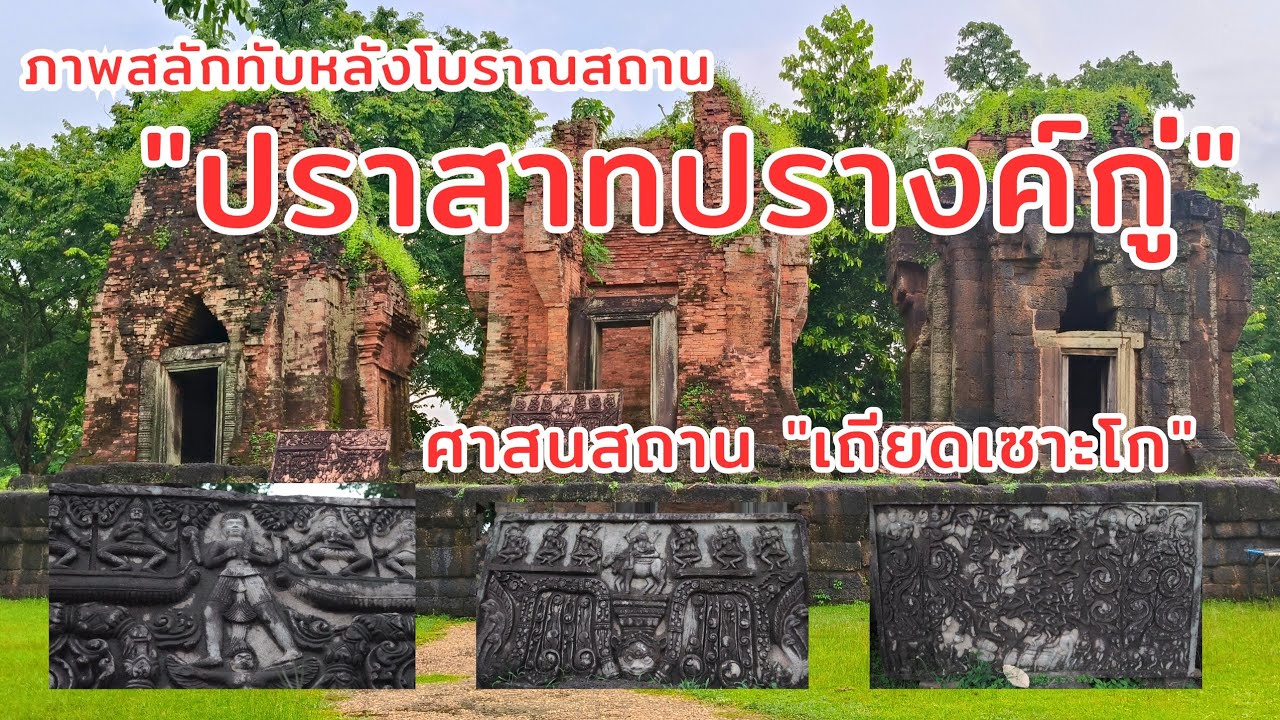
 Click to Access the Navigation Map GPS
 Historical Sites and Monuments(12)
 Landmarks and Memorials(1)
 Art, Craft Centres, Tradition(8)
 Places of Worship
 Temple(13)
 Other Sacred Sites(3)
 Suburban Living
 Village, Community(2)
 Nature and Wildlife
 National Parks and Marine Reserves(2)
 Dam, Reservoir, Lake(7)
 Waterfalls(5)
 River, Canal(5)
 Bays and Beaches(2)
 Entertainment and Agricultural
 Zoos and Aquariums(1)
 Farms, Parks and Ecotourism(3)


