
lovethailand home >Northeastern Travel Attractions >Roi Et Travel Attractions > 20 Best Places to Visit in Roi Et Popular Attracti..
TL;DR: 20 Best Places to Visit in Roi Et Popular Attractions.
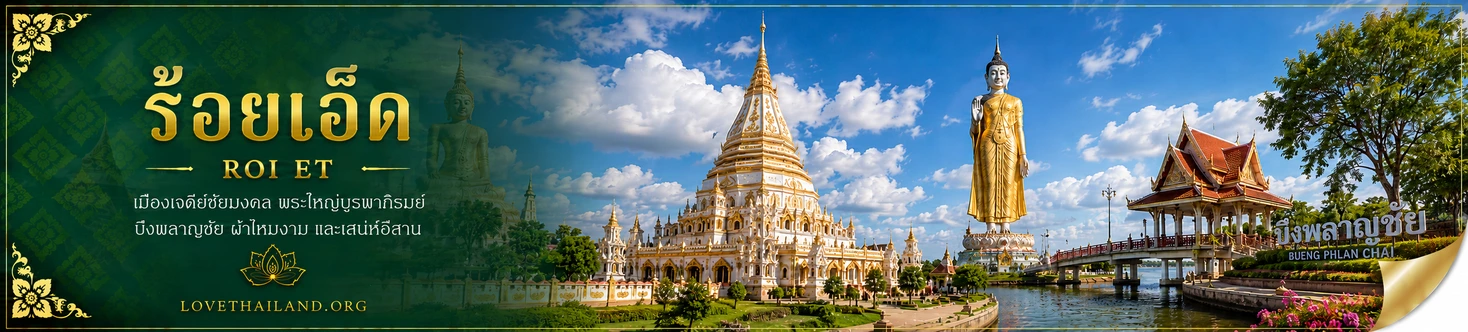
20 Best Places to Visit in Roi Et Popular Attractions
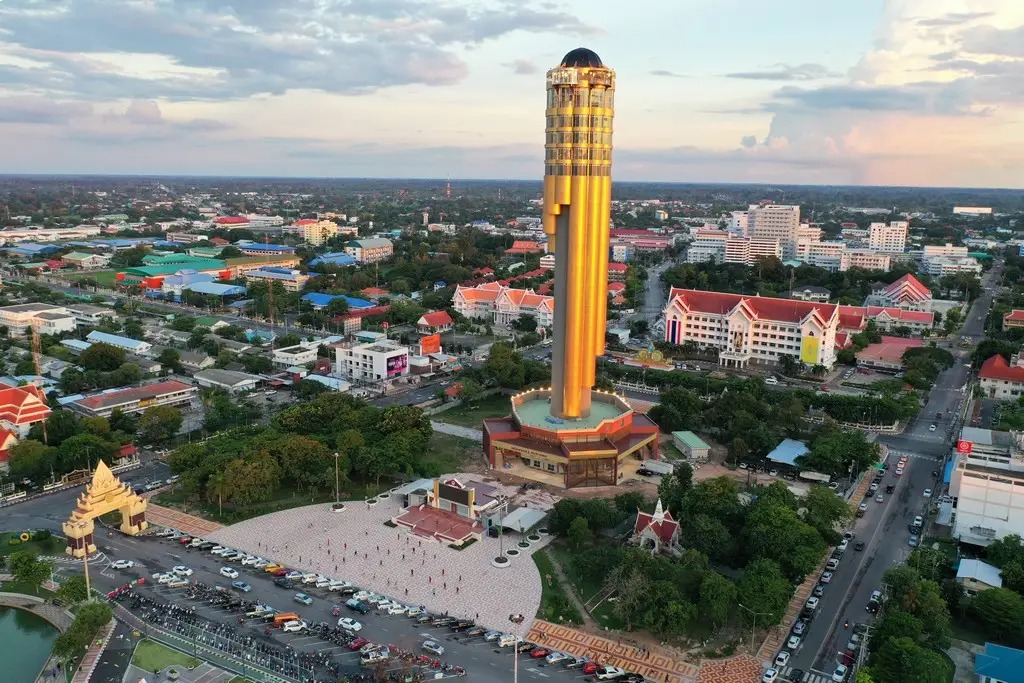
20 Best Places to Visit in Roi Et – Popular Attractions in Northeastern Thailand Roi Et is one of the major provinces of northeastern Thailand, distinguished by its history, Buddhism, religious art, Isan culture, Khmer archaeological sites, community wisdom, and the vast landscape of Thung Kula Rong Hai. While the modern image of Roi Et is often associated with Bueng Phalan Chai, Roi Et Tower, Luang Pho Yai, and Phra Maha Chedi Chai Mongkhon, travelling beyond the city center reveals attractions spread across many districts. These range from major archaeological sites in Kaset Wisai and Suwannaphum to natural and Buddhist sites in Nong Phok, as well as historic temples, craft communities, and educational attractions that provide a deeper understanding of Roi Et beyond its best-known urban landmarks.
For first-time visitors, a practical itinerary begins with Bueng Phalan Chai and Wat Buraphaphiram in Roi Et city. From there, continue to Phra Maha Chedi Chai Mongkhon and Pha Nam Yoi in Nong Phok District, followed by Wat Prachakhom Wanaram, also known as Wat Pa Kung. Another full day can be devoted to an archaeological route covering Prasat Ku Ka Sing, Ku Phra Kona, and Prang Ku, before learning about the landscape and agricultural traditions of Thung Kula Rong Hai. Travellers interested in historic temples in the city should also visit Wat Klang Ming Mueang, which is important for its art, religion, and connection with the history of Roi Et.
The name “Roi Et” is connected with the historical identity of Saket Nakhon and the concept of a city surrounded by numerous dependent settlements. The province lies within the Chi River basin and contains evidence of human settlement dating back to prehistoric times. It later came under the influence of Dvaravati Buddhism before Khmer culture became increasingly prominent. As a result, boundary stones, archaeological objects, and stone sanctuaries can be found in several districts, particularly Kaset Wisai, Thawat Buri, and Suwannaphum.
Archaeological sites such as Prasat Ku Ka Sing, Ku Phra Kona, and Prang Ku show that Roi Et was not simply an agricultural region but formed part of a wider cultural and civilizational network across the central Northeast. These structures reflect religious beliefs, construction techniques using sandstone and laterite, and historical connections with the Khmer Empire.
Roi Et is also deeply connected with Buddhism. Wat Buraphaphiram is home to Luang Pho Yai, a monumental standing Buddha image that has become one of the province’s most recognizable spiritual symbols. Wat Klang Ming Mueang is an old temple in the historic city center, while Phra Maha Chedi Chai Mongkhon in Nong Phok District serves as an important center of Buddhist devotion in the Northeast. Wat Prachakhom Wanaram, or Wat Pa Kung, is especially notable for its large sandstone chedi and distinctive architectural character.
The province also offers distinctive natural landscapes, particularly around Pha Nam Yoi and the mountainous areas of Nong Phok District. These highland landscapes differ sharply from the broad plains of central and southern Roi Et. Thung Kula Rong Hai, meanwhile, represents one of the largest agricultural landscapes in the region, transformed over time from an area remembered for drought and hardship into one of Thailand’s most important jasmine-rice-producing regions.
Roi Et’s cultural identity is also strongly connected with the Bun Phawet tradition. This major Isan merit-making festival is linked with the Great Birth Sermon and the Vessantara Jataka, featuring religious sermons, processions, and extensive community participation. The area around Bueng Phalan Chai therefore functions not only as a public park but also as a major civic and cultural venue for provincial festivals.
For efficient travel, Roi Et is best divided into several zones to reduce backtracking: Roi Et city, Nong Phok, Kaset Wisai–Suwannaphum, and Thawat Buri. A 3-day itinerary can cover many of the province’s major landmarks, while travellers who want to explore temples, archaeological sites, nature, museums, and local communities in greater depth should allow approximately 4–5 days.
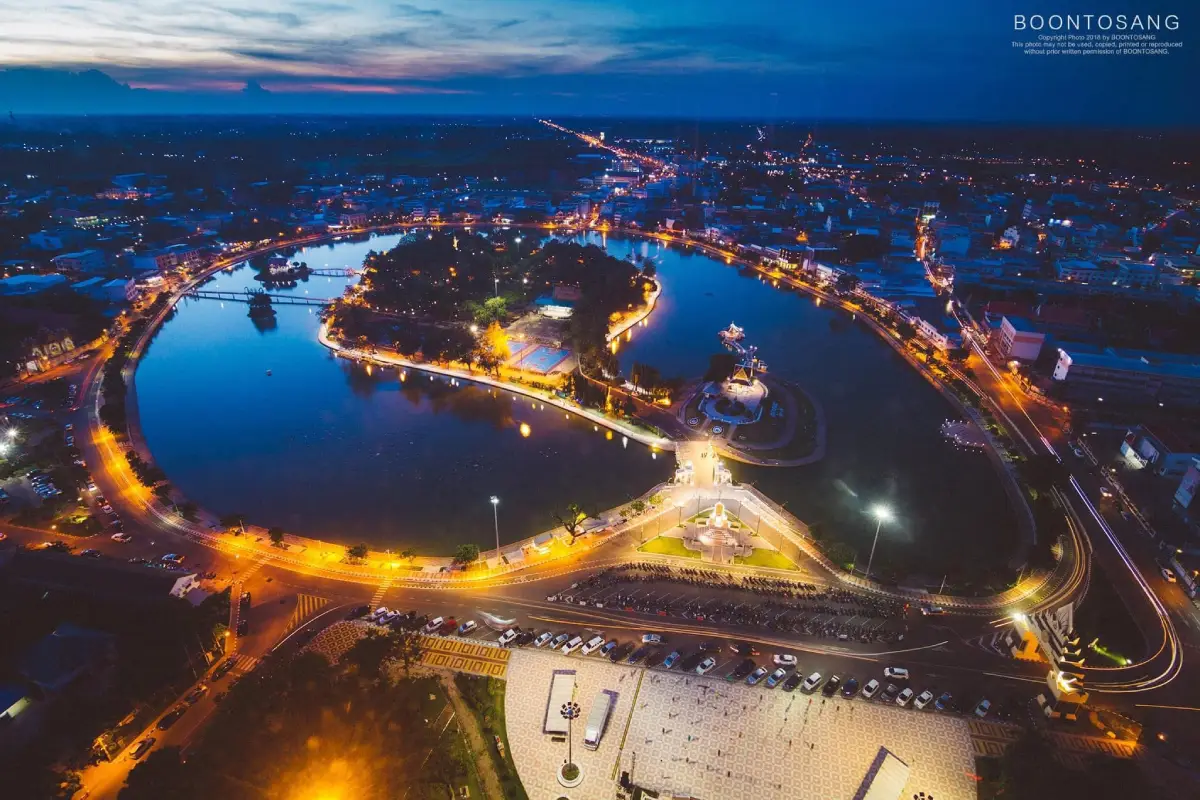
1. Bueng Phalan Chai is one of the most important landmarks in central Roi Et and a major public space reflecting the province through urban landscape, history, local life, faith, and community activities. The large lake is located in Nai Mueang Subdistrict, Mueang Roi Et District, and features an island, green spaces, flower gardens, walking paths, exercise areas, a children’s playground, sacred sites, and spaces used for major provincial festivals.
Highlights: Large lake in the city center, central island, city-pillar shrine area, walking Buddha image, flower gardens, recreation spaces, children’s playground, health park, and a convenient location connected with Roi Et Tower and other major city attractions.
Bueng Phalan Chai has a deeper meaning for local residents than simply being a public park. The area reflects an important period of collective community effort when the lake, which had become shallow, was dredged and restored. People from different parts of the province contributed labor to the project, helping transform it into an important water resource and public space that has remained part of Roi Et’s civic life ever since.
The open landscape around the lake makes early morning and evening particularly pleasant for walking, jogging, and photography. The central island and landscaped gardens create a relaxing environment suitable for families, older travellers, and first-time visitors who want to experience Roi Et at a slower pace.
During important festivals, especially Bun Phawet, Bueng Phalan Chai changes from an ordinary public park into a large cultural venue filled with processions, religious activities, and community gatherings. Travellers visiting during the festival therefore experience a very different atmosphere from a normal day.
Bueng Phalan Chai is also an ideal starting point for exploring central Roi Et. From here, visitors can continue easily to Wat Klang Ming Mueang, Wat Buraphaphiram, Roi Et National Museum, Saket Nakhon Gate, Roi Et Municipal Aquarium, and Somdet Phra Srinagarindra Park Roi Et.
Getting There: Bueng Phalan Chai is located in central Roi Et, Nai Mueang Subdistrict, Mueang Roi Et District. It is open daily from 05:00–19:00. No admission fee is announced for the public park area.
Map (GPS): https://www.google.com/maps/dir/?api=1&destination=16.058598,103.652015&travelmode=driving
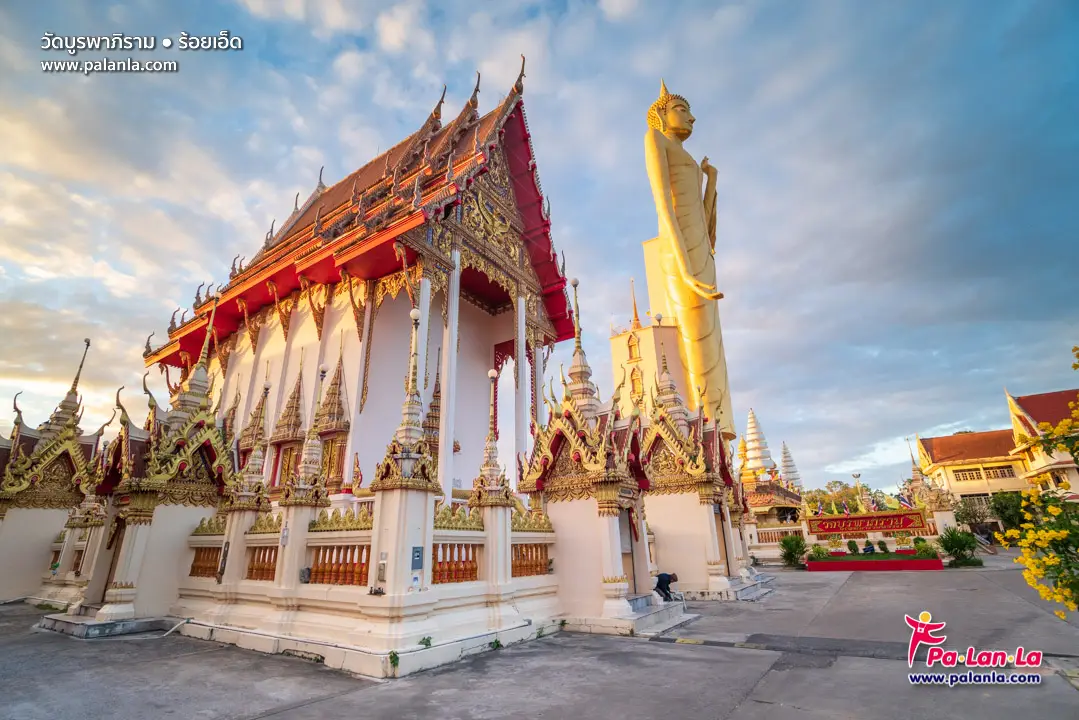
2. Wat Buraphaphiram is a third-class royal temple of the ordinary type and one of the best-known temples in Roi Et Province. Located on Phadung Phanit Road in the city center, its most important feature is Phra Phuttha Rattana Mongkhon Maha Muni, commonly known as “Luang Pho Yai,” a monumental standing Buddha image in the blessing posture that can be seen from many parts of the city and has become an important spiritual symbol for the people of Roi Et.
Highlights: Luang Pho Yai, the ordination hall, murals depicting the life of the Buddha and Bun Phawet tradition, Chao Pho Mahesak Shrine, museum areas around the base of the Buddha image, and the temple’s role as an important royal monastery of Roi Et.
The temple was originally known as “Wat Hua Ro” and its early history was connected with travel in the period before modern roads and motor vehicles. The temple area once served as a resting place for merchants and travellers entering or leaving Roi Et. It was later expanded and developed under the name Wat Burapha because of its location on the eastern side of the city, before eventually receiving its present name, Wat Buraphaphiram.
Luang Pho Yai is the feature that made the temple a provincial icon. The enormous height and proportions of the standing Buddha make it visible from a considerable distance. Areas around the base of the image are also used for religious activities and for displaying information connected with the temple.
The ordination hall and other religious structures contain artistic details that deserve time and attention, including Buddhist narrative murals, scenes associated with Bun Phawet, and decorative elements showing the relationship between Buddhism and Isan culture.
Wat Buraphaphiram is particularly suitable for a morning or early-afternoon visit and can easily be included in the same city route as Bueng Phalan Chai, Wat Klang Ming Mueang, and Roi Et National Museum.
Getting There: The temple is located on Phadung Phanit Road, Nai Mueang Subdistrict, Mueang Roi Et District. It is open daily, including public holidays, from 08:30–16:30. Admission is free.
Map (GPS): https://www.google.com/maps/dir/?api=1&destination=16.061734,103.658277&travelmode=driving
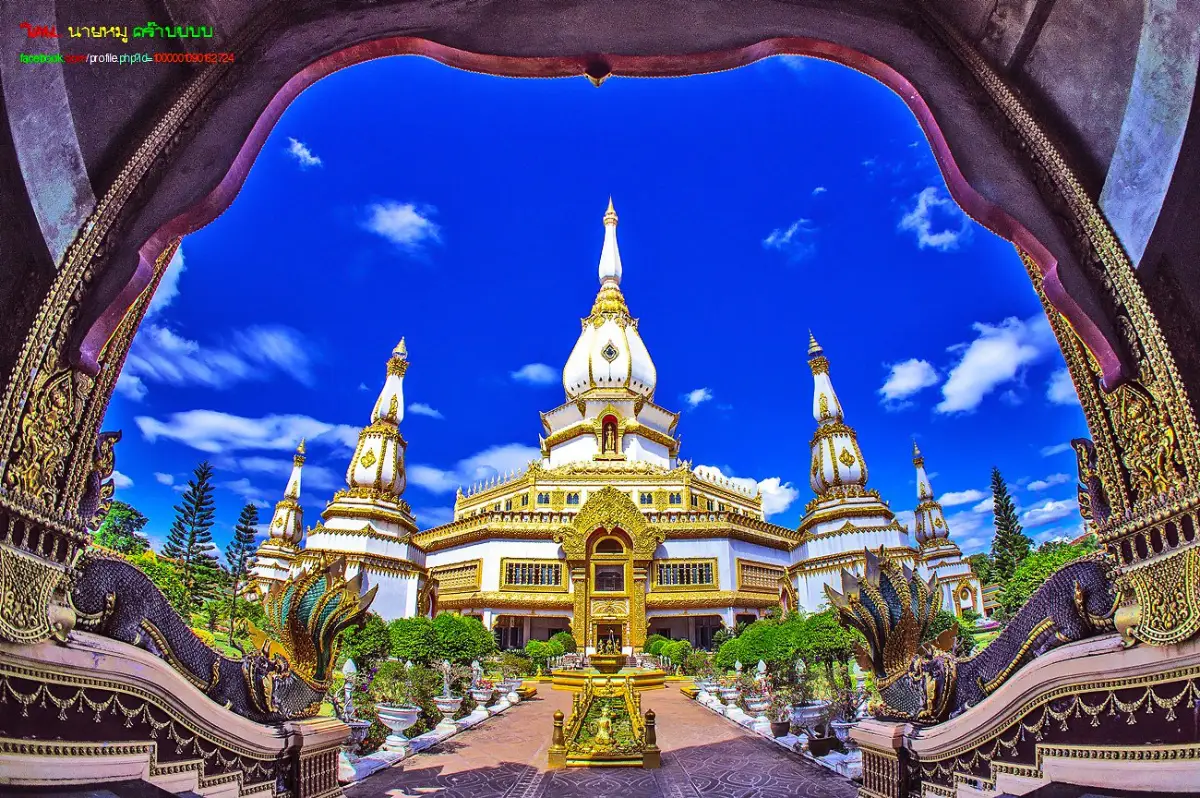
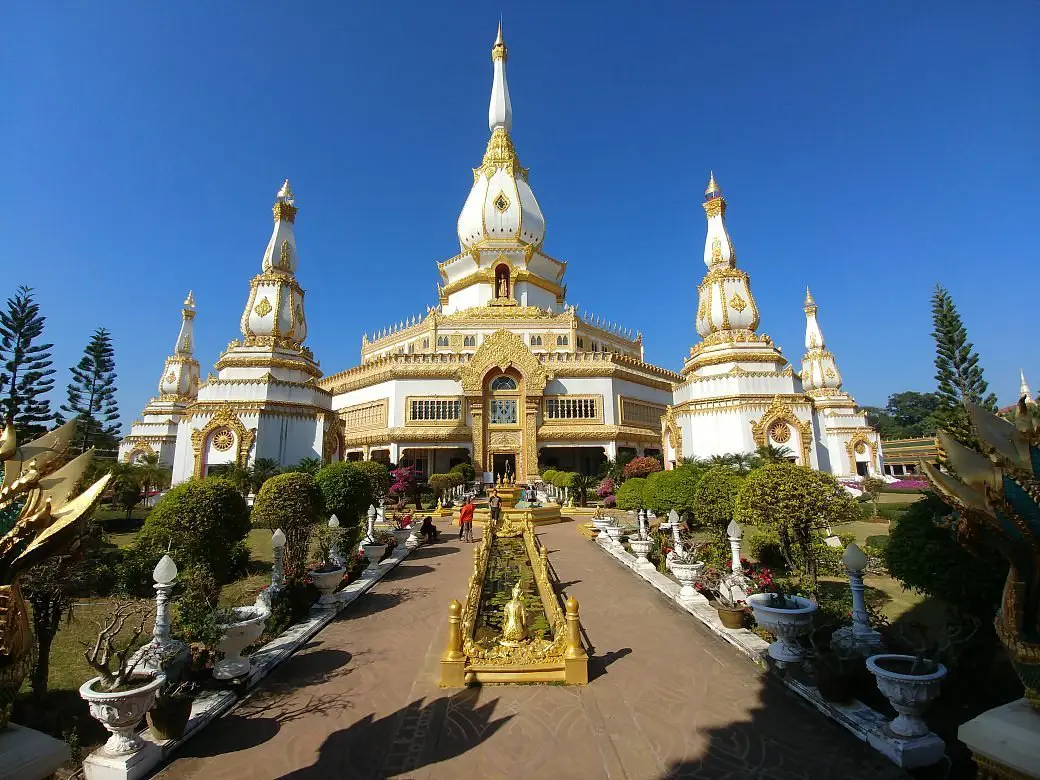
3. Phra Maha Chedi Chai Mongkhon is located within Wat Pha Nam Thip Thep Prasit Wanaram in Pha Nam Yoi Subdistrict, Nong Phok District. It is one of the largest and most recognizable religious landmarks in Roi Et. The white chedi, richly decorated with golden details, rises above the surrounding mountain landscape and is an important destination for both travellers and Buddhist pilgrims from across the region.
Highlights: Monumental white-and-gold chedi, sacred Buddha relics, 8 surrounding chedis, museum areas, stories of respected forest-meditation masters, and the mountain atmosphere of Nong Phok District.
Phra Maha Chedi Chai Mongkhon was created through the collective faith of Buddhists who wished to build a sacred monument for enshrining relics of the Buddha and commemorating respected meditation teachers. The project is closely associated with Luang Pu Sri Mahawiro, who played an important role in initiating the construction and development of the site.
The architecture is distinguished by its immense scale, highly visible profile, and elaborate gold decoration against the white structure. The interior is divided into several levels used for worship, Dhamma study, and displays connected with Buddhism and revered teachers.
Because the chedi stands on elevated terrain, travelling here offers a very different experience from visiting urban temples. Visitors encounter winding mountain roads, forest landscapes, and a quieter environment, making the destination suitable for travellers who want to combine faith-based tourism with nature.
When time permits, Phra Maha Chedi Chai Mongkhon should be combined with Pha Nam Yoi and the surrounding Isan Buddhist Park area. These attractions lie within the same zone and together demonstrate the close relationship among mountain geography, forest monasteries, and large-scale Buddhist architecture.
Getting There: Phra Maha Chedi Chai Mongkhon is located inside Wat Pha Nam Thip Thep Prasit Wanaram, Ban Khok Klang, Pha Nam Yoi Subdistrict, Nong Phok District. It is open daily, including public holidays, from 06:00–17:00.
Map (GPS): https://www.google.com/maps/dir/?api=1&destination=16.325476,104.318047&travelmode=driving
4. Pha Nam Yoi (Isan Buddhist Park) is an important natural and religious area in Nong Phok District. Set within mountainous terrain that differs sharply from the broad plains covering much of Roi Et Province, the area combines scenic nature, Buddhist attractions, and a landscape closely associated with Phra Maha Chedi Chai Mongkhon.
Highlights: Cliffs and mountains, Isan Buddhist Park, natural viewpoints, forest scenery, peaceful surroundings, and a location close to Phra Maha Chedi Chai Mongkhon.
The name Pha Nam Yoi is associated with the mountain and cliff landscape, where in some periods water can be seen flowing or seeping from rock layers. The atmosphere therefore contrasts strongly with Roi Et’s urban landmarks and is suitable for travellers seeking quiet forest and mountain scenery.
Nong Phok is one of the higher areas of Roi Et Province. As a result, routes around Pha Nam Yoi offer broader views and can feel cooler than the lowlands during some seasons. Travellers interested in landscape photography should allow enough time for viewpoints rather than treating the area only as a route to the chedi.
The Isan Buddhist Park adds a spiritual dimension to the natural landscape. Visitors should dress appropriately and maintain a respectful atmosphere in areas used for Buddhist activities.
Pha Nam Yoi is best combined with Phra Maha Chedi Chai Mongkhon in the same day. Leaving Roi Et city in the morning allows enough time to explore both the religious sites and the natural landscape without rushing.
Map (GPS): https://www.google.com/maps/dir/?api=1&destination=16.332200,104.320200&travelmode=driving
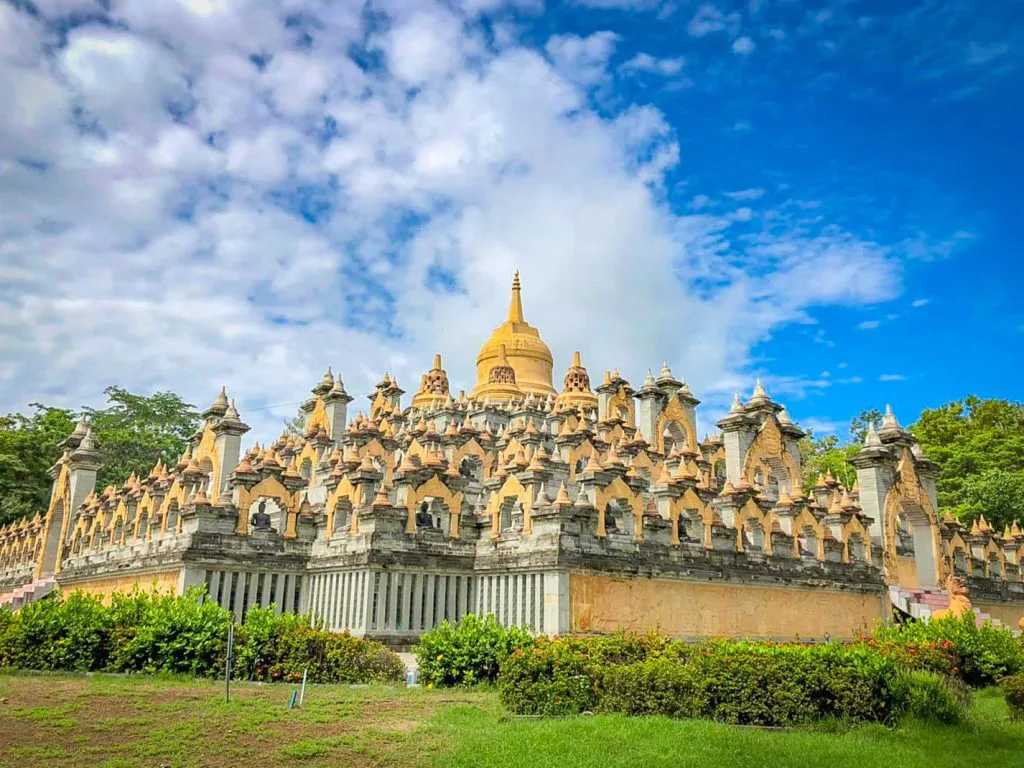
5. Wat Prachakhom Wanaram (Wat Pa Kung) is famous for its large sandstone chedi, whose architectural style differs significantly from that of most temples in northeastern Thailand. Located in Si Somdet District, the temple is particularly rewarding for travellers interested in Buddhism, architecture, and stone carving.
Highlights: Large sandstone chedi, stone carvings illustrating Buddhist stories, architectural details, and the quiet atmosphere of a forest temple.
The chedi is the temple’s most distinctive feature. Its design was inspired by an important religious monument in Indonesia and adapted to the context of Thai Buddhism, using large quantities of sandstone. From the exterior, visitors can clearly see the layered structure and continuous carved decoration around the monument.
Many of the stone carvings depict episodes from the life of the Buddha, Buddhist teachings, and important religious events. Visitors interested in the details should walk slowly around the structure, as the value of the site lies not only in the size of the chedi but also in the craftsmanship and visual storytelling carved into the stone.
The surrounding environment retains the peaceful character of a forest monastery, providing a very different atmosphere from urban tourist attractions. It is suitable for making merit, paying respect, and studying the architecture at an unhurried pace.
Wat Pa Kung can be included as a stop when travelling from Roi Et city toward other districts or used as the main destination for a half-day trip in Si Somdet and nearby areas.
Map (GPS): https://www.google.com/maps/dir/?api=1&destination=15.992062,103.495945&travelmode=driving
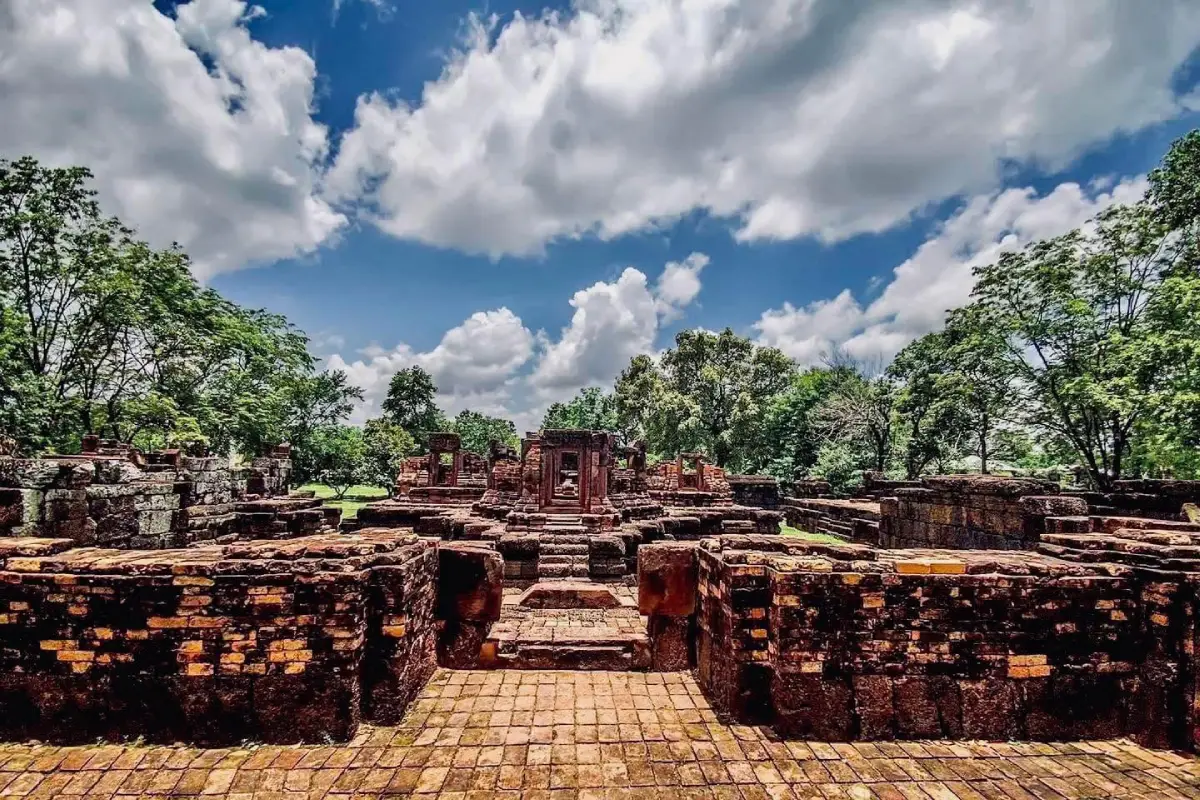
6. Prasat Ku Ka Sing is located in Ku Ka Sing Subdistrict, Kaset Wisai District, and is one of the most important Khmer archaeological sites in Roi Et Province. It is a major destination for travellers interested in northeastern Thai history during the period when Khmer cultural influence extended across the Chi River basin.
Highlights: Khmer-style stone sanctuary complex, principal towers, auxiliary structures, laterite walls, carved architectural details, and a sacred-site plan reflecting historical religious concepts.
Prasat Ku Ka Sing is particularly notable because its overall sacred architectural plan can still be understood relatively clearly. The sanctuary, surrounding wall, and associated structures allow visitors to visualize the organization of an ancient Khmer religious complex rather than seeing only an isolated ruin.
The main materials include sandstone and laterite, both commonly found in Khmer monuments throughout northeastern Thailand. The construction techniques demonstrate sophisticated knowledge of structural design and the organization of religious architecture according to sacred concepts.
A visit to Prasat Ku Ka Sing is best understood in relation to Ku Phra Kona and Prang Ku. Together, these 3 sites provide a broader picture of the network of Khmer religious monuments across Roi Et and the central Northeast. Travellers with a strong interest in archaeology should consider dedicating a full day to this route.
The archaeological site is surrounded by present-day communities and agricultural land. A visit therefore offers not only ancient architecture but also a view of how heritage sites continue to exist alongside contemporary rural life.
Map (GPS): https://www.google.com/maps/dir/?api=1&destination=15.576540,103.676037&travelmode=driving
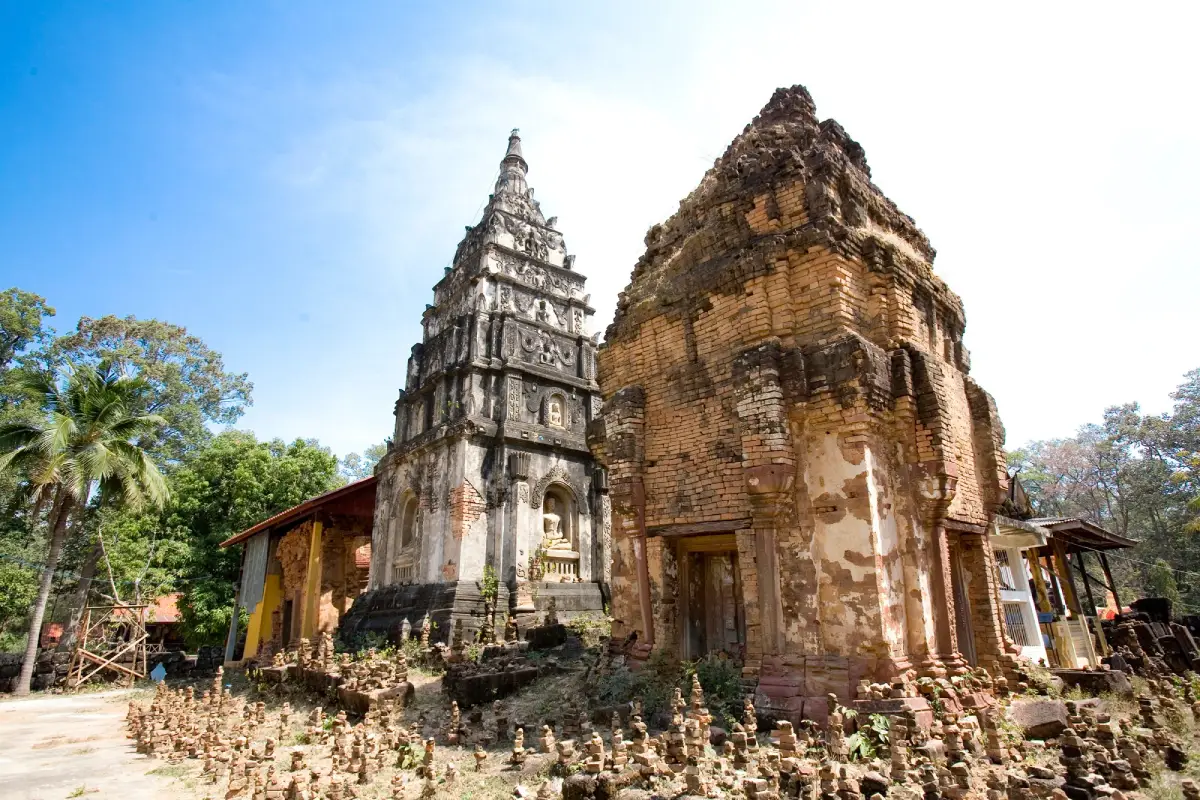
7. Ku Phra Kona is an important Khmer archaeological site in Suwannaphum District, located within a landscape historically connected with Thung Kula Rong Hai and the southern part of Roi Et Province. Its principal features are a group of Khmer-style towers constructed according to religious concepts of the period, with significant portions of the main structures still visible today.
Highlights: Khmer towers, laterite and sandstone construction, ancient architectural details, a temple-and-community atmosphere, and a convenient location near Thung Kula Rong Hai.
Ku Phra Kona is a good example of how an ancient monument continues to exist within a modern religious and community landscape. Visitors can see that the historical structures are not completely separated from present-day life but remain part of the cultural environment familiar to local residents.
The architecture reflects Khmer construction techniques using durable materials and a layout designed around religious meaning. Although some elements have changed or deteriorated over time, the surviving remains still help visitors understand the character of sacred architecture during the period of Khmer influence in northeastern Thailand.
Because Ku Phra Kona lies near Thung Kula Rong Hai, the 2 destinations can easily be combined in one day. Visitors can begin with the archaeological site and then continue into the agricultural landscape to learn how Thung Kula Rong Hai has changed over time.
Visitors should avoid climbing on the monument or touching fragile sections unnecessarily. Many original stone components are centuries old and should be observed from designated areas.
Map (GPS): https://www.google.com/maps/dir/?api=1&destination=15.555925,103.820395&travelmode=driving
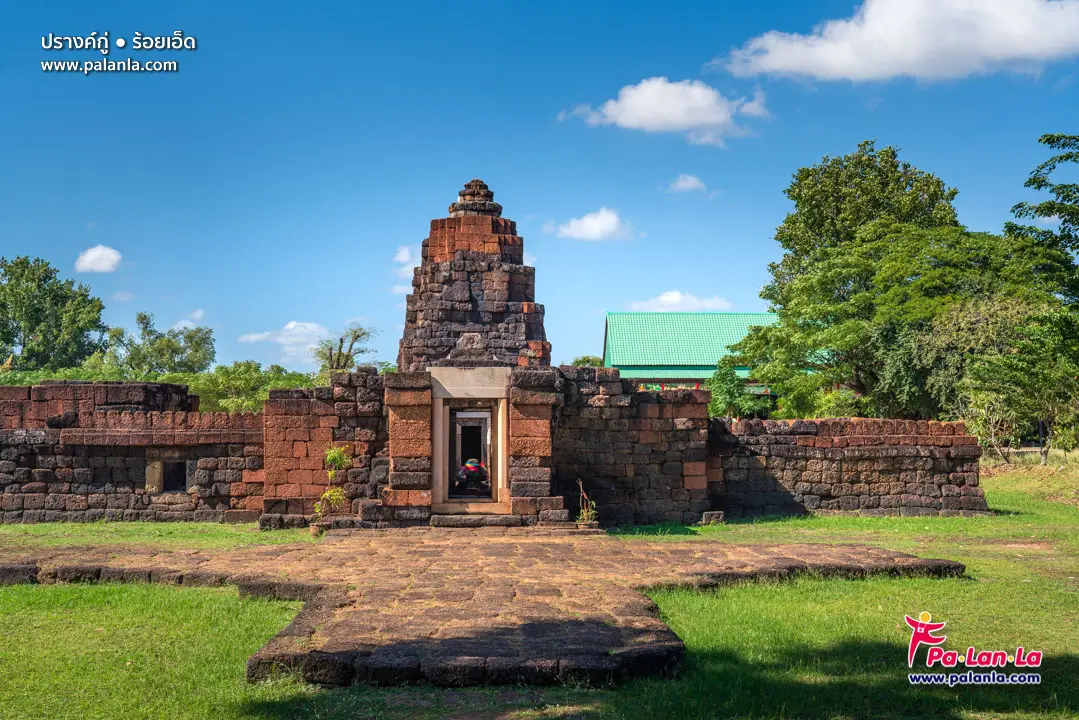
8. Prang Ku (Prasat Nong Ku) is located at Ban Yang Ku, Ma-ue Subdistrict, Thawat Buri District. The archaeological site is especially important for understanding the Arokayasala system of the Khmer period, particularly during the reign of King Jayavarman VII, when religious structures and hospital-related sanctuaries were established throughout the empire.
Highlights: Principal sanctuary tower, library building, enclosure wall, gateway, pond, laterite construction, and an architectural plan associated with an Arokayasala.
The term “Arokayasala” refers to a religious complex associated with the concept of a hospital or healing facility in the ancient Khmer period. Such sites commonly included a principal sanctuary, auxiliary buildings, walls, entrance gateways, and water sources. These elements make Prang Ku valuable not merely as an ancient ruin but as archaeological evidence of healthcare and community organization in the past.
The site lies within the grounds of Wat Si Rattanaram, creating a landscape in which an ancient monument exists alongside a contemporary Buddhist temple and local community. The overall atmosphere is quiet and suitable for travellers who want to study history at an unhurried pace.
The weathered laterite gives the monument a distinctive texture. Morning or afternoon light is preferable for photography because it reveals the dimensional character of the stone blocks and architectural details better than harsh midday sunlight.
Prang Ku can be visited as a half-day trip from Roi Et city because Thawat Buri is relatively close. Travellers with additional time can combine it with the Roi Et Science and Cultural Centre for Education in the same district.
Map (GPS): https://www.google.com/maps/dir/?api=1&destination=16.077064,103.734831&travelmode=driving
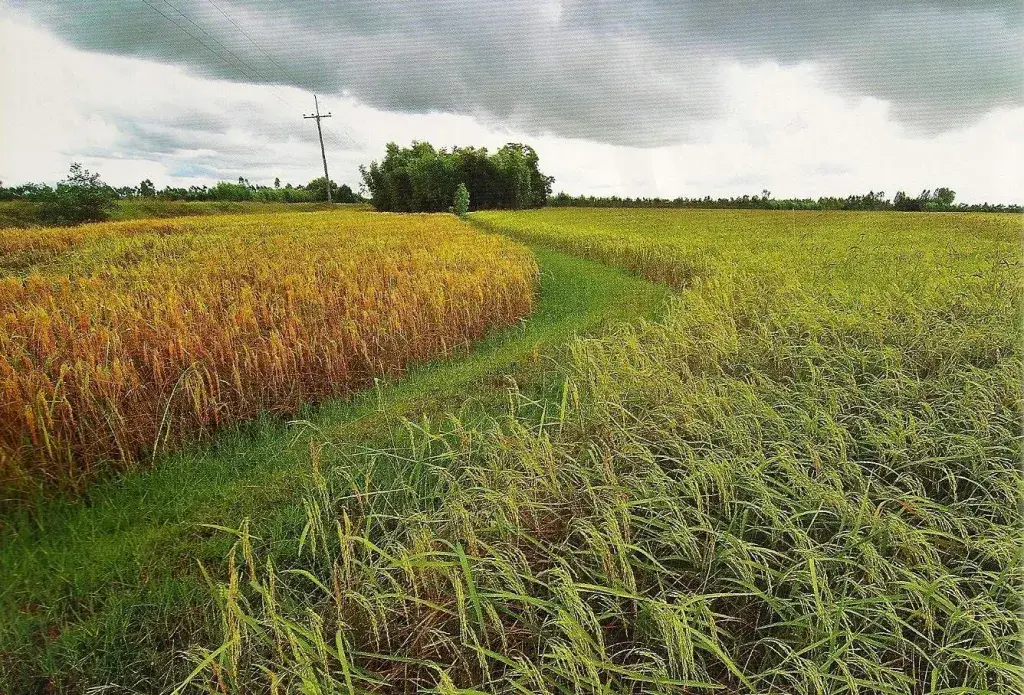
9. Thung Kula Rong Hai is a vast landscape of great importance to the history, agriculture, and identity of the central Northeast. It extends across several provinces, but a large proportion lies within Roi Et, particularly in Pathum Rat, Kaset Wisai, Suwannaphum, and Phon Sai districts.
Highlights: Vast open plains, legends of travelling Kula merchants, one of Thailand’s most important jasmine-rice-growing regions, agricultural scenery, and opportunities to learn about soil, water, and the development of formerly drought-prone land.
The name “Thung Kula Rong Hai,” literally “the field where the Kula cried,” comes from stories of Kula travelling merchants crossing an enormous dry plain with little shade and insufficient water. The intense heat and long distances were said to have challenged even these famously resilient travellers, giving rise to a name that vividly reflects the harsh conditions of the past.
Historically, the area was affected by saline soil, sandy ground, and seasonal water shortages. Improvements in soil management, water systems, and agricultural knowledge eventually transformed the region into one of Thailand’s most important production areas for high-quality Hom Mali jasmine rice.
The rice-growing and harvest seasons reveal the landscape at its most expressive. Fields change from green during the growing period to golden tones before harvest, making Thung Kula Rong Hai especially rewarding for agricultural tourism, cultural travel, and landscape photography.
Thung Kula Rong Hai should be understood as a broad regional landscape rather than a single photography stop. Visitors can travel through Suwannaphum, Kaset Wisai, Pathum Rat, and Phon Sai, combining the agricultural scenery with Ku Phra Kona and Prasat Ku Ka Sing to experience both historical heritage and contemporary rural life.
Getting There: A useful reference point on the Suwannaphum side lies along the route from the district center toward Ku Phra Kona and the Thung Kula Rong Hai Land Development Center. General areas of the plain can be visited according to seasonal conditions and road access.
Map (GPS): https://www.google.com/maps/dir/?api=1&destination=15.469192,103.678431&travelmode=driving
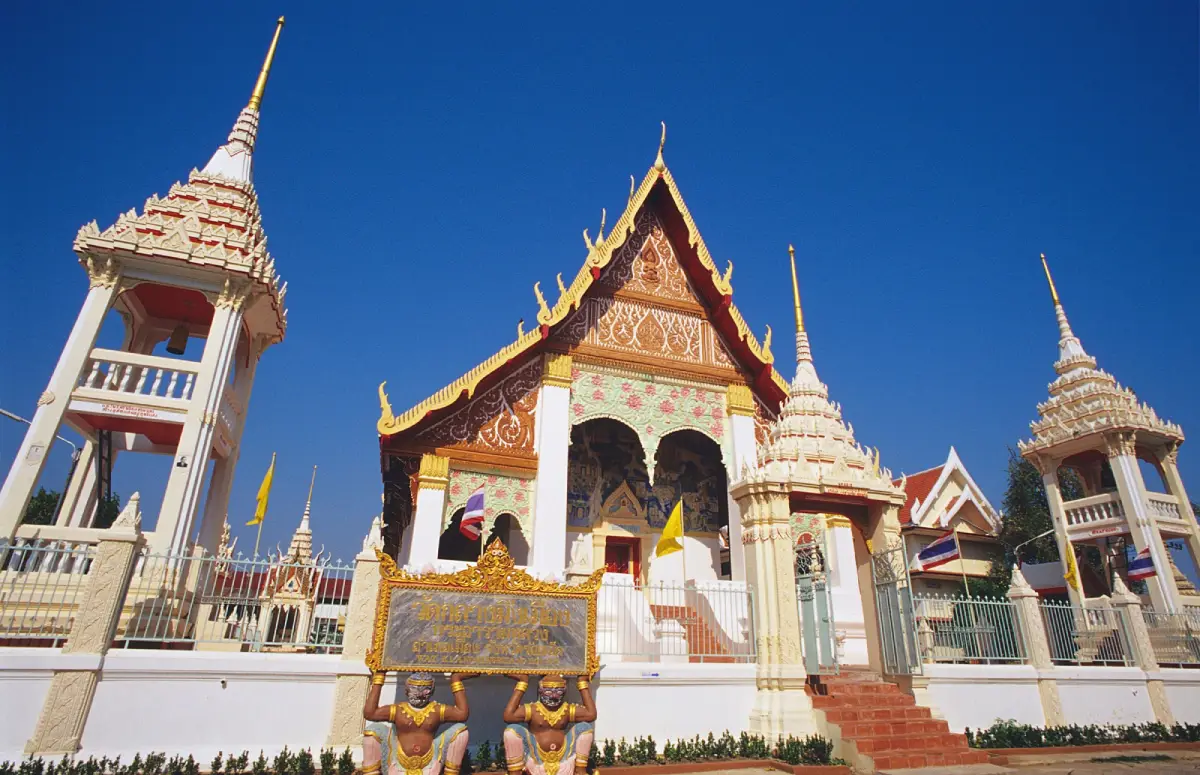
10. Wat Klang Ming Mueang is an old royal temple in central Roi Et, located on Charoen Phanit Road in Nai Mueang Subdistrict. It is important for religion, history, Buddhist art, and the political history of the city, particularly because the temple was once used for the traditional oath-of-allegiance ceremony known as the drinking of the water of allegiance.
Highlights: Historic ordination hall, Buddhist murals, Phra Phuttha Ming Mueang Mongkhon, the temple’s connection with historical oath-taking ceremonies, and its role as an important royal monastery of Roi Et.
The temple was originally known simply as “Wat Klang,” meaning the central temple, because of its location within the old city. The present name, Wat Klang Ming Mueang, reflects its status as an important spiritual center and temple associated with the identity of Roi Et.
Historical records concerning the establishment of the temple indicate a history extending back several centuries and connect the site with Roi Et before the city developed into the modern provincial center seen today.
The ordination hall is one of the temple’s most important elements. Its interior contains murals depicting the life of the Buddha and other religious stories. These works are valuable examples of local religious art and provide insight into the beliefs of the community during different periods.
The temple’s historical role is particularly evident in its association with the drinking of the water of allegiance, an important ceremony connected with declarations of loyalty and responsibility to the state. The use of Wat Klang Ming Mueang for such a civic ritual shows that the temple once held a status far beyond that of an ordinary neighborhood monastery.
Today, Wat Klang Ming Mueang can easily be combined with Roi Et National Museum, Bueng Phalan Chai, and Wat Buraphaphiram because all are located within the city and require only short travel times between them.
Getting There: Wat Klang Ming Mueang is located on Charoen Phanit Road, Nai Mueang Subdistrict, Mueang Roi Et District. It is open daily, including public holidays, from 08:30–16:30. Admission is free.
Map (GPS): https://www.google.com/maps/dir/?api=1&destination=16.062040,103.654488&travelmode=driving
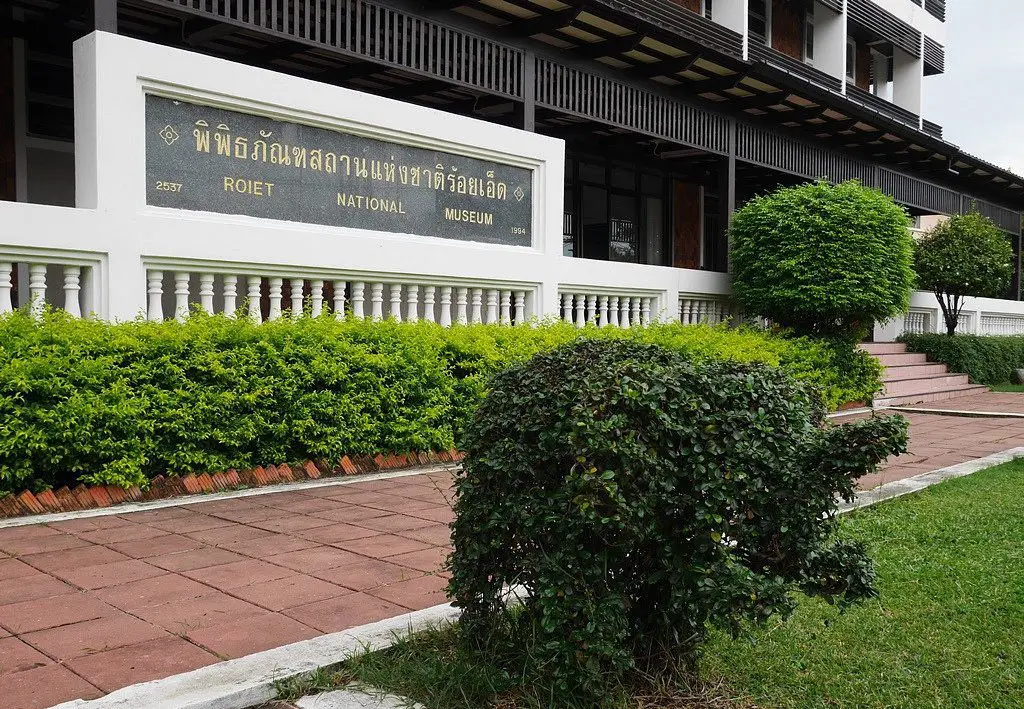
11. Roi Et National Museum is an important learning center for travellers who want to understand Roi Et Province in greater depth rather than simply visiting attractions at surface level. Located on Ploen Chit Road in Nai Mueang Subdistrict, Mueang Roi Et District, near the provincial hall, Bueng Phalan Chai, and other central-city landmarks, the museum presents a broad range of subjects including geography, geology, archaeology, history, settlement, local lifestyles, traditions, important individuals, handicrafts, and Roi Et silk.
Highlights: Exhibitions on Roi Et history, archaeology of ancient settlements, traditional arts and crafts, local silk, community life, and displays explaining the province’s development from ancient times to the present.
One of the museum’s greatest strengths is its role as an introduction to the province before visitors travel to the actual historical sites. Beginning a trip here makes it easier to understand why Roi Et contains Dvaravati archaeological remains, Khmer sanctuaries, historic temples, weaving communities, and the vast agricultural landscape of Thung Kula Rong Hai within the same province.
The archaeological displays show that the Roi Et area was inhabited long before the emergence of the modern city. Evidence from different periods illustrates cultural transitions from ancient settlements and Dvaravati influence to Khmer culture and the later development of northeastern Thai communities.
The sections devoted to silk and traditional handicrafts are equally important because weaving knowledge continues to survive in several Roi Et communities. Seeing fabrics, patterns, and the cultural context of weaving at the museum before travelling to Ban Wai Lum helps visitors better appreciate the value of local textile traditions.
The displays are not limited to archaeological objects inside glass cases. Models and interpretive elements are also used to explain social context, making the museum suitable for adults, students, families, and travellers who want an educational dimension to their trip.
Roi Et National Museum can easily be included in the same city route as Bueng Phalan Chai, Wat Klang Ming Mueang, Wat Buraphaphiram, Saket Nakhon Gate, and Somdet Phra Srinagarindra Park Roi Et. Allow around 1–2 hours for a comfortable visit before continuing to other attractions in the city center.
Getting There: The museum is located on Ploen Chit Road, Nai Mueang Subdistrict, Mueang Roi Et District, near the provincial hall. It is open Wednesday–Sunday from 09:00–16:00.
Map (GPS): https://www.google.com/maps/dir/?api=1&destination=16.054694,103.657290&travelmode=driving
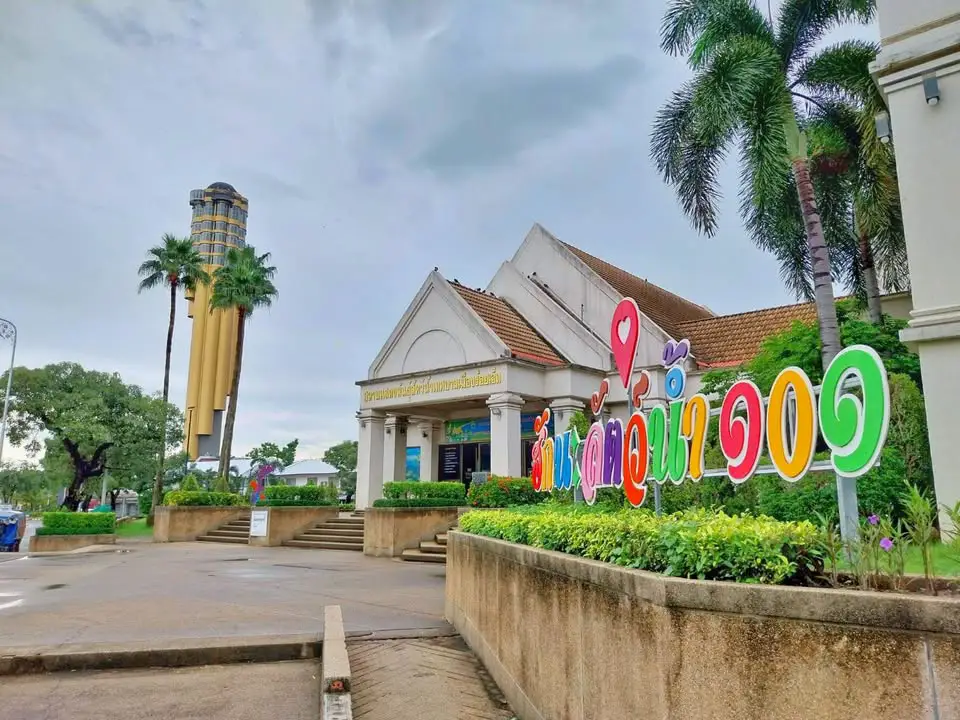
12. Roi Et Municipal Aquarium is an educational attraction designed especially for families. It is located near the southwestern side of Bueng Phalan Chai on Sunthon Thep Road, opposite Wat Bueng Phra Lan Chai. The aquarium focuses on freshwater fish and aquatic ecosystems of northeastern Thailand and includes a glass tunnel that gives visitors a closer and more immersive view of aquatic life.
Highlights: Freshwater fish displays, a large aquarium tank, underwater glass tunnel, ecosystems of the Chi–Mun–Mekong river basins, and exhibits explaining the relationship between aquatic resources and Isan communities.
The aquarium is particularly suitable for families with children because it is compact enough to explore comfortably while still providing both entertainment and educational value. Visitors can learn about the diversity of freshwater fish in the region and the importance of rivers, ponds, wetlands, and reservoirs to food systems and everyday life in northeastern Thailand.
The facility includes visitor-service and exhibition areas as well as dedicated aquarium sections. Smaller tanks allow visitors to observe individual species more closely, while the large tank and glass tunnel provide a different viewing experience by placing visitors beneath and beside swimming fish.
For travellers staying in central Roi Et, the aquarium can conveniently be combined with Bueng Phalan Chai and Wat Bueng Phra Lan Chai. For families travelling with children, it adds useful variety to an itinerary otherwise dominated by temples and historic sites.
The aquarium also helps visitors understand Roi Et’s wider geography. The province is connected with the Chi River basin and contains numerous ponds, wetlands, and reservoirs, so the displays reveal an ecological dimension of Roi Et beyond its familiar image of rice fields and temples.
Getting There: Roi Et Municipal Aquarium is located near Bueng Phalan Chai on Sunthon Thep Road, Nai Mueang Subdistrict, Mueang Roi Et District. It is open Tuesday–Sunday from 08:30–16:30, closed on Monday, and admission is free.
Map (GPS): https://www.google.com/maps/dir/?api=1&destination=16.055793,103.650325&travelmode=driving
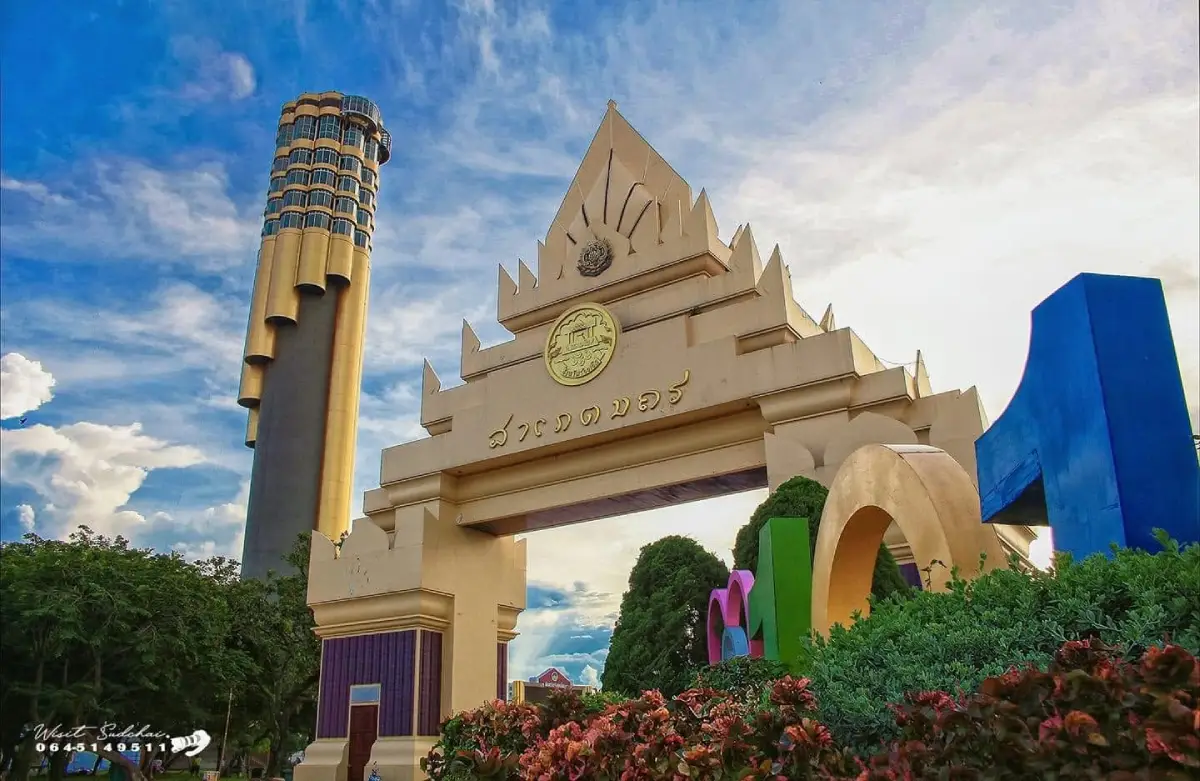
13. Saket Nakhon Gate is a symbolic city landmark in front of Bueng Phalan Chai that connects the historic name “Saket Nakhon” with the modern identity of Roi Et. The gate also plays an important cultural role in relation to the Bun Phawet festival, one of the province’s most significant annual traditions.
Highlights: Symbolic city gate, design inspired by ancient sema-stone art, lettering representing the name Saket Nakhon, a popular photography location in front of Bueng Phalan Chai, and its connection with the Bun Phawet festival.
Saket Nakhon Gate was not built as a defensive city gate like those of ancient walled cities. Instead, it serves as a cultural symbol linking Roi Et’s historical identity with the contemporary city. The name Saket Nakhon appears in local historical traditions and has been incorporated into the landscape to reinforce the city’s sense of place.
During Bun Phawet, the gate takes on additional meaning through its association with the Vessantara Jataka and the concept of the city of Sivi. The surrounding area therefore functions not only as a photography spot but also as part of the ceremonial landscape used during one of Roi Et’s most important religious festivals.
Its location directly in front of Bueng Phalan Chai makes the gate extremely easy to visit. Travellers can continue on foot or by a short ride to Roi Et Tower, Somdet Phra Srinagarindra Park Roi Et, and other attractions around the lake.
Morning and late afternoon are generally better for photography than midday because softer light reveals the architectural details more clearly and gives better views of the surrounding park.
Getting There: Saket Nakhon Gate is located in front of Bueng Phalan Chai in Mueang Roi Et District. It is open daily from 08:00–17:00.
Map (GPS): https://www.google.com/maps/dir/?api=1&destination=16.055746,103.653045&travelmode=driving
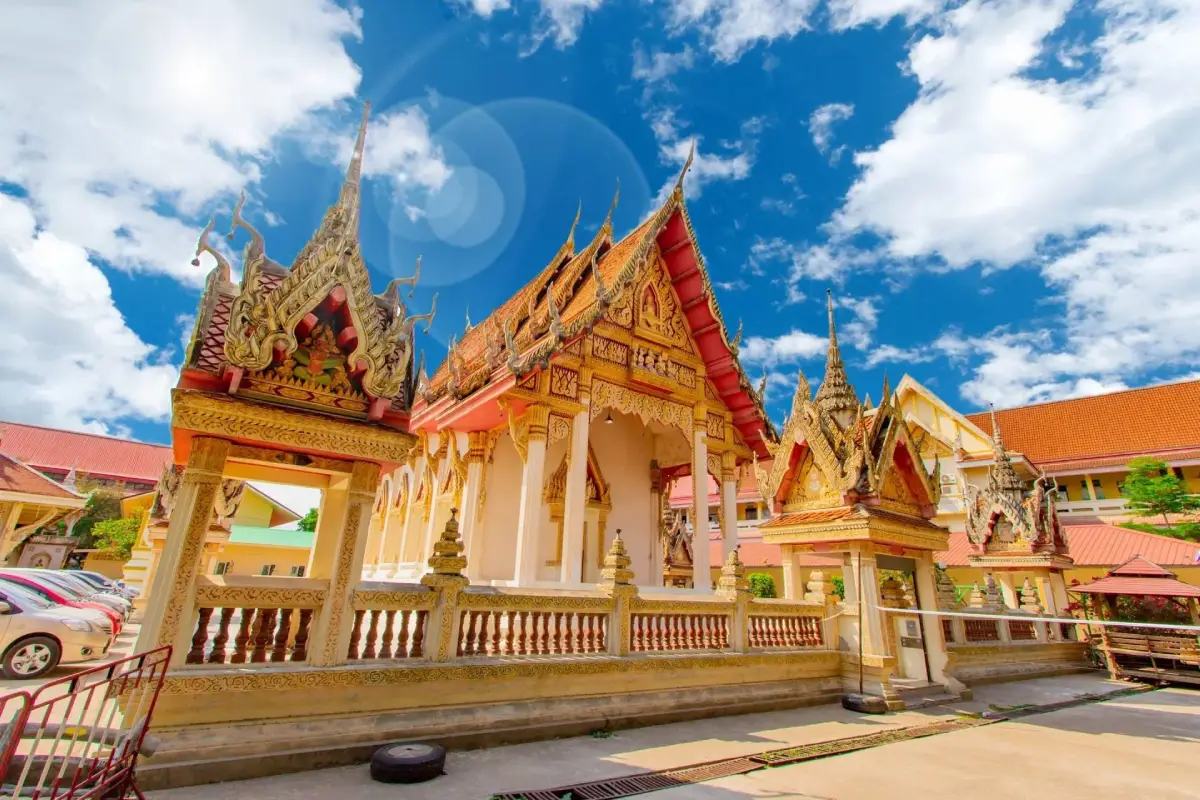
14. Wat Sra Thong is an old temple in central Roi Et, located on Hai Sok Road. It is especially important as the home of Luang Pho Phra Sangkachai, a revered sacred image closely connected with the founding of Roi Et, the city’s administrative history, and long-standing local beliefs.
Highlights: Luang Pho Phra Sangkachai, the ancient pond associated with the temple’s name, beliefs surrounding sacred water, and the temple’s historic role in civic ceremonies.
Luang Pho Phra Sangkachai has long been deeply respected by the people of Roi Et. Local tradition connects the enshrinement of the image at the temple with Phraya Khattiya Wongsa, also known as Thao Thon, the first ruler of Roi Et. This association helped establish the image as one of the sacred objects most closely tied to the historical memory of the city.
In the past, government officials were said to take annual oaths before Luang Pho Phra Sangkachai, promising to serve the city honestly. The use of the temple for such ceremonies illustrates the close relationship among religion, sacred authority, and civic administration in earlier periods.
Another important feature is the pond within the temple grounds. It is associated with the name “Sra Thong” and with beliefs surrounding sacred water once used in auspicious and official ceremonies. The meaning of the temple therefore extends beyond the viharn and sacred image to encompass the wider ritual landscape of the site.
Wat Sra Thong can be included in a central Roi Et temple route together with Wat Klang Ming Mueang and Wat Buraphaphiram. Visiting the 3 temples provides a useful comparison of important Buddha images, religious art, and the different civic roles temples have played in the city’s history.
Getting There: Wat Sra Thong is located on Hai Sok Road, Nai Mueang Subdistrict, Mueang Roi Et District. It is open daily from 08:30–16:30.
Map (GPS): https://www.google.com/maps/dir/?api=1&destination=16.063602,103.650000&travelmode=driving
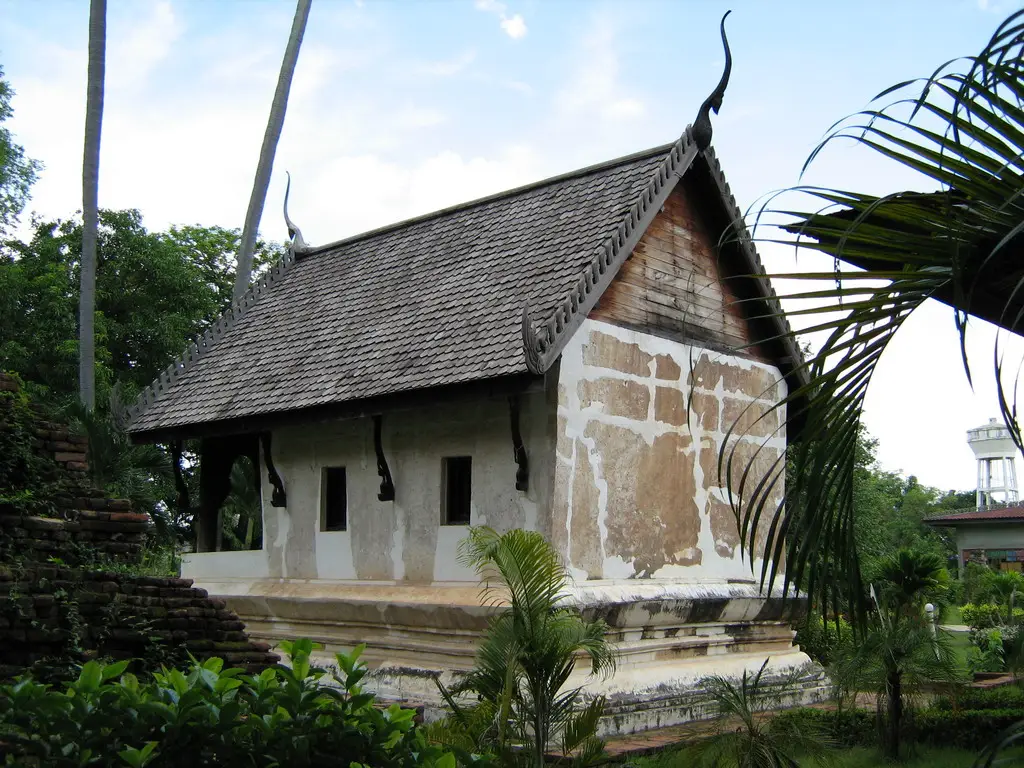
15. Wat Traiphum Khanachan is located in Ban Tak Daet, Hua Thon Subdistrict, Suwannaphum District, and is highly significant for its traditional Isan architecture and local religious art. Its most important feature is the compact sim thuep, or enclosed Isan-style ordination hall, which has been registered as an archaeological monument and preserves important examples of traditional craftsmanship.
Highlights: Traditional Isan sim, carved wooden elements on the pediment and decorative panels, Naga-shaped brackets, interior hup taem murals, and the atmosphere of an old rural temple.
The appeal of Wat Traiphum Khanachan lies not in monumental scale but in the details of vernacular craftsmanship. The proportions of the sim, gabled roof, carved woodwork, and decorative features all reflect the knowledge of local builders adapting religious architecture to the climate, materials, and culture of northeastern Thailand.
The interior hup taem, or traditional murals, are especially significant. These paintings tell Buddhist stories through a visual language that differs noticeably from mural traditions in central Thailand. The lines, colors, and composition offer valuable insight into the artistic perspective of local craftsmen and communities.
The temple’s history consists of several layers, including community settlement, relocation of religious space, and later construction of the present sim. It is therefore best understood as a record of community change rather than simply as an old building.
Because the sim contains historic murals and objects requiring conservation, the doors may be closed at certain times. Visitors should ask permission from monks or caretakers before entering and should avoid touching the walls or historic elements.
Wat Traiphum Khanachan combines naturally with Ku Phra Kona and Thung Kula Rong Hai on a Suwannaphum itinerary. This creates a full-day route covering Khmer archaeology, Isan religious art, and agricultural landscapes.
Getting There: The temple is located in Ban Tak Daet, Hua Thon Subdistrict, Suwannaphum District. It is open daily from 08:00–17:00. Admission is free, but visitors should ask permission before entering the historic sim.
Map (GPS): https://www.google.com/maps/dir/?api=1&destination=15.683489,103.813378&travelmode=driving
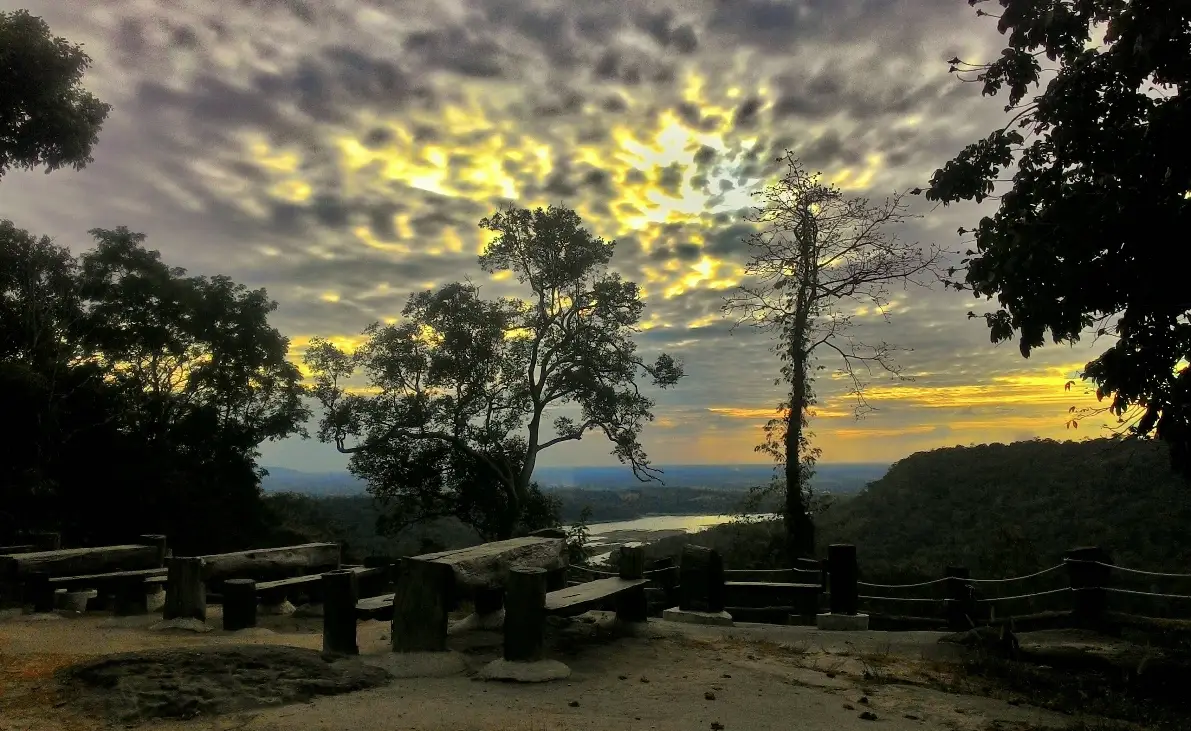
16. Tham Pha Nam Thip Non-Hunting Area is located in Bueng Ngam Subdistrict, Nong Phok District. It is an important natural area in Roi Et that reveals a very different side of the province, shifting from broad plains to mountains, forests, cliffs, and a more diverse natural ecosystem.
Highlights: Forest and mountain landscapes, Pha Phu Thai, Pha Mok Mi Wai, sunrise and sunset viewpoints, seasonal mist from the rainy season into winter, and protected wildlife habitat.
Nong Phok is one of the parts of Roi Et with the most distinctive mountainous terrain. Travelling to Tham Pha Nam Thip therefore creates a strong contrast with the urban landscape of Roi Et city and the broad agricultural plains of Thung Kula Rong Hai.
Pha Phu Thai is one of the viewpoints suitable for watching sunrise, while Pha Mok Mi Wai is associated with evening views and sunset. In suitable weather, visitors can see layers of forested hills stretching into the distance.
From the late rainy season into winter, mist may settle across valleys and forested ridges, creating especially atmospheric scenery. Travellers should nevertheless consider road conditions, rainfall, humidity, and visibility before entering natural routes.
Because this is a conservation area, visitors should remain quiet, avoid feeding wildlife, never remove plants or natural objects, and take all rubbish out of the area. Noise that may disturb wildlife should also be minimized.
The area can be combined with Pha Nam Yoi and Phra Maha Chedi Chai Mongkhon during a full day in Nong Phok District. Travellers should allow sufficient time for transportation and check current access conditions before entering natural areas.
Getting There: Tham Pha Nam Thip Non-Hunting Area is located in Bueng Ngam Subdistrict, Nong Phok District. From Nong Phok town, follow the route toward Ban Tha Sa-at. It is open daily from 08:30–16:30. Access to some areas depends on official regulations and weather conditions.
Map (GPS): https://www.google.com/maps/dir/?api=1&destination=16.396377,104.309755&travelmode=driving
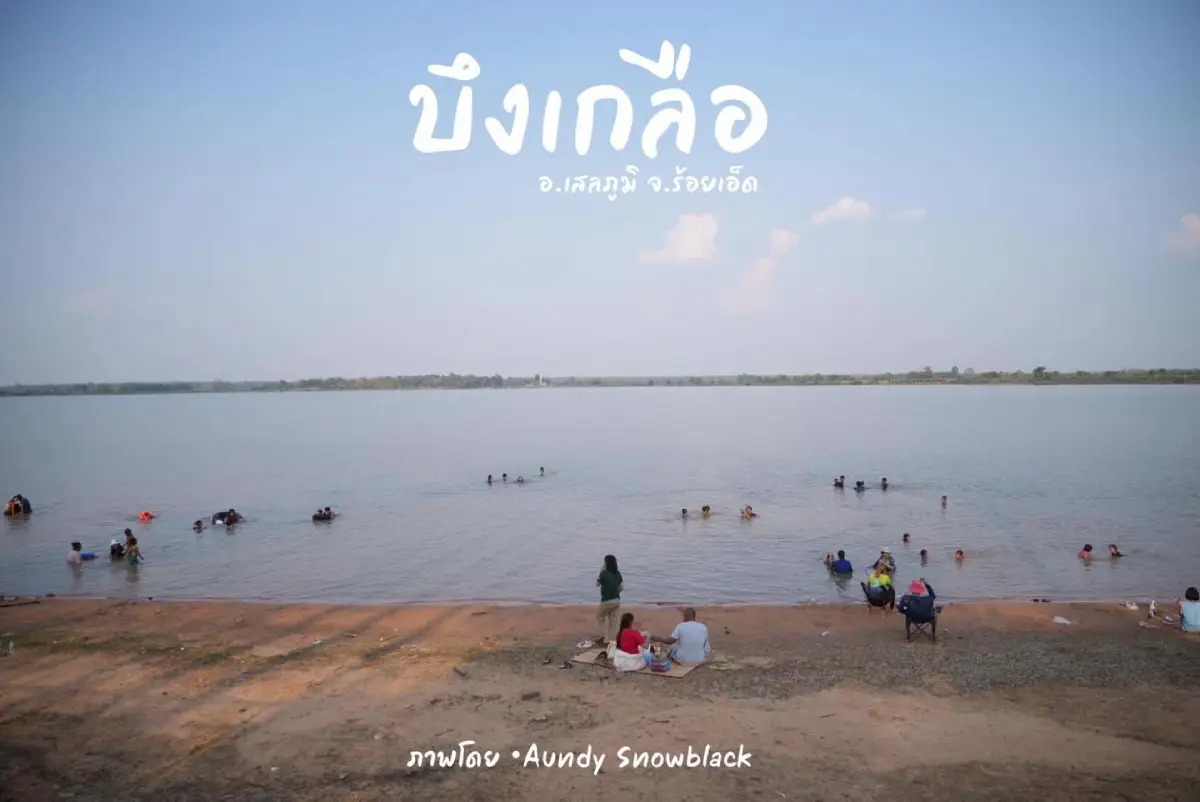
17. Bueng Kluea (Isan Sea) is a large freshwater lake and popular leisure destination in Selaphum District, located near Ban Nam Chan Noi in Bueng Kluea Subdistrict. Its broad water surface, sandy shoreline, floating restaurants, and open atmosphere have earned it the nickname “Isan Sea.”
Highlights: Large freshwater lake, sandy shoreline, floating restaurants, seaside-like atmosphere, family recreation areas, and a freshwater ecosystem supporting fish and waterbirds.
The name Bueng Kluea is rooted in the area’s past. During the dry season, salt crystals once appeared on the ground and local residents collected and boiled them for household consumption. Although the lake today is freshwater and has developed into a recreation area, the original name has remained part of local identity.
The landscape is broad and open, with water present throughout the year and sandy areas along parts of the shore. This creates an atmosphere quite different from a typical reservoir. Visitors commonly walk along the waterfront, relax by the lake, take photographs, and dine at floating restaurants.
Food is an important part of the experience. Restaurants and floating dining areas around the lake serve Isan dishes, fish, made-to-order meals, and local specialties, making Bueng Kluea suitable for families and groups of friends looking for a relaxed lunch or afternoon stop.
The lake is also important as a freshwater ecosystem supporting fish, aquatic plants, and waterbirds. Visitors should therefore help keep the area clean and avoid activities that pollute the water or disturb wildlife.
Late afternoon is generally more pleasant than midday for enjoying the light across the water and relaxing by the lake. Families with children who wish to enter the water should use only designated safe areas and provide close supervision.
Getting There: Bueng Kluea is located at Ban Nam Chan Noi, Moo 8, Bueng Kluea Subdistrict, Selaphum District. From Roi Et city, follow Highway 23 through Thawat Buri toward Selaphum, then continue along Highway 2259. It is open daily from 06:00–18:00.
Map (GPS): https://www.google.com/maps/dir/?api=1&destination=16.022795,104.018714&travelmode=driving
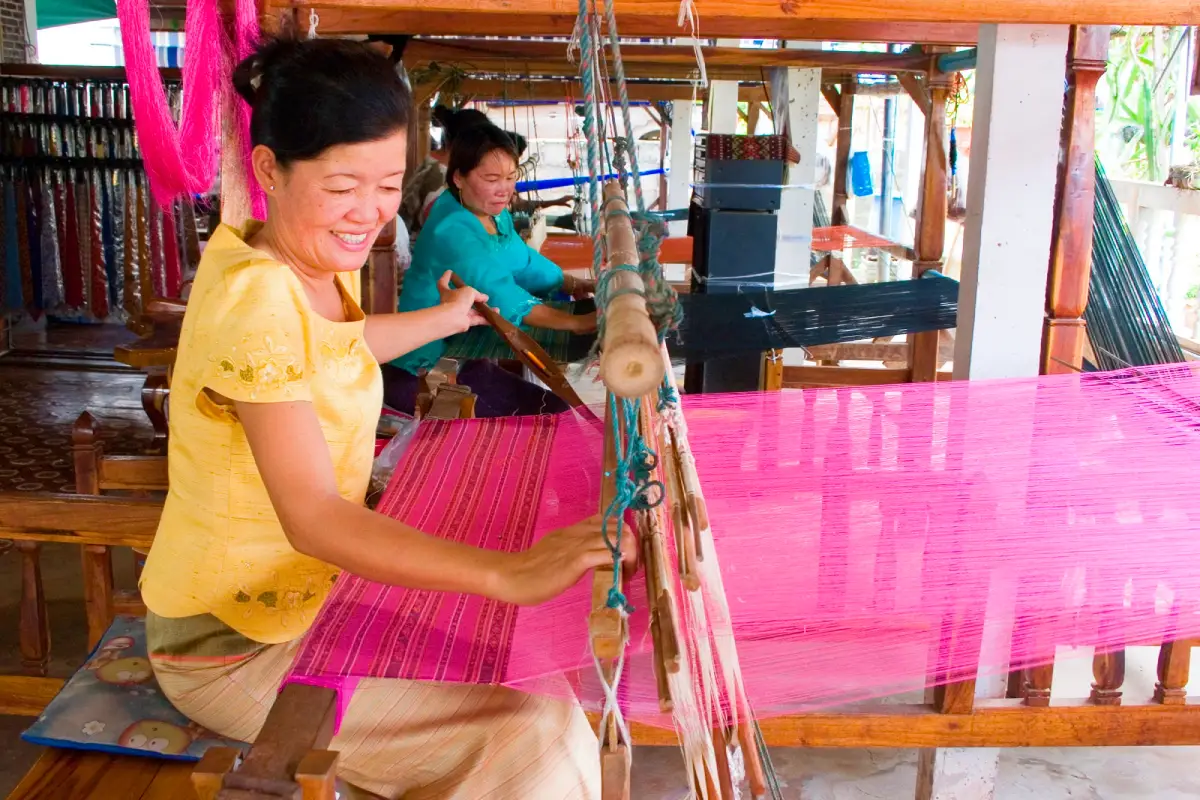
18. Ban Wai Lum is a well-known silk-weaving community in Maba Subdistrict, Thung Khao Luang District. It is one of the best places in Roi Et for travellers who want to experience the province through living local wisdom rather than only temples and major landmarks. The village produces silk, cotton textiles, clothing, bags, souvenirs, and a variety of handcrafted products.
Highlights: Handwoven silk, cotton textiles, local patterns, community craft groups, OTOP products, and opportunities to learn about production from silk thread to finished goods.
The strongest appeal of Ban Wai Lum is that it remains a living craft community. Visitors do not simply see finished textiles displayed for sale but can understand how weaving connects with family life, the local economy, and knowledge passed from one generation to the next.
Traditionally, residents depended mainly on agriculture and used weaving as supplementary work during periods outside the rice-growing season. As skills and markets developed, production became increasingly organized through community groups, and silk became one of the village’s most important products.
The textile patterns carry meanings connected with Isan culture and agricultural life. Motifs may refer to Nagas, waterways, abundance, prosperity, and other elements of local belief, turning each piece of cloth into more than clothing—it becomes a textile record of community identity.
Buying directly from the community helps support the local economy. Travellers interested in silk should ask about the patterns, weaving techniques, and meanings behind individual pieces, as this adds cultural value beyond simply choosing by color or price.
Ban Wai Lum lies along the Roi Et–Yasothon route, making it a convenient stop for travellers continuing eastward or for those exploring attractions in the eastern part of Roi Et Province.
Getting There: Ban Wai Lum is located at Moo 3, Maba Subdistrict, Thung Khao Luang District, along Highway 23. It is open daily from 08:30–16:30.
Map (GPS): https://www.google.com/maps/dir/?api=1&destination=16.030609,103.881378&travelmode=driving
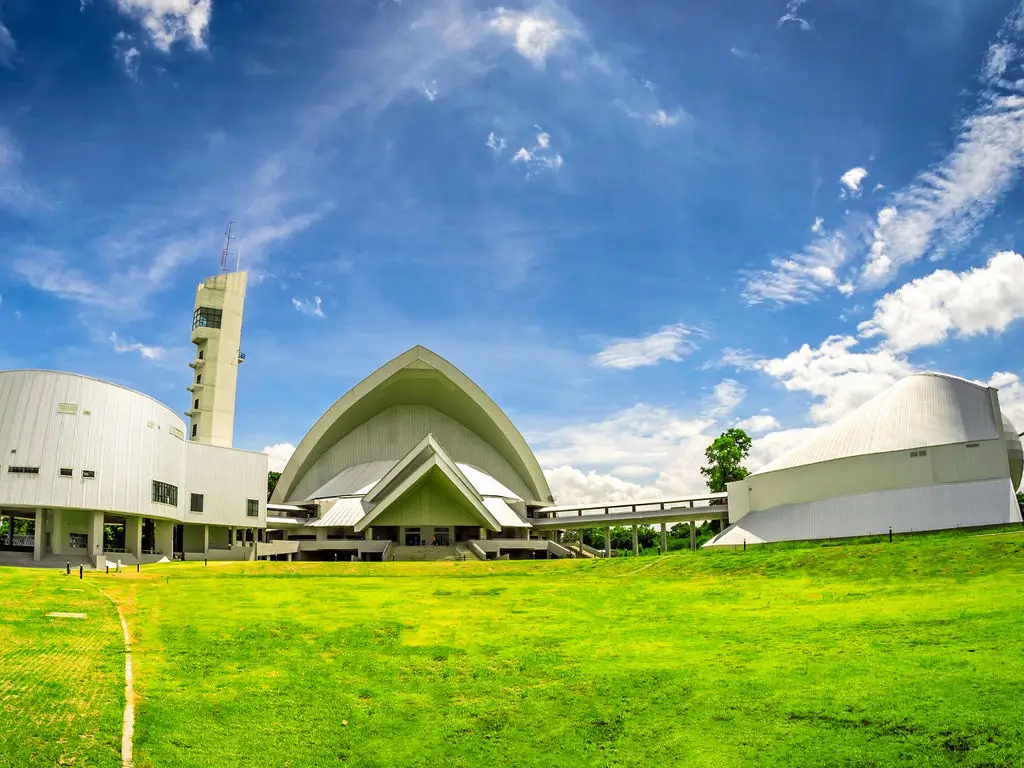
19. Roi Et Science and Cultural Centre for Education is located in Niwet Subdistrict, Thawat Buri District. It combines science, technology, environmental education, and Isan culture within a single learning complex, making it suitable for families, students, and travellers who want to add an educational dimension to their Roi Et itinerary.
Highlights: Science exhibitions, planetarium, hands-on experiments, learning areas for children, and architecture inspired by familiar Isan objects such as sticky-rice baskets, covered ox carts, and traditional bamboo steamers.
The center is designed to make science more accessible and closely connected with everyday life. Visitors do not simply read information panels but can learn through exhibitions, experiments, and interactive activities that help children and young people understand scientific concepts more easily.
Another distinctive feature is the way science is integrated with local culture. The forms and architectural elements of the buildings draw inspiration from objects familiar in Isan life, turning the architecture itself into a medium for learning about regional identity.
For families with children, the center works well as a half-day attraction, especially during hot or rainy weather because many activities take place indoors and provide greater variety than purely outdoor sites.
The center can be combined with Prang Ku in Thawat Buri District, allowing visitors to experience both archaeology and science within the same day without having to travel across the province.
Getting There: The center is located at 32 Moo 2, Niwet Subdistrict, Thawat Buri District, approximately 12 km from Roi Et city. It is open Monday–Friday from 08:30–16:30.
Map (GPS): https://www.google.com/maps/dir/?api=1&destination=16.038431,103.745607&travelmode=driving
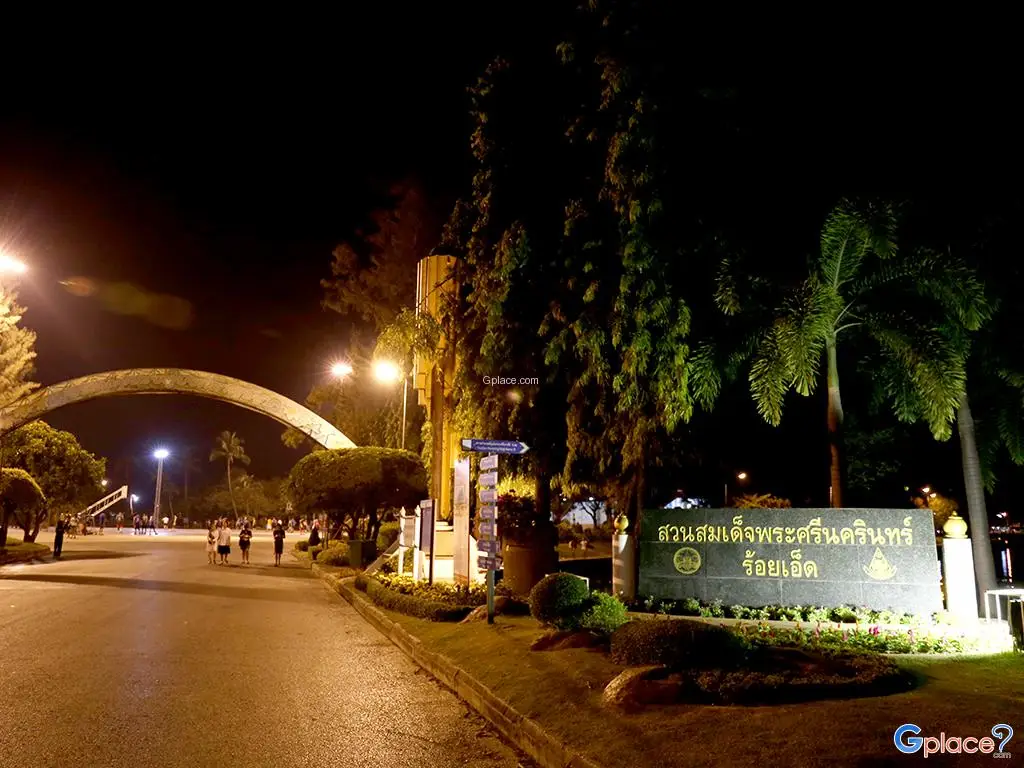
20. Somdet Phra Srinagarindra Park Roi Et is a large public park in the center of Roi Et, located in front of the provincial hall and directly connected with the Bueng Phalan Chai area and several major city landmarks. The park was created in honor of Her Royal Highness Princess Srinagarindra, the Princess Mother, and has served as an important recreational space for local residents for decades.
Highlights: Extensive green space, flower gardens, lawns, exercise paths, the monument to Princess Srinagarindra, fountains, activity plazas, and a convenient location connected with Bueng Phalan Chai and Roi Et Tower.
The park officially opened in 1986 and is one of the Somdet Phra Srinagarindra Parks established both as commemorative spaces and public parks for local communities. Its significance therefore combines royal commemoration with practical everyday use.
In the morning, local residents use the park for walking, jogging, and exercise. In the evening, families, students, and workers gather to relax after the day, making it one of the best places to observe everyday urban life in Roi Et.
The landscape includes flower gardens, lawns, mature trees, fountains, and open activity spaces. Together with nearby Bueng Phalan Chai, these features create a large green area in the heart of the city where visitors can comfortably spend several hours walking and relaxing.
Travellers can begin at Somdet Phra Srinagarindra Park Roi Et and continue on foot toward Bueng Phalan Chai, Saket Nakhon Gate, Roi Et Tower, and Roi Et Municipal Aquarium within the same central zone. This makes the area particularly suitable for days when visitors want to minimize driving.
The park is also used for provincial activities and public events at certain times of the year. It therefore functions simultaneously as a public park, civic space, recreational area, and urban landmark connecting the city with Bueng Phalan Chai.
Getting There: Somdet Phra Srinagarindra Park Roi Et is located in front of Roi Et Provincial Hall, Nai Mueang Subdistrict, Mueang Roi Et District. It is open daily from 05:00–20:00. No admission fee is announced for the public park area.
Map (GPS): https://www.google.com/maps/dir/?api=1&destination=16.054308,103.652389&travelmode=driving
| Topic | Details |
| Province Overview | Roi Et is an important province in the central Northeast, offering a combination of historic urban areas, Buddhist sites, revered Buddha images, Khmer archaeological monuments, vernacular art, museums, weaving communities, lakes, mountains, forests, and the vast landscape of Thung Kula Rong Hai. Visitors can spend 1 day exploring central Roi Et or 4–5 days travelling across several districts. |
| 20 Attractions in This Guide | 1. Bueng Phalan Chai 2. Wat Buraphaphiram 3. Phra Maha Chedi Chai Mongkhon 4. Pha Nam Yoi (Isan Buddhist Park) 5. Wat Prachakhom Wanaram (Wat Pa Kung) 6. Prasat Ku Ka Sing 7. Ku Phra Kona 8. Prang Ku (Prasat Nong Ku) 9. Thung Kula Rong Hai 10. Wat Klang Ming Mueang 11. Roi Et National Museum 12. Roi Et Municipal Aquarium 13. Saket Nakhon Gate 14. Wat Sra Thong 15. Wat Traiphum Khanachan 16. Tham Pha Nam Thip Non-Hunting Area 17. Bueng Kluea (Isan Sea) 18. Ban Wai Lum 19. Roi Et Science and Cultural Centre for Education 20. Somdet Phra Srinagarindra Park Roi Et |
| Top 10 for First-Time Visitors | 1. Bueng Phalan Chai 2. Wat Buraphaphiram 3. Phra Maha Chedi Chai Mongkhon 4. Pha Nam Yoi 5. Wat Pa Kung 6. Prasat Ku Ka Sing 7. Ku Phra Kona 8. Thung Kula Rong Hai 9. Wat Klang Ming Mueang 10. Bueng Kluea |
| Roi Et City Zone | 1. Bueng Phalan Chai 2. Wat Buraphaphiram 3. Wat Klang Ming Mueang 4. Roi Et National Museum 5. Roi Et Municipal Aquarium 6. Saket Nakhon Gate 7. Wat Sra Thong 8. Somdet Phra Srinagarindra Park Roi Et Suitable for a 1-day trip focusing on city landmarks, Buddhism, history, museums, and urban recreation. |
| Nong Phok Zone | 1. Phra Maha Chedi Chai Mongkhon 2. Pha Nam Yoi (Isan Buddhist Park) 3. Tham Pha Nam Thip Non-Hunting Area Ideal for faith-based travel, mountain scenery, forests, viewpoints, and nature. |
| Kaset Wisai–Suwannaphum Zone | 1. Prasat Ku Ka Sing 2. Ku Phra Kona 3. Thung Kula Rong Hai 4. Wat Traiphum Khanachan Best for travellers interested in Khmer heritage, traditional Isan architecture, agricultural life, and Hom Mali jasmine rice. |
| Thawat Buri Zone | 1. Prang Ku (Prasat Nong Ku) 2. Roi Et Science and Cultural Centre for Education Suitable for a half-day or full-day trip combining archaeology, history, science, and family learning. |
| Selaphum–Thung Khao Luang Zone | 1. Bueng Kluea (Isan Sea) 2. Ban Wai Lum Ideal for lakeside recreation, community learning, silk shopping, and local products. |
| Temples and Faith Route | 1. Wat Buraphaphiram – Luang Pho Yai 2. Phra Maha Chedi Chai Mongkhon 3. Wat Prachakhom Wanaram (Wat Pa Kung) 4. Wat Klang Ming Mueang 5. Wat Sra Thong – Luang Pho Phra Sangkachai 6. Wat Traiphum Khanachan |
| History and Archaeology Route | 1. Prasat Ku Ka Sing 2. Ku Phra Kona 3. Prang Ku (Prasat Nong Ku) 4. Wat Klang Ming Mueang 5. Wat Sra Thong 6. Roi Et National Museum 7. Wat Traiphum Khanachan |
| Nature and Scenic Route | 1. Pha Nam Yoi 2. Tham Pha Nam Thip Non-Hunting Area 3. Bueng Kluea 4. Bueng Phalan Chai 5. Thung Kula Rong Hai |
| Family and Children | Bueng Phalan Chai, Roi Et Municipal Aquarium, Roi Et Science and Cultural Centre for Education, Somdet Phra Srinagarindra Park Roi Et, and Bueng Kluea are particularly suitable for families, especially children who enjoy educational activities and recreation areas. |
| Community and Local Wisdom | 1. Ban Wai Lum – silk and handicrafts 2. Thung Kula Rong Hai – agricultural life and jasmine rice 3. Wat Traiphum Khanachan – traditional architecture and hup taem murals |
| Sunrise Viewpoint | Tham Pha Nam Thip Non-Hunting Area, particularly Pha Phu Thai, is suitable for morning light and mountain views. |
| Sunset Spots | 1. Pha Mok Mi Wai, Tham Pha Nam Thip Non-Hunting Area 2. Bueng Kluea 3. Bueng Phalan Chai 4. Somdet Phra Srinagarindra Park Roi Et |
| Suitable for Older Travellers | Bueng Phalan Chai, Wat Buraphaphiram, Wat Klang Ming Mueang, Roi Et National Museum, Wat Sra Thong, and Somdet Phra Srinagarindra Park Roi Et are generally easier to access than the mountain and nature routes in Nong Phok. |
| 1-Day Itinerary | Morning: Wat Buraphaphiram – Wat Klang Ming Mueang – Roi Et National Museum Afternoon: Roi Et Municipal Aquarium – Saket Nakhon Gate Evening: Bueng Phalan Chai – Somdet Phra Srinagarindra Park Roi Et |
| 2 Days / 1 Night | Day 1: Explore central Roi Et: Bueng Phalan Chai – Wat Buraphaphiram – Wat Klang Ming Mueang – Roi Et National Museum Day 2: Phra Maha Chedi Chai Mongkhon – Pha Nam Yoi – Tham Pha Nam Thip Non-Hunting Area |
| 3 Days / 2 Nights | Day 1: Central Roi Et Day 2: Phra Maha Chedi Chai Mongkhon – Pha Nam Yoi – Tham Pha Nam Thip Non-Hunting Area Day 3: Prasat Ku Ka Sing – Ku Phra Kona – Thung Kula Rong Hai – Wat Traiphum Khanachan |
| 4 Days / 3 Nights | Add Wat Prachakhom Wanaram (Wat Pa Kung), Prang Ku, and Roi Et Science and Cultural Centre for Education. Thawat Buri and Si Somdet can be grouped into the same day to reduce unnecessary backtracking. |
| 5 Days / 4 Nights | Suitable for visiting all 20 attractions without rushing: 1 day in Roi Et city, 1 day in Nong Phok, 1 day in Kaset Wisai–Suwannaphum, 1 day in Thawat Buri–Si Somdet, and 1 day in Selaphum–Thung Khao Luang. |
| Best Time to Visit | November–February is generally the most comfortable period for travelling around Roi Et because temperatures are cooler and conditions are suitable for temples, archaeological sites, and outdoor attractions. The late rainy season into winter is particularly suitable for natural areas in Nong Phok. |
| Best Time for Thung Kula Rong Hai | The rice-growing season is suitable for seeing green fields, while the period before harvest offers golden landscapes and opportunities to learn about local Hom Mali jasmine rice production. |
| Best Time for Nong Phok | The late rainy season through winter is suitable for forests, mountain views, mist, and cooler temperatures around Pha Nam Yoi and Tham Pha Nam Thip Non-Hunting Area. Weather conditions should be checked before entering natural areas. |
| Bun Phawet Festival | Bun Phawet is one of Roi Et’s most important traditions. It is associated with the Vessantara Jataka, Great Birth Sermon, processions, and Buddhist activities, with Bueng Phalan Chai and central Roi Et playing major roles in the festival. |
| Getting Around Roi Et | Attractions in central Roi Et can be reached by local transport and partly on foot. A private car, rental car, or hired vehicle with driver is more convenient for Nong Phok, Kaset Wisai, Suwannaphum, Selaphum, and Thung Khao Luang. |
| Food to Try | Som tam, larb, koi, nam tok, kaeng om, grilled chicken, freshwater fish dishes, traditional Isan food, and Hom Mali jasmine rice from the Thung Kula Rong Hai region. |
| Souvenirs | Silk and handwoven products from Ban Wai Lum, Thung Kula Hom Mali jasmine rice, community products, basketry, and other local handicrafts. |
| Nature Safety | Check weather conditions before travelling to Pha Nam Yoi and Tham Pha Nam Thip Non-Hunting Area. Remain on designated routes, do not disturb wildlife, and follow instructions from officials. |
| Lake and Water Safety | At Bueng Kluea and other water attractions, use only designated areas for swimming or water activities. Children should remain under adult supervision, and visitors should avoid entering the water during unsuitable weather. |
| Responsible Travel | Dress respectfully when entering temples, do not climb archaeological monuments, avoid touching murals and historic objects unnecessarily, take rubbish out of natural areas, and support local shops, communities, and locally made products. |
Frequently Asked Questions (FAQ)
Q: What are the must-visit attractions in Roi Et?
A: First-time visitors should consider Bueng Phalan Chai, Wat Buraphaphiram, Phra Maha Chedi Chai Mongkhon, Pha Nam Yoi, Wat Pa Kung, Prasat Ku Ka Sing, Ku Phra Kona, Thung Kula Rong Hai, Wat Klang Ming Mueang, and Bueng Kluea. Together, these attractions cover city landmarks, faith, history, archaeology, culture, and natural scenery.
Q: Where should I go if I have only 1 day in Roi Et?
A: Focus on central Roi Et. Begin with Wat Buraphaphiram and Wat Klang Ming Mueang in the morning, continue to Roi Et National Museum, visit Roi Et Municipal Aquarium and Saket Nakhon Gate in the afternoon, and finish the day at Bueng Phalan Chai and Somdet Phra Srinagarindra Park Roi Et.
Q: How many days are recommended for visiting Roi Et?
A: 2–3 days are enough for the major city landmarks, Nong Phok, and the main archaeological route. Travellers who want to visit all 20 attractions, including Bueng Kluea, Ban Wai Lum, and educational attractions in Thawat Buri, should allow approximately 4–5 days.
Q: Which temple is especially important in Roi Et?
A: Wat Buraphaphiram is one of the province’s most important temples because it is a royal monastery and houses Phra Phuttha Rattana Mongkhon Maha Muni, commonly known as Luang Pho Yai, one of Roi Et’s principal spiritual symbols.
Q: Where is Phra Maha Chedi Chai Mongkhon located?
A: Phra Maha Chedi Chai Mongkhon is located within Wat Pha Nam Thip Thep Prasit Wanaram in Pha Nam Yoi Subdistrict, Nong Phok District. The monumental white-and-gold chedi is one of the most important Buddhist landmarks in northeastern Thailand.
Q: Where should I go if I am interested in Khmer archaeological sites?
A: Prasat Ku Ka Sing, Ku Phra Kona, and Prang Ku or Prasat Nong Ku are the main sites to visit. Together, they show important features of Khmer religious architecture and Roi Et’s role within the cultural network of the central Northeast.
Q: When is the best time to visit Thung Kula Rong Hai?
A: The rice-growing season is suitable for seeing green fields, while the period before harvest offers golden rice landscapes. Both periods are well suited to photography and learning about Hom Mali jasmine rice production.
Q: Which attractions in Roi Et are suitable for families?
A: Bueng Phalan Chai, Roi Et Municipal Aquarium, Roi Et Science and Cultural Centre for Education, Somdet Phra Srinagarindra Park Roi Et, and Bueng Kluea are particularly suitable for families and children.
Q: Where should I go for mountains and nature in Roi Et?
A: Nong Phok District is the best zone for mountain scenery. Major attractions include Pha Nam Yoi, Tham Pha Nam Thip Non-Hunting Area, Pha Phu Thai, Pha Mok Mi Wai, and Phra Maha Chedi Chai Mongkhon, which is set within a mountainous landscape.
Q: Where can I watch sunrise and sunset in Roi Et?
A: Pha Phu Thai in Tham Pha Nam Thip Non-Hunting Area is suitable for sunrise, while Pha Mok Mi Wai, Bueng Kluea, and Bueng Phalan Chai are suitable for evening light and sunset.
Q: What is special about Wat Traiphum Khanachan?
A: Its main attraction is a registered traditional Isan sim featuring carved wooden decoration, Naga-shaped brackets, and interior hup taem murals. It is particularly valuable for travellers interested in vernacular Isan architecture and mural art.
Q: What kind of traveller would enjoy Ban Wai Lum?
A: Ban Wai Lum is ideal for travellers interested in silk, handicrafts, community wisdom, and buying souvenirs directly from local producers. Visitors can also learn about textile patterns and traditional weaving processes.
Q: What is special about Bueng Kluea or the Isan Sea?
A: Bueng Kluea is a large freshwater lake with sandy shorelines, floating restaurants, and lakeside recreation areas. Its broad open landscape has earned it the nickname “Isan Sea,” making it popular with families and groups of friends.
Q: Who should visit Roi Et National Museum?
A: The museum is suitable for visitors who want to understand Roi Et’s history, archaeology, local lifestyles, silk traditions, and provincial development before travelling to the actual sites. It is particularly useful for students, families, and history-focused travellers.
Q: Are there attractions in Roi Et for children?
A: Yes. Roi Et Municipal Aquarium, Roi Et Science and Cultural Centre for Education, Bueng Phalan Chai, and Somdet Phra Srinagarindra Park Roi Et are among the most suitable choices for children.
Q: Why is the Bun Phawet festival important?
A: Bun Phawet is one of Roi Et’s most important annual traditions. It is connected with the Vessantara Jataka, the Great Birth Sermon, religious processions, and Buddhist merit-making activities, with central Roi Et and Bueng Phalan Chai playing major roles in the celebration.
Q: Can I travel around Roi Et without a private car?
A: Many attractions in central Roi Et can be reached by local transport and partly on foot. For Nong Phok, Kaset Wisai, Suwannaphum, Selaphum, or Thung Khao Luang, a rental car or hired vehicle with driver is generally more convenient.
Q: How should I plan a Roi Et itinerary to avoid backtracking?
A: Divide the province into major zones: central Roi Et, Nong Phok, Kaset Wisai–Suwannaphum, Thawat Buri–Si Somdet, and Selaphum–Thung Khao Luang. Complete the attractions within one zone before moving to the next. This makes a 3–5 day itinerary more efficient.
Q: What is the best season to visit Roi Et?
A: November–February is generally the most comfortable period for overall travel because temperatures are cooler. For mist and mountain scenery in Nong Phok, the late rainy season through winter is preferable, while visitors interested in Thung Kula Rong Hai should travel during the rice-growing season or shortly before harvest.
 Category: ●Travel Articles, Recipes
 Group: ●Travel Review, Food Review
Last Update : 3 WeekAgo
 Last Update : 3 WeekAgo
Recommend

 Art, Culture and Heritage
 Historical Sites and Monuments(3)
 Landmarks and Memorials(5)
 Art, Craft Centres, Tradition(2)
 Museums(1)
 Educational Places
 Educational Gardens, Farm(3)
 Places of Worship
 Temple(35)
 Other Sacred Sites(6)
 Suburban Living
 Village, Community(1)
 Local Market(1)
 Nature and Wildlife
 National Parks and Marine Reserves(1)
 Mountain (Doi)(2)
 Dam, Reservoir, Lake(8)
 Waterfalls(1)
 Flower Field(1)
 River, Canal(4)
 Entertainment and Agricultural
 Zoos and Aquariums(1)
 Stadium(1)
 Farms, Parks and Ecotourism(5)
 Shopping
 Shopping and Night Market(1)
Travel Review, Food Review(1)


