
lovethailand home >Northeastern Travel Attractions >Roi Et Travel Attractions >Muang Roi Et >Nai Muang > Wat Klang Ming Mueang
TL;DR: Wat Klang Ming Mueang is located at Charoen Phanit Road, Nai Mueang Subdistrict, Mueang Roi Et District, Roi Et Province, open Daily, Including Public Holidays, hours 08.30 – 16.30.
Wat Klang Ming Mueang
Open Days: Daily, Including Public Holidays
Opening Hours: 08.30 – 16.30
Wat Klang Ming Mueang is one of the most historically significant temples in Roi Et city. Located on Charoen Phanit Road in Nai Mueang Subdistrict, Mueang Roi Et District, the temple stands in the old urban heart of Roi Et and preserves an important connection between Buddhism, local history, old city rituals, religious education, and Isan mural art. Formerly known as Wat Klang, meaning the temple in the center of town, it later became known as Wat Klang Ming Mueang, a name that reflects its role as a sacred and symbolic temple of the city.
This temple is especially meaningful for travelers who want to understand Roi Et beyond modern landmarks. While many visitors know Roi Et through Bueng Phlan Chai, Ho Wot 101 Tower, and the city’s public spaces, Wat Klang Ming Mueang reveals the older religious and civic layer of the province. Its old ordination hall, Buddhist murals, principal Buddha image, royal temple status, and educational role all show how temples have shaped the identity of Thai provincial towns over many generations.
The history of Wat Klang Ming Mueang reaches back several centuries. The temple is traditionally believed to have been established before the foundation of Roi Et city. Records identify the establishment of the temple in 1541 and the granting of its consecrated boundary in 1547. This long history makes the temple one of the key religious sites for understanding the early development of Roi Et. Its location in the city center also reflects the traditional role of temples as spiritual, civic, and educational centers.
In the past, Wat Klang Ming Mueang was used for the Ceremony of Drinking the Water of Allegiance, known in Thai as Phithi Thue Nam Phiphat Satya. This old ceremony was connected with loyalty, state authority, and civic order. The fact that Wat Klang Ming Mueang was used for this ritual shows that the temple was not merely a local neighborhood monastery. It had an important role in the political and ceremonial life of Roi Et in earlier times.
Wat Klang Ming Mueang was later elevated to the status of a third-class royal temple of ordinary type on May 26, 1965. This status confirms the temple’s importance in religious, historical, and cultural terms. Today, the temple belongs to the Maha Nikaya order and remains an active Buddhist temple. It is not only a place to view old architecture; it is still a functioning religious institution where monks live, Buddhist ceremonies take place, and religious education continues.
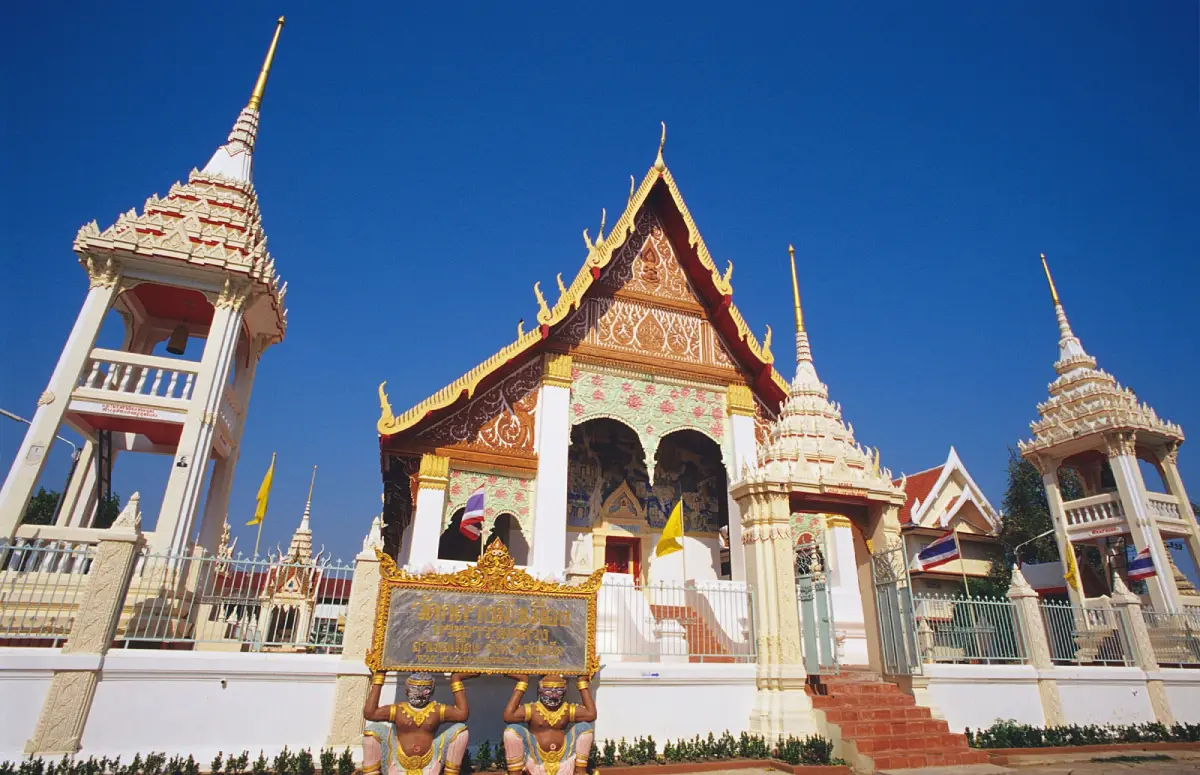
The most important architectural feature of the temple is its old ubosot, or ordination hall. The building is about 12.50 meters wide and 20 meters long, and is associated with the late Ayutthaya period in local tourism and temple records. It stands as one of the most valuable historic structures in Roi Et city. The ordination hall gives visitors a direct view of old Isan Buddhist architecture and the temple’s long religious continuity.
The ubosot shows the character of a northeastern Thai temple structure, often called a sim in the Isan cultural context. It has a compact and dignified form, raised base, entrance stairway, and traditional roof composition. Its appearance is not merely decorative; it reflects a regional religious building tradition shaped by local craftsmanship, Buddhist practice, and cultural exchange across the Mekong region. For foreign visitors, this ordination hall is a good example of how Buddhist architecture in northeastern Thailand differs from larger royal temples in Bangkok or central Thailand.
The exterior and interior wall paintings around the ubosot are among the temple’s most important artistic treasures. The murals present scenes from the life of the Buddha and Buddhist narratives. In the past, mural paintings functioned as visual teaching tools. They helped people understand Buddhist stories, moral values, and religious ideas through images. At Wat Klang Ming Mueang, these paintings preserve both religious meaning and local artistic expression.
The beauty of the murals lies not only in their subject matter, but also in their age, colors, lines, and local character. The figures, buildings, landscapes, costumes, and narrative scenes reveal how local artists imagined Buddhist stories through the visual language of their time. Even where the paintings show signs of age, that aging adds historical depth. Visitors are looking not only at religious art, but also at a surviving layer of Roi Et’s cultural memory.
Inside the ubosot is Phra Phuttha Ming Mueang, the principal Buddha image of the temple. Wat records also identify Phra Phuttha Ming Mueang Mongkhon as an important sacred object of the temple and the city. This Buddha image is deeply respected by local people. For visitors, paying respect to the principal image helps connect the physical temple building with the living faith of the community.
Beyond the ubosot, the temple complex includes a sermon hall, monks’ residences, a vihara, and the area of Sunthon Tham Pariyat School. These buildings show that Wat Klang Ming Mueang remains an active temple. It is a place of worship, learning, monastic residence, religious ceremonies, and community activity. This active use is important because the temple is not a museum frozen in the past. It is a living Buddhist institution.
One of the temple’s present-day roles is religious education. Wat Klang Ming Mueang is the location of Sunthon Tham Pariyat School and is used for Buddhist scriptural learning and Dhamma examinations. This continues the traditional Thai role of temples as centers of education. Long before modern schools became common, temples were places where people learned reading, writing, ethics, Buddhist teachings, and social discipline. At Wat Klang Ming Mueang, that educational tradition continues through Buddhist studies.
The school and examination role also help explain why the temple remains important to the community. It is not only a destination for tourists or merit-makers. It supports the transmission of Buddhist knowledge to monks, novices, and learners. This gives the temple a long-term cultural function: preserving scripture, discipline, language, and religious understanding within Roi Et society.
Wat Klang Ming Mueang is also important from a heritage conservation perspective. The old ordination hall and murals require careful preservation because they are made from aged materials and contain irreplaceable artistic evidence. Old walls, paint layers, wooden elements, and plaster surfaces all carry traces of time. Visitors who enter the temple are therefore entering a fragile cultural space as well as a sacred one.
The temple is distinctive because it combines several layers of meaning in one compact city site. It is an old temple believed to predate Roi Et city, a former site of the Water of Allegiance ceremony, a royal temple, a place with late-Ayutthaya-period architecture, a mural-art site, a shrine for an important Buddha image, and a center for Buddhist education. Together, these layers make Wat Klang Ming Mueang one of the most culturally complete temples in central Roi Et.
Travelers interested in Buddhist art will find the temple especially rewarding. The murals, old ubosot, principal Buddha image, and regional architectural elements provide a clear picture of local Buddhist art. Unlike new temple buildings, Wat Klang Ming Mueang carries visible age and historical texture. Its value comes from continuity rather than novelty. It shows how faith, art, and community have remained connected through centuries.
Travelers interested in local history can use the temple as a starting point for understanding Roi Et city. The temple is close to Roi Et National Museum, Bueng Phlan Chai, Ho Wot 101 Tower, Saket Nakhon Gate, the City Pillar Shrine, and Wat Buraphaphiram. Visiting Wat Klang Ming Mueang before these places gives the city a deeper context. It shows the old religious and ceremonial foundation before visitors continue to more modern or civic landmarks.
A visit can begin at the temple courtyard, where visitors can view the overall layout of the temple. From there, the ubosot is the most important stop. Visitors can observe the old building structure, mural paintings, and sacred atmosphere before paying respect to the principal Buddha image. If time allows, the sermon hall, vihara, monks’ residence area, and Sunthon Tham Pariyat School area help show the temple’s continuing religious and educational functions.
The atmosphere of Wat Klang Ming Mueang is calm and accessible. Because it is located in the city center, it is easy to include in a half-day Roi Et itinerary. Most visitors can spend around 45 minutes to 1.5 hours at the temple, depending on their interest in murals, old architecture, Buddhist history, and photography. The temple’s compact location makes it suitable for both Thai visitors and foreign travelers who want a meaningful cultural stop without traveling far from central Roi Et.
Getting There is straightforward. Wat Klang Ming Mueang is located on Charoen Phanit Road in central Roi Et. Visitors with private cars can navigate directly to the temple, while those using public transport can arrive at Roi Et Bus Terminal and continue by local taxi, tuk-tuk, or other city transport. Roi Et National Museum and Bueng Phlan Chai can also be used as nearby orientation points.
The temple is well placed for a city cultural route. Travelers can visit Wat Klang Ming Mueang, continue to Roi Et National Museum, then go to Bueng Phlan Chai and Ho Wot 101 Tower. Later in the day, they can visit Saket Nakhon Gate, the City Pillar Shrine, or Wat Buraphaphiram. This route combines old religious heritage, museum interpretation, public city space, and modern Roi Et landmarks in one practical itinerary.
Wat Klang Ming Mueang is open daily from 08.30 to 16.30, including public holidays. There is no admission fee. Morning and early afternoon are good times to visit because the light is suitable for viewing the ubosot and mural details. Visitors should dress respectfully because the temple is an active Buddhist site. Quiet behavior is appropriate inside the ordination hall and near sacred areas.
Visitors should avoid touching mural paintings, old walls, sacred objects, or historic architectural details. Flash photography should be avoided in sensitive areas. These practices help protect the temple’s old art and maintain the respectful atmosphere of a Buddhist monastery. For foreign travelers unfamiliar with Thai temples, Wat Klang Ming Mueang is a good place to learn temple etiquette in a calm and historically meaningful setting.
For foreign visitors, the temple explains an important idea about Thai culture: a temple is not only a place of worship. It can also be a school, a community center, an archive of local history, an art gallery, a ritual site, and a living religious institution. Wat Klang Ming Mueang shows all of these functions at once. Its murals teach Buddhist stories, its ubosot preserves old architecture, its school continues religious learning, and its Buddha image remains a focus of devotion.
Overall, Wat Klang Ming Mueang is one of the most important cultural and religious places in Roi Et city. Its value comes from its age, royal temple status, late-Ayutthaya-period ordination hall, Buddhist murals, principal Buddha image, past role in the Water of Allegiance ceremony, and continuing educational function. For travelers who want to understand Roi Et through history, art, Buddhism, and local identity, this temple is an essential stop in the city center.
| Name | Wat Klang Ming Mueang |
| Temple Type | Third-Class Royal Temple, Ordinary Type, Maha Nikaya Order |
| Location | Charoen Phanit Road, Nai Mueang Subdistrict, Mueang Roi Et District, Roi Et Province |
| Address | Wat Klang Ming Mueang, Charoen Phanit Road, Nai Mueang Subdistrict, Mueang Roi Et District, Roi Et 45000, Thailand |
| Highlights | Late-Ayutthaya-period ordination hall, Buddhist mural paintings, Phra Phuttha Ming Mueang Mongkhon, former Water of Allegiance ceremony site, and Sunthon Tham Pariyat School |
| History | Formerly known as Wat Klang, the temple is believed to have existed before the foundation of Roi Et city. It was established in 1541, received its consecrated boundary in 1547, and was elevated to a third-class royal temple of ordinary type on May 26, 1965. |
| Name Origin | The former name Wat Klang means the temple in the center of the city. The later name Wat Klang Ming Mueang reflects its status as an important temple of Roi Et. |
| Artistic Features | The ubosot is about 12.50 meters wide and 20 meters long, with Buddhist mural paintings around the walls and important local artistic value. |
| Important Sacred Objects | Phra Phuttha Ming Mueang Mongkhon and the principal Buddha image inside the ubosot |
| Historical Importance | The temple was formerly used for the Ceremony of Drinking the Water of Allegiance and is closely connected with the religious, civic, and historical life of Roi Et. |
| Travel Information | Located in Roi Et city on Charoen Phanit Road. Visitors can travel by private car, local taxi, tuk-tuk, or city transport from Roi Et Bus Terminal. |
| Current Status | Open as a royal temple, historic Buddhist site, mural-art learning site, and Buddhist education center in Roi Et city |
| Open Days | Daily, including public holidays |
| Opening Hours | 08.30 – 16.30 |
| Admission Fee | Free Admission |
| Facilities | Temple courtyard, parking area, ubosot, sermon hall, vihara, monks’ residences, Buddhist education area, and nearby restaurants in Roi Et city center |
| Main Areas / Zones | 1. Old Ubosot 2. Buddhist Mural Painting Area 3. Phra Phuttha Ming Mueang Worship Area 4. Sermon Hall 5. Vihara 6. Monks’ Residences 7. Sunthon Tham Pariyat School 8. Temple Courtyard And Religious Activity Area |
| Activities / Current Role | Buddhist scriptural education, Dhamma examination venue, Buddhist ceremonies, and religious activities for the Roi Et community |
| Caretaker / Responsible Body | Wat Klang Ming Mueang Royal Temple, Maha Nikaya Order |
| Abbot | Phra Khru Kittikhun Wat (Somphon Sophano) |
| Main Contact Number | 043-512400 |
| Nearby Tourist Attractions | 1. Roi Et National Museum, about 0.5 km, Tel. 043-514456 Ext. 101 2. Bueng Phlan Chai, about 0.8 km 3. Somdet Phra Srinagarindra Park Roi Et, about 1 km 4. Ho Wot 101 Tower, about 1 km, Tel. 043-511222 5. Saket Nakhon Gate, about 1 km 6. Roi Et City Pillar Shrine, about 1 km 7. Wat Buraphaphiram, about 1 km |
| Nearby Restaurants | 1. 4U For You, Phloen Chit Road, about 0.4 km, Tel. 065-649-1999 2. Cozy Cafe’ & Bistro, about 0.8 km, Tel. 094-310-0504 3. Her Studio Roi Et, about 1 km, Tel. 083-871-0824 4. Lakeview Restaurant, about 1 km, Tel. 093-320-8126 5. Nai Chui Vintage Pork Noodle, about 1 km, Tel. 093-638-8323 6. Sit Rim, about 1 km, Tel. 098-278-4482 |
| Nearby Accommodations | 1. Rueanrimnam Hotel, about 0.5 km, Tel. 043-518-967 2. Saket Nakhon Hotel, about 0.8 km, Tel. 043-511-741 3. The Premium Residence, about 1 km, Tel. 043-518-655 4. 101 Hotel, about 1 km, Tel. 043-513-999, 065-119-6999 5. HOP INN Roi Et, about 2 km, Tel. 02-080-2222 6. The Rice Hotel, about 2 km, Tel. 043-519-999 |
Frequently Asked Questions (FAQ)
Q: Where is Wat Klang Ming Mueang located?
A: Wat Klang Ming Mueang is located on Charoen Phanit Road in Nai Mueang Subdistrict, Mueang Roi Et District, Roi Et Province, close to Roi Et National Museum, Bueng Phlan Chai, and Ho Wot 101 Tower.
Q: What are the opening days and hours?
A: The temple is open daily, including public holidays, from 08.30 to 16.30.
Q: Is there an admission fee?
A: There is no admission fee. Visitors can enter the temple, pay respect to the Buddha image, and view the main temple areas during opening hours.
Q: Why is Wat Klang Ming Mueang important?
A: It is an old temple believed to have existed before the foundation of Roi Et city. It was formerly used for the Ceremony of Drinking the Water of Allegiance and is now a third-class royal temple of ordinary type.
Q: What should visitors see inside the temple?
A: Important highlights include the old late-Ayutthaya-period ubosot, Buddhist mural paintings, Phra Phuttha Ming Mueang Mongkhon, the sermon hall, vihara, and Sunthon Tham Pariyat School area.
Q: Who is the abbot of Wat Klang Ming Mueang?
A: The abbot is Phra Khru Kittikhun Wat (Somphon Sophano).
Q: How can visitors travel to Wat Klang Ming Mueang?
A: Visitors can travel within Roi Et city to Charoen Phanit Road. From Roi Et Bus Terminal, local taxis, tuk-tuks, or city transport can take visitors to the temple.
Q: What nearby attractions can be combined with a visit?
A: Nearby places include Roi Et National Museum, Bueng Phlan Chai, Ho Wot 101 Tower, Saket Nakhon Gate, Roi Et City Pillar Shrine, and Wat Buraphaphiram.
Tel : 043512400
 Tel : 043512400
 Category: ●Places of Worship
 Group: ●Temple
Last Update : 3 MonthAgo
 Last Update : 3 MonthAgo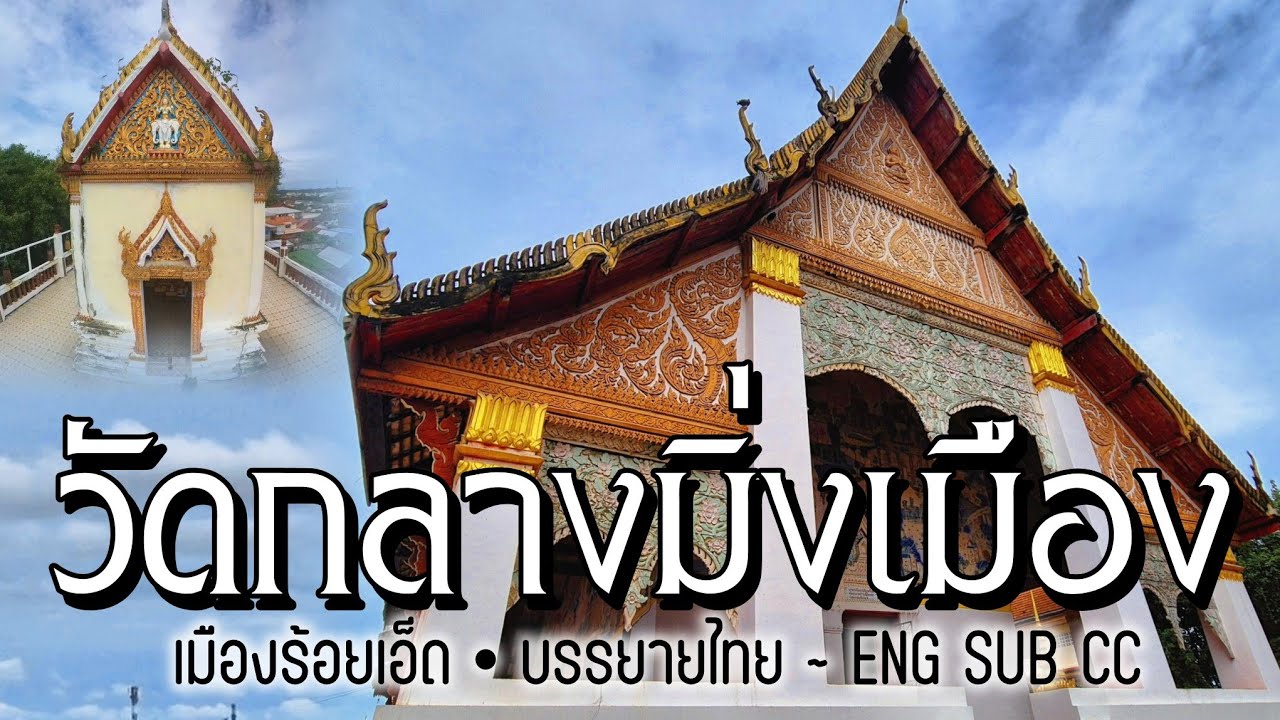
 Click to Access the Navigation Map GPS
Wat Klang Ming Mueang Map
Recommend

 Art, Culture and Heritage
 Historical Sites and Monuments(3)
 Landmarks and Memorials(5)
 Art, Craft Centres, Tradition(2)
 Museums(1)
 Educational Places
 Educational Gardens, Farm(3)
Temple(35)
Educational Gardens, Farm(3)
Temple(35)
 Other Sacred Sites(6)
 Suburban Living
 Village, Community(1)
 Local Market(1)
 Nature and Wildlife
 National Parks and Marine Reserves(1)
 Mountain (Doi)(2)
 Dam, Reservoir, Lake(8)
 Waterfalls(1)
 Flower Field(1)
 River, Canal(4)
 Entertainment and Agricultural
 Zoos and Aquariums(1)
 Stadium(1)
 Farms, Parks and Ecotourism(5)
 Shopping
 Shopping and Night Market(1)
 Travel Articles, Recipes
 Travel Review, Food Review(1)


