
lovethailand home >Northeastern Travel Attractions >Roi Et Travel Attractions >Suwannaphum >Sa Khu > Ku Phra Kona
TL;DR: Ku Phra Kona is located at Wat Ku Phra Kona, Ban Ku, Mu 12, Sa Khu Subdistrict, Suwannaphum District, Roi Et 45130, Thailand, open Daily, hours 6:00 AM–6:00 PM.
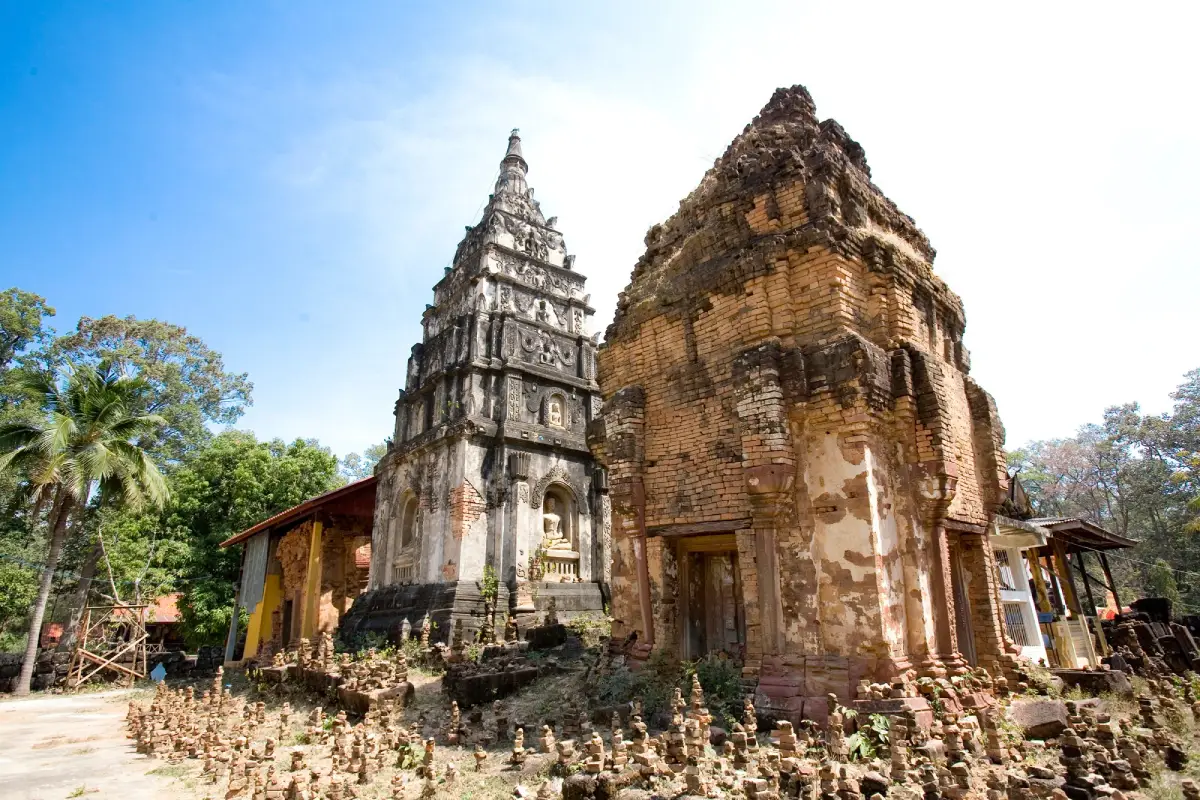
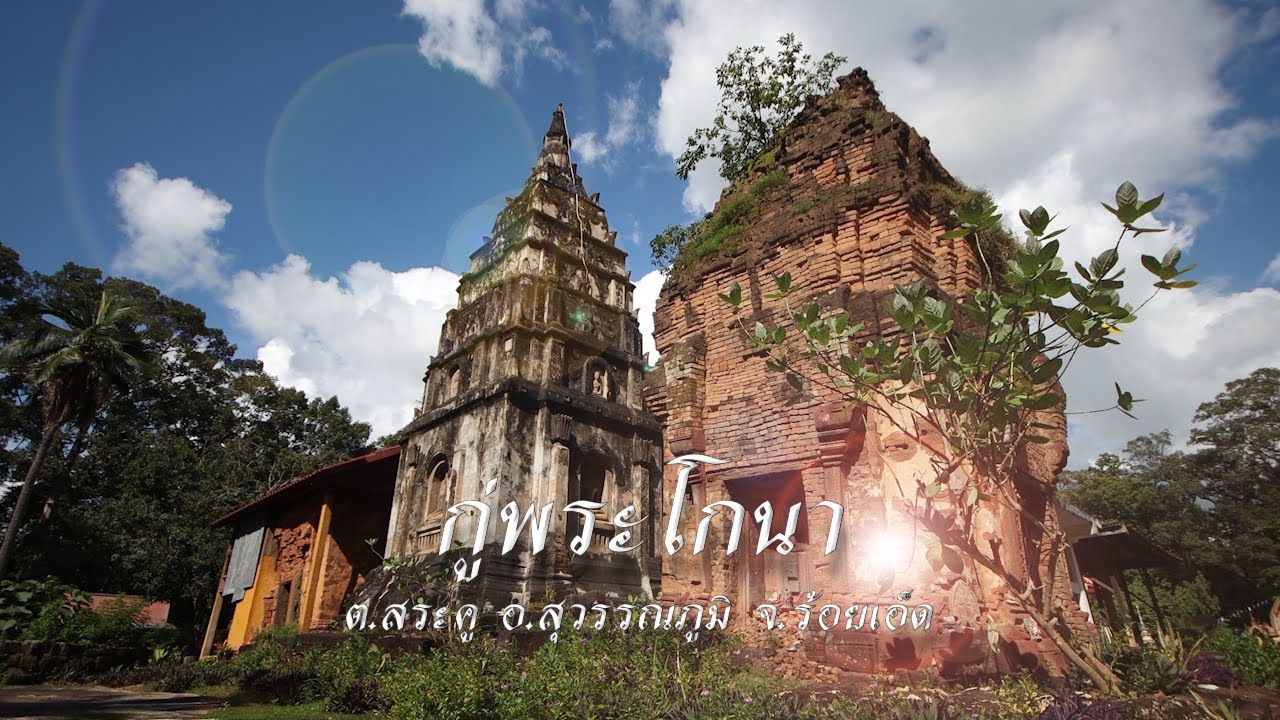
Ku Phra Kona
Open Days: Daily
Opening Hours: 6:00 AM–6:00 PM
Ku Phra Kona in Roi Et is an active ancient Khmer cultural site located within Wat Ku Phra Kona at Ban Ku, Mu 12, Sa Khu Subdistrict, Suwannaphum District, Roi Et Province. The monument is open every day from 6:00 AM to 6:00 PM, and admission is free. Its defining features are three brick sanctuary towers arranged from north to south, Baphuon-style stone carvings, an exceptional lintel depicting Vishnu reclining on the cosmic serpent, and the later transformation of the central tower into a Buddhist monument. Ku Phra Kona consequently presents history, architecture, religious belief, community memory, and the continued use of sacred space within a single compact complex.
The monument stands in the rural landscape of Suwannaphum District, approximately 60 kilometres from central Roi Et. Its setting is markedly different from that of a large urban attraction because the ruins remain closely connected to a working Buddhist temple, a village, agricultural land, and local daily life. Visitors entering the temple grounds see ancient structures surrounded by religious buildings added during later periods. Ku Phra Kona is therefore not a ruin frozen at one moment in history. It remains a meaningful place that is cared for, visited, used in ceremonies, and interpreted by the community that has developed around it.
Ku Phra Kona is also known locally as Ku Si Chaeng and Ku Kham Kuna. In northeastern Thai culture, the word “ku” is frequently applied to an old sanctuary, reliquary, tower, or sacred structure built from brick, sandstone, or laterite. These names reveal how local communities have recognised and remembered the monument across generations. Even though the original ritual function of the complex changed over time, the name has continued to connect present-day residents with the people who built temples, commissioned carvings, and organised a sacred landscape in this part of the region approximately one thousand years ago.
Ku Phra Kona was constructed during a period when Khmer cultural and artistic influence extended into the Mun River basin and the central areas of northeastern Thailand. Routes connecting ancient settlements supported more than administration. They also enabled the movement of goods, technology, religious ideas, language, architectural knowledge, craftspeople, and ritual practices. Khmer sanctuaries throughout northeastern Thailand demonstrate that the region once contained an extensive network of interrelated communities. Ku Phra Kona formed part of that cultural landscape and confirms that the Suwannaphum area held significance many centuries before the establishment of its modern settlements and administrative boundaries.
The architecture, sandstone door frames, ornamental designs, and surviving lintels place the principal phase of Ku Phra Kona in the Baphuon artistic tradition, around the 16th Buddhist century or the 11th century CE. Some of the carvings can be dated more closely to approximately 1017–1087 CE, corresponding to 1560–1630 in the Buddhist Era. Baphuon-period work is recognised by its carefully balanced compositions, rhythmic vegetal scrolls, prominent Kala faces, and images of deities positioned at the centre of lintels. Religious narratives were designed to work together with gateways, door frames, and the sacred interiors beyond them.
Ku Phra Kona has been interpreted as a sanctuary associated with the Hindu concept of the Trimurti: Shiva, Brahma, and Vishnu. The arrangement of three towers upon a common base supports a relationship with this threefold divine concept. However, identifying each individual tower with a specific deity requires evidence from architecture, carvings, the positions of lintels, and subsequent alterations. The number of towers alone is not sufficient for assigning each building to one god. What can be clearly observed is that the surviving imagery prominently represents Vishnu, Shiva, and a broader Hindu understanding of cosmic creation and divine order.
The principal plan consists of three sanctuary towers arranged along a north–south line. All three face east and stand upon a shared base. Their eastern orientation relates to sunlight, renewal, and ritual direction, as seen at many Khmer sanctuaries. The central tower anchors the composition, while the northern and southern towers establish its visual balance. From the eastern approach, the three buildings appear as one coordinated group. This arrangement allowed a person entering the enclosure to recognise a progression from the outer world towards an increasingly restricted and sacred centre.
The original ceremonial approach began on the eastern side. A visitor would have passed through an eastern gopura, or monumental gateway, in the laterite enclosure before moving towards the three towers. This sequence represented more than physical circulation. The gateway, enclosure, courtyard, and sanctuary towers marked stages in a transition from ordinary space into a ritual domain. Although several components are damaged or have been altered, the surviving east–west axis still explains the relationship between the buildings and helps visitors imagine how ceremonies were organised within the ancient compound.
Brick, sandstone, and laterite were employed for different architectural purposes. Brick was suitable for the main bodies of the sanctuary towers. Sandstone was used for elements that required structural strength or detailed carving, including bases, door frames, lintels, and decorative components. Laterite formed substantial parts of the enclosure and library building. Its strength and availability made it effective for large architectural masses. Differences in colour, texture, and weathering allow visitors to distinguish these materials and identify sections that once performed particular structural or ornamental functions.
The central sanctuary originally served as the principal building of the group and retained evidence of a projecting eastern porch. It underwent a major transformation in 1874. The original structure was covered with plaster, and a new tiered upper form was constructed above it. Niches containing Buddha images were incorporated on all four sides. As a result, its external appearance shifted from that of an ancient Khmer sanctuary to an architectural form expressing Buddhist devotion. This transformation is not simply a record of physical loss. It documents the community’s later adoption of an existing sacred place and its reinterpretation through a different religious tradition.
The central building now resembles a compact mandapa or reliquary with recessed corners, four directional Buddha niches, and a series of diminishing upper levels. Details at its corners and summit give it a profile noticeably different from that of the northern and southern towers, which preserve more of their Khmer character. The contrast makes historical change directly visible. The visitor sees 11th-century Hindu architecture, a 19th-century Buddhist transformation, and a monument that continues to function within a contemporary temple landscape at the same time.
A shrine associated with the Buddha’s footprint occupies the lower front section of the central tower. An original decorative element featuring six naga heads has also been preserved or incorporated in this area. Nagas possess meaning in both Hindu and Buddhist traditions, where they are connected with water, fertility, sacred protection, and episodes from the life of the Buddha. The survival of the naga element within a Buddhist setting demonstrates how an older symbol could retain spiritual relevance after the ritual framework of the building had changed.
The northern sanctuary has been affected by a modern protective pavilion and other construction connected with its ancient foundation. Important carvings remain in this area, including imagery associated with the Ramayana and the lintel of Vishnu reclining above the eastern doorway. The shelter reduces direct exposure to sun and rain for some components, although it also prevents the original profile of the tower from being viewed clearly from every side. Visitors should examine the old brickwork, sandstone carvings, and later structures separately in order to distinguish the different phases now visible within this part of the complex.
An especially unusual feature above the eastern entrance of the northern tower is the use of two lintels placed one above the other. The larger lower lintel is heavily weathered, while the upper lintel contains the reclining Vishnu scene. Stacked lintels of this kind appear at some Khmer monuments of the 15th and 16th Buddhist centuries but are not a standard feature of every sanctuary. Ku Phra Kona is therefore important not only for the artistic quality of its carvings but also for studying architectural design, the distribution of weight above a doorway, and the development of regional building traditions.
The reclining Vishnu lintel is the artistic masterpiece of Ku Phra Kona. Vishnu is represented with two arms, reclining upon the five-headed serpent Ananta. Three serpent heads are clearly visible, while two are partially obscured by other elements of the composition. Vishnu holds a lotus and supports his head with one hand. A lotus grows from his navel and carries Brahma, while Lakshmi attends him near his feet. Swans and vegetal designs complete the scene, transforming the long horizontal surface of the lintel into a balanced visual account of cosmic creation.
The reclining Vishnu narrative concerns the god resting upon the cosmic ocean before Brahma emerges from a lotus to begin the creation of the world. It is therefore not simply an image of a deity at rest. It expresses cycles of origin, existence, dissolution, and renewed creation. Its position above a doorway meant that worshippers entering the tower passed beneath a representation of the beginning of the cosmos. Architecture and sacred narrative worked together to mark the boundary between the human world and the domain of the deity.
The lintel is particularly valuable because it remains associated with its original monument and architectural position. It is the only major example of its kind in Roi Et Province whose relationship with the doorway and sanctuary can still be studied on site. Viewing the carving in its original context differs fundamentally from encountering it as an isolated museum object. Visitors can consider its scale, height, orientation, changing light, and role in directing movement into the building. Ancient craftspeople did not conceive the lintel as a separate artwork; they designed it as part of the complete experience of approaching sacred space.
Another lintel associated with the western doorway of the northern tower once lay on the ground. It represents Vishnu riding Garuda. Garuda is the divine vehicle of Vishnu and symbolises power, speed, and victory over hostile forces. Placing Vishnu and Garuda above an entrance proclaimed the authority of the deity protecting the sanctuary. Considered alongside the reclining Vishnu lintel, the imagery presents Vishnu both as the divine power sustaining the universe and as an active protector who intervenes to restore cosmic order.
Ramayana imagery connected with the northern tower links Ku Phra Kona to a sacred epic that spread widely through South and Southeast Asia. The Ramayana travelled not only as a written narrative but through performance, language, religious practice, and visual art adapted by individual societies. Its presence at Ku Phra Kona indicates that the builders and patrons understood stories of Rama, divine characters, righteous conduct, duty, and the restoration of order. Although weathering has erased some details, the surviving carving places the monument within a cultural world extending far beyond the boundaries of present-day Roi Et.
The southern tower preserves a comparatively large amount of its original architectural character. Its northern side contains a false doorway with a lintel showing a deity or sacred figure seated with one knee raised inside an ornamental arch above a Kala face. A false door was not intended to provide physical entry. It maintained the symmetry of the sanctuary and implied that the sacred building possessed significance in every direction. By placing imagery above a sealed doorway, the builders transformed an otherwise closed wall into another surface for expressing divine presence.
A fallen lintel formerly located in front of the southern tower depicts Shiva seated upon the bull Nandi. Fragments of decorative stone posts were also recorded nearby. Nandi is both the vehicle and gate guardian of Shiva and therefore has a direct relationship with Shaivite worship. The carving confirms that Shiva played an important role within the sanctuary complex and that the imagery was not devoted exclusively to Vishnu. When considered together with the Trimurti interpretation, the carvings from the northern and southern towers demonstrate how several divine figures could exist within a shared cosmological and ritual system.
The Kala face appearing in the decoration is a powerful frontal image, generally represented with large eyes and a mouth from which vegetal scrolls extend in both directions. Within Khmer art, Kala served as an ornament and as a symbol connected with time, death, protection, or the devouring of destructive forces. Placing a deity or sacred person above Kala establishes a hierarchy in which divine order overcomes instability. The foliage spreading from the central face transforms an abstract religious idea into a rhythm of carved lines and forms that can be recognised immediately.
Baphuon characteristics at Ku Phra Kona can be observed in the lintel compositions, vegetal scrolls, sandstone door frames, Kala faces, and the central positioning of divine figures. These carvings were designed to remain legible from the courtyard rather than only at close range. Strong primary forms identify the principal deity, while surrounding ornament guides the eye towards the centre. Although centuries of exposure have removed some details, the fundamental design still demonstrates how effectively ancient craftspeople adapted a long horizontal surface to the dimensions and visual function of the doorway below.
Comparisons with reclining Vishnu lintels at Prasat Sa Kamphaeng Yai, Sdok Kok Thom, Prasat Ban Phluang, and Prasat Muang Tam help establish the date and wider artistic connections of Ku Phra Kona. Similarities do not necessarily mean that one group of craftspeople constructed every monument. They may reflect shared models, the transmission of technical knowledge, relationships between centres of authority, and the movement of craftspeople or patrons. Ku Phra Kona is thus a local monument that contributes evidence to the broader history of 11th-century architecture and religious art in mainland Southeast Asia.
A laterite bannalai stands southeast of the principal sanctuary group. The term is generally used for a building associated with the storage of sacred texts or ritual objects. Such buildings were usually located inside the enclosure and functioned in relation to the principal towers. At Ku Phra Kona, surviving foundations and structural remains establish the position of the bannalai within the ancient plan. Later use of this part of the site and the construction of temple elements, including features associated with a bell tower, have introduced additional layers above or close to the original remains.
The sanctuary towers and bannalai were enclosed by a rectangular laterite wall. The principal gopuras stood on the eastern and western sides. At the midpoint of the northern and southern walls were rectangular chambers entered from inside the enclosure, with false external doors. This arrangement is more precise than a description suggesting four identical entrances. The northern and southern elements did not function in the same way as the eastern and western gateways. Recognising this distinction helps visitors read the plan correctly and understand how access to the sacred centre was controlled.
A pond outside the northeastern section of the enclosure formed part of the ancient landscape. The original complex may have included a naga bridge and a processional path marked by decorative posts extending from the front gate towards a pond or baray approximately 300 metres away. Stone-post fragments recorded near the monument support the possibility of such a ceremonial route. Water at a Khmer sanctuary served practical and symbolic purposes. It supported the surrounding community while also representing the cosmic ocean encircling Mount Meru within an Indian-derived vision of the universe.
When the plan is interpreted as a representation of the cosmos, the principal sanctuary becomes the sacred centre, the enclosure defines a boundary, water evokes the surrounding ocean, and the processional route carries worshippers from the outer world towards the divine core. These meanings did not need to be separated from everyday function. A reservoir could serve the community and possess religious importance at the same time. A sanctuary could provide a ritual setting while expressing the authority of its patron. Ku Phra Kona consequently integrates landscape, natural resources, religious thought, and social organisation.
Ku Phra Kona was registered as a national historic monument on 8 March 1935. Its protected boundary was formally designated on 21 October 1982, covering approximately 8 rai, 2 ngan, and 16 square wa. Registration places the buildings, carved components, and surrounding archaeological area under Thailand’s historic-monument legislation. Management must therefore balance the conservation of original evidence, visitor safety, and the needs of the temple and community that continue to occupy and use the wider site.
Ku Phra Kona differs from a ruin reconstructed to represent only its earliest phase because several historical periods remain visible at once. The Khmer towers preserve an 11th-century religious world. The plastered and redesigned central tower records a 19th-century Buddhist intervention. The protective building, bell tower, working monastery, and annual ceremonies represent continuing use in the present. A visit should therefore involve more than searching for an untouched ancient appearance. The site demonstrates how successive communities preserved, transformed, reinterpreted, and used inherited sacred architecture.
The adaptation of a Hindu sanctuary to a Buddhist context is not unique to Ku Phra Kona. Similar processes occurred at many ancient monuments in northeastern Thailand. Local communities often recognised old sites as possessing sacred power and connected them with Buddha images, footprints, relics, guardian spirits, or regional ceremonies. Continued veneration helped prevent complete abandonment, even though some construction and alteration did not follow modern conservation principles. The surviving monument is consequently a record both of its original builders and of the later communities that ensured its continued relevance.
The archaeological complex now stands within Wat Ku Phra Kona and is cared for through the combined involvement of heritage authorities, the monastery, and the local community. The abbot is Phra Khru Baidika Weerasak Issaro. The temple’s role extends beyond keeping the grounds clean or permitting visits. It connects the monument with Buddhist observance, village traditions, and hospitality towards visitors. Cooperation is essential because Ku Phra Kona is simultaneously a protected component of Thailand’s cultural heritage and a place used by the community for living religious and social activities.
The principal annual tradition is the Song Ku and worship ceremony, held on 13 April during the Songkran period. It connects Buddhist merit-making, ceremonial bathing, offerings to sacred powers, and collective respect for the ancient monument. The event allows residents who work elsewhere to return and participate in community life. Knowledge of Ku Phra Kona is transmitted through ceremony, oral accounts, dress, performance, and shared activity. Visitors attending on the festival date should allow additional time and follow the temple’s organisation of the grounds because attendance is significantly higher than on an ordinary day.
The annual tradition demonstrates that the significance of Ku Phra Kona did not end with the ancient Khmer period. Hindu deities remain carved above the doorways, while the central tower contains Buddhist imagery and a shrine associated with the Buddha’s footprint. The community can respect the earlier monument without separating its history entirely from contemporary faith. This coexistence provides a clear example of religious transition in which the past was not erased but was given additional layers of meaning through new architecture, ritual, and community memory.
Long-tailed macaques live around the temple and the rubber-tree area near the entrance. Visitors should keep food, drinks, plastic bags, and small belongings inside securely closed bags. Feeding, teasing, chasing, or approaching a mother with an infant should be avoided. Feeding encourages macaques to associate people with food and may increase snatching behaviour. If an animal approaches, maintain a safe distance, avoid threatening gestures or prolonged eye contact, and move away calmly. Young children should remain close to an adult throughout the visit.
A clear visiting route begins on the eastern side, allowing the original axis to be understood. Observe the enclosure and gopura positions before entering the courtyard, where all three towers can be viewed together. Start at the central tower to compare the 1874 alterations with the ancient fabric. Continue to the northern tower for the reclining Vishnu lintel and other Baphuon elements, then examine the southern tower, bannalai, enclosure, and landscape associated with the pond. Following this sequence establishes the complete plan before attention turns to individual carvings. A comfortable visit takes approximately 60–90 minutes.
Differences in material, colour, texture, and architectural joints deserve close attention. Old brick differs in surface and dimensions from later repair materials. Plaster on the central tower represents a period distinct from that of the sandstone door frames, while porous laterite has its own colour and weathering pattern. Reading these transitions helps identify ancient Khmer construction, later religious adaptation, and work intended to stabilise vulnerable remains. This approach makes an incomplete monument more informative than simply searching for a picturesque and perfectly preserved tower.
Morning is suitable for cooler temperatures and a quieter visit. Eastern light corresponds with the direction faced by the towers and can reveal the depth of their door frames. Late-afternoon light casts stronger shadows across brick and sandstone surfaces. The intense heat around midday should be avoided where possible, particularly during the hot season. November through February generally offers more comfortable conditions. The rainy season creates a greener landscape, but earth, brick, and laterite surfaces may become slippery. Secure footwear and careful movement are advisable.
Photography can begin from the eastern courtyard to capture the alignment of the three towers before moving closer to lintels, sandstone frames, vegetal decoration, and the joints between ancient and modified structures. Visitors should not climb onto bases, lean equipment against archaeological components, or touch carvings to arrange a photograph. Flash provides limited benefit for outdoor stonework. Angled natural light and a zoom lens used from a safe position generally produce better detail while protecting both the monument and the photographer.
Because Ku Phra Kona is located within a Buddhist temple, visitors should wear clothing that covers shoulders and knees, speak quietly during ceremonies, and respect areas temporarily closed by the monastery. Worship and donations are voluntary and are not conditions of archaeological access. Writing on walls, moving fragments, or taking brick and stone as souvenirs is prohibited. Even a small detached fragment may preserve information about material, construction technique, and original position that remains valuable for archaeological research.
The complex is an outdoor temple and archaeological site with parking available inside the temple grounds. Some surfaces consist of earth, grass, brick, or uneven material. Raised foundations and entrances are not accessible to wheelchairs at every point. Older visitors, people using walking aids, and families with young children should proceed with assistance, especially during wet weather. There is no separate charge for individual zones and advance tickets are unnecessary. Large groups or visitors intending to organise an activity should contact the temple or local authority before travelling.
Getting There from central Roi Et, follow Highway 215 towards Mueang Suang and Suwannaphum districts, then connect with Highway 214 and local roads leading to Ban Ku. The total distance is approximately 60 kilometres, with a normal driving time of around one hour to one hour and twenty minutes. From Suwannaphum town, the remaining journey is approximately 12 kilometres. A rubber-tree area and signs for the temple appear near the entrance. Using the coordinates 15.5559505, 103.8204987 provides a more precise destination than relying only on a place-name search.
A private car or rental vehicle is the most convenient form of transport because scheduled public services do not regularly stop at the temple entrance. Travellers arriving by bus in Suwannaphum should arrange a local vehicle and agree on the return journey and fare in advance. Mobile-phone coverage is generally available in the settled area, but saving the map and coordinates before leaving town is sensible. Fuel, drinking water, and other basic supplies are easier to obtain in Suwannaphum than close to the village.
Travellers with half a day can make Ku Phra Kona the central historical destination in Suwannaphum, allowing between one hour and ninety minutes at the monument before selecting additional places from the table according to their route. A full day can include local ordination halls, community landscapes, and archaeological sites within the district. Distances in the table are approximate measurements from Ku Phra Kona. Actual driving distances can vary according to the chosen entrance, road conditions, and temporary diversions.
For students and visitors interested in history, Ku Phra Kona brings together subjects that are often studied separately: Khmer cultural routes, Baphuon art, Hindu cosmology, building materials, divine iconography, the conversion of Hindu sacred space into a Buddhist context, and the role of communities in heritage care. Comparing the transformed central tower with the northern and southern towers demonstrates that original fabric, later additions, and conservation work possess different appearances. Material, form, position, and documentary history must all be examined together.
For art-history visitors, essential features include the reclining Vishnu lintel, the two-level lintel arrangement, Vishnu riding Garuda, Shiva upon Nandi, the sacred figure above Kala, and Baphuon vegetal ornament. Each image should be related to its doorway and architectural direction. The meaning of a carving lies not only in the narrative it portrays but also in the moment at which a worshipper would have seen or passed beneath it while entering the sacred area.
For visitors interested in community life, the value of Ku Phra Kona lies in the relationship between the ancient monument, Wat Ku Phra Kona, Ban Ku, the ceremony on 13 April, and local memory. Its survival for approximately one thousand years is not the result of durable brick and stone alone. Successive generations continued to regard the place as deserving respect. The form of that respect changed from Hindu ritual to Buddhist worship, annual tradition, and legal conservation, allowing the monument to remain alive through both physical fabric and social relationships.
Ku Phra Kona is particularly rewarding for anyone seeking a deeper understanding of Roi Et beyond its modern city and agricultural scenery. It demonstrates that Suwannaphum participated in regional networks of art and belief from at least the 11th century. The three towers, reclining Vishnu lintel, traces of a baray, transformation of the central sanctuary, and continuing Song Ku tradition are pieces of evidence from different periods that together form one history. Visitors encounter not merely a ruined building but a record of construction, religious change, reinterpretation, community memory, and the continuing care of sacred space.
| Place Name | Ku Phra Kona |
| Alternative Names | Ku Si Chaeng, Ku Kham Kuna |
| Site Type | Ancient Khmer Cultural Monument and Active Temple Site |
| Current Status | Open to Visitors |
| Address | Wat Ku Phra Kona, Ban Ku, Mu 12, Sa Khu Subdistrict, Suwannaphum District, Roi Et 45130, Thailand |
| Coordinates | 15.5559505, 103.8204987 |
| Historical Period | 16th Buddhist Century, Approximately 11th Century CE, Baphuon Style |
| Original Religious Context | Hinduism, Associated with the Trimurti of Shiva, Brahma, and Vishnu |
| Main Components | Three Towers on a Common Base, Bannalai, Laterite Enclosure, Eastern and Western Gopuras, Northern and Southern Wall Chambers, and an External Pond |
| Principal Highlights | Reclining Vishnu Lintel in Its Original Context, Stacked Lintels, Vishnu on Garuda, Shiva on Nandi, and the Three-Tower Plan |
| Major Modification | The Central Tower Was Plastered and Converted into a Buddhist Monument in 1874 |
| Historic Registration | Registered on 8 March 1935; Protected Boundary Designated on 21 October 1982; Approximately 8 Rai, 2 Ngan, and 16 Square Wa |
| Abbot | Phra Khru Baidika Weerasak Issaro |
| Annual Tradition | Song Ku and Ku Phra Kona Worship Ceremony, Held on 13 April |
| Opening Schedule | Daily, 6:00 AM–6:00 PM |
| Admission | Free; No Separate Zone Charges |
| Visitor Zones | 1. Central Tower and Buddha Footprint Shrine 2. Northern Tower and Reclining Vishnu Lintel 3. Southern Tower and Original Carvings 4. Bannalai and Bell-Tower Area 5. Enclosure, Gopuras, and Northern–Southern Chambers 6. Ancient Processional Route, Pond, and Baray Landscape 7. Temple Grounds and Macaque Habitat |
| Facilities | Parking and Rest Areas within the Temple Grounds |
| Recommended Visit Duration | Approximately 60–90 Minutes; Morning or Late Afternoon Is Best for Details and Photography |
| Visitor Precautions | Do Not Feed Macaques, Secure Food and Small Belongings, Do Not Climb the Monument, and Beware of Slippery Surfaces during Rain |
| Travel from Roi Et City | Follow Highway 215 through Mueang Suang towards Suwannaphum, then use Highway 214 and local roads to Ban Ku; Approximately 60 Kilometres |
| Nearby Attractions | 1. Bueng Tha Sala — Approximately 1 km 2. Chao Kaeo Mongkhon Monument and Ban Thong Ancient Town — Approximately 8 km 3. Phra That Bo Phan Khan and Bo Phan Khan Archaeological Site — Approximately 14 km 4. Wat Traiphum Khanachan Historic Ordination Hall — Approximately 17 km 5. Twin Ordination Halls at Wat Sa Ket — Approximately 23 km |
| Nearby Restaurants | 1. Chor Maliwan Restaurant — Approximately 7 km — Tel. 043-581-283, 081-769-6910 2. Phuthanawan Restaurant — Approximately 8 km — Tel. 043-581-535 3. Tik Thai Food and Ubon Noodle Soup — Approximately 7 km — Tel. 043-581-599 4. Khun Dong Duck Noodle Restaurant — Approximately 8 km — Tel. 089-279-8747 5. My Cafe 101 — Approximately 8 km — Tel. 088-063-0343 |
| Nearby Accommodation | 1. Supattra Grand Hotel — Approximately 7 km — Tel. 043-580-416, 081-261-7818 2. Suwannaphum Hotel & Resort — Approximately 8 km — Tel. 043-580-871, 081-871-4162 3. Wannamanee Resort — Approximately 8 km — Tel. 043-532-699, 098-905-8495 4. Ruean Chomphu Resort — Approximately 10 km — Tel. 081-733-3567, 081-873-7303 5. Narisara Resort — Approximately 13 km — Tel. 043-624-955, 081-873-9218 |
| Local Contact | Sa Khu Subdistrict Administrative Organisation, Tel. 0-4358-0458, for Local Area and Event Information |
Frequently Asked Questions (FAQ)
Q: Is Ku Phra Kona currently open to visitors?
A: Yes. The monument is open as usual and remains within the active grounds of Wat Ku Phra Kona.
Q: What are the opening hours, and is there an entrance fee?
A: Ku Phra Kona is open daily from 6:00 AM to 6:00 PM. Admission is free, with no separate charge for individual zones.
Q: When was Ku Phra Kona constructed?
A: The complex dates principally from the 16th Buddhist century, corresponding approximately to the 11th century CE. Important carvings belong to the Baphuon style.
Q: What is the most important feature at Ku Phra Kona?
A: Its outstanding feature is the reclining Vishnu lintel above the northern tower’s entrance. It is an important Baphuon-style carving that remains associated with its original monument and architectural position.
Q: Why does the central tower look different from the other two towers?
A: The central tower was plastered and transformed in 1874. Four directional Buddha niches and a tiered Buddhist superstructure were added to the earlier Khmer building.
Q: How long should visitors spend at Ku Phra Kona?
A: Allow approximately 60–90 minutes to examine the three towers, lintels, bannalai, enclosure, and the landscape associated with the ancient pond.
Q: Are there macaques at Ku Phra Kona?
A: Yes. Long-tailed macaques live around the temple and nearby rubber trees. Keep food and small belongings secured, do not feed or tease them, and maintain a safe distance.
Q: When is the annual Song Ku ceremony held?
A: The Song Ku and Ku Phra Kona worship ceremony is held annually on 13 April. Visitors should allow additional time because ceremonies and community activities attract more people than on ordinary days.
 Category: ●Art, Culture and Heritage
 Group: ●Historical Sites and Monuments
Last Update : 3 MonthAgo
 Last Update : 3 MonthAgo
 Click to Access the Navigation Map GPS
Ku Phra Kona Map
Recommend
 Historical Sites and Monuments(3)
 Landmarks and Memorials(5)
 Art, Craft Centres, Tradition(2)
 Museums(1)
 Educational Places
 Educational Gardens, Farm(3)
 Places of Worship
 Temple(35)
 Other Sacred Sites(6)
 Suburban Living
 Village, Community(1)
 Local Market(1)
 Nature and Wildlife
 National Parks and Marine Reserves(1)
 Mountain (Doi)(2)
 Dam, Reservoir, Lake(8)
 Waterfalls(1)
 Flower Field(1)
 River, Canal(4)
 Entertainment and Agricultural
 Zoos and Aquariums(1)
 Stadium(1)
 Farms, Parks and Ecotourism(5)
 Shopping
 Shopping and Night Market(1)
 Travel Articles, Recipes
 Travel Review, Food Review(1)


