
lovethailand home >Northeastern Travel Attractions >Roi Et Travel Attractions >Thung Kao Luang >Ma Ba > Ban Wai Lum
TL;DR: Ban Wai Lum is located at Moo 3, Maba Subdistrict, Thung Khao Luang District, Roi Et Province, open Daily, hours 08.30 – 16.30.

Ban Wai Lum
Open Days: Daily
Opening Hours: 08.30 – 16.30
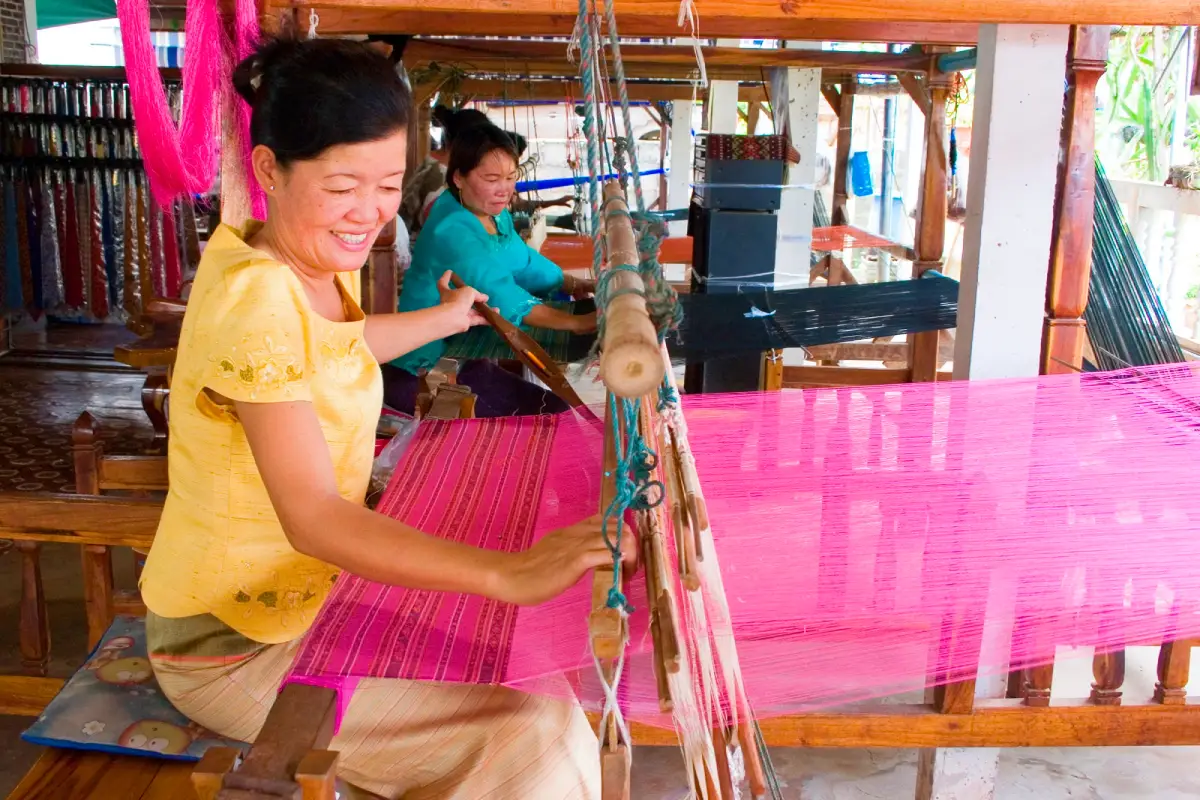
Ban Wai Luem in Roi Et Province is a renowned silk-weaving village in Moo 3, Maba Subdistrict, Thung Khao Luang District. Located along the Roi Et – Yasothon route on Highway 23 around kilometer markers 145 – 146, about 25 km from Roi Et city, the village is known as one of the province’s important community craft destinations. Ban Wai Luem is part of the One Tambon One Product movement and is recognized for silk textiles, cotton products, ready-to-wear clothing, bags, souvenirs, basketry, and local handicrafts produced by the villagers. Its value lies not only in the products sold here but also in the living craft culture behind them.
The appeal of Ban Wai Luem comes from the fact that it is a real working craft village. Visitors do not see only finished silk products on display. They can also understand how silk weaving is connected with village life, household work, community cooperation, pattern design, production skills, and local identity. Each piece of silk reflects time, patience, knowledge, and the hands of local artisans who continue to preserve and adapt the weaving tradition of Roi Et.
Ban Wai Luem has a long community background. Local stories connect the village name with an old landscape rich in wai, or rattan, which once grew densely in the area. Early settlers found the place fertile, with water, vegetation, and natural resources suitable for living. The name Wai Luem therefore carries the memory of the old environment and the relationship between local people and the landscape. It is not merely a place name; it is a reminder of how the village began and how its identity grew from the land.
In the past, villagers relied mainly on agriculture, especially rice farming and seasonal cultivation. During periods outside the farming season, women and household members used weaving as an additional source of income. Over time, this household skill developed into a more organized silk-weaving group. The community strengthened its production system, improved quality control, developed marketing channels, and expanded the range of products. Ban Wai Luem gradually became one of Roi Et’s best-known silk-weaving villages.
The strength of the Ban Wai Luem silk-weaving group lies in community cooperation. Many members, especially women with weaving skills, joined together to create a structured production network. The group manages production, quality, and product development in a systematic way. Its products include not only silk fabric but also cotton items, bags, clothing, souvenirs, basketry, and other community-made goods. This diversity allows the village to welcome many types of visitors, from serious textile buyers to travelers looking for meaningful local gifts.
The textile patterns of Ban Wai Luem reflect the identity of Roi Et and the worldview of Isan communities. Patterns such as Khom Chet symbolize brightness, prosperity, and well-being. Nak Noi refers to abundance and seasonal fertility connected with rain. Khong Ia evokes the movement of water, an essential element in agricultural life. These motifs show that silk patterns are not merely decorative. They carry meanings related to prosperity, water, rain, farming, and the values of local life.
One important textile identity in Roi Et is Saket silk pattern, which is closely associated with the province. Ban Wai Luem artisans are part of this wider textile culture. Weaving such patterns requires careful preparation of threads, color planning, rhythm, counting, and control of texture. A fine piece of silk is therefore the result of skill, patience, precision, and experience. Visitors who observe the weaving process will understand why handwoven silk has cultural and artistic value beyond its material beauty.
A visit to Ban Wai Luem is suitable for travelers who want to see the real context of Thai silk production. The loom, threads, colors, patterns, and artisan’s hands work together in a continuous process. A single piece of silk may require long hours of concentration and physical effort. Seeing this process helps visitors understand that handwoven silk is not simply a fashion product. It is a community craft shaped by local knowledge and inherited technique.
Ban Wai Luem has also developed as a cultural tourism village and homestay community. This allows travelers to experience local life more closely. The tourism style here is not rushed. It emphasizes village life, local crafts, natural rhythm, product learning, and direct interaction with residents. Visitors can walk through the community, view craft products, learn about patterns, talk with artisans, and support local families by buying products from the source.
The village offers a wide variety of products. Travelers looking for fabric for tailoring can choose silk by the piece. Those looking for gifts may choose cotton products, bags, ready-to-wear clothing, or souvenirs. Visitors interested in local crafts can explore basketry and other handmade goods. Those who want deeper knowledge can ask about the meaning of textile patterns, weaving methods, and the development of the community enterprise.
Ban Wai Luem plays an important role in the local economy. Silk weaving creates supplementary income for households during periods outside the rice-farming season. It gives women, elders, and skilled household members a stronger economic role. By working as a group, the community can maintain quality, develop products, and strengthen its reputation as a silk village of Roi Et. In this way, weaving supports both cultural preservation and household income.
Culturally, Ban Wai Luem is a living center of craft transmission. Silk weaving cannot be learned in a short time. It requires knowledge of thread preparation, loom setting, pattern reading, color balance, problem-solving during weaving, and proper finishing. Older artisans pass these skills to younger generations. Preserving silk is therefore not only about storing old textiles. It means keeping the knowledge active in real production, real use, and real community pride.
Ban Wai Luem shows how local wisdom can become a modern community product without losing its cultural roots. Many items have been adapted for present-day use, such as bags, clothing, and souvenirs, while still drawing from local patterns and weaving traditions. This balance allows the village to remain relevant to contemporary buyers while preserving the character of Roi Et textiles.
Visitors should take time to look carefully at each product. Silk differs in color, pattern, texture, weight, and intended use. Buying directly from the community allows visitors to understand the value of handwoven work and the difference between handmade textiles and mass-produced goods. Asking artisans or sellers politely about size, care, and appropriate use will help buyers choose the right fabric or product.
For photography, Ban Wai Luem offers many meaningful scenes: looms, threads, weaving hands, silk on display, craft products, and the atmosphere of the village. Visitors should always ask permission before taking close-up photos of artisans or work in progress. Weaving requires concentration and rhythm. Respectful photography helps preserve the dignity of both the craft and the people who make it.
Ban Wai Luem is best experienced slowly. Visitors should allow at least one to two hours to walk around, observe products, talk with local people, and choose purchases carefully. Those who want to experience homestay or community activities should contact the group in advance. With proper timing, a visit becomes more than a shopping stop. It becomes a direct learning experience in Roi Et’s living textile culture.
Getting There is easiest by private car, rental car, or local hired vehicle. From Roi Et city, take the Roi Et – Yasothon route on Highway 23 toward Maba Subdistrict, Thung Khao Luang District. The village is around kilometer markers 145 – 146 and about 25 km from Roi Et city. The road is a main highway, making the village suitable for a half-day trip from Roi Et or a cultural stop on the way toward Yasothon.
Travelers without a private car can travel from Roi Et city along the route serving Thung Khao Luang or the Roi Et – Yasothon road, then continue by local transport to the village. Public transport is possible, but timing should be planned carefully, especially for a same-day return. Contacting the weaving group in advance is helpful for visitors who want to arrange activities, homestay, or group visits.
Ban Wai Luem is suitable for many types of travelers. Textile lovers can buy silk directly from the source. Cultural travelers can learn about community craft and local identity. Gift buyers can find meaningful OTOP products. International visitors can understand that Thai silk is not only a beautiful material but also the result of rural life, agricultural seasons, symbolic patterns, and skills passed down through generations.
The village also helps travelers see Roi Et beyond its city landmarks. Roi Et is known for Bueng Phalan Chai, Roi Et Tower 101, Wat Burapha Phiram, and other major attractions, but Ban Wai Luem reveals another dimension of the province: a craft community using skill, design, and organization to create sustainable local income. This makes the village an important stop for anyone interested in the cultural economy of northeastern Thailand.
A good travel route can begin in Roi Et city in the morning, continue to Ban Wai Luem for silk viewing and shopping, then move on to nearby cafes or restaurants in Thung Khao Luang or Thawat Buri. Visitors can return to Roi Et city in the afternoon or evening for Bueng Phalan Chai, Roi Et Tower 101, Wat Burapha Phiram, and Roi Et National Museum. This route combines community craft and urban landmarks in one day.
When selecting silk, visitors should consider pattern, color, texture, weaving density, and intended use. Some pieces are suitable for formal tailoring, while others are better as shawls, gifts, or collectibles. Asking about care instructions and fabric dimensions is important. Proper care helps preserve the quality and beauty of Thai silk for a long time.
What makes Ban Wai Luem different from an ordinary textile shop is the experience of buying from the source. Visitors can see that a textile is not created instantly. It is produced through skill, time, and community cooperation. Buying products here directly supports local families and helps keep the weaving tradition active for future generations.
Ban Wai Luem is also an excellent learning site for students, designers, entrepreneurs, and anyone interested in Thai handicrafts. The village offers real examples of community enterprise, craft production, design development, local branding, tourism management, and cultural preservation. Learning from the actual village context makes it easier to understand how traditional knowledge can become a sustainable community economy.
For international visitors, Ban Wai Luem gives a practical and human view of Thai silk and Isan textiles. Seeing silk in a shop may reveal its beauty, but visiting a weaving village reveals the time, labor, symbolism, and pride behind it. The village is therefore a meaningful destination for travelers who want to understand Thai culture at the community level.
Visitors should follow respectful community etiquette. Ask before taking photographs of people or production processes. Do not touch threads, looms, or products without permission. Avoid aggressive bargaining, and respect that the village is both a tourism site and a living community. Good community travel means entering with respect, learning with care, and supporting local people fairly.
The best time to visit is from morning to early afternoon, when the weather is comfortable and there is enough time to view products carefully. Visitors who want to observe weaving or participate in special activities should contact the group in advance because artisan schedules may change according to orders, community events, and seasons. Visiting at the right time makes the experience fuller and more meaningful.
In summary, Ban Wai Luem in Maba Subdistrict, Thung Khao Luang District, Roi Et Province is a significant silk-weaving village with strong value in craft, culture, community economy, and educational travel. From an agricultural village using weaving as supplementary work, Ban Wai Luem has developed into a respected community enterprise and OTOP destination. Visitors can find silk, cotton products, ready-to-wear clothing, bags, basketry, souvenirs, and other local goods while learning about patterns, weaving techniques, and village life. For anyone who wants to experience Roi Et through living craft and local wisdom, Ban Wai Luem is a destination worth visiting.
| Name | Ban Wai Luem |
| Related Name / Type | Ban Wai Luem Silk-Weaving Group / OTOP Village / Silk-Weaving Village / Local Handicraft Village |
| Location | Moo 3, Maba Subdistrict, Thung Khao Luang District, Roi Et Province |
| Address | Maba Subdistrict, Thung Khao Luang District, Roi Et Province 45170, Thailand |
| Coordinates | 16.0319, 103.8829 |
| Highlights | A well-known silk-weaving village in Roi Et, offering silk, cotton products, ready-to-wear clothing, bags, souvenirs, basketry, and community-made handicrafts |
| History / Background | A farming village that developed silk weaving as supplementary work outside the rice-farming season, later becoming a recognized OTOP silk-weaving community in Roi Et Province |
| Name Origin | The name Wai Luem is linked with the old landscape where dense rattan once grew around the settlement area, becoming part of the village identity |
| Distinctive Features | A living craft village with organized silk production, local textile patterns, community enterprise management, and diverse OTOP products for visitors |
| Main Products | Silk Fabric, Cotton Products, Local Silk Patterns, Ready-To-Wear Clothing, Bags, Basketry, Organic Produce, Souvenirs, And Community Handicrafts |
| Notable Patterns | Khom Chet, Nak Noi, Khong Ia, Saket Pattern, And Other Roi Et Local Silk Motifs |
| Recommended Activities | Observing silk weaving, buying OTOP products, learning about local patterns, talking with artisans, photographing handicrafts respectfully, and experiencing village life |
| Travel Information | From Roi Et city, take the Roi Et – Yasothon route on Highway 23 to kilometer markers 145 – 146. The village is about 25 km from Roi Et city and is best reached by private car, rental car, or local hired transport. |
| Current Status | Open for visits, shopping, and community learning activities during operating hours |
| Open Days | Daily |
| Opening Hours | 08.30 – 16.30 |
| Fees | No Admission Fee |
| Facilities | OTOP Product Area, Silk-Weaving Viewing Area, Village Area, Homestay, Parking Area, And Route Connection To Highway 23 |
| Main Areas / Zones | 1. Ban Wai Luem Silk-Weaving Group Zone 2. Silk-Weaving Demonstration And Learning Zone 3. Silk And Cotton Product Zone 4. OTOP And Souvenir Zone 5. Basketry And Local Product Zone 6. Homestay And Village Life Zone 7. Highway 23 Route Connection Zone |
| Responsible / Related Organizations | Ban Wai Luem Silk-Weaving Community Enterprise, Ban Wai Luem Community, Thung Khao Luang District Community Development Office, And Roi Et Provincial Community Development Office |
| Community Enterprise Chairperson | Mrs. Suphaphon Sornsi |
| Tourism / Weaving Group Contact | 086-871-4886 |
| Nearby Tourist Attractions | 1. Wat Sophon Wihan, Ban Wai Luem, About 1 km 2. Ban Wai Luem Silk-Weaving Community Area, About 0 km 3. Na-Hong Cafe And Thung Khao Luang Area, About 10 km 4. Wat Pa Non Sawan, About 28 km 5. Bueng Phalan Chai, Mueang Roi Et, About 25 km 6. Roi Et Tower 101, About 26 km 7. Wat Burapha Phiram, About 26 km 8. Roi Et National Museum, About 27 km |
| Nearby Restaurants | 1. Na-Hong Cafe, Thung Khao Luang District, About 10 km, Tel. 081-292-3687 2. Krua Thammachart Southern Food, Thawat Buri, About 14 km, Tel. 093-758-8379 3. Krua Erawan 101, Thawat Buri, About 15 km, Tel. 092-804-1429 4. Krua Rabiang Suan Thawat Buri, About 15 km, Tel. 082-889-1430 5. Nan Nan Needee Cafe, Thawat Buri, About 15 km, Tel. 099-262-8226 6. Nutcha Coffee, Thawat Buri, About 15 km |
| Nearby Accommodations | 1. Ban Wai Luem Homestay, About 0 km, Tel. 086-871-4886 2. Rim Bueng Resort Roi Et, About 14 km, Tel. 043-037-602 3. Ruenkaew Resort Roi Et, About 15 km, Tel. 084-600-8998 4. Arawan Resort Roi Et, About 18 km 5. The Chic 101, About 19 km 6. Me Sook Resort And Cafe, About 27 km |
Frequently Asked Questions (FAQ)
Q: Where is Ban Wai Luem located?
A: Ban Wai Luem is located in Moo 3, Maba Subdistrict, Thung Khao Luang District, Roi Et Province, along Highway 23 on the Roi Et – Yasothon route around kilometer markers 145 – 146, about 25 km from Roi Et city.
Q: What are the opening days and opening hours of Ban Wai Luem?
A: Ban Wai Luem is open daily from 08.30 to 16.30.
Q: Is there an admission fee to visit Ban Wai Luem?
A: No. Visitors can enter the village, view products, and contact community activities without an admission fee during operating hours.
Q: What is Ban Wai Luem famous for?
A: Ban Wai Luem is famous for silk weaving, local textile craftsmanship, and OTOP products, especially silk, cotton goods, ready-to-wear clothing, bags, souvenirs, and community handicrafts.
Q: What are the notable silk patterns of Ban Wai Luem?
A: Notable patterns include Khom Chet, Nak Noi, Khong Ia, Saket pattern, and other Roi Et local silk motifs that reflect prosperity, abundance, water, and Isan agricultural life.
Q: Does Ban Wai Luem offer homestay accommodation?
A: Yes. Ban Wai Luem has developed as a homestay village and community tourism destination. Visitors who want to stay overnight or join activities should contact the weaving group in advance.
Q: How do visitors travel from Roi Et city to Ban Wai Luem?
A: From Roi Et city, take Highway 23 on the Roi Et – Yasothon route toward Maba Subdistrict, Thung Khao Luang District. The village is around kilometer markers 145 – 146 and about 25 km from Roi Et city.
Q: What nearby places can be visited with Ban Wai Luem?
A: Nearby and connected places include Wat Sophon Wihan, Wat Pa Non Sawan, Bueng Phalan Chai, Roi Et Tower 101, Wat Burapha Phiram, and Roi Et National Museum.
 Category: ●Suburban Living
 Group: ●Village, Community
Last Update : 2 MonthAgo
 Last Update : 2 MonthAgo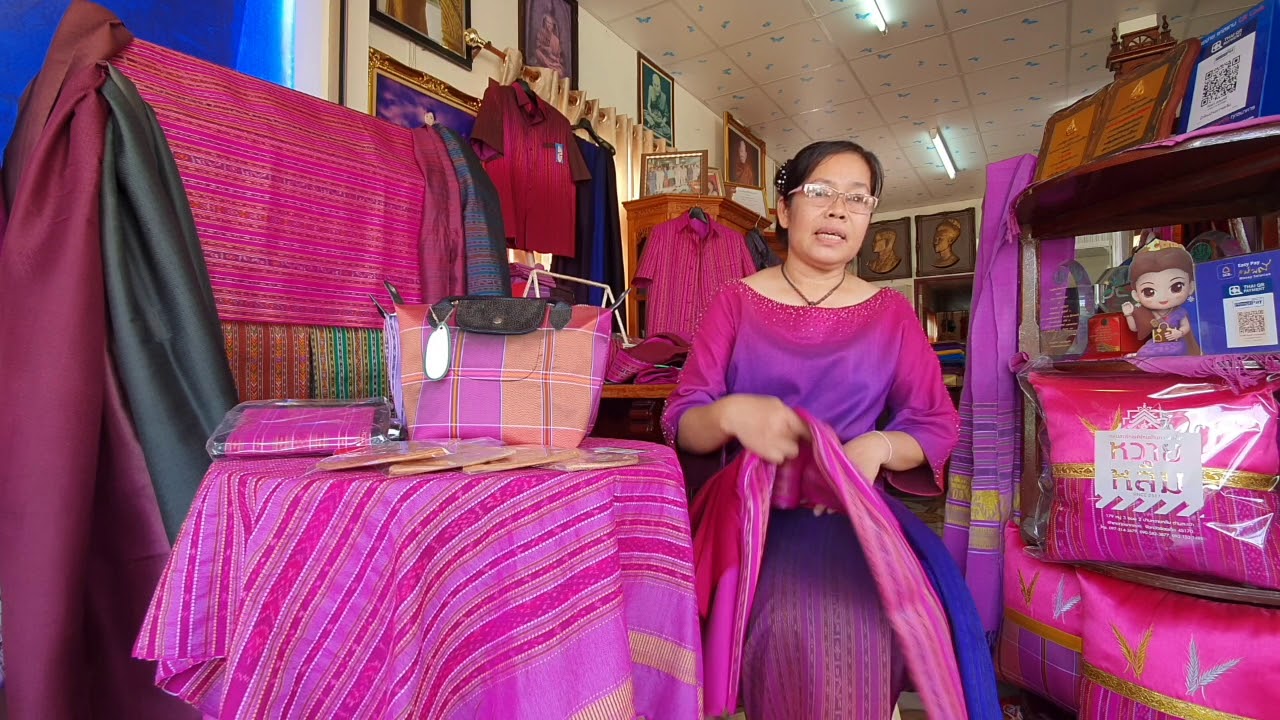
 Click to Access the Navigation Map GPS
Ban Wai Lum Map
Recommend

 Art, Culture and Heritage
 Historical Sites and Monuments(3)
 Landmarks and Memorials(5)
 Art, Craft Centres, Tradition(2)
 Museums(1)
 Educational Places
 Educational Gardens, Farm(3)
 Places of Worship
 Temple(35)
 Other Sacred Sites(6)
Village, Community(1)
Other Sacred Sites(6)
Village, Community(1)
 Local Market(1)
 Nature and Wildlife
 National Parks and Marine Reserves(1)
 Mountain (Doi)(2)
 Dam, Reservoir, Lake(8)
 Waterfalls(1)
 Flower Field(1)
 River, Canal(4)
 Entertainment and Agricultural
 Zoos and Aquariums(1)
 Stadium(1)
 Farms, Parks and Ecotourism(5)
 Shopping
 Shopping and Night Market(1)


