
lovethailand home >Northeastern Travel Attractions >Roi Et Travel Attractions >Muang Roi Et >Nai Muang > Roi Et National Museum
TL;DR: Roi Et National Museum is located at Phloen Chit Road, Nai Mueang Subdistrict, Mueang Roi Et District, Roi Et Province, near Roi Et Provincial Hall, open Wednesday – Sunday, hours 09.00 – 16.00.
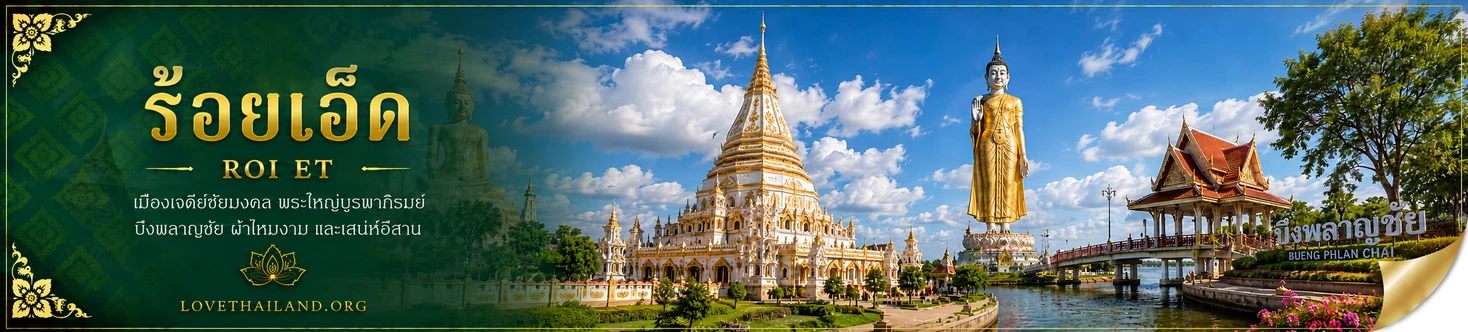
Roi Et National Museum
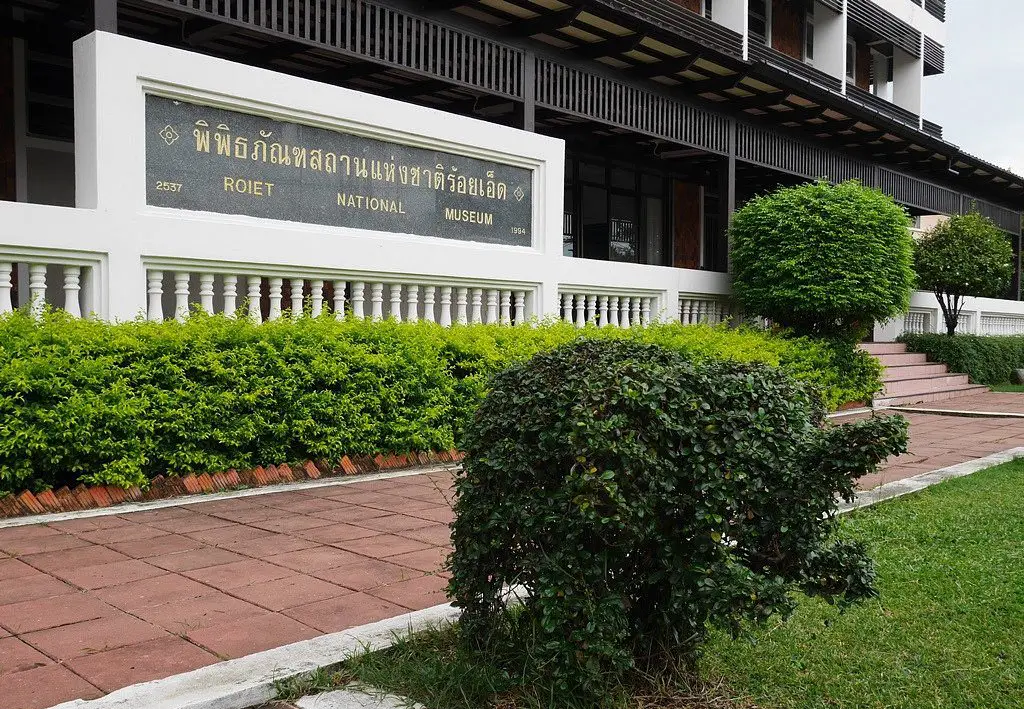
Open Days: Wednesday – Sunday
Opening Hours: 09.00 – 16.00
Roi Et National Museum is located on Phloen Chit Road in Mueang Roi Et District, Roi Et Province, close to Roi Et Provincial Hall and within easy reach of Bueng Phlan Chai, Ho Wot 101 Tower, Saket Nakhon Gate, and Somdet Phra Srinagarindra Park Roi Et. It is the city museum of Roi Et and one of the most important cultural learning places in the province. The museum presents the story of Roi Et through geography, geological resources, archaeology, history, important local figures, ways of life, traditions, silk weaving, and local handicrafts. For foreign visitors who want to understand Roi Et beyond sightseeing landmarks, this museum is one of the best places to begin.
The museum is valuable because it gathers many layers of Roi Et’s identity in one building. Visitors can learn how the province developed from its natural landscape, local resources, ancient communities, Buddhist art, historical settlements, civic life, ethnic and cultural diversity, local festivals, and textile traditions. Instead of presenting Roi Et only as a modern provincial city, the museum shows that the province has a long and complex background shaped by land, water, faith, craftsmanship, and community memory.
The origin of Roi Et National Museum is linked to the vision of Professor Dr. Ko Sawatdiphani, who wanted to establish a museum to preserve and display local silk textiles and Isan handicrafts, especially the textile heritage of Roi Et. Later, when the Fine Arts Department developed a policy to establish national city museums, Roi Et National Museum was improved and expanded to present the province’s wider story. The result is a museum that does not focus only on textiles, but also covers the geography, geology, archaeology, history, people, traditions, and cultural wisdom of Roi Et Province.
The museum is important in Thai museum history because it became the first national city museum opened under this policy. Its exhibitions were designed with modern presentation techniques, including environmental control inside the building, multimedia information systems, life-size scenes, models, and interpretive displays. This makes the museum more than a room of objects in glass cases. It is designed to help visitors understand the context behind the objects and to experience the province’s history through visual storytelling.
The establishment of the museum began in the 1993 fiscal year and was completed in 1997 with a budget of more than 41 million baht. It was officially opened on March 20, 1998. This background places the museum within a wider movement to make cultural knowledge more accessible in provincial cities. Rather than keeping historical and archaeological interpretation only in national centers, the museum brings that knowledge into Roi Et itself, close to the community whose story it tells.
The geography and geology exhibition helps visitors understand the physical foundation of Roi Et. Landforms, natural resources, soil, water, and settlement patterns all affect how people live. This section is useful because it shows that history does not begin only with kings, cities, or wars. It begins with landscape. The way people farm, settle, build communities, and connect with one another is closely related to the natural environment around them.
The archaeology section opens a deeper view into the province’s past. Archaeological evidence from Roi Et shows that the area has been connected with ancient cultures over many periods, from prehistoric communities to Dvaravati culture, Khmer-influenced Buddhist and Hindu traditions in Thailand, and later historical periods. Objects such as Buddha images, votive tablets, ritual items, sculptural fragments, and local artifacts help visitors see Roi Et as part of a wider cultural network in northeastern Thailand.
Some of the most interesting objects include Buddhist artworks found in the province. Examples include Dvaravati-style standing Buddha images, Khmer-style crowned Buddha images protected by naga hoods, bronze ritual objects, and votive molds. These works show the importance of Buddhism in the region and also reveal how artistic forms moved across different cultural areas. For travelers unfamiliar with Thai art history, these objects provide a clear introduction to the ancient religious landscape of Isan.
The history section presents the development of Roi Et city and the province through time. It covers important local figures, administrative development, urban life, community growth, and the changing social landscape of Roi Et. By using models and life-size scenes, the museum makes historical information easier to understand. Visitors can see how a city is made not only by official events, but also by trade, migration, family life, religious practice, local economy, and everyday activity.
One distinctive part of the museum is the life-size scene of Chinese community life in Roi Et. This section shows the role of Chinese residents and merchants in the development of the city. It helps visitors understand that Roi Et, like many Thai provincial towns, grew through the interaction of local communities, migrants, trade networks, and civic development. The display gives human texture to the history of the city.
The way of life and tradition section presents the cultural identity of Roi Et through daily objects, rituals, beliefs, occupations, clothing, music, festivals, and community practices. Roi Et is known for important Isan traditions such as Bun Phawet, Buddhist merit-making, local ceremonies, and festivals connected with the Hit Sip Song cultural calendar. By learning about these traditions inside the museum, visitors gain stronger context before seeing the same practices in temples, festivals, and public spaces around the province.
Silk weaving and local handicrafts are central to the museum’s identity. This reflects the original purpose of establishing the museum as a place to preserve local silk and Isan craftsmanship. Roi Et textiles are not merely decorative objects. They are cultural documents that contain design knowledge, community memory, technical skill, and regional identity. Patterns, colors, weaving techniques, and textile forms can reveal information about social life, ceremonies, gender roles, local taste, and shared heritage.
Saket silk is especially important because it represents Roi Et’s textile identity. The cloth combines several local matmi patterns into one piece, symbolizing unity among diverse communities in the province. Seeing Saket silk inside the museum helps visitors understand that textiles in Roi Et are not just clothing or souvenirs. They are a form of cultural language, carrying memory, artistry, and local pride.
For visitors interested in local history, Roi Et National Museum offers an organized and accessible introduction. The exhibitions move from natural landscape to archaeology, from ancient culture to city history, from public life to domestic life, and from practical objects to artistic heritage. This structure makes it easier to understand Roi Et as a whole rather than as a list of separate attractions.
The museum is also a good starting point for a Roi Et city itinerary. After visiting the museum, travelers can continue to Bueng Phlan Chai, Ho Wot 101 Tower, Saket Nakhon Gate, Roi Et City Pillar Shrine, Somdet Phra Srinagarindra Park Roi Et, Wat Bueng Phlan Chai, and Wat Buraphaphiram. Visiting the museum first helps give meaning to these sites because travelers already understand the historical and cultural background of the city.
The museum atmosphere is suitable for slow viewing. Visitors should allow around 1 to 2 hours to walk through the galleries, read labels, examine artifacts, and understand the sequence of the exhibitions. Families with children can use the museum as a learning space by connecting the displays with familiar topics such as rice, silk, temples, old towns, local festivals, and everyday household objects. This makes the visit more engaging and easier to understand.
Roi Et National Museum is suitable for families, teachers, students, researchers, cultural travelers, and anyone interested in Isan history. It is especially useful for visitors planning to explore other cultural sites in Roi Et because the museum provides the background that makes those places more meaningful. A temple, a city gate, a lake, or a local festival becomes easier to appreciate when the visitor understands the longer story of the province.
Getting There is simple because the museum is located in Roi Et city on Phloen Chit Road, near Roi Et Provincial Hall. Visitors with private cars can navigate directly to Roi Et National Museum or use Bueng Phlan Chai and Roi Et Provincial Hall as nearby reference points. Travelers using public transport can arrive at Roi Et Bus Terminal and continue by local taxi, tuk-tuk, or other local city transport to Phloen Chit Road.
Travelers arriving from Roi Et Airport can continue into the city center and then reach the museum by local transport. Since the museum is close to several key attractions, it is easy to combine with a half-day city route. A practical route can include Roi Et National Museum in the morning, lunch near Bueng Phlan Chai, Ho Wot 101 Tower in the afternoon, and Wat Buraphaphiram or Saket Nakhon Gate later in the day.
The museum is open Wednesday to Sunday from 09.00 to 16.00. It is closed on Monday, Tuesday, and public holidays. The admission fee is 20 baht for Thai visitors and 100 baht for foreign visitors. Students, monks and religious practitioners, seniors, and eligible visitors under the relevant national museum regulations can enter free of charge. Groups or educational visitors can contact the museum at 043-514456 extension 101.
Visitors should follow museum etiquette to help preserve the artifacts and maintain a good learning environment. Do not touch displayed objects, lean on display cases, make loud noise, or use flash photography in restricted areas. Following staff instructions helps protect cultural heritage and allows all visitors to enjoy the museum respectfully.
The surrounding area has restaurants, cafes, and city hotels, making the museum easy to include in a comfortable travel plan. Visitors can tour the museum in the morning, eat near Bueng Phlan Chai or Sunthorn Thep Road, and continue to nearby attractions in the afternoon. Staying near the city center or Bueng Phlan Chai is convenient for travelers who want easy access to the museum and major landmarks.
Overall, Roi Et National Museum is one of the most useful places for understanding Roi Et in depth. It connects natural landscape, archaeology, history, local communities, traditions, Buddhist art, silk weaving, and handicrafts in one accessible museum. For travelers who want more than a surface-level visit, beginning with this museum makes every later stop in Roi Et more meaningful, from Bueng Phlan Chai and Ho Wot 101 Tower to Saket Nakhon Gate, Wat Buraphaphiram, and the old city area.
| Name | Roi Et National Museum |
| Location | Phloen Chit Road, Nai Mueang Subdistrict, Mueang Roi Et District, Roi Et Province, near Roi Et Provincial Hall |
| Address | Roi Et National Museum, Phloen Chit Road, Mueang Roi Et District, Roi Et 45000, Thailand |
| Coordinates | 16.054109, 103.657316 |
| Highlights | A national city museum presenting Roi Et’s geography, geological resources, archaeology, history, way of life, traditions, local silk, and handicrafts |
| History | Originally inspired by Professor Dr. Ko Sawatdiphani as a museum for local silk and Isan handicrafts, later developed under the Fine Arts Department’s national city museum policy. Establishment began in the 1993 fiscal year, was completed in 1997, and the museum officially opened on March 20, 1998. |
| Name Origin | The name refers to the national museum of Roi Et Province, established to preserve, collect, and present the history, archaeology, way of life, and cultural heritage of Roi Et |
| Distinctive Features | Modern city-museum style exhibitions using interpretive displays, models, life-size scenes, multimedia information systems, and controlled indoor exhibition conditions |
| Travel Information | Located in Roi Et city on Phloen Chit Road near Roi Et Provincial Hall. Visitors can travel by private car, local taxi, tuk-tuk, or local city transport from Roi Et Bus Terminal. |
| Current Status | Open as a national city museum and learning center for the history, archaeology, and culture of Roi Et Province |
| Open Days | Wednesday – Sunday |
| Closed Days | Monday, Tuesday, and public holidays |
| Opening Hours | 09.00 – 16.00 |
| Admission Fees | Thai Visitors: 20 Baht Per Person Foreign Visitors: 100 Baht Per Person Free Admission For Students, Monks And Religious Practitioners, Seniors, And Eligible Visitors Under The Relevant National Museum Regulations |
| Facilities | Exhibition building, archaeology and art galleries, educational displays, information labels, restrooms, visitor contact area, and parking area |
| Main Areas / Zones | 1. Geography And Geology Of Roi Et Zone 2. Archaeology And Prehistoric Evidence Zone 3. Dvaravati And Khmer Art In Thailand Zone 4. Roi Et City History And Important Local Figures Zone 5. Chinese Community Life Scene Zone 6. Local Way Of Life, Traditions, And Culture Zone 7. Local Silk, Saket Silk, And Handicraft Zone 8. Temporary And Special Exhibition Zone |
| Key Objects | Dvaravati-style standing Buddha image, Khmer-style naga-protected Buddha image, votive molds, bronze ritual base, archaeological objects from Roi Et, local silk textiles, and Saket silk |
| Caretaker / Responsible Agency | The Fine Arts Department, Ministry Of Culture, through Roi Et National Museum |
| Main Contact Number | 043-514456 Ext. 101 |
| Fax | 043-514456 Ext. 112 |
| Official Website / Official Page | finearts.go.th/roietmuseum, Facebook: Roi Et National Museum |
| Nearby Tourist Attractions | 1. Bueng Phlan Chai, about 1 km 2. Somdet Phra Srinagarindra Park Roi Et, about 1 km 3. Ho Wot 101 Tower, about 1 km, Tel. 043-511222 4. Saket Nakhon Gate, about 1 km 5. Roi Et City Pillar Shrine, about 1 km 6. Wat Buraphaphiram, about 1 km 7. Wat Bueng Phlan Chai, about 1 km |
| Nearby Restaurants | 1. 4U For You Phloen Chit Road, about 0.1 km, Tel. 065-649-1999 2. Lakeview Restaurant, about 1 km, Tel. 093-320-8126 3. Nai Chui Vintage Pork Noodle, about 1 km, Tel. 093-638-8323 4. Sit Rim, about 1 km, Tel. 098-278-4482 5. Cozy Cafe & Bistro, about 1 km, Tel. 085-852-9237 6. Her Studio Roi Et, about 1 km, Tel. 083-871-0824 |
| Nearby Accommodations | 1. Rueanrimnam Hotel, about 1 km, Tel. 043-518-967 2. Saket Nakhon Hotel, about 1 km, Tel. 043-511-741 3. The Premium Residence, about 1 km, Tel. 043-518-655 4. 101 Hotel, about 1 km, Tel. 043-513-999, 065-119-6999 5. HOP INN Roi Et, about 2 km, Tel. 02-080-2222 6. The Rice Hotel, about 2 km, Tel. 043-519-999 |
Frequently Asked Questions (FAQ)
Q: Where is Roi Et National Museum located?
A: It is located on Phloen Chit Road in Nai Mueang Subdistrict, Mueang Roi Et District, Roi Et Province, near Roi Et Provincial Hall and close to Bueng Phlan Chai.
Q: What are the opening days and hours?
A: Roi Et National Museum is open Wednesday to Sunday from 09.00 to 16.00. It is closed on Monday, Tuesday, and public holidays.
Q: How much is the admission fee?
A: Admission is 20 baht for Thai visitors and 100 baht for foreign visitors. Students, monks and religious practitioners, seniors, and eligible visitors under the relevant national museum regulations can enter free of charge.
Q: What does the museum display?
A: The museum displays Roi Et’s geography, geological resources, archaeology, history, important local figures, way of life, traditions, local silk textiles, and handicrafts.
Q: Who should visit Roi Et National Museum?
A: It is suitable for families, students, teachers, researchers, cultural travelers, and anyone who wants to understand Roi Et’s history and local way of life in a structured way.
Q: How long should visitors spend at the museum?
A: Visitors should allow about 1 to 2 hours to explore the main exhibitions, read the information panels, and understand the story of Roi Et more fully.
Q: What attractions are near the museum?
A: Nearby places include Bueng Phlan Chai, Ho Wot 101 Tower, Saket Nakhon Gate, Roi Et City Pillar Shrine, Wat Buraphaphiram, Wat Bueng Phlan Chai, and Somdet Phra Srinagarindra Park Roi Et.
Q: How can visitors contact Roi Et National Museum?
A: Visitors can contact Roi Et National Museum by phone at 043-514456 extension 101.
Tel : 043514456
 Tel : 043514456
 Category: ●Art, Culture and Heritage
 Group: ●Museums
Last Update : 2 MonthAgo
 Last Update : 2 MonthAgo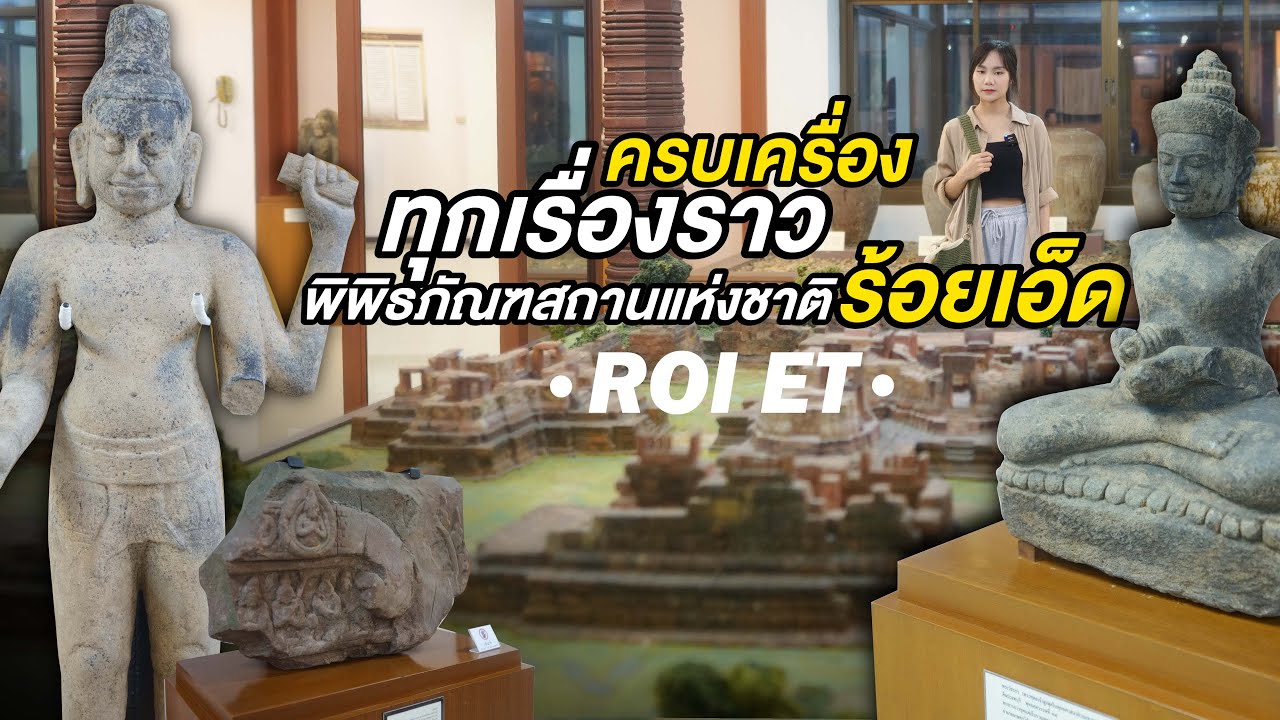
 Click to Access the Navigation Map GPS
Roi Et National Museum Map
Recommend

 Historical Sites and Monuments(3)
 Landmarks and Memorials(5)
 Art, Craft Centres, Tradition(2)
Museums(1)
Art, Craft Centres, Tradition(2)
Museums(1)
 Educational Places
 Educational Gardens, Farm(3)
 Places of Worship
 Temple(35)
 Other Sacred Sites(6)
 Suburban Living
 Village, Community(1)
 Local Market(1)
 Nature and Wildlife
 National Parks and Marine Reserves(1)
 Mountain (Doi)(2)
 Dam, Reservoir, Lake(8)
 Waterfalls(1)
 Flower Field(1)
 River, Canal(4)
 Entertainment and Agricultural
 Zoos and Aquariums(1)
 Stadium(1)
 Farms, Parks and Ecotourism(5)
 Shopping
 Shopping and Night Market(1)


