
lovethailand home >Northeastern Travel Attractions >Roi Et Travel Attractions >Thawatshaburi >Ma Ue > Prang Ku (Prasat Nong Ku)
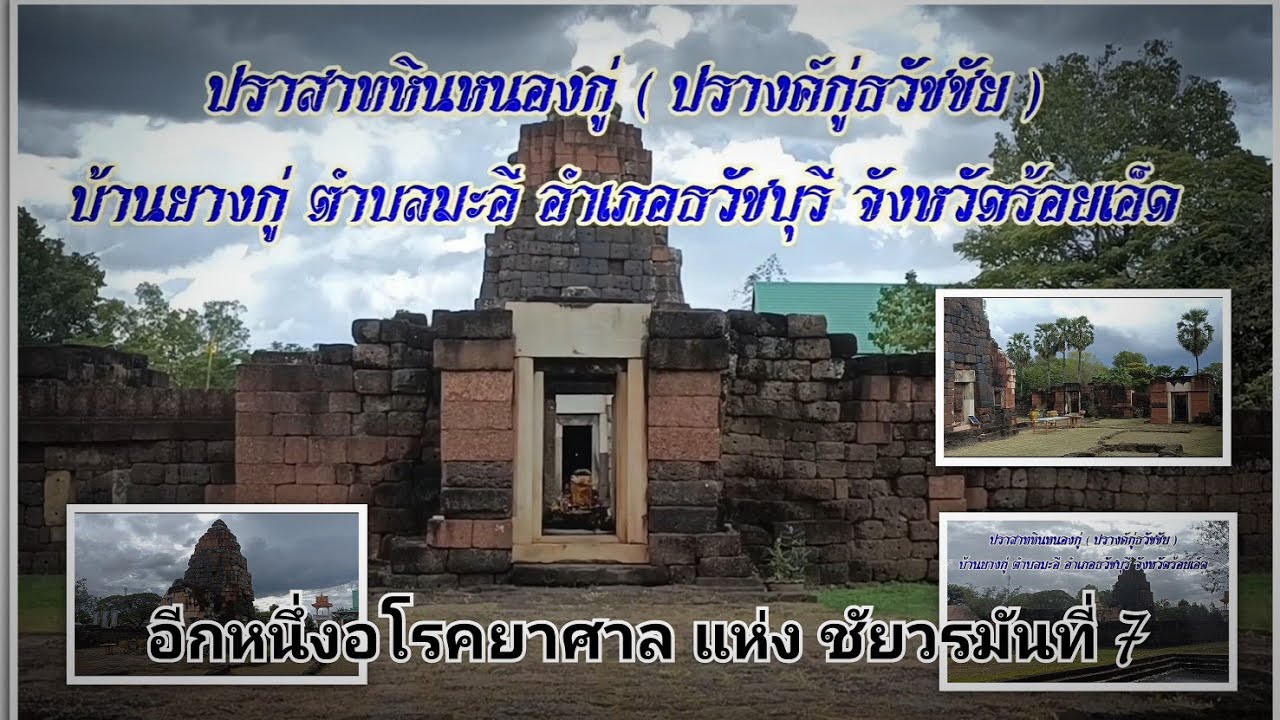
TL;DR: Prang Ku (Prasat Nong Ku) is located at Wat Si Rattanaram, Ban Yang Ku, Ma-ue Subdistrict, Thawat Buri District, Roi Et Province, open Daily, hours 08.30 – 16.30.
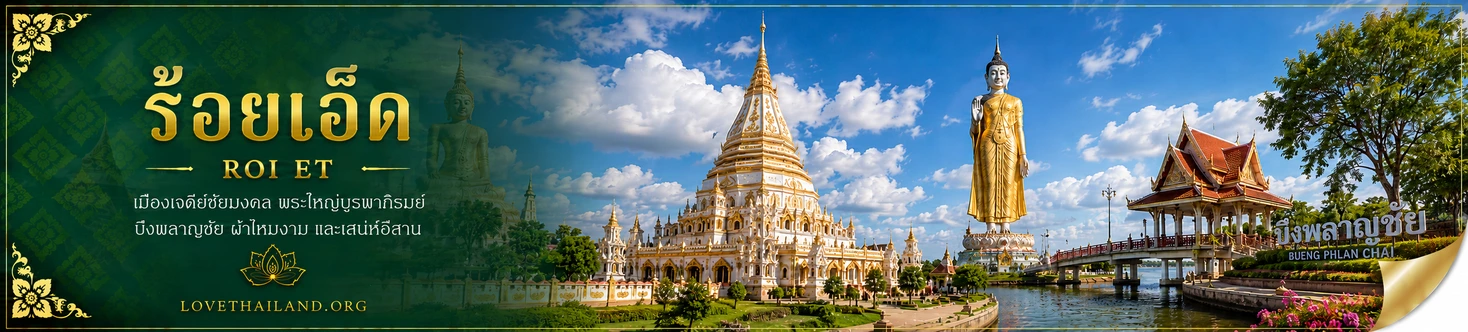
Prang Ku (Prasat Nong Ku)
Open Days: Daily
Opening Hours: 08.30 – 16.30
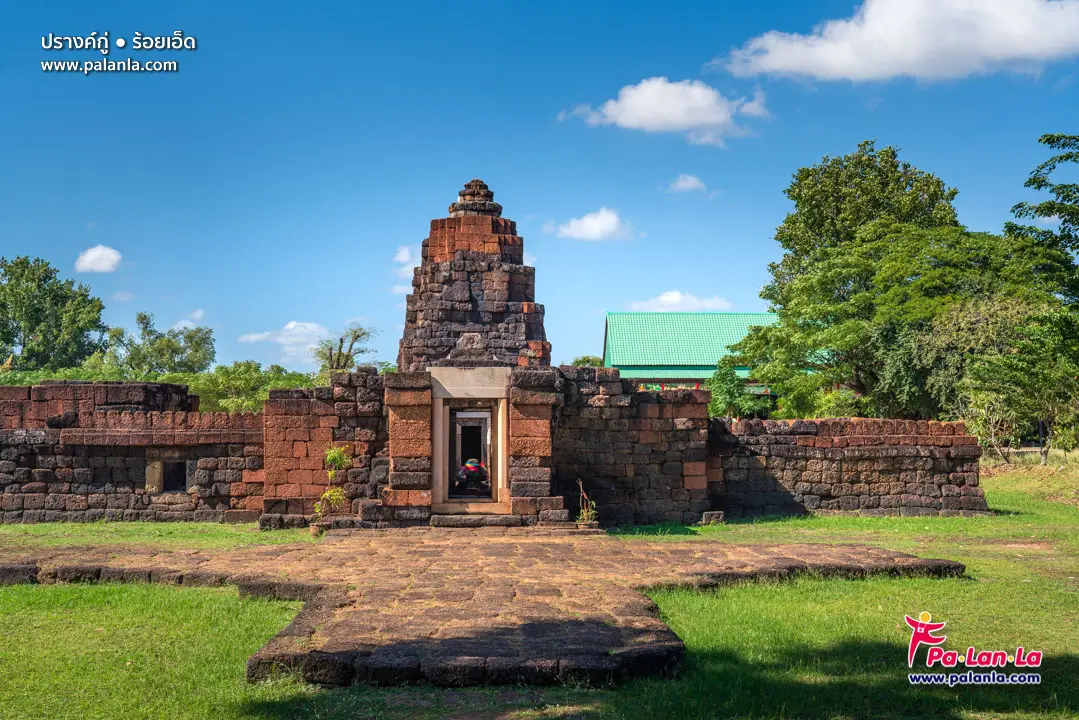
Prang Ku, also known as Prasat Nong Ku, is an important Khmer-style archaeological site in Roi Et Province. It is located within Wat Si Rattanaram at Ban Yang Ku, Ma-ue Subdistrict, Thawat Buri District, only a short drive from Roi Et city. The site is especially significant because its layout follows the pattern of an ancient Khmer Arogayasala, or hospital sanctuary, associated with the reign of King Jayavarman VII. The complex includes a main sanctuary tower, a library building, an enclosing wall with an entrance pavilion, and a pond outside the wall. The main prang still preserves 3 roof tiers, making it one of the most readable Khmer archaeological remains in this part of Roi Et.
For foreign travelers, Prang Ku offers a quiet and accessible way to understand the Khmer cultural presence in Northeastern Thailand without the crowds of larger historical parks. The site is not a remote ruin isolated from daily life. It stands inside a living temple area, surrounded by a local community, trees, open ground, and village roads. This setting allows visitors to experience both ancient architecture and the present-day religious environment of rural Roi Et. The atmosphere is calm, simple, and reflective, making the site suitable for history lovers, cultural travelers, photographers, students, and visitors who want to go beyond the usual city landmarks.
Prang Ku is also called Prasat Nong Ku, a name connected with the local landscape and the community around Ban Yang Ku. The word “prang” refers to a tower-shaped sacred structure, while “ku” is commonly used in Northeastern Thailand for Khmer-style ancient monuments. The name Prasat Nong Ku links the monument to the pond and local area around the sanctuary. Together, these names reflect both the architectural identity of the site and the way local people have remembered it through time.
The most important historical context of Prang Ku is its relationship with the Arogayasala tradition. In the Khmer world of King Jayavarman VII, Arogayasalas were religious and healing-related establishments associated with a network of temple hospitals. Their typical layout included a main sanctuary, a library, an enclosing wall, a gateway, and a pond. Prang Ku preserves these elements clearly enough for visitors to understand how the complex was planned. This makes the site valuable not only as a beautiful ancient monument but also as evidence of how religion, healing, water, ritual, and architecture were connected in the Khmer cultural sphere.
The main sanctuary is the heart of the complex. It was built of laterite and has a rectangular indented plan. The entrance faces east and is preceded by a projecting hall, while the other 3 sides have false doors. This arrangement reflects the symbolic directionality and ritual order of Khmer sacred architecture. Although the uppermost part of the tower has collapsed over the centuries, 3 roof tiers remain visible, and the lotus-bud finial base can still be seen at the top. These surviving features help visitors imagine the original form of the tower more clearly than at many smaller ruins where only foundations remain.
The laterite construction gives Prang Ku its strong visual character. Laterite is a common material in Khmer monuments in Northeastern Thailand. It is durable, porous, reddish-brown to dark in tone, and becomes visually expressive as it weathers. Standing close to the main prang, visitors can observe how laterite blocks were arranged to form walls, doorways, and roof tiers. The texture of the stone, the remaining structural lines, and the contrast between ancient masonry and the green surroundings are part of the site’s quiet appeal.
The library building, or bannalai, is another key element. In Khmer temple architecture, a library is usually an auxiliary structure within the sacred enclosure and may have been connected with ritual objects, sacred texts, or ceremonial functions. At Prang Ku, the bannalai was built of laterite in a rectangular plan. Although parts of the building are damaged, its form remains understandable. When viewed together with the main sanctuary, the library helps visitors see that this was not a single isolated tower but a planned religious complex.
The enclosing wall and entrance pavilion are equally important. The wall defines the boundary between the sacred inner space and the outside area. The main entrance is on the eastern side and takes the form of a cross-shaped gateway, or gopura. Small rooms are also found along the northern and southern sides of the wall. In front of the entrance, a cross-shaped laterite base suggests the former presence of a wooden pavilion, supported by postholes found in the area. These architectural details show that Prang Ku once had a more complex built environment than what is immediately visible at first glance.
Outside the wall is a pond, an essential part of the Arogayasala layout. Water held practical and symbolic importance in ancient religious landscapes. It could be connected with purification, ritual use, healing, and the sacred geography of the sanctuary. In the context of a hospital sanctuary, the pond becomes more than a landscape feature. It helps complete the meaning of the site as a place where water, worship, and well-being were integrated into one architectural plan.
Several ancient objects are preserved within the temple area, especially near the southeastern front part of the enclosure. These include a sandstone lintel, 2 doorframe pillars, a large Shiva linga with its base, and a lotus-bud finial fragment. The lintel is carved with Indra riding the elephant Airavata within an ornamental arch and a kala face motif. This carving is one of the most important art historical remains at the site because it reflects the mythological imagery and craftsmanship of Khmer art.
One of the doorframe pillars bears the figure of a hermit carved near its base. The hermit motif is especially interesting in the context of an Arogayasala because hermits in ancient South and Southeast Asian traditions are often associated with knowledge, discipline, spiritual practice, and healing wisdom. When seen together with the hospital-sanctuary layout, this carved figure gives the site an added layer of meaning. It invites visitors to think about the connection between sacred knowledge, health, ritual, and architecture in the ancient Khmer world.
The large Shiva linga and its base, found from a nearby field outside the main structure, add another important dimension to the site. Although the Arogayasala tradition of King Jayavarman VII is usually associated with Mahayana Buddhist contexts, Khmer sacred sites often show layers of religious meaning, including Hindu and Buddhist elements. The Shiva linga at Prang Ku shows how symbols, worship practices, and sacred objects could overlap or continue to be reinterpreted over time. This makes the monument useful for understanding the fluid religious landscape of ancient and later local communities.
The lotus-bud finial fragment that was later adapted as the base of a stucco image of Phra Sangkachai reveals another layer of continuity. Ancient monuments in Thailand often continued to serve as sacred places long after their original religious function changed. At Prang Ku, the reuse of an old architectural fragment in a later Buddhist context shows how local communities incorporated ancient remains into living religious practice. The site is therefore not only an archaeological record but also a place where past and present meanings meet.
The monument is dated to around the 18th Buddhist century, corresponding to the Khmer period of King Jayavarman VII. This was a time of major temple construction, road networks, rest houses, and hospital sanctuaries across the Khmer world. The presence of Prang Ku in Roi Et shows that this part of Northeastern Thailand was integrated into a broader cultural and religious network. For travelers, visiting Prang Ku helps reveal that Roi Et’s history extends far beyond modern provincial boundaries and local city landmarks.
Prang Ku was registered as an ancient monument by the Fine Arts Department in 1935. This official registration confirms its national cultural value and the need for careful preservation. Visitors should walk through the site respectfully, avoid climbing on the ancient masonry, refrain from touching fragile carved stones, and never move any archaeological fragments. Each block of laterite and each sandstone fragment contributes to the historical record of the site.
The present environment of Prang Ku is peaceful and well cared for. Because the monument stands within Wat Si Rattanaram, the surrounding area feels like both a temple and a heritage site. Some structures have partially collapsed, but the main tower and overall plan remain understandable. The temple has helped keep the area clean and shaded, allowing visitors to walk slowly and examine the relationship between the tower, the library, the wall, the gateway, and the pond.
For first-time visitors, the best way to explore Prang Ku is to begin at the eastern entrance, then continue to the main sanctuary, the library, the enclosing wall, and the pond outside the wall. After that, take time to observe the preserved ancient objects, especially the lintel of Indra on Airavata, the hermit-carved door pillar, the Shiva linga, and the lotus-bud finial fragment. This route makes the site easier to understand as a complete Arogayasala complex rather than as a single ruined tower.
Travelers interested in art history should pay attention to the plan of the main prang, the real eastern entrance, the false doors on the other sides, the laterite wall, the cross-shaped gateway, and the position of the pond. These are not decorative details. They are part of a larger architectural logic. The more slowly visitors observe the site, the clearer its ritual and spatial structure becomes.
Prang Ku is also suitable for families and educational trips. It allows children and students to learn about Khmer civilization, ancient hospital sanctuaries, laterite construction, religious symbols, archaeological preservation, and local heritage in a real setting. Instead of reading about history only in books, visitors can see the stones, the tower, the pond, and the sacred layout directly in the landscape of Roi Et.
For photography, the site offers several good viewpoints. A front-facing composition captures the main sanctuary and entrance. Side angles show the remaining roof tiers and the mass of the laterite tower. A wider view from near the pond helps show how the monument relates to its surrounding landscape. Close-up shots of laterite blocks and sandstone fragments reveal texture, age, and craftsmanship. Morning and late afternoon are the most comfortable times for walking and photography because the sunlight is softer and the heat is less intense.
Because Prang Ku is located within a temple, visitors should dress modestly and behave respectfully. Avoid loud noise, do not disturb monks or temple activities, and stay away from areas not intended for visitors. If local residents or monks are present, ask questions politely. Visiting an archaeological site within a temple requires respect for both ancient heritage and living religious practice.
Prang Ku can easily be combined with other places in Roi Et. Travelers can visit Bueng Phlan Chai, Ho Wot 101, Wat Burapha Phiram, or Roi Et National Museum in the city, then continue to Prang Ku in Thawat Buri District. Those staying near Roi Et Airport or along the main highway can also include the site in a short cultural stop. This makes Prang Ku a practical addition to a one-day cultural itinerary in Roi Et.
Nearby food options are mostly found in Thawat Buri District and along the route back to Roi Et city. Travelers can find local restaurants, cafés, cooked-to-order food shops, and casual dining places in the district area. Those who want more variety can continue into Roi Et city, but eating in Thawat Buri allows visitors to reduce backtracking and support businesses closer to the heritage area.
Accommodation options near Prang Ku include small hotels and apartments in Thawat Buri as well as larger hotel choices in Roi Et city. Travelers with private cars may prefer staying in Roi Et city for easier access to restaurants, city landmarks, and evening activities, then visiting Prang Ku in the morning. Those with early flights or plans around Roi Et Airport may choose accommodation in Thawat Buri. The best choice depends on transport, schedule, and preferred travel style.
The best time to visit Prang Ku is in the morning or late afternoon. The site is partly open, and midday heat can be strong. Visitors should bring a hat, umbrella, drinking water, and comfortable walking shoes. Some surfaces are stone, earth, or laterite, so elderly visitors and children should walk carefully. During the rainy season, some surfaces may become slippery, especially around shaded or mossy areas.
Getting There from Roi Et city is straightforward by private car or hired local transport. One route follows Highway 23, the Roi Et – Yasothon road, for about 10 km to the Thawat Buri District Office area. From the opposite side, take the side road to Prang Ku for about 6 km. Another route follows Highway 2044, the Roi Et – Phon Thong road, for about 8 km, then turns right toward Prang Ku for about 1 km. Public transport is limited compared with city areas, so visitors without a private vehicle should arrange transport in advance.
In summary, Prang Ku or Prasat Nong Ku is one of Roi Et’s most meaningful historical attractions. It preserves the key elements of a Khmer Arogayasala, including the main sanctuary, library, enclosing wall, gateway, and pond. It also contains important ancient objects such as the Indra lintel, hermit-carved pillar, Shiva linga, and lotus-bud finial fragment. The site offers a compact yet rich introduction to Khmer architecture, religious history, local Buddhist continuity, and community-based heritage in Roi Et Province. For travelers who want to understand Roi Et more deeply, Prang Ku is a highly worthwhile stop.
| Name | Prang Ku (Prasat Nong Ku) |
| Location | Wat Si Rattanaram, Ban Yang Ku, Ma-ue Subdistrict, Thawat Buri District, Roi Et Province |
| Address | Ma-ue Subdistrict, Thawat Buri District, Roi Et 45170, Thailand |
| Coordinates | 16.077464, 103.735106 |
| Highlights | Khmer Arogayasala-style complex with a main sanctuary, library, enclosing wall, gateway, and pond outside the wall |
| History / Period | Dated to around the 18th Buddhist century, associated with Khmer culture during the reign of King Jayavarman VII |
| Name Origin | “Prang Ku” refers to a Khmer-style ancient tower monument, while “Prasat Nong Ku” connects the site with the local pond and community landscape |
| Distinctive Features | The laterite main tower has an indented rectangular plan, an eastern entrance hall, 3 false doors, 3 surviving roof tiers, and a lotus-bud finial base |
| Key Evidence | Sandstone lintel of Indra riding Airavata, doorframe pillars including one with a hermit carving, a large Shiva linga with base, and a lotus-bud finial fragment |
| Heritage Registration | Registered as an ancient monument by the Fine Arts Department in 1935 |
| Travel Information | From Roi Et city, take Highway 23 for about 10 km to the Thawat Buri District Office area, then follow the side road to Prang Ku for about 6 km. Alternatively, take Highway 2044 for about 8 km and turn right toward Prang Ku for about 1 km |
| Current Status | Open to visitors as an important ancient monument within Wat Si Rattanaram and Ban Yang Ku community |
| Open Days | Daily |
| Opening Hours | 08.30 – 16.30 |
| Fees | No admission fee |
| Facilities | Temple grounds, walking area around the monument, shaded spaces, and a wooden shelter preserving ancient objects |
| Main Areas / Zones | 1. Main Sanctuary 2. Library Building 3. Laterite Wall And Gateway 4. Pond Outside The Wall 5. Ancient Object Preservation Area 6. Wat Si Rattanaram Grounds |
| Caretaker | Fine Arts Department, Wat Si Rattanaram, and local authorities in Ma-ue Subdistrict |
| Main Contact Number | Ma-ue Subdistrict Municipality, Tel. 0-4365-0138 |
| Official Website / Official Page | www.maeu.go.th |
| Nearby Tourist Attractions | 1. Sukjai Land Roi Et, 8 km 2. Thawat Din Daeng Market, 9 km 3. Roi Et Airport, 12 km 4. Bueng Phlan Chai, 15 km 5. Wat Burapha Phiram, 15 km 6. Ho Wot 101, 16 km 7. Roi Et National Museum, 16 km |
| Nearby Restaurants | 1. Nutcha Coffee, 9 km, Tel. 094-265-5912 2. Thai Dessert Shop Thawat Buri, 9 km, Tel. 066-041-4433 3. Krua Erawan 101, 10 km, Tel. 092-804-1429 4. Krua Thammachat Southern Food, 10 km, Tel. 093-758-8379 5. Lom Tawan Cafe Thawat Buri, 10 km 6. Krua Rabiang Suan Thawat Buri, 11 km, Tel. 082-889-1430 |
| Nearby Accommodations | 1. Boonbundal Hotel, 10 km, Tel. 043-624-624 2. Baan Isanpura Hotel, 12 km, Tel. 081-988-5756 3. Neonoche Apartment, 12 km 4. The Rice Hotel Roi Et, 18 km 5. 101 Hotel Roi Et, 18 km 6. Papa Q Suite Resort, 18 km |
Frequently Asked Questions (FAQ)
Q: Where is Prang Ku or Prasat Nong Ku located?
A: It is located within Wat Si Rattanaram at Ban Yang Ku, Ma-ue Subdistrict, Thawat Buri District, Roi Et Province.
Q: What are the opening days and hours of Prang Ku?
A: Prang Ku is open daily from 08.30 to 16.30.
Q: Is there an admission fee for Prang Ku?
A: No. Visitors can enter and walk around the archaeological site free of charge.
Q: Why is Prang Ku historically important?
A: It is an Arogayasala-style Khmer monument dated to around the 18th Buddhist century and associated with the cultural period of King Jayavarman VII.
Q: What should visitors see inside Prang Ku?
A: Important features include the main sanctuary, library building, laterite wall, entrance gateway, pond, sandstone lintel, hermit-carved door pillar, Shiva linga, and lotus-bud finial fragment.
Q: How can travelers get from Roi Et city to Prang Ku?
A: Travelers can take Highway 23 toward Thawat Buri and continue on the side road to Prang Ku, or take Highway 2044 from Roi Et toward Phon Thong and turn right toward the monument.
Q: When is the best time to visit Prang Ku?
A: Morning and late afternoon are the best times because the weather is more comfortable and the light is better for photography.
Q: What should visitors prepare before visiting Prang Ku?
A: Visitors should dress modestly, bring sun protection and drinking water, wear comfortable walking shoes, and avoid climbing, writing on, or moving any ancient objects.
 Category: ●Art, Culture and Heritage
 Group: ●Historical Sites and Monuments
Last Update : 3 MonthAgo
 Last Update : 3 MonthAgo
 Click to Access the Navigation Map GPS
Prang Ku (Prasat Nong Ku) Map
Recommend
 Historical Sites and Monuments(3)
 Landmarks and Memorials(5)
 Art, Craft Centres, Tradition(2)
 Museums(1)
 Educational Places
 Educational Gardens, Farm(3)
 Places of Worship
 Temple(35)
 Other Sacred Sites(6)
 Suburban Living
 Village, Community(1)
 Local Market(1)
 Nature and Wildlife
 National Parks and Marine Reserves(1)
 Mountain (Doi)(2)
 Dam, Reservoir, Lake(8)
 Waterfalls(1)
 Flower Field(1)
 River, Canal(4)
 Entertainment and Agricultural
 Zoos and Aquariums(1)
 Stadium(1)
 Farms, Parks and Ecotourism(5)
 Shopping
 Shopping and Night Market(1)
 Travel Articles, Recipes
 Travel Review, Food Review(1)


