
lovethailand home >Northeastern Travel Attractions >Roi Et Travel Attractions >Nong Phok >Pha Nam Yoi > Phra Maha Chedi Chai Mongkhon
TL;DR: Phra Maha Chedi Chai Mongkhon is located at Wat Pha Nam Thip Thep Prasit Wanaram, Ban Khok Klang, Pha Nam Yoi Subdistrict, Nong Phok District, Roi Et Province, open Daily, Including Public Holidays, hours 06.00 – 17.00.
Phra Maha Chedi Chai Mongkhon
Open Days: Daily, Including Public Holidays
Opening Hours: 06.00 – 17.00
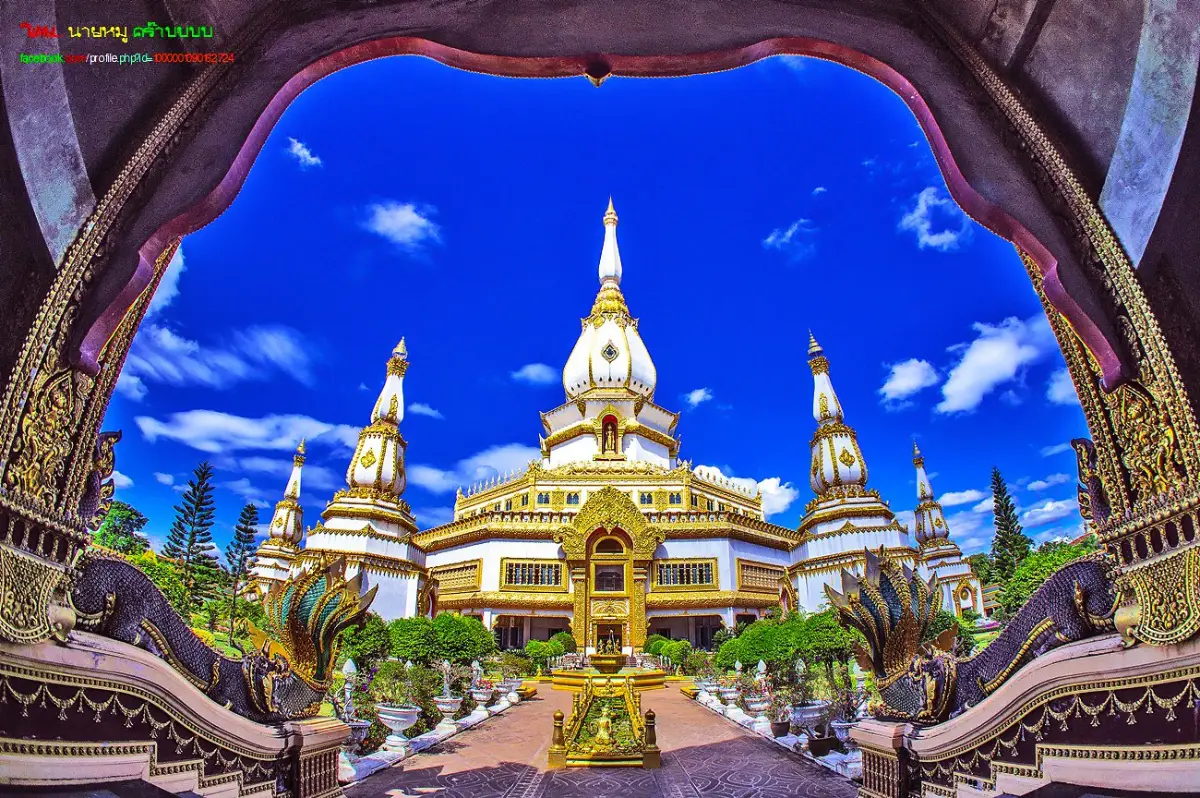
Phra Maha Chedi Chai Mongkhon in Roi Et Province is a monumental Buddhist stupa located within Wat Pha Nam Thip Thep Prasit Wanaram in Pha Nam Yoi Subdistrict, Nong Phok District. Standing on Khao Khiao, or Green Mountain, the great stupa is one of the most impressive sacred landmarks in northeastern Thailand. Its white structure, richly decorated with golden motifs, rises above the forested landscape and is surrounded by eight smaller stupas in the main directions. Inside are sacred relics of the Buddha, images of revered meditation masters, Buddhist narrative art, and a museum connected with the meditation life of Luang Pu Sri Mahaviro, the senior monk who initiated the construction of this great religious monument.
For the people of Roi Et and the wider Isan region, Phra Maha Chedi Chai Mongkhon is much more than a beautiful tourist attraction. It is a center of devotion built through the faith of Buddhists who wished to create a worthy place for sacred relics, preserve the memory of respected meditation teachers, and offer a place for worship, study, and reflection. Visitors who arrive at the temple can immediately sense that the stupa was not designed only for visual grandeur. It was created as a spiritual anchor, a place where Buddhist faith, merit-making, art, meditation heritage, and regional identity come together.
The stupa is located at Wat Pha Nam Thip Thep Prasit Wanaram, commonly known as Wat Pha Nam Yoi. The temple stands in Ban Khok Klang, Pha Nam Yoi Subdistrict, Nong Phok District, Roi Et Province. The area is closely associated with cliffs, forested hills, and water that flows down the rock face throughout the year. This natural feature gave rise to the name Pha Nam Yoi, meaning a cliff where water drips or flows down. Because of this landscape, the temple has a character quite different from urban temples in Roi Et city. Visitors experience both the grandeur of a major sacred monument and the calm atmosphere of a forest meditation temple.
Phra Maha Chedi Chai Mongkhon was initiated by Phra Ajahn Sri Mahaviro, also known as Luang Pu Sri Mahaviro, a respected monk in the Thai forest meditation tradition and a disciple of Phra Ajahn Mun Bhuridatta. The stupa was built with the intention of enshrining sacred relics of the Buddha and honoring the great meditation masters of northeastern Thailand. Luang Pu Sri is deeply respected by Buddhists in Roi Et, especially among those connected with the forest meditation lineage. For this reason, the great stupa carries not only architectural value but also the spiritual weight of Buddhist practice, teacher devotion, and the continuity of the Thai forest tradition.
The architecture of Phra Maha Chedi Chai Mongkhon is one of its most remarkable features. The design combines contemporary Thai Buddhist art from the Central region and northeastern Thailand. It draws inspiration from Phra Pathom Chedi in Nakhon Pathom and Phra That Phanom in Nakhon Phanom. The overall form gives the impression of a majestic central stupa, while the details and symbolic language connect strongly with the sacred stupa tradition of Isan and the Mekong cultural region. The white exterior creates a sense of purity and brightness, while the golden ornamentation adds ceremonial dignity and visual brilliance.
The great stupa stands on a 101-rai area. The main structure measures 101 meters wide, 101 meters long, and 101 meters high. With the golden finial, the height reaches approximately 109 meters. The finial uses around 4,750 baht-weight of gold, or about 60 kilograms. The number 101 appears repeatedly in the design and is closely associated with the identity of Roi Et Province, whose name is linked with the number 101. This gives the structure an additional symbolic dimension. It is not only a sacred Buddhist monument but also a provincial landmark that expresses the identity of Roi Et itself.
As visitors approach the stupa, they encounter a carefully composed sacred landscape. The main white-and-gold stupa stands at the center, balanced by smaller surrounding stupas in eight directions. Open courtyards, walkways, ceremonial spaces, and the mountain setting all strengthen the sense of arrival. The beauty of the site does not come only from scale. It comes from proportion, symmetry, ornament, light, and the relationship between the stupa and the surrounding forest. In the morning and late afternoon, sunlight brings out the contrast between the white surfaces and golden details, making the stupa especially striking.
The interior of Phra Maha Chedi Chai Mongkhon is arranged in several levels, each with its own function and spiritual meaning. The first level is a large and dignified hall. Its walls record the names of major donors and devotees, and the space is used for meetings and merit-making ceremonies. This level reveals that the stupa is the result of collective faith. The names recorded inside represent the devotion of many people who contributed to the creation of a Buddhist monument for future generations.
The second level is another spacious hall decorated with elaborate Thai motifs and images from the life of the Buddha. This level allows visitors to learn Buddhist history through visual art. The paintings and decorative patterns create a calm and reverent atmosphere. Even visitors who are not familiar with Buddhist narratives can follow key moments from the Buddha’s life through the images, while those with deeper knowledge can appreciate the artistic and doctrinal details more fully.
The third level is one of the most important areas inside the stupa. It enshrines images of respected teachers, Isan Buddhist scholars, and 101 revered monks known as Phra Supatipanno, meaning monks who practiced well. These images honor meditation masters and exemplary monks who contributed to the preservation of Buddhism. For visitors, this level functions as a hall of spiritual memory. It shows the continuity of the teacher lineage and the deep respect that Thai Buddhists have for monks who lived with discipline, meditation, wisdom, and compassion.
The fourth level functions as a museum presenting temples, monasteries, and meditation places where Luang Pu Sri Mahaviro practiced. This area is especially meaningful for those interested in the Thai forest tradition. It helps visitors understand that the great stupa is rooted in meditation practice, not merely in ceremonial architecture. The museum evokes the life of wandering meditation, discipline, simplicity, and spiritual effort. It connects the visible grandeur of the stupa with the quiet inner work of Buddhist practice.
The fifth level includes a spiral staircase of 119 steps leading to an octagonal bell-shaped hall where sacred relics are enshrined. This upper area is the spiritual heart of the stupa. Visitors should walk quietly, dress respectfully, and maintain a calm attitude. The experience of ascending toward the relic chamber has strong symbolic meaning. It turns the visit into a gradual movement from the outer world of architecture and art toward the inner focus of Buddhist devotion.
Some sources describe the stupa as having five levels, while others describe it as having six. The essential point is that the interior includes major halls, Buddhist narrative art, images of revered monks, a meditation museum, an upper relic chamber, and the sacred area where relics of the Buddha are enshrined. Visitors should follow the signs and temple guidance during the visit, because access to some areas may depend on temple management, ceremonies, maintenance, or daily conditions.
Proper conduct is essential when visiting Phra Maha Chedi Chai Mongkhon. Visitors should remove hats and shoes where required, dress modestly, speak quietly, avoid bringing animals into the stupa, and refrain from touching decorative details. Food, snacks, and drinks should not be taken into the stupa. Incense and candles should not be lit inside the building. Smoking and intoxicants are not appropriate anywhere in the sacred area. These rules protect the sanctity, cleanliness, safety, and artistic condition of the monument.
The stupa is also important as a major work of contemporary Buddhist art. Its exterior gives a sense of monumental scale, while the decorative details show refined Thai craftsmanship. The references to Phra Pathom Chedi and Phra That Phanom link the monument to two major stupa traditions in Thailand. The design by the Fine Arts Department gives the structure formal proportion and artistic discipline, while the continuing devotion of visitors gives it living spiritual meaning. It is this combination of official design, local faith, and meditation lineage that makes the stupa especially powerful.
The name of Wat Pha Nam Thip Thep Prasit Wanaram is connected with the natural setting of Pha Nam Yoi. The cliff where water flows down throughout the year has long been regarded by local people as an auspicious and spiritually meaningful place. The temple developed from a forest landscape associated with meditation and natural stillness. When Luang Pu Sri Mahaviro established the temple and later initiated the great stupa, the mountain, forest, water, and sacred architecture became part of a single religious landscape.
Historically, the Khao Khiao and Pha Nam Yoi area was suitable for meditation practice because of its quiet forested environment. The mountain, cliff, and natural surroundings supported contemplation and retreat. Luang Pu Sri recognized the spiritual potential of the place and established Wat Pha Nam Thip Thep Prasit Wanaram as a permanent site for Buddhist practice and moral training. The idea of building the great stupa grew from this foundation and eventually became a major center for worship and spiritual learning.
Phra Maha Chedi Chai Mongkhon is important on three levels. First, it is a sacred Buddhist place because it enshrines relics of the Buddha. Second, it is a cultural and religious learning site because it preserves the memory of meditation masters and Isan Buddhist heritage. Third, it is a major travel landmark of Roi Et Province, attracting both Thai and international visitors. A visit here therefore includes worship, art appreciation, Buddhist learning, and the experience of a mountain temple landscape.
For families, the stupa is a strong educational destination. Children and young visitors can learn about the Buddha’s life through murals, see the images of revered monks, and understand the importance of sacred relics and proper temple etiquette. Parents can explain merit-making, respect for teachers, and the role of Buddhist monuments in Thai culture. Learning in an actual sacred place makes these ideas easier to understand than reading about them in a book.
For photographers, Phra Maha Chedi Chai Mongkhon offers many memorable viewpoints. The approach to the stupa, the main entrance, the white-and-gold exterior, the surrounding smaller stupas, the mountain setting, and the decorative details all provide powerful visual subjects. Morning light is suitable for a calm atmosphere, while late afternoon light brings warmth to the golden details. Photography should always be done respectfully, without blocking worshippers or using poses that are inappropriate for a sacred Buddhist site.
Visitors who want to experience the stupa properly should allow at least 1.5 to 2.5 hours. The site is large, and there are many details to see both outside and inside. A quick visit may reveal only the scale of the monument, while a slower visit allows time to appreciate the murals, donor inscriptions, meditation museum, revered monk images, relic chamber, and the architectural relationship between the stupa and the surrounding landscape.
For international travelers, Phra Maha Chedi Chai Mongkhon offers a clear example of the diversity of Thai Buddhist architecture. It is not an ancient ruin and not a typical urban temple. It is a contemporary mountain stupa connected with the Thai forest meditation tradition. Its exterior is grand and artistic, while its interior preserves sacred relics, Buddhist stories, meditation heritage, and the memory of revered monks. Foreign visitors can understand through this place that Thai temples can function as places of worship, art, education, pilgrimage, and cultural memory at the same time.
Getting There is easiest by private car, rental car, or local hired transport. From Roi Et city, take the Roi Et – Phon Thong – Nong Phok route along Highways 2044 and 2136. The distance from Roi Et city to Nong Phok District is about 62 km. From Nong Phok, continue toward Ban Tha Sa-at in Pha Nam Yoi Subdistrict and drive up Khao Khiao for about 5 km to reach Wat Pha Nam Thip Thep Prasit Wanaram. The route is suitable for a day trip from Roi Et city, but drivers should allow enough travel time and use caution on the mountain road.
Visitors using public transport can travel by bus or van to Nong Phok District. Routes that pass through Nong Phok include long-distance services such as Bangkok – Mukdahan, while travelers arriving in Roi Et city can continue to Nong Phok by local transport. From Nong Phok town, visitors can hire a local vehicle to the temple. This method is possible, but it requires careful timing because the stupa is located on a mountain and not in the town center. Arranging local transport in advance makes the trip smoother.
The best time to visit is in the morning. The air is cooler, the light is good, and visitors have enough time to explore several levels of the stupa before closing time. Late afternoon is also beautiful for exterior photography, but visitors should arrive early enough because the site closes at 17.00. The cool season and the period after the rains are especially comfortable. During the rainy season, visitors should check the weather and walk carefully in outdoor areas.
Phra Maha Chedi Chai Mongkhon can be planned as the main destination of the day. Because the site is some distance from Roi Et city and has a large area, visitors should not rush. A good itinerary is to leave Roi Et city in the morning, spend time at the stupa, have lunch in Nong Phok, and then return to the city for Bueng Phalan Chai, Roi Et Tower 101, Wat Burapha Phiram, or Roi Et National Museum in the late afternoon. Travelers interested in Buddhist sites can also connect the trip with Wat Pa Kung or other major temples in Roi Et Province.
Restaurants and coffee shops are available in Nong Phok District and along the route to the temple. Options include local restaurants, seafood restaurants, family dining, and cafes. Nearby accommodation is available in Nong Phok for visitors who want a slower trip, while travelers who prefer larger hotels and city services may stay in Roi Et city and visit the stupa as a day trip. Both approaches are practical, depending on the travel plan.
There is no admission fee for Phra Maha Chedi Chai Mongkhon. Visitors may enter and pay respect during the official opening hours. Donations can be made according to personal faith at the proper areas provided by the temple. The absence of an entrance fee makes the site accessible to many types of visitors, but it also places responsibility on everyone to keep the area clean, respect the rules, and help preserve the sacred monument.
In summary, Phra Maha Chedi Chai Mongkhon at Wat Pha Nam Thip Thep Prasit Wanaram is one of the most significant Buddhist landmarks in Roi Et Province. Its white-and-gold mountain stupa, 101-rai setting, 101-meter structure, surrounding stupas, golden finial, sacred relics, Buddhist murals, meditation museum, and 101 images of revered monks make it an exceptional destination for worship, cultural learning, and travel. For anyone who wants to understand the depth of Buddhist faith in Roi Et and the Isan region, this great stupa deserves to be a main destination in the journey.
| Name | Phra Maha Chedi Chai Mongkhon |
| Location | Wat Pha Nam Thip Thep Prasit Wanaram, Ban Khok Klang, Pha Nam Yoi Subdistrict, Nong Phok District, Roi Et Province |
| Address | Pha Nam Yoi Subdistrict, Nong Phok District, Roi Et Province 45210, Thailand |
| Highlights | A monumental white-and-gold mountain stupa enshrining sacred relics of the Buddha, with images of 101 revered monks and a meditation museum connected with Luang Pu Sri Mahaviro |
| History | Initiated by Phra Ajahn Sri Mahaviro, a disciple of Phra Ajahn Mun Bhuridatta, as a sacred monument to enshrine relics of the Buddha and preserve the heritage of the Thai forest meditation tradition |
| Name Origin | Phra Maha Chedi Chai Mongkhon means a great stupa of victory and auspiciousness, while Pha Nam Thip or Pha Nam Yoi refers to the cliff where water flows down throughout the year |
| Distinctive Features | Contemporary Thai Buddhist architecture combining Central Thai and Isan art, inspired by Phra Pathom Chedi and Phra That Phanom, with a white structure, golden motifs, and eight surrounding stupas |
| Size And Area | Built on 101 rai, measuring 101 meters wide, 101 meters long, and 101 meters high; approximately 109 meters high including the golden finial, using about 4,750 baht-weight of gold, or around 60 kilograms |
| Important Sacred And Cultural Objects | Sacred relics of the Buddha, Buddhist narrative murals, images of 101 revered monks, meditation museum, merit-making hall, octagonal bell-shaped upper chamber, and surrounding stupas |
| Travel Information | From Roi Et city, take the Roi Et – Phon Thong – Nong Phok route on Highways 2044 and 2136 for about 62 km to Nong Phok, then continue to Ban Tha Sa-at in Pha Nam Yoi Subdistrict and drive up Khao Khiao for about 5 km |
| Current Status | Open for worship and visits during operating hours |
| Open Days | Daily, Including Public Holidays |
| Opening Hours | 06.00 – 17.00 |
| Fees | No Admission Fee |
| Facilities | Relic Worship Area, Stupa Walkway, Museum Area, Merit-Making Hall, Viewpoints, Photo Areas, And Parking Area |
| Main Areas / Zones | 1. Main Stupa Courtyard And Eight Surrounding Stupas 2. Merit-Making Hall And Donor Inscription Area 3. Buddha Life Mural And Thai Ornament Area 4. 101 Revered Monk Image Area 5. Luang Pu Sri Meditation Museum Area 6. Spiral Staircase And Octagonal Bell-Shaped Hall 7. Upper Relic Worship Area 8. Pha Nam Yoi And Khao Khiao Landscape Area |
| Founder / Important Monk | Phra Ajahn Sri Mahaviro, Also Known As Luang Pu Sri Mahaviro |
| Main Contact Number | 064-295-9766 |
| Local Administrative Office | Pha Nam Yoi Subdistrict Municipality, Tel. 043-625555 |
| Important Visitor Etiquette | Remove hats and shoes where required, dress modestly, speak quietly, do not bring animals, food, or drinks into the stupa, do not touch decorative details, do not light incense or candles inside, and do not smoke |
| Nearby Tourist Attractions | 1. Pha Nam Yoi / Pha Nam Thip, About 1 km 2. Nong Phok Market And Nong Phok Town Area, About 13 km 3. Laem Phayom / Bueng Phon Thong, About 55 km 4. Wat Pa Kung / Wat Prachakhom Wanaram, About 75 km 5. Wat Burapha Phiram, About 80 km 6. Bueng Phalan Chai, About 80 km 7. Roi Et Tower 101, About 81 km |
| Nearby Restaurants | 1. VR Pla Phao Restaurant, About 6 km, Tel. 081-209-7330, 089-617-8830 2. 29 Café Nong Phok, About 14 km, Tel. 088-324-3517 3. Big Seafood, About 14 km, Tel. 061-040-6854 4. Wali Land Garden Cafe, About 15 km, Tel. 087-221-1909 5. Today Coffee, About 15 km, Tel. 087-221-1909 6. Pai Nom Sod 168 Milk At Home, About 16 km, Tel. 094-991-2212 |
| Nearby Accommodations | 1. Meethip Hotel, About 14 km, Tel. 089-942-0701, 087-949-9119 2. Baan Fahsai Dao Suay Resort, About 18 km, Tel. 089-009-6439 3. Hanchana’s Sweet Home, About 18 km, Tel. 087-224-2867 4. Phu Dao Homestay, About 20 km, Tel. 065-293-5353 5. Por Palm Si Rung, About 20 km, Tel. 091-054-9815 |
Frequently Asked Questions (FAQ)
Q: Where is Phra Maha Chedi Chai Mongkhon located?
A: Phra Maha Chedi Chai Mongkhon is located inside Wat Pha Nam Thip Thep Prasit Wanaram in Pha Nam Yoi Subdistrict, Nong Phok District, Roi Et Province, on Khao Khiao near the Pha Nam Yoi area.
Q: What are the opening days and opening hours of Phra Maha Chedi Chai Mongkhon?
A: The stupa is open daily, including public holidays, from 06.00 to 17.00.
Q: Is there an admission fee to visit Phra Maha Chedi Chai Mongkhon?
A: No. Visitors can enter, worship, and walk around the great stupa without an admission fee during the official opening hours.
Q: What is the main highlight of Phra Maha Chedi Chai Mongkhon?
A: The main highlight is the monumental white-and-gold stupa on a 101-rai site, surrounded by eight smaller stupas and enshrining sacred relics of the Buddha, with 101 revered monk images and a meditation museum inside.
Q: Who initiated the construction of Phra Maha Chedi Chai Mongkhon?
A: The construction was initiated by Phra Ajahn Sri Mahaviro, also known as Luang Pu Sri Mahaviro, a respected meditation monk and disciple of Phra Ajahn Mun Bhuridatta.
Q: What can visitors see inside Phra Maha Chedi Chai Mongkhon?
A: Visitors can see merit-making halls, Buddha life murals, 101 revered monk images, a meditation museum, an octagonal bell-shaped upper hall, and the sacred relic worship area on the upper level.
Q: How do visitors travel from Roi Et city to Phra Maha Chedi Chai Mongkhon?
A: From Roi Et city, take the Roi Et – Phon Thong – Nong Phok route along Highways 2044 and 2136 for about 62 km to Nong Phok, then continue to Ban Tha Sa-at and drive up Khao Khiao for about 5 km.
Q: When is the best time to visit Phra Maha Chedi Chai Mongkhon?
A: Morning is the best time because the weather is cooler, the light is good, and visitors have enough time to explore the stupa’s interior levels before closing time.
 Category: ●Places of Worship
 Group: ●Other Sacred Sites
Last Update : 3 MonthAgo
 Last Update : 3 MonthAgo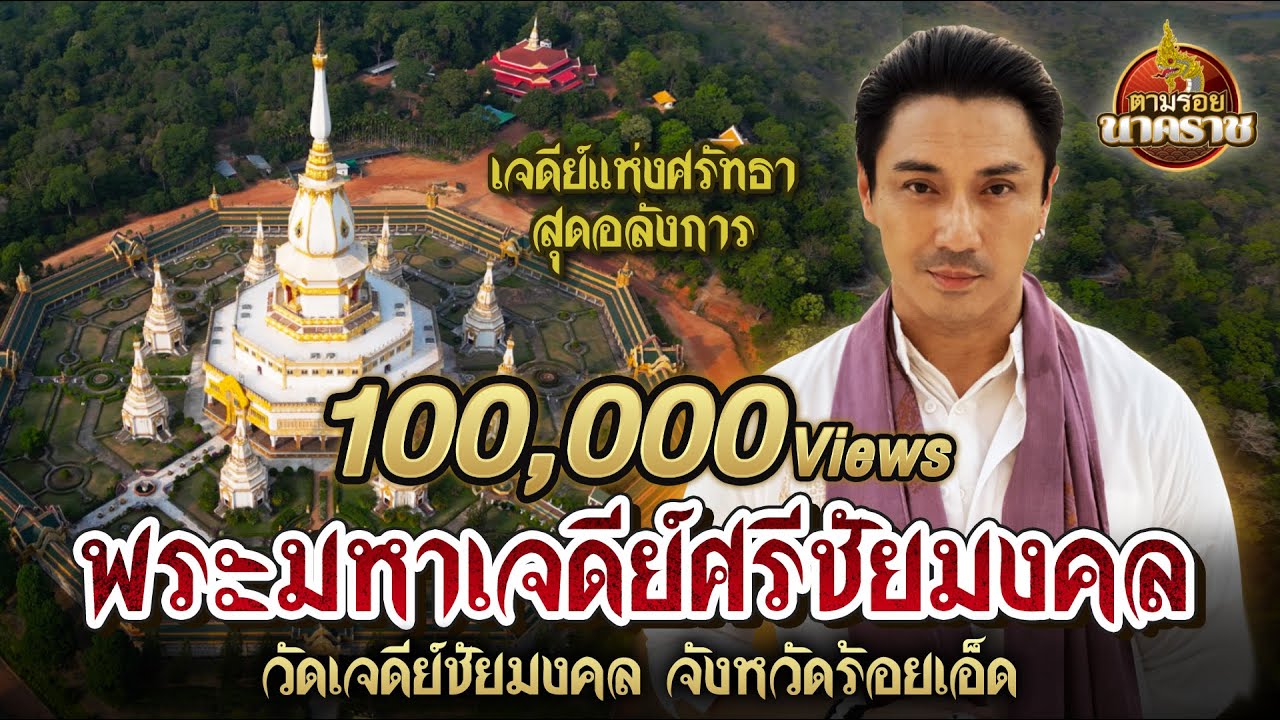
 Click to Access the Navigation Map GPS
Phra Maha Chedi Chai Mongkhon Map
Recommend

 Art, Culture and Heritage
 Historical Sites and Monuments(3)
 Landmarks and Memorials(5)
 Art, Craft Centres, Tradition(2)
 Museums(1)
 Educational Places
 Educational Gardens, Farm(3)
 Temple(35)
Other Sacred Sites(6)
Temple(35)
Other Sacred Sites(6)
 Suburban Living
 Village, Community(1)
 Local Market(1)
 Nature and Wildlife
 National Parks and Marine Reserves(1)
 Mountain (Doi)(2)
 Dam, Reservoir, Lake(8)
 Waterfalls(1)
 Flower Field(1)
 River, Canal(4)
 Entertainment and Agricultural
 Zoos and Aquariums(1)
 Stadium(1)
 Farms, Parks and Ecotourism(5)
 Shopping
 Shopping and Night Market(1)
 Travel Articles, Recipes
 Travel Review, Food Review(1)


