
lovethailand home >Northeastern Travel Attractions >Roi Et Travel Attractions >Kaset Wisai >Ku Ka Sing > Prasat Ku Ka Sing
TL;DR: Prasat Ku Ka Sing is located at Wat Burapha Ku Ka Sing Noi, Ku Ka Sing Subdistrict, Kaset Wisai District, Roi Et Province, open Daily, hours 08.30 – 16.30.
Prasat Ku Ka Sing
Open Days: Daily
Opening Hours: 08.30 – 16.30
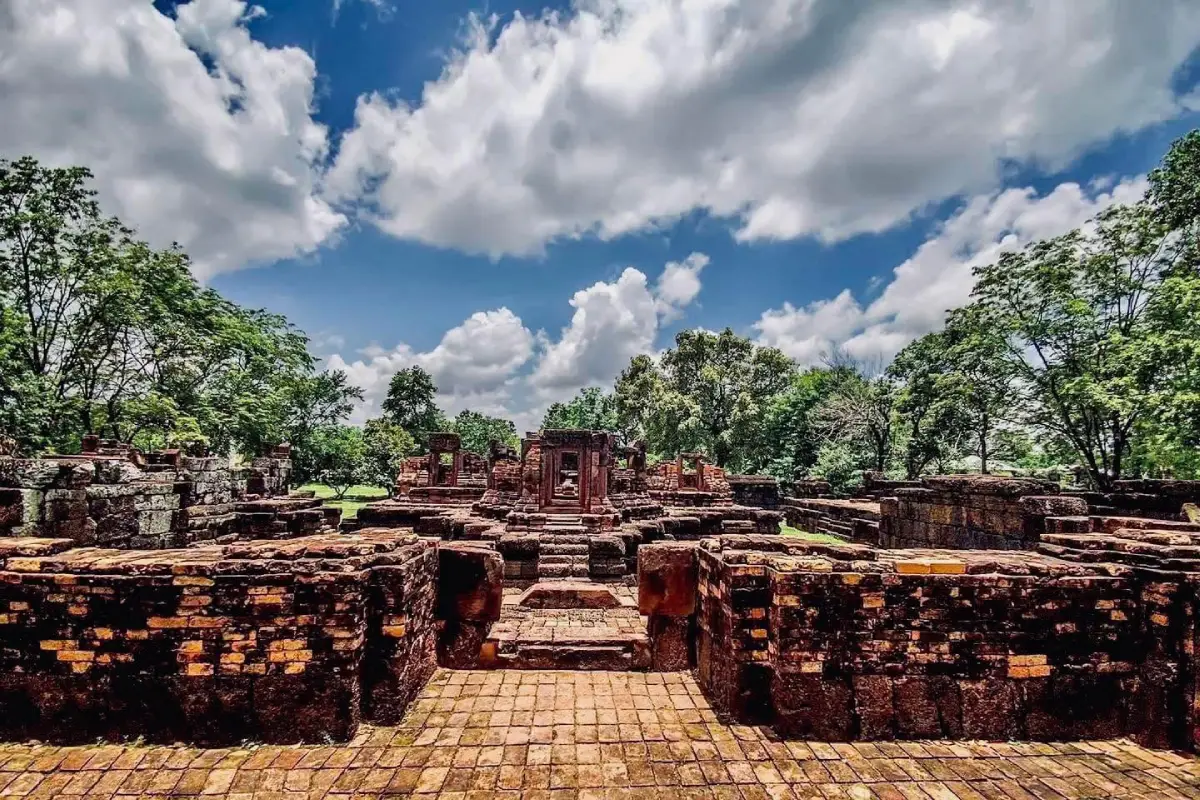
Prasat Ku Ka Sing in Roi Et Province is a large Khmer-style archaeological site located within Wat Burapha Ku Ka Sing Noi in Ku Ka Sing Subdistrict, Kaset Wisai District. Its main highlight is a group of 3 brick sanctuaries standing on the same laterite base, accompanied by 2 library buildings, an enclosing wall, gateways, and a U-shaped moat. The site is open daily with no admission fee, making it an important cultural destination for travelers interested in Khmer architecture, Hindu religious history, and the heritage landscape of Thung Kula Rong Hai.
Prasat Ku Ka Sing stands in the community of Ban Ku Ka Sing, an area connected with several ancient settlements and archaeological sites in the central part of Northeastern Thailand. The first impression for visitors is the calm presence of weathered brick, sandstone, and laterite structures set within a living temple and village environment. This is not a scattered ruin without context. The site has a clear architectural plan, a defined ritual axis, and a spatial arrangement that reflects the religious worldview of an ancient Khmer sanctuary. As visitors approach from the eastern side, the 3 sanctuaries can be seen standing in a north-south alignment, with the central tower serving as the most important structure.
Ku Ka Sing is a significant example of Khmer architecture in the Baphuon style found in Thailand’s Northeast. Its value lies not only in the size of the ruins but also in its architectural details, including laterite foundations, sandstone bases, lotus-petal motifs, decorative carvings, sandstone doorframes, lintels, and sculptural fragments associated with the worship of Shiva. The central sanctuary once enshrined a Shiva linga, an important symbol of Shiva or Isvara in Shaivite Hinduism. For this reason, the site is meaningful for religious history, art history, and the study of Khmer cultural influence in Roi Et Province.
The complex consists of 3 sanctuaries on a shared base, 2 library buildings located in front of the sanctuary group, an enclosing wall with gateways on all 4 sides, and an outer U-shaped moat. This plan reflects the structured organization of sacred space in an ancient Hindu sanctuary. The central area represents the ritual core, the frontal buildings support ritual functions, and the wall and moat separate the sacred inner area from the outside world. Visitors should begin from the eastern approach and gradually observe the alignment of gateways, bases, towers, and surrounding structures in relation to one another.
The central sanctuary deserves the most attention. It is the principal tower of the complex, larger than the 2 side towers, and has an extended front chamber. Its architectural arrangement is associated with the presence of Nandi, the sacred bull mount of Shiva. When these elements are considered together, the relationship between architecture, sculpture, and religious belief becomes clear. The sanctuary was not built merely for visual beauty. It was a ritual space with hierarchy, symbolism, and meaning embedded in every part of its plan.
The 2 side sanctuaries flanking the central tower are similar in scale and form. Their bases were built with sandstone, while the walls were made of brick. Each has an entrance at the front and traces of image platforms inside. These features suggest that the sanctuary group once contained sacred images or attendant deities according to Hindu religious concepts. Although the upper sections of the towers have partially collapsed over time, the remaining bases, building plans, and sandstone architectural fragments still provide valuable evidence for art historical interpretation.
The 2 library buildings in front of the sanctuary group are also important. In Khmer temple architecture, such buildings are commonly associated with ritual use or the storage of sacred texts. At Ku Ka Sing, the libraries were built of laterite and face toward the central sanctuary group. Their placement helps visitors understand the overall planning of the religious complex. Observing the libraries together with the 3 towers gives a clearer picture of how the ancient sanctuary was organized.
The carved details and decorative fragments at Ku Ka Sing are highly significant. Among the most notable are lintels depicting Indra riding the three-headed elephant Airavata within an ornamental arch, as well as pediment fragments showing Indra on Airavata surrounded by scrolling foliage motifs. These carvings reflect the skills, religious imagination, and symbolic world of ancient craftsmen who integrated Indian mythology into Khmer artistic traditions. They should be viewed not only as beautiful decorations but also as historical evidence of belief systems, cultural networks, and the connection between Roi Et and the wider Khmer world.
Based on its artistic style, Ku Ka Sing is dated to the late 16th Buddhist century. It has been studied by several art historians and archaeologists. The Fine Arts Department carried out excavation and restoration work in 1991 and 1992, making the site clearer and more accessible for study. Thanks to this restoration, present-day visitors can read the layout more easily and see the bases of the towers, the wall lines, the gateways, and the major components of the monument with greater clarity.
The Fine Arts Department registered Ku Ka Sing as a national ancient monument in the Royal Gazette on 8 March 1935 and later defined the protected archaeological land area on 17 March 1999. This registration confirms the site’s legal and cultural importance. Visitors should therefore explore the monument carefully, avoid climbing on fragile structures, refrain from writing on stones or bricks, and never move any ancient fragments. Every brick, stone base, and carved fragment is part of the historical record.
The name “Ku Ka Sing” is connected to language, local memory, and community legend. The word “Ku” is commonly used in the Northeast to refer to Khmer-style ancient monuments. The word “Ka” is linked to local stories about crows that once gathered in large numbers near a pond known as Nong Ka Non. The word “Sing” refers to 2 lion sculptures that once stood near the entrance. Although those lion sculptures have disappeared, the name Ku Ka Sing remains central to the identity of the monument, village, temple, and subdistrict.
The Ban Ku Ka Sing area includes more than the main sanctuary. Nearby sites such as Ku Phon Rakhang and Ku Phon Wit show that this area was once part of a broader ancient cultural landscape. Ku Phon Rakhang is only a few hundred meters away and is associated with the arogyasala, or hospital-chapel tradition, of King Jayavarman VII. Ku Phon Wit is another nearby archaeological site that helps expand the picture of religious networks in the area. Visiting these sites together allows travelers to see different stages of Khmer cultural development in Roi Et.
The atmosphere around Prasat Ku Ka Sing is that of a rural community in Thung Kula Rong Hai. The surrounding area reflects rice farming, silk weaving, community products, temple life, and a close relationship between local people and ancient heritage. A visit here is therefore not only about seeing a Khmer ruin. It is also about experiencing a community that has lived alongside ancient monuments for generations. Local people participate in caring for the area, welcoming visitors, presenting local food, and sharing the stories of Ban Ku Ka Sing.
Travelers interested in community culture can combine Ku Ka Sing with the Ban Ku Ka Sing Wisdom Heritage Museum. This local museum presents stories of the community, archaeology, history, agricultural tools, pottery, silk textiles, and rice culture in Thung Kula Rong Hai. It helps visitors understand that the ancient monument is not separate from daily life. It is part of a cultural landscape that includes temples, rice fields, local wisdom, and collective memory.
One of the strengths of Ku Ka Sing as a cultural travel destination is the richness of information within a compact area. Visitors can explore the main sanctuary, continue to nearby archaeological sites, visit the community museum, enjoy local food, and interact respectfully with local residents within half a day. For a full-day itinerary, the route can be extended to Ku Phra Kona in Suwannaphum District or back to Roi Et city to visit Roi Et National Museum, Bueng Phlan Chai, and Wat Burapha Phiram.
The best time to visit is in the morning or late afternoon. The archaeological area is largely open, and although there are some trees, midday sunlight can be strong. Visitors should bring a hat, umbrella, drinking water, and comfortable walking shoes. Some areas include stone, laterite, and uneven ground, so elderly visitors and children should walk carefully. Modest clothing is recommended because the site is located within a temple area.
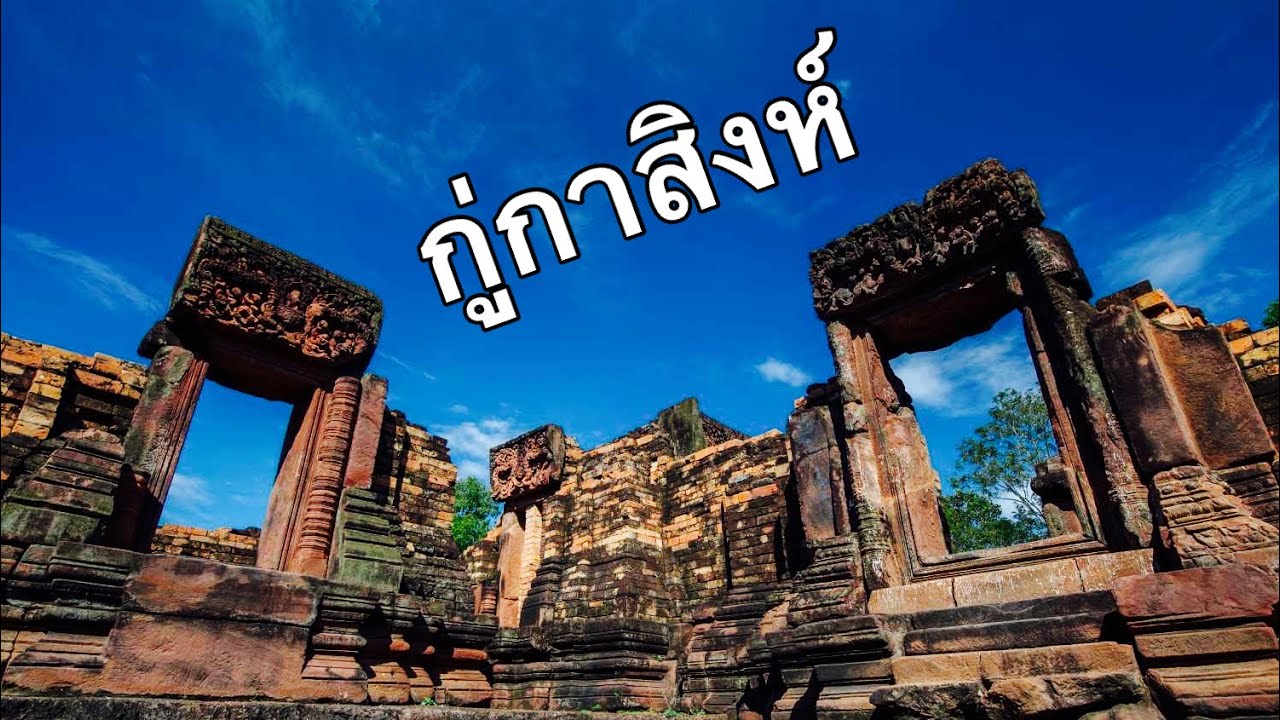
Photography at Ku Ka Sing is rewarding from several angles. The frontal view captures the main sanctuary group clearly. A side view shows the north-south alignment of the 3 towers. Close-up views of doorframes, sandstone bases, and carved fragments reveal the texture of the materials and the marks of time. Visitors should avoid climbing on fragile ancient structures and should take care that tripods or camera equipment do not strike any ancient stonework.
For learning purposes, Ku Ka Sing is suitable for students, teachers, local historians, cultural travelers, and anyone interested in Khmer art in Thailand. The site contains enough architectural and historical elements to explain sanctuary planning, the Baphuon style, Shaivite worship, archaeological registration, restoration, and the role of community-based conservation. Reading background information before arrival or observing the information signs on site will make the visit far more meaningful than a short photo stop.
Ku Ka Sing also serves as a key point in the wider Khmer cultural route of Roi Et. When compared with Ku Phra Kona, Ku Phon Rakhang, Ku Phon Wit, and other ancient sites in the province, it becomes clear that this area was not merely a remote settlement. It was part of a cultural landscape influenced by Khmer religious practice, art, and settlement planning. Later, Lao and local communities continued to use and reinterpret the area, creating the present relationship between ancient monument, temple, and village.
Visitors should understand Ku Ka Sing as a living heritage site. Although the sanctuary was built centuries ago, the place remains part of a temple, a community, and the tourism identity of Roi Et Province. Community activities, silk textiles, jasmine rice, local products, food culture, and guided community programs continue to connect the ancient monument with present-day life. This gives Ku Ka Sing cultural value beyond its stones and bricks.
Responsible travelers should take time to walk slowly, read the information, observe the construction materials, speak politely with local people, and support local food or community products when available. These small actions help tourism benefit the community directly and encourage continued care for the heritage site.
Getting There is easiest by private car. From Roi Et city, take Highway 214 toward Kaset Wisai District for about 47 km. Continue along the Kaset Wisai – Suwannaphum route for about 10 km, then turn right toward Ku Ka Sing for another 10 km. Another route is via Roi Et – Suwannaphum – Surin using Highway 215 and Highway 214. Near Wat Ku Phra Kona, there is a road leading to Ku Ka Sing, about 18 km away. The route is suitable for a cultural road trip and can be combined with Ku Phra Kona, Ku Phon Rakhang, and other historical sites in Suwannaphum and Kaset Wisai districts.
Travelers from outside Roi Et should plan transportation in advance because Ku Ka Sing is located in a village rather than a major tourist district with frequent public transport. Renting a car from Roi Et city or hiring local transport is the most practical option for visitors without a private vehicle. Traveling as a group can reduce costs and allow more stops along the route, especially Ku Ka Sing, Ku Phon Rakhang, Ku Phon Wit, and Ku Phra Kona.
In summary, Prasat Ku Ka Sing is one of Roi Et’s most important historical attractions. It combines a large Khmer sanctuary plan, clear architectural remains, Baphuon-style art, Shaivite religious meaning, official heritage registration, and a living village context. Travelers interested in ancient monuments, Northeastern Thai culture, and Khmer civilization in Thailand should include Ku Ka Sing in their Roi Et itinerary. The site offers knowledge, quiet atmosphere, and a tangible sense of history in the heart of Thung Kula Rong Hai.
| Name | Prasat Ku Ka Sing |
| Location | Wat Burapha Ku Ka Sing Noi, Ku Ka Sing Subdistrict, Kaset Wisai District, Roi Et Province |
| Address | Ban Ku Ka Sing, Ku Ka Sing Subdistrict, Kaset Wisai District, Roi Et 45150, Thailand |
| Coordinates | 15.576536, 103.676042 |
| Highlights | Three Khmer sanctuaries on one base, 2 library buildings, enclosing wall, 4 gateways, and a U-shaped moat |
| History / Period | Baphuon-style Khmer art, late 16th Buddhist century, built as a Shaivite Hindu sanctuary dedicated to Shiva |
| Name Origin | “Ku” refers to a Khmer-style ancient monument, “Ka” is linked to local stories about crows, and “Sing” refers to 2 lion sculptures that once stood near the entrance |
| Distinctive Features | The central tower is larger than the flanking towers and has an extended front chamber; sandstone and laterite bases retain carved details such as lotus-petal and scroll motifs |
| Key Evidence | Green stone Shiva linga, Nandi remains, lintel of Indra on Airavata, gold naga ornament with 5 heads, and gold foundation plaques |
| Heritage Registration | Registered as a national ancient monument on 8 March 1935, with protected archaeological land defined on 17 March 1999 |
| Travel Information | From Roi Et city, take Highway 214 to Kaset Wisai for 47 km, continue toward Suwannaphum for 10 km, then turn toward Ku Ka Sing for 10 km. Another route leads from the Wat Ku Phra Kona area to Ku Ka Sing for 18 km |
| Current Status | Open to visitors as an important ancient monument within Wat Burapha Ku Ka Sing Noi and Ban Ku Ka Sing community |
| Open Days | Daily |
| Opening Hours | 08.30 – 16.30 |
| Fees | No admission fee |
| Main Areas / Zones | 1. Central Sanctuary 2. Northern And Southern Flanking Sanctuaries 3. Two Library Buildings 4. Enclosing Wall And Gateways 5. U-Shaped Moat 6. Wat Burapha Ku Ka Sing Noi Area |
| Caretaker | The Fine Arts Department and Wat Burapha Ku Ka Sing Noi |
| Main Contact Number | Ku Ka Sing Subdistrict Municipality, Tel. 043-632-126, 092-525-0191 |
| Official Website / Official Page | www.kukasing.go.th, Facebook: Ku Ka Sing Subdistrict Municipality |
| Nearby Tourist Attractions | 1. Ku Phon Rakhang, 0.4 km 2. Ku Phon Wit, 0.5 km 3. Ban Ku Ka Sing Wisdom Heritage Museum, 0.5 km 4. Ku Ka Sing Silk Center, 1 km 5. Ku Phra Kona, 18 km 6. King Rama IX 80th Birthday Anniversary Park, Suwannaphum District, 22 km |
| Nearby Restaurants | 1. Som Tam Yai Choen, 1 km 2. Som Tam Mae On Rim Siao, 2 km 3. Som Tam Mae Ratree Moo 3, 2 km 4. Je Bum Krua Aroi Cooked-To-Order Restaurant, 2 km 5. Ubonrat Phochana Cooked-To-Order Restaurant, 2 km 6. Zone Nom Ku Ka Sing Branch, 2 km 7. Tamnan Thai Restaurant, 20 km, Tel. 061-149-4662 8. Aomsap Restaurant, 20 km, Tel. 089-942-8624 |
| Nearby Accommodations | 1. Ku Ka Sing Community Tourism Homestay, 1 km 2. Krongthip Hotel, 20 km, Tel. 043-589-087 3. Kitty Resort, 21 km, Tel. 043-530-020 4. Sukontha Coffee & Resort, 21 km, Tel. 085-511-1969 5. Panadda Resort, 22 km, Tel. 081-873-1560 6. Mueang Bua Garden Resort, 28 km |
Frequently Asked Questions (FAQ)
Q: Where is Prasat Ku Ka Sing located?
A: Prasat Ku Ka Sing is located within Wat Burapha Ku Ka Sing Noi in Ban Ku Ka Sing, Ku Ka Sing Subdistrict, Kaset Wisai District, Roi Et Province.
Q: What are the opening days and hours of Prasat Ku Ka Sing?
A: The site is open daily from 08.30 to 16.30.
Q: Is there an admission fee for Prasat Ku Ka Sing?
A: No. Visitors can enter the archaeological site free of charge.
Q: Why is Prasat Ku Ka Sing important?
A: It is a Baphuon-style Khmer sanctuary with 3 towers on a shared base, built as a Shaivite Hindu temple dedicated to Shiva, and it is one of Roi Et’s significant archaeological sites.
Q: What should visitors see inside Prasat Ku Ka Sing?
A: Key points include the central sanctuary, 2 side sanctuaries, 2 library buildings, the enclosing wall, gateways, the U-shaped moat, lintels showing Indra on Airavata, and traces of Shiva worship.
Q: How can travelers get to Prasat Ku Ka Sing?
A: The most convenient way is by private car. From Roi Et city, drive toward Kaset Wisai District on Highway 214, continue toward Suwannaphum, then turn toward Ku Ka Sing. Another route leads from the Wat Ku Phra Kona area to Ku Ka Sing.
Q: Are there nearby attractions to visit with Prasat Ku Ka Sing?
A: Yes. Nearby attractions include Ku Phon Rakhang, Ku Phon Wit, Ban Ku Ka Sing Wisdom Heritage Museum, Ku Ka Sing Silk Center, and Ku Phra Kona.
Q: What should travelers prepare before visiting Prasat Ku Ka Sing?
A: Visitors should dress modestly, bring sun protection and water, wear comfortable walking shoes, and avoid climbing, writing on, or touching fragile parts of the ancient monument.
 Category: ●Art, Culture and Heritage
 Group: ●Historical Sites and Monuments
Last Update : 3 MonthAgo
 Last Update : 3 MonthAgo
 Click to Access the Navigation Map GPS
Prasat Ku Ka Sing Map
Recommend
 Historical Sites and Monuments(3)
 Landmarks and Memorials(5)
 Art, Craft Centres, Tradition(2)
 Museums(1)
 Educational Places
 Educational Gardens, Farm(3)
 Places of Worship
 Temple(35)
 Other Sacred Sites(6)
 Suburban Living
 Village, Community(1)
 Local Market(1)
 Nature and Wildlife
 National Parks and Marine Reserves(1)
 Mountain (Doi)(2)
 Dam, Reservoir, Lake(8)
 Waterfalls(1)
 Flower Field(1)
 River, Canal(4)
 Entertainment and Agricultural
 Zoos and Aquariums(1)
 Stadium(1)
 Farms, Parks and Ecotourism(5)
 Shopping
 Shopping and Night Market(1)
 Travel Articles, Recipes
 Travel Review, Food Review(1)


