
lovethailand home >Northeastern Travel Attractions >Roi Et Travel Attractions >Muang Roi Et >Nai Muang > Wat Buraphaphiram
TL;DR: Wat Buraphaphiram is located at Phadung Phanit Road, Nai Mueang Subdistrict, Mueang Roi Et District, Roi Et Province, open Daily, Including Public Holidays, hours 08.30 – 16.30.
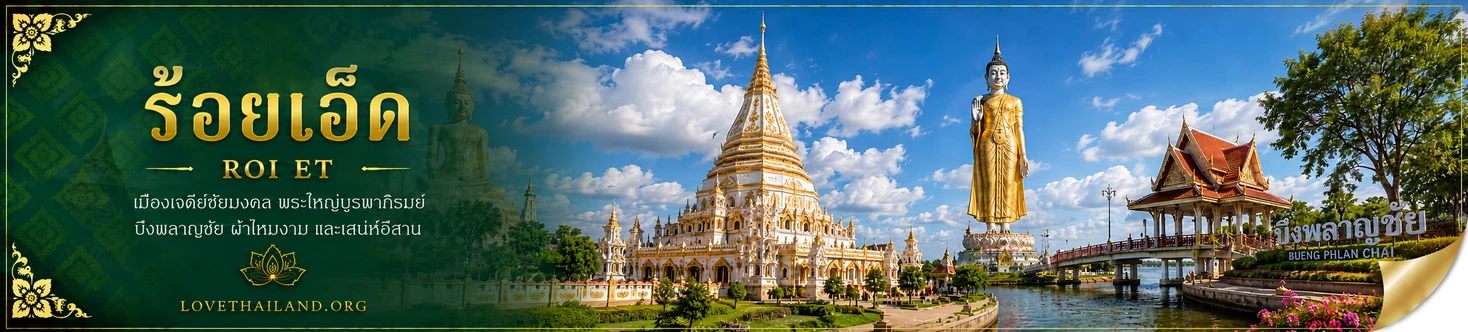
Wat Buraphaphiram
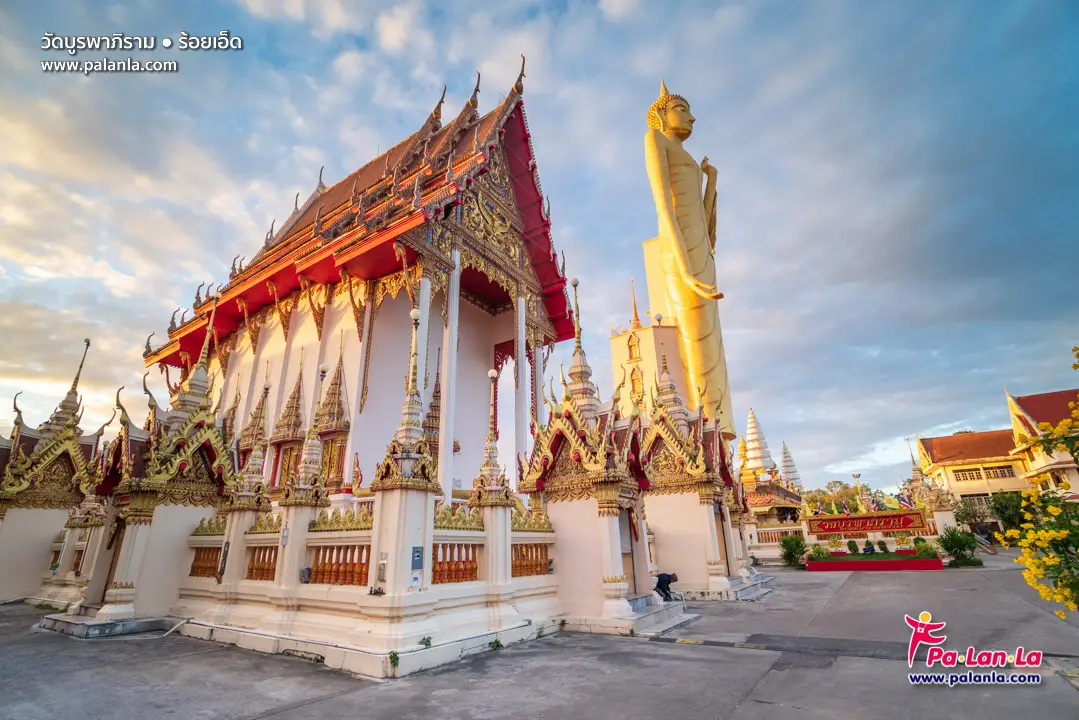
Open Days: Daily, Including Public Holidays
Opening Hours: 08.30 – 16.30
Wat Buraphaphiram is a third-class royal temple of ordinary type located on Phadung Phanit Road in Nai Mueang Subdistrict, Mueang Roi Et District, Roi Et Province. It is one of the most important Buddhist landmarks in Roi Et city and one of the province’s most recognizable religious sites. The temple is best known for Phra Phuttha Rattanamongkhon Mahamuni, commonly called Luang Pho Yai by local people. This immense standing Buddha image in the blessing posture is regarded as the tallest standing Buddha image of its kind in Thailand and has become a spiritual and visual symbol of Roi Et. For foreign travelers, Wat Buraphaphiram is an essential place to understand how Buddhism, city identity, local history, religious education, and civic pride are connected in northeastern Thailand.
The temple was originally known as Wat Hua Ro. It was established in 1913, during a period when travel still depended heavily on walking and slow overland movement. In those days, the temple area served as a resting place for merchants and travelers entering or leaving Roi Et. Wat Hua Ro was often used as a first-night stopover and a meeting point before people continued their journeys. This early role gives the temple a strong connection with movement, trade, hospitality, and the everyday life of the old town.
Later, Phra Athikan La Inthawaso expanded the temple grounds and renamed the temple Wat Burapha because it was located toward the east of the city. The word “burapha” means east. The temple was later given the present name Wat Buraphaphiram, a name that combines its eastern location with a sense of beauty, calmness, and sacred dignity. The name therefore reflects both geography and religious identity: a pleasant and revered temple on the eastern side of old Roi Et.
Wat Buraphaphiram is now a royal temple under the Maha Nikaya order. It received its consecrated boundary in 1938 and continues to function as an active Buddhist monastery. The temple is not only a sightseeing landmark. It is a living religious institution where monks reside, Buddhist ceremonies are performed, people make merit, and Buddhist education continues through religious study and missionary work. This living function is important because it helps visitors understand that Thai temples are not museums. They remain part of daily spiritual and community life.
The central highlight of the temple is Phra Phuttha Rattanamongkhon Mahamuni, or Luang Pho Yai. The Buddha image was built in 1973 with reinforced concrete. From the feet to the top of the head, the image is 59.20 meters high. Including the base, the total height is 67.85 meters. The Buddha stands in the blessing posture, creating a calm yet commanding presence over the temple grounds and Roi Et city. Its golden form can be seen from a distance and gives the city one of its most powerful visual symbols.
For local people, Luang Pho Yai is not simply a large statue. It is a sacred Buddha image associated with protection, blessing, and provincial identity. Many Roi Et residents come to pay respect, make merit, offer flowers and candles, or pray for good fortune. Travelers will often see people standing quietly before the image, bowing, making offerings, or walking around the temple grounds in a respectful manner. This atmosphere makes the site both impressive and intimate: large in scale, yet deeply personal in devotion.
The base of Luang Pho Yai contains several rooms used for religious functions and museum-style displays. Visitors can enter the base area to pay respect to Buddha images, view displays, and experience the interior space beneath the immense statue. This makes the base more than a structural support. It is part of the religious and educational experience of the temple. The visitor sees the Buddha image not only from outside, but also from within the space that supports its sacred presence.
The temple’s ubosot, or ordination hall, is another important feature. Inside the ubosot are mural paintings that tell stories from the life of the Buddha and the Bun Phawet tradition, one of the most important Buddhist merit-making traditions in Isan culture. These murals were created by artists associated with the traditional Fine Arts Department school of craftsmanship. The paintings are valuable because they connect Buddhist teaching with local cultural identity. They show that Wat Buraphaphiram is not only about size and monumentality, but also about narrative, art, and religious learning.
The mural paintings serve as visual teaching tools. Scenes from the Buddha’s life help viewers understand core Buddhist events, while the Bun Phawet scenes connect the temple with Roi Et’s Isan heritage. Bun Phawet, or the Mahachat festival, is centered on the Vessantara Jataka and the perfection of giving. By including this local religious tradition in the murals, the temple preserves an important cultural memory of Roi Et and the wider northeastern region.
Other elements within the temple grounds include a reclining Buddha image, a drum tower, a bell tower, wooden signal instruments, and several worship areas. The drum tower and wooden instruments recall an older temple rhythm in which sound was used to mark time, call people together, or announce activities to the surrounding community. These features help foreign visitors understand that a Thai temple traditionally served practical social functions as well as religious ones.
On the eastern side of the temple area is the old city moat zone and the shrine of Chao Pho Mahesakdanuphap, also known locally as Chao Pho Mahesak. This sacred guardian shrine is respected by the people of Roi Et. Its presence near the temple shows how Buddhism and local guardian beliefs often coexist in Isan communities. Visitors can therefore experience both Buddhist devotion and local civic faith within the same cultural landscape.
Wat Buraphaphiram also houses a Buddhist missionary work center and a Buddhist scriptural school. These functions show the temple’s continuing educational role. Buddhist scriptural education preserves the study of Buddhist teachings, discipline, language, and religious knowledge, while missionary work connects the temple with wider Buddhist service. This makes the temple an active center of learning, not only a place for worship or tourism.
The importance of Wat Buraphaphiram cannot be understood only through the height of Luang Pho Yai. The temple combines several layers of meaning: the old Wat Hua Ro travel-rest history, the eastern location of the old city, royal temple status, the giant standing Buddha, murals of Buddhist and Isan traditions, the city guardian shrine, Buddhist education, and local religious practice. These layers make the temple one of the most complete cultural sites in central Roi Et.
A visit to Wat Buraphaphiram can begin in the main courtyard in front of Luang Pho Yai. From this point, visitors can appreciate the full height and vertical power of the standing Buddha image. After paying respect, they can enter the base area of the image, then continue to the ubosot to view the murals. If time allows, the reclining Buddha, drum tower, bell tower, shrine area, Buddhist school, and surrounding monastic spaces provide additional context for understanding the temple.
The best time to visit is in the morning or early afternoon. The temple is open daily from 08.30 to 16.30, including public holidays, and there is no admission fee. Morning light is often suitable for photography of the Buddha image, while the cooler hours make it easier to walk around the temple grounds. Visitors may make merit according to personal faith at designated offering points inside the temple.
Getting There is easy because Wat Buraphaphiram is located in Roi Et city on Phadung Phanit Road. Visitors with private cars can navigate directly to the temple or to Luang Pho Yai Roi Et. The temple is not far from Roi Et Bus Terminal and other city attractions. Travelers without private vehicles can use local taxis, tuk-tuks, songthaews, or other city transport services to reach the temple.
The temple fits naturally into a Roi Et city itinerary. Visitors can start with Wat Buraphaphiram, then continue to Bueng Phlan Chai, Somdet Phra Srinagarindra Park Roi Et, Ho Wot 101 Tower, Roi Et National Museum, Wat Klang Ming Mueang, or Saket Nakhon Gate. This route allows travelers to experience Buddhism, public city space, local history, and modern provincial landmarks within a short distance.
Because Wat Buraphaphiram is an active Buddhist temple, visitors should dress respectfully and behave quietly in sacred areas. They should avoid touching murals, climbing on restricted parts of the Buddha base, disturbing ceremonies, or leaving litter. These simple practices help preserve the temple’s religious atmosphere and allow monks, worshippers, students, and visitors to share the space properly.
For families and students, the temple can also function as an educational site. Luang Pho Yai introduces scale, Buddhist symbolism, public art, and engineering. The murals introduce Buddhist stories and Isan cultural traditions. The old name Wat Hua Ro introduces the travel history of the town. The Buddhist school and missionary center show that temples continue to support education and community life. A visit can therefore become a lesson in art, religion, history, and local identity.
For foreign travelers, Wat Buraphaphiram is one of the clearest places to understand Roi Et. The large Buddha image is immediately memorable, but the deeper value of the temple lies in its role as a living Buddhist institution. It is a place of worship, a landmark, a school, a guardian-shrine area, a mural-art site, and a symbol of the province. This combination makes the temple much more meaningful than a simple photo stop.
Overall, Wat Buraphaphiram is one of Roi Et’s most important religious and cultural landmarks. Its main highlight is Phra Phuttha Rattanamongkhon Mahamuni, the tallest standing Buddha image in the blessing posture in Thailand. Its deeper importance comes from royal temple status, the history of Wat Hua Ro, the old travel role of the temple, the Buddhist murals, the museum rooms at the Buddha base, the Buddhist missionary work center, the scriptural school, and the respected Chao Pho Mahesak shrine. For travelers who want to understand Roi Et through Buddhism, history, art, and city identity, this temple is an essential place to visit.
| Name | Wat Buraphaphiram |
| Temple Type | Third-Class Royal Temple, Ordinary Type, Maha Nikaya Order |
| Location | Phadung Phanit Road, Nai Mueang Subdistrict, Mueang Roi Et District, Roi Et Province |
| Address | 559 Phadung Phanit Road, Nai Mueang Subdistrict, Mueang Roi Et District, Roi Et 45000, Thailand |
| Coordinates | 16.06296, 103.65858 |
| Highlights | Phra Phuttha Rattanamongkhon Mahamuni, or Luang Pho Yai, the tallest standing Buddha image in the blessing posture in Thailand; museum rooms at the Buddha base; ubosot; Buddhist and Bun Phawet murals; Buddhist missionary work center; Buddhist scriptural school; and Chao Pho Mahesak Shrine |
| History | Established in 1913. The temple was originally called Wat Hua Ro because it served as a resting and meeting place for travelers. It was later renamed Wat Burapha because of its eastern location in the city, and finally became Wat Buraphaphiram. The temple received its consecrated boundary in 1938. |
| Name Origin | The original name Wat Hua Ro reflects its old role as a traveler stop. Wat Burapha refers to the east, and Wat Buraphaphiram reflects a sacred and pleasant temple on the eastern side of Roi Et city. |
| Important Buddha Image | Phra Phuttha Rattanamongkhon Mahamuni, or Luang Pho Yai, a reinforced-concrete standing Buddha image built in 1973. The image is 59.20 meters high from the feet to the top of the head and 67.85 meters high including the base. |
| Artistic Features | The temple features the immense blessing-posture Buddha image, an ubosot with murals depicting the life of the Buddha and the Bun Phawet tradition, a reclining Buddha image, drum tower, bell tower, and traditional wooden signal instruments. |
| Religious Importance | A major temple of Roi Et, a sacred site for worshipping Luang Pho Yai, and an active Buddhist center with scriptural education, missionary work, and community religious activities |
| Travel Information | Located in Roi Et city on Phadung Phanit Road. Visitors can travel by private car, local taxi, tuk-tuk, songthaew, or city transport from Roi Et Bus Terminal. |
| Current Status | Open as a royal temple, Luang Pho Yai worship site, religious and artistic learning place, and major landmark of Roi Et Province |
| Open Days | Daily, including public holidays |
| Opening Hours | 08.30 – 16.30 |
| Admission Fee | Free Admission |
| Facilities | Temple courtyard, parking area, Luang Pho Yai worship area, ubosot, museum rooms at the Buddha base, merit-making area, drum tower, bell tower, Buddhist scriptural school, and nearby restaurants in Roi Et city center |
| Main Areas / Zones | 1. Phra Phuttha Rattanamongkhon Mahamuni / Luang Pho Yai 2. Buddha Base And Museum Rooms 3. Ubosot 4. Buddhist And Bun Phawet Mural Area 5. Reclining Buddha Image 6. Drum Tower, Bell Tower, And Wooden Signal Instruments 7. Chao Pho Mahesak Shrine 8. Buddhist Missionary Work Center 9. Buddhist Scriptural School 10. Temple Courtyard And Religious Activity Area |
| Activities / Current Role | Worshipping Luang Pho Yai, merit-making, offering robes and alms, listening to Dhamma, Buddhist scriptural education, missionary work, and community religious activities |
| Caretaker / Responsible Body | Wat Buraphaphiram Royal Temple, Maha Nikaya Order |
| Abbot | Phra Sukhum Watwethi (Sathaphon Chotidhammo) |
| Main Contact Number | 043-511374 |
| Nearby Tourist Attractions | 1. Bueng Phlan Chai, about 1 km 2. Somdet Phra Srinagarindra Park Roi Et, about 1 km 3. Ho Wot 101 Tower, about 1 km, Tel. 043-511222 4. Saket Nakhon Gate, about 1 km 5. Roi Et City Pillar Shrine, about 1 km 6. Roi Et National Museum, about 1 km, Tel. 043-514456 Ext. 101 7. Wat Klang Ming Mueang, about 1 km, Tel. 043-512400 |
| Nearby Restaurants | 1. Lakeview Restaurant, about 1 km, Tel. 093-320-8126 2. Nai Chui Vintage Pork Noodle, about 1 km, Tel. 093-638-8323 3. Cozy Cafe’ & Bistro, about 1 km, Tel. 094-310-0504 4. Her Studio Roi Et, about 1 km, Tel. 083-871-0824 5. 4U For You, Phloen Chit Road, about 1 km, Tel. 065-649-1999 6. Sit Rim, about 1 km, Tel. 098-278-4482 |
| Nearby Accommodations | 1. Rueanrimnam Hotel, about 1 km, Tel. 043-518-967 2. The Premium Residence, about 1 km, Tel. 043-518-655 3. 101 Hotel, about 1 km, Tel. 043-513-999, 065-119-6999 4. HOP INN Roi Et, about 2 km, Tel. 02-080-2222 5. The Rice Hotel, about 2 km, Tel. 043-519-999 6. Le Park 23 Boutique Resort, about 3 km, Tel. 043-513-444 |
Frequently Asked Questions (FAQ)
Q: Where is Wat Buraphaphiram located?
A: Wat Buraphaphiram is located at 559 Phadung Phanit Road, Nai Mueang Subdistrict, Mueang Roi Et District, Roi Et 45000, Thailand, within Roi Et city and close to Bueng Phlan Chai, Ho Wot 101 Tower, and Roi Et Bus Terminal.
Q: What are the opening days and hours?
A: The temple is open daily, including public holidays, from 08.30 to 16.30.
Q: Is there an admission fee?
A: There is no admission fee. Visitors can enter the temple, worship Luang Pho Yai, visit the ubosot, and explore the main temple areas during opening hours.
Q: How tall is Luang Pho Yai at Wat Buraphaphiram?
A: Phra Phuttha Rattanamongkhon Mahamuni, or Luang Pho Yai, is 59.20 meters high from the feet to the top of the head and 67.85 meters high including the base.
Q: What was the former name of Wat Buraphaphiram?
A: The temple was originally called Wat Hua Ro because it served as a resting place and meeting point for travelers. It was later renamed Wat Burapha and then Wat Buraphaphiram.
Q: What should visitors see inside the temple?
A: Important highlights include Luang Pho Yai, the Buddha base museum rooms, the ubosot, murals of the Buddha’s life and Bun Phawet tradition, the reclining Buddha image, drum tower, bell tower, Chao Pho Mahesak Shrine, Buddhist missionary work center, and Buddhist scriptural school.
Q: Who is the abbot of Wat Buraphaphiram?
A: The abbot is Phra Sukhum Watwethi (Sathaphon Chotidhammo).
Q: What nearby places can be combined with a visit?
A: Nearby places include Bueng Phlan Chai, Somdet Phra Srinagarindra Park Roi Et, Ho Wot 101 Tower, Saket Nakhon Gate, Roi Et City Pillar Shrine, Roi Et National Museum, and Wat Klang Ming Mueang.
 Category: ●Places of Worship
 Group: ●Temple
Last Update : 3 MonthAgo
 Last Update : 3 MonthAgo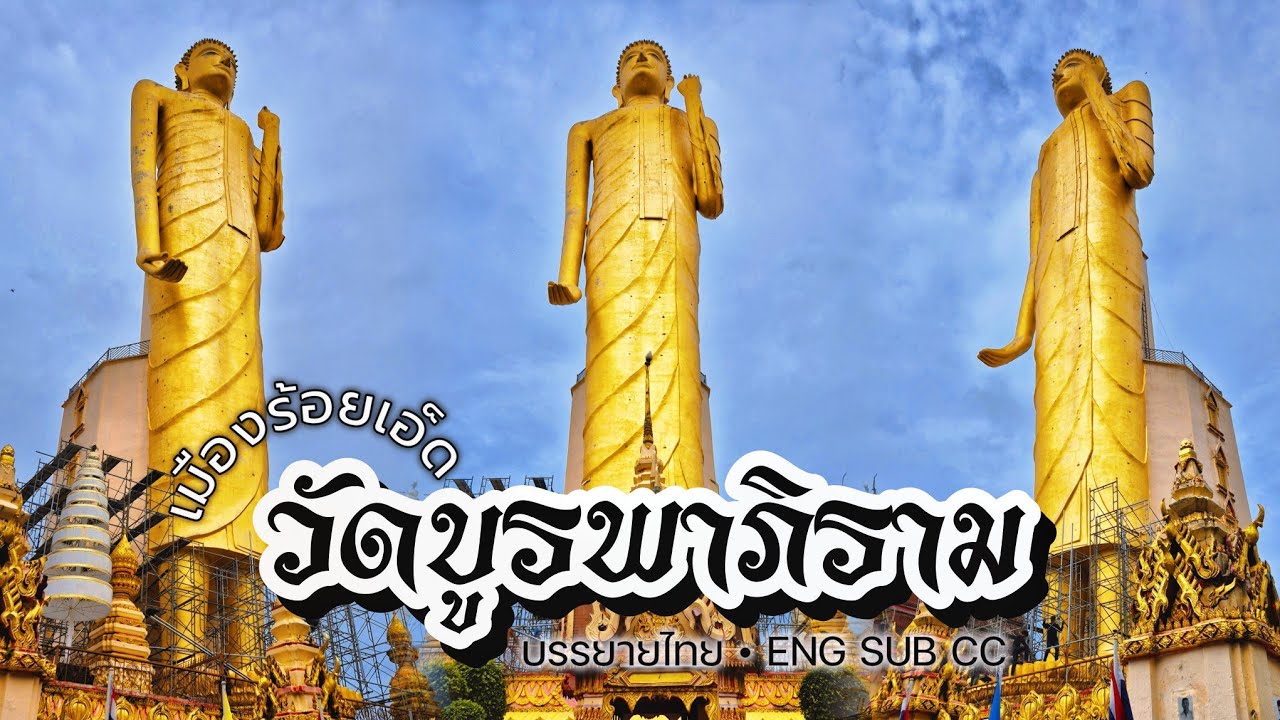
 Click to Access the Navigation Map GPS
Wat Buraphaphiram Map
Recommend

 Art, Culture and Heritage
 Historical Sites and Monuments(3)
 Landmarks and Memorials(5)
 Art, Craft Centres, Tradition(2)
 Museums(1)
 Educational Places
 Educational Gardens, Farm(3)
Temple(35)
Educational Gardens, Farm(3)
Temple(35)
 Other Sacred Sites(6)
 Suburban Living
 Village, Community(1)
 Local Market(1)
 Nature and Wildlife
 National Parks and Marine Reserves(1)
 Mountain (Doi)(2)
 Dam, Reservoir, Lake(8)
 Waterfalls(1)
 Flower Field(1)
 River, Canal(4)
 Entertainment and Agricultural
 Zoos and Aquariums(1)
 Stadium(1)
 Farms, Parks and Ecotourism(5)
 Shopping
 Shopping and Night Market(1)
 Travel Articles, Recipes
 Travel Review, Food Review(1)


