
lovethailand home >Northeastern Travel Attractions >Roi Et Travel Attractions >Thawatshaburi >Ni Wet > Roi Et Science and Cultural Centre for Education
TL;DR: Roi Et Science and Cultural Centre for Education is located at Niwet Subdistrict, Thawat Buri District, Roi Et Province, open Monday – Friday, hours 08.30 – 16.30.
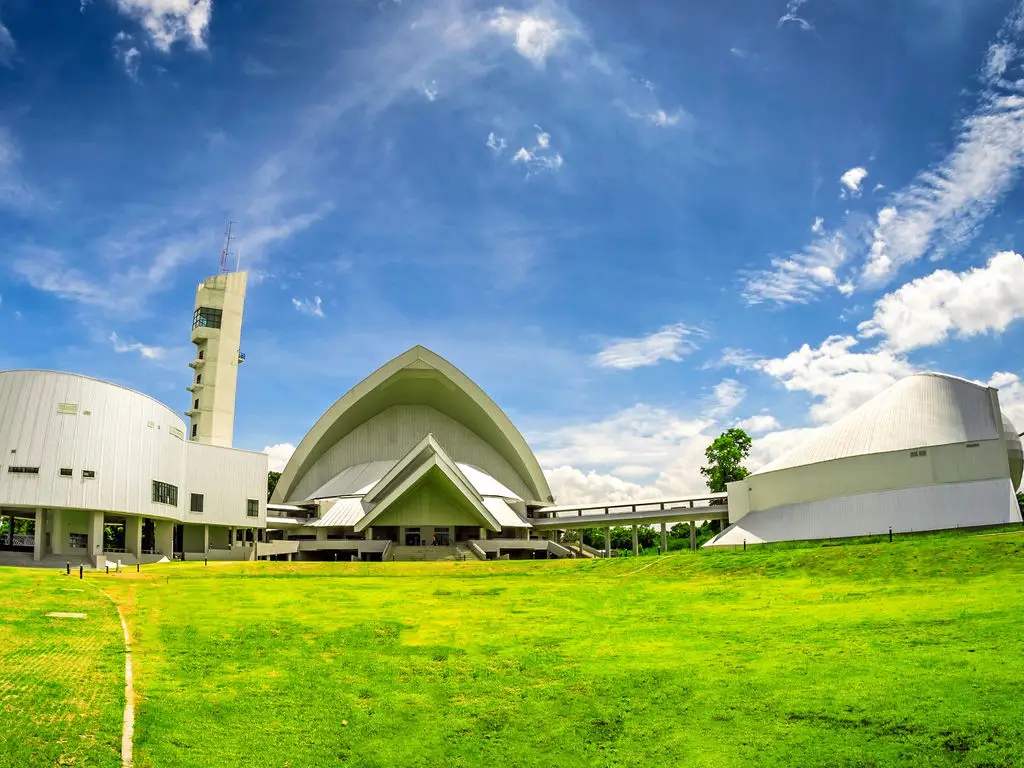
Roi Et Science and Cultural Centre for Education
Open Days: Monday – Friday
Opening Hours: 08.30 – 16.30
Roi Et Science and Cultural Centre for Education is a major learning destination in Thawat Buri District, Roi Et Province. The center brings together science, technology, environment, astronomy, hands-on learning, and Isan cultural identity in one place. It was created to support public learning beyond the classroom and to give children, students, teachers, families, and general visitors access to science-based education in a fun, practical, and culturally meaningful setting. For foreign travelers, this center offers a different side of Roi Et: not only temples, lakes, and festivals, but also a modern educational space designed to inspire curiosity and scientific thinking among young people.
The center is located at 32 Moo 2, Niwet Subdistrict, Thawat Buri District, Roi Et Province 45170. It is about 12 kilometers from Roi Et city center, making it convenient for a half-day or full-day educational trip. Visitors can combine the center with nearby Roi Et city attractions such as Bueng Phlan Chai, Ho Wot 101 Tower, Saket Nakhon Gate, Roi Et National Museum, and Wat Buraphaphiram. For schools and family groups, the location is practical because it provides enough content for structured learning while still being close enough to the city for restaurants, hotels, and additional sightseeing.
The purpose of the center is to expand science and technology learning opportunities into the region while integrating them with the cultural roots of northeastern Thailand. Instead of presenting science as something separate from local life, the center links scientific knowledge with Isan culture, agriculture, natural resources, energy, astronomy, and everyday experience. This approach helps learners understand that science is not distant or abstract; it is connected with rice, salt, plants, the sky, energy, the environment, technology, and the cultural landscape around them.
The architecture of the center is one of its most memorable features. Several building forms are inspired by Isan cultural objects and local ways of life, including the rice basket, the traditional cart canopy, and the bamboo rice steamer. These design elements make the center visually distinctive and culturally grounded. Visitors can see that the buildings were not designed as generic modern structures, but as architecture that translates local identity into a contemporary educational environment.
The center is especially suitable for children because it encourages curiosity through multiple forms of learning. Visitors can see, listen, touch, observe, ask questions, watch demonstrations, and take part in activities. This type of informal learning helps children understand scientific ideas more naturally than memorizing information from a textbook. Parents and teachers can walk with children through the exhibitions, read signs, explain concepts, and use the displays as starting points for conversation.
The planetarium is one of the main highlights of Roi Et Science and Cultural Centre for Education. It introduces visitors to astronomy, stars, the solar system, celestial objects, and stories of the universe through immersive sky shows. For many children, a planetarium visit is the first time they experience astronomy in a visual and emotional way. The dark dome, projected sky, and guided presentation help transform difficult space concepts into a memorable learning experience. Groups that want to visit the planetarium should reserve seats in advance.
The Science Show area is another important part of the center. Science demonstrations help children see principles in action, such as force, energy, sound, light, motion, reactions, or environmental processes. When learners see an experiment happen in front of them, they are more likely to ask questions and remember the concept. Science shows also make the center lively because they turn scientific explanation into performance, discovery, and shared excitement.
The center also provides activities for early childhood learners. Young children learn best through play, movement, color, sound, and safe hands-on participation. Spaces and activities designed for younger children allow families to introduce science gently, without making learning feel too difficult or too formal. This makes the center suitable not only for older school groups, but also for parents bringing younger children for a meaningful weekday outing.
One of the important exhibitions focuses on jasmine rice. This topic connects science with agriculture, geography, economy, and local life in northeastern Thailand. Roi Et is part of a wider region known for high-quality jasmine rice, and the exhibition helps visitors understand rice not only as food, but also as a subject connected with soil, water, climate, plant varieties, local communities, and Thai food culture. For foreign travelers, this exhibition is a useful introduction to why rice is central to Thai life and Isan identity.
The basic science exhibition provides a foundation for understanding everyday phenomena. Topics may include force, motion, energy, light, sound, electricity, materials, and the scientific method. This section is useful because it supports the most important habit in science: asking how and why things happen. Children who learn to observe carefully, ask questions, form ideas, and test them are building the foundation of scientific thinking.
The prehistoric world exhibition introduces visitors to the long history of Earth, ancient life, fossils, geological change, and the development of living things through time. This section helps learners understand that Earth has changed constantly over millions of years. It also opens a broader view of time, evolution, and environmental change. For young visitors, prehistoric displays can be exciting because they combine imagination with scientific evidence.
The rock salt and Thung Kula resource exhibition connects science with local natural resources. Salt in northeastern Thailand is related to geology, underground water, soil conditions, local production, and the way communities have used natural resources over time. Presenting this subject in a science center helps visitors see that local knowledge and scientific explanation can work together. Natural resources are not just economic materials; they also tell stories about land, people, and environment.
The biotechnology exhibition introduces the world of living systems and their applications. Biotechnology relates to microorganisms, food, agriculture, health, genetics, and environmental management. For students, this section helps show that biology is not limited to the study of plants and animals. It also connects to modern technology and future careers. Understanding biotechnology can help learners see how science affects food production, medicine, and sustainable development.
The plants and environment exhibition encourages visitors to understand ecosystems and the relationship between living things and nature. Plants are connected with food, oxygen, climate, soil, water, and biodiversity. Environmental learning helps children understand that human behavior affects nature, and that caring for the environment begins with understanding how living systems depend on one another. This section is useful for building awareness of conservation and responsible resource use.
The energy and renewable energy exhibitions are closely connected with modern life. Energy is essential for homes, transport, communication, industry, education, and public services. Renewable energy topics such as solar power, wind, biomass, and other sustainable energy forms help learners think about future choices. These exhibitions connect scientific knowledge with real social issues such as cost, climate change, energy security, and environmental responsibility.
The art and culture exhibitions, including the Saket Nakhon cultural theme, make this center different from many science-only museums. They show that science and culture can be learned together. Saket Nakhon is linked with Roi Et’s historical and cultural identity, while the broader cultural exhibitions help learners understand language, local wisdom, traditional life, and community memory. For foreign travelers, this part of the center helps explain Roi Et as a place with both modern education and deep local roots.
The future technology exhibition encourages children and visitors to imagine what comes next. Space technology, geographic information, communication, digital innovation, robotics, and automation are all fields that shape the future. Exhibitions like this help young people understand that what they learn today can connect to future careers, invention, and problem-solving. The goal is not only to show technology, but to make learners feel that they can participate in the future.
Beyond permanent exhibitions, the center organizes educational activities, training, lectures, demonstrations, experiments, competitions, and science and culture camps. These activities make the center a living learning space rather than a static display hall. Schools can use the center for field trips, while youth groups can join camps or special learning programs. The center therefore supports both informal public learning and structured educational activities.
Science camps are especially valuable for schools. A camp allows students to spend more time with experiments, group work, observation, and guided learning. Instead of simply walking past displays, students can work together, test ideas, listen to instructors, and reflect on what they have learned. This helps science become an active process rather than a memorized subject.
For families, Roi Et Science and Cultural Centre for Education is a good alternative to ordinary entertainment venues. Parents can bring children to spend time in a place that is enjoyable but also educational. The center gives families a reason to talk about stars, rice, energy, plants, ancient life, local culture, and future technology. A visit can become both a family activity and a learning experience.
For teachers, the center is a useful field-trip destination because it supports many subjects at once: science, social studies, local culture, environment, agriculture, energy, and technology. Bringing students to the center helps connect classroom content with real displays and practical experiences. This makes the knowledge more concrete and easier to remember.
Visitors should plan around the official opening schedule. The center is open Monday to Friday from 08.30 to 16.30 and is closed on Saturdays, Sundays, and public holidays. Those who want to watch a planetarium show should contact the center in advance, especially if visiting as a school group or a large party. Advance planning helps ensure that the visit includes the most important activities.
The admission fee is accessible. Exhibition-only admission is 10 baht for children and 20 baht for adults per person. Planetarium plus exhibition admission is 30 baht per person. Children under 3 years old, people with disabilities, and seniors aged 60 and above can enter free of charge. This pricing supports the center’s role as a public learning space that remains affordable for families and schools.
Getting There is straightforward from Roi Et city center. Take Chaeng Sanit Road toward Thawat Buri District for about 12 kilometers, pass the Thawat Buri post office area, and continue toward the route connecting with Ronnachai Chanyut Road to reach the center. Travelers can navigate directly to Roi Et Science and Cultural Centre for Education or use the address 32 Moo 2, Niwet Subdistrict, Thawat Buri District, Roi Et 45170. Visitors without a private car can first travel to Roi Et city center and then continue by local taxi or local transport.
The center is spacious and suitable for group visits, but visitors should use the area respectfully. School groups should follow staff instructions, avoid touching restricted equipment, keep noise low inside the planetarium, and supervise young children closely. These simple practices help everyone share the learning space safely and comfortably.
A family visit can begin in the morning after the center opens. Visitors can explore the main exhibition building, watch a planetarium show, join available activities, and then have lunch in Thawat Buri or return to Roi Et city for more sightseeing. In the afternoon, the trip can continue to Bueng Phlan Chai, Ho Wot 101 Tower, Saket Nakhon Gate, Roi Et National Museum, or Wat Buraphaphiram. This route combines science, culture, city landmarks, and local food in one day.
For school trips, it is best to contact the center before visiting. Schools can coordinate visitor numbers, planetarium rounds, activity time, and suitable learning formats. With proper planning, a field trip to the center can support classroom lessons and give students a stronger, more memorable understanding of science and culture.
For general travelers, the center adds depth to a Roi Et itinerary. It shows that Roi Et is not only a province of temples, lakes, and festivals, but also a place with a strong commitment to lifelong learning and youth development. The existence of a modern science and cultural learning center in Thawat Buri reflects the wider effort to expand educational opportunities beyond major cities.
One of the most meaningful qualities of the center is that it does not separate science from culture. Science teaches children to observe, question, experiment, and think logically. Culture helps them understand identity, community, local wisdom, and their own roots. When these two dimensions are presented together, learners can see that modern technology and local heritage do not have to oppose each other. They can grow together.
In summary, Roi Et Science and Cultural Centre for Education is a valuable learning attraction for families, schools, students, teachers, and curious travelers. Its highlights include the planetarium, science and cultural exhibitions, Science Show, educational camps, Isan-inspired architecture, affordable admission, and a wide range of activities designed to inspire young minds. For anyone visiting Roi Et with children or an interest in educational travel, this center is one of the province’s most useful and meaningful places to include in the itinerary.
| Name | Roi Et Science and Cultural Centre for Education |
| Location | Niwet Subdistrict, Thawat Buri District, Roi Et Province |
| Address | 32 Moo 2, Chaeng Sanit Road, Niwet Subdistrict, Thawat Buri District, Roi Et 45170, Thailand |
| Highlights | Planetarium, science and cultural exhibitions, Science Show, science camps, Isan-inspired architecture, and informal learning spaces for children, students, and families |
| History / Concept | Created as a regional learning center to support science, technology, and cultural education, encourage scientific thinking, and connect modern knowledge with Isan cultural identity |
| Name Origin | The name reflects the center’s role in combining science and cultural education in one public learning space for Roi Et and the wider northeastern region |
| Distinctive Features | Buildings inspired by Isan cultural forms such as rice baskets, traditional cart canopies, and bamboo rice steamers, combined with modern exhibitions and educational activities |
| Travel Information | From Roi Et city center, take Chaeng Sanit Road toward Thawat Buri for about 12 km, then continue toward the route connecting with Ronnachai Chanyut Road to reach the center. |
| Current Status | Open as a science and cultural learning center for general visitors, schools, and educational groups |
| Open Days | Monday – Friday |
| Closed Days | Saturday, Sunday, and public holidays |
| Opening Hours | 08.30 – 16.30 |
| Admission Fees | Exhibition Only: Children 10 Baht, Adults 20 Baht Per Person Planetarium And Exhibition: 30 Baht Per Person Free Admission For Children Under 3, People With Disabilities, And Seniors Aged 60 And Above |
| Facilities | Main exhibition building, planetarium, meeting hall, media laboratory building, activity areas, exhibition halls, science camp areas, inquiry counter, and spaces for school groups |
| Main Areas / Zones | 1. Main Exhibition Building 2. Planetarium Room 3. Science Show Area 4. Early Childhood Activity Zone 5. Meeting And Training Areas 6. Media Laboratory Building 7. Science And Culture Camp Area 8. Outdoor Landscape Inspired By Isan Culture |
| Main Exhibitions | 1. Jasmine Rice Exhibition 2. Basic Science Exhibition 3. Prehistoric World Exhibition 4. Rock Salt / Thung Kula Resource Exhibition 5. Biotechnology Exhibition 6. Plants And Environment Exhibition 7. Energy And Renewable Energy Exhibition 8. Art And Culture Exhibition 9. Way Of Saket Nakhon Exhibition 10. Future Technology Exhibition 11. Astronomy And Space Exhibition |
| Key Activities | Planetarium shows, Science Show, demonstrations, experiments, competitions, lectures, training sessions, and science and culture camps |
| Caretaker / Responsible Agency | Roi Et Science and Cultural Centre for Education, under the Ministry of Education |
| Director | Miss Thanaphon Saengsai |
| Main Contact Number | 043-569340 |
| Planetarium Reservation Number | 091-3691944 |
| Official Website / Official Page | roietsci.com, Facebook: Roi Et Science and Cultural Centre for Education |
| Nearby Tourist Attractions | 1. Bueng Phlan Chai, about 12 km 2. Ho Wot 101 Tower, about 12 km, Tel. 043-511222 3. Saket Nakhon Gate, about 12 km 4. Roi Et National Museum, about 13 km, Tel. 043-514456 Ext. 101 5. Wat Buraphaphiram, about 14 km 6. Somdet Phra Srinagarindra Park Roi Et, about 12 km |
| Nearby Restaurants | 1. Khanom Thai Thawat Buri, about 2 km, Tel. 066-041-4433 2. Lom Tawan Cafe Thawat Buri, about 2 km, Tel. 087-542-6262 3. Ban Tam Nua 101 By Tam Nua 101, about 3 km, Tel. 092-861-5581 4. A. Kung Phao Roi Et, about 5 km, Tel. 065-325-9532 5. Krua Erawan 101, about 5 km, Tel. 092-804-1429 6. Fa Sai Kuai Tiao Saleng, about 5 km, Tel. 061-956-8539 |
| Nearby Accommodations | 1. Boonbundal Hotel, about 9 km, Tel. 043-624-624 2. The Bed Hotel 101, about 10 km, Tel. 043-032-142 3. Le Park 23 Boutique Resort, about 12 km, Tel. 043-513-444 4. HOP INN Roi Et, about 13 km, Tel. 02-080-2222 5. The Capital Hotel Roi Et, about 14 km, Tel. 087-233-5000 6. Rueanrimnam Hotel, about 14 km, Tel. 043-518-967 |
Frequently Asked Questions (FAQ)
Q: Where is Roi Et Science and Cultural Centre for Education located?
A: It is located at 32 Moo 2, Chaeng Sanit Road, Niwet Subdistrict, Thawat Buri District, Roi Et Province 45170, about 12 km from Roi Et city center.
Q: What are the opening days and hours?
A: The center is open Monday to Friday from 08.30 to 16.30 and is closed on Saturdays, Sundays, and public holidays.
Q: How much is the admission fee?
A: Exhibition-only admission is 10 baht for children and 20 baht for adults per person. Planetarium and exhibition admission is 30 baht per person. Children under 3, people with disabilities, and seniors aged 60 and above enter free of charge.
Q: Should visitors reserve planetarium seats in advance?
A: Yes. Advance reservation is recommended, especially for school groups, educational tours, and large visitor groups. The planetarium reservation number is 091-3691944.
Q: What can visitors see inside the center?
A: Visitors can see the planetarium, basic science exhibitions, astronomy and space exhibitions, prehistoric world displays, jasmine rice exhibition, energy exhibitions, Isan cultural exhibitions, Science Show, and science camp activities.
Q: Is the center suitable for young children?
A: Yes. The center is suitable for young children, school-age children, and youth because it offers visual, hands-on, and activity-based learning in a safe and engaging environment.
Q: How can visitors travel from Roi Et city center to the center?
A: From Roi Et city center, take Chaeng Sanit Road toward Thawat Buri for about 12 km. Visitors without a private car can travel to Roi Et city center and continue by local taxi or local transport.
Q: What attractions can visitors combine with this center?
A: Nearby places to combine with the visit include Bueng Phlan Chai, Ho Wot 101 Tower, Saket Nakhon Gate, Roi Et National Museum, Wat Buraphaphiram, and Somdet Phra Srinagarindra Park Roi Et.
Tel : 043569340
 Tel : 043569340
Fax : 043569174
 Fax : 043569174
 Category: ●Art, Culture and Heritage
 Group: ●Art, Craft Centres, Tradition
Last Update : 3 MonthAgo
 Last Update : 3 MonthAgo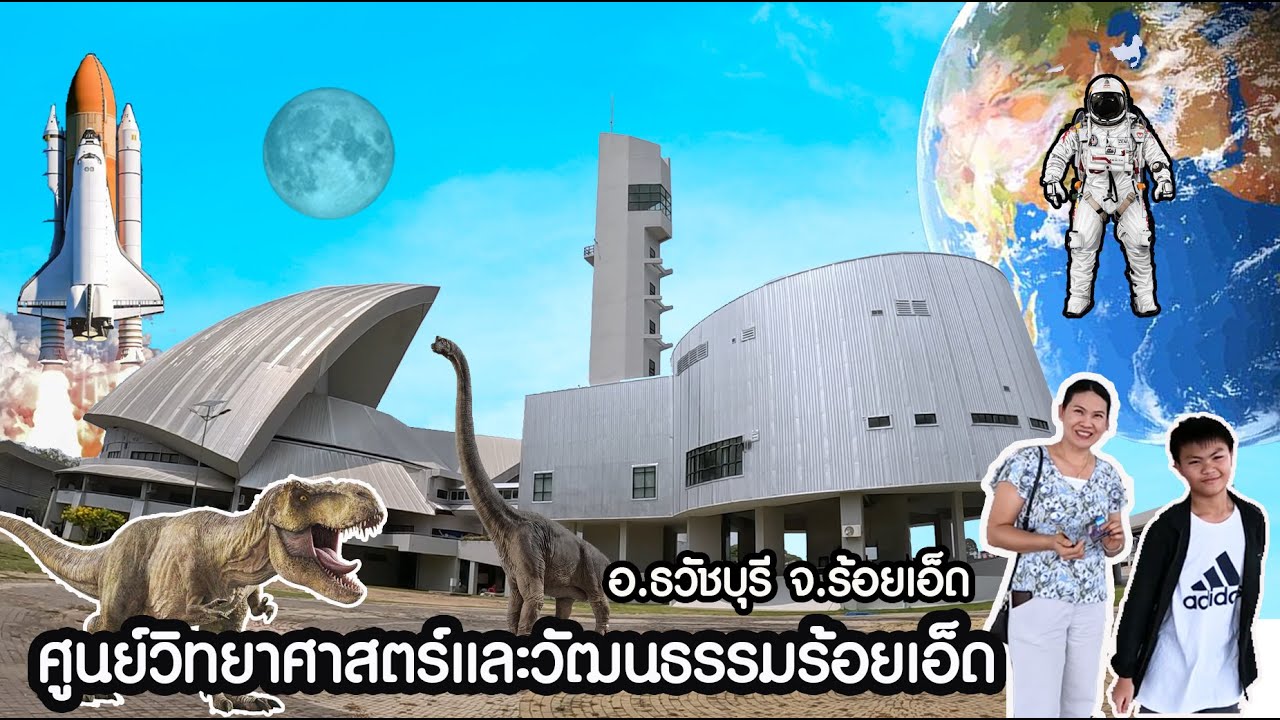
 Click to Access the Navigation Map GPS
Roi Et Science and Cultural Centre for Education Map
Gellery
Recommend

 Historical Sites and Monuments(3)
 Landmarks and Memorials(5)
Art, Craft Centres, Tradition(2)
Landmarks and Memorials(5)
Art, Craft Centres, Tradition(2)
 Museums(1)
 Educational Places
 Educational Gardens, Farm(3)
 Places of Worship
 Temple(35)
 Other Sacred Sites(6)
 Suburban Living
 Village, Community(1)
 Local Market(1)
 Nature and Wildlife
 National Parks and Marine Reserves(1)
 Mountain (Doi)(2)
 Dam, Reservoir, Lake(8)
 Waterfalls(1)
 Flower Field(1)
 River, Canal(4)
 Entertainment and Agricultural
 Zoos and Aquariums(1)
 Stadium(1)
 Farms, Parks and Ecotourism(5)
 Shopping
 Shopping and Night Market(1)
 Travel Articles, Recipes
 Travel Review, Food Review(1)


