
lovethailand home >Northeastern Travel Attractions >Roi Et Travel Attractions >Muang Roi Et >Nai Muang > Wat Sra Thong
TL;DR: Wat Sra Thong is located at Hai Sok Road, Nai Mueang Subdistrict, Mueang Roi Et District, Roi Et Province, open Daily, hours 08.30 – 16.30.
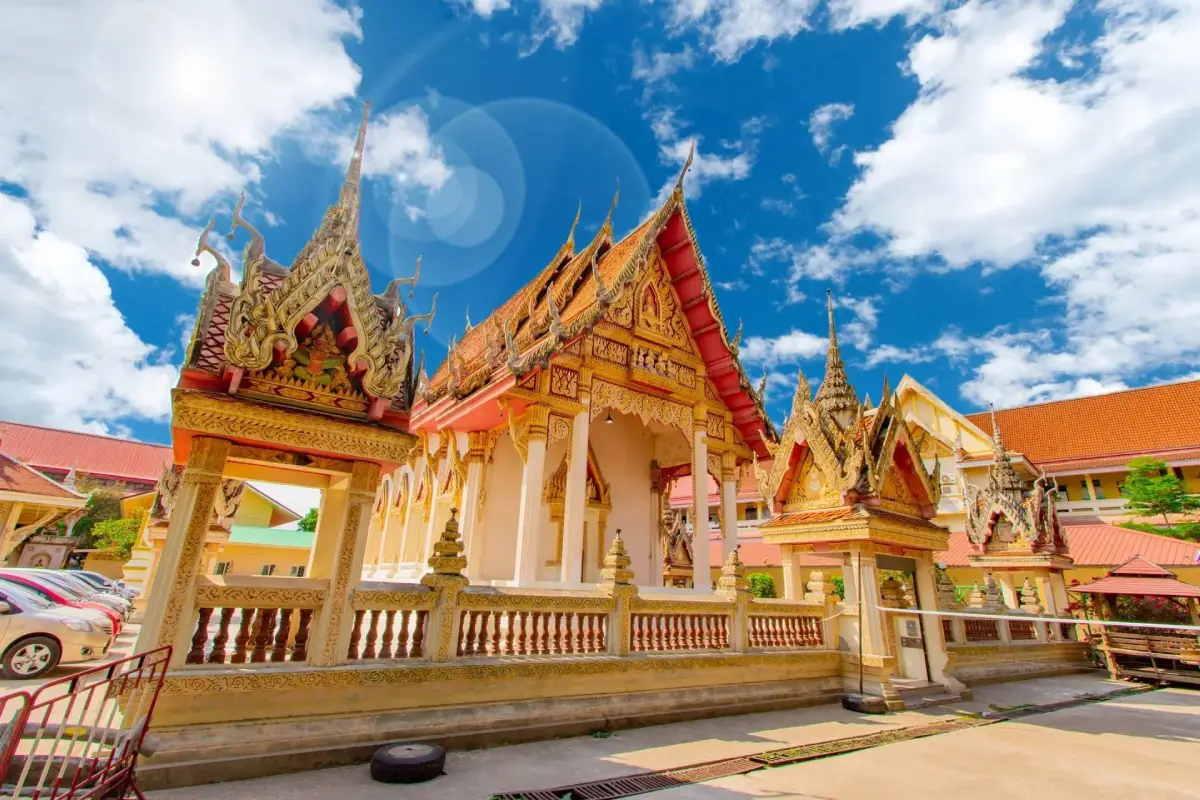
Wat Sra Thong
Open Days: Daily
Opening Hours: 08.30 – 16.30
Wat Sra Thong in Roi Et is an old Buddhist temple located on Hai Sok Road in Nai Mueang Subdistrict, Mueang Roi Et District, Roi Et Province. It is one of the important city temples associated with local faith, sacred water, early education, civic oath-taking, and the revered Luang Pho Phra Sangkachai, a sacred Buddha image deeply respected by the people of Roi Et. Although the temple is not as visually monumental as Wat Buraphaphiram with its towering Luang Pho Yai, Wat Sra Thong has a profound historical and spiritual role in the heart of Roi Et city.
The temple is especially meaningful because it enshrines Luang Pho Phra Sangkachai, a sacred image regarded as one of the city’s most important objects of worship. Local tradition records that in 1782, Phraya Khattiya Wongsa, also known as Thao Thon, the first governor of Roi Et, found this ancient and highly revered image. Recognizing its sacred importance, he had it enshrined at Wat Sra Thong and elevated it as a guardian image of the city. Since then, Luang Pho Phra Sangkachai has remained closely connected with the identity and faith of Roi Et.
For the people of Roi Et, Luang Pho Phra Sangkachai is not merely a religious statue. It represents blessing, prosperity, protection, moral integrity, and civic loyalty. In the past, government officials were required to swear an oath of loyalty before the image every year, promising to remain faithful to the city and perform their duties honestly. This historical role gives Wat Sra Thong a special place in Roi Et’s civic memory, because the temple connected Buddhist faith with public responsibility.
Phra Sangkachai, or Maha Kaccayana in Buddhist tradition, is remembered as a wise disciple known for clearly explaining the Buddha’s teachings. In popular Thai belief, Phra Sangkachai is also associated with prosperity, fullness, abundance, and good fortune. His rounded form is commonly understood as a symbol of well-being and sufficiency. At Wat Sra Thong, this belief is strengthened by the image’s status as a guardian figure of the city, making it a focus of both personal devotion and collective faith.
The temple was formerly known as Wat Si Mongkhon. The later name Wat Sra Thong is connected with the sacred pond inside the temple grounds. The word “sra” means pond and “thong” means gold. Local people considered the pond important and auspicious, and water from the pond was used in ceremonial and royal or official rites for blessing and sanctity. This connection between sacred water and city ritual gives the temple a deeper meaning beyond the worship of Luang Pho Phra Sangkachai.
Roi Et has several old ponds that were traditionally regarded as important and sacred to the city, including Sra Chai Mongkhon, Sra Kaeo, Sra Thong, Sra Borisut, and Sra Prasoet. These ponds were not only water sources. They were part of the spiritual and ritual landscape of the old city. Sra Thong at Wat Sra Thong therefore represents a form of sacred geography, where water, Buddhism, public ceremony, and local belief are interwoven.
Wat Sra Thong also has an important connection with early education in Roi Et. In the past, the temple grounds were used as one of the early learning places for children in the province. The vihara of Luang Pho Phra Sangkachai served as a teaching space, with monks and novices teaching Thai language and arithmetic. This reflects the traditional role of Thai temples as places of learning before modern schools became fully established.
This educational role helps explain why the temple is valuable not only as a religious site but also as part of Roi Et’s social history. Temples in Thailand often functioned as schools, meeting places, shelters, and centers of moral training. Wat Sra Thong preserves this layered history. It was a temple of worship, a space of learning, a civic oath site, and a place connected with sacred water. These roles show how important temples were in the daily structure of old provincial towns.
The vihara of Luang Pho Phra Sangkachai is the most important stop for visitors. Inside, the golden image is enshrined on a raised altar in a calm and devotional atmosphere. Local people and visitors come to pay respect, offer flowers and garlands, pray for blessing, or sit quietly before the image. The space is modest and intimate, allowing the focus to remain on the sacred image and its relationship with the city’s faith.
In earlier times, the image did not have the permanent and well-kept shrine seen today. Local devotees gradually helped build and improve the worship space so that the sacred image could be protected and properly honored. This history of care shows the continuing faith of the community. The temple’s present appearance is the result of generations of devotion rather than a single act of construction.
Wat Sra Thong remains an active temple in Roi Et city. Monks reside at the temple, local people come to make merit, and Buddhist ceremonies continue to take place. The temple is close to residential areas, schools, shops, and transport routes, making it easy for people to visit as part of daily life. This living role is important for foreign visitors to understand: Thai temples are not simply historical monuments; they are still part of community life.
For cultural travelers, Wat Sra Thong offers a different kind of experience from large landmark temples. It is not defined by height or scale, but by memory, local devotion, and civic meaning. The story of Luang Pho Phra Sangkachai, the oath-taking of officials, the sacred pond, and the temple’s connection with early education all make Wat Sra Thong a deeply meaningful place for understanding Roi Et.
The temple can be easily included in a Roi Et city itinerary. Nearby places include Roi Et National Museum, Bueng Phlan Chai, Ho Wot 101 Tower, Wat Klang Ming Mueang, Wat Buraphaphiram, Somdet Phra Srinagarindra Park Roi Et, and Saket Nakhon Gate. Together, these sites tell different parts of the city’s story: history, archaeology, Buddhism, public space, civic identity, and modern provincial development.
A visit to Wat Sra Thong can begin at the temple courtyard, then continue to the vihara of Luang Pho Phra Sangkachai. Visitors can pay respect to the sacred image, observe the devotional atmosphere, and learn about the temple’s connection with the city’s old oath-taking tradition. They can then walk around the temple grounds and view the area associated with Sra Thong, the sacred pond that helped give the temple its name.
The best time to visit is in the morning or early afternoon. Wat Sra Thong is generally open daily from 08.30 to 16.30. Morning hours provide a calm atmosphere for worship, while early afternoon is convenient for combining the temple with Roi Et National Museum, Bueng Phlan Chai, or Ho Wot 101 Tower. Because the temple is in the city center, it is suitable for a short cultural stop or as part of a half-day walking and driving route around central Roi Et.
There is no admission fee to visit Wat Sra Thong. Visitors may enter the temple, pay respect to Luang Pho Phra Sangkachai, and walk around the main temple areas during opening hours. Merit-making, flower offerings, candles, incense, and donations can be made according to personal faith at the areas arranged by the temple. This makes the temple accessible to both local residents and travelers.
Getting There is easy because the temple is located on Hai Sok Road in Roi Et city. Visitors with private cars can navigate directly to Wat Sra Thong or use Wat Sra Thong Municipal School and Hai Sok Road as reference points. Travelers arriving at Roi Et Bus Terminal can continue by tuk-tuk, local taxi, or city transport. The temple is close enough to other city attractions to combine several places in one route.
The surrounding city area offers restaurants, cafés, and hotels, especially around Hai Sok Road, Phloen Chit Road, Bueng Phlan Chai, and the bus terminal area. Visitors can worship at the temple, have a meal nearby, and continue to other central Roi Et attractions without long travel time. Staying in the city center is convenient for travelers who want to visit multiple temples and museums.
Visitors should dress respectfully and behave quietly because Wat Sra Thong is an active Buddhist temple. Inside the vihara, visitors should avoid touching the sacred image, avoid interrupting worshippers, and refrain from loud conversation. Photography should be done respectfully, especially when local people are praying. The sacred pond and temple grounds should also be treated with care because they carry historical and ritual meaning for the community.
For families and students, Wat Sra Thong can serve as a practical learning site. Children can learn what a city guardian Buddha image means, why officials once swore oaths before a sacred image, and how temple ponds were connected with ritual life. Learning from the actual site makes these cultural ideas easier to understand than reading about them from a distance.
For foreign travelers, the temple helps explain a core idea about Thai culture: a temple can be a sacred space, a community school, a ritual center, a guardian place, and a memory archive all at once. Wat Sra Thong is a compact but rich example of this role. It preserves stories of Buddhism, city loyalty, sacred water, early education, and local devotion in one accessible location.
Overall, Wat Sra Thong is one of Roi Et’s meaningful old city temples. Its main highlight is Luang Pho Phra Sangkachai, the sacred guardian image of Roi Et, discovered and enshrined by Phraya Khattiya Wongsa in 1782. The temple is also important for its former name Wat Si Mongkhon, its sacred pond Sra Thong, its role in official oath-taking, and its connection with early education in the province. For travelers who want to understand Roi Et through faith, water, civic memory, and local Buddhist life, Wat Sra Thong is an important stop in the city center.
| Name | Wat Sra Thong, Roi Et |
| Former Name | Wat Si Mongkhon |
| Temple Type | Local Buddhist Temple In Roi Et City |
| Location | Hai Sok Road, Nai Mueang Subdistrict, Mueang Roi Et District, Roi Et Province |
| Address | Wat Sra Thong, 51 Hai Sok Road, Nai Mueang Subdistrict, Mueang Roi Et District, Roi Et 45000, Thailand |
| Highlights | Luang Pho Phra Sangkachai, Roi Et’s sacred guardian image; the vihara of Luang Pho Phra Sangkachai; Sra Thong sacred pond; and the old civic oath-taking tradition before the sacred image |
| History | Formerly known as Wat Si Mongkhon, the temple is an old city temple of Roi Et. In 1782, Phraya Khattiya Wongsa, also known as Thao Thon, the first governor of Roi Et, found Luang Pho Phra Sangkachai and enshrined the sacred image at the temple as a guardian image of the city. |
| Name Origin | The name Wat Sra Thong is connected with the sacred pond inside the temple. Water from the pond was regarded as auspicious and used in important official and ceremonial rites. |
| Important Sacred Image | Luang Pho Phra Sangkachai, a sacred image deeply respected by the people of Roi Et and regarded as a guardian image of the city |
| Historical Importance | In the past, government officials swore an annual oath of loyalty before Luang Pho Phra Sangkachai. The temple is also connected with early education in Roi Et. |
| Religious Importance | A worship site for Roi Et’s sacred guardian image and an active Buddhist temple serving the city community |
| Travel Information | Located in Roi Et city on Hai Sok Road. Visitors can travel by private car, tuk-tuk, local taxi, or city transport from Roi Et Bus Terminal. |
| Current Status | Open as an active Buddhist temple and worship site for Luang Pho Phra Sangkachai, the sacred guardian image of Roi Et |
| Open Days | Daily |
| Opening Hours | 08.30 – 16.30 |
| Admission Fee | Free Admission |
| Facilities | Luang Pho Phra Sangkachai vihara, temple courtyard, parking area, worship area, Sra Thong sacred pond, merit-making area, and nearby restaurants in Roi Et city center |
| Main Areas / Zones | 1. Luang Pho Phra Sangkachai Vihara 2. Luang Pho Phra Sangkachai Worship Area 3. Sra Thong Sacred Pond 4. Temple Courtyard And Religious Activity Area 5. Monks’ Residence Area 6. Merit-Making And Offering Area 7. Area Connected With Wat Sra Thong Municipal School And The Surrounding Community |
| Activities / Current Role | Worshipping Luang Pho Phra Sangkachai, merit-making, alms and robe offerings, listening to Dhamma, annual Buddhist traditions, and religious activities for the Roi Et city community |
| Caretaker / Responsible Body | Wat Sra Thong, Nai Mueang Subdistrict, Mueang Roi Et District, Roi Et Province |
| Abbot | Phra Khru Suwan Saranukit |
| Nearby Tourist Attractions | 1. Roi Et National Museum, about 0.8 km, Tel. 043-514456 Ext. 101 2. Bueng Phlan Chai, about 1 km 3. Somdet Phra Srinagarindra Park Roi Et, about 1 km 4. Ho Wot 101 Tower, about 1 km, Tel. 043-511222 5. Wat Klang Ming Mueang, about 1 km, Tel. 043-512400 6. Wat Buraphaphiram, about 1.5 km, Tel. 043-511374 7. Saket Nakhon Gate, about 1.5 km |
| Nearby Restaurants | 1. 4U For You, Phloen Chit Road, about 0.6 km, Tel. 065-649-1999 2. Cozy Cafe’ & Bistro, about 1 km, Tel. 094-310-0504 3. Her Studio Roi Et, about 1 km, Tel. 083-871-0824 4. Lakeview Restaurant, about 1 km, Tel. 093-320-8126 5. Nai Chui Vintage Pork Noodle, about 1 km, Tel. 093-638-8323 6. Sit Rim, about 1 km, Tel. 098-278-4482 |
| Nearby Accommodations | 1. Saket Nakhon Hotel, about 0.3 km, Tel. 043-511-741 2. Rueanrimnam Hotel, about 1 km, Tel. 043-518-967 3. The Premium Residence, about 1 km, Tel. 043-518-655 4. 101 Hotel, about 1 km, Tel. 043-513-999, 065-119-6999 5. HOP INN Roi Et, about 2 km, Tel. 02-080-2222 6. The Rice Hotel, about 2.5 km, Tel. 043-519-999 |
Frequently Asked Questions (FAQ)
Q: Where is Wat Sra Thong located?
A: Wat Sra Thong is located on Hai Sok Road in Nai Mueang Subdistrict, Mueang Roi Et District, Roi Et Province. It is in the city center and is easy to reach from Roi Et Bus Terminal, Bueng Phlan Chai, and Roi Et National Museum.
Q: What are the opening days and hours?
A: Wat Sra Thong is open daily from 08.30 to 16.30.
Q: Is there an admission fee?
A: There is no admission fee. Visitors can enter the temple, worship Luang Pho Phra Sangkachai, and walk around the main temple areas during opening hours.
Q: Why is Luang Pho Phra Sangkachai important?
A: Luang Pho Phra Sangkachai is a sacred image that Phraya Khattiya Wongsa, also known as Thao Thon, the first governor of Roi Et, enshrined at Wat Sra Thong in 1782 and elevated as a guardian image of the city.
Q: What was the former name of Wat Sra Thong?
A: The temple was formerly known as Wat Si Mongkhon. It later became known as Wat Sra Thong because of the sacred pond inside the temple grounds.
Q: Who is the abbot of Wat Sra Thong?
A: The abbot of Wat Sra Thong is Phra Khru Suwan Saranukit.
Q: What should visitors see inside the temple?
A: Important places include the vihara of Luang Pho Phra Sangkachai, the worship area of the sacred city guardian image, Sra Thong sacred pond, the temple courtyard, and the religious activity areas of the temple.
Q: What nearby places can be combined with a visit?
A: Nearby places include Roi Et National Museum, Bueng Phlan Chai, Ho Wot 101 Tower, Wat Klang Ming Mueang, Wat Buraphaphiram, Somdet Phra Srinagarindra Park Roi Et, and Saket Nakhon Gate.
 Category: ●Places of Worship
 Group: ●Temple
Last Update : 3 MonthAgo
 Last Update : 3 MonthAgo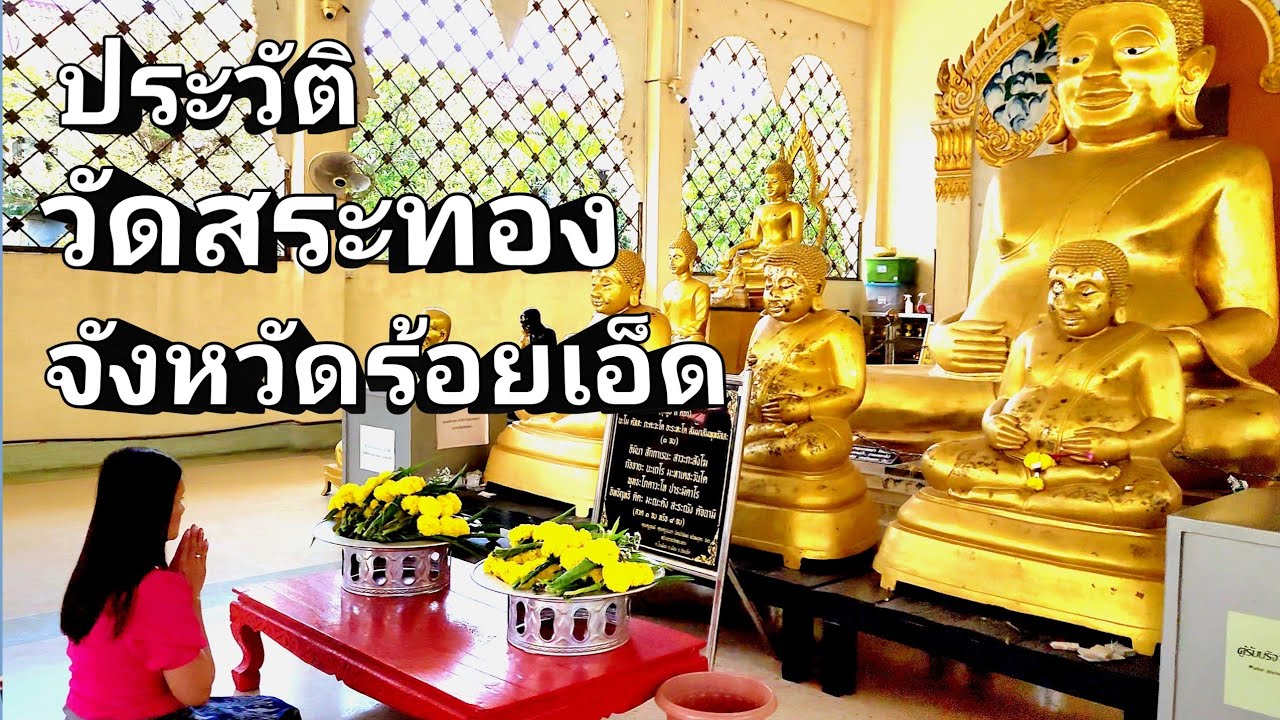
 Click to Access the Navigation Map GPS
Wat Sra Thong Map
Recommend

 Art, Culture and Heritage
 Historical Sites and Monuments(3)
 Landmarks and Memorials(5)
 Art, Craft Centres, Tradition(2)
 Museums(1)
 Educational Places
 Educational Gardens, Farm(3)
Temple(35)
Educational Gardens, Farm(3)
Temple(35)
 Other Sacred Sites(6)
 Suburban Living
 Village, Community(1)
 Local Market(1)
 Nature and Wildlife
 National Parks and Marine Reserves(1)
 Mountain (Doi)(2)
 Dam, Reservoir, Lake(8)
 Waterfalls(1)
 Flower Field(1)
 River, Canal(4)
 Entertainment and Agricultural
 Zoos and Aquariums(1)
 Stadium(1)
 Farms, Parks and Ecotourism(5)
 Shopping
 Shopping and Night Market(1)
 Travel Articles, Recipes
 Travel Review, Food Review(1)


