
lovethailand home >North Travel Attractions >Phitsanulok Travel Attractions > 20 Places to Visit in Phitsanulok Northern Thailan..
TL;DR: 20 Places to Visit in Phitsanulok Northern Thailand, open Daily Opening Hours: 06:00 – 18:00.

20 Places to Visit in Phitsanulok Northern Thailand
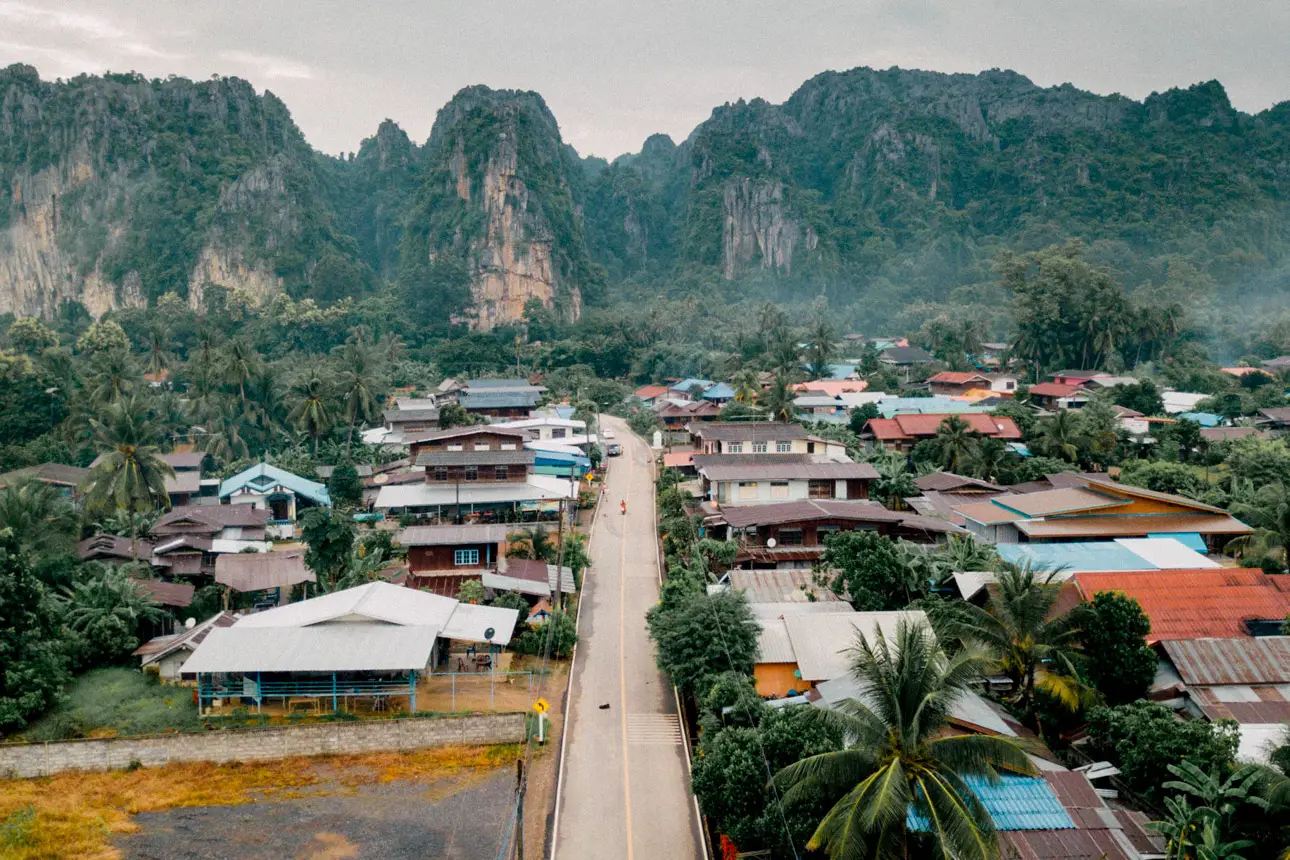
20 Places to Visit in Phitsanulok: Must-See Attractions in Northern Thailand Phitsanulok is one of the most important provinces in Thailand’s Lower North, combining history, Buddhism, an old riverside city, high mountains, waterfalls, forests, caves, local communities, and outdoor adventures in a single destination. If you have only 1 day, begin with Wat Phra Si Rattana Mahathat Woramahawihan, Wat Nang Phaya, Sergeant Thawee Folk Museum, and the historic district in central Phitsanulok. With 2–3 days, add the Wang Thong–Khek River route, Kaeng Song Waterfall, and Kaeng Sopha Waterfall. A 4–5 day trip allows enough time to explore Phu Hin Rong Kla National Park, Namtok Chat Trakan National Park, Phu Soi Dao, and Ban Mung–Noen Maprang.
Phitsanulok lies at the meeting point between Thailand’s Upper Central region and the North. Its geography includes the Nan River floodplain as well as high mountain ranges to the east. Phitsanulok city developed along the Nan River and has long played important strategic, transportation, religious, and administrative roles. In contrast, Nakhon Thai, Chat Trakan, Wang Thong, and Noen Maprang districts are characterized by mountains, forests, waterfalls, cliffs, and dramatic limestone landscapes.
Historically, Phitsanulok played an important role from the Sukhothai period through the Ayutthaya era and is closely associated with King Naresuan the Great. Religious and artistic evidence survives in many important temples, while Phra Buddha Chinnarat remains the spiritual heart of the province and has made Phitsanulok one of Thailand’s major pilgrimage destinations.
For nature travel, Highway 12 between Phitsanulok and Lom Sak is one of the province’s most important scenic routes. It connects the city with Wang Thong and Nakhon Thai districts, passing the Khek River, waterfalls, forests, and mountain landscapes before climbing toward Phu Hin Rong Kla. Travelers can combine waterfalls, outdoor activities, riverside cafés, and cool mountain stays along a single route.
In the north of the province, Chat Trakan District is a gateway to headwater forests, Namtok Chat Trakan National Park, and the route toward Phu Soi Dao, where the higher elevation creates ecosystems very different from those around the city. In southern Phitsanulok, Noen Maprang is known for limestone mountains, Ban Mung, caves, and evening bat-viewing areas, forming another distinctive landscape of the province.
Phitsanulok cuisine includes urban dishes, Lower Northern Thai food, and riverside dining along the Nan River. The city is particularly known for hanging-leg noodles, riverside restaurants, and local Thai dishes, while communities in outer districts offer seasonal agricultural ingredients and regional food. A well-planned trip can therefore combine history, nature, local communities, and food within the same itinerary.
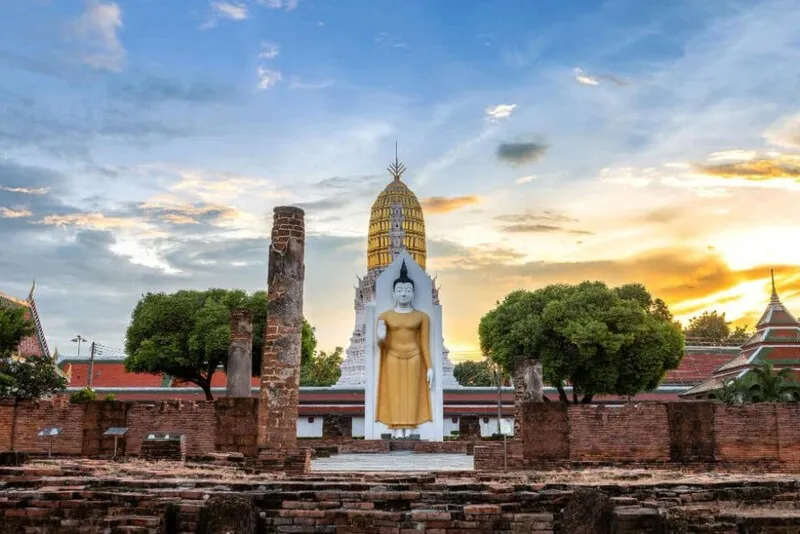
1. Wat Phra Si Rattana Mahathat Woramahawihan, commonly known locally as Wat Yai, is the principal royal temple of Phitsanulok. Standing beside the Nan River in the historic city center, the temple is home to Phra Buddha Chinnarat, one of Thailand’s most revered Buddha images and a major focus of pilgrimage throughout the year.
Highlights: Phra Buddha Chinnarat, the ornate flame-like aureole, principal prang, Phra Luea, Phra Attharot, mother-of-pearl doors, and the atmosphere of an active royal monastery where Buddhist ceremonies continue throughout the year.
Phra Buddha Chinnarat is a bronze Buddha image in the posture of subduing Mara. Its serene facial expression, balanced proportions, flame-like ushnisha, and characteristic elongated fingers are among its most recognizable artistic features. Together with the elaborate aureole behind the image, the main hall creates one of Thailand’s most distinctive sacred interiors.
The temple complex also contains the principal prang, the Phra Luea shrine, Phra Attharot, the reclining Buddha known as Phra Chao Khao Nirvana, and numerous historic objects. Visitors interested in art history should therefore allow more time than is required simply to pay respects to Phra Buddha Chinnarat.
The temple stands close to Wat Nang Phaya, Wat Ratchaburana, and the historic Nan River district, allowing travelers to explore several important sites on foot within half a day.
Open Days: Daily Opening Hours: 06:00 – 18:00
Getting There: The temple is on Phuttha Bucha Road in Nai Mueang Subdistrict. From Phitsanulok Railway Station, visitors can take a local vehicle, songthaew, taxi, ride-hailing service, or private car.
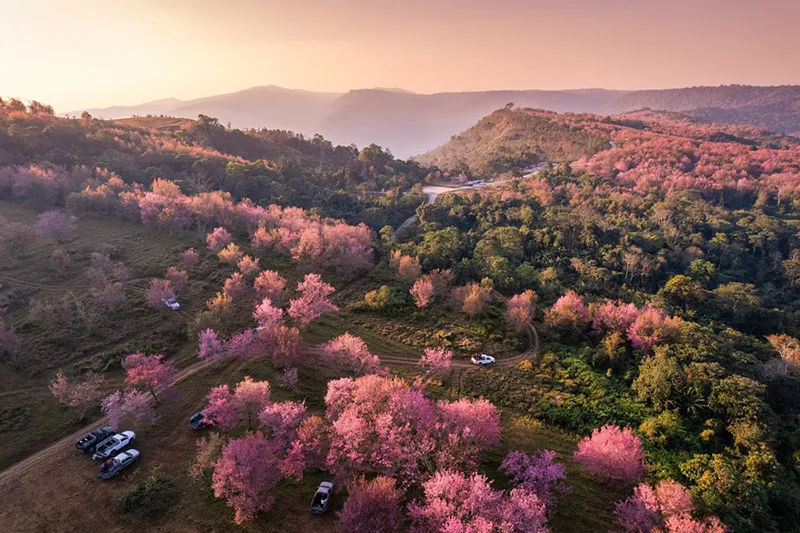
2. Phu Hin Rong Kla National Park is one of Thailand’s most distinctive national parks because it combines nature, modern history, geology, and biodiversity within the same mountain landscape. Located across the borders of Phitsanulok, Phetchabun, and Loei provinces, the park covers approximately 191,875 rai and includes high mountains, pine forest, rock fields, cliffs, and waterfalls.
Highlights: Lan Hin Pum, Lan Hin Taek, Pha Chu Thong, the Political and Military School, historic former stronghold areas, pine forest, wildflowers, cool weather, and walking trails combining natural and historical interpretation.
The park rises to approximately 1,617 meters above sea level at its highest points, giving it noticeably cooler temperatures than the surrounding lowlands. Winter mornings often bring mist, making the area popular for hiking, photography, and mountain stays.
What makes Phu Hin Rong Kla particularly unusual is the way traces of modern political history exist within a natural mountain environment. Visitors can walk from historic interpretation sites to rock formations, pine forest, and cliff viewpoints along the same route, creating a very different experience from that of most national parks.
Open Days: Daily Opening Hours: 06:00 – 18:00
Getting There: From central Phitsanulok, follow Highway 12 toward Nakhon Thai and continue uphill to Phu Hin Rong Kla. A private car is the most practical option because attractions within the park are spread across several areas.
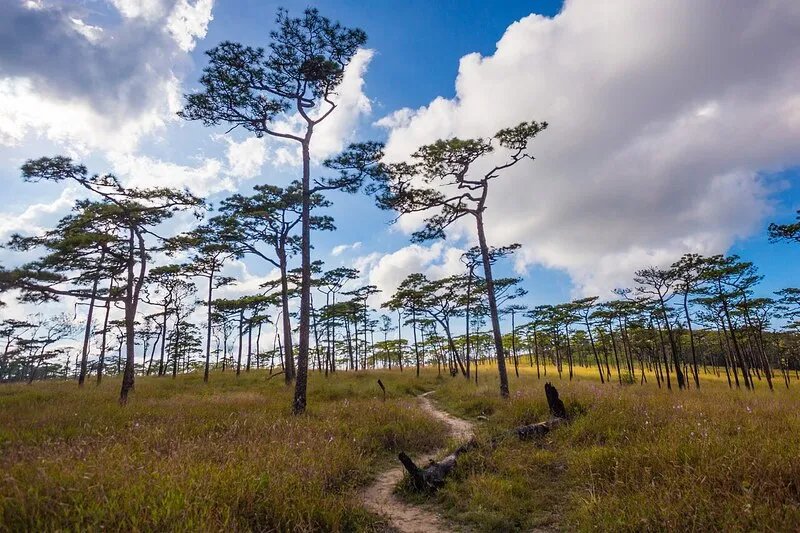
3. Phu Soi Dao National Park is one of the best-known trekking destinations in Thailand’s Lower North. Extending across areas of Phitsanulok and Uttaradit near the Thai–Lao border, the park is characterized by high mountains and the famous three-needle pine plateau that attracts hikers from across the country.
Highlights: Three-needle pine plateau, fields of Murdannia giganteum flowers, Phu Soi Dao Waterfall, Sai Thip Waterfall, sea of mist, pine forest, and the approximately 6.5-kilometer trekking route to the plateau.
The route to the pine plateau begins near Phu Soi Dao Waterfall. It passes through forest, steep slopes, ridges, and resting points. Although the distance is not exceptionally long compared with some mountain trails, the elevation gain makes the trek physically demanding and requires reasonable preparation.
The rainy season is known for purple Murdannia flowers and lush forest, while the cool season brings colder temperatures, mist, and occasional frost-like conditions. Access to the plateau and trekking routes depends on seasonal national park announcements, so current information should always be checked before traveling.
Open Days: According to current national park announcements Opening Hours: Registration for the pine plateau is generally recommended between 08:00 – 13:00 during the open trekking season
Getting There: From Phitsanulok city, travel north toward Chat Trakan District and continue toward Phu Soi Dao along the route leading toward the Thai–Lao border. Private transport is recommended and several hours should be allowed for the journey.

4. Kaeng Sopha Waterfall is one of the largest and best-known waterfalls along the Phitsanulok–Lom Sak route. Located within Thung Salaeng Luang National Park in Nakhon Thai District, it is formed where the Khek River drops over cliffs and rocky ledges to create a waterfall approximately 40 meters high.
Highlights: Powerful flow from the Khek River, approximately 3 visible levels during lower-water periods, rocky cliffs, viewpoints, and a shaded forest atmosphere.
During the rainy season, the waterfall is at its most powerful, with water spreading across the rock face and producing heavy spray throughout the area. When water levels fall, the individual levels and rock formations become more visible, creating a very different character.
The waterfall is surrounded by forest and has a cool, humid atmosphere. It is suitable for nature walks, photography, and as a stop while traveling from Phitsanulok toward Nakhon Thai or Phu Hin Rong Kla.
Open Days: Daily Opening Hours: 08:30 – 16:30
Getting There: Follow Highway 12 to around kilometer 71–72, then turn onto the access road for approximately 2 kilometers. Private car is the most convenient option.
Map (GPS):Open Google Maps – Kaeng Sopha Waterfall
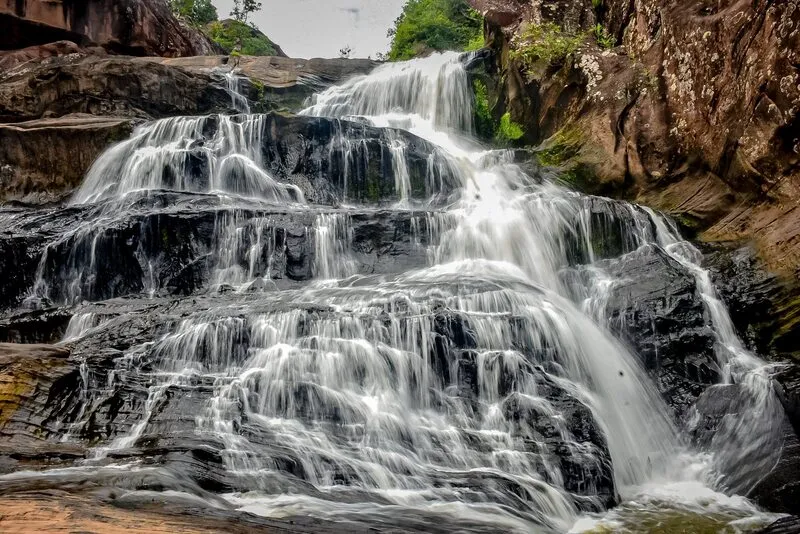
5. Namtok Chat Trakan National Park is an important natural area in northern Phitsanulok, covering parts of Chat Trakan and Nakhon Thai districts. Its major attractions include headwater forest, the 7-level Chat Trakan Waterfall, caves, and archaeological evidence on cliff faces.
Highlights: Seven levels of Chat Trakan Waterfall, headwater forest feeding the Khwae Noi River, nature trails, caves, and highly diverse forest ecosystems.
Chat Trakan Waterfall, locally known as Pak Rong Waterfall, consists of 7 levels. Each level has different water patterns, pools, and surrounding terrain. The lower levels are easier to reach, while the upper levels require longer walks.
The forest within the park forms an important part of the Khwae Noi watershed, giving the area ecological importance beyond tourism. It supports water resources, biodiversity, and communities downstream.
Open Days: Daily Opening Hours: 08:30 – 16:30
Getting There: From Phitsanulok city, travel toward Chat Trakan District and continue along the access route to Namtok Chat Trakan National Park. Private car is the most convenient choice for a day trip.
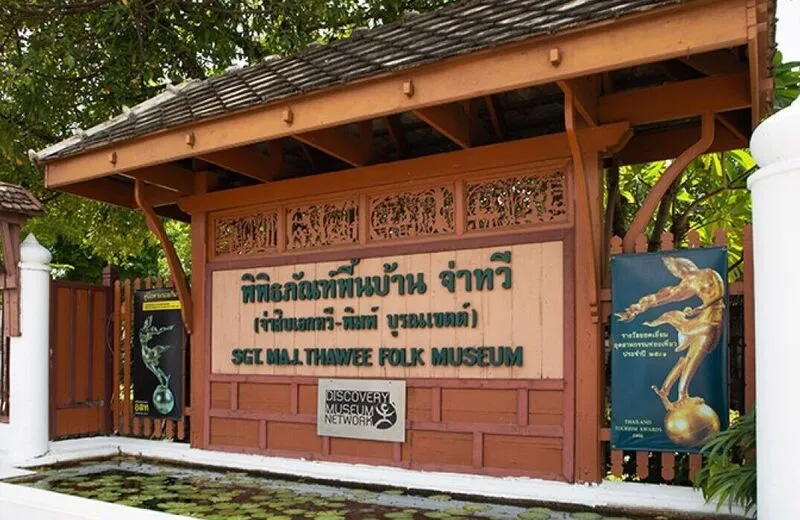
6. Sergeant Thawee Folk Museum is an important local museum in Phitsanulok created through the efforts of Sergeant Major Thawee Buranakhet, who collected tools, household objects, and artifacts representing traditional Thai life so that later generations could learn from them.
Highlights: Agricultural tools, kitchen equipment, craft tools, basketry, traditional clothing, folk toys, fishing equipment, and a large collection of objects from rural Thai life.
The museum’s appeal lies in its preservation of ordinary objects that were once part of everyday life, from rice-farming implements and household utensils to tools used by local craftspeople. These objects reveal dimensions of Thai society that archaeological monuments alone cannot communicate.
The museum is particularly suitable for families, students, and visitors interested in folk culture. It can easily be combined with Wat Yai, Wat Nang Phaya, and other central Phitsanulok attractions in a single day.
Getting There: The museum is located within Mueang Phitsanulok District and can be reached easily by car, taxi, or ride-hailing service from the railway station and city center.
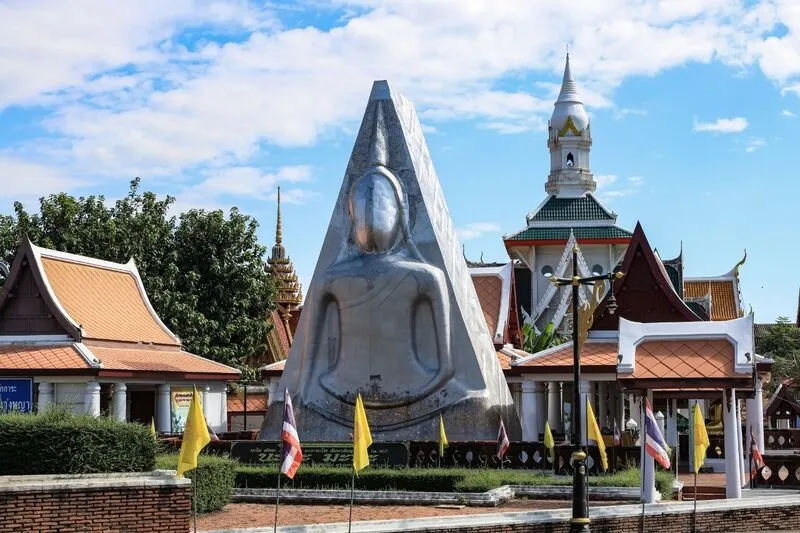
7. Wat Nang Phaya is an ancient temple in central Phitsanulok located close to Wat Phra Si Rattana Mahathat Woramahawihan and Wat Ratchaburana. It is important for religion, history, and Thai amulet culture, particularly because of the celebrated Phra Nang Phaya amulets associated with the temple.
Highlights: Phra Nang Phaya amulets, archaeological remains within the temple, assembly hall, Buddha images, and its location within the historic cluster of important Phitsanulok temples.
Phra Nang Phaya is regarded as one of Thailand’s famous Benjapakee amulet types and is associated with Buddhist art and beliefs concerning charm and auspicious protection. This has made the temple nationally known beyond the physical size of the monastery itself.
Wat Nang Phaya is best visited together with Wat Yai and Wat Ratchaburana because the temples stand within the same historic district and together provide a more continuous understanding of religion, art, and the history of Phitsanulok.
Open Days: Daily Opening Hours: 08:30 – 18:00
Getting There: The temple is in Nai Mueang Subdistrict close to Wat Phra Si Rattana Mahathat Woramahawihan. Visitors can walk between the two temples or take local transport from Phitsanulok Railway Station.
Map (GPS):Open Google Maps – Wat Nang Phaya

8. Kaeng Song Waterfall is an important waterfall in Wang Thong District, located beside Highway 12 on the Phitsanulok–Lom Sak route along the Khek River. The river drops across broad rock formations to create a wide cascade and series of natural rapids.
Highlights: Broad cascades and rapids of the Khek River, rocky scenery, riverside restaurants and cafés, and the atmosphere of the Kaeng Song community.
During the rainy season, the river becomes powerful and fast-moving. In the cool and dry seasons, lower water levels expose more of the rock formations and create a noticeably different landscape.
The surrounding community contains restaurants and riverside resting areas, making Kaeng Song more than simply a waterfall stop. It also provides a clear view of the close relationship between local communities and the Khek River.
Open Days: Daily Opening Hours: 06:00 – 18:00
Getting There: Follow Highway 12 from Phitsanulok city toward Wang Thong. The waterfall is around kilometer 45 and can be reached directly from the main highway.
Map (GPS):Open Google Maps – Kaeng Song Waterfall

9. Wang Nok Aen Waterfall (Sakunothayan Arboretum), also known as Sakunothayan Waterfall, is a waterfall on the Khek River in Wang Thong District. It lies within Sakunothayan Arboretum and is particularly convenient for visitors who want a shaded natural setting without a long forest trek.
Highlights: Single-level waterfall approximately 10 meters wide, botanical garden, nature trails, Kaeng Sai rapids, royal pavilion, and local plant species.
The waterfall is formed where the Khek River flows across a rock ledge and drops in a single level. During periods of high water, a broad curtain of water forms across the rocks, while the surrounding arboretum contains mature trees and walking routes suitable for families.
The site works well as a stop on the Phitsanulok–Khao Kho or Phitsanulok–Phu Hin Rong Kla route and is suitable for travelers who want to enjoy nature without a demanding hike.
Open Days: Daily Opening Hours: 08:30 – 16:30
Getting There: The waterfall is beside Highway 12 in Wang Thong District. It is easily reached by private car from Phitsanulok city and can be combined with Kaeng Song and Kaeng Sopha waterfalls.
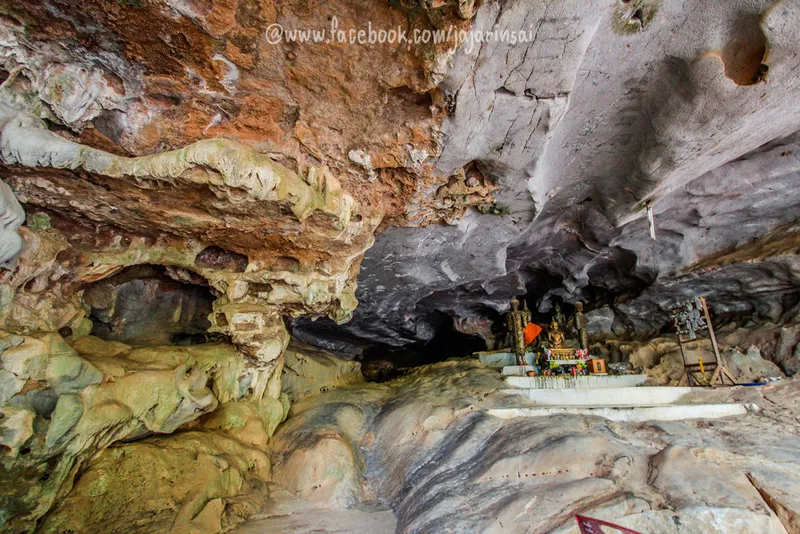
10. Tham Nang Sip Song is located within Wat Ban Mung in Noen Maprang District, surrounded by the distinctive limestone mountains of Ban Mung. The site combines nature, local culture, belief, and folk legend in one destination.
Highlights: Limestone cave, stalactites and stalagmites, rock basins associated with the Nang Sip Song legend, Ban Mung limestone mountains, Wat Ban Mung, and nearby evening bat-viewing routes.
The cave’s name is connected with the folk legend of the Twelve Sisters. Local interpretations associate several rock basins inside the cave, some resembling cradles, with elements of the traditional story, giving the cave cultural meaning beyond its natural geology.
Wat Ban Mung serves both as a community religious center and as a gateway to the surrounding limestone landscape. Visitors can pay respects at the temple, explore the cave, then continue into the village, rice fields, and nearby bat-viewing areas in the evening.
The cave can be humid and slippery. Wear suitable footwear, carry a flashlight when necessary, and never touch or damage stalactites and stalagmites.
Open Days: Daily Opening Hours: 08:00 – 18:00
Getting There: From central Phitsanulok, travel toward Noen Maprang District and continue to Ban Mung Subdistrict and Wat Ban Mung. Private car is recommended because it allows easy access to nearby viewpoints and community attractions.
Map (GPS):Open Google Maps – Tham Nang Sip Song
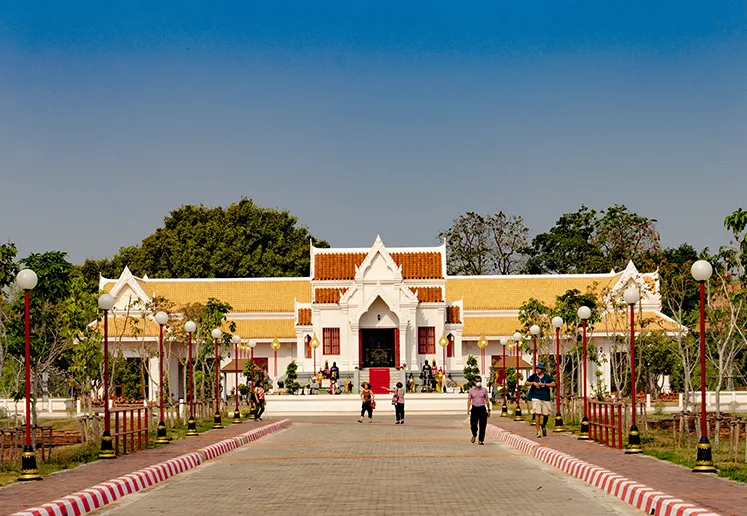
11. King Naresuan the Great Shrine is an important historical and cultural site in Phitsanulok, located within the Chan Royal Palace area on Wang Chan Road in Nai Mueang Subdistrict. The site is deeply connected with the historical memory of King Naresuan the Great and the former royal compound of Phitsanulok.
Highlights: Statue of King Naresuan the Great, traditional Thai three-gabled shrine building, Chan Royal Palace area, and a historic setting associated with the life of King Naresuan.
The royal statue is approximately life-size and depicts the king in a pose associated with the declaration of independence at Mueang Kraeng. The shrine is therefore a major place where local people and visitors come to pay respect and commemorate one of the most important monarchs in Thai history.
The importance of the site extends beyond the shrine itself to the broader Chan Royal Palace area, which formed an important historic royal compound in Phitsanulok. Walking through the surrounding area helps visitors understand the relationship between the royal court, the city, and Phitsanulok’s political history.
The shrine lies close to Wat Phra Si Rattana Mahathat Woramahawihan, Wat Nang Phaya, and the old city area, making it easy to include within a one-day historical itinerary.
Open Days: Tuesday – Sunday Opening Hours: 09:00 – 16:00
Getting There: The shrine is only a few minutes from Wat Phra Si Rattana Mahathat Woramahawihan. Visitors can travel by private car, taxi, or local transport to Wang Chan Road and the Chan Royal Palace area.
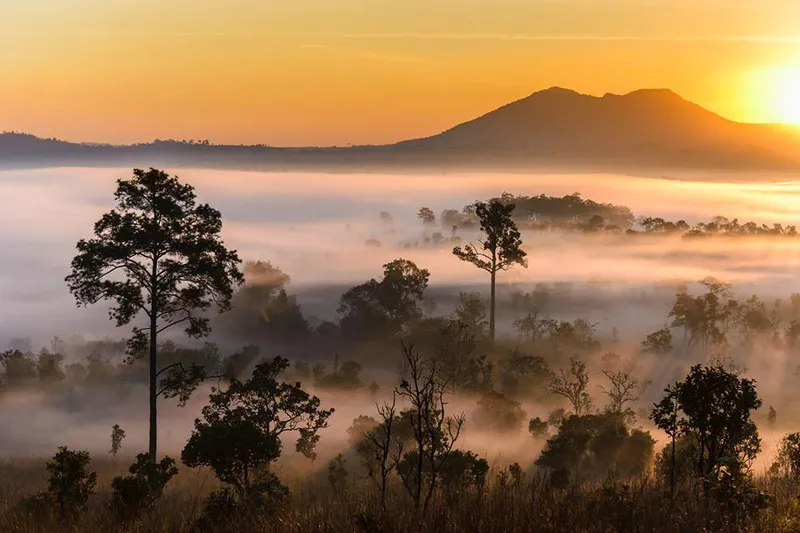
12. Thung Salaeng Luang National Park protects one of the largest forest landscapes in Thailand’s Lower North, extending across Phitsanulok and Phetchabun provinces. It is famous for savanna-like grasslands, pine forests, and highly diverse natural ecosystems.
Highlights: Broad grasslands, two-needle and three-needle pine forest, Thung Salaeng Luang, Nong Mae Na, Thung Nang Phaya, Thung Non Son, camping, birdwatching, and nature trails.
The park is often described as the “Savanna of Thailand” because of its expansive grasslands surrounded by forest and mountains. From the late rainy season into the cool season, the grasslands become especially green, temperatures are comfortable, and early-morning mist is common.
The park contains dry dipterocarp forest, mixed deciduous forest, dry evergreen forest, pine forest, and natural wetlands. It is therefore valuable not only for scenic photography but also for studying plant communities, birds, and wildlife.
Visitors planning to enter more remote areas such as Thung Nang Phaya or Thung Non Son should check current road conditions and park regulations. Certain routes may require suitable vehicles or may be seasonally restricted.
Open Days: Daily Opening Hours: 08:30 – 16:30
Getting There: From Phitsanulok city, follow Highway 12 toward Wang Thong and Nakhon Thai, then continue to the relevant park access area. Private transport and advance route planning are recommended.
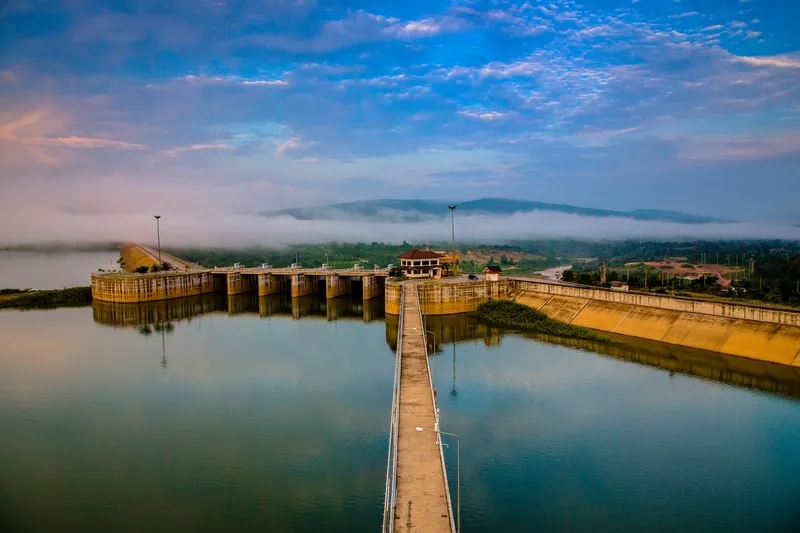
13. Khwae Noi Bamrung Daen Dam is a major irrigation project in Khan Chong Subdistrict, Wat Bot District. The dam plays an important role in water storage, agriculture, flood mitigation, and drought management, while its large reservoir and mountain backdrop also make it an attractive scenic destination.
Highlights: Large reservoir, dam crest, viewpoints, surrounding mountains, and opportunities to learn about irrigation and water-resource management.
The project was developed under a royal initiative to address water-management problems within the Khwae Noi basin, including both seasonal flooding and water shortages. It therefore directly supports agricultural areas and numerous communities across Phitsanulok.
The dam system includes several major structures working together. From designated viewpoints, visitors can see the dam crest, reservoir, and surrounding mountain landscape, particularly attractive in the morning and late afternoon.
Because the dam remains an active irrigation facility, visitors should check access conditions and contact the project before entering controlled areas.
Open Days: Contact the Khwae Noi Bamrung Daen Irrigation and Maintenance Project before visiting controlled areas
Getting There: From central Phitsanulok, travel toward Wat Bot District, then continue to Khan Chong Subdistrict and the Khwae Noi Bamrung Daen Dam project area. Private car or rental car is recommended.
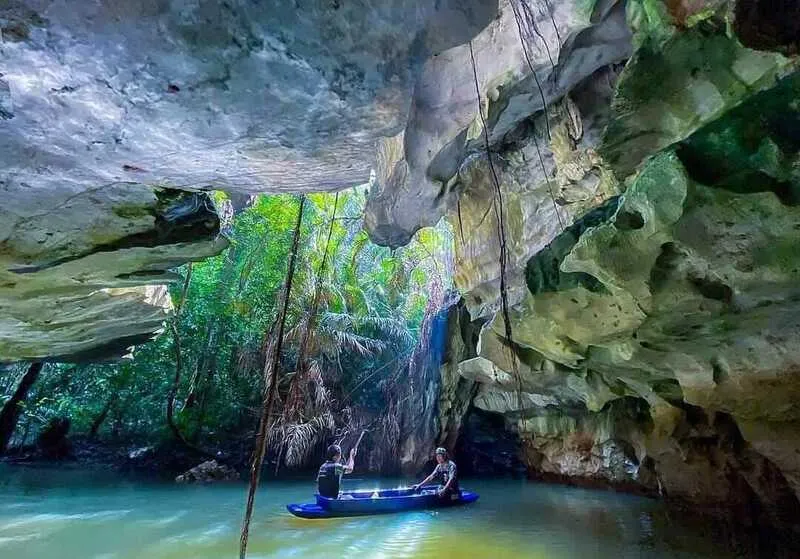
14. Tham Pha Tha Phon Non-Hunting Area is an important conservation and tourism area in Noen Maprang District, distinguished by limestone mountains, caves, stalactites and stalagmites, fossils, and archaeological evidence within a landscape connected to the Ban Mung community.
Highlights: Limestone mountains, Tham Pha Tha Phon, caves, stalactites and stalagmites, fossils, prehistoric rock paintings, and nature trails.
The limestone landscape is important geologically because rock layers and fossil evidence provide clues to environments that existed millions of years ago. Visitors can therefore learn about geological development while exploring the natural scenery.
Some caves and rock shelters also contain evidence of past human use, giving the area value in terms of nature conservation, archaeology, and local history.
Visitors should wear footwear suitable for natural trails, avoid touching cave formations, and follow staff instructions, particularly when entering caves or conservation-sensitive areas.
Open Days: Daily Opening Hours: Access available until approximately 16:30
Getting There: From Phitsanulok city, travel approximately 85 kilometers toward Noen Maprang District and Ban Mung Subdistrict. Private car is recommended, and the trip can be combined with Tham Nang Sip Song and the Ban Mung area.
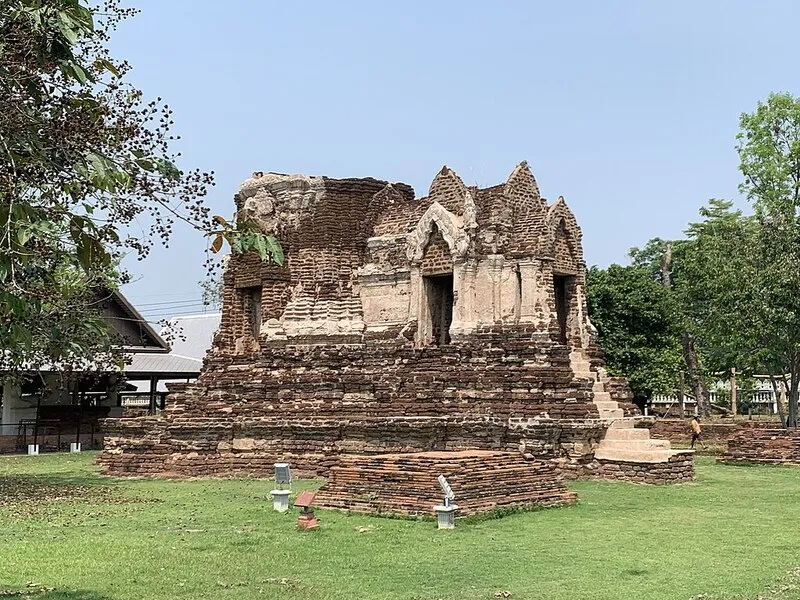
15. Wat Chulamani is an ancient temple beside the Nan River in Tha Thong Subdistrict, Mueang Phitsanulok District. It is particularly important to Ayutthaya-period history because King Borommatrailokkanat was ordained at this temple.
Highlights: Ancient prang, mandapa containing a replica Buddha footprint, important inscriptions, archaeological remains, and historical associations with King Borommatrailokkanat.
In 1464, King Borommatrailokkanat entered the monkhood at Wat Chulamani for 8 months and 15 days together with a large number of royal attendants. The event gave the temple exceptional significance as a place connecting the royal court with Buddhism during a period when Phitsanulok held major political importance.
The temple contains several historic structures worth examining carefully, particularly the prang and mandapa. Its setting within an old riverside community also demonstrates the continuity between religious space and settlement along the Nan River.
Wat Chulamani lies only a short distance from central Phitsanulok and can be included with Wat Yai, Wat Nang Phaya, and the King Naresuan the Great Shrine in a half-day or full-day historical itinerary.
Open Days: Daily Opening Hours: 08:00 – 17:00
Getting There: The temple is in Tha Thong Subdistrict approximately 5 kilometers south of central Phitsanulok and can be reached by car or local transport along Borom Trailokanat Road.
Map (GPS):Open Google Maps – Wat Chulamani
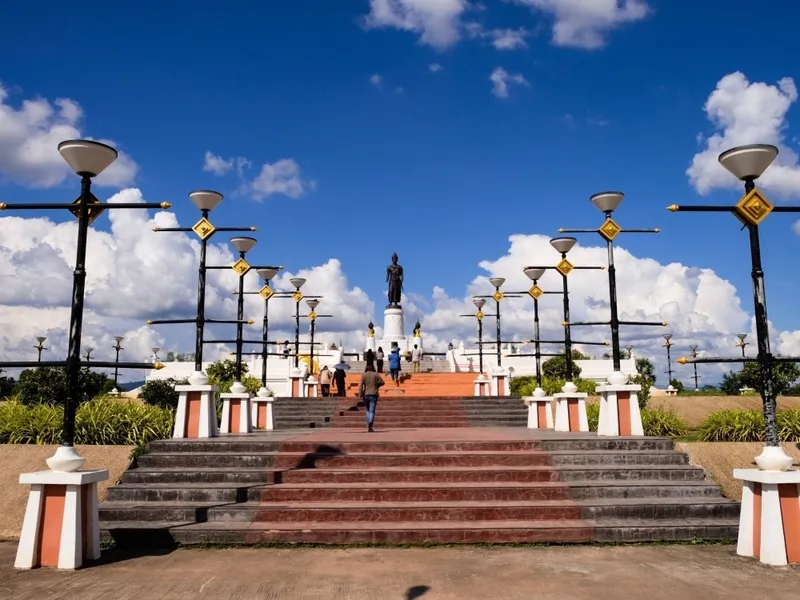
16. Monument of Pho Khun Bang Klang stands within Wat Klang Si Phuttharam in Nakhon Thai District. The site connects the history of Nakhon Thai, historically associated with Mueang Bang Yang, with Pho Khun Bang Klang Thao, who later became King Si Inthrathit, the first king of the Sukhothai Kingdom.
Highlights: Monument of Pho Khun Bang Klang Thao, Wat Klang Si Phuttharam, ancient white champaca tree, and historical stories associated with Mueang Bang Yang and Nakhon Thai.
The site is important to local people as a place commemorating a historical figure closely connected with the emergence of the Sukhothai Kingdom. A visit therefore adds an important pre-Sukhothai and early-state dimension to the history of Phitsanulok.
The temple also preserves an old white champaca tree, while the community maintains the Pak Thong Chai tradition on Khao Chang Luang during the Loy Krathong period, demonstrating the relationship between history, faith, and local tradition in Nakhon Thai.
The monument can be combined with Phu Hin Rong Kla National Park and other attractions in Nakhon Thai for a route combining community history and mountain landscapes.
Open Days: Daily Opening Hours: According to temple access hours
Getting There: The monument is at Wat Klang Si Phuttharam in Nakhon Thai town. From Phitsanulok city, follow Highway 12 and continue toward Nakhon Thai. Private car is the most convenient option.
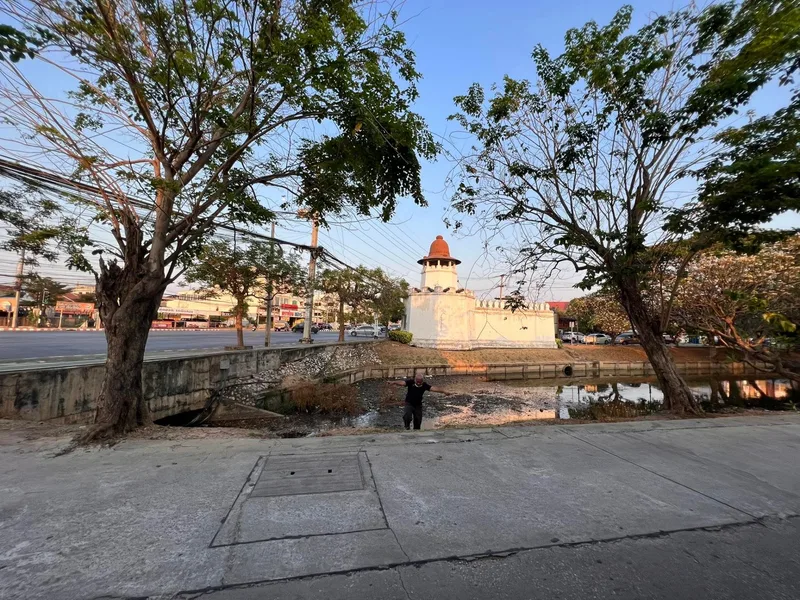
17. Ancient City Wall preserves traces of the historic defensive and urban structure of Phitsanulok. The remains reflect the city’s past role as an administrative center, frontier city, and strategic link between central Thailand and the North.
Highlights: Traces of ancient city walls, moat lines, historic urban planning, and archaeological remains scattered across the central city area.
Phitsanulok’s defenses originally developed from earthen walls and moats, with some sections later strengthened using brick. These structures reflect the defensive needs of a city that once held considerable military and political importance.
The complete city wall no longer survives, but traces remain in several parts of central Phitsanulok, including areas near temples and road alignments corresponding with the former moat. The site is particularly relevant to visitors interested in historical urban planning.
Exploring these remains is best done with an old-city map and can be combined with Chan Royal Palace, the King Naresuan the Great Shrine, and important temples within the city.
Open Days: Daily Opening Hours: Accessible according to public-space and archaeological-site access
Getting There: Traces of the wall and moat are distributed around central Phitsanulok. Car, motorcycle, or bicycle makes it easier to connect the individual locations.
Map (GPS):Open Google Maps – Ancient City Wall

18. Poi Waterfall is located in Kaeng Sopha Subdistrict, Wang Thong District, within the Khao Krayang forest area. It is a waterfall on the Khek River distinguished by a broad cascade spreading across numerous rocks rather than a single high vertical drop.
Highlights: Waterfall almost 200 meters wide, extensive rock formations, Khek River scenery, shaded forest surroundings, and riverside resting areas.
The waterfall is approximately 10 meters high, but its most impressive feature is its width. As the Khek River passes through the area, water divides into several channels across natural rocks and rapids, producing a landscape that changes significantly with seasonal water levels.
High-water periods create a broad and powerful flow, while lower water reveals more details of the rapids and rocks. Swimming should be avoided whenever currents are strong.
Poi Waterfall can be included in the same route as Kaeng Song, Kaeng Sopha, and other Khek River stops, creating a convenient one-day nature itinerary.
Open Days: Check with Khao Krayang forest management before traveling Opening Hours: Daytime visits are recommended
Getting There: From Phitsanulok city, follow Highway 12 through Wang Thong District toward Kaeng Sopha Subdistrict, then continue into the Khao Krayang forest area and Poi Waterfall.
Map (GPS):Open Google Maps – Poi Waterfall

19. Khwae Noi National Park protects a large headwater forest area in Phitsanulok spanning parts of Wat Bot, Chat Trakan, Nakhon Thai, and Wang Thong districts. The park is directly connected with the Khwae Noi River system and Khwae Noi Bamrung Daen Dam.
Highlights: Headwater forest, Khwae Noi River, waterfalls, rapids, viewpoints, nature trails, camping areas, and several forest ecosystems.
The park covers approximately 223 square kilometers and protects an important part of the Khwae Noi watershed, which supports agriculture, communities, and freshwater ecosystems across the province.
Forest types include mixed deciduous, dry dipterocarp, dry evergreen, and montane forest, making the park suitable for nature study, birdwatching, trekking, and camping. Some areas also connect with water-based recreation and reservoir viewpoints.
Visitors planning nature trails should contact park staff in advance, particularly during the rainy season or when entering areas far from the main visitor facilities.
Open Days: Daily Opening Hours: Contact the park and travel during daylight hours
Getting There: The principal park area is in Khan Chong Subdistrict, Wat Bot District. Private car from Phitsanulok city is recommended, and the trip can be combined with Khwae Noi Bamrung Daen Dam.

20. Chom Nan Chaloem Phrakiat Park is a public riverside park in central Phitsanulok, ideal for walking, exercise, relaxation, and enjoying the atmosphere of the Nan River during the morning or evening.
Highlights: Nan River promenade, green space, resting areas, evening atmosphere, and a location close to major temples and Phitsanulok’s historic district.
The Nan River has shaped Phitsanulok for centuries as a water source, transportation route, commercial corridor, and focus of settlement. Chom Nan Park allows visitors to experience the relationship between the modern city and the river in a contemporary public space.
Evening is generally the most pleasant time to visit because temperatures become cooler and the riverside light is attractive. After spending the day visiting temples or museums, travelers can relax here before continuing to restaurants along the Nan River.
The park stands close to Wat Ratchaburana, Wat Nang Phaya, and Wat Phra Si Rattana Mahathat Woramahawihan, making it a useful link between historical sightseeing and riverside relaxation.
Open Days: Daily Opening Hours: 06:00 – 20:00
Getting There: The park is beside the Nan River in central Phitsanulok and can be reached on foot from the Wat Yai and Wat Nang Phaya area or by car, taxi, motorcycle, or local transport.
| Phitsanulok City Zone | 1. Wat Phra Si Rattana Mahathat Woramahawihan 2. Sergeant Thawee Folk Museum 3. Wat Nang Phaya 4. King Naresuan the Great Shrine 5. Wat Chulamani 6. Ancient City Wall 7. Chom Nan Chaloem Phrakiat Park |
| Wang Thong–Khek River Zone | 1. Kaeng Sopha Waterfall 2. Kaeng Song Waterfall 3. Wang Nok Aen Waterfall (Sakunothayan Arboretum) 4. Poi Waterfall |
| Nakhon Thai–Highland Zone | 1. Phu Hin Rong Kla National Park 2. Monument of Pho Khun Bang Klang 3. Thung Salaeng Luang National Park |
| Chat Trakan–Headwater Forest Zone | 1. Phu Soi Dao National Park 2. Namtok Chat Trakan National Park |
| Noen Maprang–Ban Mung Zone | 1. Tham Nang Sip Song 2. Tham Pha Tha Phon Non-Hunting Area |
| Wat Bot–Khwae Noi Zone | 1. Khwae Noi Bamrung Daen Dam 2. Khwae Noi National Park |
| Top Highlights for First-Time Visitors | 1. Wat Phra Si Rattana Mahathat Woramahawihan – Pay respects to Phra Buddha Chinnarat 2. Phu Hin Rong Kla National Park – Nature, history, and mountain landscapes 3. Phu Soi Dao National Park – Pine plateau and famous trekking route 4. Kaeng Sopha Waterfall – Major waterfall on the Khek River 5. King Naresuan the Great Shrine – Historic Chan Royal Palace area 6. Wat Nang Phaya – Important old-city temple and origin of the famous Nang Phaya amulet 7. Tham Nang Sip Song – Cave and limestone landscape of Ban Mung 8. Thung Salaeng Luang National Park – Extensive grasslands and pine forest |
| Best for History | 1. Wat Phra Si Rattana Mahathat Woramahawihan 2. King Naresuan the Great Shrine 3. Wat Nang Phaya 4. Wat Chulamani 5. Ancient City Wall 6. Monument of Pho Khun Bang Klang 7. Sergeant Thawee Folk Museum |
| Best for Nature | 1. Phu Hin Rong Kla National Park 2. Phu Soi Dao National Park 3. Thung Salaeng Luang National Park 4. Namtok Chat Trakan National Park 5. Khwae Noi National Park 6. Tham Pha Tha Phon Non-Hunting Area 7. Kaeng Sopha Waterfall 8. Kaeng Song Waterfall 9. Wang Nok Aen Waterfall 10. Poi Waterfall |
| Adventure / Outdoor | 1. Trek to the Phu Soi Dao pine plateau 2. Walk nature trails at Phu Hin Rong Kla 3. Trek in Thung Salaeng Luang National Park 4. Explore Tham Pha Tha Phon 5. Explore Tham Nang Sip Song 6. Walk the Chat Trakan Waterfall route 7. Explore headwater forest in Khwae Noi National Park |
| Best for Families | 1. Wat Phra Si Rattana Mahathat Woramahawihan 2. Sergeant Thawee Folk Museum 3. Wat Nang Phaya 4. King Naresuan the Great Shrine 5. Chom Nan Chaloem Phrakiat Park 6. Wang Nok Aen Waterfall 7. Khwae Noi Bamrung Daen Dam |
| Best for Photography | 1. Phra Buddha Chinnarat at Wat Phra Si Rattana Mahathat Woramahawihan 2. Rock formations and pine forest at Phu Hin Rong Kla 3. Pine plateau at Phu Soi Dao 4. Kaeng Sopha Waterfall 5. Grasslands of Thung Salaeng Luang National Park 6. Ban Mung limestone mountains 7. Khwae Noi Bamrung Daen Dam 8. Chom Nan Chaloem Phrakiat Park in the evening |
| Foods to Try | 1. Hanging-Leg Noodles 2. Phitsanulok-style Sukhothai noodles 3. Lower Northern Thai cuisine 4. River fish and Nan River dining 5. Local food in Nakhon Thai and Chat Trakan communities 6. Seasonal agricultural produce |
| Recommended Areas to Stay | 1. Phitsanulok City: Best for temples, museums, restaurants, and rail travelers 2. Wang Thong: Best for the Khek River route and waterfalls 3. Nakhon Thai: Best for Phu Hin Rong Kla and Mueang Bang Yang history 4. Chat Trakan: Best for Chat Trakan Waterfall and Phu Soi Dao 5. Noen Maprang: Best for Ban Mung, caves, and limestone mountains |
| Getting Around Phitsanulok | Central Phitsanulok can be explored using local vehicles, songthaews, taxis, ride-hailing services, or private transport. For Phu Hin Rong Kla, Phu Soi Dao, Chat Trakan, Noen Maprang, Khwae Noi Dam, and national parks, a private or rental car is generally more convenient because attractions are widely dispersed and public transport access is limited. |
| Best Time to Visit | November to February is suitable for city sightseeing, temples, mountains, and outdoor activities. Late rainy season through early cool season is particularly attractive for waterfalls, grasslands, and green forests. Phu Soi Dao and some trekking routes have seasonal opening and closing periods, so current announcements should always be checked before traveling. |
| Safety Advice | Phu Soi Dao, Phu Hin Rong Kla, Thung Salaeng Luang, waterfall routes, and caves require footwear suitable for natural terrain. Carry drinking water and seasonal rain or cold-weather protection, remain on designated routes, and avoid swimming when currents are strong. |
1-Day Phitsanulok Itinerary – Old City and Phra Buddha Chinnarat
If you have only 1 day, focus on central Phitsanulok. Begin in the morning at Wat Phra Si Rattana Mahathat Woramahawihan to pay respects to Phra Buddha Chinnarat, then walk to Wat Nang Phaya. Continue to the King Naresuan the Great Shrine and Chan Royal Palace area. In the afternoon, visit Sergeant Thawee Folk Museum or Wat Chulamani before ending the day at Chom Nan Chaloem Phrakiat Park and dining along the Nan River.
2 Days 1 Night in Phitsanulok
Day 1: Wat Phra Si Rattana Mahathat Woramahawihan – Wat Nang Phaya – King Naresuan the Great Shrine – Sergeant Thawee Folk Museum – Chom Nan Chaloem Phrakiat Park
Day 2: Wang Nok Aen Waterfall – Kaeng Song Waterfall – Poi Waterfall – Kaeng Sopha Waterfall using Highway 12 as the principal route.
This 2-day itinerary is suitable for travelers who want both urban history and Khek River scenery without driving as far as Phu Soi Dao or Noen Maprang.
3 Days 2 Nights in Phitsanulok
Day 1: Central Phitsanulok – Phra Buddha Chinnarat – Wat Nang Phaya – Chan Royal Palace – Sergeant Thawee Folk Museum
Day 2: Wang Thong Route – Wang Nok Aen Waterfall – Kaeng Song Waterfall – Kaeng Sopha Waterfall – Overnight in Nakhon Thai or near Phu Hin Rong Kla
Day 3: Phu Hin Rong Kla National Park – Lan Hin Pum – Lan Hin Taek – Pha Chu Thong – Historic sites inside the park – Monument of Pho Khun Bang Klang before returning
4 Days 3 Nights in Phitsanulok
Day 1: Central Phitsanulok and historic attractions
Day 2: Wang Thong–Khek River–Waterfalls
Day 3: Phu Hin Rong Kla and Nakhon Thai
Day 4: Choose Noen Maprang–Ban Mung–Tham Nang Sip Song–Tham Pha Tha Phon, or Khwae Noi Bamrung Daen Dam–Khwae Noi National Park according to your interests.
5 Days 4 Nights in Phitsanulok
Day 1: Central Phitsanulok
Day 2: Wang Thong–Kaeng Song Waterfall–Poi Waterfall–Kaeng Sopha Waterfall
Day 3: Nakhon Thai–Phu Hin Rong Kla
Day 4: Namtok Chat Trakan National Park and Chat Trakan District
Day 5: Choose Phu Soi Dao for hikers with enough time and preparation, or Noen Maprang–Ban Mung for travelers who prefer caves and limestone scenery without a trek as demanding as Phu Soi Dao.
Frequently Asked Questions (FAQ)
Q: Where should first-time visitors start in Phitsanulok?
A: Begin at Wat Phra Si Rattana Mahathat Woramahawihan to pay respects to Phra Buddha Chinnarat, then visit Wat Nang Phaya, the King Naresuan the Great Shrine, and Sergeant Thawee Folk Museum to understand the history and culture of Phitsanulok.
Q: Can Phitsanulok be visited in one day?
A: Yes. With only 1 day, focus on the city because several major attractions are close together. Phu Hin Rong Kla, Phu Soi Dao, Chat Trakan, and Noen Maprang should be visited on separate days.
Q: How should I plan 2 days and 1 night in Phitsanulok?
A: Spend the first day in the city visiting Wat Phra Si Rattana Mahathat Woramahawihan, Wat Nang Phaya, and the Chan Royal Palace area. On the second day, follow the Wang Thong route to Wang Nok Aen, Kaeng Song, and Kaeng Sopha waterfalls.
Q: Which temple houses Phra Buddha Chinnarat?
A: Phra Buddha Chinnarat is enshrined at Wat Phra Si Rattana Mahathat Woramahawihan, commonly known as Wat Yai, in central Phitsanulok.
Q: Which Phitsanulok waterfalls are best for first-time visitors?
A: Kaeng Song Waterfall, Wang Nok Aen Waterfall, and Kaeng Sopha Waterfall are good choices because they are located along major travel routes and can be visited on the same journey.
Q: How much time should I allow for Phu Hin Rong Kla?
A: Allow at least half a day. If you plan to walk several routes such as Lan Hin Pum, Lan Hin Taek, Pha Chu Thong, and historical sites, a full day is more appropriate.
Q: Is Phu Soi Dao suitable for beginner hikers?
A: Beginners can complete the trek if they are physically fit and prepare in advance, but several sections are steep and the walk takes several hours. Appropriate footwear, drinking water, and suitable equipment are essential.
Q: What is there to see around Ban Mung and Noen Maprang?
A: Highlights include limestone mountains, Tham Nang Sip Song, Tham Pha Tha Phon Non-Hunting Area, rice fields, and the Ban Mung community landscape. The area is suitable for nature, photography, and geology-focused travel.
Q: Are there attractions suitable for children and older travelers?
A: Yes. Suitable choices include Wat Phra Si Rattana Mahathat Woramahawihan, Sergeant Thawee Folk Museum, Wat Nang Phaya, King Naresuan the Great Shrine, Chom Nan Chaloem Phrakiat Park, Wang Nok Aen Waterfall, and Khwae Noi Bamrung Daen Dam.
Q: What is the best time of year to visit Phitsanulok?
A: November to February is ideal for city sightseeing, mountains, and outdoor activities. For waterfalls and lush forests, consider the late rainy season through early cool season, while checking weather and park announcements before traveling.
Q: Can I travel around Phitsanulok without a private car?
A: Central Phitsanulok is relatively easy to explore using local transport, songthaews, taxis, or ride-hailing services. For Phu Hin Rong Kla, Phu Soi Dao, Noen Maprang, or Khwae Noi Dam, a rental or private car is considerably more convenient.
Q: What food should I try in Phitsanulok?
A: Hanging-leg noodles are especially famous. Travelers should also try Lower Northern Thai dishes, river fish, and restaurants along the Nan River.
Q: Can I visit Phu Hin Rong Kla and Kaeng Sopha Waterfall on the same day?
A: Yes if you leave the city early and keep the schedule efficient. However, if you want to explore several walking routes inside Phu Hin Rong Kla, staying overnight around Nakhon Thai or the national park is more comfortable.
Q: Which places in Phitsanulok are best for photography?
A: Phu Hin Rong Kla, Phu Soi Dao, Thung Salaeng Luang, Ban Mung, Kaeng Sopha Waterfall, Khwae Noi Bamrung Daen Dam, and Chom Nan Chaloem Phrakiat Park all offer very different landscapes and strong photographic opportunities.
Q: Should I stay in Phitsanulok city or outside the city?
A: Stay in the city if your priorities are temples, food, and convenient transport. If you plan to visit Phu Hin Rong Kla, Phu Soi Dao, or Ban Mung, staying closer to those areas reduces driving time and allows more time for sightseeing.
 Category: ●Travel Articles, Recipes
 Group: ●Travel Review, Food Review
Last Update : 3 WeekAgo
 Last Update : 3 WeekAgo
Recommend

 Art, Culture and Heritage
 Historical Sites and Monuments(1)
 Landmarks and Memorials(2)
 Art, Craft Centres, Tradition(3)
 Museums(3)
 Educational Places
 Educational Gardens, Farm(1)
 Places of Worship
 Temple(29)
 Mosque(1)
 Other Sacred Sites(3)
 Research and Development
 Royal Project(1)
 Suburban Living
 Village, Community(1)
 Nature and Wildlife
 National Parks and Marine Reserves(7)
 Mountain (Doi)(4)
 Dam, Reservoir, Lake(5)
 Waterfalls(19)
 Caves(3)
 River, Canal(9)
 Other natural attractions(1)
 Entertainment and Agricultural
 Farms, Parks and Ecotourism(2)
 Outdoor and Adventure Activities(1)
Travel Review, Food Review(1)


