
lovethailand home >North Travel Attractions >Phitsanulok Travel Attractions >Nakhon Thai >Nakhon Thai > Monument of Pho Khun Bang Klang
TL;DR: Monument of Pho Khun Bang Klang is located at Wat Klang / Wat Klang Si Phuttharam, Nakhon Thai District, Phitsanulok Province, open Daily, hours Accessible according to the temple’s visiting hours.
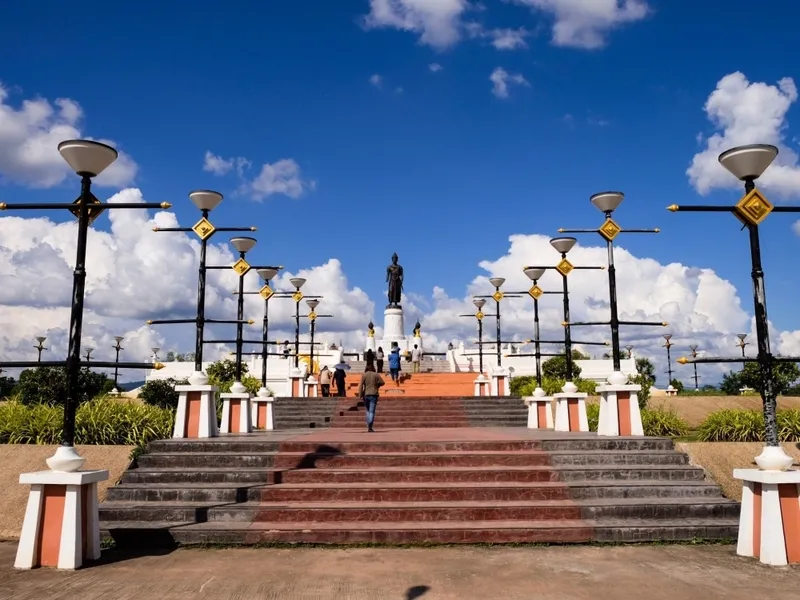
Monument of Pho Khun Bang Klang
Open Days: Daily
Opening Hours: Accessible according to the temple’s visiting hours
The Monument of Pho Khun Bang Klang Thao at Wat Klang in Nakhon Thai District, Phitsanulok Province, is an important historical and cultural site associated with the memory of Mueang Bang Yang, the old name linked to present-day Nakhon Thai. The monument is located in Wat Klang, also known as Wat Klang Si Phuttharam, in the center of Nakhon Thai District. Local residents and travelers visit this site to pay respect to Pho Khun Bang Klang Thao, also known as Pho Khun Si Inthrathit, the first king of the Sukhothai Kingdom and one of the most important figures in the early political and cultural formation of Thailand.
For travelers who want a clear overview, the monument at Wat Klang is a meaningful place to learn about the history of Nakhon Thai, pay respect to a key figure in early Thai history, see the ancient white champaka tree believed to be over 700 years old, and connect the visit with the Pak Thong Chai tradition on Khao Chang Luang during the Loy Krathong period. This is not only a photo stop or a small local shrine. It is a place where history, community faith, cultural memory, and nature are preserved together.
Nakhon Thai is an old town with deep historical significance. Local belief connects this area with Mueang Bang Yang, a town once ruled by Pho Khun Bang Klang Thao before the establishment of the Sukhothai Kingdom. Pho Khun Bang Klang Thao later became known as Pho Khun Si Inthrathit after joining forces with Pho Khun Pha Mueang of Mueang Rat to defeat Khmer authority and establish Sukhothai. Visiting this monument is therefore like returning to one of the symbolic starting points of early Thai state formation.
The monument of Pho Khun Bang Klang Thao inside Wat Klang carries strong local meaning. It helps the people of Nakhon Thai see continuity between the past and the present. Although Nakhon Thai is now a district of Phitsanulok Province, in historical memory it remains connected with the old town of Bang Yang and the political movements before the rise of Sukhothai. For this reason, the monument is not simply a statue or memorial structure. It is a symbol of local pride and identity.
Pho Khun Bang Klang Thao is remembered as a brave leader who helped shape early Thai history. His story is connected with struggle, leadership, the gathering of people, and the liberation of Sukhothai from Khmer control. By preserving the monument inside Wat Klang, the local community expresses gratitude toward a historical ancestor and passes the memory of his role to later generations. The site teaches that a city and a kingdom are not created in a single moment, but through sacrifice, courage, and collective effort.
Wat Klang, or Wat Klang Si Phuttharam, has long been an important religious site for the Nakhon Thai community. Located in the central area of the town, it serves as a place for Buddhist practice, local activities, and community memory. The presence of the monument within the temple gives the site both religious and historical meaning. Visitors can pay respect at the temple, enjoy the calm atmosphere, and learn about the story of Mueang Bang Yang within the same area.
Behind the monument stands a large white champaka tree that has become one of the most remarkable features of the site. The tree is said to be over 700 years old, with a tall, strong trunk and white flowers that continue to bloom. It is now strongly associated with the monument and has become a natural symbol of continuity, endurance, peace, and preservation. The tree is not merely an old tree; it is part of the cultural landscape of Wat Klang.
The ancient white champaka tree adds a natural dimension to the visit. Travelers can feel the shade of an old tree, the calmness of the temple, and the quiet atmosphere of a historical community site. Seeing such an old tree standing beside a monument to a major historical figure creates a strong impression that nature and history are telling the same story together: the story of Nakhon Thai as a place that continues to preserve its roots.
Culturally, the monument is closely connected with the Pak Thong Chai tradition of Nakhon Thai District. This tradition is held during the Loy Krathong period, when local people prepare ceremonial flags and carry them to be planted on the summit of Khao Chang Luang. The act is performed for auspiciousness and in memory of Pho Khun Bang Klang Thao’s victory according to local legend. The tradition reflects the community’s belief in sacred mountains, local guardians, unity, and the deep relationship between people and the surrounding landscape.
Local legend says that after Pho Khun Bang Klang Thao achieved victory, he tied a cloth around a bamboo pole and placed it on Khao Chang Luang as a sign to the villagers that the battle had been won. This memory later developed into the Pak Thong Chai tradition, which continues annually. The tradition is more than a ceremonial event. It is a way for the community to perform and preserve historical memory together.
As a travel destination, the monument is suitable for visitors who want meaningful cultural experiences. A visit here is not only about seeing a statue; it is about understanding Nakhon Thai’s historical identity. Travelers can begin by paying respect to the monument, then see the ancient white champaka tree, walk through Wat Klang, and continue to nearby historical sites such as the Nakhon Thai Town Museum, the Royal Monument of Pho Khun Si Inthrathit at Noen Nong Pu, or natural routes associated with the Pak Thong Chai tradition.
The atmosphere around Wat Klang is simple, quiet, and local. Visitors can observe everyday life in Nakhon Thai, see how the temple remains a spiritual center, and experience a historical place that is not separated from daily community life. The beauty of this site lies in the way past and present overlap naturally.
Visitors should pay respect to the monument politely. Since the site is located inside a temple, modest dress and respectful behavior are important. Travelers should avoid loud noise, keep the area clean, and take photographs with care. The ancient white champaka tree should not be climbed, damaged, or disturbed, and visitors should not interfere with temple activities or local ceremonies.
For those interested in Sukhothai history, visiting this monument adds an important layer to the story of Pho Khun Si Inthrathit. Many people know him as the first king of Sukhothai, but Nakhon Thai helps visitors understand the earlier story of Mueang Bang Yang, the gathering of people, and the political landscape that existed before the rise of Sukhothai. The site therefore serves as a gateway to understanding Sukhothai history beyond standard textbook narratives.
Geographically, Nakhon Thai is surrounded by mountains and natural routes. It is therefore understandable that local history and belief are deeply connected with the landscape. Khao Chang Luang, associated with the Pak Thong Chai tradition, is an example of a mountain that became sacred in the memory of the people. The monument at Wat Klang and the tradition on the mountain are part of the same cultural landscape.
Getting There is convenient because Wat Klang is located in Nakhon Thai town. Travelers from Phitsanulok city can drive toward Nakhon Thai District. Once in town, Wat Klang is located within the community area. Private car is the most convenient option because visitors can continue to other nearby attractions. Those without a private car should plan local transport in advance.
The best time to visit is in the morning or late afternoon, when the weather is more comfortable and the light is suitable for photography around the monument and the old tree. Travelers who want to experience the Pak Thong Chai tradition should plan their visit around Loy Krathong, when the district becomes more active with cultural events. Those who prefer a quieter visit can come on ordinary weekdays.
Travelers interested in a historical route through Nakhon Thai can begin at Wat Klang and the monument of Pho Khun Bang Klang Thao, then continue to the Nakhon Thai Town Museum, the Royal Monument of Pho Khun Si Inthrathit at Noen Nong Pu, and, if time allows, extend the journey to Phu Hin Rong Kla National Park, Ban Rong Kla, or Phu Lom Lo during the suitable season.
For young learners, the site is highly valuable because it turns history into a real place. The monument represents a historical figure, the white champaka tree represents nature preserved through time, and the Pak Thong Chai tradition shows how a community keeps memory alive through annual ritual. This kind of learning helps history feel more alive than memorizing dates and names alone.
The beauty of the monument is not only in the structure itself, but also in the meaning of its surroundings. Wat Klang provides a religious setting, the ancient tree represents natural continuity, the Pak Thong Chai tradition represents shared memory, and the Nakhon Thai community continues to preserve all these elements. Together, they make this place complete as a historical, cultural, natural, and spiritual destination.
For photography, the best subjects include the monument, the ancient white champaka tree, the temple walkways, and the calm atmosphere of Wat Klang. However, visitors should remember that the site is a temple and a place of respect. Good photographs here should convey serenity, age, and the relationship between people, history, and place rather than focusing only on visual spectacle.
The preservation of the white champaka tree is an important responsibility of the local community. Old trees like this have both natural and cultural value. The fact that the tree still flowers every year gives people a sense of continuity and living memory. Visitors should help protect it by avoiding damage to its roots, trunk, branches, and flowers.
From the perspective of local faith, the monument is a place where people express respect toward a figure associated with courage, beginnings, and leadership. Paying respect here is more than an act of worship before a statue. It is a recognition of the sacrifices of earlier generations and the historical foundations that shaped the Thai realm. This faith also gives the local community a shared point of identity.
Compared with other attractions in Phitsanulok, the monument of Pho Khun Bang Klang Thao is unique because it brings together Sukhothai history, Nakhon Thai, Mueang Bang Yang, the ancient white champaka tree, and the Pak Thong Chai tradition in one place. Visitors gain historical knowledge, temple atmosphere, natural beauty, and the feeling of a small town with a long memory. This makes the site ideal for travelers seeking a deeper cultural experience.
In summary, the Monument of Pho Khun Bang Klang Thao at Wat Klang in Nakhon Thai District, Phitsanulok Province, is a valuable destination for travelers interested in Thai history, local culture, traditional rituals, and nature. The site tells the story of Pho Khun Bang Klang Thao, or Pho Khun Si Inthrathit, the first king of Sukhothai. It also tells the story of Mueang Bang Yang, the 700-year-old white champaka tree, and the Pak Thong Chai tradition on Khao Chang Luang during Loy Krathong. A visit here offers knowledge, respect, cultural depth, and natural beauty in one meaningful place.
| Name | Monument Of Pho Khun Bang Klang Thao At Wat Klang |
| Location | Wat Klang / Wat Klang Si Phuttharam, Nakhon Thai District, Phitsanulok Province |
| Address | Wat Klang Si Phuttharam, Nakhon Thai Subdistrict, Nakhon Thai District, Phitsanulok Province 65120 |
| Reference Coordinates | 17.1000, 100.8350 |
| Highlights | Monument of Pho Khun Bang Klang Thao, also known as Pho Khun Si Inthrathit, the ancient white champaka tree over 700 years old, and the memory of Mueang Bang Yang |
| History / Importance | A site honoring Pho Khun Bang Klang Thao, the first king of Sukhothai, and connected with the history of Mueang Bang Yang, present-day Nakhon Thai |
| Name Origin | Pho Khun Bang Klang Thao is the local name associated with the historical figure known as Pho Khun Si Inthrathit |
| Distinctive Features | Located inside Wat Klang Si Phuttharam, with an ancient white champaka tree behind the monument and a strong connection to local history, culture, and faith |
| Related Tradition | The Pak Thong Chai tradition on Khao Chang Luang, held during Loy Krathong to commemorate victory and local faith in Pho Khun Bang Klang Thao |
| Travel Information | Travel from Phitsanulok city to Nakhon Thai District, then continue into Nakhon Thai town. Wat Klang is located in the community area and is accessible by private car or local transport. |
| Current Status | Open as a place of worship and local historical learning site in Nakhon Thai District |
| Facilities | Located in Nakhon Thai town, near local shops, restaurants, markets, and accommodations |
| Main Areas / Zones | Pho Khun Bang Klang Thao Monument, 700-year-old white champaka tree, Wat Klang Si Phuttharam temple area, and worship area inside the temple |
| Abbot / Caretaker | Phra Khru Sathit Chayanan, Abbot of Wat Klang, together with Nakhon Thai Subdistrict Municipality as the local authority |
| Main Contact Number | Nakhon Thai Subdistrict Municipality Tel. 0-5538-9987 |
| Official Website / Official Page | Nakhon Thai Subdistrict Municipality, Nakhon Thai District, Phitsanulok Province |
| Nearby Tourist Attractions | 1. Nakhon Thai Town Museum, about 1 km 2. Royal Monument Of Pho Khun Si Inthrathit At Noen Nong Pu, about 4 km 3. Khao Chang Luang, about 8 km 4. Phu Hin Rong Kla National Park, about 35 km 5. Phu Lom Lo, about 50 km |
| Nearby Restaurants | 1. Local Restaurants In Nakhon Thai Market, about 1 km 2. Local Thai Food Shops In Nakhon Thai Town, about 1 km 3. Restaurants And Cafés Along The Nakhon Thai-Noen Phoem Route, about 3 km 4. Community Food Shops Near Wat Klang, about 1 km 5. Local Restaurants Along The Phu Hin Rong Kla Route, about 5 km |
| Nearby Accommodations | 1. Panya Garden Resort, about 8 km, Tel. 087-998-6896 2. Eve & Amp Resort, about 8 km, Tel. 055-389388, 093-2294979 3. Plerndow Hotel, about 8 km 4. Petch Nakhonthai Homestay, about 8 km 5. Prem's Place Nakhon Thai, about 8 km |
Frequently Asked Questions (FAQ)
Q: Where is the Monument of Pho Khun Bang Klang Thao located?
A: It is located inside Wat Klang, also known as Wat Klang Si Phuttharam, in Nakhon Thai District, Phitsanulok Province.
Q: Who was Pho Khun Bang Klang Thao?
A: Pho Khun Bang Klang Thao is the historical figure known as Pho Khun Si Inthrathit, the first king of the Sukhothai Kingdom and an important figure in early Thai history.
Q: Why is the white champaka tree behind the monument important?
A: The tree is believed to be over 700 years old and has been preserved as a natural symbol connected with the monument and the history of Nakhon Thai.
Q: How is the Pak Thong Chai tradition related to the monument?
A: The Pak Thong Chai tradition on Khao Chang Luang is a major Nakhon Thai tradition held during Loy Krathong to commemorate victory and local faith in Pho Khun Bang Klang Thao.
Q: How can travelers get to Wat Klang in Nakhon Thai?
A: Travelers can drive from Phitsanulok city to Nakhon Thai District, then continue into the town center. Wat Klang is located in the community area and is easiest to reach by private car or local transport.
Q: Who should visit this site?
A: It is suitable for travelers interested in Sukhothai history, local culture, the Pak Thong Chai tradition, students, families, and cultural travelers exploring Nakhon Thai.
Q: What nearby attractions can be visited on the same trip?
A: Visitors can combine the trip with the Nakhon Thai Town Museum, the Royal Monument of Pho Khun Si Inthrathit, Khao Chang Luang, Phu Hin Rong Kla National Park, and Phu Lom Lo.
Q: What should travelers prepare before visiting?
A: Dress respectfully because the site is inside a temple, bring drinking water if visiting several places, and plan extra travel time if continuing to Phu Hin Rong Kla or Phu Lom Lo.
Tel : 0552527423
 Tel : 0552527423
 Category: ●Art, Culture and Heritage
 Group: ●Landmarks and Memorials
Last Update : 4 MonthAgo
 Last Update : 4 MonthAgo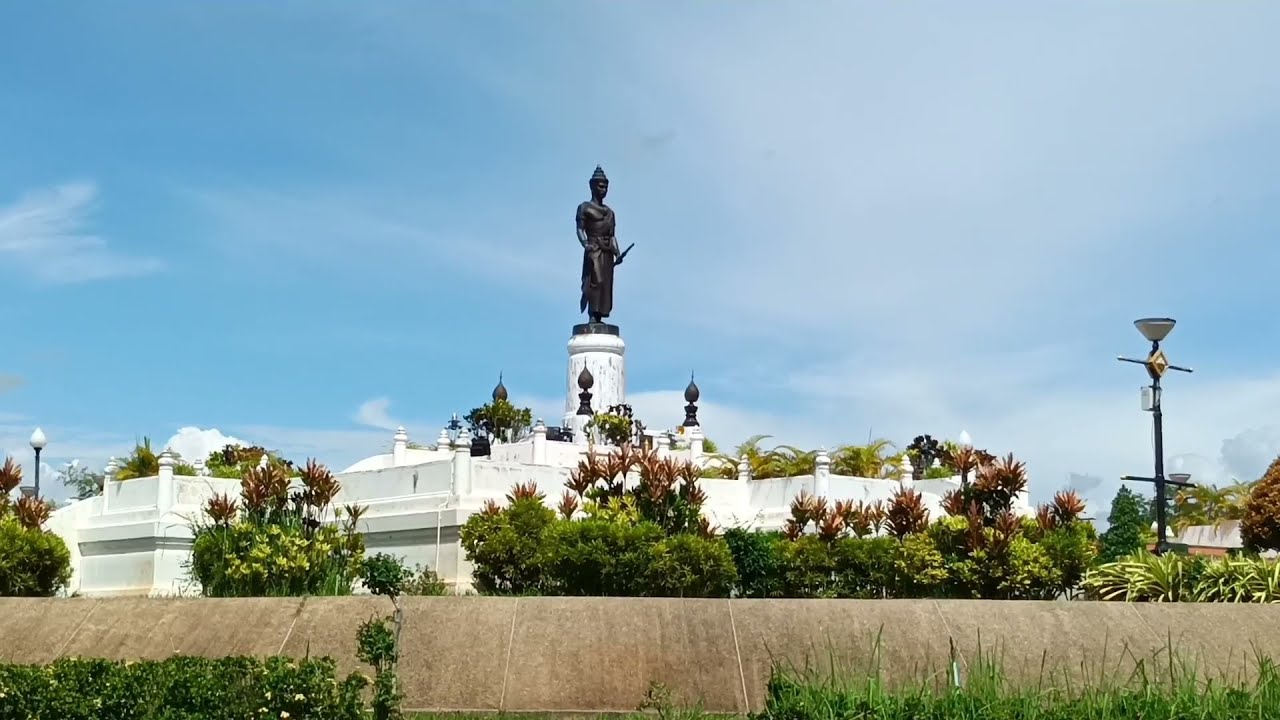
 Click to Access the Navigation Map GPS
Monument of Pho Khun Bang Klang Map
Recommend

 Historical Sites and Monuments(1)
Landmarks and Memorials(2)
Historical Sites and Monuments(1)
Landmarks and Memorials(2)
 Art, Craft Centres, Tradition(3)
 Museums(3)
 Educational Places
 Educational Gardens, Farm(1)
 Places of Worship
 Temple(29)
 Mosque(1)
 Other Sacred Sites(3)
 Research and Development
 Royal Project(1)
 Suburban Living
 Village, Community(1)
 Nature and Wildlife
 National Parks and Marine Reserves(7)
 Mountain (Doi)(4)
 Dam, Reservoir, Lake(5)
 Waterfalls(19)
 Caves(3)
 River, Canal(9)
 Other natural attractions(1)
 Entertainment and Agricultural
 Farms, Parks and Ecotourism(2)
 Outdoor and Adventure Activities(1)


