
lovethailand home >North Travel Attractions >Phitsanulok Travel Attractions >Noen Maprang >Ban Mung > Tham Nang Sip Song
TL;DR: Tham Nang Sip Song is located at Wat Ban Mung, Ban Mung Subdistrict, Noen Maprang District, Phitsanulok Province, open Daily, hours 08.00 – 18.00.
Tham Nang Sip Song
Open Days: Daily
Opening Hours: 08.00 – 18.00
Tham Nang Sip Song at Wat Ban Mung in Phitsanulok Province is one of the most distinctive cave attractions in Noen Maprang District. Located inside Wat Ban Mung in Ban Mung Subdistrict, the cave is surrounded by the dramatic limestone mountain landscape that makes this part of Phitsanulok so memorable. For foreign travelers, this site offers more than a short cave visit. It combines limestone geology, Buddhist temple culture, rural community life, Thai folklore, and scenic countryside in one compact destination. This makes Tham Nang Sip Song a meaningful stop for travelers who want to understand both the natural and cultural character of lower northern Thailand.
The cave is best known for its connection with the Thai folk legend of Nang Sip Song, the story of the twelve women, Phra Rot, and Nang Meri. Inside the cave, there are rock basins that local people associate with twelve small cradles, linking the landscape with the legend. This gives the cave a special identity. It is not only a limestone cave shaped by natural processes but also a cultural place where the local community has placed memory, belief, and imagination into the landscape. Visitors therefore experience both natural beauty and a living local story.
Tham Nang Sip Song is located within Wat Ban Mung, an old temple that serves as a spiritual center for the Ban Mung community. Historical information records that Wat Ban Mung was established in 1836 and received its official consecrated boundary on 29 April 1992. The temple remains an active religious space where local people make merit, join Buddhist activities, and maintain community traditions. Because the cave is inside the temple area, visitors should treat the site with the same respect they would show in any Thai Buddhist temple.
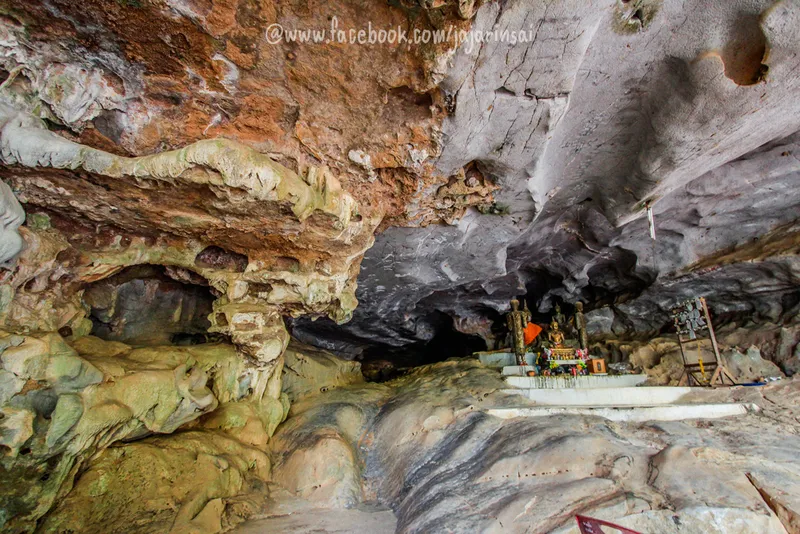
The landscape of Noen Maprang, especially around Ban Mung, is famous for limestone mountains rising from rural plains and rice fields. These limestone formations were shaped over millions of years by geological processes. Rainwater and underground water slowly dissolved the limestone, creating caves, cracks, chambers, stalactites, stalagmites, columns, and rock basins. Tham Nang Sip Song is part of this limestone world. Its forms were not created quickly; they were formed gradually by water, minerals, and time.
When visitors enter the cave area, they can feel cooler air, increased humidity, and a quiet atmosphere different from the outside world. The limestone surfaces vary in color, texture, and shape. Some formations rise like natural pillars, some hang from the ceiling like stone curtains, and some appear as layered or rounded shapes. Light entering from cave openings or artificial lighting in some areas reveals details of the rock surfaces, making the cave interesting for both ordinary travelers and people interested in geology.
The most memorable feature of the cave is the group of rock basins that resemble twelve small cradles. Scientifically, these forms are part of natural limestone erosion and deposition. Culturally, however, local people connect them with the legend of Nang Sip Song. This shows how a natural place can become meaningful through storytelling. Visitors who understand this connection will see that the cave is not just a collection of rocks. It is a landscape interpreted through the beliefs and imagination of the community.
The legend of Nang Sip Song is one of the well-known Thai folk narratives. It tells of twelve women who face hardship, separation, suffering, and destiny, with characters such as Phra Rot and Nang Meri playing important roles in the broader story. The legend reflects themes of love, endurance, loss, and karmic consequence in Thai cultural imagination. At Ban Mung, the legend becomes tied to a real place. This allows visitors to connect a traditional story with the physical environment of a cave and temple.
From a cultural point of view, Tham Nang Sip Song shows how Thai communities often give meaning to mountains, caves, rocks, and natural formations through legends. Nature becomes part of cultural memory. A cave is not only a geological formation; it can also become a sacred, symbolic, or storytelling space. In Ban Mung, the cave, the temple, and the limestone mountains work together to create the identity of the community. This is one reason the site is valuable for cultural tourism as well as nature tourism.
Before entering the cave, visitors may wish to pay respect at Wat Ban Mung. Since the cave is inside the temple grounds, modest clothing and polite behavior are important. Visitors should avoid loud noise, should not climb on fragile formations, and should not write on cave walls or rocks. The temple and cave are shared by monks, local residents, religious visitors, and tourists. Respectful conduct helps keep the site peaceful and appropriate for everyone.
Walking inside the cave requires care. Although Tham Nang Sip Song is more accessible than many deep cave systems, some areas may be damp, uneven, or slippery. Visitors should wear comfortable shoes with good grip. When taking photographs, it is safer to stop before shooting rather than walking backward while looking at a camera or phone screen. Visitors should also avoid touching stalactites and stalagmites unnecessarily because oil and dirt from human hands can disturb the slow natural process that forms limestone features.
The best time to visit is from morning to early afternoon. During this period, the weather is usually more comfortable, and natural light can make the cave entrance and limestone landscape more beautiful. At certain times of day, sunlight entering through cave openings creates impressive light-and-shadow effects on the rocks. Photographers should prepare for low-light conditions and should respect the temple atmosphere when using cameras, tripods, or other equipment.
Traveling from Phitsanulok City to Tham Nang Sip Song is straightforward by private car. The distance is about 68 km. A common route uses Highway 11 before connecting to Highway 1306 toward Noen Maprang District and Ban Mung Subdistrict. The road is suitable for a day trip or an overnight stay in Ban Mung. Public transport is possible but less convenient because the final connection to the temple and local attractions is easier by private car, rental car, or hired local vehicle.
The route to Ban Mung is part of the attraction. Along the way, travelers can see rural scenery, limestone mountains, rice fields, and quiet communities. Many visitors combine Tham Nang Sip Song with the famous Ban Mung bat viewpoint. In the evening, large numbers of bats fly out from the cave area in a long moving stream across the sky. This natural event has become one of the signature experiences of Noen Maprang and makes a strong ending to a day trip in Ban Mung.
Nearby places of interest include Tham Luang Pho Bunmi, a cave associated with Buddhist devotion and sacred images; Khao Noi 360 Degree Viewpoint, which offers views over limestone mountains and countryside; the Ban Mung bat viewpoint; and cafés or homestays with mountain views. These places allow travelers to design a half-day, full-day, or 2-day itinerary combining caves, temples, viewpoints, community life, and local food.
For nature lovers, Tham Nang Sip Song helps visitors understand the relationship between limestone mountains, caves, and local ecosystems. Limestone hills often support specialized plants, birds, insects, bats, and small animals. Caves are habitats as well as scenic places. Visitors should avoid loud noise, littering, or disturbing animals. Respecting the environment helps preserve the natural balance of the cave and surrounding mountain area.
For the Ban Mung community, Tham Nang Sip Song and Wat Ban Mung are sources of identity and pride. Ban Mung is not simply a village that tourists pass through; it is a community with its own landscape, stories, traditions, and tourism resources. Travelers who visit the cave, eat at local restaurants, stay at homestays, buy from local shops, or use local guiding services help support the local economy while gaining a more authentic travel experience.
Food options around Ban Mung include local Thai restaurants, cafés, homestay dining areas, and small countryside eateries. Typical dishes include made-to-order Thai food, noodles, steak, coffee, cold drinks, and simple meals suitable for travelers. The special charm of eating in Ban Mung is the view of limestone mountains, which gives even a simple meal a memorable setting. Many travelers stop for lunch or coffee before or after visiting the cave.
Accommodation in Ban Mung and Noen Maprang includes homestays, mountain-view lodges, camping areas, small resorts, and nature-style guesthouses. Travelers who want to experience the local atmosphere should stay in Ban Mung, where the limestone scenery, bat viewpoint, temple, and cave are close together. Those who prefer more transport convenience may stay in Noen Maprang town or return to Phitsanulok City after a day trip.
Recommended activities include paying respect at Wat Ban Mung, walking through Tham Nang Sip Song, observing limestone formations, learning about the Nang Sip Song legend, photographing the limestone mountains, visiting the Ban Mung community, stopping at mountain-view cafés, and watching bats in the evening. A full-day itinerary can begin with the temple and cave in the morning, continue with lunch and cafés in the afternoon, and end at the bat viewpoint near sunset.
Families traveling with children should supervise them inside the cave because the ground may be uneven or slippery. Older visitors should walk slowly and choose easier areas. Anyone who wants to explore beyond the main visitor area should ask monks or local caretakers first. A small flashlight, drinking water, and suitable shoes make the visit safer and more comfortable.
Photography should be done with both safety and respect in mind. Visitors should not touch formations, climb rocks, or enter risky spots for a photo. The cave already offers strong visual elements through light, shadow, rock texture, and chamber space. Outside the cave, photographers should also capture Wat Ban Mung, limestone mountains, rice fields, and village scenery to show the full identity of Noen Maprang.
Tham Nang Sip Song is especially meaningful for foreign travelers who want to understand Thai culture beyond famous temples and city landmarks. The site brings together folklore, Buddhism, geology, village life, and rural landscapes. It shows how Thai communities often understand nature through stories, beliefs, and temple-centered community life. Visiting this cave can therefore provide a deeper cultural experience than sightseeing alone.
Useful items to bring include comfortable walking shoes, modest clothing suitable for a temple, a small flashlight, drinking water, a camera or phone, and small cash for donations or local food. During the rainy season, visitors should bring an umbrella or rain protection and check road conditions before traveling. Arriving in the morning gives enough time to explore several places in Ban Mung without rushing.
Visitors should dress respectfully, keep noise low, avoid littering, avoid touching cave formations, avoid writing on rocks, avoid disturbing animals, and follow advice from monks or local caretakers. If taking photos of people in the temple or community, asking permission is appropriate. These simple manners help protect both the natural and cultural value of the site.
Overall, Tham Nang Sip Song at Wat Ban Mung is a rich destination combining nature, folklore, Buddhism, and community identity. Its limestone cave, stalactites, stalagmites, cradle-like rock basins, Nang Sip Song legend, and peaceful temple setting create a travel experience with a character different from ordinary cave visits. It is suitable for travelers interested in limestone landscapes, Thai folk stories, cultural learning, photography, and quiet rural travel in Phitsanulok.
A visit to Tham Nang Sip Song is not just a walk into a cave. It is a journey through landscape, legend, and community life. Visitors can see how natural rock formations become part of local belief, how old folk tales remain alive in real places, and how a small village can preserve both its scenery and cultural memory. For travelers looking for a meaningful nature-and-culture trip in Phitsanulok, Tham Nang Sip Song at Wat Ban Mung deserves a place on the itinerary.
| Name | Tham Nang Sip Song at Wat Ban Mung |
| Location | Wat Ban Mung, Ban Mung Subdistrict, Noen Maprang District, Phitsanulok Province |
| Address | Wat Ban Mung, Ban Mung Subdistrict, Noen Maprang District, Phitsanulok 65190, Thailand |
| Highlights | A limestone cave inside Wat Ban Mung with stalactites, stalagmites, stone columns, twelve cradle-like rock basins, and a strong connection with the Nang Sip Song folk legend |
| History | Wat Ban Mung was established in 1836 and received its official consecrated boundary on 29 April 1992. The temple contains Tham Nang Sip Song, a limestone cave linked with local folklore |
| Name Origin | The name comes from local belief connecting twelve cradle-like rock basins inside the cave with the legend of Nang Sip Song and Phra Rot-Meri |
| Distinctive Features | Limestone cave formations, stone columns, stalactites, stalagmites, cave chambers, light openings, and the surrounding limestone mountain scenery of Ban Mung |
| Travel Information | From Phitsanulok City, take Highway 11 and connect to Highway 1306 toward Noen Maprang District and Ban Mung Subdistrict. The distance is about 68 km, and a private car or rental car is the most convenient option |
| Current Status | Open as a natural and cultural attraction inside Wat Ban Mung. Visitors should dress modestly and respect the temple area |
| Open Days | Daily |
| Opening Hours | 08.00 – 18.00 |
| Fees | No admission fee; visitors may make a donation to support site maintenance |
| Facilities | Temple parking area, worship area, cave access path, resting areas inside the temple, and local shops and restaurants in Ban Mung village |
| Main Areas / Zones | Wat Ban Mung temple area, Tham Nang Sip Song entrance, cave chambers, stalactite and stalagmite areas, twelve cradle-like rock basins, and surrounding limestone mountain viewpoints |
| Abbot / Caretaker | Wat Ban Mung and the Ban Mung community care for the site. Local records refer to Phra Khru Sathit Rattanakon, also known as Luang Ta Kaeo Amaro, as an abbot associated with telling the local legend |
| Main Contact Number | Ban Mung Subdistrict Municipality Tel. 055-992948 |
| Official Website / Official Page | Ban Mung Subdistrict Municipality, Noen Maprang District, Phitsanulok Province |
| Nearby Tourist Attractions | 1. Tham Luang Pho Bunmi, about 0.5 km 2. Ban Mung Bat Viewpoint, about 2 km 3. Khao Noi 360 Degree Viewpoint, about 4 km 4. Ban Mung Limestone Mountain Area, about 1 km 5. Ban Mung Village, about 0 km 6. Tham Duean Tham Dao, about 12 km |
| Nearby Restaurants | 1. Krua Im Plae Lae Khao, Ban Mung, about 2 km, Tel. 088-5061670 2. Na Mung Cafe, Ban Mung, about 2 km 3. Ban Mung Steakhouse, about 2 km 4. The Mountain Deer View Lodge & Hashery, Ban Mung, about 2 km 5. See Mountain, Ban Mung, about 3 km 6. Hug Cafe Noen Maprang, about 12 km |
| Nearby Accommodations | 1. Nutcha Na Mung Homestay, about 2 km, Tel. 081-2053554 2. Ban Mung Homestay Network, about 2 km, Tel. 095-6202760, 090-6965810, 094-6410309 3. Accommodation near Ban Mung School, about 2 km, Tel. 062-8255355 4. The Mountain Deer View Lodge & Hashery, Ban Mung, about 2 km 5. Wantana Homestay Ban Mung, about 2 km 6. Noen Thong House, about 15 km, Tel. 087-9423434 |
Frequently Asked Questions (FAQ)
Q: Where is Tham Nang Sip Song at Wat Ban Mung located?
A: It is located inside Wat Ban Mung in Ban Mung Subdistrict, Noen Maprang District, Phitsanulok Province, about 68 km from Phitsanulok City.
Q: What legend is Tham Nang Sip Song connected with?
A: The cave is connected with the Thai folk legend of Nang Sip Song and Phra Rot-Meri. Local people associate twelve cradle-like rock basins inside the cave with the story.
Q: What are the opening hours of Tham Nang Sip Song?
A: The cave is generally open daily from 08.00 to 18.00.
Q: Is there an entrance fee?
A: There is no admission fee, but visitors may make a donation to support the temple and site maintenance.
Q: How do travelers get to Tham Nang Sip Song?
A: From Phitsanulok City, take Highway 11 and connect to Highway 1306 toward Noen Maprang District and Ban Mung. A private car or rental car is the most convenient option.
Q: Who is Tham Nang Sip Song suitable for?
A: It is suitable for travelers interested in limestone caves, Thai folklore, Buddhist temple culture, photography, and quiet rural tourism.
Q: What should visitors wear?
A: Visitors should dress modestly because the cave is inside a temple and should wear comfortable shoes suitable for walking inside a cave.
Q: What nearby attractions can be visited with Tham Nang Sip Song?
A: Nearby attractions include Tham Luang Pho Bunmi, Ban Mung Bat Viewpoint, Khao Noi 360 Degree Viewpoint, Ban Mung limestone mountain area, and Tham Duean Tham Dao.
 Category: ●Nature and Wildlife
 Group: ●Caves
Last Update : 4 MonthAgo
 Last Update : 4 MonthAgo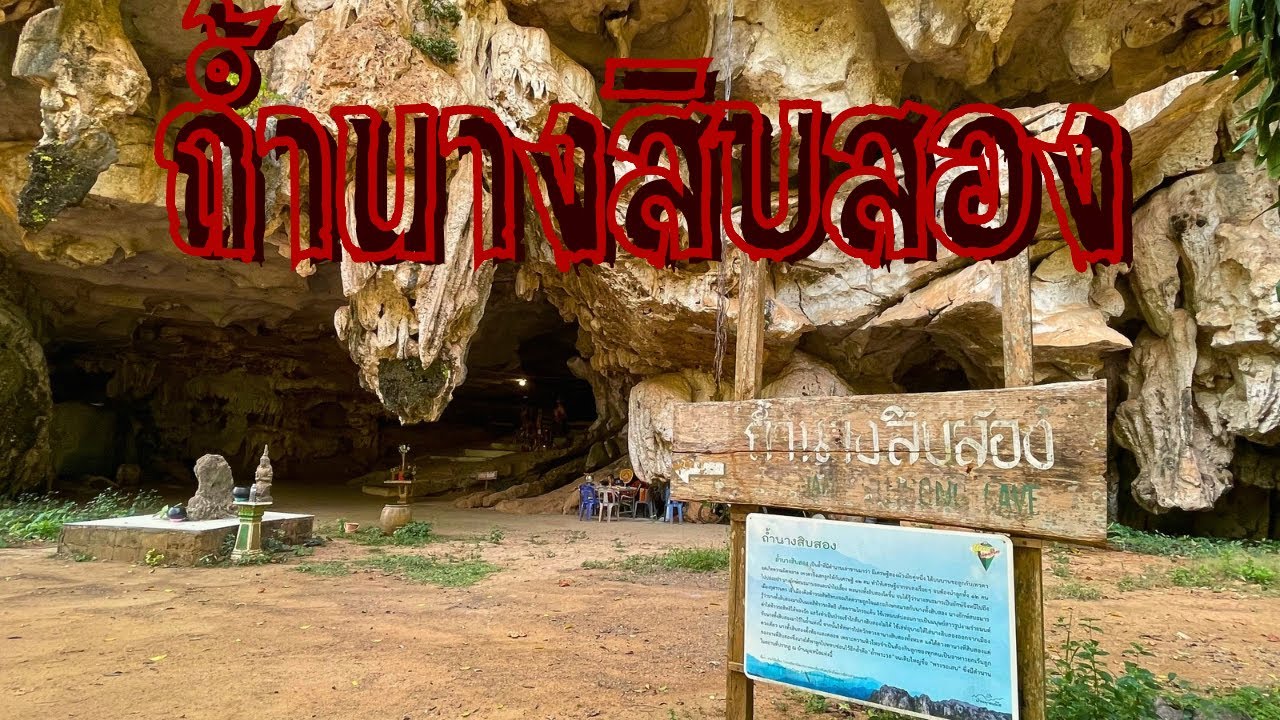
 Click to Access the Navigation Map GPS
Tham Nang Sip Song Map
Recommend

 Art, Culture and Heritage
 Historical Sites and Monuments(1)
 Landmarks and Memorials(2)
 Art, Craft Centres, Tradition(3)
 Museums(3)
 Educational Places
 Educational Gardens, Farm(1)
 Places of Worship
 Temple(29)
 Mosque(1)
 Other Sacred Sites(3)
 Research and Development
 Royal Project(1)
 Suburban Living
 Village, Community(1)
 National Parks and Marine Reserves(7)
 Mountain (Doi)(4)
 Dam, Reservoir, Lake(5)
 Waterfalls(19)
Caves(3)
Waterfalls(19)
Caves(3)
 River, Canal(9)
 Other natural attractions(1)
 Entertainment and Agricultural
 Farms, Parks and Ecotourism(2)
 Outdoor and Adventure Activities(1)


