
lovethailand home >Central Travel Attractions >Bangkok Travel Attractions > 50 Beautiful Temples in Bangkok 2027 Famous Royal ..
TL;DR: 50 Beautiful Temples in Bangkok 2027 Famous Royal Temples, open Daily Opening Hours: 06:00 – 22:00.
50 Beautiful Temples in Bangkok 2027 Famous Royal Temples
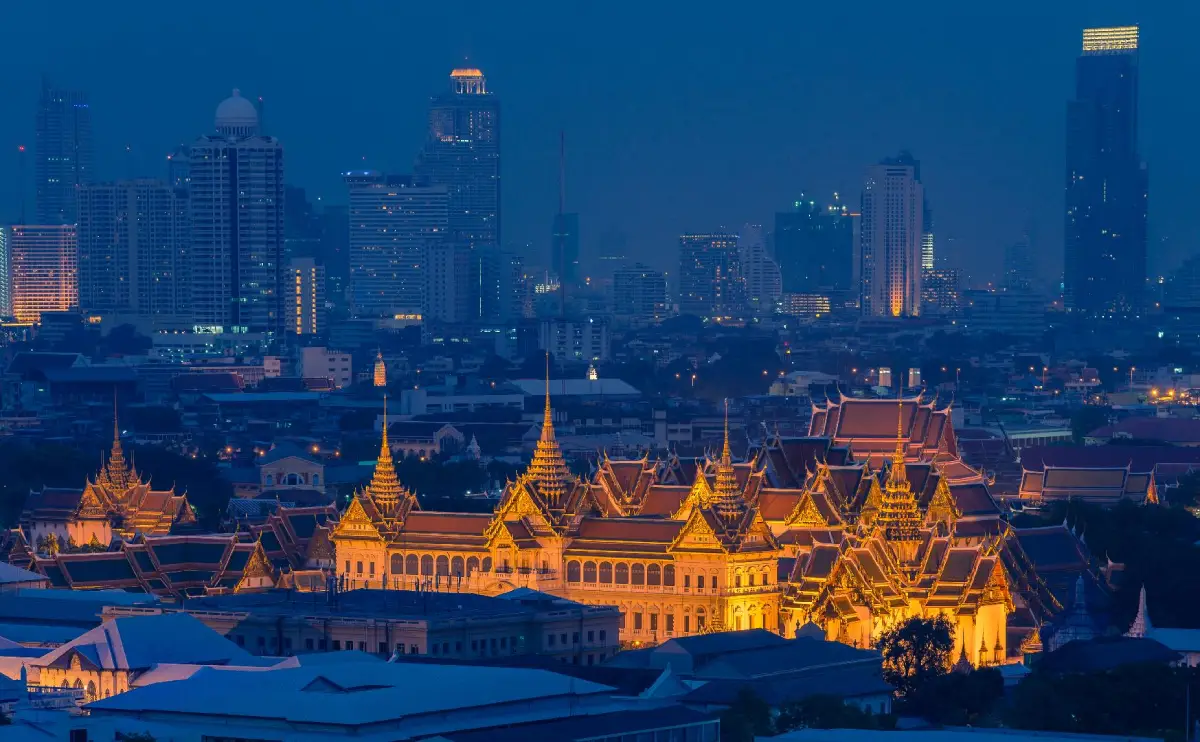
50 Beautiful Temples in Bangkok 2027: Famous Royal Temples, Historic Monasteries, Highlights, and GPS Maps Bangkok has an extraordinary collection of important royal monasteries and ancient community temples, found both in historic Phra Nakhon and across the river in Thon Buri. Each site offers a different perspective on Thailand’s Buddhist traditions, architecture, artistic heritage, and everyday cultural life, spanning the Ayutthaya, Thon Buri, and Rattanakosin periods. Several temples are internationally recognized landmarks, while others preserve remarkable murals, historic Buddha images, local craftsmanship, and the distinctive stories of older Bangkok neighborhoods.
Bangkok temples that visitors should not miss include Wat Phra Kaew, Wat Arun, Wat Pho, Wat Pradu Chimphli, Wat Saket, Wat Traimit, Wat Benchamabophit, and Wat Suthat. Their appeal ranges from grand royal architecture and internationally famous Buddha images to lesser-known community traditions. For a one-day introduction, Wat Phra Kaew, Wat Pho, and Wat Arun make a practical starting point because they are located in the historic center and along opposite sides of the Chao Phraya River.
The importance of Bangkok temples goes far beyond the beauty of chedis and religious buildings. Their history includes the foundation of the capital, royal support for Buddhism, the work of court artisans, religious beliefs, and the preservation of community customs. Some played a role in royal ceremonies, others became centers of learning, while neighborhood monasteries continue to illustrate the close relationship between religion and daily life.
Plan your temple visits by area. Phra Nakhon contains Wat Phra Kaew, Wat Pho, Wat Suthat, and other Old Town landmarks. Bangkok Yai features Wat Arun and temples connected with the former Thon Buri capital, while Phasi Charoen and surrounding canals preserve old neighborhoods, local temples, and artistic communities. Grouping temples geographically reduces travel time and leaves more time for architecture, history, and quiet exploration.
Visiting Bangkok temples is an opportunity to appreciate Thailand’s history through physical monuments: ordination halls, viharns, prangs, chedis, murals, sculptures, and sacred images. Dress respectfully, follow the rules of each monastery, and be considerate toward those taking part in ceremonies. Special attention is required in royal precincts and areas containing fragile historic artwork.
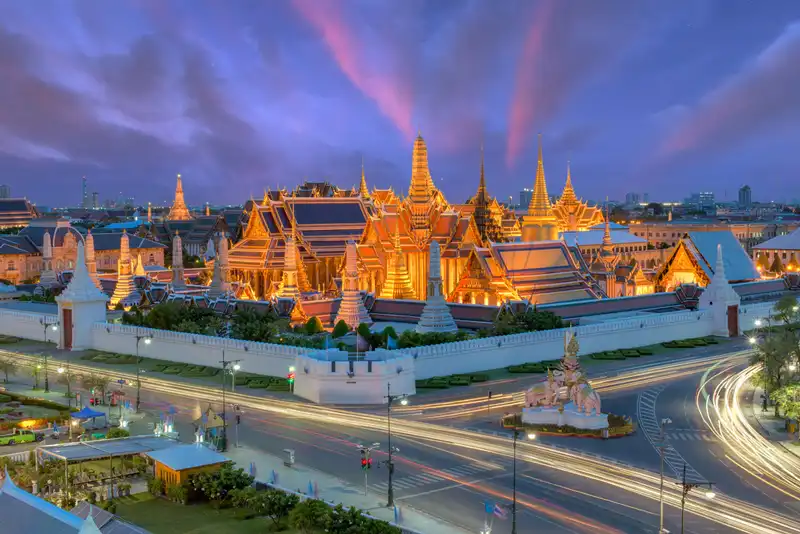
1. Wat Phra Si Rattana Satsadaram (Wat Phra Kaew) Wat Phra Si Rattana Satsadaram, commonly known as Wat Phra Kaew or the Temple of the Emerald Buddha, stands within the Grand Palace complex in Phra Borom Maha Ratchawang Subdistrict, Phra Nakhon District, Bangkok. It is one of Thailand's most important sacred sites and houses Phra Phuttha Maha Mani Rattana Patimakon, the revered Emerald Buddha, an image intimately connected with the country's history, Buddhism, and monarchy.
Highlights: The Emerald Buddha, the richly ornamented ordination hall, Phra Si Rattana Chedi, the Royal Pantheon, the Phra Mondop library, Ramakien murals along the surrounding galleries, and the exceptional craftsmanship of the early Rattanakosin period.
Wat Phra Kaew was founded during the reign of King Rama I following the establishment of Bangkok as the new capital in 1782. The king commissioned the temple inside the royal precinct in a tradition reminiscent of Wat Phra Si Sanphet within the royal palace at Ayutthaya. Its primary roles were to enshrine a sacred national Buddha image and provide a suitable setting for major royal ceremonies.
Unlike a conventional community temple, Wat Phra Kaew has no residential monastic compound and no community of monks living there permanently. Its distinctive royal status links it directly to state ceremonies and to the symbolism of the Rattanakosin capital. The arrangement of its sacred buildings conveys the prominence given to Buddhism in the foundation of Bangkok.
At the center of the ordination hall is the Emerald Buddha, a small seated Buddha image carved from green stone and installed high upon a magnificent gilded pedestal. One of the best-known royal traditions is the ceremonial changing of the Buddha's seasonal robes for the hot, rainy, and cool seasons. This practice reflects the longstanding connection between Buddhist devotion, royal ceremony, and wishes for the well-being of the kingdom.
The architecture represents some of the finest achievements of Thai royal artisans. Multitiered roofs are ornamented with chofa finials, bai raka details, hang hong ornaments, and colored glass mosaics. Beyond the ordination hall are the golden Phra Si Rattana Chedi, the elaborately decorated Phra Mondop, the Royal Pantheon, and other structures combining sacred symbolism with masterful design.
The surrounding galleries are renowned for their Ramakien murals, which unfold scenes from the Thai version of the Ramayana. Their extensive compositions depict characters, traditional dress, royal buildings, landscapes, and dramatic episodes. They offer an important window into Thai literature, painting, court culture, and the artistic imagination of the Rattanakosin period.
A visit is particularly rewarding for anyone interested in Thai history, architecture, Buddhism, and the culture of the royal court. Allow enough time to appreciate details throughout the complex rather than rushing from one building to another. Modest dress and strict compliance with Grand Palace visitor regulations are required, particularly when approaching the ordination hall.
Getting There: Take the MRT Blue Line to Sanam Chai Station, then walk or continue by local transport to the Grand Palace entrance. Another option is the Chao Phraya Express Boat to Tha Chang Pier followed by a short walk. Public transport is especially practical in the historic center, where traffic and parking can be difficult.

2. Wat Arun Ratchawararam Ratchaworamahawihan (Temple of Dawn) Wat Arun Ratchawararam Ratchaworamahawihan, widely known as Wat Arun or the Temple of Dawn, stands beside the Chao Phraya River in Wat Arun Subdistrict, Bangkok Yai District, on Bangkok's Thon Buri bank. Its monumental riverside prang is internationally recognized as one of Thailand's most distinctive architectural landmarks.
Highlights: The great riverside prang, decorative porcelain and glazed ceramics, the ordination hall and viharn, fine sculpture, and panoramic views across the historic Chao Phraya waterfront.
The temple dates back to the Ayutthaya period, when it was known as Wat Makok. Its importance grew dramatically in the Thon Buri period after King Taksin established his capital on the western bank of the river. The temple's location close to the former royal palace makes it part of the historical landscape of Thailand's transition from Ayutthaya to Thon Buri.
Wat Arun once housed the Emerald Buddha during the Thon Buri era. Following the establishment of the Rattanakosin capital, the image was transferred to Wat Phra Kaew in the Grand Palace. This episode illustrates the historical relationship between the two riverbank capitals and their royal temples.
The enormous central prang embodies traditional Buddhist cosmology, with its soaring form representing Mount Meru, the symbolic center of the universe. Work begun and expanded under Kings Rama II and Rama III produced the richly ornamented landmark seen today. Fragments of porcelain and glazed pottery form intricate floral patterns and other details over the tower's surface, showcasing ingenious craftsmanship.
Wat Arun offers a different visual experience at different times of day. Morning sunlight reveals the fine ceramic ornamentation, while the evening light creates memorable views from across the river. Approaching the temple by boat is particularly atmospheric, because it emphasizes the relationship between the religious complex, the river, and Bangkok's historical urban form.
The grounds also contain an ordination hall and other important buildings featuring Buddhist images, carved ornament, murals, and sculptures from the Rattanakosin period. Visitors can explore the craftsmanship at close range and appreciate why the temple is valued as both a place of worship and a major cultural heritage site.
Wat Arun is ideal for travelers interested in Thai architecture, Thon Buri history, photography, and the Chao Phraya River. It combines naturally with Wat Pho, Wat Phra Kaew, and Wat Kalayanamitr. Allow time for the ferry crossing and for unhurried exploration of the temple compound.
Getting There: Take the MRT to Sanam Chai Station, walk to Tha Tien Pier, and cross the river by ferry to Wat Arun. Alternatively, take the MRT to Itsaraphap Station and continue by road. The river route is especially rewarding for visitors exploring the historic temples on both banks.

3. Wat Phra Chetuphon Wimonmangkhalaram (Wat Pho) Wat Phra Chetuphon Wimonmangkhalaram Ratchaworamahawihan, better known as Wat Pho, is located on Sanam Chai Road in Phra Borom Maha Ratchawang Subdistrict, Phra Nakhon District, Bangkok. This major royal temple is celebrated for its giant Reclining Buddha and its remarkable role in preserving traditional Thai medicine, massage, literature, and Buddhist art.
Highlights: The great Reclining Buddha, the four royal chedis, the ordination hall, the Wat Pho stone inscriptions, sculptures of hermit exercises, and the temple's heritage of traditional Thai medicine and massage.
Wat Pho existed before Bangkok became the capital and was originally known as Wat Photharam. King Rama I ordered extensive restoration and developed it into a major royal temple. Under King Rama III, further expansion brought new structures and an ambitious program of inscribing practical knowledge on stone tablets for the benefit of the public.
The celebrated Reclining Buddha, enshrined in its own viharn, measures approximately 46 meters in length. Its serene features demonstrate the artistry of the early Rattanakosin period. The soles of its feet are decorated with 108 auspicious symbols, a richly detailed expression of Buddhist cosmological and religious ideas.
Four great royal chedis form another central architectural group. Associated with the royal patronage of the early Chakri kings, the towers are covered with brightly colored glazed tiles and elaborate floral and geometric patterns. Their differing colors and decorative schemes offer an opportunity to study the skill and variety of historic Thai ceramic craftsmanship.
Wat Pho also functions as an extraordinary repository of public learning. Inscriptions on traditional medicine, medicinal formulations, therapeutic massage, and other fields were installed as part of King Rama III's effort to make knowledge available more broadly. These records are a major resource for understanding the development of education and medicine in Thai society.
Sculptures showing the exercises of reusi dat ton, or traditional hermit stretching practices, preserve another form of local health knowledge. The postures reflect approaches to movement, flexibility, and bodily well-being passed down within Thai culture and closely associated with Wat Pho's therapeutic traditions.
Visitors interested in art can examine the ordination hall, viharns, chedis, sculptures, murals, and decorative ceramics in detail. Those exploring social history can learn how a Buddhist temple also became a place for collecting and teaching practical knowledge long before modern public education was widespread.
Wat Pho is particularly suitable for travelers interested in Buddhist history, architecture, and Thai wellness traditions. Its location near the Grand Palace makes it convenient to combine with Wat Phra Kaew and Wat Arun in the same day, using the nearby river piers for cross-river transport.
Getting There: Take the MRT Blue Line to Sanam Chai Station and walk to the temple, or travel by Chao Phraya Express Boat to the Tha Tien area. Visitors arriving from the Grand Palace can continue on foot, and a ferry from Tha Tien links the neighborhood with Wat Arun.
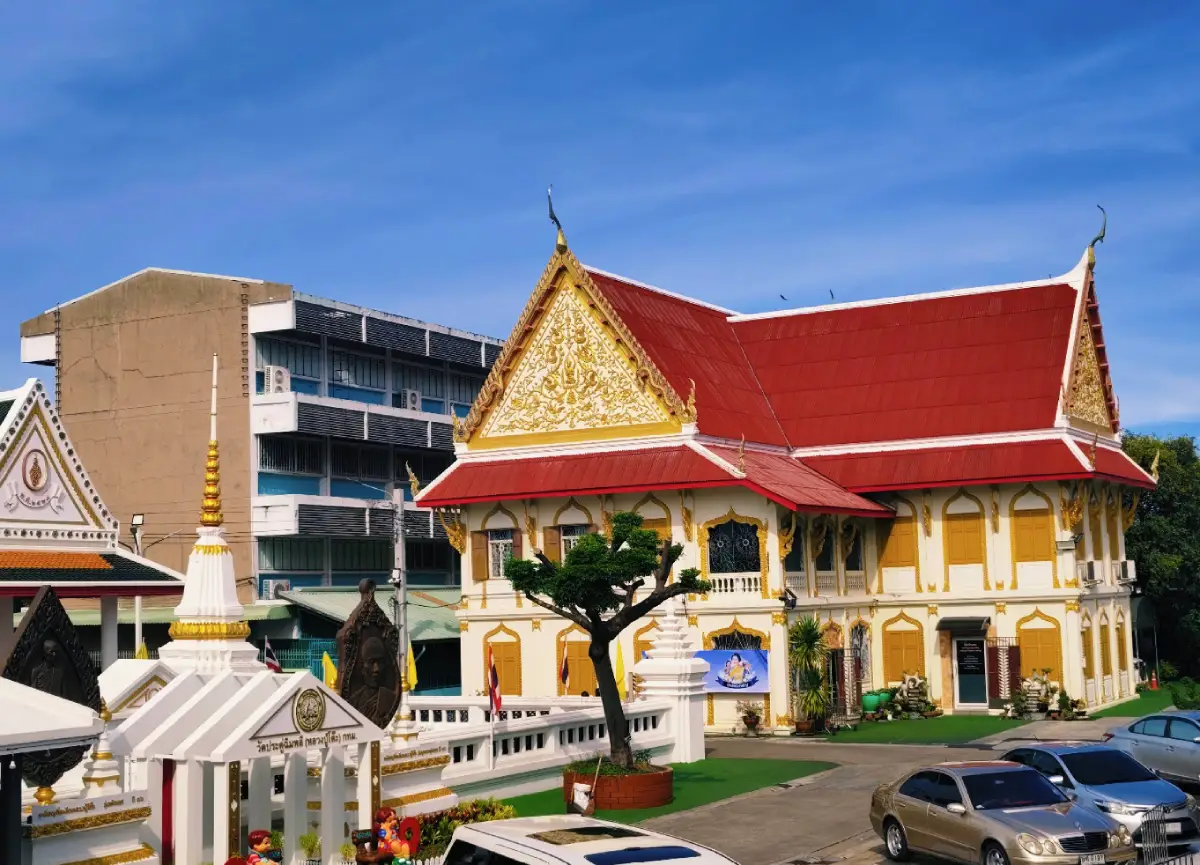
4. Wat Pradu Chimphli (Luang Pu Toh Temple) Wat Pradu Chimphli, also known as Wat Luang Pu Toh, stands at 1162 Soi Rim Khlong Bangkok Yai, Wat Tha Phra Subdistrict, Bangkok Yai District, Bangkok. This historic public temple was established between the late reign of King Rama III and the early reign of King Rama IV. Situated beside the old Khlong Bang Luang canal community, it is renowned for its connection with Luang Pu Toh Indasuvanno, its historic ordination hall, Mon-style chedi, and other important Buddhist works of art.
Highlights: The statue of Luang Pu Toh Indasuvanno, the old Rattanakosin ordination hall, an antique principal Buddha image brought from Wat Oi Chang in Nonthaburi, a Mon-style chedi, a replica Buddha footprint, the history of the former name Wat Chimphli, and the canal-side community of Khlong Bangkok Yai.
The temple's original name was Wat Chimphli, associated with silk-cotton trees that once grew in the area. Local residents also call it Wat Pradu Nok, or Outer Pradu Temple, to distinguish it from the nearby Wat Pradu Nai Songtham, known as Wat Pradu Nai. These names preserve how local communities historically identified sacred places through distinctive plants, landscapes, and their relationship to neighboring temples.
Construction began toward the end of King Rama III's reign and was completed during the early reign of King Rama IV. Somdet Chao Phraya Borom Maha Phichaiyat, Tat Bunnag, was a leading patron and organizer. The temple consequently represents the tradition of senior officials supporting Buddhism and founding religious institutions in early Rattanakosin Bangkok.
Its position along Khlong Bangkok Yai connects it closely to the historic Thon Buri network of waterways, markets, houses, and temples. Khlong Bang Luang was once a major route for travel, trade, and settlement. Temples founded along such waterways served the spiritual and communal needs of residents, making Wat Pradu Chimphli an integral part of the canal-side cultural landscape.
The ordination hall has a distinctive architectural character, differing from more conventional Thai temples in some of its roof decoration. Its design reflects artistic interactions among Thai, Chinese, and Mon traditions during the early Rattanakosin period. Inside is a principal Buddha image brought from Wat Oi Chang in Nonthaburi, chosen to become the main sacred image of the newly established temple.
The principal Buddha image is valued for both its artistic qualities and its historical journey. Its installation followed a familiar practice in Thai Buddhism, in which patrons transferred a significant image from an existing temple to become the devotional center of a newly founded monastery. The Buddha's refined appearance helps visitors appreciate the relationship between religious patronage and traditional sculpture.
Another important monument is the Mon-style chedi. It demonstrates the cultural variety of old Thon Buri, where Thai, Chinese, Mon, and other communities lived near one another. Seen beside the ordination hall and other buildings, the chedi reveals the diverse architectural influences incorporated into the temple over time.
Wat Pradu Chimphli is especially associated with Phra Ratchasangwonphimont, better known as Luang Pu Toh Indasuvanno, a highly respected former abbot. Born on 27 March 1887, he received full ordination at this temple on 16 July 1907 and became its abbot on 10 July 1913. His work included developing the temple, studying and teaching Buddhist discipline, and encouraging meditation and spiritual practice.
Luang Pu Toh was widely respected for his disciplined monastic life and religious learning. He undertook dhutanga pilgrimages and studied with teachers from different traditions. Over many decades he devoted himself to Buddhist practice, teaching, and temple development, attracting followers who continue to visit the place closely connected with his life.
His statue is one of the temple's principal devotional attractions. Visitors come to pay respect and remember his teachings. The temple is also known to collectors of Buddhist amulets, particularly Phra Pidta associated with Luang Pu Toh. However, his historical importance reaches beyond amulets to his meditation practice, commitment to monastic principles, and service to the Buddhist community.
A replica Buddha footprint offers another important place for worship. The Buddhist tradition of venerating footprints expresses remembrance of the Buddha and dedication to his path. Visitors can begin at the ordination hall, view the Mon-style chedi, pay respect to Luang Pu Toh's image, and then visit the replica footprint.
In 1992 Wat Pradu Chimphli was selected as an exemplary temple for development. This recognition reflects its continued religious and community activities. The temple remains a place for observances on Buddhist holy days, ceremonies, merit-making, and the transmission of local spiritual traditions.
For visitors interested in neighborhood history, Wat Pradu Chimphli connects naturally with Wat Pradu Nai Songtham, Wat Nuan Noradit, Baan Silapin Khlong Bang Luang, and Wat Kuhasawan. These canalside places trace the history of settlement and art along Khlong Bangkok Yai and offer a more detailed view of Bangkok beyond its famous central landmarks.
Respectful clothing is appropriate, particularly within the ordination hall and during ceremonies. Morning and the cooler afternoon hours are comfortable for examining the temple's architectural details. Visitors should observe any local restrictions on photography and on access to religious buildings.
Open Days: Daily Opening Hours: 06:00 – 22:00
Getting There: Take the MRT Blue Line to Bang Phai or Tha Phra Station, then continue by motorcycle taxi or taxi toward Phet Kasem Soi 15 and Soi Rim Khlong Bangkok Yai. Drivers can approach from Phet Kasem Road or Charan Sanit Wong Road. Allow time for narrow lanes and parking in this historic canal community, especially on major Buddhist holidays.

5. Wat Saket Ratchaworamahawihan (The Golden Mount) Wat Saket Ratchaworamahawihan, celebrated for its Golden Mount, is located in Ban Bat Subdistrict, Pom Prap Sattru Phai District, Bangkok. This historic royal temple houses Phu Khao Thong, a gilded chedi on an artificial hill overlooking the historic city. Its combination of religious significance, architecture, and elevated views makes it one of Bangkok's defining landmarks.
Highlights: The Golden Mount or Suwanbanphot, sacred Buddha relics, the gilded summit chedi, a winding ascent with views over Bangkok, the ordination hall, and the annual red-cloth wrapping festival.
Wat Saket was originally called Wat Sakae and predates the establishment of Bangkok. King Rama I restored the temple and gave it the name Wat Saket as part of the early development of the new Rattanakosin capital. Its history reveals how important Buddhist sites were integrated into the expanding royal city.
The Golden Mount is its best-known feature. King Rama III began constructing a monumental chedi on an artificial hill, and work continued through later reigns. During the reign of King Rama V the project took the form associated with Suwanbanphot today. Unlike ordinary standalone chedis, the complex invites visitors to follow a path winding upward through the artificial landscape.
The Buddha relics enshrined at the summit are a major focus of devotion. Walking to the top is consequently both a sightseeing experience and an act of pilgrimage for many visitors. The route rises through several levels, offering successive views of the city and opportunities to appreciate the distinctive combination of landscaping and sacred architecture.
From the summit visitors can look across Bangkok's Old Town and see the interwoven skyline of temple roofs, chedis, streets, and historic neighborhoods. This panorama offers a useful perspective on how sacred spaces have shaped the city. The Golden Mount is popular with photographers, but its spiritual significance remains central to the experience.
Wat Saket is also known for traditional celebrations such as the annual ceremony of wrapping red cloth around the Golden Mount and paying homage to the relics. Elsewhere in the compound, an ordination hall and other historic buildings preserve important examples of Rattanakosin Buddhist art.
This temple combines easily with Wat Ratchanatdaram, Loha Prasat, Wat Thepthidaram, and the Giant Swing. Allow additional time for the ascent and views. Visitors with limited mobility should consider the number of steps before setting out.
Open Days: Daily Opening Hours: 07:30 – 19:00
Getting There: Arrive by taxi, private car, or public bus using Boriphat Road and other Old Town routes. MRT Sam Yot Station is a useful interchange for onward transport. Another option is the Khlong Saen Saep boat service to Phan Fa Lilat Pier, followed by a walk to the temple.

6. Wat Traimit Withayaram Worawihan Wat Traimit Withayaram Worawihan stands on Charoen Krung Road in Talat Noi Subdistrict, Samphanthawong District, close to Hua Lamphong and Chinatown. It is internationally known for Phra Phuttha Maha Suwana Patimakon, the Golden Buddha, an extraordinary solid-gold Buddha image of outstanding artistic, historical, and religious significance.
Highlights: The Golden Buddha in the Sukhothai style, the impressive Phra Maha Mondop, the story of the image's rediscovery, and the temple's links with Bangkok's historic Chinese community.
Wat Traimit was formerly known as Wat Sam Chin, or the Temple of Three Chinese, a name reflecting its connections with Bangkok's Chinese population. Located in an area long shaped by trade and transport, the temple lies amid old commercial streets, Chinese shrines, historic buildings, and neighborhoods that illustrate the city's multicultural development.
Its most important treasure is the Golden Buddha, a seated image in the Sukhothai artistic tradition that weighs several tonnes. For many years the figure was covered with plaster, concealing the precious metal beneath. During a move, part of the outer covering cracked away, revealing the astonishing golden statue inside.
The discovery transformed public awareness of Wat Traimit and attracted considerable interest among Buddhist worshippers, historians, and international visitors. The image is valuable not merely because it contains gold, but also because of its refined proportions, casting technique, Sukhothai style, and survival across generations.
Today the image is housed within an imposing Phra Maha Mondop, a purpose-built structure with elegant Thai architectural details. Additional displays explain aspects of the Golden Buddha's history and the cultural development of the surrounding neighborhood, enabling travelers to connect religious art with the wider history of Chinatown.
Wat Traimit is ideal for visitors interested in Sukhothai sculpture, Thai Buddhism, and Chinese-Thai cultural heritage. It combines with the Odeon Gate, Yaowarat Road, Talat Noi, and Wat Mangkon Kamalawat as part of an engaging walking route through old Bangkok.
Modest clothing and respectful behavior are expected in the hall housing the sacred statue. Travelers wishing to photograph the Golden Buddha should follow any posted restrictions and avoid disturbing people who have come to worship.
Getting There: Take the MRT Blue Line to Hua Lamphong Station and walk to the temple, or arrive by taxi or public bus along Charoen Krung Road. The MRT is particularly convenient for combining a temple visit with a walk through Chinatown without searching for parking.

7. Wat Benchamabophit Dusitwanaram (The Marble Temple) Wat Benchamabophit Dusitwanaram Ratchaworawihan is located on Si Ayutthaya Road in Dusit Subdistrict, Dusit District, Bangkok. Known internationally as the Marble Temple, it is celebrated for its elegant use of marble and for its refined late-Rattanakosin architecture associated with King Rama V. It beautifully combines traditional Thai craftsmanship with a more modern approach to temple planning.
Highlights: The marble ordination hall, a replica of Phra Phuttha Chinnarat, a collection of Buddhist images in many historic styles along the cloister, decorative Thai motifs, and architecture dating to the reign of King Rama V.
The temple's development is closely associated with King Chulalongkorn, Rama V, who ordered the creation and reconstruction of a royal monastery within the rapidly developing Dusit area. The project formed part of a broader period of modernization, during which Thailand adopted new technology and architectural ideas while continuing its own artistic traditions.
The ordination hall is the temple's great masterpiece. Designed by Prince Narisara Nuwattiwong, an influential figure in Thai art and architecture, it uses marble prominently in its walls, pillars, and decorative details. Its harmonious proportions, traditional roof forms, and restrained elegance have made it an outstanding example of Thai royal architecture.
Inside stands a replica of Phra Phuttha Chinnarat, modeled after the celebrated original in Phitsanulok. The sculpture's graceful proportions suit the carefully composed sacred interior and make the principal Buddha image a focus of devotion as well as art-historical interest.
The cloister behind the ordination hall houses an impressive collection of Buddhist images displaying different artistic traditions. Visitors can compare features such as facial expression, body proportions, poses, and decorative characteristics, thereby gaining an overview of developments in Buddhist sculpture across various periods.
Carefully maintained walkways and open courtyards create a peaceful setting for appreciating the building from different angles. The bright marble surfaces and fine architectural proportions make the temple especially attractive to those interested in photographing traditional Thai buildings.
Visitors can combine the Marble Temple with nearby historic Dusit landmarks, including the Ananta Samakhom area where access is permitted. The temple is suited to travelers interested in royal history, religion, and the transition of Thai architecture during the late nineteenth and early twentieth centuries.
Getting There: Reach the temple by taxi, private car, or public bus along Si Ayutthaya Road, Ratchadamnoen Nok Road, and other routes through Dusit. BTS or MRT travelers will generally need to connect with a taxi or local transport; allow extra time during busy traffic periods.
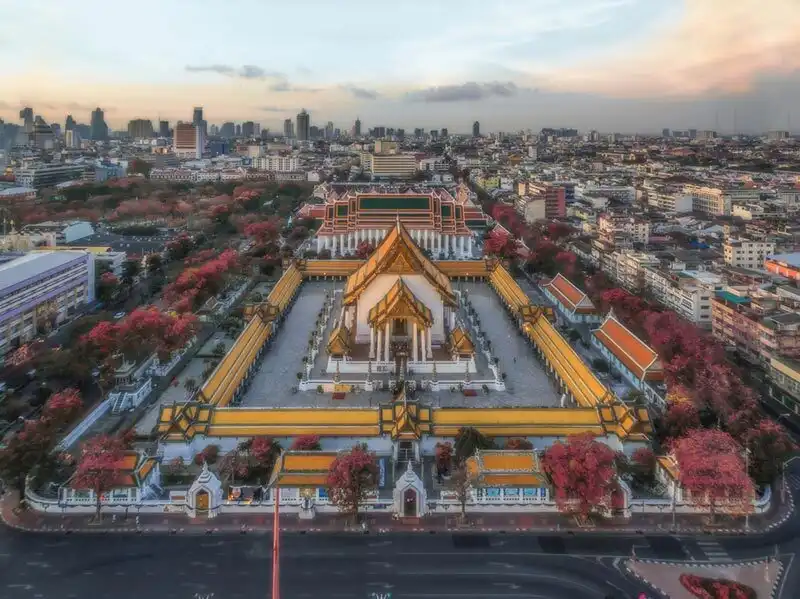
8. Wat Suthat Thepwararam Ratchaworamahawihan Wat Suthat Thepwararam Ratchaworamahawihan stands on Bamrung Mueang Road in Sao Chingcha Subdistrict, Phra Nakhon District, Bangkok. This prominent royal temple is famous for its monumental viharn, exquisite murals, important Buddha images, and its setting beside the Giant Swing. Its artistic and historical importance makes it essential for understanding early Rattanakosin Bangkok.
Highlights: Phra Si Sakyamuni, the grand viharn, the spacious ordination hall, elaborate Buddhist murals, important Buddha images, and the Giant Swing outside the temple.
Construction began under King Rama I, who intended the large viharn to house an important Buddha image brought from Sukhothai. Originally known as Wat Maha Sutthawat, the temple continued to develop under King Rama II and was completed during the reign of King Rama III. Its history thus reflects the patronage of several early Chakri monarchs.
The great Buddha image, Phra Si Sakyamuni, was brought from Wat Mahathat in ancient Sukhothai and enshrined in the principal viharn. Its refined Sukhothai features testify to the artistic links between Thailand's historic capitals and the newly established city of Bangkok.
The great viharn is notable for its grand proportions and the complex murals covering its interior. These paintings present Buddhist narratives, religious cosmology, and aspects of early Rattanakosin social life. Close observation reveals sophisticated composition, fine drawing, and an extraordinary wealth of visual detail.
The ordination hall is another important building, remarkable for its size, ordered proportions, and carefully designed roof, columns, and walls. Its interior houses sacred Buddha imagery, while the overall layout of the temple illustrates the symmetry and planning characteristic of important royal monasteries.
The Giant Swing standing just outside the temple is a familiar Bangkok landmark. Historically it was associated with the Brahmanical Triyampawai and Tripawai ceremonies. Its location beside a major Buddhist temple demonstrates the longstanding interaction between Buddhist and Brahmanical traditions in Thai court culture.
Wat Suthat is especially rewarding for lovers of Sukhothai sculpture, mural painting, historic religious architecture, and Thai ceremonial history. The temple can be visited alongside the Giant Swing, Wat Ratchabophit, Wat Thepthidaram, and Wat Saket on a route through Bangkok's Old Town.
Open Days: Daily Opening Hours: 08:30 – 21:00
Getting There: Use MRT Sam Yot Station and continue on foot or by local transport toward Bamrung Mueang Road and the Giant Swing. Taxis and public buses also serve the area. Visitors exploring the historic center can link the temple on foot with nearby Wat Ratchabophit.
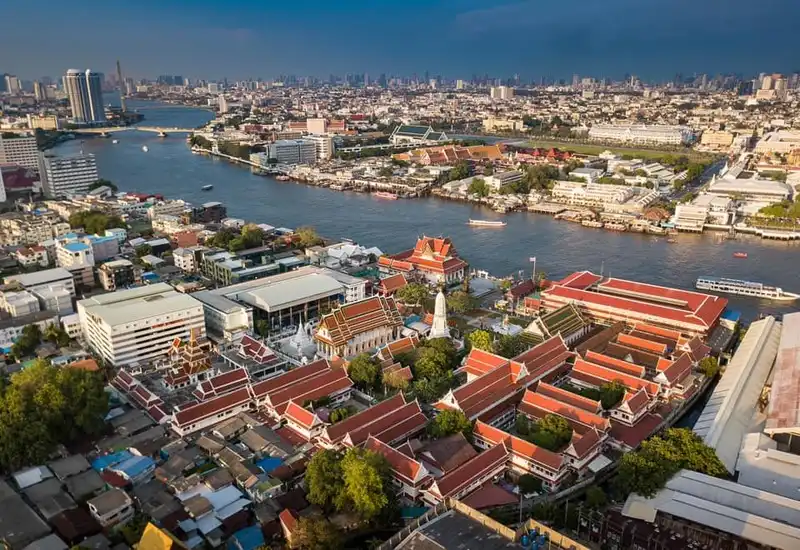
9. Wat Rakang Kositaram Woramahawihan Wat Rakang Kositaram Woramahawihan is a historic riverside royal temple on Arun Amarin Road in Siriraj Subdistrict, Bangkok Noi District, Bangkok. Deeply connected with the early Rattanakosin era, it is widely revered through its association with Somdet Phra Phutthachan (To Phrommarangsi), one of Thailand's most respected monks.
Highlights: The principal Buddha image known for its gentle, welcoming smile, historic prang and chedis, murals, the legacy of Somdet To Phrommarangsi, and the temple's atmospheric Chao Phraya River setting.
The temple predates the foundation of Bangkok and was once called Wat Bang Wa Yai. It gained renewed importance during the early Rattanakosin era when King Rama I undertook restoration work. An old bell discovered in the compound contributed to the name Wat Rakang Kositaram, a reference to the sound of bells.
The temple's fame is inseparable from Somdet Phra Phutthachan (To Phrommarangsi), an important religious figure celebrated for his learning, meditation, and teaching in the Rattanakosin period. The stories surrounding his life have inspired generations of devotees, many of whom come to pay respect and remember his Buddhist example.
Inside the ordination hall is a principal Buddha image admired for its gentle facial expression and sometimes affectionately described as the Buddha with a welcoming smile. The setting includes fine Buddhist murals and decorative elements that showcase the skills and religious ideas of Thai artists.
Historic chedis, a prang, and other buildings preserve evidence of restorations across successive periods. Their arrangement reflects both religious functions and the geography of a temple on the Chao Phraya River, once Bangkok's major transport route and the heart of waterfront settlement.
The name of Wat Rakang is also associated in popular belief with good fortune, reputation, and success through the auspicious symbolism of bells. Visitors come to make merit, pay respect to the Buddha, learn about Somdet To, and enjoy views across the river.
The temple combines well with Wat Arun, Wat Amarinthraram, and the Siriraj district. A leisurely visit allows time to appreciate the ordination hall, historic buildings, and the riverfront atmosphere.
Open Days: Daily Opening Hours: 08:00 – 18:00
Getting There: Cross the Chao Phraya by ferry from the Tha Chang area to the Wat Rakang side, or travel by car or taxi along Arun Amarin Road. Other visitors can connect from public transport serving Siriraj and Bangkok Noi.
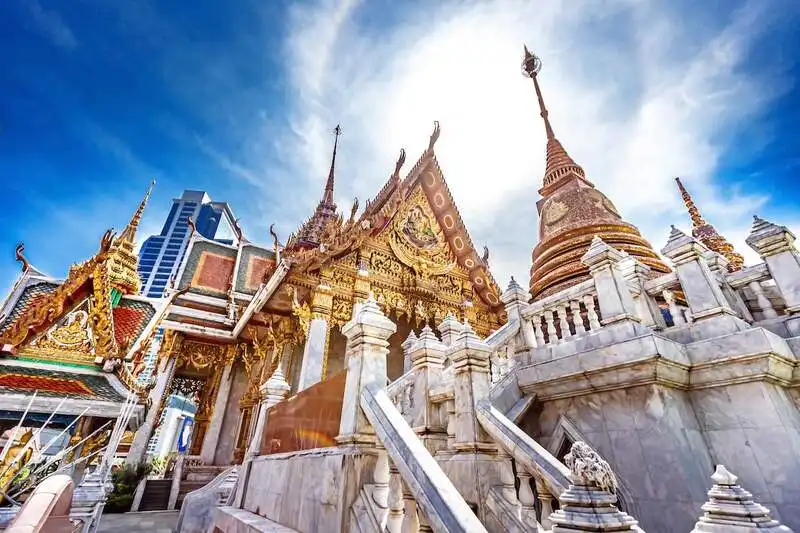
10. Wat Hua Lampong Wat Hua Lampong stands at 728 Rama IV Road, Si Phraya Subdistrict, Bang Rak District, Bangkok. This centrally located royal temple plays an important role in the daily religious life of urban residents and is especially known for opportunities to support charitable funeral services through coffin donations and other acts of community assistance.
Highlights: The ordination hall and sacred Buddha images, the former name Wat Wua Lamphong, old-temple architecture in the heart of the city, charitable merit-making, and exceptionally convenient access from MRT Sam Yan Station.
Wat Hua Lampong was once called Wat Wua Lamphong, a name associated with the older community that occupied this area before modern development. The temple has continued to evolve as Bangkok changed from a traditional settlement into a busy commercial and business district.
During the reign of King Rama V the temple received the name Wat Hua Lampong, which remains in use today. On 18 July 2002 it was elevated to the status of a third-class ordinary royal temple, recognizing its importance as an active Buddhist institution in central Bangkok.
The compound includes an ordination hall, sacred Buddha images, and other religious buildings maintained for local worship and ceremonies. Its distinction lies not only in architecture but also in its accessibility to people from different backgrounds and professions who come to make merit during an ordinary day.
One of the temple's best-known associations is charitable coffin donation and assistance for people who lack the means to cover funeral expenses. Visitors may contribute according to their wishes to charitable efforts connected with the Ruamkatanyu Foundation. This practice expresses compassion, generosity, and the Buddhist ideal of helping those in need.
Wat Hua Lampong illustrates the social role of Buddhism in a densely populated modern city. Beyond religious rituals, its charitable associations offer opportunities for public service, while the temple itself serves as a peaceful place for reflection amid the busy surroundings.
Its location makes the temple an easy stop when exploring Sam Yan, Rama IV Road, and the Silom area. It is particularly suitable for travelers who wish to pay respects, make merit, and experience the ways in which Buddhism remains part of everyday Bangkok life.
Getting There: Take the MRT to Sam Yan Station and walk to the temple on Rama IV Road. Taxis, buses, and private vehicles also provide access, although traffic in the central business district is often heavy at commuting times.
Map (GPS):Get Directions to Wat Hua Lampong
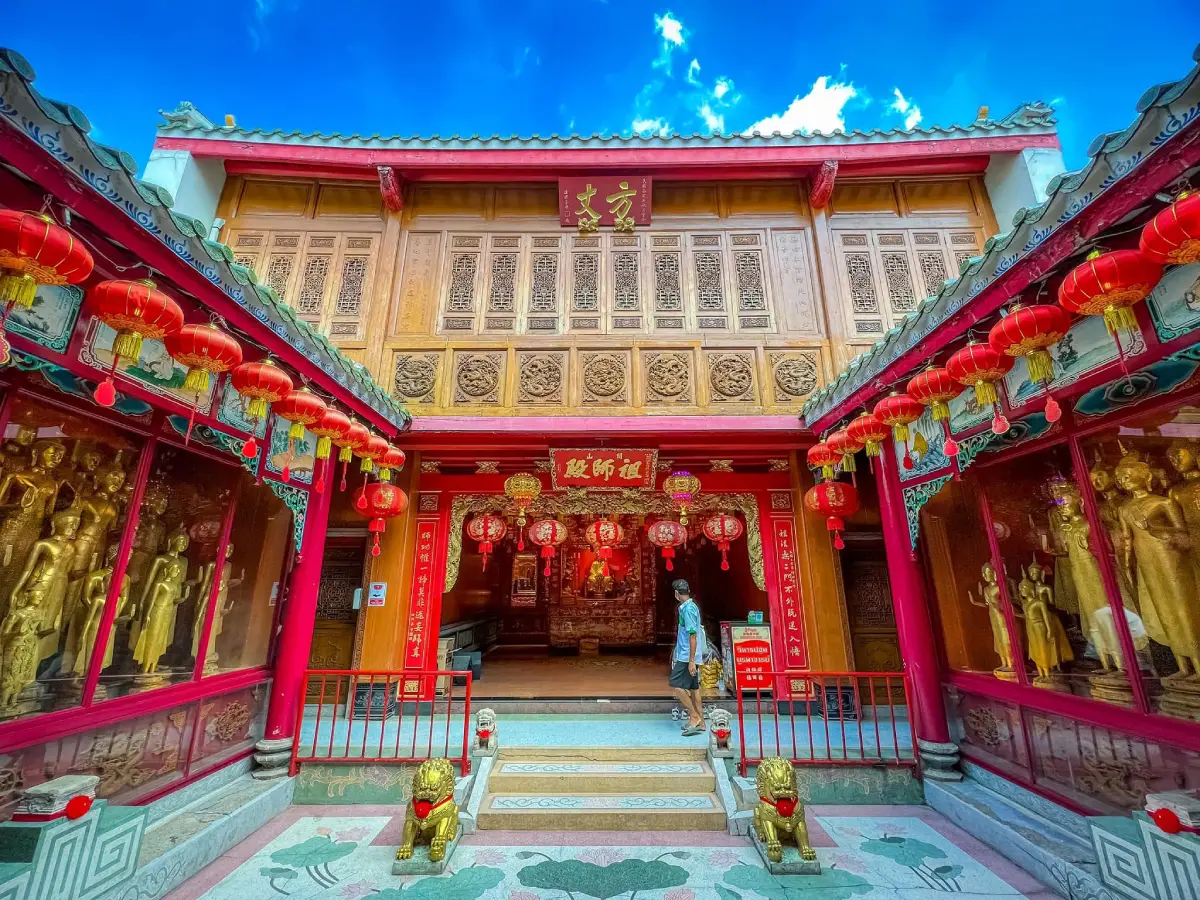
11. Wat Mangkon Kamalawat (Wat Leng Noei Yi) Wat Mangkon Kamalawat, also known as Wat Leng Noei Yi, stands on Charoen Krung Road in Pom Prap Sattru Phai District, Bangkok. It is a major Chinese Buddhist temple for the Thai-Chinese community and a center of Mahayana Buddhist worship and traditional ceremonies. Elaborate Chinese architecture, important Buddha images and deities, and lively religious festivals distinguish it from the city's Theravada royal temples.
Highlights: Traditional Chinese temple architecture, Mahayana Buddhist images, important Chinese deities, Lunar New Year and Vegetarian Festival celebrations, and traditional rites associated with the Chinese zodiac and misfortune years, known in Thai as pi chong.
Wat Mangkon Kamalawat developed alongside the expansion of Bangkok's Chinese communities during the Rattanakosin period. The growth of Sampheng and Yaowarat created a need for temples where families could practice religion, maintain customs brought from China, and gather for significant festivals. The monastery therefore became a center of cultural identity as well as a religious site.
The architectural character is distinctly Chinese. Its entrance gates, curving rooflines, dragon and auspicious-animal ornaments, ceramics, and axial arrangement of buildings lead visitors through a sequence of sacred spaces. Inside are Buddhist images and objects of reverence associated with Mahayana traditions, whose rituals and symbolism differ in certain respects from those of mainstream Thai Theravada temples.
The temple is especially well known for rites undertaken during pi chong, or years traditionally considered unfavorable within the Chinese zodiac. Devotees make offerings and pay respect to protective deities according to Chinese religious and astrological traditions. The practice is particularly popular around the beginning of the year and during the Lunar New Year period.
Lunar New Year and the Vegetarian Festival bring large numbers of people into the temple, creating a festive atmosphere that illustrates the blending of Buddhism, popular Chinese beliefs, and family customs. Visiting on an ordinary weekday, however, can provide a quieter opportunity to observe the architectural details and understand the ceremonial setting.
Wat Mangkon Kamalawat is an ideal stop on a walking route through Yaowarat and Sampheng, and it combines naturally with Wat Traimit. It is especially meaningful for travelers interested in Chinese-Thai culture, architecture, religion, and living traditions. Visitors should take care not to disturb those making offerings or performing ceremonies.
Open Days: Daily Opening Hours: 08:00 – 17:00
Getting There: Use MRT Wat Mangkon Station and walk to the temple on Charoen Krung Road. Buses, taxis, and cars can also reach the area via Charoen Krung and Yaowarat, but the MRT is particularly convenient because Chinatown is often congested.
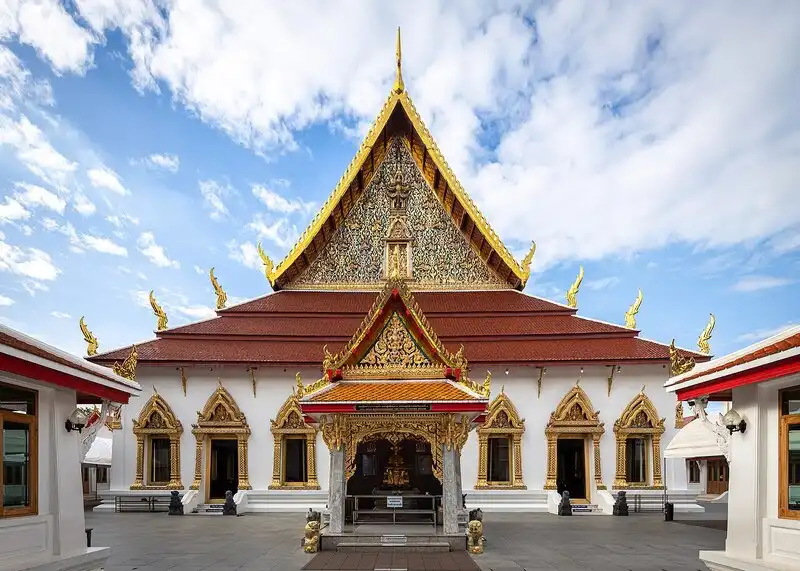
12. Wat Chana Songkhram Ratchaworamahawihan Wat Chana Songkhram Ratchaworamahawihan is a historic royal temple on Chakrabongse Road in Chana Songkhram Subdistrict, Phra Nakhon District, Bangkok. Situated in the Banglamphu neighborhood near Khao San Road and Phra Athit Road, it has close associations with the foundation of Rattanakosin and the military victories of the early Chakri period.
Highlights: An early-Rattanakosin ordination hall, sacred Buddhist images, the historical significance of victories during the reign of King Rama I, refined temple art, and its location amid the traditional streets of Banglamphu.
The temple predates the foundation of Bangkok and was originally known as Wat Klang Na. It was later restored and became an important religious landmark as the new capital took shape. After major wartime events in the reign of King Rama I, it received the name Wat Chana Songkhram, meaning Temple of Victory, in commemoration of military success and defense of the kingdom.
Its connection with military history gives the temple a distinctive identity. The monastery is not merely a religious compound but also a reminder of the relationship between Buddhism, state affairs, and the consolidation of Bangkok during the early Rattanakosin years.
The ordination hall houses an important principal Buddha image and displays architectural and artistic features typical of historic Thai royal temples. Its traditional roof, decorative gable, columns, and sacred interior reflect the skills of artisans working when the capital was expanding.
Banglamphu itself has a long history as a commercial and residential district. The neighborhood's transformation from a traditional local market area into an internationally known visitor quarter creates an interesting contrast with the quieter religious atmosphere within the temple walls.
Wat Chana Songkhram combines well with Wat Bowonniwet, Phra Sumen Fort, Phra Athit Road, and the Banglamphu Museum. It is suitable for visitors seeking Buddhist merit-making alongside a better understanding of Bangkok's military and neighborhood history.
Getting There: Take a Chao Phraya Express Boat to Phra Athit Pier and continue on foot, or use a taxi, bus, or car via Chakrabongse and Phra Athit Roads. Visitors staying around Khao San Road can usually reach the temple by walking.

13. Wat Ratchabophit Sathit Maha Simaram Wat Ratchabophit Sathit Maha Simaram Ratchaworawihan is located at 2 Fueang Nakhon Road, Wat Ratchabophit Subdistrict, Phra Nakhon District, Bangkok. Founded under King Rama V, it is a major royal monastery celebrated for its unexpected combination of traditional Thai exteriors and European-influenced interior decoration. It is closely connected with the royal history of the Chakri dynasty.
Highlights: A distinctive ordination hall combining Thai and European artistic traditions, the central chedi and surrounding cloister, intricately decorated buildings, the Royal Cemetery, and associations with the reign of King Rama V.
King Chulalongkorn, Rama V, established Wat Ratchabophit as an important royal temple associated with his reign. Its name reflects the concept of a royal foundation. The monastery's development took place during a period when Thailand was absorbing foreign technologies and artistic influences while maintaining its established religious and court traditions.
The ordination hall offers one of the finest expressions of this cultural encounter. From the outside, it retains the proportions and elaborate roofscape of Thai religious architecture. Inside, however, the decorative treatment displays clear European influence, creating a striking contrast that makes the temple highly distinctive among Bangkok's royal monasteries.
The central chedi stands within a surrounding cloister, forming a carefully coordinated composition with the ordination hall, viharn, and other sacred buildings. The chedi's decorative surfaces and the planned relationship among the structures illustrate the importance of symmetry and craftsmanship in a major royal foundation.
The Royal Cemetery is another significant part of the compound. It contains memorial monuments associated with members of the royal family and offers insights into dynastic history, commemorative art, and the role of temples as places of remembrance alongside their Buddhist religious functions.
Wat Ratchabophit can be visited alongside Wat Suthat, Wat Ratchapradit, and the Giant Swing. Its architectural blend, royal associations, and historic memorial area make it especially rewarding for visitors interested in Rattanakosin history and Thai-European art. The Royal Cemetery should be treated as a place deserving particular respect.
Open Days: Daily Opening Hours: 08:00 – 17:00
Getting There: Take MRT Sam Yot or Sanam Chai Station and walk or continue by local transport to Fueang Nakhon Road. Taxis and buses also serve the Old Town. The surrounding streets make it practical to combine the temple with Wat Suthat and Wat Ratchapradit.

14. Wat Ratchanatdaram Worawihan (Loha Prasat) Wat Ratchanatdaram Worawihan is located on Maha Chai Road in Phra Nakhon District, close to Ratchadamnoen Avenue and the Democracy Monument. This royal temple is best known for Loha Prasat, the remarkable multi-tiered Metal Castle. Unlike the familiar Thai chedi or prang, the structure expresses Buddhist teachings through an unusual arrangement of towers and spires.
Highlights: Loha Prasat and its 37 spires, the ordination hall and viharn, architecture dating to King Rama III's reign, and views across Bangkok's historic Ratchadamnoen neighborhood.
King Nangklao, Rama III, ordered the temple to be built in honor of his granddaughter Princess Somanas Wattanawadi, who later became Queen Somanas Wattanawadi during the reign of King Rama IV. Its foundation illustrates the close relationship between royal patronage, Buddhist architecture, and the early nineteenth-century development of the capital.
Loha Prasat is the temple's defining monument. Inspired by the historic concept of a metal palace in Buddhist tradition, the building consists of arranged levels and pointed towers. Its 37 spires are traditionally associated with the 37 bodhipakkhiya dhamma, or qualities conducive to awakening, giving the structure a clear symbolic religious meaning.
The arrangement of the towers and interior spaces provides an architectural interpretation of Buddhist principles. Rather than a conventional chedi alone, Loha Prasat uses height, repetition, and layered forms to convey an ordered spiritual ideal. Studying it closely therefore reveals both innovative design and religious symbolism.
The temple grounds also contain an ordination hall, viharn, and other buildings with features typical of early Rattanakosin craftsmanship. Nearby are notable Old Town landmarks including Lan Phlapphla Maha Chetsadabodin, Wat Thepthidaram, and Wat Saket, making this an excellent area for exploring several monuments within a compact neighborhood.
The temple is particularly suitable for visitors interested in architecture, Buddhism, photography, and Bangkok's historic urban landscape. Natural light at different times of the day brings out the rhythm of the spires and other details of this highly unusual structure.
Open Days: Daily Opening Hours: 08:00 – 17:00
Getting There: Take MRT Sam Yot Station and walk or continue by local transport to Maha Chai Road. Buses and taxis serve Ratchadamnoen Avenue and the Democracy Monument. Wat Thepthidaram and Wat Saket can be combined with this stop on foot or by a short local connection.
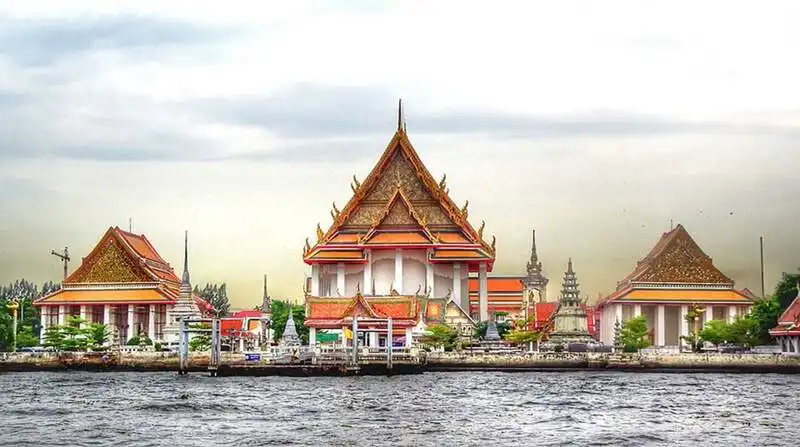
15. Wat Kalayanamitr Woramahawihan Wat Kalayanamitr Woramahawihan stands on the Thon Buri bank of the Chao Phraya River, in Wat Kalayan Subdistrict, Thon Buri District, Bangkok, close to the mouth of Khlong Bangkok Yai. This important royal monastery reflects the intertwined history of Thai and Chinese communities and is celebrated for a monumental Buddha image called Luang Pho To or Sam Po Kong.
Highlights: Phra Phuttha Trai Rattana Nayok, commonly called Luang Pho To, the great Buddha viharn, Thai architecture with Chinese influences, a large bell, and the historic multicultural communities along the river.
Wat Kalayanamitr was founded in the reign of King Rama III by Chao Phraya Nikonbodin, also known as To Kalayanamitr, a prominent official who donated land and built the temple before presenting it as a royal monastery. Its location in a longstanding Thai-Chinese settlement has left a distinctive cultural imprint upon its religious history and architecture.
The great Buddha image Phra Phuttha Trai Rattana Nayok is the temple's principal devotional treasure. Chinese devotees know the image as Sam Po Kong, a name that highlights its importance to the Chinese-Thai community. Enshrined in a spacious viharn, the large seated figure is revered for its beauty and as a focus of prayers for blessings and well-being.
The monumental viharn differs in scale from many ordinary temple halls because it was designed to accommodate the enormous Buddha image. The surrounding buildings and architectural decoration reflect the artistic traditions of the early Rattanakosin period, while the calm interior offers a place for contemplation and worship.
Wat Kalayanamitr is part of the historic Kudi Chin neighborhood and a remarkably diverse religious landscape. Buddhist temples, Christian churches, and Chinese shrines stand near one another, recording centuries of coexistence among communities with different religious and cultural backgrounds.
Travelers interested in community history can combine the temple with Wat Arun, Wat Prayurawongsawat, the Kudi Chin community, and Santa Cruz Church. Together these places tell an important story about Bangkok's riverside settlements from the Thon Buri era onward.
Open Days: Daily Opening Hours: 06:00 – 18:00
Getting There: Reach the temple by taxi or car via the Thon Buri road network, including Arun Amarin Road, or use river transport and nearby piers where services are operating. Exploring the surrounding Kudi Chin area on foot offers a valuable view of the old Chao Phraya waterfront.
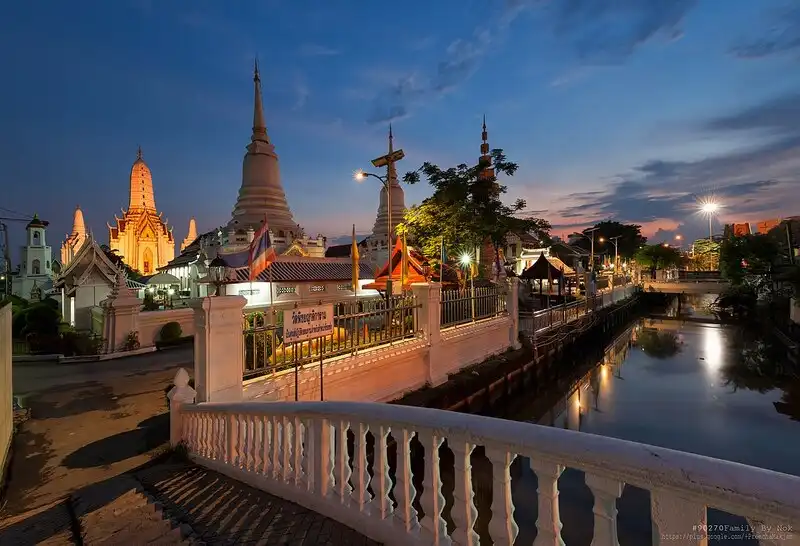
16. Wat Phitchaya Yatikaram Worawihan Wat Phitchaya Yatikaram Worawihan is located in Somdet Chao Phraya Subdistrict, Khlong San District, Bangkok. This historic royal monastery on the Thon Buri side is renowned for its large prang and early Rattanakosin architecture. Its history is closely connected with Chao Phraya Phrakhlang (Dit Bunnag), an important official in the reign of King Rama III.
Highlights: The large central prang, the ordination hall, architecture of King Rama III's period, Chinese-influenced decorative arts, and the atmosphere of an old royal monastery in Khlong San.
The temple underwent substantial restoration under Chao Phraya Phrakhlang (Dit Bunnag), a leading figure of the early Rattanakosin court. After the restoration it was offered as a royal monastery. Its history thus records the importance of the Bunnag family and the role of senior officials in the patronage of religion, politics, and culture.
The large prang is the compound's most striking feature. Its form and decorative elements reflect early Rattanakosin artistic traditions and Buddhist religious symbolism. The prominent tower distinguishes Wat Phitchaya Yatikaram from many neighboring Thon Buri temples.
The ordination hall and associated buildings preserve features of the Chinese decorative style popular during the reign of King Rama III. Glazed ceramic ornament, traditional motifs, and architectural details illustrate the intense commercial and cultural contacts between Thailand and China in that period.
The monastery also helps explain the social history of the Thon Buri waterfront. The neighborhood once accommodated river traders, old settlements, and homes of influential officials. Walking through the compound encourages visitors to consider how temples related to social hierarchy, religious donations, and urban settlement in the nineteenth century.
Wat Phitchaya Yatikaram is suited to travelers interested in prang architecture and early royal temples. It combines well with Wat Kalayanamitr, Wat Prayurawongsawat, and the Kudi Chin community, allowing a wider exploration of Buddhist and multicultural heritage on the western riverbank.
Getting There: Travel by taxi or private car using Prachathipok Road and the streets of Khlong San, or connect from public transport serving Wongwian Yai and Memorial Bridge. The temple can be included in a wider Thon Buri route visiting Wat Kalayanamitr and nearby historical communities.

17. Wat Mahathat Yuwaratrangsarit Wat Mahathat Yuwaratrangsarit Ratchaworamahawihan stands on Na Phra That Road in Phra Nakhon District, Bangkok, close to Sanam Luang and the Grand Palace. It is one of the capital's important royal monasteries and a significant center for Buddhist scholarship, monastic education, and meditation practice.
Highlights: The ordination hall, mondop, historic chedis, the development of Buddhist education, Mahachulalongkornrajavidyalaya University, and traditions of vipassana meditation.
The temple was originally known as Wat Salak and has roots in the early Rattanakosin period. It was restored and elevated in importance following the foundation of Bangkok. Its location near the Grand Palace and Sanam Luang placed it at the heart of the city's royal ceremonial and religious landscape.
A defining aspect of Wat Mahathat has been its long role in Buddhist scholarship. The monastery contributed to the development of monastic learning and is historically associated with Mahachulalongkornrajavidyalaya University, a major institution of Buddhist higher education in Thailand.
Within the compound are an ordination hall, mondop, viharn, and other religious buildings displaying Rattanakosin artistic characteristics. The Buddha images and architectural arrangement reflect the temple's dual functions as a place of worship and a center for the training of monks.
Wat Mahathat also offers opportunities to study Dhamma and practice meditation within the Theravada tradition. Mindfulness, concentration, and insight meditation have long been important parts of its educational and devotional life, attracting both Thai practitioners and interested visitors from abroad.
The temple combines easily with Sanam Luang, Wat Phra Kaew, the National Museum Bangkok, and Wat Bowonniwet. It is especially appropriate for those who want to understand the intellectual history of Thai Buddhism alongside the architecture of Bangkok's Old Town.
Open Days: Daily Opening Hours: 09:00 – 18:00
Getting There: Travel by Chao Phraya Express Boat to Tha Chang or Tha Phra Chan Pier and walk to Na Phra That Road. Buses and taxis serving Sanam Luang are other options. The temple can also be reached on foot from the Grand Palace area.

18. Wat Bowonniwet Vihara Wat Bowonniwet Vihara Ratchaworawihan is located at 248 Phra Sumen Road in Bowon Niwet Subdistrict, Phra Nakhon District, Bangkok. This important royal monastery is closely associated with Chakri kings and the history of the Dhammayut monastic tradition. Its sacred Buddha images, royal connections, and fine murals make it one of the most significant religious sites in Banglamphu.
Highlights: Phra Phuttha Chinnasi, the ordination hall, historic chedis, Rattanakosin murals, the development of the Dhammayut order, and the temple's associations with Thai kings.
Wat Bowonniwet was established during the reign of King Rama III and became especially important when Prince Mongkut, later King Rama IV, resided here as an ordained monk and served as abbot. The monastery consequently became closely linked with the development of the Dhammayut order and changes in Buddhist learning during the Rattanakosin era.
Phra Phuttha Chinnasi is an important Buddha image enshrined in the ordination hall. Its artistic qualities and religious importance make it a major focus of devotion. The hall also preserves murals associated with the artistic developments of King Rama IV's reign, including new ideas influenced by Western approaches to painting.
The chedis and other buildings are important to the history of the royal monastery and the Thai Sangha. Their architectural arrangement expresses the dignity of a royal religious institution while continuing to support worship, teaching, and daily monastic life.
The monastery has been closely connected with several Thai kings, including periods of royal ordination and Buddhist study. This relationship gives the site historical value extending beyond its architecture and connects it with major developments in the country's religious and royal institutions.
Wat Bowonniwet can be combined with Wat Chana Songkhram, Phra Sumen Road, Phra Sumen Fort, and the Banglamphu Museum. It is a particularly worthwhile destination for visitors interested in Buddhist history, murals, and the royal heritage of old Bangkok.
Getting There: Take a bus, taxi, or car along Phra Sumen Road or other streets through Banglamphu. From Phra Athit Pier on the Chao Phraya River, continue on foot or by short local transport.
Map (GPS):Get Directions to Wat Bowonniwet Vihara
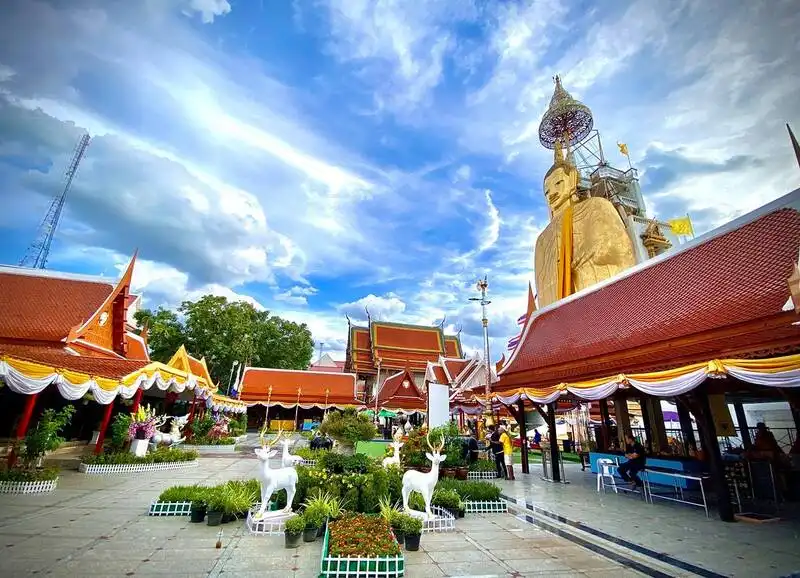
19. Wat Intharawihan Wat Intharawihan stands at 114 Wisut Kasat Road in Bang Khun Phrom Subdistrict, Phra Nakhon District, Bangkok. The temple is famous for its enormous standing Buddha image, popularly called Luang Pho To or Phra Si Ariya Metteyya. Its history is closely associated with the Bang Khun Phrom community and popular devotion to Somdet To Phrommarangsi.
Highlights: The monumental standing Buddha Phra Si Ariya Metteyya, the ordination hall, religious sculpture and murals, and historic associations with the Bang Khun Phrom neighborhood.
Wat Intharawihan is an old community temple whose history is connected with Buddhist patronage by officials and residents in the northern part of historic Bangkok. It has developed over successive generations into a religious center serving people from both the neighborhood and further afield.
The imposing standing Buddha is the temple's unmistakable landmark. Its scale and majestic proportions are immediately apparent from within the compound. The image has drawn generations of devotees and visitors who come to pay respect and appreciate the remarkable monument.
The temple is also linked in popular tradition with Somdet Phra Phutthachan (To Phrommarangsi), a revered monk of the Rattanakosin period. His life and reputation remain influential in Thai religious culture, particularly in traditions of paying respect to highly regarded teachers.
An ordination hall and other religious buildings offer opportunities to view Thai Buddhist architecture, decorative motifs, and sacred images. The surrounding old neighborhood adds cultural depth, showing how the temple has remained part of Bang Khun Phrom's religious and social life.
Visitors can combine Wat Intharawihan with Wat Bowonniwet, Wat Sam Phraya, and the streets around Phra Sumen Road. The temple is particularly suitable for those interested in monumental Buddhist imagery and the history of central Bangkok.
Open Days: Daily Opening Hours: 08:30 – 20:00
Getting There: Reach the temple by bus, taxi, or car using Wisut Kasat Road and nearby routes through Bang Khun Phrom. Visitors coming from Banglamphu or Ratchadamnoen can continue by local road transport.
Map (GPS):Get Directions to Wat Intharawihan
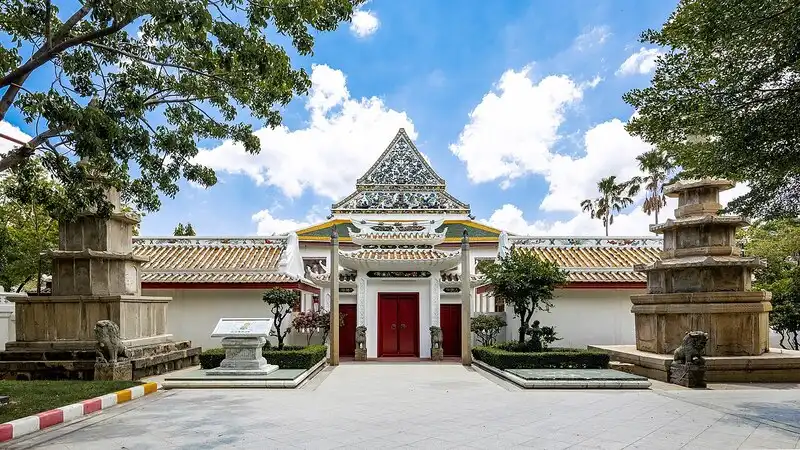
20. Wat Ratcha Orasaram Ratchaworawihan Wat Ratcha Orasaram Ratchaworawihan is located at 258 Ekkachai Soi 4 in Bang Kho Subdistrict, Chom Thong District, Bangkok. It is a major historic royal temple and is closely associated with King Rama III as the royal temple of his reign. Its architectural importance lies in the exceptionally clear influence of Chinese art upon Thai religious buildings and decorative details.
Highlights: Chinese-influenced royal-style ordination hall, viharns, important Buddha images, porcelain and glazed tile ornament, and history associated with King Rama III.
The temple was originally called Wat Chom Thong and existed before Bangkok was established as the capital. Prince Chetsadabodin, later King Rama III, undertook major restoration work here before ascending the throne. The project expressed his devotion to Buddhism and helped shape an important artistic style of the early nineteenth century.
The ordination hall is particularly notable for its incorporation of Chinese architectural features. Some conventional Thai roof ornaments were simplified or replaced with Chinese-inspired forms, porcelain decoration, and other design motifs. This style, often called the royal preference of King Rama III, emerged during a period of close trade and cultural exchange between Thailand and China.
Other buildings, including the viharn, demonstrate how Thai craftsmen combined religious concepts with Chinese artistic elements. The decorative details provide valuable evidence of changing tastes, international trade connections, and royal architectural patronage in early Rattanakosin Bangkok.
The temple also contributes to the social history of old Thon Buri, especially neighborhoods connected with canals and waterways leading toward the Chao Phraya River. It has remained a religious and community center across generations.
Wat Ratcha Orasaram forms a rewarding thematic route with Wat Nang and Wat Nang Nong in the Chom Thong area. These temples are particularly useful for comparing styles of architecture and art associated with the reign of King Rama III.
Getting There: Travel by taxi or car via Ekkachai Road and Chom Thong Road, entering Ekkachai Soi 4. Local buses also serve Ekkachai Road. Those touring several Chom Thong temples can connect to Wat Nang and Wat Nang Nong by road.
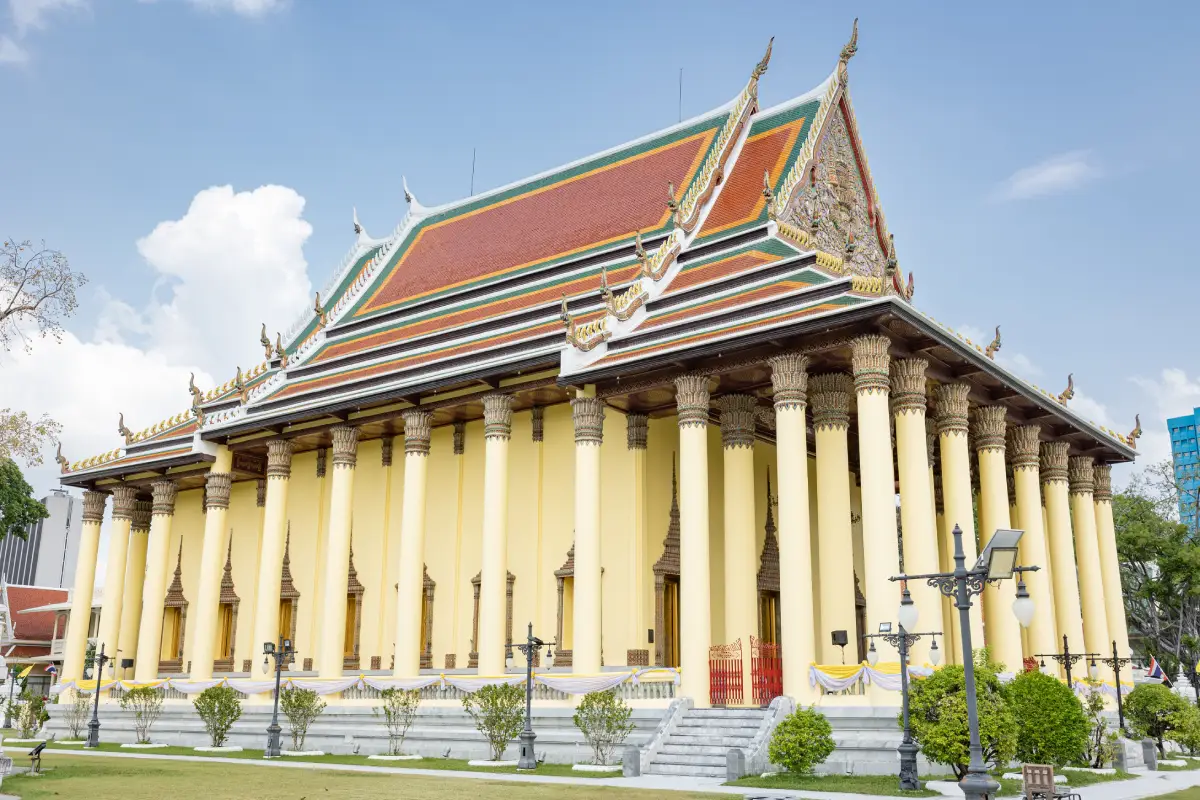
21. Wat Thepsirintrawat Ratchaworawihan Wat Thepsirintrawat Ratchaworawihan stands at 1464 Krung Kasem Road in Wat Thepsirin Subdistrict, Pom Prap Sattru Phai District, Bangkok. A second-class royal temple of the Dhammayut order, it holds considerable importance for Buddhist religion, the royal court, education, and late-Rattanakosin art. King Rama V founded the temple in memory of his mother, Queen Thepsirin, giving it a particularly personal significance within royal history.
Highlights: The ordination hall and architecture of the reign of King Rama V, revered Buddha images, its connection with Queen Thepsirin, the history of Dhammayut Buddhism, and the historic environment along Krung Kasem Road.
Wat Thepsirintrawat was established during King Rama V's extensive modernization of Bangkok, a period of administrative reform, infrastructure development, and educational change. The king wished to dedicate religious merit to Queen Thepsirin, his mother, and the temple became an enduring expression of filial gratitude as well as royal patronage of Buddhism.
Its orderly layout and architectural features illustrate the work of late-Rattanakosin royal craftsmen. The ordination hall and associated buildings display refined traditional roof forms, ornament, and carefully planned sacred spaces. Important Buddha images remain focal points for worship within the compound.
The monastery is also closely linked to the history of education. The nearby Debsirin School is an institution with a long educational heritage, reflecting the relationship between Buddhist precincts and formal learning during Thailand's transition to a modern national education system. This association expands the significance of the temple beyond purely religious functions.
The surrounding area is also connected with the history of royal cremation ceremonies and the nearby royal cemetery and cremation grounds. These traditions show the broad role of Buddhist institutions in Thai life: from spiritual training and education to remembrance of the deceased and funeral rites.
Visitors can explore the historic buildings and the urban character of Krung Kasem Road. The temple lies relatively close to Hua Lamphong and the Bobae area, making it possible to combine a visit with Wat Traimit, Wat Boromniwas, or other historic sites around Pom Prap Sattru Phai.
Wat Thepsirintrawat is especially appropriate for travelers interested in King Rama V, religious architecture, and the relationship between Buddhism and social change in Thailand.
Open Days: Daily Opening Hours: 08:00 – 17:00
Getting There: Take MRT Hua Lamphong Station and continue by local bus or taxi toward Krung Kasem Road, or approach through the Kasat Suek Bridge area by public transport. Private-car visitors should allow extra time for central-city traffic.
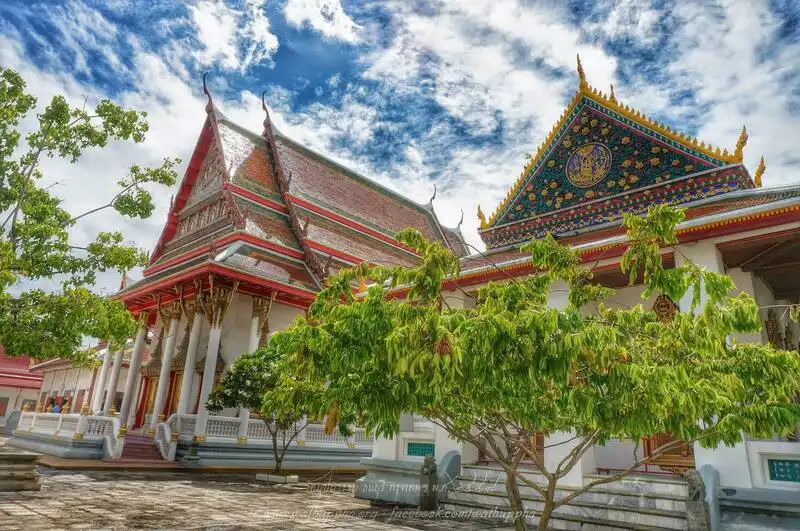
22. Wat Buppharam Worawihan (Wat Dokmai) Wat Buppharam Worawihan, also known as Wat Dokmai, is a historic royal monastery in Wat Kalayan Subdistrict, Thon Buri District, Bangkok. Its origins reach back to the Ayutthaya period, and its later development reflects the extensive restoration of Buddhist temples in early Rattanakosin Bangkok. The temple offers historic architecture and a quieter atmosphere within the cultural landscape of old Thon Buri.
Highlights: The ordination hall and Rattanakosin religious art, the former name Wat Dokmai, important restorations in the reigns of Kings Rama III and Rama IV, sacred Buddha images, and proximity to the historic Kudi Chin community.
The temple was originally known as Wat Dokmai, literally the Temple of Flowers, and has roots in the Ayutthaya period. Following a period of decline, it underwent significant restoration in the Rattanakosin era, particularly near the end of King Rama III's reign. This work renewed its importance as a functioning place of worship and reflected the generosity of patrons committed to preserving historic religious sites.
Under King Rama IV the monastery received the name Wat Buppharam. The new name retained the floral meaning of the original while reflecting the temple's enhanced status. This historical continuity shows how temples founded before Bangkok became the capital could be renewed and integrated into the royal religious landscape.
The ordination hall, viharn, and other buildings display architectural details characteristic of Thai religious art developed and restored during the Rattanakosin period. Balanced building proportions, traditional roofs, and fine decorative craftsmanship make the temple of interest to visitors studying the evolution of sacred architecture.
The surrounding Thon Buri neighborhood has long accommodated Thai, Chinese, and Christian communities living in close proximity. Wat Buppharam is part of this multicultural landscape, especially the Kudi Chin and Wat Kalayan districts, where religious buildings help preserve the distinctive identities of historic waterfront settlements.
The temple is an attractive destination for travelers who prefer quieter historic monasteries. It combines with Wat Kalayanamitr, Wat Prayurawongsawat, Kudi Chin, and Santa Cruz Church, offering insights into the religious and cultural diversity of Bangkok's western bank.
Open Days: Daily Opening Hours: 07:00 – 17:00
Getting There: Reach the temple by taxi or car through Prachathipok Road and local streets in Thon Buri. Public transport connections are available from the Memorial Bridge and Wongwian Yai areas. A Kudi Chin cultural walk can also include Wat Buppharam.
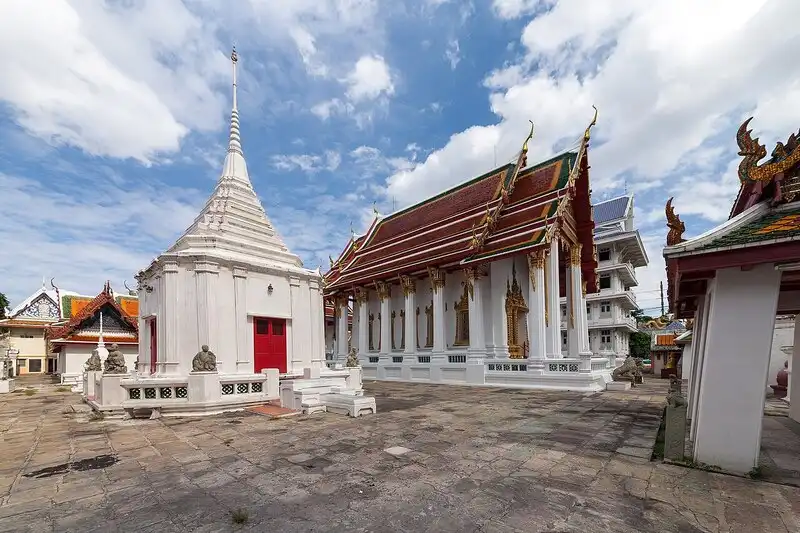
23. Wat Anongkharam Worawihan Wat Anongkharam Worawihan, historically known as Wat Noi Kham Thaem, is located on Somdet Chao Phraya Road in Somdet Chao Phraya Subdistrict, Khlong San District, Bangkok. This old royal monastery is an important part of Thon Buri's Buddhist and community history, reflecting the development of Chao Phraya riverside settlements and old canal networks.
Highlights: The historic ordination hall, revered Buddha images, Rattanakosin-period religious art, the former name Wat Noi Kham Thaem, and the temple's connection with Khlong San's old neighborhoods.
Wat Anongkharam's history is linked with the growth of Thon Buri communities during the Rattanakosin era. Its older name, Wat Noi Kham Thaem, recalls people and local circumstances associated with the site's early history. Later development and patronage transformed it into an important monastery while preserving the religious traditions of the surrounding neighborhood.
The compound includes an ordination hall and other religious structures in a traditional Thai architectural arrangement. The ordination hall remains the center of important Buddhist ceremonies and houses images held in high regard by the community. The site's orderly layout reflects the close relationship between temple life and local residents.
Khlong San was historically shaped by waterways, boats, trading communities, and canalside homes long before modern roads became dominant. Temples such as Wat Anongkharam served as centers for merit-making, seasonal ceremonies, and everyday social connections, linking religion to local economic and family life.
Its architecture offers a useful opportunity to study Rattanakosin craftsmanship. Traditional roofs, gables, and ornamentation illustrate the forms employed during periods of construction and restoration, while the temple's community setting helps explain its enduring relevance beyond monumental architecture alone.
Wat Anongkharam is ideal for visitors interested in neighborhood history and cultural heritage. It can be combined with Wat Phitchaya Yatikaram, Wat Thong Nopphakhun, and the Memorial Bridge area, revealing contrasts among historic communities, commercial streets, and modern urban development.
Getting There: Travel by car or taxi along Somdet Chao Phraya and Prachathipok Roads, or connect from public transport routes serving Wongwian Yai and Memorial Bridge. Other old Khlong San temples can be visited on the same local route.
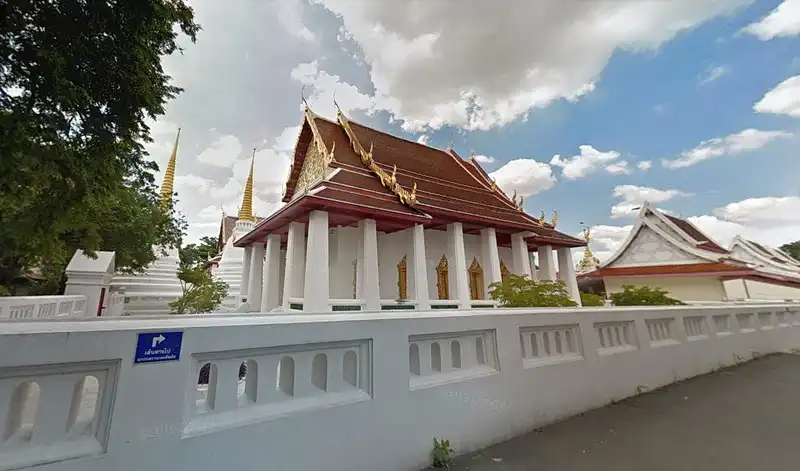
24. Wat Khruea Wan Worawihan Wat Khruea Wan Worawihan stands at 36 Arun Amarin Road in Wat Arun Subdistrict, Bangkok Yai District, Bangkok. Located near Khlong Mon, the former Thon Buri royal precinct, and Wat Arun, this historic royal temple is particularly valuable for its architecture and Buddhist murals. It belongs to the cluster of old monasteries that preserves the cultural character of Bangkok's western riverbank.
Highlights: Murals inside the ordination hall, important Buddha images, Rattanakosin religious craftsmanship, the history of the Khlong Mon community, and a route linking Thon Buri's ancient riverside temples.
The history of Wat Khruea Wan is connected with Buddhist patronage during the Rattanakosin period and the growth of the Thon Buri riverside settlements. Construction and restoration took place in an area long associated with waterways, religious institutions, and the former royal palace, linking the monastery to the transition from the Thon Buri capital to Rattanakosin Bangkok.
The ordination hall's murals are a particularly important artistic feature. Buddhist mural painting traditionally conveyed teachings, religious beliefs, and episodes of the Buddha's life through detailed visual narratives. Such images are also a valuable resource for understanding the language of art before modern systems of public education became widespread.
The temple's architecture includes an ordination hall and related buildings reflecting Rattanakosin Thai design. Its beauty lies both in the shapes of roofs and sacred structures and in the carefully composed interior decoration around important Buddha images.
Wat Khruea Wan is situated within the old Khlong Mon landscape, where canals and traditional neighborhoods still preserve traces of Thon Buri's earlier settlement patterns. A visit therefore offers a view of Bangkok through its canals and communities rather than only through the capital's most famous monuments.
It can be included on a route with Wat Arun, Wat Hong Rattanaram, and Wat Molilokayaram. The temple is well suited to travelers interested in murals, sacred architecture, photography, and historical walking routes. Visitors should remain quiet when ceremonies are taking place inside the ordination hall.
Open Days: Daily Opening Hours: 05:00 – 22:00
Getting There: Use MRT Itsaraphap Station and continue by taxi or local transport along Arun Amarin Road. By car, approach through the western-bank road network, including the Phra Pinklao and Rama VIII bridges where suitable. The temple can also be reached as part of a route starting at Wat Arun.
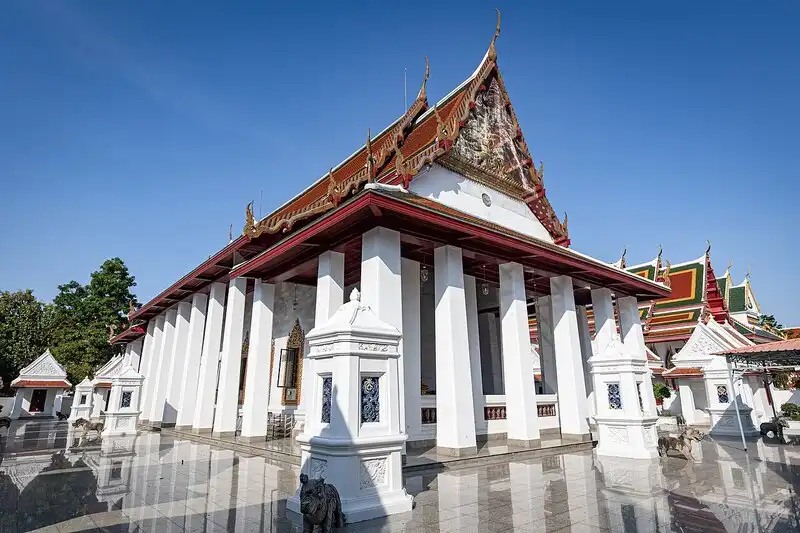
25. Wat Ratchasittharam Ratchaworawihan (Wat Phlap) Wat Ratchasittharam Ratchaworawihan, also called Wat Ratchasit or Wat Phlap, stands near Itsaraphap Road in Wat Arun Subdistrict, Bangkok Yai District, Bangkok. This historic royal monastery traces its origins to the Ayutthaya period and became more prominent following restoration in the Rattanakosin era. Its significance includes Buddhist art and the traditions of meditation practice within Thai monastic history.
Highlights: The old name Wat Phlap, historic ordination hall, sacred Buddha images, buildings associated with meditation masters, Rattanakosin art, and an atmospheric setting in the Itsaraphap neighborhood.
Wat Ratchasittharam was originally known as Wat Phlap and existed during the Ayutthaya period. After the establishment of Bangkok as the capital, the monastery received restoration and further development. These changes reflect the wider renewal of older Buddhist temples during the consolidation of the Rattanakosin kingdom.
The temple is closely associated with traditions of meditation and the development of Buddhist contemplative practice. Accounts of influential monks and their teachings form part of the monastery's history, giving it significance beyond architectural preservation alone.
The ordination hall, viharn, and additional religious buildings display artistic characteristics that connect the late Ayutthaya period with subsequent Rattanakosin craftsmanship. Roof forms, sacred images, and ornamental elements help visitors understand the continuity and evolution of Thai temple design.
The location near older canals and neighborhoods of Bangkok Yai connects the temple with the historic settlement of the Thon Buri side. As with many waterfront temples, religious activities, local customs, and everyday community life developed in close relationship with one another.
Wat Ratchasittharam is rewarding for those interested in meditation history, historic Buddhist art, and Thon Buri's canals. It combines naturally with Wat Arun, Wat Khruea Wan, and Wat Hong Rattanaram. Allow time to appreciate the old buildings and their religious setting.
Open Days: Daily Opening Hours: 06:00 – 21:00
Getting There: Take MRT Itsaraphap Station and walk or continue by local transport toward Itsaraphap Road and the Charoen Phat Bridge area. Taxis and private cars can also reach the monastery via the local road network.
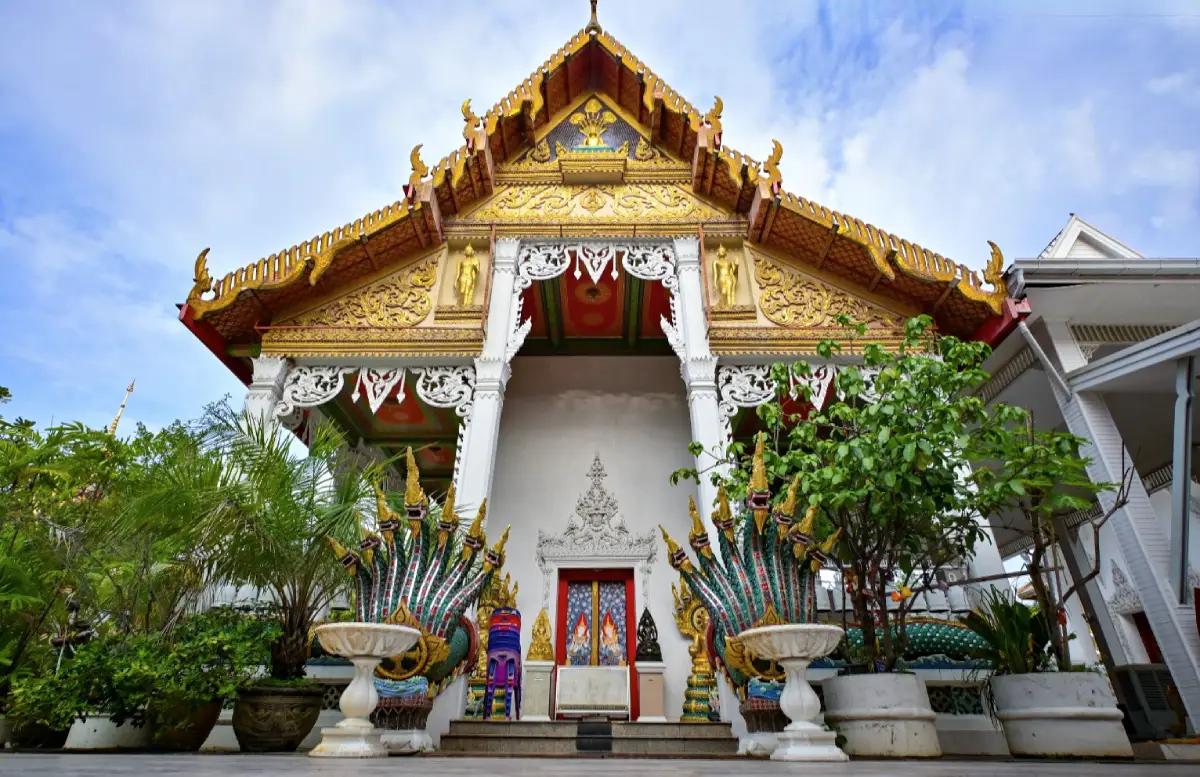
26. Wat Nak Prok Wat Nak Prok is located near Thoet Thai Soi 49 in Pak Khlong Phasi Charoen Subdistrict, Phasi Charoen District, Bangkok. This historic community temple is famous for Luang Pho Nak Prok, a seated Buddha image protected by a seven-headed naga. Its art and setting reflect the Chinese-Thai cultural connections and old canalside settlements of Thon Buri.
Highlights: The seven-headed naga protecting the Buddha, a Chinese-influenced ordination hall with a shape associated with a sailing junk, old Buddhist murals, the Nak Prok viharn, and the neighborhood's canal heritage.
The temple's history is rooted in the old canal communities of western Bangkok, where orchards and waterways once shaped daily life and transportation. The presence of canals both around and near the compound reflects the intimate relationship between Buddhist temples and the agricultural settlements that supported them.
The main image shows the Buddha sheltered beneath a naga with seven outspread heads. This iconography recalls the story of the naga king Mucalinda protecting the Buddha from wind and rain after his enlightenment. The image symbolizes protection, inner steadiness, and devotion to the Buddhist teachings.
One of Wat Nak Prok's most distinctive features is its ordination hall, whose design has been associated with the form of a Chinese sailing junk. Such stylistic influences are reminders of the close commercial and cultural contact between Thai and Chinese communities during the Rattanakosin period, when Chinese decorative forms entered many Buddhist buildings.
The murals within the monastery are also important for understanding traditional Thai religious art. Buddhist images and stories conveyed through painting help reveal historic clothing, architecture, daily life, and religious concepts from the periods in which the works were created.
Wat Nak Prok remains an active religious site with a continuing role in Buddhist ceremonies and local practice. It is particularly appropriate for travelers interested in naga imagery, Chinese-influenced architecture, and the history of Thon Buri communities. The temple can be visited with Wat Apsornsawan and the wider Phasi Charoen area.
Open Days: Daily Opening Hours: 08:00 – 18:00
Getting There: Take the BTS to Talat Phlu or Wutthakat Station, then continue by taxi or local transport to Thoet Thai Soi 49. Private vehicles can approach via Thoet Thai Road and nearby routes including Ratchadaphisek Road.
Map (GPS):Get Directions to Wat Nak Prok
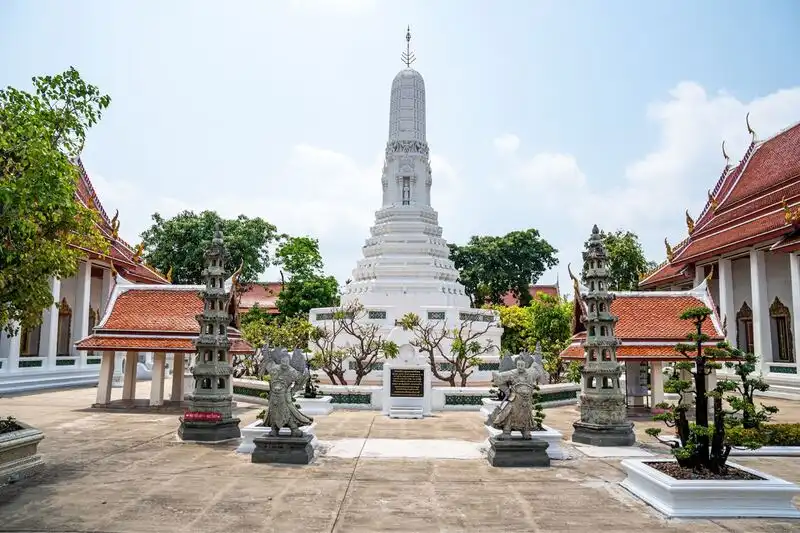
27. Wat Nang Ratchaworawihan Wat Nang Ratchaworawihan is located at 200 Wutthakat Soi 42 in Bang Kho Subdistrict, Chom Thong District, Bangkok. This historic royal monastery is associated with the communities of Khlong Dan and the extensive restoration of Buddhist temples during the Rattanakosin era. It offers a particularly interesting view of Thon Buri's old waterborne transport system and traditional religious architecture.
Highlights: The ordination hall and sacred Buddha images, Rattanakosin religious art, the patronage of the early Chakri era, the Khlong Dan community, and the historic group of temples in Chom Thong.
Wat Nang dates back to before Bangkok became the capital and was established in a settlement along Khlong Dan, once an important transport artery of Thon Buri. In the past, canals connected trade, travel, homes, and agricultural areas, and temples naturally emerged as central institutions along these routes.
The monastery underwent restoration and development during the Rattanakosin period. Such projects ensured that older religious sites remained suitable for community worship while also preserving artistic traditions and supporting the broader renewal of Buddhism on the western bank of Bangkok.
The ordination hall and other buildings exhibit Thai craftsmanship of the Rattanakosin period. Visitors can study the rooflines, gables, ornamentation, and the setting of important Buddha images to appreciate the character of historic Buddhist architecture.
Wat Nang is connected with Thai monastic traditions and the ongoing transmission of Buddhist learning. As a community monastery, its role has extended across the centuries to merit-making, religious study, ceremonies, and the continuation of local customs.
The surrounding area preserves reminders of its former canal-based character, even as modern roads and neighborhoods have expanded. Visiting Wat Nang provides an opportunity to consider how life in western Bangkok once depended on waterways and how those communities evolved.
A rewarding route combines Wat Nang with Wat Ratcha Orasaram and Wat Nang Nong, two other important Chom Thong monasteries. Together they present contrasting examples of royal patronage and the architectural styles of early Rattanakosin Thailand.
Getting There: Travel by taxi or car via Wutthakat Road and enter Wutthakat Soi 42. BTS Wutthakat Station offers a public transport starting point for a taxi or other onward connection. Visitors can use local road transport to continue to Wat Ratcha Orasaram and Wat Nang Nong.
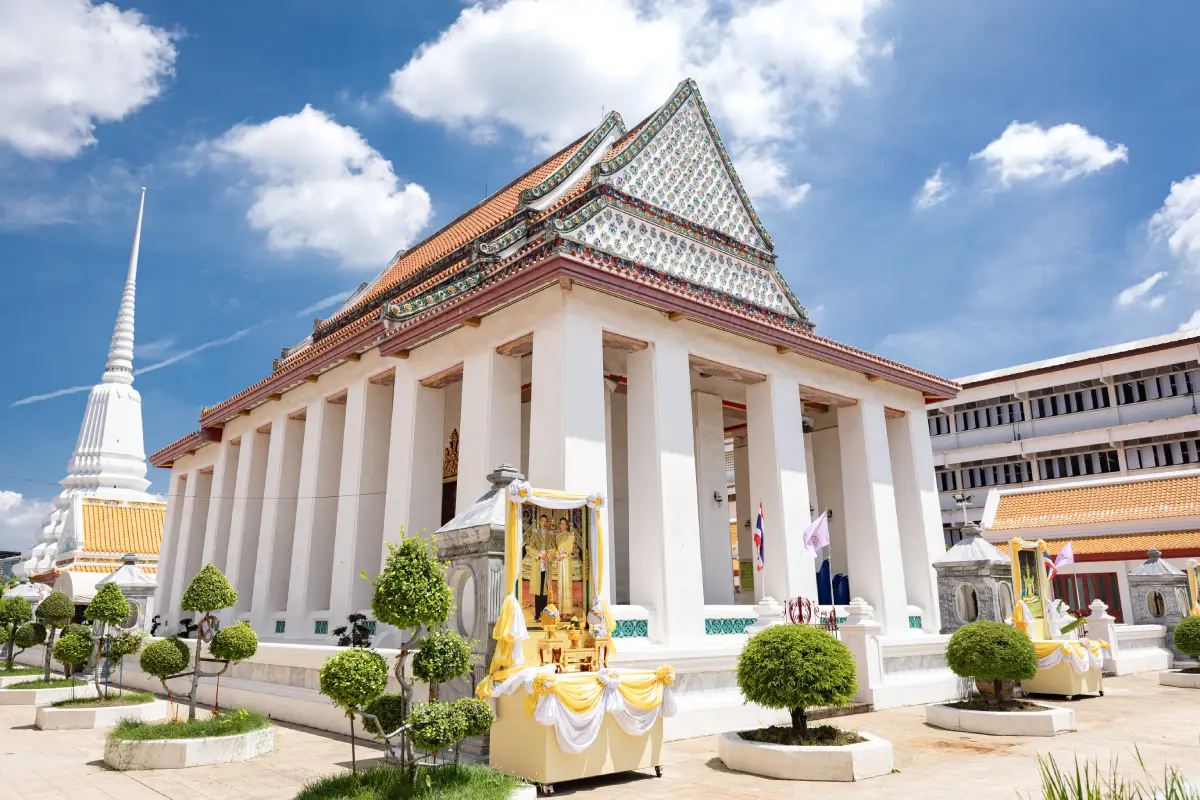
28. Wat Nang Nong Worawihan Wat Nang Nong Worawihan is located at 76 Wutthakat Road in Bang Kho Subdistrict, Chom Thong District, Bangkok. It is a third-class royal temple with origins in the late Ayutthaya period and major reconstruction in the reign of King Rama III. Its architecture is especially admired for the blend of Chinese and Thai artistic traditions characteristic of the king's preferred style.
Highlights: An ordination hall in the Chinese-influenced royal style of King Rama III, twin viharns, chedis, the important Phra Phuttha Maha Chakraphat image, murals depicting the Jambupati legend, and refined Chinese-Thai decoration.
Wat Nang Nong developed within an old Chom Thong canalside community and is thought to date to the late Ayutthaya period. Major restoration ordered during the reign of King Rama III created buildings that remain important examples of the royal architectural preference of that era.
The ordination hall displays clear Chinese influence while retaining its function as a Thai Buddhist religious building. Some features recall Chinese pavilion architecture, and auspicious Chinese patterns decorate the structure. The result illustrates the strong trading and cultural links between Thailand and China in the early nineteenth century.
The important Phra Phuttha Maha Chakraphat Buddha image is another highlight. Its iconography and artistic presentation can be appreciated within the richly decorated temple setting, offering insights into religious devotion and the creation of sacred images for community worship.
The murals portraying the Jambupati narrative are among the monastery's most valuable artistic features. The story concerns the Buddha's spiritual power and the instruction of a ruler attached to worldly authority and grandeur. Painted interpretations of such narratives historically helped convey Buddhist teachings to local communities.
The twin viharns and chedis complete the architectural ensemble. Their placement and ornament demonstrate the creativity of Rattanakosin artisans, particularly during the period when Chinese ceramic and decorative traditions were increasingly integrated into Thai temple construction.
Wat Nang Nong is ideal for art and history enthusiasts examining the relationship between Thai and Chinese craftsmanship. Nearby Wat Ratcha Orasaram and Wat Nang provide a meaningful comparative route through Chom Thong's historic royal monasteries.
Open Days: Daily Opening Hours: 08:00 – 17:00
Getting There: Approach by car or taxi through Wutthakat Road and Chom Thong Road, or use BTS Wutthakat Station with an onward local transport connection. The temple is conveniently grouped with Wat Nang and Wat Ratcha Orasaram.
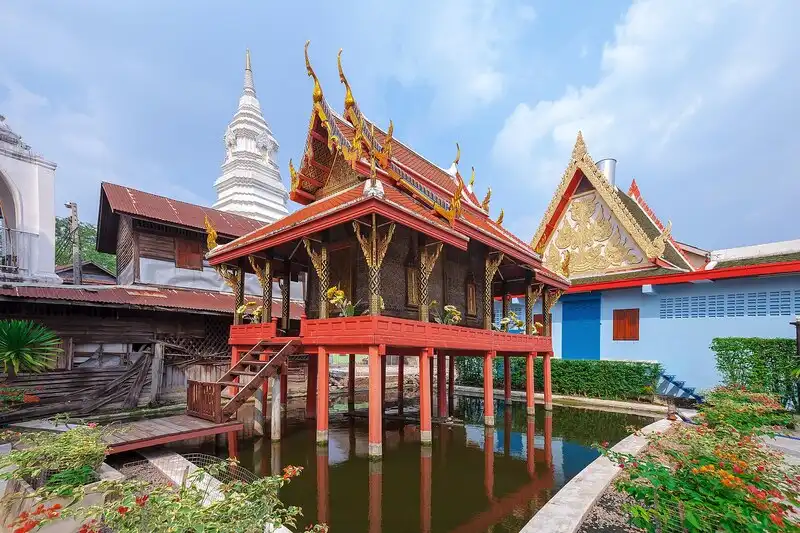
29. Wat Apsornsawan Worawihan Wat Apsornsawan Worawihan is located around Phet Kasem Soi 23 in Pak Khlong Phasi Charoen Subdistrict, Phasi Charoen District, Bangkok. This third-class royal temple has a remarkable feature: 28 seated Buddha images in the earth-touching posture are enshrined together within its ordination hall, an unusual arrangement among Thai temples.
Highlights: Twenty-eight Buddha images arranged on a single pedestal, the historic ordination hall, King Rama III-period art, the former name Wat Mu, and an old Thon Buri community setting.
Wat Apsornsawan was formerly known as Wat Mu and served an old community on the Thon Buri side long before the present urban landscape developed. It underwent substantial restoration during the Rattanakosin era, notably in the reign of King Rama III, when Thai and Chinese artistic forms were frequently combined in religious architecture.
The 28 Buddha images within the ordination hall are the temple's defining treasure. Similar in scale and design, they share a single pedestal and are traditionally associated with the Buddhist concept of Buddhas of the past. This arrangement creates a striking visual effect and presents a different devotional composition from ordination halls centered on one principal image.
The compound also preserves Rattanakosin architecture with decorative elements reflecting King Rama III's era, including features influenced by Chinese motifs, ceramics, and building techniques. Visitors can study how the visual language of temple design evolved as Buddhist patronage continued through the nineteenth century.
The surrounding Phasi Charoen district was historically linked with canals feeding into the Chao Phraya River and the old Thon Buri settlement network. The monastery thus illustrates the close ties between Buddhist ceremonies, local history, and daily canalside life.
Those interested in Buddhist iconography should set aside time to examine the distinctive group of 28 images. Wat Apsornsawan can be combined with Wat Nak Prok, Wat Nuan Noradit, and cultural sites around Phasi Charoen for a rewarding local history itinerary.
Open Days: Daily Opening Hours: 05:00 – 22:00
Getting There: Use MRT Bang Phai or Tha Phra Station and take a taxi or local transport to Phet Kasem Soi 23. Cars can approach from Phet Kasem Road and connecting streets in Phasi Charoen.
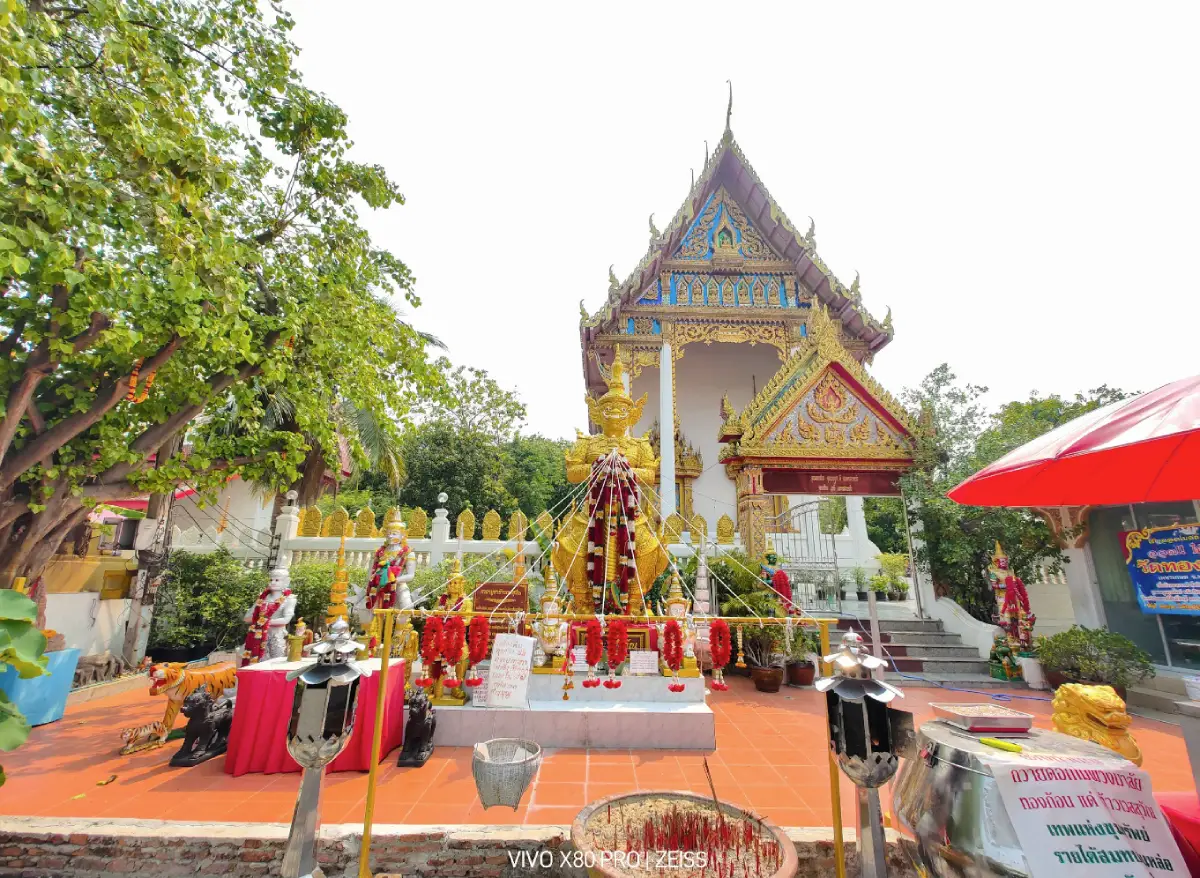
30. Wat Thong Sala Ngam Wat Thong Sala Ngam lies along Phet Kasem Soi 20 in Pak Khlong Phasi Charoen Subdistrict, Phasi Charoen District, Bangkok. This old canalside temple is closely associated with the Khlong Bang Luang community and the settlement history of Khlong Bangkok Yai. Local residents once called it Wat Thong Lang or simply Wat Thong, names recalling the neighborhood's earlier religious landscape.
Highlights: The historic ordination hall, the former name Wat Thong Lang, an old riverside sala and carved wooden naga motifs, the atmosphere of Khlong Bang Luang, and the history of communities along Khlong Bangkok Yai.
The temple dates back to the late Ayutthaya period and was established in a community of orchard growers and canalside residents along Khlong Bangkok Yai. Its early name, Wat Thong Lang, remained part of local memory before the more formal name Wat Thong Sala Ngam came into use.
The name Wat Thong Sala Ngam recalls a riverside pavilion admired for its craftsmanship and appearance. An especially meaningful architectural element is a carved wooden naga motif associated with the pavilion's gable. Nagas have longstanding symbolic importance in Buddhist art and traditions of protection, and the carving also attests to the skills of local artisans.
Khlong Bang Luang, also known in this area as part of Khlong Bangkok Yai, was once a major route for commercial and everyday travel. Temples along the banks served as educational, social, and religious centers, while waterside landings connected residents and monks with neighboring settlements.
Within the monastery, the ordination hall and other religious buildings preserve aspects of traditional Thai temple design. Restoration undertaken across different periods helped the site remain useful for worship, while surviving wooden features and the surrounding waterways retain valuable traces of local history.
Wat Thong Sala Ngam offers a relatively quiet experience of Bangkok's canalside heritage. Unlike the monumental royal monasteries of Phra Nakhon, it illuminates the role of an old community temple in ordinary family life, transport, and cultural tradition.
The temple is especially attractive to visitors interested in the Khlong Bang Luang art district, Baan Silapin, and the wider Phasi Charoen area. Allow time to appreciate both its religious buildings and the waterside neighborhood.
Open Days: Daily Opening Hours: 05:00 – 20:00
Getting There: Take MRT Bang Phai or Tha Phra Station and continue by local transport into Phet Kasem Soi 20, or use a car or taxi from Phet Kasem Road. A visit can be combined with nearby cultural places along Khlong Bang Luang.
Map (GPS):Get Directions to Wat Thong Sala Ngam

31. Wat Hong Rattanaram Ratchaworawihan Wat Hong Rattanaram Ratchaworawihan stands at 102 Soi Wat Hong Rattanaram in Wat Arun Subdistrict, Bangkok Yai District, Bangkok. This historic royal monastery is connected with the Ayutthaya, Thon Buri, and Rattanakosin periods. Located near the former Thon Buri royal palace and Wat Arun, it forms part of a particularly important cultural landscape associated with the reign of King Taksin.
Highlights: The ordination hall and revered Buddha images, the former name Wat Chao Sua Hong, links with King Taksin, Rattanakosin temple art, and the old neighborhoods around the former royal palace.
Wat Hong Rattanaram traces its beginnings to the Ayutthaya period. It was originally a public temple associated with a wealthy Chinese patron and was locally known as Wat Chao Sua Hong or Wat Khrua Hong. These names recall the prominent role of Chinese merchants and donors in supporting Buddhism in the old Thon Buri settlements.
After King Taksin founded Thon Buri as the capital, the nearby royal palace became the center of government and court life. Wat Hong Rattanaram consequently gained importance through its proximity to the new royal precinct. Restorations in later periods demonstrate continued religious patronage and preservation following the transfer of the capital to Phra Nakhon.
The ordination hall is one of the main buildings to appreciate. Sacred Buddha images and fine decorative work within the hall reveal Rattanakosin artistic traditions. The arrangement of religious buildings also reflects the way royal monasteries grew while retaining ties to local neighborhoods.
What makes the temple especially significant is its position in a district containing physical reminders of several major historical periods. A visit links the story of Wat Hong Rattanaram with the old royal palace, Wat Arun, and the evolution of the Chao Phraya waterfront, making the site a useful point of entry into Thon Buri history.
Visitors interested in the former capital, Buddhist architecture, and neighborhood culture can include Wat Hong Rattanaram with Wat Arun, Wat Molilokayaram, and Wat Ratchasittharam. It is worthwhile to explore the surrounding historical streets as well as the monastery itself.
Open Days: Daily Opening Hours: 09:00 – 17:00
Getting There: Take MRT Itsaraphap Station and continue on foot or by local transport. Another option is to cross the river by ferry from Tha Tien to the Wat Arun side and continue through the old neighborhood. Cars can approach via Arun Amarin Road.
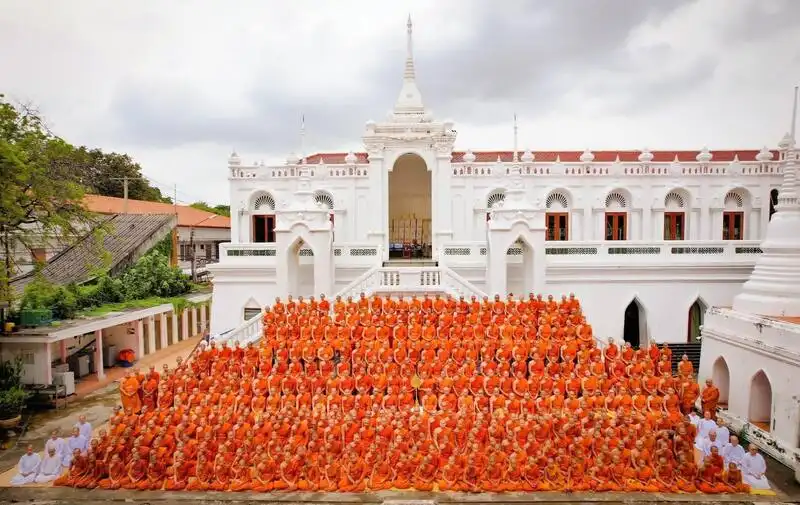
32. Wat Molilokayaram Ratchaworawihan Wat Molilokayaram Ratchaworawihan stands at 248 Arun Amarin Road in Wat Arun Subdistrict, Bangkok Yai District, Bangkok. Formerly called Wat Thai Talat, or the Temple at the End of the Market, it is a historic royal monastery closely linked with the Thon Buri capital and the transition to Rattanakosin Bangkok. The monastery is also important for traditional Buddhist education.
Highlights: The former name Wat Thai Talat, links to the old Thon Buri royal palace, the ordination hall, sacred Buddha images, Rattanakosin architecture, and the study of Buddhist scriptures and Pali.
The origins of Wat Molilokayaram reach back to the Ayutthaya period. Its significance increased after King Taksin established Thon Buri as the capital, when the neighboring Wat Chaeng, today's Wat Arun, and Wat Thai Talat formed part of the area closely associated with the royal palace. This history shows how religious sites and political authority were linked during the establishment of a new capital.
Following the move of the capital to the eastern bank under King Rama I, Wat Thai Talat was revived as a functioning monastery with resident monks. This change marked its transition from a site associated with the palace precinct back to a center of worship and religious learning.
The ordination hall and other structures display Thai artistic traditions shaped by successive restoration projects. Their layout reflects the site's location near the Chao Phraya River and the community that developed around the former royal palace. Sacred images and architecture retain both devotional and historical importance.
Wat Molilokayaram has been particularly significant as a center for Buddhist scholastic study. Monks and novices study Pali and Buddhist discipline, a tradition that has played a central role in Thai monastic education for centuries. Its scholarly functions give the monastery an importance beyond architectural heritage.
Travelers can combine the temple with Wat Arun and Wat Hong Rattanaram to understand the history of the Thon Buri royal palace and the evolution of the Buddhist institutions in this area.
Open Days: Daily Opening Hours: 08:00 – 16:00
Getting There: Use MRT Itsaraphap Station and connect by foot or local transport to Arun Amarin Road. Visitors can also cross by ferry from Tha Tien to Wat Arun and continue nearby. Drivers can enter via the Bangkok Yai road network.
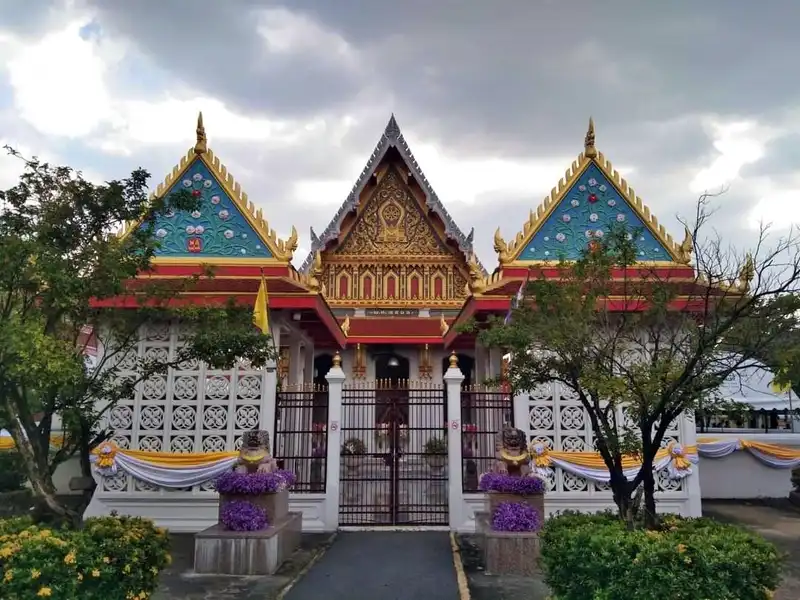
33. Wat Nuan Noradit Worawihan Wat Nuan Noradit Worawihan stands beside Khlong Bangkok Yai in Pak Khlong Phasi Charoen Subdistrict, Phasi Charoen District, Bangkok. This historic royal monastery is linked with old canalside communities and the development of Buddhism in the Rattanakosin period. Across the canal stands Wat Pradu Chimphli, emphasizing the importance of waterways in the settlement history of Thon Buri.
Highlights: The ordination hall and sacred Buddha images, the former name Wat Makok Nai, Rattanakosin art, the atmosphere of Khlong Bangkok Yai, and views of nearby historic temples across the canal.
Wat Nuan Noradit was once known as Wat Makok Nai, a name that reflects the landscape of the Bangkok Yai waterways. The older name is especially interesting when considered alongside Wat Makok Nok, historically associated with Wat Arun. These paired names reveal a traditional way of identifying temples through local geography and their relative positions.
The monastery's development under the Rattanakosin dynasty was supported by religious patrons who restored historic temples along Bangkok's western canals. Wat Nuan Noradit is consequently part of the continuing religious history of communities that relied on waterways for travel and commerce.
Its ordination hall and religious buildings display forms and decorative details associated with Rattanakosin temple craftsmanship. Rooflines, gables, and the arrangement of sacred images illustrate the artistic features of a royal monastery serving its surrounding community.
The Khlong Bangkok Yai setting is a defining part of the experience. Canal banks, old landing places, and religious sites facing each other across the water preserve an impression of how Thon Buri was organized before modern roads became the dominant means of transport.
Wat Nuan Noradit is ideal for those exploring local history, canalside culture, and Thai sacred architecture. It can be combined with Wat Pradu Chimphli, Wat Apsornsawan, and Baan Silapin Khlong Bang Luang on a cultural route through Phasi Charoen.
Open Days: Daily Opening Hours: 08:00 – 17:00
Getting There: Take MRT Bang Phai or Tha Phra Station and connect by local transport toward Khlong Bangkok Yai and the temple, or use a car or taxi from Phet Kasem Road. The surrounding district lends itself to a wider Khlong Bang Luang itinerary.
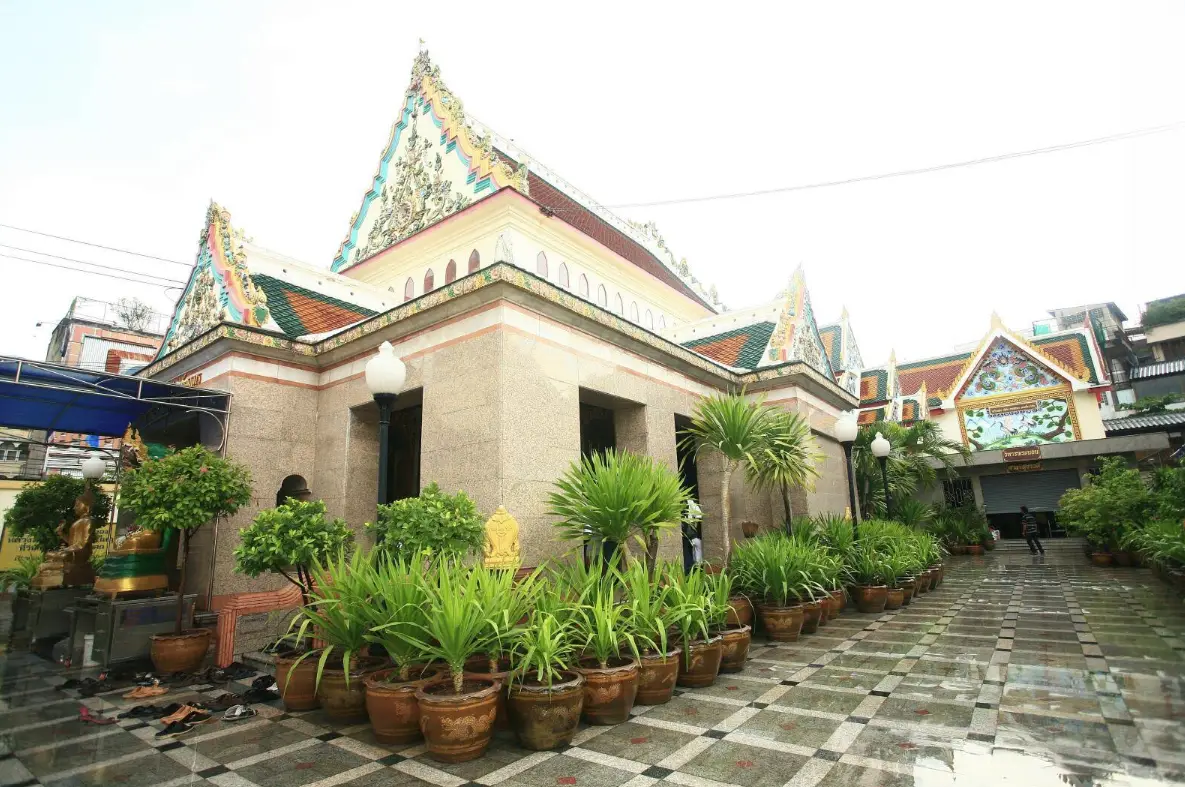
34. Wat Chamni Hatthakan (Wat Sam Ngam) Wat Chamni Hatthakan, also locally called Wat Sam Ngam, stands at 199 Rama I Road in Rong Mueang Subdistrict, Pathum Wan District, Bangkok, near Kasat Suek Bridge. It is an old community monastery valued for its historical relationship with the Rong Mueang neighborhood and Chinese-Thai artistic elements dating to the early Rattanakosin period.
Highlights: The former name Wat Sam Ngam, old ordination hall, early-Rattanakosin Chinese-Thai artistic details, the history of Rong Mueang and Khlong Nang Hong, and its convenient location near Kasat Suek Bridge.
The temple's establishment is associated with the year 1824, during the early Rattanakosin period. Its local name, Wat Sam Ngam, preserves the way residents remembered familiar places. The construction of community monasteries during this era accompanied the expansion of Bangkok beyond its earliest royal and commercial center.
The Rong Mueang area and Kasat Suek Bridge developed around important transport routes, roads, and waterways. Temples founded within these neighborhoods played central roles in merit-making, local ceremonies, and the religious life of residents as the city grew.
Wat Chamni Hatthakan's old ordination hall preserves artistic details that show a combination of Thai forms and Chinese influence. This mixture reflects the extensive commercial and cultural interactions between Thailand and China during the early nineteenth century, when imported materials and decorative motifs became common in religious architecture.
The temple illustrates how historic community institutions survived amid major urban change. The area shifted from a district closely associated with canals and traditional transport to one influenced by railways, roads, and contemporary commercial development, yet the monastery continues to hold religious and cultural significance.
Travelers interested in lesser-known central Bangkok temples can combine Wat Chamni Hatthakan with Wat Boromniwas, Wat Thepsirintrawat, and the National Stadium area. It offers useful insight into the social history of Rong Mueang.
Open Days: Daily Opening Hours: 08:00 – 18:00
Getting There: Take BTS National Stadium Station and continue on foot or by short local transport toward Rama I Road and Kasat Suek Bridge. Taxis and buses use Rama I Road and Banthat Thong Road, while the Hua Lamphong area provides another starting point.

35. Wat Thong Thammachat Worawihan Wat Thong Thammachat Worawihan is a historic royal monastery in Khlong San District, Bangkok, on the western side of the Chao Phraya River. It is closely associated with the old riverbank community and the development of Thon Buri during the Rattanakosin period. Its importance includes Buddhist artistic heritage and the continuing spiritual life of the Khlong San neighborhood.
Highlights: The ordination hall and sacred Buddha images, traditional Buddhist murals, royal-temple architecture, and the history of the Chao Phraya riverside community in Khlong San.
The monastery developed in a historic Thon Buri settlement that depended heavily on the Chao Phraya River for trade and travel. As in many old riverside communities, the temple served as a focus for religious celebrations, merit-making, and communal relationships across generations.
Wat Thong Thammachat continued to function as the neighborhood changed during the Rattanakosin period, with restoration helping maintain its sacred buildings and artwork. The history of such temples illustrates the relationship between ongoing Buddhist patronage and the preservation of the city's architectural heritage.
Murals and decorative details within the ordination hall are especially interesting to visitors who study traditional Thai painting. Religious narratives, visual symbolism, and ornate interior work demonstrate how temples communicated Buddhist teachings and ideals through art.
The ordination hall and other religious buildings preserve aspects of the craftsmanship of different historical periods. Their roof forms, gables, and decorative elements allow visitors to appreciate the character of Thon Buri royal monasteries set amid older riverbank neighborhoods.
Wat Thong Thammachat can be included in a Khlong San itinerary with Wat Anongkharam, Wat Phitchaya Yatikaram, and other historic sites near the Chao Phraya River. It is especially suitable for travelers interested in local heritage, mural painting, and Buddhist community life.
Getting There: Travel by car or taxi through Somdet Chao Phraya Road and other routes serving Khlong San. The BTS Gold Line provides connections to the wider area, followed by local transport to the monastery. A visit can be included in a wider riverside temple route.
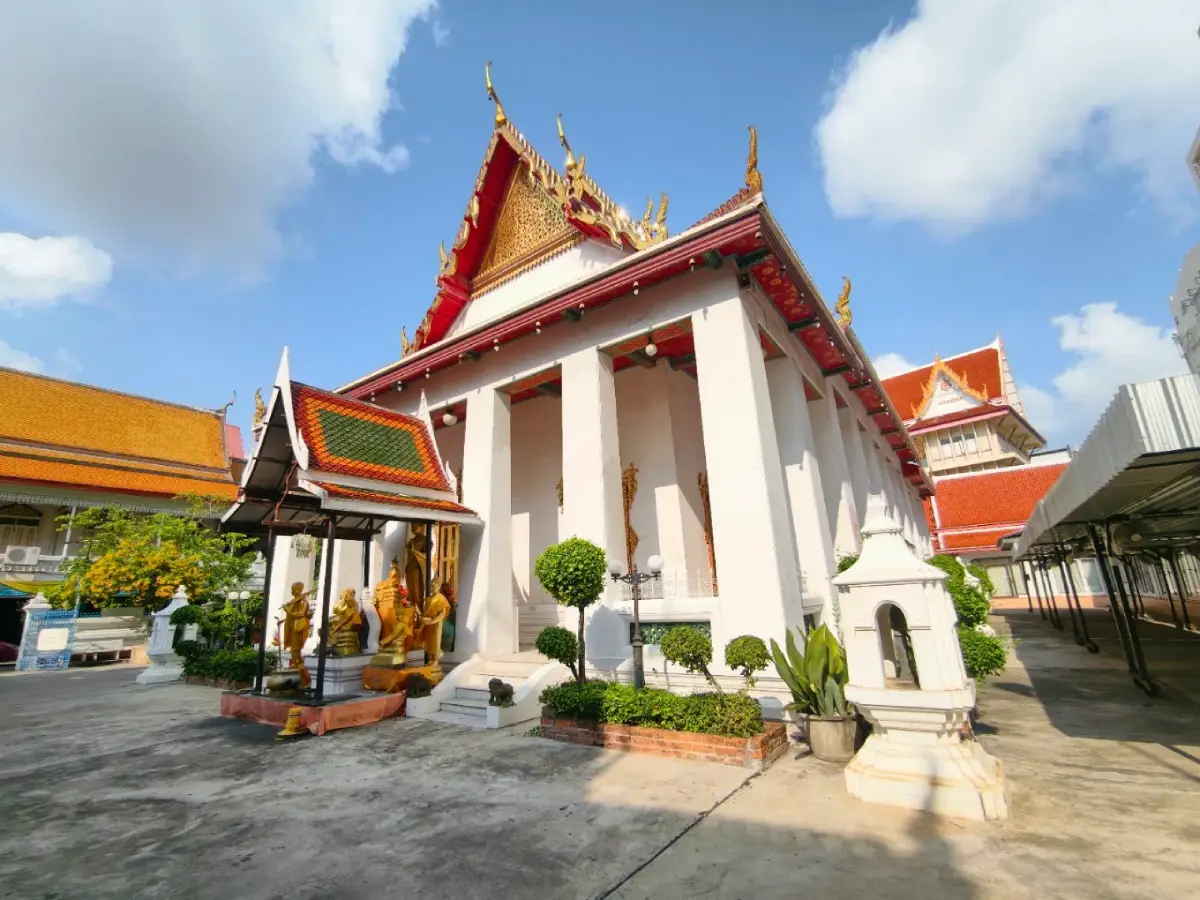
36. Wat Bophit Phimuk Worawihan Wat Bophit Phimuk Worawihan stands at 266 Chakkrawat Road in Chakkrawat Subdistrict, Samphanthawong District, Bangkok. This second-class royal temple has roots reaching back to the Ayutthaya period and preserves important examples of early Rattanakosin Buddhist art. Its location connects it with the old commercial districts of Phahurat, Sampheng, Khlong Ong Ang, and Yaowarat.
Highlights: Phra Samphuttha Bophit, an important U Thong-style stone Buddha image, a Lanka-style chedi, the viharn and ordination hall, the former name Wat Choeng Len, and the atmosphere of a traditional Bangkok trading neighborhood.
Wat Bophit Phimuk was previously called Wat Choeng Len or Wat Tin Len, names connected with the muddy terrain and waterways that once characterized this part of the city. Such geographic names preserve valuable evidence of local settlement before modern streets and commercial buildings transformed the landscape.
During the reign of King Rama I, the temple was restored through the patronage of Krom Phra Ratchawang Bowon Sathan Phimuk. Its renewed status reflects the effort to restore Buddhism and artistic heritage during the foundation of the Rattanakosin capital.
Among the religious treasures are Phra Samphuttha Bophit and an important stone Buddha image associated with the U Thong artistic tradition. These images hold devotional significance and illustrate the development of Buddhist sculpture across different historical periods.
A Lanka-style chedi, the ordination hall, and the viharn form important elements of the compound. Their architecture demonstrates how South and Southeast Asian Buddhist artistic concepts were adapted to the conventions of Thai religious building.
The surrounding Chakkrawat neighborhood gives the temple additional cultural value. Nearby markets and historic trading lanes were inhabited by merchants from a variety of backgrounds, allowing visitors to observe how Buddhist institutions remained central within busy commercial areas.
Wat Bophit Phimuk is well suited to a cultural walk including Wat Chakkrawat, Sampheng Market, and Khlong Ong Ang. It rewards those interested in Buddha imagery, historic temple architecture, and the social history of Bangkok's old trading streets.
Open Days: Daily Opening Hours: 08:00 – 17:00
Getting There: Take MRT Sam Yot Station and walk or continue by taxi to Chakkrawat Road. Public buses and taxis also reach the area through Phahurat and Sampheng. The compact historic street network is especially rewarding on foot.

37. Wat Chakkrawat Rachawat Woramahawihan Wat Chakkrawat Rachawat Woramahawihan, commonly associated with the old name Wat Sam Pluem, is located at 225 Chakkrawat Road in Chakkrawat Subdistrict, Samphanthawong District, Bangkok. It is a historic royal monastery tied to the old Chinese-Thai commercial quarter and the patronage of Chao Phraya Bodindecha during the reign of King Rama III.
Highlights: The history of Wat Sam Pluem, connections with Chao Phraya Bodindecha, the ordination hall, revered Buddha images, Rattanakosin Buddhist art, and the old Chakkrawat commercial district.
The monastery was originally called Wat Nang Pluem and later became known as Wat Sam Pluem. Its origins extend back to the Ayutthaya period. Changes in the name and status of the temple reflect the role of local patrons and senior officials in restoring and supporting Buddhism during the early Rattanakosin era.
Chao Phraya Bodindecha (Sing Singhaseni), an influential statesman and military commander, was a key figure in the temple's restoration before it was offered as a royal monastery under King Rama III. This history associates the site with important developments in Thailand's political and social life and the practice of donating resources to religious institutions.
The ordination hall, Buddha images, and related buildings contain architectural features characteristic of the Rattanakosin period. Their decorative workmanship records the artistic preferences of the era, while the continuing use of the compound demonstrates its living religious role.
Wat Chakkrawat stands amid Chakkrawat and Sampheng, a district with a long history of trade and commercial settlement. Its location illustrates how monasteries, markets, shops, and neighborhoods developed together as Bangkok's economy and transport networks expanded.
The temple can be visited alongside Wat Bophit Phimuk, Wat Samphanthawongsaram, and Sampheng Market. It is particularly interesting to travelers exploring the history of Thai officials, early-Rattanakosin art, and Chinatown's old streets.
Open Days: Daily Opening Hours: 08:00 – 17:00
Getting There: Use MRT Sam Yot or Wat Mangkon Station followed by a walk or short local connection to Chakkrawat Road. Buses and taxis serving Sampheng also provide access. The historic neighborhood is well suited to exploring on foot.

38. Wat Samphanthawongsaram Wat Samphanthawongsaram, formerly called Wat Ko Kaeo Langkaram, is located in Samphanthawong District, Bangkok, close to Song Wat Road and the old Sampheng trading area. This historic royal monastery is closely connected with the development of Chinese-Thai riverside commerce and the Buddhist and royal heritage of early Rattanakosin Bangkok.
Highlights: The history of Wat Ko Kaeo Langkaram, the ordination hall, revered Buddha images, Rattanakosin religious art, and the historic Song Wat–Sampheng trading neighborhood.
The temple's older name was Wat Ko Kaeo Langkaram, recalling its origins before the modern commercial landscape took shape. Its history is connected with Buddhist patronage by members of the royal family during the Rattanakosin period and with the old Chao Phraya waterfront settlements.
During the reign of King Rama III, the monastery received further development and a new royal name. Its history reflects the wider restoration of older temples during a period when international commerce, especially trade with China, was reshaping Bangkok.
The ordination hall and other sacred buildings preserve important examples of Rattanakosin religious design. The Buddha images within the compound remain centers of devotion, while architectural features demonstrate traditional craftsmanship and the changes introduced through later restoration.
Song Wat Road and Sampheng became important centers of commerce in the nineteenth and early twentieth centuries. The temple's location in this dense trading neighborhood highlights how religious sites provided continuity, communal identity, and spiritual spaces for merchant families over time.
Wat Samphanthawongsaram is a natural stop on a route with Wat Chakkrawat, Wat Pathum Khongkha, Song Wat Road, and Talat Noi. It is rewarding for travelers studying the city's trading history, Chinese-Thai communities, Buddhism, and Rattanakosin architecture.
Open Days: Daily Opening Hours: 08:00 – 17:00
Getting There: Use MRT Wat Mangkon Station and walk or take a short local ride toward Song Wat Road and Sampheng. Taxis and buses can approach from Yaowarat and Song Wat; a walking route through the old commercial neighborhood is particularly worthwhile.
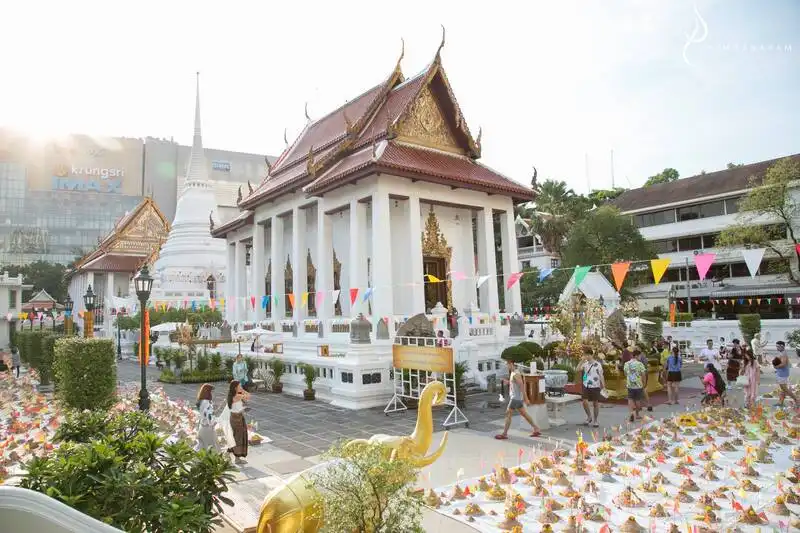
39. Wat Pathum Wanaram Ratchaworawihan Wat Pathum Wanaram Ratchaworawihan, also known as Wat Sa Pathum, stands on Rama I Road in Pathum Wan Subdistrict, Pathum Wan District, Bangkok. This royal monastery, founded during the reign of King Rama IV, occupies an extraordinary position amid major shopping centers and transport hubs in the Siam district. Its peaceful grounds preserve a chapter of Bangkok's history before the area became a modern business center.
Highlights: The ordination hall and viharn, murals associated with King Rama IV's period, lotus ponds, the history of the royal Sa Pathum garden, and a peaceful temple atmosphere in central Siam.
King Mongkut, Rama IV, founded the temple in connection with the development of the royal garden at Sa Pathum, then an outlying landscape used for royal recreation. The establishment of a monastery in this area reflects the expansion of royal activities beyond the old Grand Palace district during the mid-nineteenth century.
The temple has associations with Queen Thepsirin and was supported by the royal court. Its ordination hall and viharn contain Buddha images and decorative work that reflect the artistic character of King Rama IV's reign, when Thai craftsmen increasingly encountered Western ideas and techniques.
The murals are particularly valuable for understanding changes in Thai painting during the middle Rattanakosin period. New approaches to spatial composition and visual storytelling developed alongside long-established forms of Buddhist symbolism.
The lotus ponds and calm temple grounds provide a striking contrast to the surrounding commercial district. They also preserve a reminder of the original landscape of Pathum Wan before the construction of its modern shopping centers and busy roads.
Wat Pathum Wanaram is an ideal place for merit-making, quiet reflection, and viewing Buddhist art without leaving central Bangkok. It combines easily with Siam Square, Ratchaprasong, and nearby cultural attractions. Public rail transport is generally the most convenient way to visit.
Open Days: Daily Opening Hours: 09:00 – 17:00
Getting There: Take BTS Siam or Chit Lom Station and walk to the temple on Rama I Road. Buses use Rama I and Ratchadamri Roads. Driving is possible, but visitors should allow time for traffic around Siam and Ratchaprasong.

40. Wat Boromniwas Ratchaworawihan Wat Boromniwas Ratchaworawihan is located in Rong Mueang Subdistrict, Pathum Wan District, Bangkok. This historic royal monastery is significant in the development of the Dhammayut monastic tradition and Thai painting during the reign of King Rama IV. It is especially admired for murals associated with Khrua In Khong, an influential artist who incorporated Western techniques into Buddhist painting.
Highlights: Murals by Khrua In Khong, Buddhist symbolic paintings influenced by Western visual techniques, the ordination hall, the history of the Dhammayut order, and a location close to the Bobae commercial area.
Wat Boromniwas is linked with King Mongkut, Rama IV, from the period when he was still ordained as a monk. He supported the establishment of the temple as an aranyawasi, or forest-oriented monastery, emphasizing meditation and a quieter religious environment. The project was conceptually related to Wat Bowonniwet, another center of the Dhammayut tradition.
The monastery was once known as Wat Nok. It later received further development and restoration under King Rama V and the royal name Wat Boromniwas. Its evolution reflects the changing religious and educational needs of the Thai Sangha during the nineteenth century.
The murals inside the ordination hall are exceptionally important. They are associated with Khrua In Khong, a pioneer in blending Western perspective, light, shadow, and pictorial composition with traditional Thai Buddhist imagery. Rather than presenting only conventional religious scenes, these works employ visual metaphors to explore Buddhist ideas.
Some paintings incorporate objects and scenes inspired by Western technological and scientific developments, including railways and new forms of equipment. Their appearance in Buddhist murals reflects the intellectual encounter between Thailand and the outside world during the reign of King Rama IV.
The ordination hall and related buildings also preserve important features of mid-Rattanakosin architecture, combining traditional Thai forms with the educational and spiritual purposes of the monastery. The site is therefore as significant to art history as it is to religious history.
Wat Boromniwas is a worthwhile destination for visitors interested in historic painting, nineteenth-century cultural exchange, and the Dhammayut order. It can be included with Wat Chamni Hatthakan, Wat Thepsirintrawat, and the old Bobae district. Observe photography rules and remain quiet when viewing murals inside religious buildings.
Open Days: Daily Opening Hours: 05:00 – 20:00
Getting There: Take MRT Hua Lamphong Station and continue by taxi or local transport toward Rong Mueang and Bobae. Drivers can approach via Rama I Road and Krung Kasem Road, depending on traffic. Nearby historic temples can be combined into a central Bangkok route.
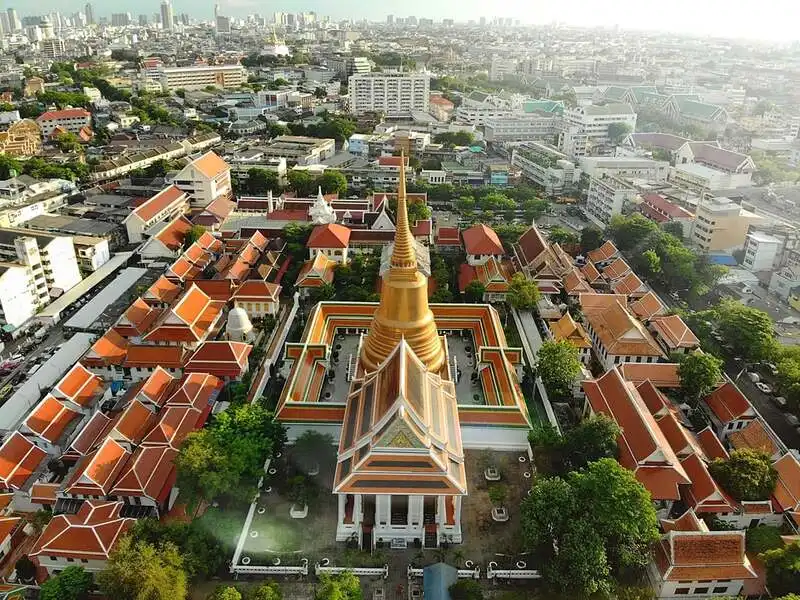
41. Wat Somanas Ratchaworawihan Wat Somanas Ratchaworawihan, often called Wat Somanas Vihara, stands beside Krung Kasem Road in Wat Somanas Subdistrict, Pom Prap Sattru Phai District, Bangkok. King Rama IV founded the royal monastery in memory of Queen Somanas Wattanawadi. Its orderly architecture and location near Khlong Phadung Krung Kasem also connect it with the expansion of Bangkok's outer historic city in the mid-nineteenth century.
Highlights: The ordination hall, viharn, principal chedi and surrounding galleries, royal architecture of King Rama IV's period, and historical connections with Queen Somanas Wattanawadi.
King Mongkut, Rama IV, commissioned Wat Somanas in order to dedicate religious merit to Queen Somanas Wattanawadi after her death. The temple was founded during the period when Khlong Phadung Krung Kasem was being excavated to expand the city's outer defensive and urban boundary. Its location along the new canal demonstrates the relationship between Buddhist foundations and urban planning.
The monastery was designed with a clearly organized layout, coordinating the ordination hall, viharn, chedi, galleries, and monks' residential quarters. This approach emphasizes the distinction between the sacred precinct and residential monastic areas, reflecting the importance of consecrated boundaries for formal acts of the Buddhist Sangha.
The ordination hall preserves the dignity of mid-Rattanakosin royal architecture. The quality of its decoration, the central position of the chedi, and the relationship among its sacred buildings illustrate a careful balance of religious function and architectural design.
Wat Somanas is closely related historically to Wat Makut Kasatriyaram, another monastery founded during the reign of King Rama IV near Khlong Phadung Krung Kasem. Visiting both temples offers an opportunity to examine how religious monuments were integrated into a newly expanding part of old Bangkok.
Wat Somanas is especially suitable for visitors interested in royal history, nineteenth-century Buddhist architecture, and the growth of Bangkok. It can be combined with Wat Makut Kasatriyaram, Wat Intharawihan, and the Ratchadamnoen Nok area. Modest dress and appropriate respect for religious ceremonies are expected.
Open Days: Daily Opening Hours: 06:00 – 18:00
Getting There: Travel by bus, taxi, or private car along Krung Kasem Road and Ratchadamnoen Nok Road. Public transport connections serve the Khlong Phadung Krung Kasem area, making it possible to include several historic monasteries on the same day.
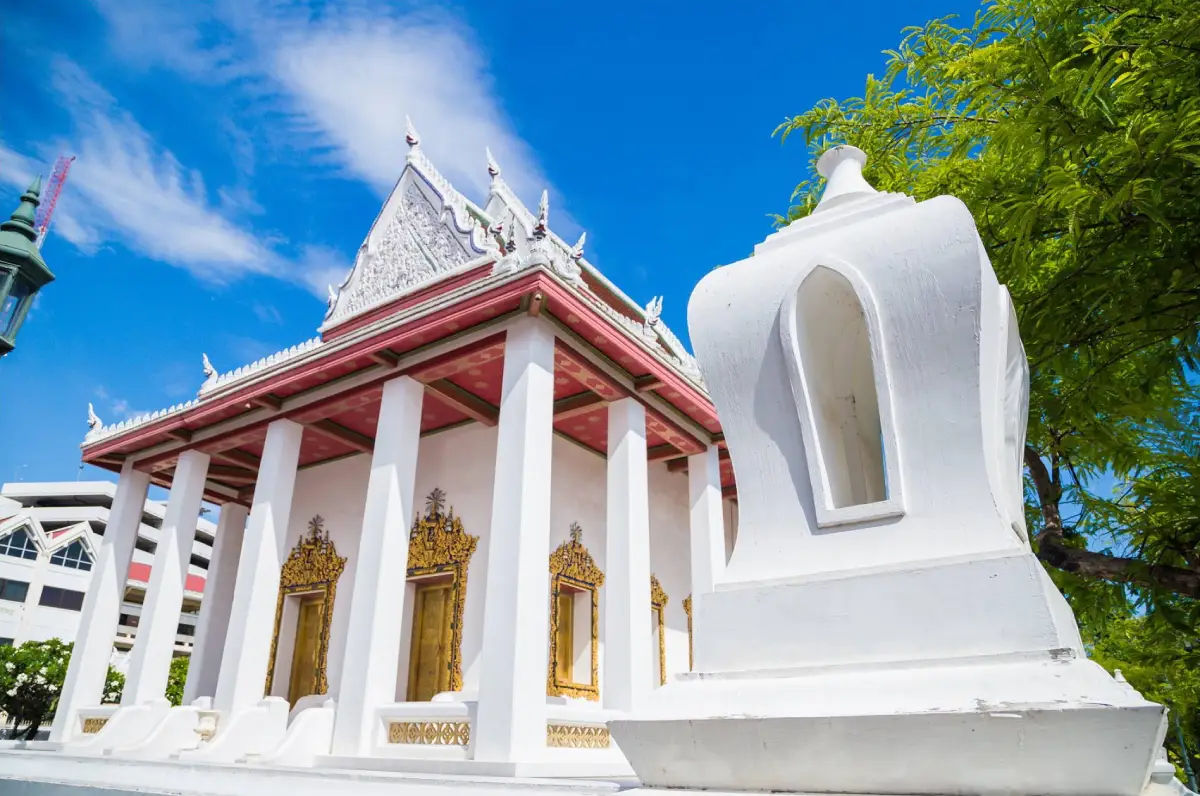
42. Wat Makut Kasatriyaram Ratchaworawihan Wat Makut Kasatriyaram Ratchaworawihan stands at 330 Krung Kasem Road in Bang Khun Phrom Subdistrict, Phra Nakhon District, Bangkok. It is a second-class royal monastery of the Dhammayut order founded by King Rama IV. Its history is closely connected with urban expansion along Khlong Phadung Krung Kasem and with the religious architectural traditions of mid-Rattanakosin Bangkok.
Highlights: The ordination hall and viharn, important Buddha images, King Rama IV-period architectural design, the excavation of Khlong Phadung Krung Kasem, links with Wat Somanas, and the artistic character of a Dhammayut royal monastery.
The temple was established during King Rama IV's expansion of the capital beyond the older city boundaries. Khlong Phadung Krung Kasem became a new outer canal and an important part of the city's urban structure. The king's decision to create temples along this route combined Buddhist patronage with the organization and development of the expanding capital.
Wat Makut Kasatriyaram is historically linked to Wat Somanas Ratchaworawihan, which was established in the same reign. Together the monasteries illustrate how the establishment of sacred sites was closely connected with the construction of canals, new transport routes, and a more ordered urban landscape.
The ordination hall is a key architectural feature, containing important Buddha images and serving as a sacred site for formal Buddhist ceremonies. Its exterior and interior design reflect the restrained dignity and harmonious proportions of royal temples built during the middle Rattanakosin period.
The monastery also carries significance for the history of the Dhammayut order, which developed during King Mongkut's monastic life and later received royal patronage. Buddhist education, discipline, and religious practice form an important part of the monastery's historical identity.
The environment around Wat Makut Kasatriyaram remains connected with Ratchadamnoen Nok Road and Khlong Phadung Krung Kasem, both important elements in Bangkok's development. Visitors can therefore appreciate its sacred architecture while also exploring an area shaped by nineteenth-century urban planning.
The temple is an excellent stop for those studying King Rama IV's reign, religious architecture, and the history of Bangkok's city expansion. It combines especially well with Wat Somanas and Wat Intharawihan.
Open Days: Daily Opening Hours: 08:00 – 18:30
Getting There: Travel by bus, taxi, or car along Krung Kasem and Ratchadamnoen Nok Roads. Visitors interested in temples established during the reign of King Rama IV can plan a combined route including Wat Somanas.

43. Wat Thepthidaram Worawihan Wat Thepthidaram Worawihan stands at 70 Maha Chai Road in Samran Rat Subdistrict, Phra Nakhon District, Bangkok. Founded under King Rama III, it is celebrated for Chinese-influenced royal-style architecture and for its historical links with Sunthorn Phu, one of Thailand's best-known poets. Sculptures and preserved buildings make it a destination of interest to students of both Buddhist art and Thai literature.
Highlights: King Rama III-period ordination hall, a remarkable group of 52 sculpted Buddhist nuns, Sunthorn Phu's former monastic residence, Chinese-Thai architecture, and the historic cluster of temples around Loha Prasat.
King Nangklao, Rama III, ordered the temple to be built in honor of his eldest daughter, Princess Wilat, who later held the title Krom Muen Apsornsuda Thep. The foundation represents royal Buddhist patronage during a period when Chinese influence played a particularly prominent role in Thai architecture and decorative art.
The architecture embodies the royal taste of King Rama III, combining Thai religious forms with Chinese-inspired ornament and building details. The ordination hall and other structures demonstrate the skilled craftsmanship of an era strongly shaped by trade and cultural exchanges with China.
An especially unusual feature is the group of 52 statues of Buddhist nuns, or bhikkhunis. Their representation in the temple offers a rare opportunity to explore the roles of women in Buddhist history and the use of religious sculpture to communicate stories and ideals.
Wat Thepthidaram also holds literary importance because the celebrated poet Sunthorn Phu once lived here as an ordained monk. The area associated with his residence allows visitors to learn about his personal history and literary legacy, connecting Buddhist life with the development of Thai poetry.
The surrounding historic neighborhood contains Wat Ratchanatdaram, Loha Prasat, Wat Saket, and the Giant Swing. A walking route through these landmarks reveals the artistic and cultural richness of early Rattanakosin Bangkok.
The temple is particularly rewarding for visitors interested in religious sculpture, nineteenth-century Thai-Chinese art, Sunthorn Phu, and literature. Respect opening arrangements and any restrictions on access or photography inside historic buildings.
Open Days: Daily Opening Hours: 07:30 – 17:00
Getting There: Use MRT Sam Yot Station and walk or continue by local transport to Maha Chai Road. Buses serving Ratchadamnoen and Maha Chai Roads provide alternatives. Wat Ratchanatdaram and Loha Prasat are convenient nearby stops.
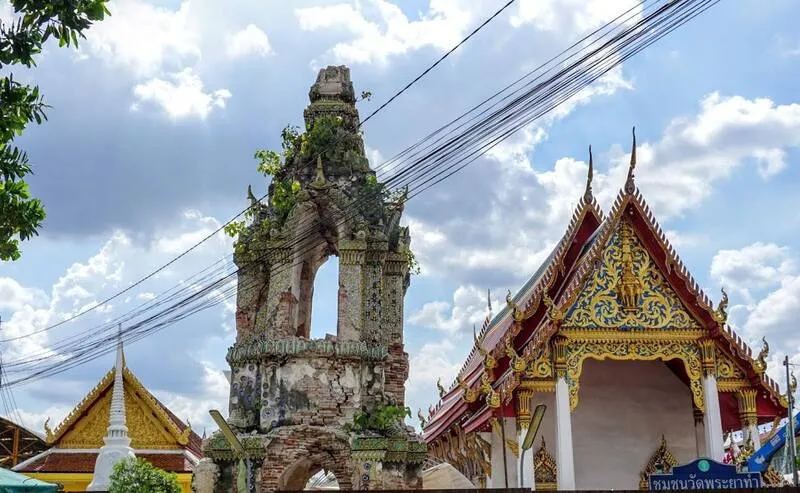
44. Wat Praya Tham Worawihan Wat Praya Tham Worawihan is located at 47 Arun Amarin Road in Ban Chang Lo Subdistrict, Bangkok Noi District, Bangkok. This old royal monastery is closely associated with Thon Buri's canalside settlements, Buddhist history, and the neighborhood's traditions of craftsmanship and education. Its location near Khlong Mon and old communities makes it a valuable local heritage site.
Highlights: The ordination hall and important Buddha images, the history of the Ban Chang Lo community, links with Khlong Mon, Rattanakosin temple architecture, and the role of monasteries in local education.
The temple developed within the historic Bangkok Noi district, an area once dependent on the Chao Phraya River and neighboring canals for transport and settlement. Khlong Mon and connecting waterways supported communities whose religious and social lives centered on temples and shared local institutions.
The temple compound contains a sacred precinct, residential monastic areas, and spaces connected with community activity and education. This layout illustrates the broad role of Buddhist temples as places for worship, learning, social relations, and neighborhood gatherings.
The ordination hall and its principal Buddha images are significant within the Rattanakosin artistic tradition. Architectural details, roof forms, and arrangements of sacred spaces preserve aspects of traditional temple craftsmanship and the religious functions of a historic community monastery.
Ban Chang Lo is itself a neighborhood name associated with artisanal skills and the making of cast objects. Historic occupational communities such as this played an important role in Bangkok's economy and social organization. The temple's setting therefore provides insights into the connections among specialized crafts, homes, canals, and religious life.
Wat Praya Tham can be combined with Wat Rakang, Wat Amarinthraram, and the Khlong Mon area. It is a rewarding stop for visitors interested in local arts, community history, and the quieter temples of Bangkok Noi.
As a functioning monastery, the grounds are also used for community activities and religious ceremonies. Visitors should dress modestly and respect worshippers, monks, and any educational activities taking place.
Open Days: Daily Opening Hours: 08:00 – 17:00
Getting There: Reach the temple by taxi or car along Arun Amarin Road and local streets in Ban Chang Lo. Buses serving the Siriraj and Bangkok Noi areas are another option, and river travelers can connect by road from piers on the Thon Buri bank.
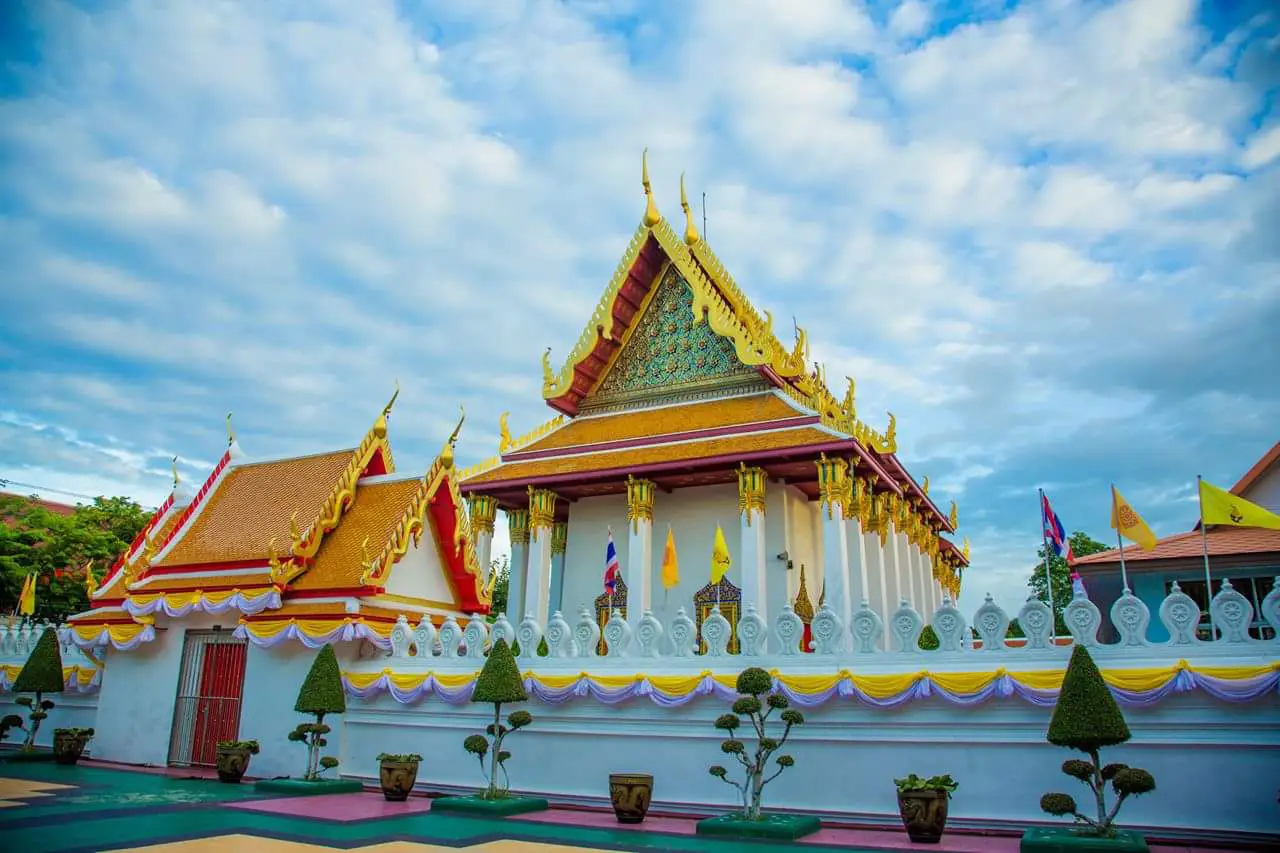
45. Wat Daowaduengsaram Wat Daowaduengsaram stands at 872 Soi Somdet Phra Pinklao 2 in Bang Yi Khan Subdistrict, Bang Phlat District, Bangkok. This third-class ordinary royal temple has important links with early-Rattanakosin patronage and the old Chao Phraya riverbank community near the mouth of Khlong Bang Yi Khan. It preserves historic murals, an unusual bell tower, and traditions of Buddhist learning.
Highlights: Old ordination hall and murals, a bell tower with Western architectural influence, the memorial mondop associated with Luang Pu Wo, early-Rattanakosin royal patronage, and the temple's role in teaching Buddhist scriptures.
The monastery's history involves construction and restoration from the reigns of Kings Rama I to Rama III. Accounts of its patrons include Chao Chom Waen, also known as Khun Suea, a royal consort of King Rama I, and other influential supporters of Buddhism. This history demonstrates the role of women and court figures in founding and maintaining religious institutions.
The ordination hall is significant for its architecture and Buddhist mural painting. Religious narratives depicted through these images preserve aspects of traditional artistic composition, religious beliefs, and the work of early-Rattanakosin craftsmen.
The bell tower attracts attention because its design incorporates elements influenced by Western architecture. Such a combination provides evidence of the increasing interaction among artistic traditions during the Rattanakosin period and offers an unusual detail within a Thai Buddhist temple.
The Luang Pu Wo mondop is another important devotional area. It preserves memories of a respected monk and reflects the community's practice of honoring teachers whose work contributed to religious education and spiritual life.
Wat Daowaduengsaram has also supported Buddhist scriptural study, giving it a role beyond its historic monuments. The continuing activities of the temple illustrate how a royal monastery can remain a living institution serving its surrounding neighborhood.
The site is suitable for travelers interested in murals, early-Rattanakosin heritage, and the old Bang Yi Khan district. Nearby riverside areas and the Rama VIII Bridge surroundings can be included in a wider visit to Bang Phlat.
Open Days: Daily Opening Hours: 08:00 – 17:00
Getting There: Use MRT Bang Yi Khan Station and continue by taxi or other local transport. Drivers can approach via Somdet Phra Pinklao Road, Charan Sanit Wong Road, or Arun Amarin Road, depending on the starting point.
Map (GPS):Get Directions to Wat Daowaduengsaram
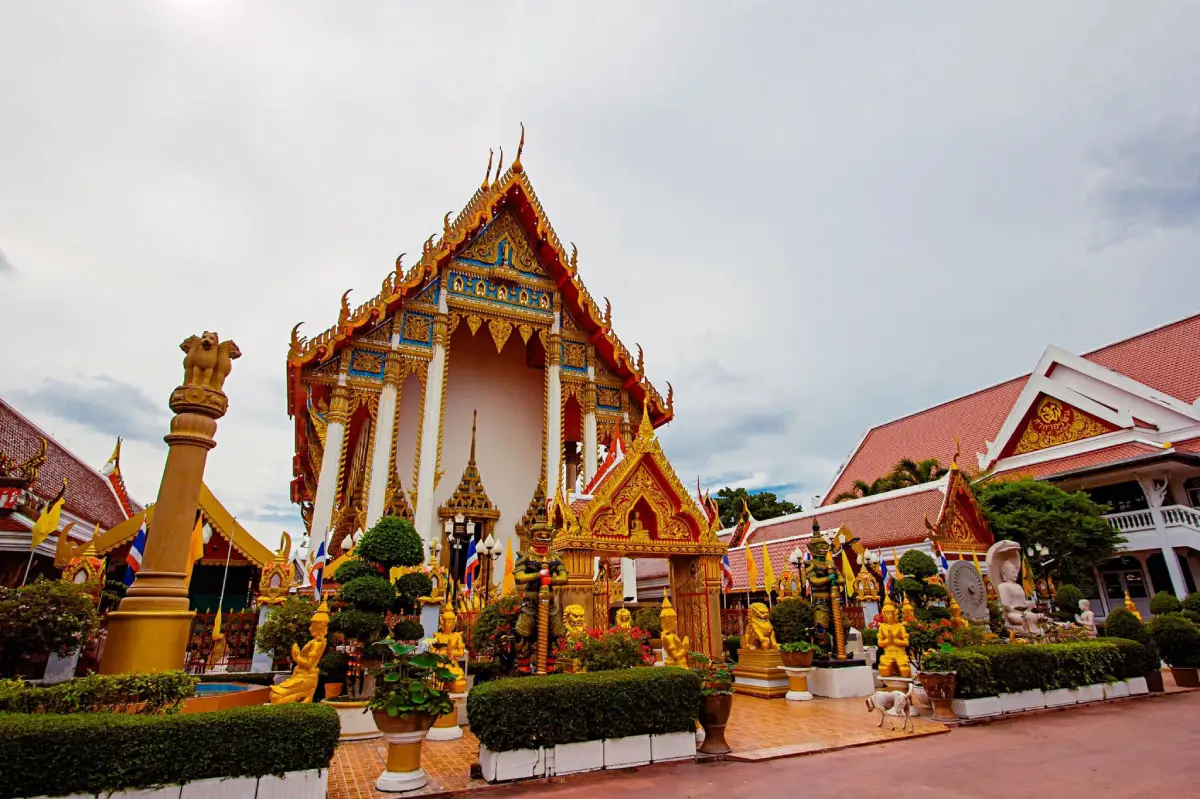
46. Wat Awutvikasitaram Wat Awutvikasitaram stands at 436 Charan Sanit Wong Soi 72 in Bang Phlat Subdistrict, Bang Phlat District, Bangkok. A third-class ordinary royal temple of the Dhammayut order, it has long served the Bang Phlat riverside community. The temple is also known for devotional traditions surrounding Khun Mae Bunruean Tongbuntoem, a revered laywoman associated with Buddhist practice.
Highlights: The ordination hall, a Buddha image modeled on Phra Phuttha Chinnarat, an Ashokan pillar and Dhamma wheel, the Khun Mae Bunruean Tongbuntoem shrine, and the history of the Bang Phlat community.
The temple developed alongside the settlement of Bang Phlat, a district historically dependent on the Chao Phraya River for transport and trade. Like other old riverside monasteries, it became a focal point for religious ceremonies, merit-making, and community activities.
The ordination hall and sacred Buddha images remain central to temple life. A replica modeled on Phra Phuttha Chinnarat demonstrates the popularity of important artistic prototypes in Thai Buddhism. Symbols including the Ashokan pillar and Dhamma wheel recall the history and spread of the Buddha's teachings.
The shrine associated with Khun Mae Bunruean Tongbuntoem is an important place of devotion for many visitors. She is respected by followers interested in Buddhist meditation and stories of committed lay practitioners. Her presence in the monastery's religious landscape reflects the continuing role of inspiring individuals in Thai Buddhist culture.
Wat Awutvikasitaram also supports Buddhist study and ceremonies throughout the religious calendar. Its continued work highlights the importance of temples as spiritual and communal institutions amid the development of modern urban neighborhoods.
The site is suitable for travelers interested in Buddhism, local history, and devotional traditions in Bang Phlat. It can be included on a local itinerary with Wat Daowaduengsaram and other historic temples along Charan Sanit Wong Road.
Visitors wishing to pay respect at the Khun Mae Bunruean shrine should take note that the shrine's visiting hours may differ from those of the monastery grounds.
Open Days: Daily Opening Hours: 08:30 – 17:00
Getting There: Approach by car or taxi through Charan Sanit Wong Road and enter Soi 72. MRT Blue Line connections serve the wider Bang Phlat district, followed by a taxi, motorcycle taxi, or local transport. Allow sufficient time if making a separate visit to the shrine.
Map (GPS):Get Directions to Wat Awutvikasitaram
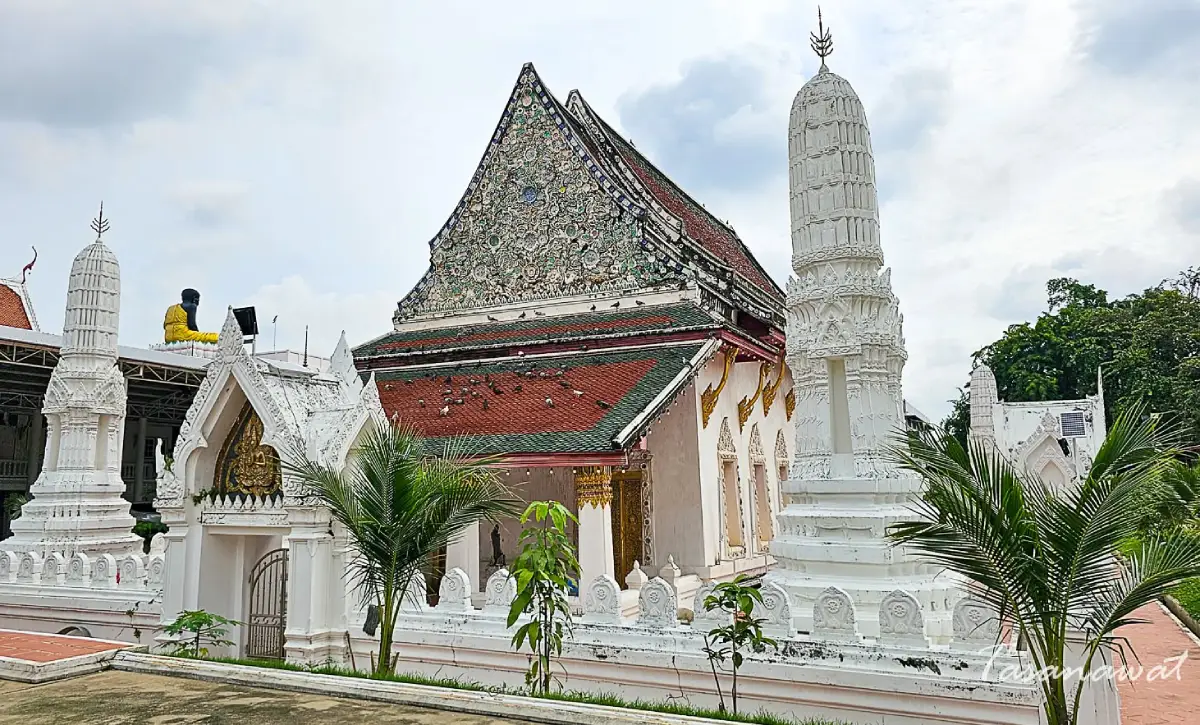
47. Wat Bang Khun Thian Nok Wat Bang Khun Thian Nok is a historic community temple in Chom Thong Subdistrict, Chom Thong District, Bangkok, near Khlong Bang Khun Thian and the Rama II Road corridor. Its origins extend to the late Ayutthaya period, and its ordination hall is an outstanding local example of the Chinese-influenced architectural style favored during the reign of King Rama III.
Highlights: A Chinese-pavilion-style ordination hall, a gable decorated with Benjarong ceramics, murals including images of the twelve nationalities, the principal Buddha image Phra Phuttha Yammalok, and the former name Wat Yammalok.
The monastery was originally called Wat Yammalok and belongs to a historic group of temples bearing the name Bang Khun Thian: Wat Bang Khun Thian Nok, Wat Bang Khun Thian Klang, and Wat Bang Khun Thian Nai. The names reflect the location and official identification of religious sites within the same old neighborhood.
The ordination hall is particularly notable for its resemblance to Chinese pavilion architecture, a style that became popular during the reign of King Rama III. Its gable is decorated with fine ceramics including Benjarong ware, demonstrating the craftsmanship and Chinese artistic influence common to the period.
The murals inside the hall are especially valuable. Paintings associated with the twelve nationalities on window panels are of particular interest because they depict different peoples and cultural identities as understood by artists of the period. These works offer a distinctive visual record of society and cultural encounters in historic Siam.
Phra Phuttha Yammalok is the temple's important Buddha image and a central object of local devotion. Other religious images and buildings reflect the continuation of Buddhist practice in the Bang Khun Thian community across several historical periods.
The temple is linked with an old canalside settlement in an area once dominated by farming and water transport. Subsequent restorations helped preserve the early-Rattanakosin artistic heritage visible today.
Wat Bang Khun Thian Nok is ideal for visitors interested in Chinese-Thai architectural details, mural painting, and historic neighborhood temples. It can be visited alongside Wat Bang Khun Thian Klang and Wat Bang Khun Thian Nai for a comparative exploration of related temples.
Open Days: Daily Opening Hours: 06:00 – 18:00
Getting There: Reach the temple by taxi or car through Rama II Road Soi 28 or by connecting from Chom Thong Road into Soi Watjana 19. Public buses serve Rama II and Chom Thong Roads, followed by local transport to the monastery.
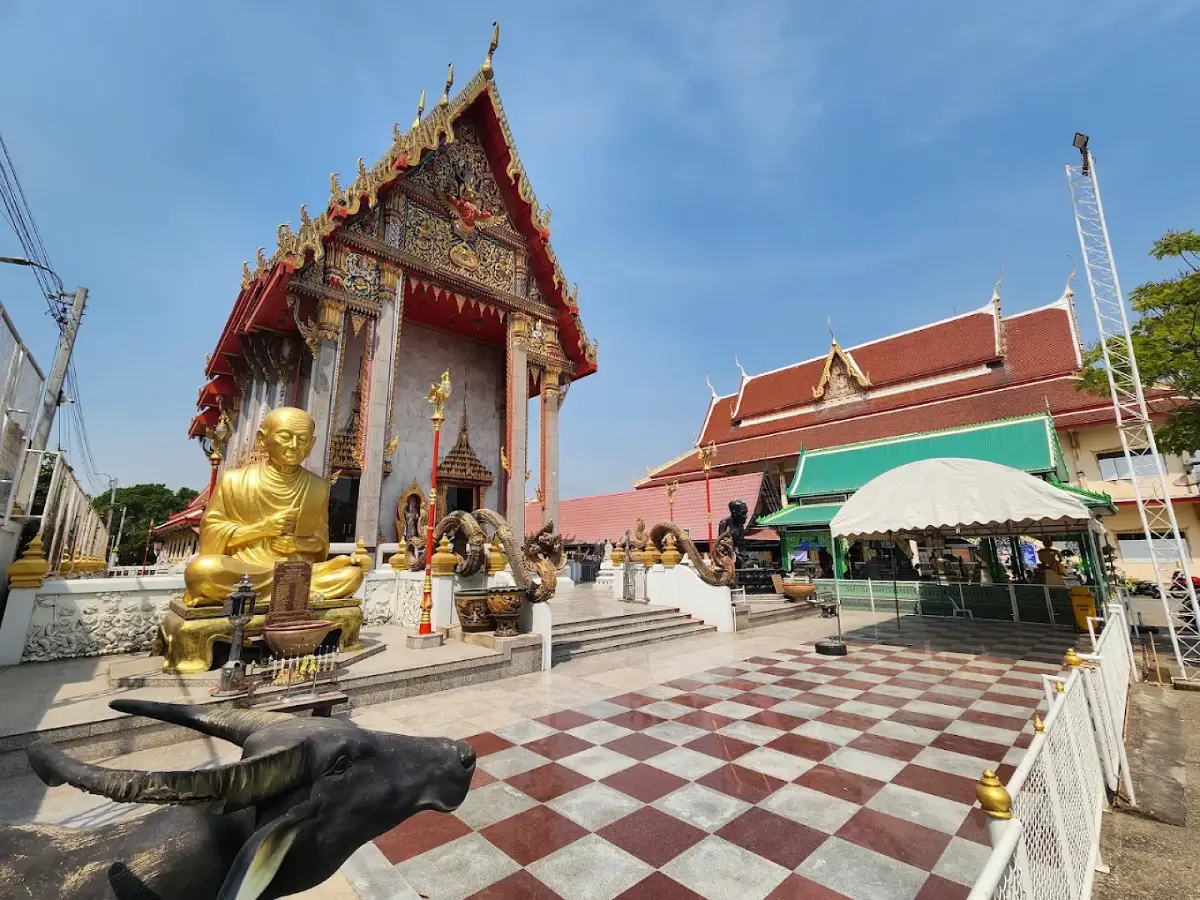
48. Wat Boonyapradit Wat Boonyapradit stands at 9 Moo 2 on Phutthamonthon Sai 2 Road in Bang Phai Subdistrict, Bang Khae District, Bangkok. It is a third-class ordinary royal temple of the Mahanikaya order and an important religious center for the Bang Phai community. Its history illustrates the development of a local Buddhist foundation into a royal monastery as Bangkok's western districts grew.
Highlights: The ordination hall, revered Buddha images, history of its foundation through community donations, third-class royal-temple status, Buddhist education, and the religious atmosphere of the Phutthamonthon Sai 2 neighborhood.
Wat Boonyapradit was established through the devotion of local benefactors, including Bun and Nuam Photnimit, who played important roles in its foundation and development. The history reflects the close relationship between Buddhist merit-making, local donors, and the creation of community institutions.
The Bang Phai area and western Bangkok were once characterized by orchards and agricultural settlements. A local monastery was particularly important in supporting ceremonies, traditional festivals, and learning. As the area became increasingly urban, the temple continued to serve both old and new residents.
Wat Boonyapradit was elevated to third-class ordinary royal temple status in 2004. This development marks an important stage in its religious and institutional history and reflects the increased significance of the monastery within the expanding Bang Khae district.
The ordination hall and other buildings support ceremonies conducted under Buddhist monastic discipline and provide space for Buddhist learning and community activity. The temple remains more than a site containing sacred statues: it is a focal point for traditions passed between generations.
Its history is an example of how religious institutions and neighborhoods develop together. The transition from rural orchards to roads, housing estates, and commercial areas has changed the landscape, but the monastery continues to play a stabilizing cultural role.
Visitors can pay respects, make merit, and learn about the development of religious institutions outside the old city center. Wat Boonyapradit is particularly appropriate for those exploring the less frequently visited districts of western Bangkok.
Open Days: Daily Opening Hours: 08:00 – 17:00
Getting There: Travel by car or taxi via Phutthamonthon Sai 2 Road, connecting from Phet Kasem, Borommaratchachonnani, Bang Waek, or Kanchanaphisek Roads according to the starting point. Local public transport is available from the district's main roads.
Map (GPS):Get Directions to Wat Boonyapradit
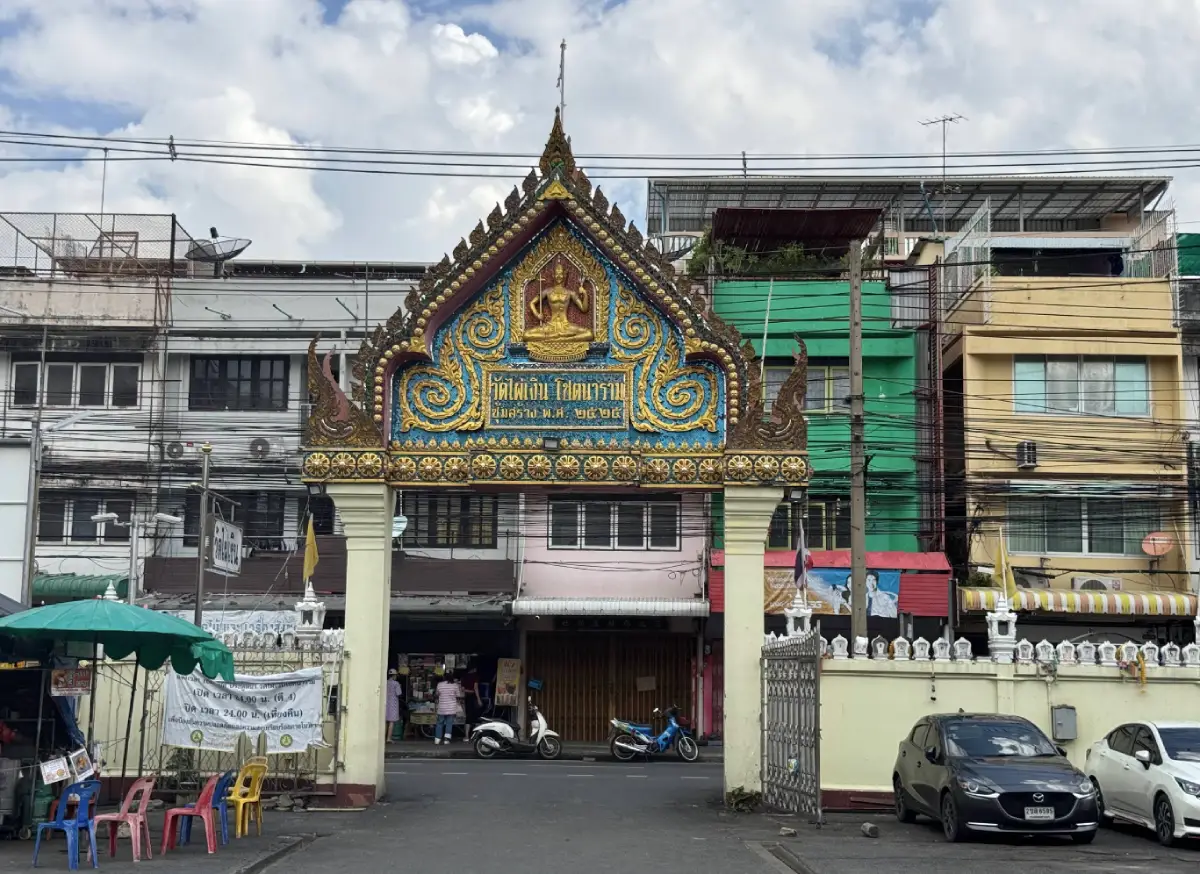
49. Wat Phai Ngoen Chotnaram Wat Phai Ngoen Chotnaram stands at 882 Chan Soi 43 in Bang Khlo Subdistrict, Bang Kho Laem District, Bangkok. This historic temple is linked with the legacy of three earlier local temples: Wat Phai Lom, Wat Ngoen, and Wat Chotikaram. It is particularly revered for Luang Pho Samrit, an old bronze Buddha image that remains an important focus of local Buddhist devotion.
Highlights: Luang Pho Samrit, an ancient bronze Buddha image, its dedicated viharn, the history of three former temples, devotional sites combining Thai and Chinese traditions, and the atmosphere of the Bang Khlo community.
The temple's history is unusual because its present identity brings together the backgrounds of several religious sites. The names Wat Phai Lom, Wat Ngoen, and Wat Chotikaram are preserved in its story, recording how communities and temple institutions evolved over time in the Bang Khlo district.
Luang Pho Samrit is the temple's most important Buddha image. This historic bronze sculpture is admired for its refined appearance and holds deep devotional importance for residents who visit to make offerings and pay respect. Its value is both religious and artistic.
The compound also contains areas devoted to figures revered in contemporary Thai and Chinese-influenced belief, including Lakshmi, Thao Wessuwan, Ganesha, and Rahu. The presence of these different devotional traditions within one place illustrates the variety of religious practices found in modern Thai society.
Wat Phai Ngoen Chotnaram continues to serve the Bang Khlo community, whose history is connected with the development of the Chao Phraya waterfront and the surrounding network of streets and commerce. The temple remains an active center for Buddhist ceremonies and local gatherings.
Travelers interested in ancient Buddhist sculpture may find Luang Pho Samrit particularly meaningful, while those studying contemporary religious culture can observe the diversity of devotional practices within the compound.
The temple combines easily with cultural attractions around Chan Road, Charoen Krung Road, and the riverside areas of Bang Kho Laem.
Open Days: Daily Opening Hours: 06:00 – 18:00
Getting There: Take a taxi or car via Chan Road and enter Chan Soi 43. Public buses serve Chan and Sathu Pradit Roads. Visitors coming from Sathon or Charoen Krung can continue by local road transport.
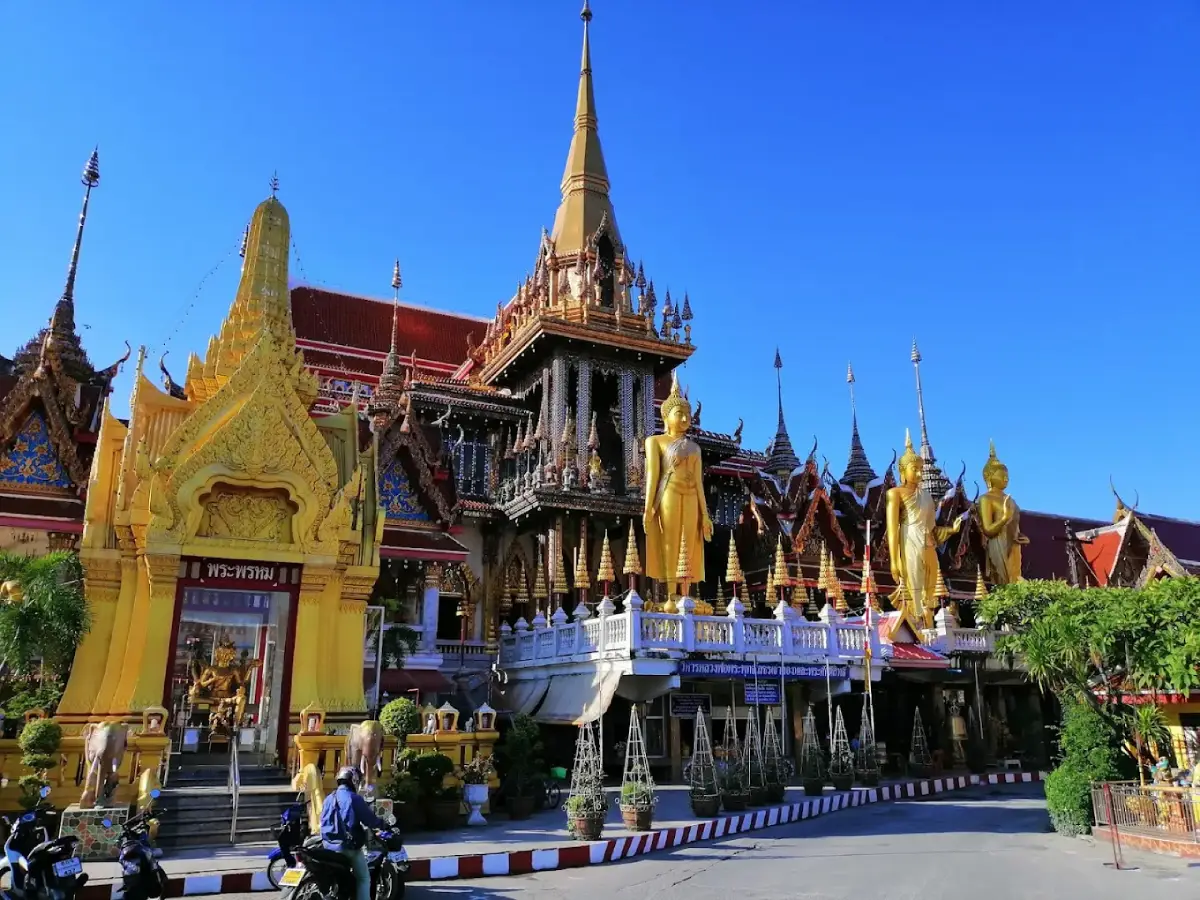
50. Wat Lat Phrao Wat Lat Phrao stands at 1 Moo 9 on Lat Phrao–Wang Hin Road in Lat Phrao Subdistrict, Lat Phrao District, Bangkok. This historic community monastery of the Mahanikaya order is associated with the settlement of northern Bangkok and has continued to support Buddhist ceremonies, education, and neighborhood activities. Its notable features include the Daowaduengs Chedi and the sacred image known as Phra Chao Poet Lok.
Highlights: The Daowaduengs Chedi, Phra Chao Poet Lok, a hall containing a replica Buddha image, the ordination hall, the temple's relocation history, and the local heritage of Lat Phrao–Wang Hin.
Wat Lat Phrao was founded around 1870, near the transition from the reign of King Rama IV to that of King Rama V. The monastery originally stood on the opposite side of its current location. Around 1874, the monastic community and local residents moved it because the original site had difficulties involving water availability and terrain.
The newer site was associated with a natural basin known as Wang Lat Phrao, a low-lying area with accessible water. The relocation reflects the practical importance of water for monks and residents in the past, when waterways and ponds were crucial for household use, farming, and transport.
The Daowaduengs Chedi is one of the temple's most noticeable features. Its name refers to the Tavatimsa heaven, a realm within Buddhist cosmology. The monument reflects the community's faith and the use of architecture to communicate religious concepts.
Phra Chao Poet Lok and the hall containing a replica Buddha image offer additional places for religious devotion and the study of Buddhist imagery. The buildings and sacred objects represent the desire of local residents to maintain a place for worship and traditional ceremonies.
Wat Lat Phrao has continued to serve its community through Buddhist festivals, merit-making, Dhamma teaching, and other local activities. Although the surrounding area has changed considerably from a semi-rural settlement into a densely built urban district, the temple remains part of its cultural identity.
The site is well suited to travelers interested in local religion and the settlement history of northern Bangkok. It can be combined with a broader visit to the Lat Phrao–Wang Hin neighborhood and the Khlong Lat Phrao area.
Open Days: Daily Opening Hours: 07:00 – 17:00
Getting There: Travel by private car or taxi via Lat Phrao–Wang Hin Road and Lat Phrao Road, or connect using public transport serving these corridors. Rail passengers can continue by local road transport from stations connected to the Lat Phrao area.
Map (GPS):Get Directions to Wat Lat Phrao
Summary Table: 50 Beautiful Temples in Bangkok, Grouped by District Bangkok is administratively divided into districts and subdistricts, called khet and khwaeng in Thai. The following single table lists all 50 temples by district, giving location, temple classification, any recorded connections with a particular royal reign, and telephone numbers only where supplied in the source.
| Khlong San District (3 Temples) | |
| 16. Wat Phitchaya Yatikaram Worawihan | Address: Somdet Chao Phraya Subdistrict, Khlong San District, Bangkok Temple Type: Royal Temple |
| 23. Wat Anongkharam Worawihan | Address: Somdet Chao Phraya Road Somdet Chao Phraya Subdistrict, Khlong San District, Bangkok Temple Type: Royal Temple |
| 35. Wat Thong Thammachat Worawihan | Address: Khlong San District, Bangkok Temple Type: Royal Temple |
| Chom Thong District (4 Temples) | |
| 20. Wat Ratcha Orasaram Ratchaworawihan | Address: 258 Ekkachai Soi 4 Bang Kho Subdistrict, Chom Thong District, Bangkok Temple Type: Royal Temple Royal Reign Association: King Rama III |
| 27. Wat Nang Ratchaworawihan | Address: 200 Wutthakat Soi 42 Bang Kho Subdistrict, Chom Thong District, Bangkok Temple Type: Royal Temple |
| 28. Wat Nang Nong Worawihan | Address: 76 Wutthakat Road Bang Kho Subdistrict, Chom Thong District, Bangkok Temple Type: Royal Temple |
| 47. Wat Bang Khun Thian Nok | Address: Chom Thong Subdistrict, Chom Thong District, Bangkok Temple Type: Public Buddhist Temple |
| Dusit District (1 Temples) | |
| 7. Wat Benchamabophit Dusitwanaram (The Marble Temple) | Address: Si Ayutthaya Road Dusit Subdistrict, Dusit District, Bangkok Temple Type: Royal Temple Royal Reign Association: Associated with King Rama V (Sometimes Identified as a Royal Temple of His Reign) Telephone: 098-395-4289 (Dhamma Outreach Office) |
| Thon Buri District (2 Temples) | |
| 15. Wat Kalayanamitr Woramahawihan | Address: Wat Kalayan Subdistrict, Thon Buri District, Bangkok Temple Type: Royal Temple |
| 22. Wat Buppharam Worawihan (Wat Dokmai) | Address: Wat Kalayan Subdistrict, Thon Buri District, Bangkok Temple Type: Royal Temple |
| Bangkok Noi District (2 Temples) | |
| 9. Wat Rakang Kositaram Woramahawihan | Address: Arun Amarin Road Siriraj Subdistrict, Bangkok Noi District, Bangkok Temple Type: Royal Temple |
| 44. Wat Praya Tham Worawihan | Address: 47 Arun Amarin Road Ban Chang Lo Subdistrict, Bangkok Noi District, Bangkok Temple Type: Royal Temple |
| Bangkok Yai District (6 Temples) | |
| 2. Wat Arun Ratchawararam Ratchaworamahawihan (Temple of Dawn) | Address: Chao Phraya riverside Wat Arun Subdistrict, Bangkok Yai District, Bangkok Temple Type: Royal Temple Royal Reign Association: King Rama II |
| 4. Wat Pradu Chimphli (Luang Pu Toh Temple) | Address: 1162 Rim Khlong Bangkok Yai Soi Wat Tha Phra Subdistrict, Bangkok Yai District, Bangkok Temple Type: Public Buddhist Temple |
| 24. Wat Khruea Wan Worawihan | Address: 36 Arun Amarin Road Wat Arun Subdistrict, Bangkok Yai District, Bangkok Temple Type: Royal Temple |
| 25. Wat Ratchasittharam Ratchaworawihan (Wat Phlap) | Address: Itsaraphap Road Wat Arun Subdistrict, Bangkok Yai District, Bangkok Temple Type: Royal Temple |
| 31. Wat Hong Rattanaram Ratchaworawihan | Address: 102 Wat Hong Rattanaram Soi Wat Arun Subdistrict, Bangkok Yai District, Bangkok Temple Type: Royal Temple |
| 32. Wat Molilokayaram Ratchaworawihan | Address: 248 Arun Amarin Road Wat Arun Subdistrict, Bangkok Yai District, Bangkok Temple Type: Royal Temple |
| Bang Kho Laem District (1 Temples) | |
| 49. Wat Phai Ngoen Chotnaram | Address: 882 Chan Soi 43 Bang Khlo Subdistrict, Bang Kho Laem District, Bangkok Temple Type: Public Buddhist Temple |
| Bang Phlat District (2 Temples) | |
| 45. Wat Daowaduengsaram | Address: 872 Somdet Phra Pinklao Soi 2 Bang Yi Khan Subdistrict, Bang Phlat District, Bangkok Temple Type: Royal Temple |
| 46. Wat Awutvikasitaram | Address: 436 Charan Sanit Wong Soi 72 Bang Phlat Subdistrict, Bang Phlat District, Bangkok Temple Type: Royal Temple |
| Bang Rak District (1 Temples) | |
| 10. Wat Hua Lampong | Address: 728 Rama IV Road Si Phraya Subdistrict, Bang Rak District, Bangkok Temple Type: Royal Temple |
| Bang Khae District (1 Temples) | |
| 48. Wat Boonyapradit | Address: 9 Moo 2 Phutthamonthon Sai 2 Road Bang Phai Subdistrict, Bang Khae District, Bangkok Temple Type: Royal Temple |
| Pathum Wan District (3 Temples) | |
| 34. Wat Chamni Hatthakan (Wat Sam Ngam) | Address: 199 Rama I Road Rong Mueang Subdistrict, Pathum Wan District, Bangkok Temple Type: Public Buddhist Temple |
| 39. Wat Pathum Wanaram Ratchaworawihan | Address: Rama I Road Pathum Wan Subdistrict, Pathum Wan District, Bangkok Temple Type: Royal Temple |
| 40. Wat Boromniwas Ratchaworawihan | Address: Rong Mueang Subdistrict, Pathum Wan District, Bangkok Temple Type: Royal Temple |
| Pom Prap Sattru Phai District (4 Temples) | |
| 5. Wat Saket Ratchaworamahawihan (The Golden Mount) | Address: Ban Bat Subdistrict, Pom Prap Sattru Phai District, Bangkok Temple Type: Royal Temple |
| 11. Wat Mangkon Kamalawat (Wat Leng Noei Yi) | Address: Charoen Krung Road Pom Prap Subdistrict, Pom Prap Sattru Phai District, Bangkok Temple Type: Chinese Mahayana Buddhist Temple (Royal Temple) |
| 21. Wat Thepsirintrawat Ratchaworawihan | Address: 1464 Krung Kasem Road Wat Thepsirin Subdistrict, Pom Prap Sattru Phai District, Bangkok Temple Type: Royal Temple |
| 41. Wat Somanas Ratchaworawihan | Address: Krung Kasem Road Wat Somanas Subdistrict, Pom Prap Sattru Phai District, Bangkok Temple Type: Royal Temple |
| Phra Nakhon District (11 Temples) | |
| 1. Wat Phra Si Rattana Satsadaram (Wat Phra Kaew) | Address: Grand Palace Phra Borom Maha Ratchawang Subdistrict, Phra Nakhon District, Bangkok Temple Type: Royal Temple inside the Grand Palace (No Resident Monks) |
| 3. Wat Phra Chetuphon Wimonmangkhalaram (Wat Pho) | Address: Sanam Chai Road Phra Borom Maha Ratchawang Subdistrict, Phra Nakhon District, Bangkok Temple Type: Royal Temple Royal Reign Association: King Rama I Telephone: 02-226-0335 (Temple Office) |
| 8. Wat Suthat Thepwararam Ratchaworamahawihan | Address: Bamrung Mueang Road Sao Chingcha Subdistrict, Phra Nakhon District, Bangkok Temple Type: Royal Temple |
| 12. Wat Chana Songkhram Ratchaworamahawihan | Address: Chakrabongse Road Chana Songkhram Subdistrict, Phra Nakhon District, Bangkok Temple Type: Royal Temple |
| 13. Wat Ratchabophit Sathit Maha Simaram | Address: 2 Fueang Nakhon Road Wat Ratchabophit Subdistrict, Phra Nakhon District, Bangkok Temple Type: Royal Temple Royal Reign Association: Kings Rama V and VII |
| 14. Wat Ratchanatdaram Worawihan (Loha Prasat) | Address: Maha Chai Road Phra Nakhon District, Bangkok Temple Type: Royal Temple |
| 17. Wat Mahathat Yuwaratrangsarit | Address: Na Phra That Road Phra Nakhon District, Bangkok Temple Type: Royal Temple |
| 18. Wat Bowonniwet Vihara | Address: 248 Phra Sumen Road Bowon Niwet Subdistrict, Phra Nakhon District, Bangkok Temple Type: Royal Temple |
| 19. Wat Intharawihan | Address: 144 Wisut Kasat Road Bang Khun Phrom Subdistrict, Phra Nakhon District, Bangkok Temple Type: Royal Temple Telephone: 02-282-3173 |
| 42. Wat Makut Kasatriyaram Ratchaworawihan | Address: 330 Krung Kasem Road Bang Khun Phrom Subdistrict, Phra Nakhon District, Bangkok Temple Type: Royal Temple |
| 43. Wat Thepthidaram Worawihan | Address: 70 Maha Chai Road Samran Rat Subdistrict, Phra Nakhon District, Bangkok Temple Type: Royal Temple |
| Phasi Charoen District (4 Temples) | |
| 26. Wat Nak Prok | Address: Thoet Thai Road Soi 49 Pak Khlong Phasi Charoen Subdistrict, Phasi Charoen District, Bangkok Temple Type: Public Buddhist Temple |
| 29. Wat Apsornsawan Worawihan | Address: Phet Kasem Soi 23 Pak Khlong Phasi Charoen Subdistrict, Phasi Charoen District, Bangkok Temple Type: Royal Temple |
| 30. Wat Thong Sala Ngam | Address: Phet Kasem Soi 20 Pak Khlong Phasi Charoen Subdistrict, Phasi Charoen District, Bangkok Temple Type: Public Buddhist Temple |
| 33. Wat Nuan Noradit Worawihan | Address: Along Khlong Bangkok Yai Pak Khlong Phasi Charoen Subdistrict, Phasi Charoen District, Bangkok Temple Type: Royal Temple |
| Lat Phrao District (1 Temples) | |
| 50. Wat Lat Phrao | Address: 1 Moo 9 Lat Phrao–Wang Hin Road Lat Phrao Subdistrict, Lat Phrao District, Bangkok Temple Type: Public Buddhist Temple |
| Samphanthawong District (4 Temples) | |
| 6. Wat Traimit Withayaram Worawihan | Address: Charoen Krung Road Talat Noi Subdistrict, Samphanthawong District, Bangkok Temple Type: Royal Temple |
| 36. Wat Bophit Phimuk Worawihan | Address: 266 Chakkrawat Road Chakkrawat Subdistrict, Samphanthawong District, Bangkok Temple Type: Royal Temple |
| 37. Wat Chakkrawat Rachawat Woramahawihan | Address: 225 Chakkrawat Road Chakkrawat Subdistrict, Samphanthawong District, Bangkok Temple Type: Royal Temple |
| 38. Wat Samphanthawongsaram | Address: Song Wat Road area Samphanthawong District, Bangkok Temple Type: Royal Temple |
Understanding Temple Types and Their Historical Importance. These 50 temples include royal temples, public/community temples, and Chinese Mahayana religious establishments. A royal temple is a monastery founded or formally elevated to royal status, whereas a public temple has not received that designation. Both may function as active centers of Buddhist worship and community life. Temple rank should not be confused with artistic or spiritual importance.
Royal temples associated with particular Chakri reigns in this collection include Wat Pho (King Rama I), Wat Arun (King Rama II), Wat Ratcha Orasaram (King Rama III), and Wat Ratchabophit (King Rama V, with connections to King Rama VII). Wat Benchamabophit is another major monastery founded under King Rama V and associated with his royal remains. A temple founded or restored by a king is not automatically the official temple associated with that reign.
For a relaxed visit, choose three to five temples within the same district or adjoining neighborhoods, such as Phra Nakhon, Pom Prap Sattru Phai, Bangkok Yai, or Chom Thong. This is usually more rewarding than trying to cross the entire city, because visitors have time to appreciate ordination halls, Buddha images, murals, and surrounding historic communities.
Visiting Nine Bangkok Temples in One Day: How to Plan Your Merit-Making Route. For visitors hoping to pay respects at nine temples in a single day, the Old Town is the most practical starting point. Selecting nearby temples makes the route more manageable, but nine substantial temple visits will still require an early start, careful transport planning, and shorter stays at each stop.
Suggested Nine-Temple Route for One Day: 1. Wat Phra Kaew → 2. Wat Pho → 3. Wat Ratchabophit → 4. Wat Suthat → 5. Wat Ratchanatdaram → 6. Wat Thepthidaram → 7. Wat Saket → 8. Wat Bowonniwet → 9. Wat Chana Songkhram.
Begin in the morning at the Grand Palace and Wat Pho, then continue along Fueang Nakhon and Bamrung Mueang Roads to Wat Ratchabophit and Wat Suthat. Visit Wat Ratchanatdaram and Wat Thepthidaram, then Wat Saket, before making your way north toward Wat Bowonniwet and Wat Chana Songkhram. This itinerary is best treated as a compact merit-making route rather than a full architectural tour of all nine monasteries.
Walk between nearby temples and use a taxi or other public transport for longer sections. This is an indicative visiting sequence, not a guarantee that all halls will be open or that the entire route can be finished regardless of traffic and crowds. Check access arrangements in advance, especially at royal precincts, and consider dividing the route over two days if you want more time for historical interpretation.
Preparing for Temple Visits in Bangkok. Wear modest clothing that covers the shoulders and knees, avoiding revealing or transparent outfits. Choose comfortable footwear that can be removed easily when entering sacred buildings. Some royal temples, particularly Wat Phra Kaew inside the Grand Palace, impose more specific dress and visitor requirements.
Carry drinking water, a hat or umbrella, sun protection, essential medication, and a phone with enough battery power for maps and transport information. Small cash donations may be useful for merit-making, although donations should always be voluntary and within your means. Check visiting hours, admission arrangements, and the weather before setting out, especially if walking between several temples.
Keep your voice low inside temple compounds, silence your phone, do not touch historic murals or artifacts, and never climb on Buddha-image pedestals or enter restricted areas. Photography is not permitted everywhere; observe signs, avoid flash when prohibited, and be considerate when people are praying or monks are conducting ceremonies.
Visiting Bangkok Temples by Public Transport. The MRT Blue Line provides access to Sanam Chai Station for Wat Pho and the Grand Palace area, Sam Yot for several Old Town royal temples, Wat Mangkon for Chinatown, and Hua Lamphong for Wat Traimit. BTS Siam is convenient for Wat Pathum Wanaram, while boats and ferries serve riverbank attractions including Wat Arun and Wat Rakang. A combination of rail, walking, and river transport can reduce exposure to traffic and parking difficulties.
Royal Temples and Royal Reign Temples: What Is the Difference? The term royal temple refers to a Buddhist temple with a recognized royal status, while a temple associated with a particular royal reign has a specific historical connection to a king or reign. These concepts overlap but are not interchangeable. Wat Phra Kaew, for example, was founded under King Rama I inside the Grand Palace, yet Wat Pho is widely identified as the royal temple associated with that reign.
Frequently Asked Questions (FAQ)
Q: Which Bangkok districts contain the 50 temples in this guide?
A: The temples are spread across Phra Nakhon, Bangkok Yai, Bangkok Noi, Pom Prap Sattru Phai, Samphanthawong, Khlong San, Thon Buri, Phasi Charoen, Chom Thong, Dusit, Bang Phlat, Bang Kho Laem, Bang Rak, Bang Khae, Pathum Wan, and Lat Phrao.
Q: Does Bangkok use districts or amphoe?
A: Bangkok uses districts (khet) and subdistricts (khwaeng) rather than the amphoe and tambon terminology commonly used in other provinces. This guide groups the temples by district and includes their subdistricts and streets where the source provides them.
Q: Can I visit nine temples and make merit in one day in Bangkok?
A: Yes, a compact visit to nine temples can be planned in one day by concentrating on the Old Town and nearby neighborhoods. However, fully exploring the ordination halls, murals, and monuments of all nine sites may be difficult in one day, especially with crowds and traffic.
Q: Where should a one-day nine-temple tour begin?
A: Start in the morning at Wat Phra Kaew and Wat Pho, then continue to Wat Ratchabophit, Wat Suthat, Wat Ratchanatdaram, Wat Thepthidaram, Wat Saket, Wat Bowonniwet, and Wat Chana Songkhram, adjusting the sequence to opening hours and transport conditions.
Q: What should I wear when visiting Buddhist temples in Bangkok?
A: Wear clothing that covers your shoulders and knees, choose shoes that are easy to remove, and follow any site-specific dress requirements. Wat Phra Kaew and other buildings in royal precincts may have stricter regulations.
Q: What should I bring on a Bangkok temple tour?
A: Take water, a hat or umbrella, comfortable walking shoes, any regular medication, a charged phone for navigation, and a voluntary merit-making budget. Check the weather and visitor opening times before leaving.
Q: Can I take photographs everywhere inside Bangkok temples?
A: No. Some ordination halls, areas containing historic objects, and religious ceremonies restrict photography. Follow posted instructions, avoid flash where it is prohibited, and do not disturb worshippers.
Q: Which temples in this guide are associated with particular Chakri reigns?
A: Wat Pho is associated with King Rama I, Wat Arun with King Rama II, and Wat Ratcha Orasaram with King Rama III. Wat Ratchabophit has important connections with Kings Rama V and VII, while Wat Benchamabophit was established under King Rama V and is associated with his royal remains.
Q: Is Wat Phra Kaew the temple associated with King Rama I?
A: Wat Phra Kaew was founded by King Rama I inside the Grand Palace, but Wat Pho is widely recognized as the royal temple associated with his reign. Being founded by a king does not automatically give a temple the same historical classification.
Q: What is the difference between a royal temple and a public temple?
A: A royal temple has been founded or formally designated with royal-monastery status, while a public temple does not have that designation. Both types may conduct Buddhist ceremonies and serve their communities under Buddhist monastic rules.
Q: Do all temples in Bangkok charge an entrance fee?
A: No. Admission arrangements vary. Some famous tourist temples have different charges for different categories of visitors, while many active community temples do not charge for general entry. Check each temple’s latest visitor information.
Q: Where can I find the telephone numbers of the temples?
A: Telephone numbers are included in the address and contact information in the summary table when they were supplied in the verified source material. A temple without a listed number is not necessarily without telephone service; it simply has no confirmed contact number in this guide.
 Category: ●Travel Articles, Recipes
 Group: ●Travel Review, Food Review
Last Update : 1 DayAgo
 Last Update : 1 DayAgo
Recommend

 Art, Culture and Heritage
 Historical Sites and Monuments(3)
 Landmarks and Memorials(23)
 Royal Palace(13)
 Art, Craft Centres, Tradition(35)
 Museums(59)
 Historic Homes and Cities(3)
 Art Gallery(16)
 Educational Places
 Museum for Study(6)
 Library(4)
 Places of Worship
 Temple(72)
 Church(2)
 Mosque(67)
 Other Sacred Sites(8)
 Research and Development
 Royal Project(1)
 Suburban Living
 Village, Community(5)
 Local Market(9)
 Floating Market(2)
 Nature and Wildlife
 River, Canal(3)
 Bays and Beaches(1)
 Other natural attractions(1)
 Entertainment and Agricultural
 Zoos and Aquariums(5)
 Animal camps and shows(5)
 Stadium(9)
 Farms, Parks and Ecotourism(20)
 Amusement Park(1)
 Waterpark(4)
 Theater(7)
 Cinema(1)
 Shopping
 Shopping and Night Market(20)
 Department Store(7)
 Spas and Wellness
 Spas and Wellness(1)
 Restaurant
 Michelin Star(5)
 Accommodation
 Hotel(3)
 Call Customer Service in Tourism
 Call Customer Service in Tourism(1)
Travel Review, Food Review(41)
 Royal Thai Desserts and Recipes(56)


