
lovethailand home >Central Travel Attractions >Bangkok Travel Attractions >Bangkok Yai >Wat Tha Phra > Wat Pradu Chimphli
TL;DR: Wat Pradu Chimphli is located at Soi Rim Khlong Bangkok Yai, Connected With Phet Kasem Soi 15, Wat Tha Phra Subdistrict, Bangkok Yai District, Bangkok, Near Khlong Bang, open Daily, hours 06.00 – 22.00.
Wat Pradu Chimphli
Open Days: Daily
Opening Hours: 06.00 – 22.00
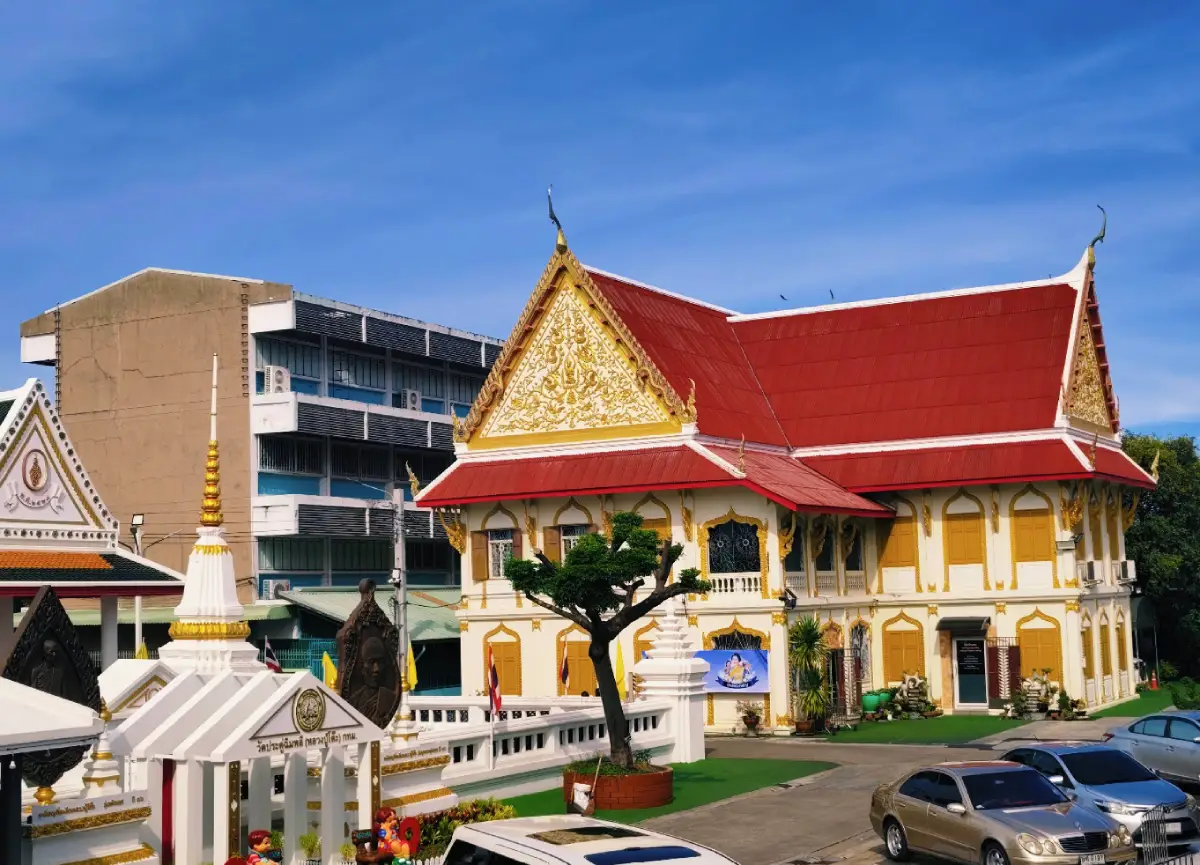
Wat Pradu Chimphli is an old public Buddhist temple in Wat Tha Phra Subdistrict, Bangkok Yai District, Bangkok. Located on Soi Rim Khlong Bangkok Yai and connected with the Phet Kasem Soi 15 area, the temple stands close to Khlong Bang Luang, Khlong Bangkok Yai, Wat Pradu Nai Songtham, Wat Paknam Phasi Charoen, and several old Thon Buri canal communities. The temple is significant because it was founded in the late reign of King Rama III and completed in the early reign of King Rama IV. Its older name was Wat Chimphli, and local people also call it Wat Pradu Nok, the outer Pradu temple, in contrast with nearby Wat Pradu Nai Songtham, or Wat Pradu Nai. Today, the temple is widely known as Wat Luang Pu Toh because of its deep connection with Luang Pu Toh Indasuvanno, one of Thailand’s most respected meditation monks and revered masters.
Wat Pradu Chimphli is located at 1162 Soi Rim Khlong Bangkok Yai, Wat Tha Phra Subdistrict, Bangkok Yai District, Bangkok 10600. Many visitors also find the temple through Phet Kasem Soi 15 and the route near Wat Pradu Nai Songtham. Its location belongs to the historic canal landscape of Khlong Bang Luang and Khlong Bangkok Yai, where temples, homes, schools, small shops, walking paths, and waterways still form a living cultural district. A visit to Wat Pradu Chimphli is therefore not only a temple visit. It is also an entry point into the old canal-side life of Thon Buri.
The temple’s former name, Wat Chimphli, comes from the old landscape where many silk-cotton trees once grew. The word Chimphli is associated with those trees and preserves a memory of the area before modern urban development. The local name Wat Pradu Nok also matters. It was used in contrast with Wat Pradu Nai Songtham, known locally as Wat Pradu Nai. This pair of names shows how old communities remembered temples through location, landscape, and relationship with nearby religious sites rather than through formal names alone.
Wat Pradu Chimphli was built in the late reign of King Rama III and completed in the early reign of King Rama IV. Construction took 8 years and was led by Somdet Chao Phraya Borom Maha Phichaiyat, also known as Tat Bunnag, during the period when he held the title Phra Si Phiphat Rattanaratchakosa. This background gives the temple importance as a public temple linked with early Rattanakosin patronage, political service, and Buddhist merit-making on the Thon Buri side of Bangkok.
The temple’s canal-side location is essential to understanding it. Khlong Bangkok Yai and Khlong Bang Luang are surrounded by old temples and communities, including Wat Pradu Nai Songtham, Wat Nuannoradit, Wat Paknam Phasi Charoen, Baan Silapin Khlong Bang Luang, and Wat Kuhasawan Worawihan. Wat Pradu Chimphli should be read as part of this wider network of temples, canals, and local settlement. It is not an isolated landmark, but one element in a historic religious and community landscape.
The ordination hall is one of the temple’s most important areas. It is a large hall with Mahayana-influenced characteristics and has no chofa or bai raka roof ornaments. Its dimensions are 6 wa and 2 sok wide and 16 wa long. This makes it visually different from many Thai-style ordination halls that emphasize traditional roof finials and decorative elements. At Wat Pradu Chimphli, the hall’s importance lies in its scale, calm form, sacred interior, and relationship with the principal Buddha image enshrined within.
The principal Buddha image in the ordination hall was selected and brought from Wat Oi Chang in Nonthaburi by Somdet Chao Phraya Borom Maha Phichaiyat. The image has a lap width of more than 4 sok and is described as a special Sukhothai-style Buddha image of exceptional beauty. Its significance comes not only from its artistic form but also from its history of selection, relocation, and installation as the main sacred image of Wat Pradu Chimphli.
Another distinctive feature of Wat Pradu Chimphli is its Mon-style chedi. This chedi reflects the cultural diversity of the Thon Buri side, where Thai, Chinese, Mon, and other canal-side communities have long lived close to one another. When seen together with the ordination hall and other sacred objects, the chedi shows that Wat Pradu Chimphli preserves more than one artistic tradition. It is a temple shaped by the layered cultural history of old Bangkok.
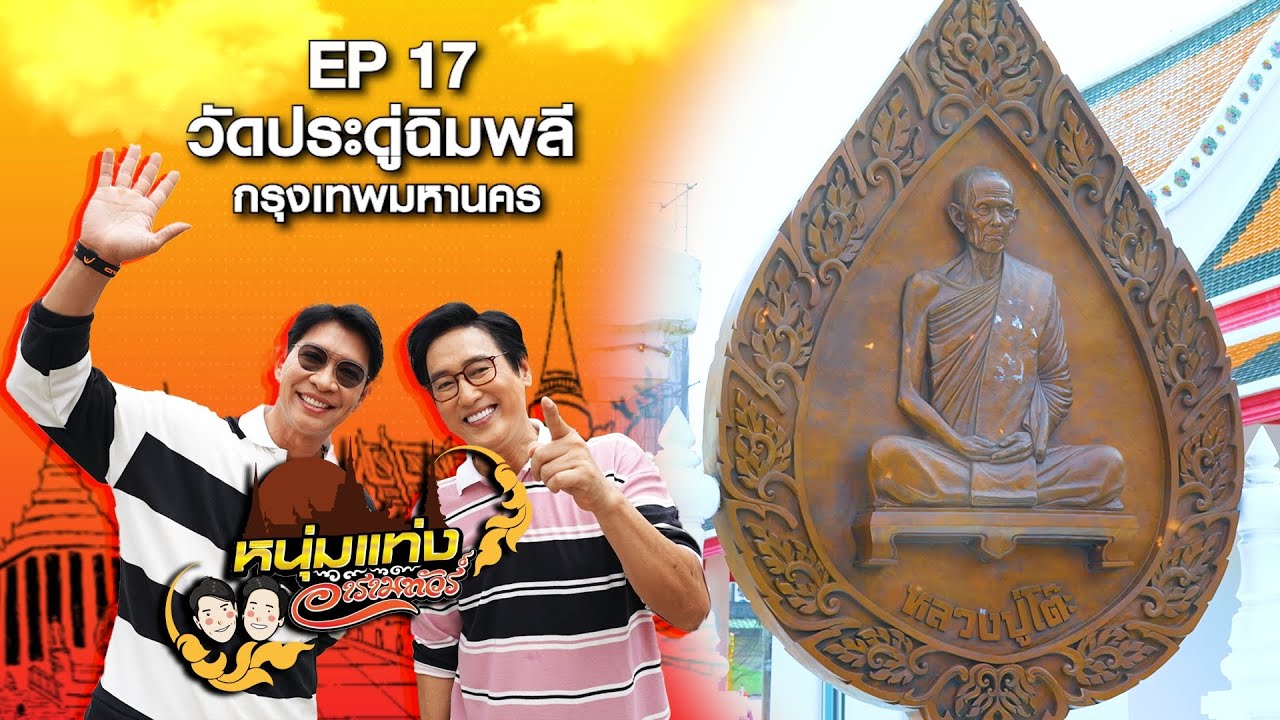
Wat Pradu Chimphli is best known through Luang Pu Toh Indasuvanno, formally Phra Ratchasangwonphimont. Luang Pu Toh was born on 27 March B.E. 2430, became a novice in B.E. 2447, and was ordained on 16 July B.E. 2450 at Wat Pradu Chimphli. He was appointed abbot of the temple on 10 July B.E. 2456 and became one of the most respected monks associated with meditation practice, strict discipline, teaching, and Buddhist devotion in Thailand.
Luang Pu Toh studied Buddhist discipline, practiced meditation, and traveled widely on dhutanga journeys to learn from various teachers. His reputation made Wat Pradu Chimphli widely known as Wat Luang Pu Toh. Many visitors come to the temple not only to see architecture but also to pay respect to his image, remember his practice, and make merit in a place closely connected with his life and legacy.
The statue of Luang Pu Toh is one of the temple’s main devotional points. Devotees and students of the Luang Pu Toh tradition come to pay respect, make offerings, and reflect on his teachings. Some visitors know the temple through his amulets, especially Phra Pidta, while others know it through his meditation practice and monastic discipline. The temple therefore connects reverence for a great monk, sacred Buddhist objects, community merit-making, and living faith in one place.
The replica Buddha footprint is another important sacred object in the temple. In Buddhist devotion, a Buddha footprint represents remembrance of the Buddha and the path of Dhamma. Its presence gives visitors another focus for worship beyond the ordination hall and the Luang Pu Toh shrine. It also connects the temple with the broader Buddhist practice of honoring the Buddha’s trace and walking the path of moral cultivation.
The temple also includes a statue of King Taksin the Great. This adds a historical Thon Buri dimension to the temple because Bangkok Yai and the Khlong Bangkok Yai area are closely linked with the old city landscape of Thon Buri. The presence of this statue allows visitors to connect Buddhist devotion with the broader history of the Thon Buri side of Bangkok.
Wat Pradu Chimphli was selected by the Department of Religious Affairs as an outstanding model temple for development in B.E. 2535. This recognition shows that the temple’s value is not based only on history or the fame of Luang Pu Toh. It also reflects the temple’s role in religious administration, community service, spatial organization, and the continued functioning of a public temple in a dense urban district.
Today, Wat Pradu Chimphli remains an active public Buddhist temple under the Mahanikaya order. It has resident monks and continuing Buddhist activities. The current abbot is Phra Sri Rattanamoli. Recent temple records and Kathin information confirm that the temple continues to function as a living religious site, not as an abandoned or inactive historical location. Visitors who plan group merit-making or formal religious activities should contact the temple in advance.
Religious activities at Wat Pradu Chimphli follow the rhythm of a working community temple. These include Buddhist holy day merit-making, chanting, major Buddhist calendar ceremonies, Kathin robe offering, worship of the principal Buddha image, and paying respect to Luang Pu Toh. The temple is especially meaningful for Luang Pu Toh’s devotees because it is the place where he was ordained, lived, practiced, taught, served as abbot, and built a lasting religious legacy.
The temple atmosphere reflects an old urban canal community. Visitors can begin at the ordination hall, pay respect to the principal Buddha image, observe the Mon-style chedi, pay respect to the image of Luang Pu Toh, visit the replica Buddha footprint, and then walk quietly around the temple compound. This route helps visitors understand the temple through the Buddha, the Dhamma, the Sangha, its architectural heritage, and the faith of the surrounding community.
Visitors interested in Thai amulets often know Wat Pradu Chimphli through Luang Pu Toh and his Phra Pidta amulets. Even so, the temple should not be understood only through amulet culture. Luang Pu Toh’s importance rests on his discipline, practice, teaching, temple development, and ability to inspire faith. Paying respect to him at Wat Pradu Chimphli is therefore also a way to remember a life of Buddhist training and service.
Wat Pradu Chimphli is well suited to a cultural route with Wat Pradu Nai Songtham, Wat Nuannoradit, Wat Paknam Phasi Charoen, Baan Silapin Khlong Bang Luang, Wat Kuhasawan Worawihan, and Wat Kamphaeng Bang Chak. These places form a rich canal-side itinerary along Khlong Bang Luang and Khlong Bangkok Yai. Visiting them together gives travelers a clearer understanding of temples, water routes, art, community life, and old Thon Buri religious history.
Getting There is convenient by car, local transport, and MRT connection. By car, use Phet Kasem Road or Charan Sanit Wong Road, then enter through Phet Kasem Soi 15 or Soi Rim Khlong Bangkok Yai. Drivers should allow extra time for local lanes and parking because the area is an old canal-side community with several temples close together. By MRT Blue Line, use Bang Phai Station or Tha Phra Station, then continue by motorcycle taxi, taxi, or local transport to the temple.
Another meaningful way to understand the area is to connect the temple with Wat Paknam Phasi Charoen or Baan Silapin Khlong Bang Luang. A half-day route can begin at Wat Pradu Chimphli, continue to Wat Paknam, and then move toward Baan Silapin or Wat Kuhasawan. With more time, visitors can extend the route to Wat Tha Phra, Wat Chao Mun, Wat Diduat, and Talat Phlu. This turns the temple visit into a broader exploration of Bangkok Yai and the Khlong Bang Luang community.
The best time to visit is in the morning or the cooler part of the afternoon. These periods are comfortable for paying respect in the ordination hall, visiting the Luang Pu Toh shrine, observing the chedi, and walking around the temple grounds. Visitors should dress modestly, keep shoulders covered, wear appropriate trousers or skirts, speak quietly, and avoid disturbing monks or local worshippers. Photography should be done respectfully, especially near Buddha images, monk statues, and areas used for religious practice.
Wat Pradu Chimphli is therefore much more than a short map listing in Phet Kasem Soi 15. It brings together the old name Wat Chimphli, the local identity of Wat Pradu Nok, early Rattanakosin patronage by Somdet Chao Phraya Borom Maha Phichaiyat, a special Sukhothai-style principal Buddha image, a Mahayana-influenced ordination hall, a Mon-style chedi, the legacy of Luang Pu Toh, the replica Buddha footprint, Buddhist devotional practice, and the living canal-side culture of Bangkok Yai. For travelers who want to understand Thon Buri in depth, Wat Pradu Chimphli is one of the most meaningful temples in the Khlong Bang Luang area.
| Name | Wat Pradu Chimphli |
| Former / Local Names | Wat Chimphli, Wat Pradu Nok, Wat Luang Pu Toh |
| Location | Soi Rim Khlong Bangkok Yai, Connected With Phet Kasem Soi 15, Wat Tha Phra Subdistrict, Bangkok Yai District, Bangkok, Near Khlong Bang Luang And Wat Pradu Nai Songtham |
| Address | 1162 Soi Rim Khlong Bangkok Yai, Wat Tha Phra Subdistrict, Bangkok Yai District, Bangkok 10600, Thailand |
| Coordinates | 13.72424, 100.46975 |
| Temple Type | Public Buddhist Temple Under The Mahanikaya Order |
| History | Founded In The Late Reign Of King Rama III And Completed In The Early Reign Of King Rama IV, With Construction Led By Somdet Chao Phraya Borom Maha Phichaiyat |
| Name Origin | The Former Name Wat Chimphli Came From Silk-Cotton Trees In The Area; The Local Name Wat Pradu Nok Pairs The Temple With Wat Pradu Nai Songtham, Known As Wat Pradu Nai |
| Highlights | Large Mahayana-Influenced Ordination Hall, Special Sukhothai-Style Principal Buddha Image, Mon-Style Chedi, Luang Pu Toh Statue, Replica Buddha Footprint, King Taksin The Great Statue, And Khlong Bang Luang Cultural Route |
| Ordination Hall | Large Mahayana-Influenced Hall Without Chofa Or Bai Raka Roof Ornaments, 6 Wa And 2 Sok Wide And 16 Wa Long, Enshrining A Principal Buddha Image Brought From Wat Oi Chang In Nonthaburi |
| Main Areas / Zones | Ordination Hall, Mon-Style Chedi, Luang Pu Toh Statue, Replica Buddha Footprint, Principal Buddha Image Worship Area, Merit-Making Area, Monks’ Residences, And Khlong Bangkok Yai Community Area |
| Sacred Objects | Special Sukhothai-Style Principal Buddha Image, Luang Pu Toh Indasuvanno Statue, Mon-Style Chedi, Replica Buddha Footprint, And King Taksin The Great Statue |
| Traditions / Activities | Buddhist Holy Day Merit-Making, Major Buddhist Calendar Ceremonies, Kathin Robe Offering, Paying Respect To Luang Pu Toh, Buddha Image Worship, And Wat Tha Phra Community Activities |
| Abbot / Caretaker | Phra Sri Rattanamoli |
| Facilities | Parking, Public Restrooms, And Accessible Areas For Visitors With Disabilities |
| Admission Fee | No General Entrance Fee |
| Travel Information | Enter Via Phet Kasem Road, Phet Kasem Soi 15, Or Soi Rim Khlong Bangkok Yai; Public Transport Users Can Continue From MRT Bang Phai Or MRT Tha Phra Station |
| Current Status | Open As A Public Buddhist Temple And Active Religious Site In Wat Tha Phra Subdistrict, Bangkok Yai |
| Open Days | Daily |
| Opening Hours | 06.00 – 22.00 |
| Main Contact Number | 02-467-4723, 02-458-1564 |
| Nearby Bus Routes | 84, 84ก, 81, 80ก, 89, 91ก, 164, 165, 189, 146, 147, 163, 101, ปอ.509, ปอ.พ.10, ปอ.7, ปอ.84 |
| Nearby Tourist Attractions | 1. Wat Nuannoradit, 0.3 km 2. Wat Paknam Phasi Charoen, 0.6 km, Tel. 02-467-0811, 02-457-9042 3. Wat Pradu Nai Songtham, 0.7 km, Tel. 02-868-1269 4. Baan Silapin Khlong Bang Luang, 1.2 km, Tel. 065-691-5655, 089-125-3949 5. Wat Kuhasawan Worawihan, 1.4 km, Tel. 02-458-1842 6. Wat Kamphaeng Bang Chak, 1.5 km 7. Wat Tha Phra, 2.7 km, Tel. 02-467-4719, 02-467-3522, 02-868-1848 |
| Nearby Restaurants | 1. Wirat Fried Mussels Phet Kasem 15 Wat Pradu Chimphli, 0.3 km, Tel. 061-591-1665 2. Khao Khai Jiew Song Kruang And Made-To-Order Phet Kasem 15, 0.4 km, Tel. 090-285-5188 3. Lan Isan Zaeb Nua 249 Phet Kasem 15, 0.4 km, Tel. 096-943-8029 4. Artist House, 1.2 km, Tel. 02-868-5279 5. Krua Khun Aoi Phet Kasem 20, 1.3 km, Tel. 094-497-8519 6. Pad Thai Ban Ploenchit, 1.3 km 7. Aoi Khlong Bang Luang, 1.4 km |
| Nearby Accommodations | 1. Mae Ae Apartment, 0.5 km, Tel. 086-337-6226 2. Bang Luang House, 0.8 km, Tel. 089-668-0808 3. Baan Tha Phra, 2.4 km, Tel. 091-108-7365 4. Toptel Thaphra, 2.8 km, Tel. 065-526-1646 5. iCheck inn Thapra, 3.8 km, Tel. 02-878-9709 6. Bed By Tha-Pra, 4.5 km, Tel. 02-868-6888, 084-646-5151 7. 35 Bow Hotel, 4.8 km, Tel. 02-434-9535 |
Frequently Asked Questions (FAQ)
Q: Where is Wat Pradu Chimphli located?
A: Wat Pradu Chimphli is located at 1162 Soi Rim Khlong Bangkok Yai, Wat Tha Phra Subdistrict, Bangkok Yai District, Bangkok 10600, in the Phet Kasem Soi 15 area near Wat Pradu Nai Songtham, Wat Paknam Phasi Charoen, and Khlong Bang Luang.
Q: What was the former name of Wat Pradu Chimphli?
A: The former name was Wat Chimphli, named after the silk-cotton trees that once grew in the area. Local people also call it Wat Pradu Nok, paired with Wat Pradu Nai or Wat Pradu Nai Songtham nearby.
Q: How is Wat Pradu Chimphli connected with Luang Pu Toh?
A: Wat Pradu Chimphli is where Luang Pu Toh Indasuvanno was ordained, lived, practiced meditation, taught, and served as abbot. His reputation made the temple widely known as Wat Luang Pu Toh.
Q: What are the main highlights inside Wat Pradu Chimphli?
A: Main highlights include the large Mahayana-influenced ordination hall, the special Sukhothai-style principal Buddha image, the Mon-style chedi, Luang Pu Toh statue, replica Buddha footprint, and King Taksin the Great statue.
Q: Who is the current abbot of Wat Pradu Chimphli?
A: The current abbot of Wat Pradu Chimphli is Phra Sri Rattanamoli.
Q: What are the opening hours of Wat Pradu Chimphli?
A: Wat Pradu Chimphli is open daily from 06.00 to 22.00. Morning and the cooler part of the afternoon are the most comfortable times to visit.
Q: How can travelers get to Wat Pradu Chimphli?
A: Travelers can enter through Phet Kasem Soi 15 or Soi Rim Khlong Bangkok Yai. By MRT Blue Line, use Bang Phai Station or Tha Phra Station and continue by taxi, motorcycle taxi, or local transport.
Q: What nearby attractions can be combined with Wat Pradu Chimphli?
A: Nearby attractions include Wat Paknam Phasi Charoen, Wat Pradu Nai Songtham, Wat Nuannoradit, Baan Silapin Khlong Bang Luang, Wat Kuhasawan Worawihan, Wat Kamphaeng Bang Chak, and Wat Tha Phra.
 Category: ●Places of Worship
 Group: ●Temple
Last Update : 1 MonthAgo
 Last Update : 1 MonthAgo
 Click to Access the Navigation Map GPS
Wat Pradu Chimphli Map
Recommend

 Phra Nakhon(24)Dusit(17)Khlong San(7)Khlong Toei(3)Jatujak(2)Don Muang(5)Taling Chan(26)Thon Buri(23)Bangkok Noi(31)Bangkok Yai(13)Bang Kapi(5)Bang Kun Tien(15)Bang Khen(3)Bang Kholam(10)Bang Sue(9)Bang Plad(23)Bang Rak(6)Chom Thong(16)Bung Kum(5)Pra Wet(6)Patum Wan(6)Pom Prap Sattru Phai(11)Paya Thai(1)Pra Kanong(4)Pa Sri Charoen(23)Min Buri(7)Yan Na Wa(8)Ratchathewi(4)Rat Burana(6)Lat Krabang(13)Nong Chok(16)Lat Phrao(4)Sathorn(4)Sam Phan Tha Wong(12)Nong Khaem(7)Huai Khwang(3)Suan Luang(7)Din Daeng(2)Lak Si(1)Sai Mai(8)Khan Na Yao(2)Wang Thong Lang(1)Klong Sam Wa(10)Watthana(2)Bang Na(4)Thawi Watthana(3)Bang Khae(5)Thung Khru(4)Bang Bon(3)


