
lovethailand home >Central Travel Attractions >Bangkok Travel Attractions >Pom Prap Sattru Phai >Wat Sommanat > Wat Somanas Ratchaworawihan
TL;DR: Wat Somanas Ratchaworawihan is located at Krung Kasem Road, Pom Prap Sattru Phai District, Bangkok (along Khlong Phadung Krung Kasem), open Daily, hours 06:00–18:00.
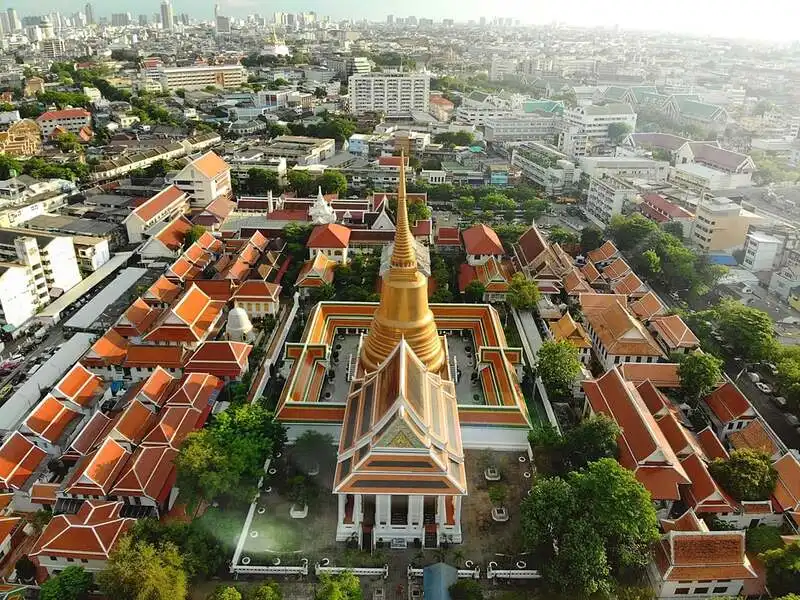
Wat Somanas Ratchaworawihan
Open Days: Daily
Opening Hours: 06:00–18:00
Wat Sommanat Ratchaworawihan is a second-class royal monastery (Ratchaworawihan) in Bangkok. Many people also know it by the shorter name “Wat Sommanat Wihan.” Its full official name is “Wat Sommanat Ratchaworawihan.” King Mongkut (Rama IV) founded the temple as a royal dedication to Queen consort Sommanat Wattanawadi, and in the early years of his reign it later received the royal name “Wat Sommanat Wihan.”
King Mongkut (Rama IV) laid the foundation stone of the ordination hall (Ubosot) on the 12th day of the waxing moon in the Year of the Ox, Chulasakarat 1215, which corresponds to 15 January 1853 (B.E. 2396). The temple grounds cover approximately 31 rai (including the surrounding moat). The site was granted a formal boundary for ecclesiastical purposes (Wisungkhamsima). The front of the temple faces Khlong Phadung Krung Kasem, and moats were dug to define the boundary on three sides.
Within the area designated as Wisungkhamsima, the inner precinct inside the wall was defined as the principal boundary (Mahasima), while the space outside the wall was left as the outer precinct (Upacharasima) together with the moat, separating residential areas on monastic land from the principal monastic boundary. The Ubosot itself was defined as a specific sub-boundary (Khandhasima), with boundary markers around the courtyard encircling the Ubosot. From the front to the rear, the area inside the wall is divided into three bands. The central band forms the sacred precinct (Phutthawat), containing the Ubosot, the main vihara, the cloistered gallery (Wihan Khot), and the stupa/chedi.
The monks’ residential quarters (Sangkhawat) are arranged along the two side bands, each side consisting of three monastic groups. Between these groups are open precinct areas, laid out in an orderly manner without crowding. At the front of the temple there is a spacious courtyard, which today is used as a school area. The rear of the temple is used as the Army cremation ground, and on one side there is a cemetery, while another side serves as an access road leading through to the back of the temple.
Once some construction had been completed—enough to serve as a residence for monks and novices during the rains retreat—on the 9th day of the waxing moon in the 8th lunar month, a Thursday morning in B.E. 2399 (1856), King Mongkut (Rama IV) invited “Phra Ariyamuni” (Phutthasiri Thera, Thap, Por. 9) from Wat Ratchathiwat, together with about 40 monks, to proceed in a ceremonial boat procession and take residence in the monastic quarters.
The King offered alms food and monastic requisites to Phra Ariyamuni and the accompanying learned monks, then returned. The senior monastic assembly, with Somdet Phra Maha Samana Chao Krom Phraya Pavares Variyalongkorn presiding, paid respects at the site. Flowers, incense, and candles were presented to Phra Ariyamuni according to the tradition of inaugurating a new residence for each monk.
Later, Phra Ariyamuni was promoted to Phra Phrommuni in the Year of the Snake, B.E. 2400 (1857). In the reign of King Chulalongkorn (Rama V), in the Year of the Monkey, B.E. 2415 (1872), Phra Phrommuni was promoted to Phra Phimontham. In the Year of the Rabbit, B.E. 2422 (1879), Phra Phimontham was elevated to Somdet Phra Wanrat.
For those who appreciate Thai temple heritage, the temple’s charm lies in the “systematic order” of its layout: a clear separation between the sacred precinct (Phutthawat) and the residential precinct (Sangkhawat), and the meaningful use of moats and walls to define boundaries—not merely for beauty, but as part of the temple’s ritual and monastic organization. As you walk through the inner areas, you can sense an airy openness and disciplined order that naturally settles the pace of the visit into calm.
Getting There There are several ways to reach the temple. If you are using public transport, it helps to use Krung Kasem Road and the line of Khlong Phadung Krung Kasem as your main reference points, then get off at a nearby stop and walk the final short distance. This works especially well for a one-trip plan of “temple visit, then a neighborhood walk,” continuing on to nearby areas such as Nang Loeng.
| Name | Wat Sommanat Ratchaworawihan (Wat Sommanat Wihan) |
| Type | Second-class royal monastery (Ratchaworawihan) |
| Location | Krung Kasem Road, Pom Prap Sattru Phai District, Bangkok (along Khlong Phadung Krung Kasem) |
| Period / Founder | Reign of Rama IV (King Mongkut) |
| Highlights | A systematic temple layout with a clear sacred/residential division, and moats and walls that define ritual boundaries with ecclesiastical significance |
| Current Abbot | Phra Thamma Wachira Methachan (Acting Abbot) |
| Temple Contact | 0 2282 7944 |
| Nearby Attractions (real-route distance estimate) | Nang Loeng Market – approx. 0.6 km Khlong Phadung Krung Kasem (in front of the temple) – approx. 0.1 km Wat Saket (Golden Mount) – approx. 1.8 km Rajadamnern Boxing Stadium – approx. 1.5 km Democracy Monument – approx. 2.3 km |
| Nearby Restaurants (real-route distance estimate) | S. Rungroj – approx. 0.8 km – 02 282 9775 Kot Wok – approx. 0.7 km – 092 916 7962 Hi-Li Daifuku – approx. 0.7 km – 096 965 1597 Mon Saneh Thai Desserts – approx. 1.1 km – 083 169 2497 Jip Kee – approx. 1.0 km – 02 281 1283 |
| Nearby Accommodations (real-route distance estimate) | Here Hostel – approx. 2.6 km – 090 987 7438 ChingCha Bar – approx. 2.5 km – 063 231 2017 Bangkok Oasis Hotel – approx. 3.8 km – 02 002 0555 The Quarter Hualampong by UHG – approx. 3.5 km – 02 344 1999 Royal Princess Larn Luang – approx. 1.5 km – 02 281 3088 |
Frequently Asked Questions (FAQ)
Q: Why was Wat Sommanat Ratchaworawihan founded?
A: King Mongkut (Rama IV) founded it as a royal dedication to Queen consort Sommanat Wattanawadi, and it became a royal monastery with a carefully planned layout and clearly defined ecclesiastical boundaries.
Q: Are Wat Sommanat Wihan and Wat Sommanat Ratchaworawihan the same temple?
A: Yes. “Wat Sommanat Ratchaworawihan” is the full official name, while “Wat Sommanat Wihan” is the commonly used shortened name.
Q: If I’m visiting for the first time, where should I start walking?
A: Start by taking in the view along the canal at the front of the temple, then enter the walled inner area to see the central sacred precinct with the Ubosot, vihara, cloistered gallery, and chedi. After that, continue to the residential precinct where the monastic quarters are arranged into orderly groups.
Q: What is the best time of day to visit?
A: Mornings are cooler with soft light and are great for observing details. Late afternoons can be especially calm, but it’s best to allow enough time to finish before closing.
Q: What nearby area is easy to continue to after paying respects at the temple?
A: Nang Loeng is a convenient next stop for food and a walk through an old neighborhood, and it fits nicely into a half-day itinerary.
 Category: ●Places of Worship
 Group: ●Temple
Last Update : 10 MonthAgo
 Last Update : 10 MonthAgo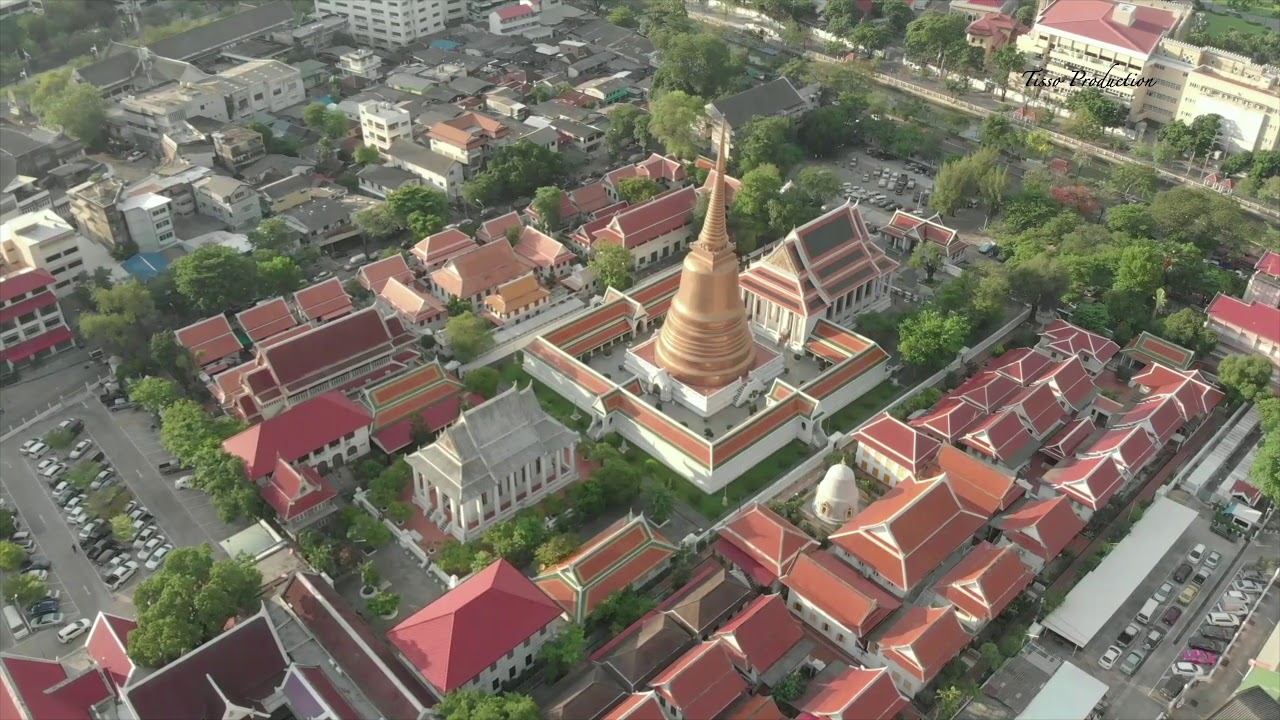
 Click to Access the Navigation Map GPS
Wat Somanas Ratchaworawihan Map
Recommend

 Art, Culture and Heritage
 Historical Sites and Monuments(3)
 Landmarks and Memorials(23)
 Royal Palace(13)
 Art, Craft Centres, Tradition(35)
 Museums(59)
 Historic Homes and Cities(3)
 Art Gallery(16)
 Educational Places
 Museum for Study(6)
 Library(4)
Temple(72)
Library(4)
Temple(72)
 Church(2)
 Mosque(67)
 Other Sacred Sites(8)
 Research and Development
 Royal Project(1)
 Suburban Living
 Village, Community(5)
 Local Market(9)
 Floating Market(2)
 Nature and Wildlife
 River, Canal(3)
 Bays and Beaches(1)
 Other natural attractions(1)
 Entertainment and Agricultural
 Zoos and Aquariums(5)
 Animal camps and shows(5)
 Stadium(9)
 Farms, Parks and Ecotourism(20)
 Amusement Park(1)
 Waterpark(4)
 Theater(7)
 Cinema(1)
 Shopping
 Shopping and Night Market(20)
 Department Store(7)
 Spas and Wellness
 Spas and Wellness(1)
 Restaurant
 Michelin Star(5)
 Accommodation
 Hotel(3)
 Call Customer Service in Tourism
 Call Customer Service in Tourism(1)
 Travel Articles, Recipes
 Travel Review, Food Review(42)
 Royal Thai Desserts and Recipes(56)


