
lovethailand home >Central Travel Attractions >Bangkok Travel Attractions >Phra Nakhon >Samran Rat > Wat Thepthidaram Worawihan
TL;DR: Wat Thepthidaram Worawihan is located at 70 Maha Chai Road, Samran Rat Subdistrict, Phra Nakhon District, Bangkok 10200, open Daily, hours 07:30 – 17:00.
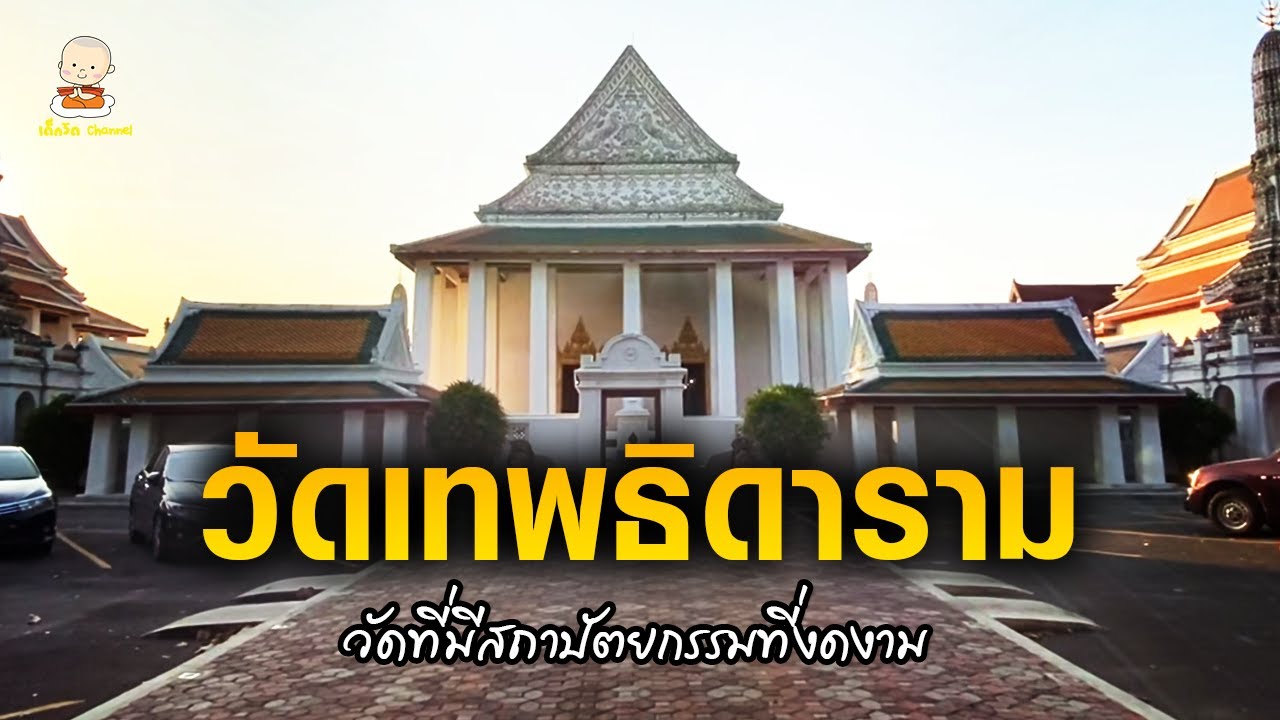
Wat Thepthidaram Worawihan

Open Days: Daily
Opening Hours: 07:30 – 17:00
Wat Thepthidaram Worawihan is a charming old-town temple in Bangkok that’s genuinely fun to explore at a slow pace. It’s well known as a third-class royal monastery on Maha Chai Road near Wat Ratchanatdaram, but what really makes it memorable is its Rama III–era artistry—Thai aesthetics blended with Chinese influence in a refined way. Add the literary connection to Sunthorn Phu, and the temple becomes a place where “poetry + old Bangkok + craftsmanship” all live together. If you like Bangkok walks that are actually walkable, easy to drop by, and leave you with stories worth telling, this temple is a very good use of time.
The temple sits on Rattanakosin Island along Maha Chai Road, not far from Loha Prasat and Wat Ratchanatdaram. That makes it ideal for a half-day or full-day loop—start at Loha Prasat, walk (or simply cross over) to pay respect at Wat Thepthidaram, then continue toward the Giant Swing, Wat Suthat, or Golden Mount in the classic old-city style. The nice part is that this neighborhood has plenty to look at along the way—old city walls, Mahakan Fort, and traces of long-standing local communities that still linger in pockets of the area.
The temple’s former name was “Wat Ban Phraya Krai Suan Luang.” It is believed the name referred to the surrounding area, once used as farmland and gardens, and possibly linked to land owned by Phraya Krai in the past. Later, during the reign of King Rama III (King Nangklao), the King ordered the construction of this temple to honor and grant it to his eldest daughter, Her Royal Highness Princess Apsornsudathep (Phra Ong Chao Wilas). Construction began in 1836 and was completed in 1839, making the temple a clear representation of Rama III craftsmanship—both in architectural form and decorative taste.
If you have visited several Rama III–period temples, you’ll notice shared characteristics: Siam’s trade and contact with China was thriving, and Chinese influence became prominent in architecture and temple ornamentation. Wat Thepthidaram is a strong example of this “language of the era.” Some buildings appear more restrained than temples from other periods, and you’ll find decorative elements such as Chinese-style stone figures—both people and animals—placed around the grounds. What’s especially interesting is that some human figures are posed and dressed in distinctly Chinese styles, while others appear in Thai dress. A unique signature of this temple is the abundance of female sculptures in various postures, which is notably more common here than at many other temples.
When you reach the ordination hall, you can see the delicacy of Rama III craftsmanship in multiple details, including the beautifully arranged busabok-style structure that supports the principal Buddha image. The mural paintings on the ordination hall walls feature the “phum khao bin” motif, a classic pattern associated with the period’s painting style. The motif feels orderly, intricate, and rhythmically repeated—something that invites you to stand and look longer. If you enjoy observing Thai decorative arts, this temple can feel like a small open-air classroom you can truly walk through.
Another highlight many visitors come to see is the set of 52 lacquered-and-gilded “bhikkhuni” figures (49 seated and 3 standing). They are arranged in the temple’s sanctuary space and portrayed in a remarkably wide range of postures—from meditative seated poses and standing in reverence, to praying with palms together, listening to sermons, chewing betel, and even smoking. These details make the experience more than just “counting statues.” They reflect an intention to give the sacred space a sense of lived reality and human texture. The overall atmosphere feels both peaceful and intriguing at the same time.
Inside the ordination hall, the principal Buddha image revered by many locals is known as “Luang Pho Khao.” Enshrined on a busabok, it is a white-stone Buddha in the Mara-vijaya posture, carved from pure white stone. The lap width is 15 inches and the height is 21 inches. It is also recorded that King Rama IX bestowed the name “Phra Phuttha Thewa Wilas” upon this image. The combination of its material and scale helps you understand that the statue’s impact comes not from monumental size, but from the refined beauty of craftsmanship—something you feel best when you step closer.
Another major feature of the temple is the four directional prangs (stupa-like towers), crafted by artisans of the Rama III period. They add depth to the space and create multiple viewing angles. Walking around, you get the sense the temple was not designed to be rushed through, but to be “paused with” in small rhythms—pauses created by morning shadows across the structures, by Chinese decorative accents, or by open courtyard moments where the eye rests before moving on.
If you enjoy detailed architecture, the temple’s “Ho Trai” (scripture library) is especially worth attention. It is a two-story masonry building raised on a high base, decorated with gilding and red lacquer, and featuring chofa and bai raka elements with a gable adorned in gilt and colored glass mosaic. Many doors and windows display traditional “lai rot nam” (gold-on-black lacquer) artistry. Historically, the Ho Trai was used to store palm-leaf manuscripts, including the Tipitaka and other texts. Inside, there is an antique-style scripture cabinet with lion-foot legs. These details make the visit more than temple sightseeing—it becomes a glimpse into how knowledge was preserved within communities through architecture and craft.
Wat Thepthidaram is also closely tied to Thai literary history. It once served as the residence of Sunthorn Phu, the great poet of the Rattanakosin era, during 1840–1842 when he was ordained as a monk. Today, there remains an area known as the “Poet’s House,” opened as a museum for visitors. This gives the visit a special dimension: you can begin with worship and merit-making, then continue with a walk through the poet’s story in a real historical setting—faith and learning woven together in a balanced, meaningful way.
For the best on-the-ground experience, morning visits are recommended—cooler air and beautiful light make it easier to appreciate the details. Dressing modestly, speaking softly, and observing posted guidelines will help keep the visit smooth and respectful, especially around the ordination hall and sanctuary areas where people may be worshipping. If you’d like to feel the temple’s rhythm of daily life, you can try aligning your visit with the prayer times referenced in heritage information: morning prayers at 08:30 and evening prayers at 19:00. Still, it’s wise to check the day’s schedule and what activities are actually taking place when you arrive.
Getting There Wat Thepthidaram Worawihan is located at 70 Maha Chai Road, Samran Rat Subdistrict, Phra Nakhon District, Bangkok. An easy landmark is that it is near Wat Ratchanatdaram and Loha Prasat; from Wat Ratchanatdaram, you can walk along Maha Chai Road for a short distance to reach the temple. Several bus routes pass through the Ratchadamnoen–Maha Chai area, and commonly referenced routes include 15 and 47. By MRT, you can get off at Sam Yot Station and walk onward (the walking distance is commonly cited as about 1.2 km). If you prefer to connect by boat, you may consider nearby piers in the area, such as Bobae Market Pier, which is often cited as roughly a 739-meter walk away.
| Place Name | Wat Thepthidaram Worawihan |
| Location | 70 Maha Chai Road, Samran Rat Subdistrict, Phra Nakhon District, Bangkok 10200 |
| Key Features | Rama III–period temple with Thai–Chinese influence, four directional prangs, ordination hall murals with phum khao bin motifs, 52 bhikkhuni figures in the sanctuary, Luang Pho Khao (Phra Phuttha Thewa Wilas), a two-story Ho Trai with lai rot nam artistry, and the Poet’s House / Sunthorn Phu museum |
| Period | Early Rattanakosin (King Rama III). Construction began in 1836 and was completed in 1839. |
| Key Evidence / Significance | Commissioned by King Rama III as a temple dedicated to Princess Apsornsudathep; notable for Rama III–era artistic features and the 52 bhikkhuni figures; linked to Sunthorn Phu through the Poet’s House museum |
| Abbot (Latest) | Phra Thep Wisutthimethi (Phaeo Porakkamo) |
| Getting There | Near Wat Ratchanatdaram / Loha Prasat; short walk along Maha Chai Road to the temple. Commonly referenced bus routes include 15 and 47. MRT Sam Yot Station then walk about 1.2 km. Bobae Market Pier is often cited as about a 739 m walk away. |
| Current Status | Open for worship and visits |
| Temple Contact (Verified) | 02-621-1178 |
| Admission | Free entry |
| Facilities | Information mentions free parking (please confirm on-site) and learning / museum points within the temple grounds |
| Nearby Attractions (Distance) | Wat Ratchanatdaram Worawihan – Loha Prasat (approx. 0.3 km) Mahakan Fort (approx. 0.8 km) Democracy Monument (approx. 1.2 km) Giant Swing (approx. 1.3 km) Wat Suthat Thepwararam (approx. 1.5 km) Wat Saket (Golden Mount) (approx. 1.6 km) |
| Nearby Restaurants (Distance + Phone) | Thipsamai Pad Thai Pratu Phi (approx. 0.2 km) – 02-226-6666 Jay Fai (approx. 0.5 km) – 02-223-9384 Kopi Hia Tai Kee (Giant Swing) (approx. 1.3 km) – 062-678-3003 Mont Nom Sod (Giant Swing) (approx. 1.3 km) – 02-224-1147 Kopi Hia Tai Kee (Phan Fa) (approx. 1.0 km) – 062-686-0770 |
| Nearby Accommodations (Distance + Phone) | Once Again Hostel (approx. 0.4 km) – 092-620-5445 Villa De Pranakorn (approx. 0.4 km) – 02-221-1122 Nouvo City Hotel (approx. 1.1 km) – 02-282-7500 Villa De Khaosan (approx. 1.3 km) – 02-629-0283 Riva Surya Bangkok (approx. 1.5 km) – 02-633-5000 |
Frequently Asked Questions (FAQ)
Q: Where is Wat Thepthidaram Worawihan located in Bangkok?
A: It is located at 70 Maha Chai Road, Samran Rat Subdistrict, Phra Nakhon District, on Rattanakosin Island, near Wat Ratchanatdaram and Loha Prasat.
Q: What makes this temple different from other temples?
A: Its key strengths are Rama III–period arts with a clear Chinese influence, the four directional prangs, the set of 52 bhikkhuni figures, and its connection to Sunthorn Phu through the Poet’s House / museum within the temple grounds.
Q: Where are the 52 bhikkhuni figures, and what is special about them?
A: They are in the temple’s sanctuary area. The 52 lacquered-and-gilded figures are arranged in many different postures—from meditation and listening to sermons to everyday-life gestures—making the walk-through engaging and full of details to observe.
Q: Can you visit the Poet’s House / Sunthorn Phu museum?
A: Yes, there is an area known as the Poet’s House and a Sunthorn Phu museum you can visit. It’s recommended to check the museum’s opening hours on the day you go, as they may differ from the temple’s general hours.
Q: Is it convenient to visit by MRT?
A: Yes. You can get off at MRT Sam Yot Station and walk to the temple via Maha Chai Road (the walk is commonly cited as about 1.2 km), which suits visitors who want to continue exploring the old city on foot.
Q: What nearby places should you visit after the temple?
A: Recommended nearby stops include Wat Ratchanatdaram – Loha Prasat, Mahakan Fort, Democracy Monument, the Giant Swing, Wat Suthat, and Wat Saket (Golden Mount), all within the same walkable old-town zone.
Tel : 022225067
 Tel : 022225067
 Category: ●Places of Worship
 Group: ●Temple
Last Update : 9 MonthAgo
 Last Update : 9 MonthAgo
 Click to Access the Navigation Map GPS
Wat Thepthidaram Worawihan Map
Recommend

 Art, Culture and Heritage
 Historical Sites and Monuments(3)
 Landmarks and Memorials(23)
 Royal Palace(13)
 Art, Craft Centres, Tradition(35)
 Museums(59)
 Historic Homes and Cities(3)
 Art Gallery(16)
 Educational Places
 Museum for Study(6)
 Library(4)
Temple(72)
 Church(2)
 Mosque(67)
 Other Sacred Sites(8)
 Research and Development
 Royal Project(1)
 Suburban Living
 Village, Community(5)
 Local Market(9)
 Floating Market(2)
 Nature and Wildlife
 River, Canal(3)
 Bays and Beaches(1)
 Other natural attractions(1)
 Entertainment and Agricultural
 Zoos and Aquariums(5)
 Animal camps and shows(5)
 Stadium(9)
 Farms, Parks and Ecotourism(20)
 Amusement Park(1)
 Waterpark(4)
 Theater(7)
 Cinema(1)
 Shopping
 Shopping and Night Market(20)
 Department Store(7)
 Spas and Wellness
 Spas and Wellness(1)
 Restaurant
 Michelin Star(5)
 Accommodation
 Hotel(3)
 Call Customer Service in Tourism
 Call Customer Service in Tourism(1)
 Travel Articles, Recipes
 Travel Review, Food Review(41)
 Royal Thai Desserts and Recipes(56)


