
lovethailand home >Central Travel Attractions >Bangkok Travel Attractions >Chom Thong >Chom Thong > Wat Bang Khun Thian Nok
TL;DR: Wat Bang Khun Thian Nok is located at Chom Thong Subdistrict, Chom Thong District, Bangkok, Thailand, open Daily, hours 06.00 – 18.00.
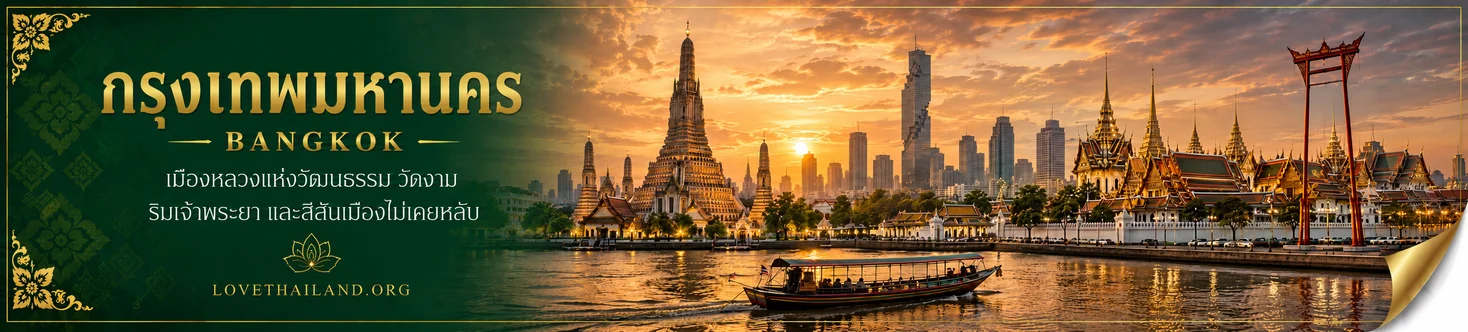
Wat Bang Khun Thian Nok
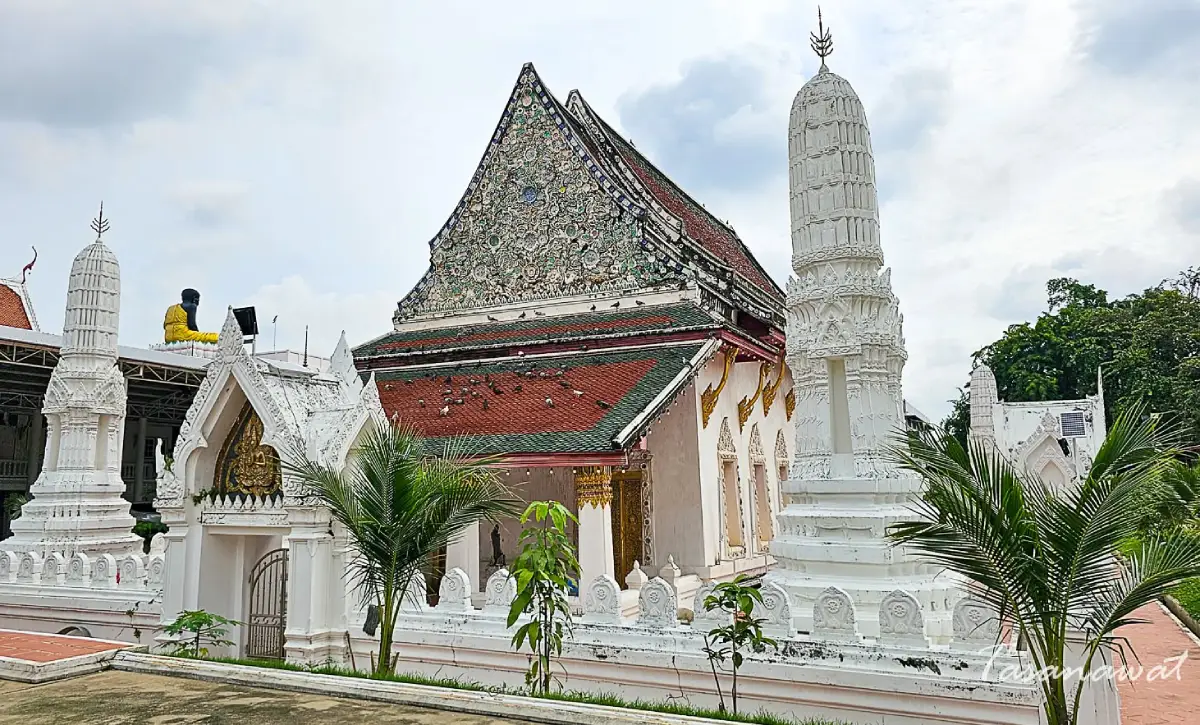
Open Days: Daily
Opening Hours: 06.00 – 18.00
Wat Bang Khun Thian Nok in Chom Thong District, Bangkok, is a private Buddhist temple under the Mahanikaya monastic order. The temple is located around Chom Thong Road, Rama II Soi 28, Soi Wachana 19, and Khlong Bang Khun Thian. It is one of the three closely connected Bang Khun Thian temples: Wat Bang Khun Thian Nok, Wat Bang Khun Thian Klang, and Wat Bang Khun Thian Nai. The temple was formerly known as Wat Yommalok and dates back to the late Ayutthaya period. Its main highlights include a Chinese-style ordination hall from the King Rama III period, a gable decorated with Benjarong ceramics, valuable murals, the rare Twelve Nations paintings on the inner window panels, Phra Phuttha Yommalok, Sukhothai-style Buddha images, images of Phra Sariputta and Phra Moggallana, corner chedis around the ordination hall, the Luang Pu Thuat viharn, and the atmosphere of an active canal-side community temple in Chom Thong.
Wat Bang Khun Thian Nok is suitable for travelers who want to make merit, visit an old ordination hall, study Sino-Thai temple architecture from the early Rattanakosin period, and understand the old canal-side communities of southern Thonburi. This is not a large royal monastery or a commercial sightseeing landmark. Its value lies in its history, its art, its relationship with neighboring temples, and its continued role in local Buddhist life. The temple connects late Ayutthaya roots, King Rama III-period restoration, Chinese-influenced decorative art, Buddhist murals, school life, canal geography, and modern Chom Thong community activities within one compact site.
The history of Wat Bang Khun Thian Nok begins with its former name, Wat Yommalok. The temple was founded around 1703 in the late Ayutthaya period by two devout lay supporters. Later, one of the two supporters established another temple nearby, now known as Wat Bang Khun Thian Klang. This shared origin makes Wat Bang Khun Thian Nok and Wat Bang Khun Thian Klang historically inseparable. They are best understood as sister temples within the old Bang Khun Thian canal-side community.
The temple stands in an old water-based settlement near Khlong Bang Khun Thian and the historical water routes connected with Khlong Dan or Khlong Sanam Chai. These canals once served as roads for local communities, trade, travel, and daily movement across the Thonburi side of Bangkok. The temple’s canal-side location is therefore central to its identity. It reflects a period when people lived, traded, traveled, made merit, and built temples around waterways rather than modern roads.
The name Wat Yommalok is tied to the temple’s early memory and to its principal Buddha image. Inside the ordination hall is Phra Phuttha Yommalok, the temple’s important principal Buddha image. After World War II, during the time of Phra Athikan Samniang as abbot, the temple name was changed to Wat Bang Khun Thian Nok to correspond with the official Bang Khun Thian district name. The new name also helps distinguish the temple from Wat Bang Khun Thian Klang and Wat Bang Khun Thian Nai, which stand close to one another in the same local temple cluster.
Wat Bang Khun Thian Nok received its Wisungkham Sima, or consecrated boundary for formal monastic acts, around 1707. The consecrated boundary measures 16 meters wide and 21 meters long. In Thai Buddhism, the Wisungkham Sima is essential for important monastic ceremonies, especially ordination. This confirms that Wat Bang Khun Thian Nok had full religious status from the early part of its history and served as an established Buddhist center in the Bang Khun Thian community.
Historical temple records describe the compound as low-lying land that was frequently affected by seasonal flooding. The eastern side bordered Khlong Bang Khun Thian, while the temple entrance traditionally faced north and the rear faced south. This landscape is typical of old Thonburi temples, where canals and ditches often formed natural boundaries and provided the main access routes before roads became dominant.
The ordination hall is the most important building at Wat Bang Khun Thian Nok. It measures 16 meters wide and 21 meters long and is a Chinese-style hall associated with the King Rama III period. Its design reflects the royal-preferred Sino-Thai style of early Rattanakosin temple architecture. The building uses durable masonry, Chinese ceramic decoration, and a simpler roofline without some of the traditional Thai roof ornaments found in older temple forms. At the same time, it remains fully rooted in Thai Buddhist sacred architecture.
The gable of the ordination hall is decorated with Benjarong ceramics and Chinese-style colored wares arranged into floral, tree, and natural motifs. This type of ceramic decoration is closely associated with the artistic taste of King Rama III’s reign, when Chinese ceramics and trade goods were incorporated into temple architecture. The result is a distinctive building that differs from conventional Thai temples while preserving strong Buddhist meaning and local craftsmanship.
The ordination hall has seven bays, tiered roofing, and projected eaves on both the front and rear. A boundary wall surrounds the hall, with four entrance gates and corner chedis in a slender prang-like form. These elements create a complete sacred composition around the ordination hall. Visitors interested in architecture should observe the building, the boundary wall, the gates, the corner chedis, the gable decoration, and the relationship between the hall and the canal-side setting.
Inside the ordination hall is Phra Phuttha Yommalok, the temple’s main Buddha image. Older temple history describes the principal image as a Sukhothai-style Buddha image in meditation posture, enshrined together with 15 other Buddha images, Phra Sariputta, and Phra Moggallana. The grouped arrangement of the sacred images on the same base gives the interior a concentrated devotional atmosphere. Visitors should pay respect quietly and take time to observe the surrounding images with care.
Other sacred objects associated with the temple include several bronze Sukhothai-style Buddha images in meditation posture kept at the abbot’s residence, together with crowned Buddha images and Phra Khanom Tom images. These objects deepen the temple’s cultural value. Wat Bang Khun Thian Nok is not important only because of its ordination hall; it also preserves sacred objects, devotional memory, and local Buddhist heritage that have been maintained by the community over generations.
The murals inside the ordination hall are among the temple’s most important highlights. Some portions have deteriorated over time, but the surviving paintings remain highly valuable. The murals include scenes from the Buddha’s life and the Twelve Nations paintings on the inner window panels. These paintings make Wat Bang Khun Thian Nok especially important for studying King Rama III-period mural traditions, because they show both Buddhist narrative and the way people in early Rattanakosin Siam imagined foreign peoples and cultures.
The Twelve Nations paintings at Wat Bang Khun Thian Nok are particularly significant. Academic study identifies images of people from 22 nations, with one additional group that cannot be identified. Unlike the better-known Twelve Nations imagery at Wat Phra Chetuphon, the paintings at Wat Bang Khun Thian Nok include scenes of women carrying or leading children, showing ordinary family life rather than only formal ethnic representation. This gives the paintings a local character and reveals the viewpoint of non-court artisans working outside the royal center.
The guardian figures and foreign male-and-female pairs on the window panels make the ordination hall unusual. Many temples use male guardian figures or divine protectors in more conventional forms. At Wat Bang Khun Thian Nok, the images of foreign men and women reflect the multicultural awareness of Siam during the King Rama III period. Trade, travel, diplomacy, Chinese networks, Western missionaries, and regional encounters all shaped how foreign peoples were imagined and depicted. These paintings are therefore not merely decorative; they are cultural documents from early modern Bangkok.
The art of Wat Bang Khun Thian Nok has several historical layers. The first layer is the late Ayutthaya foundation. The second layer is the King Rama III-period restoration and ceramic decoration. The third layer is the continued use of the temple by the local community. The fourth layer is the memory shared by Chom Thong residents, who still see the temple as a place of worship, education, and local identity. A meaningful visit should consider the temple, the murals, the Buddha images, the canals, and the neighboring temples together.
The Luang Pu Thuat viharn is another worship point inside the temple. The viharn includes a large Luang Pu Thuat image on the rooftop, and inside the viharn is Phra Phuttha Setthi, where visitors come to pay respect for encouragement in work and livelihood. Together with Phra Phuttha Yommalok in the ordination hall and other sacred images in the compound, this gives the temple several points of worship for visitors who prefer a calm merit-making visit.
Older temple records describe eight monks’ residences, mostly traditional Thai-style hardwood buildings. The temple also has a chanting hall, a two-storey sermon hall, and other buildings for monastic and community activities. These structures show that Wat Bang Khun Thian Nok is not only a historical site. It is a functioning community temple with spaces for monks, ceremonies, Dhamma learning, community gatherings, and local religious life.
Education has long been part of the temple’s role. Wat Bang Khun Thian Nok supported monks and novices in studying Buddhist scripture at other monastic schools according to their circumstances. A Bangkok Metropolitan Administration primary school also stands on temple land. This relationship between temple and school is a key feature of Thai community temples. The temple has supported not only ritual life, but also learning, youth development, and local social continuity.
Current public temple information lists Phra Khru Kasem Sutaphon as the abbot of Wat Bang Khun Thian Nok. The 2025 Kathin record lists 19 resident monks, confirming that the temple remains active with monastic life, Kathin activities, and community participation. The temple is therefore not simply a historical name. It continues to operate as a living Buddhist space in Chom Thong.
Wat Bang Khun Thian Nok is very close to Wat Bang Khun Thian Klang and Wat Bang Khun Thian Nai, making it practical to visit all three temples in the same trip. Wat Bang Khun Thian Klang is known for Luang Pho Chat Thong and its long waterside pavilion, while Wat Bang Khun Thian Nai was formerly known as Wat Khanun and stands beside Khlong Bang Khun Thian. Visiting all three temples gives travelers a clearer understanding of the old Bang Khun Thian temple cluster and the canal-side religious landscape of southern Thonburi.
The area around the temple also shows how Chom Thong has changed over time. What was once a canal-side landscape of gardens and lowland communities has become a dense urban district connected with Rama II Road, Chom Thong Road, Suk Sawat Road, Dao Khanong, and the BTS network on the Thonburi side. Even with these changes, Wat Bang Khun Thian Nok continues to anchor local memory and Buddhist practice.
A visit should begin at the temple entrance and continue to the ordination hall area. Visitors should observe the Chinese ceramic gable, boundary wall, gates, corner chedis, and principal Buddha image. If the ordination hall is open, the murals and window-panel paintings deserve careful viewing. After that, visitors can continue to the Luang Pu Thuat viharn, sermon hall, canal-side area, and other public areas of the temple compound.
Visitors should dress respectfully, speak quietly, and avoid entering monks’ residential areas without permission. They should not touch murals, window panels, Buddha images, or historic architectural elements. Photography should be discreet, especially inside the ordination hall or during ceremonies. Wat Bang Khun Thian Nok is an active community temple, so temple etiquette is just as important as sightseeing.
Getting There is possible by private car, taxi, motorcycle taxi, bus, or BTS connection. Drivers can approach through Rama II Soi 28 or Chom Thong Road toward Soi Wachana 19. Public transport users can take buses along Rama II Road or Chom Thong Road and continue by motorcycle taxi or taxi into the temple area. Travelers using the BTS can get off at Wutthakat or Talat Phlu Station, then continue by road transport toward Chom Thong and Rama II Soi 28.
Drivers should allow extra time for traffic and parking because the area includes schools, markets, homes, and narrow local roads. Morning and late-afternoon periods can be busy because of school and community movement. For a quieter visit, late morning or late afternoon is generally more comfortable. The temple is open daily from 06.00 to 18.00.
A practical half-day route can begin at Wat Bang Khun Thian Nok with Phra Phuttha Yommalok, the Chinese-style ordination hall, and the Twelve Nations paintings. Visitors can then continue to Wat Bang Khun Thian Klang, Wat Bang Khun Thian Nai, Wat Kiat Pradit, Wat Pho Kaeo, and Wat Mongkhon Wararam. With more time, Wat Nang Nong Worawihan, Wat Nang Ratchaworawihan, or Wat Ratcha Orasaram Ratchaworawihan can be added for a deeper view of Thonburi temple history.
The best time to visit Wat Bang Khun Thian Nok is in the morning or late afternoon. These periods are more comfortable for walking and viewing architectural details. Visitors who want to study the murals should allow enough time and maintain quiet inside the ordination hall. Those who want to ask about Kathin activities, ceremonies, or group visits should contact the temple directly at 02-476-4109 before traveling.
Wat Bang Khun Thian Nok is worth visiting for travelers who want to understand Bangkok through old community temples rather than only through famous landmarks. The temple brings together a late Ayutthaya foundation, the former name Wat Yommalok, a consecrated boundary from around 1707, a King Rama III-period Chinese-style ordination hall, Benjarong ceramic decoration, rare Twelve Nations paintings, Phra Phuttha Yommalok, the Luang Pu Thuat viharn, Wat Bang Khun Thian Nok School, Khlong Bang Khun Thian, and its close relationship with Wat Bang Khun Thian Klang and Wat Bang Khun Thian Nai. A visit to this temple is therefore not only a merit-making trip, but also a way to read the history of southern Thonburi through a living Buddhist temple.
| Name | Wat Bang Khun Thian Nok |
| Former Name | Wat Yommalok |
| Location | Chom Thong Subdistrict, Chom Thong District, Bangkok, Thailand |
| Address | 1 Moo 7, Soi Wachana 19, Chom Thong Road, Chom Thong, Bangkok 10150, with access from Rama II Soi 28 / Soi Muban Sinthawee area |
| Coordinates | 13.697123, 100.465472 |
| Place Type | Private Buddhist Temple Under The Mahanikaya Monastic Order |
| Highlights | King Rama III-period Chinese-style ordination hall, Benjarong ceramic gable decoration, murals, Twelve Nations window paintings, Phra Phuttha Yommalok, Sukhothai-style Buddha images, corner chedis, and Luang Pu Thuat viharn |
| History | Founded around 1703 in the late Ayutthaya period. Formerly named Wat Yommalok and later renamed Wat Bang Khun Thian Nok after World War II during the time of Phra Athikan Samniang as abbot. |
| Consecrated Boundary | Granted Wisungkham Sima around 1707, with a consecrated boundary measuring 16 meters wide and 21 meters long |
| Temple Land | 6 rai, 1 ngan, and 8 square wah according to temple-history records |
| Site Character | Low-lying canal-side land beside Khlong Bang Khun Thian, close to Wat Bang Khun Thian Klang and Wat Bang Khun Thian Nai |
| Main Areas / Zones | Ordination hall, boundary wall, four entrance gates, corner chedis, monks’ residences, chanting hall, two-storey sermon hall, Luang Pu Thuat viharn, canal-side area, and temple activity areas |
| Important Sacred Objects | Phra Phuttha Yommalok, the principal Buddha image, 15 surrounding Buddha images, Phra Sariputta, Phra Moggallana, bronze Sukhothai-style Buddha images, crowned Buddha images, Phra Khanom Tom images, Luang Pu Thuat, and Phra Phuttha Setthi |
| Important Murals | Buddha-life murals and the Twelve Nations paintings on the inner window panels, reflecting foreign peoples and cultural imagination in the King Rama III period |
| Important Activities | Buddhist holy-day merit-making, Sangha offerings, Kathin activities, community events, and activities connected with Wat Bang Khun Thian Nok School |
| Travel Information | Access via Rama II Soi 28 or Chom Thong Road toward Soi Wachana 19. Public transport users can take buses along Rama II Road or Chom Thong Road, or use BTS Wutthakat / BTS Talat Phlu and continue by taxi or motorcycle taxi. |
| Current Status | Open as an active Buddhist temple for worship, merit-making, Kathin activities, and local community use in Chom Thong |
| Open Days | Daily |
| Opening Hours | 06.00 – 18.00 |
| Facilities | Worship areas, sermon hall, public restrooms, accessible entry, parking, canal-side area, and temple activity spaces |
| Abbot / Caretaker | Phra Khru Kasem Sutaphon |
| Resident Monks | 19 monks according to the 2025 Kathin record |
| Main Contact Number | 02-476-4109 |
| Nearby Tourist Attractions | 1. Wat Bang Khun Thian Klang, about 1 km, Tel. 02-476-2244 2. Wat Bang Khun Thian Nai, about 1 km, Tel. 02-878-0270 3. Wat Kiat Pradit, about 2 km, Tel. 02-468-4478 4. Wat Pho Kaeo, about 2 km 5. Wat Mongkhon Wararam, about 3 km, Tel. 02-875-7549 6. Wat Nang Nong Worawihan, about 3 km, Tel. 092-282-5249, 02-476-2612 |
| Nearby Restaurants | 1. Day’s Food Chom Thong 19, about 1 km, Tel. 083-603-5018 2. Miaw Made-To-Order Food Chom Thong 19, about 1 km, Tel. 061-284-7729, 088-956-8337 3. Pakcha Mala Chom Thong 19, about 1 km, Tel. 090-909-9489 4. Yong Leap Chicken Stew Chom Thong 19, about 1 km, Tel. 061-558-7446, 081-734-4055 5. Made-To-Order Food Near Family Mart Chom Thong 19, about 2 km, Tel. 082-705-8054 6. Auntie Khaek’s Noodles Chom Thong 19, about 2 km, Tel. 064-254-4800 |
| Nearby Accommodations | 1. 45 Resort Suk Sawat, about 4 km, Tel. 086-061-1636 2. 14 Avenue, about 4 km, Tel. 02-877-1188 3. The Choice Hotel, about 5 km, Tel. 081-655-7233 4. Aqua Residences BTS Wutthakat, about 5 km, Tel. 096-891-9063, 091-874-4895 5. 14 Place Rama 2, about 5 km, Tel. 02-416-3355 6. Anurak Guesthouse, about 6 km, Tel. 02-468-0881 |
Frequently Asked Questions (FAQ)
Q: Where is Wat Bang Khun Thian Nok located?
A: Wat Bang Khun Thian Nok is located in Chom Thong Subdistrict, Chom Thong District, Bangkok, around Chom Thong Road, Soi Wachana 19, Rama II Soi 28, and Khlong Bang Khun Thian, close to Wat Bang Khun Thian Klang and Wat Bang Khun Thian Nai.
Q: What is the history of Wat Bang Khun Thian Nok?
A: Wat Bang Khun Thian Nok was founded around 1703 in the late Ayutthaya period. It was formerly called Wat Yommalok and was later renamed Wat Bang Khun Thian Nok after World War II to correspond with the official Bang Khun Thian area name.
Q: What are the main highlights of Wat Bang Khun Thian Nok?
A: The main highlights are the King Rama III-period Chinese-style ordination hall, Benjarong ceramic gable decoration, murals, Twelve Nations window paintings, Phra Phuttha Yommalok, corner chedis, and the Luang Pu Thuat viharn.
Q: Why are the Twelve Nations paintings important?
A: The Twelve Nations paintings on the inner window panels show foreign male-and-female pairs and reflect the cultural imagination of Siam during the King Rama III period. They are important because they show a local artisan interpretation that differs from court-style models.
Q: What are the opening days and hours of Wat Bang Khun Thian Nok?
A: Wat Bang Khun Thian Nok is open daily from 06.00 to 18.00.
Q: Who is the abbot of Wat Bang Khun Thian Nok?
A: Current public temple information lists Phra Khru Kasem Sutaphon as the abbot of Wat Bang Khun Thian Nok.
Q: How can travelers get to Wat Bang Khun Thian Nok?
A: Travelers can access the temple via Rama II Soi 28 or Chom Thong Road toward Soi Wachana 19. Public transport users can take buses along Rama II Road or Chom Thong Road, or use BTS Wutthakat or BTS Talat Phlu and continue by taxi or motorcycle taxi.
Q: What nearby places can visitors combine with Wat Bang Khun Thian Nok?
A: Visitors can combine the temple with Wat Bang Khun Thian Klang, Wat Bang Khun Thian Nai, Wat Kiat Pradit, Wat Pho Kaeo, Wat Mongkhon Wararam, and Wat Nang Nong Worawihan.
 Category: ●Places of Worship
 Group: ●Temple
Last Update : 1 MonthAgo
 Last Update : 1 MonthAgo
 Click to Access the Navigation Map GPS
Wat Bang Khun Thian Nok Map
Recommend

 Phra Nakhon(24)Dusit(17)Khlong San(7)Khlong Toei(3)Jatujak(2)Don Muang(5)Taling Chan(26)Thon Buri(23)Bangkok Noi(31)Bangkok Yai(13)Bang Kapi(5)Bang Kun Tien(15)Bang Khen(3)Bang Kholam(10)Bang Sue(9)Bang Plad(23)Bang Rak(6)Chom Thong(16)Bung Kum(5)Pra Wet(6)Patum Wan(6)Pom Prap Sattru Phai(11)Paya Thai(1)Pra Kanong(4)Pa Sri Charoen(23)Min Buri(7)Yan Na Wa(8)Ratchathewi(4)Rat Burana(6)Lat Krabang(13)Nong Chok(16)Lat Phrao(4)Sathorn(4)Sam Phan Tha Wong(12)Nong Khaem(7)Huai Khwang(3)Suan Luang(7)Din Daeng(2)Lak Si(1)Sai Mai(8)Khan Na Yao(2)Wang Thong Lang(1)Klong Sam Wa(10)Watthana(2)Bang Na(4)Thawi Watthana(3)Bang Khae(5)Thung Khru(4)Bang Bon(3)


