
lovethailand home >Central Travel Attractions >Bangkok Travel Attractions >Bang Kholam >Bang Kho > Wat Phai Ngoen Chotnaram
TL;DR: Wat Phai Ngoen Chotnaram is located at Bang Khlo Subdistrict, Bang Kho Laem District, Bangkok, open Daily, hours 06.00 – 18.00.
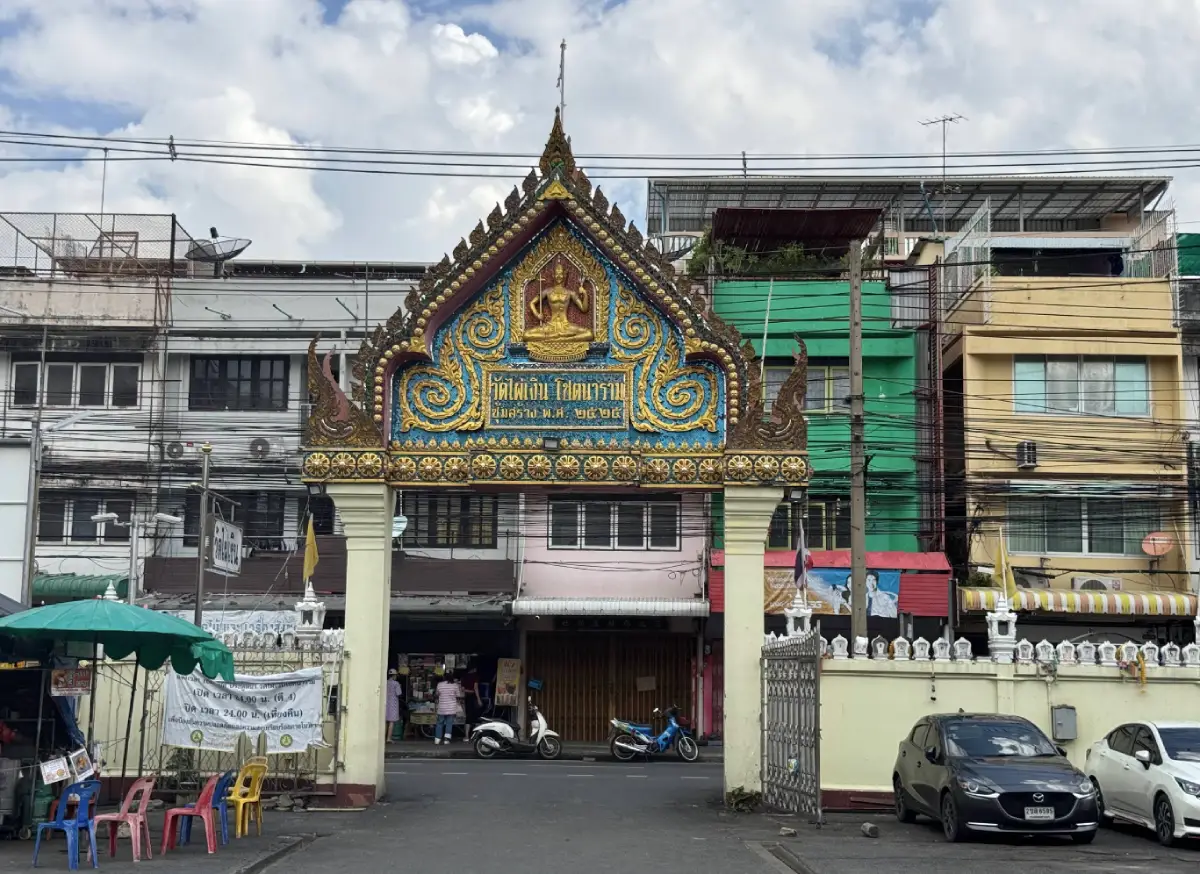
Wat Phai Ngoen Chotnaram
Open Days: Daily
Opening Hours: 06.00 – 18.00
Wat Phai Ngoen Chotnaram is a historic Buddhist temple in Bang Khlo Subdistrict, Bang Kho Laem District, Bangkok. Located at 882 Soi Wat Phai Ngoen, also known as Chan Road Soi 43, the temple stands in an old urban neighborhood connected to Chan Road, Sathu Pradit Road, Rama 3 Road, Charoen Krung Road, and the Chao Phraya River area. For visitors who want to experience a local Bangkok temple with deep history, important sacred images, and strong community faith, Wat Phai Ngoen Chotnaram is one of the most meaningful places to visit in this part of the city.
The temple is especially important because it carries the historical roots of three temples: Wat Phai Lom, Wat Ngoen, and Wat Chotikaram, also known as the former Wat Phraya Krai. This unusual background gives Wat Phai Ngoen Chotnaram a layered identity. It is not only a neighborhood temple for merit-making, but also a place where the histories of relocation, temple preservation, sacred objects, and Bangkok’s urban development are brought together in one religious site.
Wat Phai Ngoen Chotnaram was originally known as Wat Phai Lom. It was built around 1792 during the reign of King Rama I, although the name and personal history of the founder are not clearly recorded. This early Rattanakosin-period origin makes the temple historically significant within the Bang Khlo area. Like many old Bangkok temples, it served as a religious and social center for the surrounding community, supporting merit-making, Buddhist ceremonies, education, and local traditions.
The temple’s name changed because of a major urban development event. Wat Ngoen, formerly located in the Khlong Toei area, had to relocate when land was expropriated for the construction of Bangkok Port. Its monastic buildings were moved and merged with Wat Phai Lom. In 1939, the merged temple was renamed Wat Phai Ngoen, combining the identities of the original Wat Phai Lom and Wat Ngoen. This name records a specific moment in Bangkok’s modern urban history, when religious sites had to adapt to infrastructure development while preserving their spiritual continuity.
Later, the temple received Luang Pho Samrit, an important principal Buddha image from Wat Chotikaram, or the old Wat Phraya Krai, after that temple became abandoned. Some monastic structures were also moved and merged into Wat Phai Ngoen. This made the temple a place that brought together the heritage of three temples. In 1940, the temple was officially renamed Wat Phai Ngoen Chotnaram. The current name therefore preserves the memory of Wat Phai Lom, Wat Ngoen, and Wat Chotikaram in one living temple.
Luang Pho Samrit is the spiritual heart of Wat Phai Ngoen Chotnaram. The image is a large bronze Buddha statue with a lap width of 104 inches. It belongs stylistically to the late Sukhothai to early Ayutthaya period and was brought from Vientiane during the Thonburi period. Before being enshrined at Wat Phai Ngoen Chotnaram, the image was associated with Wat Phraya Krai. Today, worshippers come to pay respect to Luang Pho Samrit for success in business, career growth, prosperity, and good fortune.
The importance of Luang Pho Samrit goes beyond devotional belief. The image is also valuable as a historic Buddhist artwork that reflects the movement of sacred objects across cities, temples, and communities over time. For visitors interested in Buddhist art, the statue offers a rare opportunity to see a large bronze Buddha image with a long and complex history. For local worshippers, it remains a deeply respected sacred image connected to prayers for success and stability in life.
Wat Phai Ngoen Chotnaram is also well known for the shrine of Lakshmi, the goddess associated with prosperity, beauty, love, good fortune, and abundance. Many visitors come to the temple specifically to pray to Lakshmi for relationships, financial improvement, business growth, and personal confidence. This shrine has helped make the temple popular among younger worshippers and Bangkok visitors who are interested in contemporary devotional culture.
Another major sacred point is the statue of Thao Wessuwan, located near the sacred-object center associated with Thao Wessuwan Narai Song Khrut. The statue is 2.90 metres tall. Worshippers commonly pray to Thao Wessuwan for wealth, authority, protection, and the removal of negative influences. In Thai Buddhist and folk belief, Thao Wessuwan is strongly associated with guardianship and prosperity, making this one of the most visited points in the temple.
The temple also enshrines Ganesha in the Natkhanet posture. This brass statue is 1.95 metres tall, has ten arms, and holds a full set of attributes. Ganesha is widely revered for success, wisdom, creativity, learning, business beginnings, and the removal of obstacles. Visitors who work in creative fields, study, start businesses, or begin new projects often include this shrine in their worship route.
Other sacred points within the temple include Rahu and Phra Mae Thorani. Rahu is associated with transformation, karmic shifts, and the easing of misfortune, while Phra Mae Thorani is connected with the earth, stability, fertility, and protection. The presence of these sacred figures shows how Wat Phai Ngoen Chotnaram combines Buddhist devotion with wider Thai spiritual beliefs in a way that feels natural within contemporary urban religious life.
The temple is also connected with the annual Luang Pho Samrit festival around the New Year period. The festival traditionally includes Chinese opera performances for several nights, making it a memorable community event. This tradition reflects the relationship between the temple, local residents, and long-standing devotional practices. The festival is not only a time to pay respect to Luang Pho Samrit, but also a living example of Bangkok’s community temple culture.
Wat Phai Ngoen Chotnaram continues to support Buddhist activities throughout the year. These include chanting, meditation practice, Dharma activities on Buddhist holy days, and candlelight processions on major Buddhist occasions such as Makha Bucha Day. The sermon hall remains an important space for religious practice and community gathering. This makes the temple more than a popular wish-making destination; it remains a functioning Buddhist temple with ongoing religious, educational, and community roles.
The current abbot is Phra Khru Adun Thammanuwat, also written as Phra Khru Adunyathamanukwat, whose monastic name is Ukkatecho. He has served as abbot since 2008. The temple’s records show a long succession of abbots, including Phra Maha Si Yasotharo, also known as Phra Khru Siri Thammasuthi or Phra Mongkhon Suthi, who served as the 13th abbot from 1940 to 2008. This continuity of monastic leadership has helped the temple maintain its religious and community functions over time.
Visitors can organize their visit by first paying respect to the principal Buddha image and Luang Pho Samrit inside the viharn. After that, they can continue to the Lakshmi shrine, Thao Wessuwan, Ganesha, Rahu, and Phra Mae Thorani. On weekends, holidays, or major ritual days, visitors should allow more time because the temple can attract larger numbers of worshippers, especially those coming to pray for love, business success, career progress, and prosperity.
The atmosphere of Wat Phai Ngoen Chotnaram is that of a working community temple in a dense Bangkok neighborhood. The entrance is in Chan Road Soi 43, an area surrounded by houses, local food stalls, small restaurants, and everyday urban life. This setting is part of the temple’s charm. Visitors can experience a real Bangkok neighborhood rather than a purely tourist-oriented attraction, then continue to nearby dining spots, Rama 3, Charoen Krung, or the Chao Phraya riverside.
Getting There is possible by private car, taxi, public bus, motorcycle taxi, BTS, or MRT. Drivers can navigate to Chan Road Soi 43 or Sathu Pradit Soi 20 and enter the temple area from the local road network. Parking is available at the temple, but visitors should allow extra time on busy days. Public buses serving the Chan Road, Sathu Pradit, and Rama 3 corridors include routes such as 32, 35, 62, 71, and local songthaew route 1271. From BTS Saphan Taksin, visitors can continue by bus, taxi, or motorcycle taxi. From MRT Lumphini, take Exit 2 and continue by taxi or motorcycle taxi to Chan Road and Soi Wat Phai Ngoen.
The best time to visit is in the morning or late afternoon, when the weather is more comfortable and the worship route is easier to follow. Visitors should dress respectfully, speak quietly, remove shoes where required, and avoid disturbing monks or local worshippers. Since this is an active community temple, visitors should treat the space primarily as a place of faith and religious practice.
What makes Wat Phai Ngoen Chotnaram distinctive is its combination of historical depth and active devotional life. It preserves the legacy of an early Rattanakosin temple, the relocation of Wat Ngoen due to Bangkok Port development, the sacred history of Luang Pho Samrit from Wat Phraya Krai, and the modern popularity of Lakshmi, Thao Wessuwan, and Ganesha worship. For travelers, it is a compact but rich cultural stop that connects Bangkok history, Buddhist art, local ritual, and contemporary faith in one place.
| Name | Wat Phai Ngoen Chotnaram |
| Location | Bang Khlo Subdistrict, Bang Kho Laem District, Bangkok |
| Address | 882 Soi Wat Phai Ngoen, Chan Road Soi 43, Chan Road, Bang Khlo, Bang Kho Laem, Bangkok 10120 |
| Coordinates | 13.701194, 100.523944 |
| Highlights | Historic Bangkok community temple combining the heritage of Wat Phai Lom, Wat Ngoen, and Wat Chotikaram, with Luang Pho Samrit, Lakshmi, Thao Wessuwan, and Ganesha as key sacred points |
| History | Built around 1792 as Wat Phai Lom, merged with Wat Ngoen in 1939, and renamed Wat Phai Ngoen Chotnaram in 1940 after receiving Luang Pho Samrit from Wat Chotikaram |
| Name Origin | The name reflects the merger of Wat Phai Lom and Wat Ngoen, together with the sacred heritage from Wat Chotikaram, also known as the former Wat Phraya Krai |
| Distinctive Features | Viharn of Luang Pho Samrit, Lakshmi shrine, Thao Wessuwan worship area, Ganesha in the Natkhanet posture, Rahu, Phra Mae Thorani, sermon hall, and active community temple areas |
| Important Sacred Image | Luang Pho Samrit, a bronze Buddha image from the late Sukhothai to Ayutthaya period, with a lap width of 104 inches, brought from Vientiane during the Thonburi period |
| Traditions / Rituals | Annual Luang Pho Samrit festival around New Year, Chinese opera performances, chanting, meditation practice, and candlelight processions on major Buddhist holy days |
| Travel Information | Accessible by private car, taxi, public bus, motorcycle taxi, BTS Saphan Taksin with onward transport, or MRT Lumphini with onward taxi or motorcycle taxi |
| Current Status | Open as a private Buddhist temple in Bang Kho Laem District and listed in the Bang Kho Laem District Office’s religious-place information |
| Open Days | Daily |
| Opening Hours | 06.00 – 18.00 |
| Fees | No admission fee |
| Facilities | Parking, toilets, merit-making areas, worship areas, sermon hall, and several sacred shrines within the temple grounds |
| Main Areas / Zones | Viharn of Luang Pho Samrit, ordination hall, sermon hall, Lakshmi shrine, Thao Wessuwan area, Ganesha, Rahu, Phra Mae Thorani, and sacred-object area |
| Abbot / Caretaker | Phra Khru Adun Thammanuwat, also written as Phra Khru Adunyathamanukwat, monastic name Ukkatecho |
| Main Contact Number | 02-211-3729, 02-211-1084 |
| Official Website / Official Page | Wat Phai Ngoen Chotnaram official Google Sites page |
| Nearby Tourist Attractions | 1. Wat Chan Nok, about 1 km, Tel. 02-289-2376 2. Wat Sai Rama 3, about 2 km, Tel. 02-289-1292 3. Wat Rueang Yot Suttharam, about 2 km, Tel. 02-289-1320 4. Terminal 21 Rama 3, about 2 km, Tel. 02-483-3555 5. Asiatique The Riverfront Destination, about 3 km, Tel. 092-246-0812 |
| Nearby Restaurants | 1. Keaw Thai Food, about 0.1 km, Tel. 096-151-5752 2. Wichian Pochana Branch Kwan Siu Kee Talat Noi, Chan 43, about 0.2 km, Tel. 062-964-2363 3. The Steak House Chan Road, about 0.1 km, Tel. 098-352-2636 4. Potion Essential Cafe, about 0.4 km, Tel. 082-535-6062 5. Khao Rad Kaeng Jae Pu, about 0.1 km, Tel. 082-331-4101 |
| Nearby Accommodations | 1. Four Seasons Hotel Bangkok at Chao Phraya River, about 2 km, Tel. 02-032-0888 2. Chatrium Hotel Riverside Bangkok, about 2 km, Tel. 02-307-8888 3. Hotel Once Bangkok, about 2 km, Tel. 02-688-2596 4. Shangri-La Bangkok, about 3 km, Tel. 02-236-7777 5. Tower Club at lebua, about 3 km, Tel. 02-624-9999 |
Frequently Asked Questions (FAQ)
Q: Where is Wat Phai Ngoen Chotnaram located?
A: Wat Phai Ngoen Chotnaram is located at 882 Soi Wat Phai Ngoen, Chan Road Soi 43, Bang Khlo, Bang Kho Laem, Bangkok.
Q: Why is Wat Phai Ngoen Chotnaram historically important?
A: The temple was built around 1792 as Wat Phai Lom, later merged with Wat Ngoen in 1939, and received Luang Pho Samrit from Wat Chotikaram before being renamed Wat Phai Ngoen Chotnaram in 1940.
Q: Why is Luang Pho Samrit important?
A: Luang Pho Samrit is a large bronze Buddha image from the late Sukhothai to Ayutthaya period, with a lap width of 104 inches. It was brought from Vientiane during the Thonburi period and is highly respected for success, business, and career blessings.
Q: What sacred figures can visitors worship at the temple?
A: Visitors can pay respect to Luang Pho Samrit, Lakshmi, Thao Wessuwan, Ganesha in the Natkhanet posture, Rahu, and Phra Mae Thorani.
Q: What are the opening hours of Wat Phai Ngoen Chotnaram?
A: The temple is open daily from 06.00 to 18.00, with no admission fee.
Q: How can travelers reach Wat Phai Ngoen Chotnaram by public transport?
A: Travelers can take BTS to Saphan Taksin and continue by bus, taxi, or motorcycle taxi, or take MRT to Lumphini Exit 2 and continue by taxi or motorcycle taxi to Chan Road Soi 43.
Q: Who should visit Wat Phai Ngoen Chotnaram?
A: The temple is suitable for visitors interested in historic Bangkok temples, Buddhist art, local community faith, and prayers for business, career success, love, prosperity, and good fortune.
Q: What nearby places can be combined with a visit to the temple?
A: Nearby places include Wat Chan Nok, Wat Sai Rama 3, Wat Rueang Yot Suttharam, Terminal 21 Rama 3, and Asiatique The Riverfront Destination.
 Category: ●Places of Worship
 Group: ●Temple
Last Update : 1 MonthAgo
 Last Update : 1 MonthAgo

 Click to Access the Navigation Map GPS
Wat Phai Ngoen Chotnaram Map
Recommend

 Phra Nakhon(24)Dusit(17)Khlong San(7)Khlong Toei(3)Jatujak(2)Don Muang(5)Taling Chan(26)Thon Buri(23)Bangkok Noi(31)Bangkok Yai(13)Bang Kapi(5)Bang Kun Tien(15)Bang Khen(3)Bang Kholam(10)Bang Sue(9)Bang Plad(23)Bang Rak(6)Chom Thong(16)Bung Kum(5)Pra Wet(6)Patum Wan(6)Pom Prap Sattru Phai(11)Paya Thai(1)Pra Kanong(4)Pa Sri Charoen(23)Min Buri(7)Yan Na Wa(8)Ratchathewi(4)Rat Burana(6)Lat Krabang(13)Nong Chok(16)Lat Phrao(4)Sathorn(4)Sam Phan Tha Wong(12)Nong Khaem(7)Huai Khwang(3)Suan Luang(7)Din Daeng(2)Lak Si(1)Sai Mai(8)Khan Na Yao(2)Wang Thong Lang(1)Klong Sam Wa(10)Watthana(2)Bang Na(4)Thawi Watthana(3)Bang Khae(5)Thung Khru(4)Bang Bon(3)


