
lovethailand home >Central Travel Attractions >Bangkok Travel Attractions >Pa Sri Charoen >Pak Khlong Phasi Charoen > Wat Thong Sala Ngam
TL;DR: Wat Thong Sala Ngam is located at Soi Phet Kasem 20, beside Khlong Bangkok Yai, Pak Khlong Phasi Charoen Subdistrict, Phasi Charoen District, Bangkok, open Daily, hours 05.00 – 20.00.
Wat Thong Sala Ngam
Open Days: Daily
Opening Hours: 05.00 – 20.00
Wat Thong Sala Ngam is a historic canal-side Buddhist temple in Phasi Charoen District, Bangkok. Located in Soi Phet Kasem 20 beside Khlong Bangkok Yai and the Khlong Bang Luang community, the temple preserves an older side of Thonburi where temples, canals, houses, schools, and local markets remain closely connected. The temple was formerly known as Wat Thong Lang or Wat Thong before receiving its official name, Wat Thong Sala Ngam.
Wat Thong Sala Ngam is a good destination for travelers who want to visit a quieter historic temple in Bangkok rather than a crowded landmark. Its value lies in the combination of old temple history, canal-side atmosphere, Buddhist worship, carved wooden architecture, local community life, and walkable access to nearby cultural sites such as Wat Kamphaeng Bang Chak, Wat Khuha Sawan Worawihan, Baan Silapin Khlong Bang Luang, and Khlong Bang Luang Floating Market.
The temple is located at 247 Soi Phet Kasem 20, Phet Kasem Road, Pak Khlong Phasi Charoen Subdistrict, Phasi Charoen District, Bangkok. It is a Mahanikaya Buddhist temple with an area of about 20 rai. The eastern side of the temple faces Khlong Bang Luang Noi, while the surrounding area includes Wat Kamphaeng Bang Chak, Wat Thong Sala Ngam School, private homes, and long-established canal communities. This setting reflects the traditional geography of Thonburi, where canals once served as the main routes for movement, trade, temple visits, and community life.
Wat Thong Sala Ngam was established around 1757, during the late Ayutthaya period. It received its royal consecrated boundary, known in Thai as wisungkhamsima, in 1777, with the latest consecrated boundary recorded on 20 May 2005. These details show that Wat Thong Sala Ngam has long served as a fully functioning Buddhist temple. In Thai Buddhism, the consecrated boundary is important because it defines the sacred area used for formal monastic acts, especially those connected with the ordination hall.
The name “Sala Ngam” is closely connected with the temple’s former riverside pavilion. In the past, people traveling along Khlong Bang Luang saw the temple’s beautiful waterside sala, and that memory became associated with the temple’s name. The old riverside pavilion later deteriorated and was removed, but its carved wooden gable was preserved and placed at the sermon hall. The gable, carved with a naga motif, remains one of the most important artistic details visitors should notice at Wat Thong Sala Ngam.
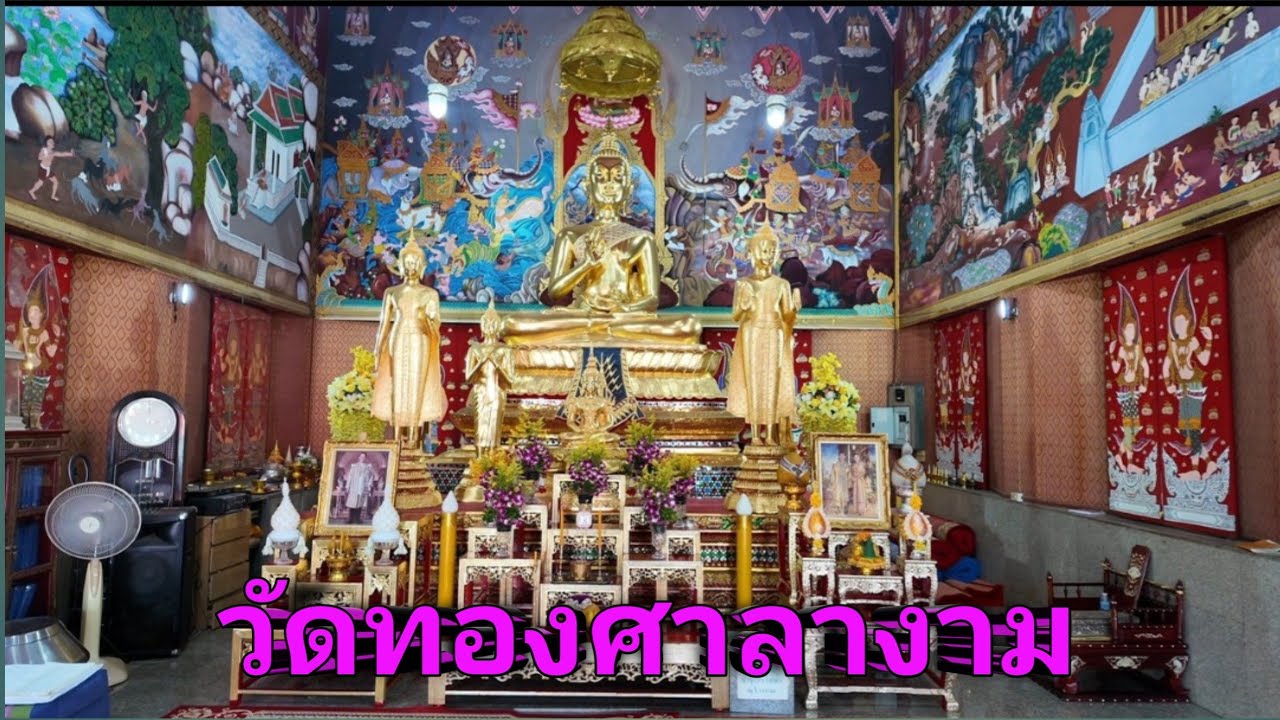
The former ordination hall was a Thai-style masonry building measuring about 11.75 meters wide and 21.25 meters long. Its architectural character is associated with the late Ayutthaya period. The temple also preserves important Buddhist images, including an old principal Buddha image in royal attire in the artistic style of the Thonburi period. These elements make Wat Thong Sala Ngam valuable not only as a place of worship but also as a place for understanding the development of Buddhist architecture and devotional art on the Thonburi side of Bangkok.
Inside the temple grounds are the ordination hall, sermon hall, monk residences, worship areas, and canal-side spaces. The sermon hall is especially significant because it houses the carved wooden gable from the old waterside pavilion. For visitors, this detail helps connect the present temple with the time when the canal was the front entrance of the community and the waterside pavilion welcomed people arriving by boat.
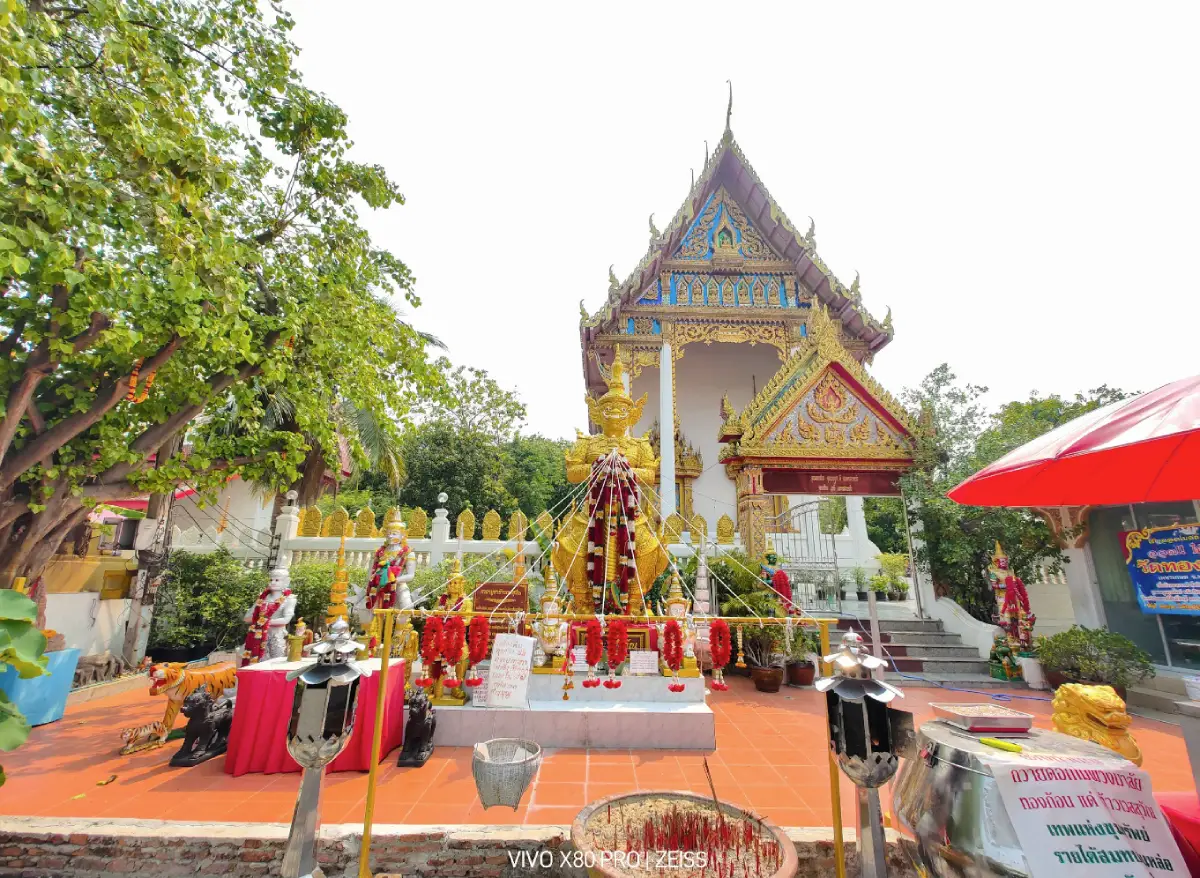
Several sacred features inside Wat Thong Sala Ngam attract local worshippers. These include Phra Chao Than Chai, Thao Wessuwan in the Pang Sawoei Suk posture, Luang Pho Thong, Luang Pho Ngoen, Luang Pho Phet, a statue of Luang Pu Rak, Somdet Phutthachan To, Phra Phrom, Ganesha, Phaya Khrut Plot Ni, Ai Khai, and a figure of Phaya Yommathut. Together, these devotional points show how traditional Buddhist practice and contemporary Thai forms of merit-making coexist within a historic temple setting.
Phra Chao Than Chai is one of the worship points many visitors approach early in their visit. The image is associated with prayers for encouragement, success, and smooth progress in personal goals. Thao Wessuwan Pang Sawoei Suk is another major point of devotion, especially for people seeking blessings related to prosperity, authority, career progress, and protection from misfortune.
Wat Thong Sala Ngam is also associated with Luang Pu Rak, a former abbot respected by local residents around Phet Kasem and Khlong Bang Luang. His statue is enshrined for devotees to pay respect. The temple’s annual merit-making activities, including gilding ceremonies and the robe procession for Luang Pho Thong and Luang Pu Rak, reflect the continuing bond between the temple, monks, and the local community.
The figure of Phaya Yommathut carries a moral meaning. It is intended to remind visitors of karma, merit, wrongdoing, and the consequences of human actions. In this context, the image is not simply a sacred figure for worship. It functions as a visual teaching that encourages people to live mindfully and reflect on Buddhist moral principles.
The atmosphere of Wat Thong Sala Ngam is quiet and local. The temple is closely connected with surrounding houses, the school, and the canal. It is not separated from daily community life. Travelers should therefore visit with a calm and respectful attitude, taking time to observe the old buildings, carved woodwork, waterside setting, worship areas, and community paths rather than treating the temple only as a quick photo stop.
A meaningful visit can begin with paying respect to the Buddha images and sacred figures inside the temple. Visitors can then walk around the ordination hall, the sermon hall, and the preserved naga-carved wooden gable. The canal-side area is important because it explains why the temple’s identity is so closely tied to a waterside pavilion and why canal temples in Thonburi played such an important role in local life for centuries.
The area around Wat Thong Sala Ngam is ideal for a walking-based cultural route. From the temple, travelers can continue to Wat Kamphaeng Bang Chak, Wat Khuha Sawan Worawihan, Wat Yang Bang Chak, Baan Silapin Khlong Bang Luang, and Khlong Bang Luang Floating Market. This route is suitable for a half-day trip in Phasi Charoen, combining temple visits, art, canal scenery, food, and old Bangkok community life.
Baan Silapin Khlong Bang Luang adds depth to a visit to Wat Thong Sala Ngam. It is an old wooden canal-side house adapted into an art space, gallery, workshop venue, souvenir area, and cafe. Walking between the temple and Baan Silapin gives travelers a clearer view of how the canal community has adapted older residential and religious spaces into a living cultural district.
Wat Kamphaeng Bang Chak and Wat Khuha Sawan Worawihan are also important nearby temples. Wat Kamphaeng Bang Chak is located very close to Wat Thong Sala Ngam and is part of the same canal-side cultural landscape. Wat Khuha Sawan Worawihan is another historic temple connected with the walking route around Khlong Bang Luang. Combining these sites helps visitors understand the area as a cluster of old temples and communities rather than as a single isolated attraction.
Getting There is convenient by MRT, bus, taxi, private car, and ride-hailing service. The most practical rail route is to take the MRT Blue Line to Bang Phai Station, then enter Soi Phet Kasem 20 and continue for about 900 meters on foot or by motorcycle taxi. Drivers can access the area through Phet Kasem Road and Soi Phet Kasem 20, but should allow extra time because some community lanes are narrow.
Travelers who want to continue to Baan Silapin and Khlong Bang Luang can use the walking paths and footbridges along the canal. Comfortable walking shoes are recommended. Visitors should be careful around narrow waterside paths, especially when traveling with children or older adults. Because this is a living community, it is important not to litter, not to make loud noise near local homes, and not to photograph residents closely without permission.
For travelers interested in history, Wat Thong Sala Ngam is more than a small local temple. It has a founding history around 1757, a royal consecrated boundary from 1777, architectural traces from the late Ayutthaya period, a Thonburi-style Buddha image in royal attire, a preserved carved wooden gable from the old waterside pavilion, and a location within the broader Khlong Bang Luang cultural network. These layers make the temple useful for understanding religion, art, urban history, and canal-based community life in Bangkok.
The temple also reflects the social role of Thai community temples. The nearby Wat Thong Sala Ngam School shows how temples and education have often been linked in local neighborhoods. In many Thai communities, temples were not only places for worship but also centers for learning, moral formation, social support, and seasonal merit-making. Wat Thong Sala Ngam continues to represent that broader community role.
Compared with Bangkok’s larger tourist temples, Wat Thong Sala Ngam has a quieter character. Its appeal is found in its local scale, old woodwork, canal-side atmosphere, devotional life, and proximity to other cultural stops. Travelers who enjoy slow exploration, historic neighborhoods, temple art, and community-based routes will find the temple especially rewarding.
The best time to visit is in the morning or late afternoon, when the heat is easier to manage and walking around Khlong Bang Luang is more comfortable. Visitors who plan to see several nearby sites should allow at least half a day. This gives enough time to pay respect inside the temple, observe the canal setting, visit Baan Silapin, eat in the local area, and continue to nearby temples without rushing.
Visitors should dress respectfully because Wat Thong Sala Ngam is an active Buddhist temple. Inside worship areas, keep noise low and avoid touching Buddha images or old artistic details. Photographers should respect monks, worshippers, and local residents. The temple remains a real religious and community space, not only a tourist attraction.
In summary, Wat Thong Sala Ngam is a valuable historic temple for travelers who want to understand Bangkok beyond its main landmarks. It combines late Ayutthaya history, Thonburi-period Buddhist art, canal-side community identity, sacred worship points, a preserved naga-carved wooden gable, and easy access to Khlong Bang Luang’s cultural walking route. A visit here offers a calm and meaningful view of old Bangkok on the Thonburi side.
| Name | Wat Thong Sala Ngam |
| Location | Soi Phet Kasem 20, beside Khlong Bangkok Yai, Pak Khlong Phasi Charoen Subdistrict, Phasi Charoen District, Bangkok |
| Address | 247 Soi Phet Kasem 20, Phet Kasem Road, Pak Khlong Phasi Charoen, Phasi Charoen, Bangkok 10160, Thailand |
| Coordinates | 13.72911, 100.46329 |
| Highlights | Historic canal-side temple formerly known as Wat Thong Lang, with a preserved naga-carved wooden gable from the old waterside pavilion and several sacred worship points |
| History | Established around 1757 during the late Ayutthaya period; received its royal consecrated boundary in 1777 and the latest consecrated boundary on 20 May 2005 |
| Name Origin | The name is connected with the temple’s former beautiful waterside pavilion seen by people traveling along Khlong Bang Luang |
| Distinctive Features | A Mahanikaya community temple of about 20 rai, located beside Khlong Bang Luang Noi and closely connected with the Khlong Bang Luang cultural area |
| Main Sacred Features | Phra Chao Than Chai, Thao Wessuwan Pang Sawoei Suk, Luang Pho Thong, Luang Pho Ngoen, Luang Pho Phet, Luang Pu Rak statue, Thonburi-style Buddha image in royal attire, naga-carved wooden gable, and sermon hall |
| Main Areas / Zones | Ordination hall, sermon hall, Phra Chao Than Chai worship area, Thao Wessuwan worship area, Buddha image pavilion, canal-side area, and walking connections to Khlong Bang Luang community |
| Important Traditions | Gilding ceremony and robe procession for Luang Pho Thong and Luang Pu Rak, along with Buddhist merit-making activities |
| Travel Information | Take the MRT Blue Line to Bang Phai Station, then enter Soi Phet Kasem 20 for about 900 meters. The temple is also accessible by private car, taxi, bus, and ride-hailing service via Phet Kasem Road |
| Current Status | Open as a community Buddhist temple in Phasi Charoen District, Bangkok |
| Open Days | Daily |
| Opening Hours | 05.00 – 20.00 |
| Abbot / Caretaker | Phra Khru Ophat Waranukit |
| Nearby Tourist Attractions | 1. Wat Kamphaeng Bang Chak, about 0.2 km 2. Wat Khuha Sawan Worawihan, about 0.5 km 3. Wat Yang Bang Chak, about 0.5 km 4. Baan Silapin Khlong Bang Luang, about 0.7 km 5. Khlong Bang Luang Floating Market, about 0.7 km 6. Wat Nuannoradit Worawihan, about 1 km |
| Nearby Restaurants | 1. Baan Plern Jitt at Khlong Bang Luang, about 0.3 km, Tel. 085-252-8839, 097-241-4961 2. Baan Silapin Khlong Bang Luang, about 0.7 km, Tel. 065-691-5655 3. Krua Baan Phueng Sin Thai Restaurant, about 0.7 km, Tel. 084-076-1002 4. Five Star Phet Kasem 28, about 1 km, Tel. 083-915-5418 5. Local Food And Drink Stalls at Khlong Bang Luang Floating Market, about 0.7 km |
| Nearby Accommodations | 1. 28 Place Apartment, about 1 km, Tel. 089-719-2828 2. Taweesuk Place, about 1 km, Tel. 081-648-1132, 082-494-0979 3. Baan Khun Jeng, about 1 km, Tel. 081-481-6222, 086-785-7600 4. A House Boutique, about 2 km, Tel. 02-869-1288 5. Bed by Tha-Pra, about 2 km, Tel. 02-868-6888 |
Frequently Asked Questions (FAQ)
Q: Where is Wat Thong Sala Ngam located?
A: Wat Thong Sala Ngam is located at 247 Soi Phet Kasem 20, Phet Kasem Road, Pak Khlong Phasi Charoen Subdistrict, Phasi Charoen District, Bangkok, beside the Khlong Bang Luang area.
Q: What is the history of Wat Thong Sala Ngam?
A: The temple was established around 1757 during the late Ayutthaya period. It was formerly called Wat Thong Lang or Wat Thong and received its royal consecrated boundary in 1777.
Q: What is Wat Thong Sala Ngam known for?
A: The temple is known for its canal-side history, preserved naga-carved wooden gable from the former waterside pavilion, important Buddha images, Phra Chao Than Chai, Thao Wessuwan, and its connection with Khlong Bang Luang community life.
Q: What are the opening days and hours of Wat Thong Sala Ngam?
A: Wat Thong Sala Ngam is open daily from 05.00 to 20.00.
Q: Can travelers reach Wat Thong Sala Ngam by MRT?
A: Yes. Travelers can take the MRT Blue Line to Bang Phai Station, then enter Soi Phet Kasem 20 and continue for about 900 meters on foot, by motorcycle taxi, or by ride-hailing service.
Q: What nearby places can be combined with Wat Thong Sala Ngam?
A: Nearby places include Wat Kamphaeng Bang Chak, Wat Khuha Sawan Worawihan, Wat Yang Bang Chak, Baan Silapin Khlong Bang Luang, Khlong Bang Luang Floating Market, and Wat Nuannoradit Worawihan.
Q: What type of trip is Wat Thong Sala Ngam suitable for?
A: The temple is suitable for a half-day cultural trip, especially for travelers interested in old Bangkok temples, canal communities, Buddhist worship, Thai wood carving, and quiet walks around Khlong Bang Luang.
 Category: ●Places of Worship
 Group: ●Temple
Last Update : 1 MonthAgo
 Last Update : 1 MonthAgo
 Click to Access the Navigation Map GPS
Wat Thong Sala Ngam Map
Recommend

 Phra Nakhon(24)Dusit(17)Khlong San(7)Khlong Toei(3)Jatujak(2)Don Muang(5)Taling Chan(26)Thon Buri(23)Bangkok Noi(31)Bangkok Yai(13)Bang Kapi(5)Bang Kun Tien(15)Bang Khen(3)Bang Kholam(10)Bang Sue(9)Bang Plad(23)Bang Rak(6)Chom Thong(16)Bung Kum(5)Pra Wet(6)Patum Wan(6)Pom Prap Sattru Phai(11)Paya Thai(1)Pra Kanong(4)Pa Sri Charoen(23)Min Buri(7)Yan Na Wa(8)Ratchathewi(4)Rat Burana(6)Lat Krabang(13)Nong Chok(16)Lat Phrao(4)Sathorn(4)Sam Phan Tha Wong(12)Nong Khaem(7)Huai Khwang(3)Suan Luang(7)Din Daeng(2)Lak Si(1)Sai Mai(8)Khan Na Yao(2)Wang Thong Lang(1)Klong Sam Wa(10)Watthana(2)Bang Na(4)Thawi Watthana(3)Bang Khae(5)Thung Khru(4)Bang Bon(3)


