
lovethailand home >Central Travel Attractions >Bangkok Travel Attractions >Lat Phrao >Lat Phrao > Wat Lat Phrao
TL;DR: Wat Lat Phrao is located at Lat Phrao Subdistrict, Lat Phrao District, Bangkok, open Daily, hours 07.00 – 17.00. Highlights include The oldest temple in Lat Phrao District, with roots around 1870 and a prasat enshrining Buddha relics from Kandy, Sri Lanka.
Wat Lat Phrao
Open Days: Daily
Opening Hours: 07.00 – 17.00
Wat Lat Phrao is a historic private Buddhist temple under the Mahanikaya order. It is located at 1 Moo 9, Lat Phrao–Wang Hin Road, Lat Phrao Subdistrict, Lat Phrao District, Bangkok 10230. The temple is one of the most important religious landmarks of the Lat Phrao community and reflects the long history of settlement in northern Bangkok. Wat Lat Phrao was founded around 1870. In its earliest stage, the temple did not stand at its present site; it was located near the foot of a bridge on the opposite side, about 100 meters from the current temple grounds. In 1874, the monks and villagers agreed to move the temple to Wang Lat Phrao because the former site was on higher ground and was not convenient for water use by monks and novices.
The term “Wang Lat Phrao” is important to the temple’s history. In this local context, “wang” refers to a broad water basin larger than a pond. The new temple site was close to the junction of Khlong Song Krathiam and Khlong Lat Phrao. It was a low-lying area with better access to water, making it more suitable for monastic life and community use. The relocation of the temple was therefore not simply a change of location. It reflected the way local communities in old Bangkok lived with waterways, used water for daily life, and organized religious spaces around practical environmental conditions.
The early history of Wat Lat Phrao began as a monastic residence. Local villagers built two or three monks’ dwellings and invited Phra Achan Phoem to serve as the monk responsible for the site. This pattern reflects how many Thai community temples began: local faith created a small religious space first, and the site gradually developed into a formal temple as the community grew. Wat Lat Phrao was therefore born from the real needs of local people rather than from tourism, state planning, or a desire to create a landmark.
The age of Wat Lat Phrao makes it an important historical anchor for Lat Phrao District. Its roots go back to the late Rattanakosin period, long before the surrounding district became the dense urban neighborhood seen today. Modern Lat Phrao is now filled with roads, commercial buildings, housing estates, condominiums, schools, markets, restaurants, and urban transport routes. Earlier, however, the area was shaped by canals, lowlands, local communities, and water basins. Wat Lat Phrao stands as evidence of that transition from an older water-based community to a modern district of Bangkok.
The temple covers approximately 24 rai, which is a substantial area for a community temple in northern Bangkok. This space allows Wat Lat Phrao to support many forms of Buddhist and community activity, including worship, merit-making, Dhamma listening, Buddhist ceremonies, and local events. The size of the temple grounds also helps preserve a sense of religious calm even though the surrounding area has become increasingly urban and busy.
As a private temple, Wat Lat Phrao is closely connected with local people. Private temples in Thailand are built, supported, and maintained through public faith. This gives Wat Lat Phrao a strong community identity. Residents come to make merit on Buddhist holy days, join annual ceremonies, participate in family merit-making events, and use the temple as a spiritual center. This relationship keeps the temple active and meaningful rather than turning it into a passive historical site.
Wat Lat Phrao belongs to the Mahanikaya order, the largest monastic order in Thai Buddhism. Its role is therefore both religious and social. The temple functions as a place for Buddhist practice and as a community institution for people living around Lat Phrao, Wang Hin, Chok Chai 4, Sena Nikhom, Ratchada, Kaset, and nearby neighborhoods. Visitors will find a temple that is simple, active, and deeply rooted in the local area.
At present, Phra Khru Niphut Yanprasit, also known as Nikhom Nakhawaro, Dr., serves as the abbot of Wat Lat Phrao. The abbot plays an important role in managing the temple, supporting Buddhist activities, maintaining the relationship between monks and laypeople, and continuing the temple’s religious responsibilities. Under this leadership, Wat Lat Phrao remains a center for merit-making, Kathin ceremonies, chanting, and community Buddhist activities.
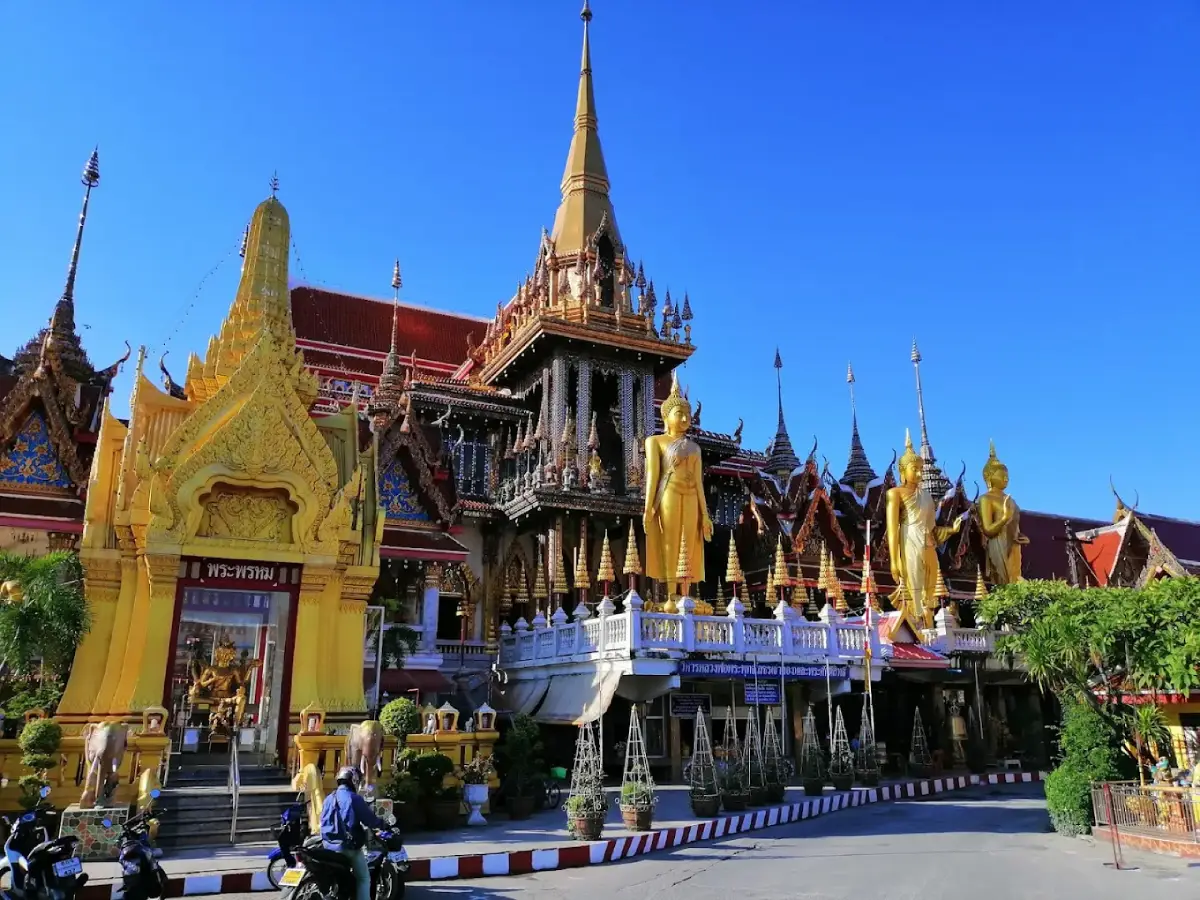
One of the most important sacred features inside Wat Lat Phrao is the prasat that enshrines relics of the Lord Buddha. These relics were brought from Kandy, Sri Lanka, and are enshrined at Phra Chedi Daowadueng above Phra Chao Perd Lok. This feature gives the temple a deeper religious identity. It connects a local community temple in Bangkok with one of the major Buddhist centers of Sri Lanka, making the temple more significant than a simple neighborhood place of worship.
The temple’s viharn also houses replica Buddha images familiar to Thai Buddhists, including Luang Pho Sothon, Luang Pho Phet, and Luang Pho Wat Ban Laem. These replica images allow worshippers to pay respect to several revered Buddha images in one location without traveling to the original temples in other provinces. This makes Wat Lat Phrao suitable for visitors who want to make merit, pray, and spend quiet time in a historic Buddhist setting within Bangkok.
Another important feature of Wat Lat Phrao is its teak sermon hall. In Thai temples, a sermon hall is used for Dhamma listening, monastic meetings, merit-making activities, and community gatherings. The presence of a teak sermon hall helps preserve the character of a traditional Thai temple and adds cultural value to the temple grounds.
Wat Lat Phrao is also recognized as the oldest temple in Lat Phrao District. This makes it a valuable starting point for understanding the district’s local history. The temple’s story connects the old water-based settlement, the canals, the move to Wang Lat Phrao, and the later development of roads such as Lat Phrao Road, Lat Phrao–Wang Hin Road, Chok Chai 4 Road, and nearby transport corridors. For visitors interested in Bangkok beyond the main tourist zones, Wat Lat Phrao offers a clear view of how local communities developed around temples and waterways.
The present location of Wat Lat Phrao can be reached through several routes, including Lat Phrao–Wang Hin Road, Chok Chai 4 Road, Lat Phrao Road, Ratchadaphisek Road, Prasert-Manukitch Road, and Kaset-Nawamin Road. This makes the temple accessible from Lat Phrao, Wang Hin, Chok Chai 4, Sena Nikhom, Ratchada, Kaset, and Ram Inthra. The temple can be visited as a single merit-making destination or as part of a short cultural route through northern Bangkok.
Getting There is easiest by private car, taxi, or ride-hailing service. Set the destination to Wat Lat Phrao on Lat Phrao–Wang Hin Road, Lat Phrao Subdistrict, Lat Phrao District, Bangkok, or use the coordinates 13.80377, 100.58938. Travelers coming from Lat Phrao Road can enter through Chok Chai 4 and connect to Lat Phrao–Wang Hin Road. Travelers from Kaset-Nawamin Road or Prasert-Manukitch Road can approach the Wang Hin area directly. Because the surrounding roads can be busy, travel time should be planned according to traffic conditions.
Public transport is also possible. Several bus routes serve the Lat Phrao and Chok Chai 4 areas, and visitors can get off near Phawana Intersection or another nearby stop before taking a short local ride to the temple. Travelers using public transport should check the latest routes before departure because Bangkok’s bus services and route patterns can change over time.
Visitors using electric rail services can consider stations along the Lat Phrao, Ratchada, or Ram Inthra corridors and then continue by taxi or ride-hailing service to Lat Phrao–Wang Hin Road. This is practical for those who prefer not to drive during heavy traffic periods. Checking real-time traffic and map navigation before departure will help determine the most efficient route.
The best time to visit Wat Lat Phrao is in the morning or before noon. The weather is usually more comfortable, the temple atmosphere is calmer, and the time is suitable for merit-making and worship. On Buddhist holy days, major Buddhist festivals, or days with temple activities, visitors should allow extra time because more worshippers may come to the temple. Since Wat Lat Phrao is an active community temple, visitors should move around respectfully and give space to ongoing religious activities.
The atmosphere of Wat Lat Phrao combines the identity of an old temple with the surroundings of a modern city. Visitors can feel the contrast between the busy roads outside and the calmer religious grounds inside. The temple serves as a place of reflection for people living in a district shaped by traffic, shops, residential buildings, and daily urban routines. A visit to the temple offers a slower and more grounded side of Lat Phrao.
Visitors should take time to understand the temple’s history before walking around the grounds. The move from the former elevated site to Wang Lat Phrao shows how important water once was to community life. The location near the junction of Khlong Song Krathiam and Khlong Lat Phrao reflects the old canal-based transport network. The temple’s growth into a major community temple shows how local faith helped preserve a Buddhist space through many generations.
Important areas to include in a visit are the prasat enshrining the Buddha relics, Phra Chedi Daowadueng, Phra Chao Perd Lok, the viharn with replica Buddha images, and the main religious activity areas. Visitors should walk respectfully, avoid disturbing those who are chanting or making merit, and take photographs only in appropriate areas. Extra care should be taken around sacred spaces and during religious ceremonies.
Wat Lat Phrao is especially suitable for travelers interested in old Bangkok temples. Its history includes the founding of a monastic residence around 1870, the relocation to Wang Lat Phrao in 1874, the relationship with canals and water basins, the temple’s 24-rai grounds, its status as a private Mahanikaya temple, and the enshrinement of relics from Sri Lanka. Together, these details give the temple religious, historical, and cultural depth.
Compared with well-known temples in Bangkok’s inner city, Wat Lat Phrao is not a mass-tourism landmark. Its strength is its authenticity as a working community temple. Visitors can see how local people use the temple in everyday life, how the temple remains connected with nearby schools and neighborhoods, and how Buddhist practice continues within a modern residential district. This makes Wat Lat Phrao valuable for travelers who want to understand Bangkok beyond the famous tourist routes.
Wat Lat Phrao can be combined with several nearby places. Visitors can continue to Wat Lat Pla Khao, Baan Bang Khen, The Jas Wang Hin, Hua Mum Market, Central EastVille, or Wat Bang Bua. Those interested in culture can plan a temple-and-community route, while families can combine merit-making with cafés, restaurants, or nearby shopping areas. The temple is therefore suitable for a short visit, a half-day route, or a neighborhood-based itinerary in northern Bangkok.
The area around Wat Lat Phrao has many restaurants because it is a dense urban neighborhood with several important roads. Nearby dining options include noodle shops, fish porridge restaurants, cafés, casual Thai restaurants, family restaurants, and long-established eateries in the Wang Hin area. Visitors can make merit in the morning and then continue to lunch or coffee nearby without traveling far.
Accommodation near Wat Lat Phrao includes hotels, apartments, and serviced lodging in the Lat Phrao, Wang Hin, Ratchada, Kaset, and Ram Inthra areas. Travelers from other provinces or those with business in northern Bangkok should choose accommodation based on real travel routes rather than straight-line distance. In Lat Phrao, minor roads, turning points, and heavy traffic can affect travel time, so a location close to main roads or onward transport is usually more practical.
Temple etiquette is important. Visitors should dress modestly, speak quietly, keep the grounds clean, avoid disturbing monks or worshippers, and behave respectfully in sacred areas. Families visiting with children should keep them calm around the viharn, the Buddha relic area, and ceremony spaces. Respectful behavior helps preserve the dignity of the temple and makes the visit more meaningful.
Wat Lat Phrao deserves detailed presentation because many general listings mention only fragments of its story. Some sources give only the address, some focus on the founding history, and some mention the Buddha relics without connecting them with travel information, coordinates, opening hours, nearby restaurants, accommodation, or the wider community context. When verified details are brought together, the temple can be understood as a complete cultural and religious destination.
The temple is also a strong example of a living religious site in a large city. Many old temples in Bangkok have had to adapt to urban expansion, new roads, denser land use, and changing community patterns. Wat Lat Phrao continues to preserve its Buddhist role while also serving as a marker of the older Lat Phrao community. Even though the surrounding landscape has changed, the temple’s name, history, and sacred features keep the memory of the old area alive.
Those who want to understand the history of Lat Phrao should begin with Wat Lat Phrao. The temple connects place names, waterways, canals, old settlements, and urban growth. The meaning of Wang Lat Phrao helps explain why water was central to the temple and community in the past. The surrounding urban development shows that Bangkok did not grow only from the old city center, but also through many local communities where temples served as spiritual anchors.
A visit to Wat Lat Phrao should be intentional rather than rushed. Visitors can begin with merit-making, pay respect to the Buddha relics, walk through the viharn and sermon hall areas, and then reflect on how the temple’s history connects to the modern Lat Phrao district. This approach gives the visit more meaning than simply stopping for photographs.
In conclusion, Wat Lat Phrao is a private Mahanikaya temple with major historical, religious, and community significance in Lat Phrao District. It began around 1870, moved to Wang Lat Phrao in 1874, covers approximately 24 rai, and is recognized as the oldest temple in the district. Its important sacred features include a prasat enshrining Buddha relics from Kandy, Sri Lanka, Phra Chedi Daowadueng, Phra Chao Perd Lok, replica Buddha images, and a teak sermon hall. Open daily for worship and merit-making, Wat Lat Phrao is a meaningful destination for visitors who want to experience a historic community temple in northern Bangkok.
| Name | Wat Lat Phrao |
| Location | Lat Phrao Subdistrict, Lat Phrao District, Bangkok |
| Address | 1 Moo 9, Lat Phrao–Wang Hin Road, Lat Phrao, Lat Phrao District, Bangkok 10230, Thailand |
| Coordinates | 13.80377, 100.58938 |
| Temple Type | Private Buddhist temple under the Mahanikaya order |
| Highlights | The oldest temple in Lat Phrao District, with roots around 1870 and a prasat enshrining Buddha relics from Kandy, Sri Lanka |
| History | Founded around 1870 as a monastic residence, the temple was moved in 1874 to Wang Lat Phrao, a low-lying water basin near the junction of Khlong Song Krathiam and Khlong Lat Phrao. |
| Name And Site Origin | The temple’s current location is linked to Wang Lat Phrao, a broad water basin that made the area more practical for monastic life and community water use. |
| Distinctive Features | A large 24-rai community temple in the Lat Phrao–Wang Hin area, with Phra Chedi Daowadueng, Phra Chao Perd Lok, replica Buddha images, and a teak sermon hall |
| Important Sacred Features | Prasat enshrining Buddha relics, Phra Chedi Daowadueng, Phra Chao Perd Lok, replica images of Luang Pho Sothon, Luang Pho Phet, Luang Pho Wat Ban Laem, and the teak sermon hall |
| Travel Information | Private car, taxi, or ride-hailing service is the most convenient option. Use Lat Phrao Road, Chok Chai 4 Road, Lat Phrao–Wang Hin Road, Prasert-Manukitch Road, or Kaset-Nawamin Road toward Wang Hin. |
| Current Status | Open as an active Buddhist temple and community religious site for merit-making, Kathin ceremonies, chanting, Buddhist ceremonies, and community activities |
| Open Days | Daily |
| Opening Hours | 07.00 – 17.00 |
| Admission Fee | No general admission fee for temple entry |
| Main Areas / Zones | Merit-making and worship area, Buddha relic prasat, Phra Chedi Daowadueng, viharn with replica Buddha images, sermon hall, Buddhist ceremony area, and community activity areas |
| Abbot / Caretaker | Phra Khru Niphut Yanprasit (Nikhom Nakhawaro, Dr.) |
| Main Contact Number | 02-931-7144 |
| Nearby Tourist Attractions | 1. Wat Lat Pla Khao, about 3 km 2. Baan Bang Khen, about 4 km 3. The Jas Wang Hin, about 4 km 4. Hua Mum Market, about 5 km 5. Central EastVille, about 6 km 6. Wat Bang Bua, about 6 km |
| Nearby Restaurants | 1. Guay Tiew Tom Yum Wat Lat Phrao Ran Na Bot, about 200 m, Tel. 089-532-6253 2. Siang Khao Tom Pla Suki Boran Lat Phrao Wang Hin, about 1 km, Tel. 095-996-5492 3. Wood Cafe Lat Phrao Wang Hin 48, about 2 km, Tel. 065-949-3659 4. Pho 54 Lat Phrao Wang Hin, about 3 km, Tel. 089-770-2682 5. Song Ped Palo Wang Hin, about 4 km, Tel. 02-570-4080 6. Som Tam Chok Chai Si Isan Zaap, about 4 km, Tel. 084-944-3316, 085-684-7505 |
| Nearby Accommodations | 1. 48 Metro Hotel, about 2 km 2. The Room Hostel, about 3 km, Tel. 088-965-5514 3. BOOK A BED Apartment Lat Phrao–Wang Hin 67, about 4 km, Tel. 080-729-1499 4. Spice Mansion Lat Phrao–Wang Hin, about 4 km 5. Livotel Hotel Kaset Nawamin Bangkok, about 6 km 6. Livotel Hotel Lat Phrao, about 9 km, Tel. 02-138-7505, 086-404-6000 |
Frequently Asked Questions (FAQ)
Q: Where is Wat Lat Phrao located?
A: Wat Lat Phrao is located at 1 Moo 9, Lat Phrao–Wang Hin Road, Lat Phrao Subdistrict, Lat Phrao District, Bangkok 10230, Thailand.
Q: What are the opening days and hours of Wat Lat Phrao?
A: Wat Lat Phrao is open daily from 07.00 to 17.00.
Q: Is there an admission fee to visit Wat Lat Phrao?
A: There is no general admission fee for visiting Wat Lat Phrao. Visitors can enter the temple for merit-making, worship, and respectful sightseeing during opening hours.
Q: What is the history of Wat Lat Phrao?
A: Wat Lat Phrao was founded around 1870 as a monastic residence near the foot of a bridge opposite the current site. In 1874, the monks and villagers moved the temple to Wang Lat Phrao, a low-lying area with better access to water.
Q: What are the important sacred features inside Wat Lat Phrao?
A: Important features include the prasat enshrining Buddha relics from Kandy, Sri Lanka, Phra Chedi Daowadueng, Phra Chao Perd Lok, replica Buddha images, and the teak sermon hall.
Q: Which Buddhist order does Wat Lat Phrao belong to?
A: Wat Lat Phrao is a private Buddhist temple under the Mahanikaya order.
Q: Who is the abbot of Wat Lat Phrao?
A: The abbot of Wat Lat Phrao is Phra Khru Niphut Yanprasit, also known as Nikhom Nakhawaro, Dr.
Q: What places can be visited near Wat Lat Phrao?
A: Nearby places include Wat Lat Pla Khao, Baan Bang Khen, The Jas Wang Hin, Hua Mum Market, Central EastVille, and Wat Bang Bua.
 Category: ●Places of Worship
 Group: ●Temple
Last Update : 1 MonthAgo
 Last Update : 1 MonthAgo
 Click to Access the Navigation Map GPS

 Phra Nakhon(24)Dusit(17)Khlong San(7)Khlong Toei(3)Jatujak(2)Don Muang(5)Taling Chan(26)Thon Buri(23)Bangkok Noi(31)Bangkok Yai(13)Bang Kapi(5)Bang Kun Tien(15)Bang Khen(3)Bang Kholam(10)Bang Sue(9)Bang Plad(23)Bang Rak(6)Chom Thong(16)Bung Kum(5)Pra Wet(6)Patum Wan(6)Pom Prap Sattru Phai(11)Paya Thai(1)Pra Kanong(4)Pa Sri Charoen(23)Min Buri(7)Yan Na Wa(8)Ratchathewi(4)Rat Burana(6)Lat Krabang(13)Nong Chok(16)Lat Phrao(4)Sathorn(4)Sam Phan Tha Wong(12)Nong Khaem(7)Huai Khwang(3)Suan Luang(7)Din Daeng(2)Lak Si(1)Sai Mai(8)Khan Na Yao(2)Wang Thong Lang(1)Klong Sam Wa(10)Watthana(2)Bang Na(4)Thawi Watthana(3)Bang Khae(5)Thung Khru(4)Bang Bon(3)


