
lovethailand home >Central Travel Attractions >Bangkok Travel Attractions >Bang Plad >Bang Yi Khan > Wat Daowaduengsaram
TL;DR: Wat Daowaduengsaram is located at Bang Yi Khan Subdistrict, Bang Phlat District, Bangkok, open Daily, hours 08.00 – 17.00.
Wat Daowaduengsaram
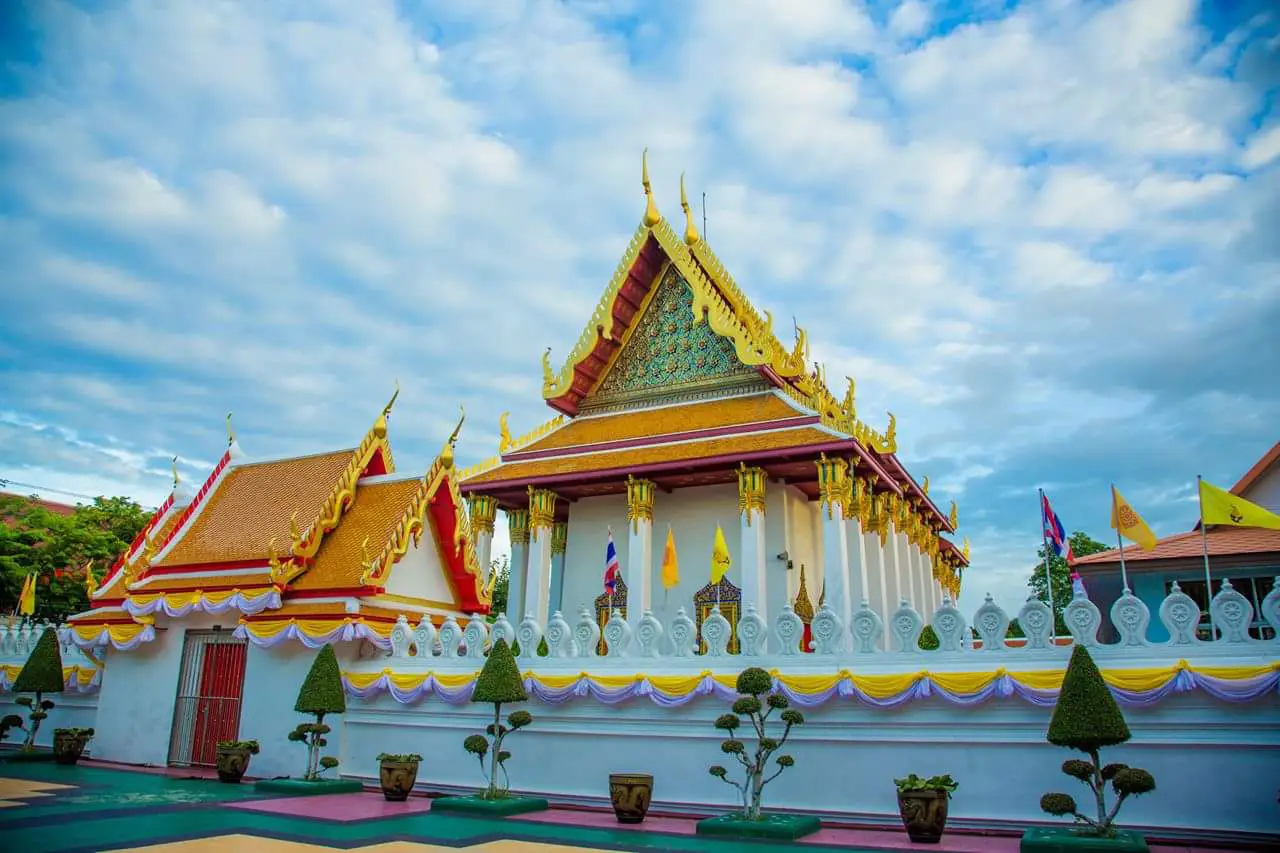
Open Days: Daily
Opening Hours: 08.00 – 17.00
Wat Daowaduengsaram is a third-class royal Buddhist monastery of the ordinary type under the Maha Nikaya order. It is located at 872 Soi Somdet Phra Pinklao 2, Somdet Phra Pinklao Road, Bang Yi Khan Subdistrict, Bang Phlat District, Bangkok 10700. The temple stands on the Thonburi side of Bangkok, near the Chao Phraya River, Khlong Bang Yi Khan, Somdet Phra Pinklao Bridge, and Rama VIII Bridge. It is an old royal temple with a history connected with Chao Chom Waen, also known as Khun Suea, a royal consort of King Rama I; Phra Athikan In, the early resident monk; an inner-court official named In during the reign of King Rama II; and Phraya Maha Thep, also known as Pan, during the reign of King Rama III.
The value of Wat Daowaduengsaram lies in its rare combination of royal history, early Rattanakosin temple architecture, important mural paintings, a distinctive bell tower, the Mondop of Luang Pu Wo, and the temple’s role as a center of Buddhist education. Visitors come not only to pay respect to the principal Buddha image, but also to study an old Bangkok temple that connects religion, art, monastic learning, local community life, and the historical landscape of Bang Yi Khan.
The temple’s origin is traditionally associated with the reign of King Rama I. Chao Chom Waen, a Lao-born royal consort, established the temple as a small monastery in Bang Yi Khan. The original ordination hall was simple, built with hardwood pillars, a tiled roof, teak walls, and a brick base raised about two sok above the ground. Phra Athikan In, a monk known for insight meditation, was invited to reside at and take care of the temple. Local residents therefore called the temple Wat Khrua In.
The name Wat Khrua In preserves the earliest layer of the temple’s memory. Khrua was a traditional term used for a respected senior monk, while In referred to Phra Athikan In, the early monastic leader. Although the temple later became a royal monastery, this original name shows that its foundation remained closely tied to local faith and the people of Bang Yi Khan.
During the reign of King Rama II, an inner-court official named In, who was related to Chao Chom Waen, restored the temple. Because both the resident monk and the restorer shared the name In, King Rama II bestowed the name Wat Daowadueng Sawan. The name refers to Tavatimsa Heaven, the celestial realm associated with Indra. This royal naming gave the temple a more formal religious identity while preserving the symbolic connection with the name In.
In the reign of King Rama III, Phraya Maha Thep, or Pan, undertook major restoration and construction. He built important permanent structures, including the ordination hall, the principal Buddha image, and monks’ residences. He then presented the temple to the king as a royal monastery. King Rama III bestowed the name Wat Daowaduengsaram, which has remained the temple’s official name. This period transformed the temple from a small local monastery into a royal Buddhist institution with lasting architectural and artistic significance.
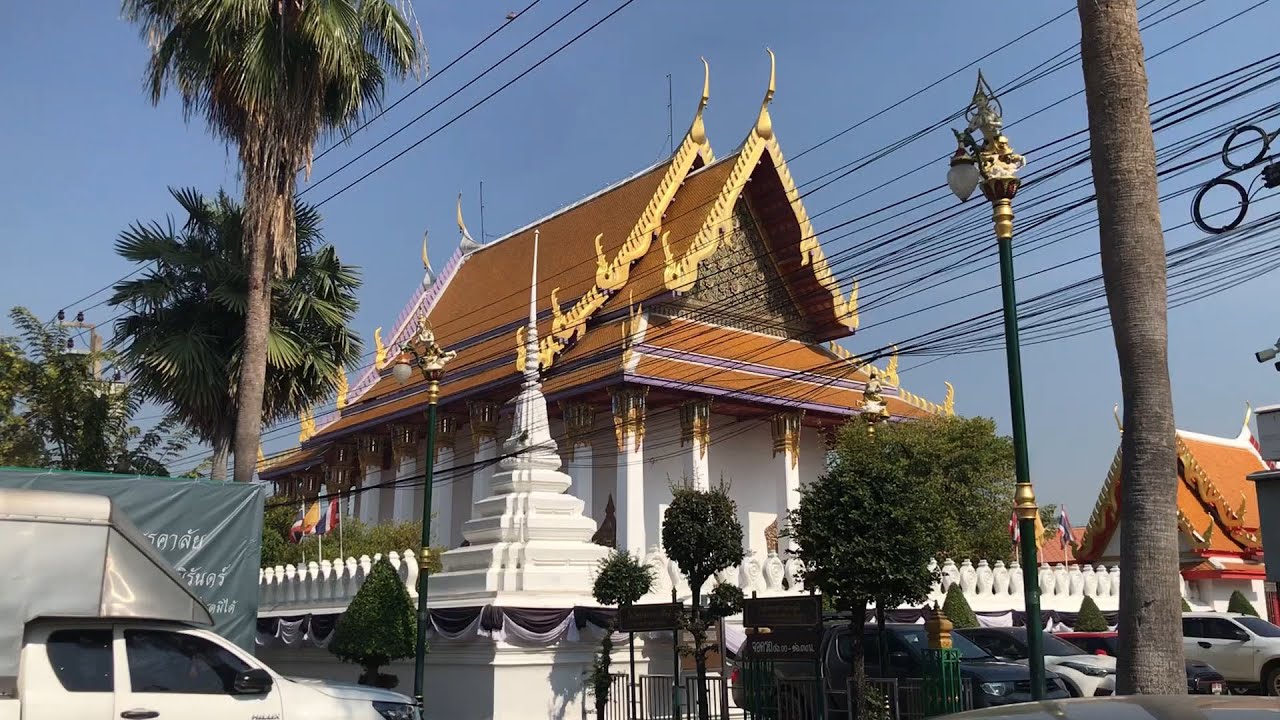
The ordination hall is the most important building of Wat Daowaduengsaram. It is built of brick and plaster, with a two-tier tiled roof decorated with chofa, bai raka, and hang hong ornaments. The gable is carved from teak in a large floral design, decorated with glass mosaic and gilding. The interior floor is paved with marble, and the hall is surrounded by a veranda. The doors and windows are richly decorated with stucco floral frames, glass ornamentation, and lacquered designs that tell stories from the Ten Jataka and the life of the Buddha.
The principal Buddha image inside the ordination hall is in the meditation posture. It measures about four sok across the lap and about five sok high, is lacquered and gilded, and was created during the reign of King Rama III. The meditation posture represents calmness, concentration, and spiritual steadiness. It also connects with the early identity of the temple as a place associated with Phra Athikan In and insight meditation. Visitors should begin their visit at the ordination hall to pay respect to the principal Buddha image and observe the art with composure.
The mural paintings in the ordination hall are among the temple’s most significant features. They were painted during the reign of King Rama III and are believed to be the work of Khru Kong Pae, also known as Luang Seni Borirak, and Khru Thong Yu, also known as Luang Wichit Chetsada, both respected craftsmen of the early Rattanakosin period. The remaining murals depict Vessantara Jataka, Mahosadha Jataka, the journey of Phra Buddhaghosa to Lanka, Queen Samavati, King Dadhivahana, and Maha Kassapa Thera. Some of these subjects are rarely found in other temples, giving the murals special artistic and scholarly value.
The painting of Phra Buddhaghosa traveling to Lanka is especially important because it relates to the transmission and translation of Buddhist texts. It also reflects the way different peoples in Siam were represented during the reign of King Rama III. The murals are therefore not merely religious decoration; they are also valuable visual records of society, belief, storytelling, and artistic craftsmanship in early Rattanakosin Bangkok.
The bell tower is another distinctive feature of Wat Daowaduengsaram. It is a brick-and-plaster structure with Western architectural influence, a style that became popular during the reign of King Rama V. The tower stands on a square base, has Western-style columns, arched openings on all four sides, and a pointed square spire. This building shows how Thai temple architecture absorbed Western elements during a period of urban and cultural transition.
The Mondop of Luang Pu Wo is another important structure. It is a chaturamuk-style mondop with two-tier roofs on all four sides and glazed tiles. Its stucco gables are decorated with ornamental patterns, and the interior preserves the ashes of Phra Khru Wothan Thammachan, or Wat, an important former abbot. Visitors should approach this area respectfully because it is connected with the memory of a senior monk who played a major role in the temple’s development.
During the reign of King Rama V, Krom Phra Ratchawang Bowon Wichaichan restored the temple. Old plaster pavilions around the ordination hall were removed, a new bell tower was built, and monks’ residences and the dining hall were repaired. Later, the temple declined and at times had very few resident monks. It gradually recovered under later abbots, especially during the period of Phra Khru Sinakhan Sunthon, or Prem, when restoration resumed and more monks returned to reside at the temple.
In the reign of King Rama VII, Somdet Krom Phraya Damrong Rajanubhab visited the temple to view the murals and saw that many paintings had deteriorated. He encouraged the preservation of the remaining paintings. Subsequent restoration repaired the ordination hall, roof, veranda, doors, windows, landing pavilion, bell tower, sermon hall, and monks’ residences. These efforts helped preserve the temple as an important example of early Rattanakosin religious art.
After the passing of Phra Khru Wothan Thammachan, Phra Khru Palat But, later known as Phra Thep Pariyatti Withan, came to lead the temple. He restored the ordination hall because the roof had become badly damaged and rainwater had harmed the murals. The restoration returned the hall to a more dignified condition, and in 1985 a brick-and-plaster chanting hall was also built. Phra Thep Pariyatti Withan remains one of the most important former abbots associated with both temple restoration and Buddhist education.
Wat Daowaduengsaram has a strong role in Buddhist education through Wat Daowaduengsaram Monastic School. The temple continues to support Pariyatti Dhamma education in both Dhamma and Pali studies. This role makes the temple more than a preserved historic monument. It is still a living place of monastic learning where monks and novices study Buddhist doctrine, discipline, and language.
The temple compound covers about 15 rai and is located around 200 metres west of the Chao Phraya River, near the southern side of Khlong Bang Yi Khan. Nearby areas include Wat Chaturamit Pradittharam, Wat Bang Yi Khan, Wat Phraya Siri Aisawan, the Wat Daowaduengsaram community, the old Bang Yi Khan distillery area, and the riverside settlement zone. This context is important because the temple is part of a larger historic urban landscape, not an isolated religious site.
The Wat Daowaduengsaram community has a long history connected with Thonburi and modern Bangkok. The area once included orchards, waterways, riverside houses, and groups of residents from various backgrounds. The old Bang Yi Khan distillery also played a role in drawing workers and families into the area. The temple therefore remains a key cultural anchor for community memory, social life, and local identity.
Today, Wat Daowaduengsaram remains active through Buddhist ceremonies, Kathin activities, monastic education, temple-community programs, district-level meetings, and support for Pali education. Recent public information also mentions electronic donation systems at the temple, allowing donations to go directly into the temple’s account and making tax deduction records easier for donors. This shows how an old royal temple has adapted to contemporary forms of merit-making while maintaining its traditional religious role.
Current caretaker information should be treated carefully because public sources do not fully agree. Some temple databases still list Phra Kittisaramethi, but public monastic news records that he became abbot of Wat Suwannaram Ratchaworawihan in 2013. Wat Daowaduengsaram’s own abbot information page lists Phra Sirichai Sophon, Boonserm, as acting abbot from 2013. For this reason, the article uses the caretaker wording of acting abbot rather than making a broader claim beyond the available evidence.
First-time visitors should begin at the ordination hall, pay respect to the principal Buddha image, and then observe the murals, teak gable, lacquered door and window panels, bell tower, Luang Pu Wo Mondop, statue of Phra Thep Pariyatti Withan, and the monastic education areas. Visitors should move quietly because the temple is still used by monks and novices for religious activities, chanting, study, and daily monastic life.
Getting There is convenient by MRT, taxi, motorcycle taxi, public bus, private car, and riverside routes. Visitors using MRT can get off at Bang Yi Khan Station and continue by a short local ride toward Soi Somdet Phra Pinklao 2 or the temple access from Somdet Phra Pinklao Road. Drivers can approach the area from Somdet Phra Pinklao Road, Charansanitwong Road, Arun Amarin Road, Rama VIII Bridge, or Somdet Phra Pinklao Bridge depending on traffic conditions.
The surrounding area is an old urban neighborhood with small streets, communities, temples, piers, restaurants, guesthouses, and major bridge routes nearby. Drivers should allow extra time during morning and evening traffic, Buddhist holy days, weekends, and temple-event periods. For first-time visitors, MRT followed by a short local ride is often the easiest option.
The best time to visit is in the morning or afternoon during the temple’s regular visitor hours. Visitors interested in art should allow at least one hour to study the murals, jataka stories, lacquered panels, gable work, and bell tower. Modest dress is recommended. Visitors should speak quietly, remove shoes where required, and avoid disturbing monks, novices, worshippers, or students using the temple compound.
Wat Daowaduengsaram is suitable for visitors interested in old Bangkok temples, royal monasteries on the Thonburi side, King Rama III-era murals, the history of Chao Chom Waen, Wat Khrua In, Bang Yi Khan community history, and cultural routes along the Chao Phraya River. The temple can also be combined with nearby places such as Suan Luang Rama VIII Park, Wat Bowon Mongkhon Ratchaworawihan, the Royal Barges National Museum, Pipit Banglamphu Museum, ChangChui Creative Park, and the old Phra Nakhon side across the river.
Compared with Bangkok’s major tourist temples, Wat Daowaduengsaram offers a quieter and more historically layered experience. Visitors can trace the temple’s story from its foundation in the reign of King Rama I, royal naming in the reign of King Rama II, elevation to royal-monastery status in the reign of King Rama III, restoration in the reign of King Rama V, and ongoing preservation, monastic learning, and community use in the present. This continuity makes the temple a meaningful destination for both worship and serious cultural exploration.
In summary, Wat Daowaduengsaram is a third-class royal monastery in Bang Phlat with deep value in history, Buddhist art, monastic education, and community memory. It began as Wat Khrua In, founded by Chao Chom Waen in the reign of King Rama I, received the name Wat Daowadueng Sawan in the reign of King Rama II, and became Wat Daowaduengsaram as a royal monastery in the reign of King Rama III. Important features include the ordination hall, principal meditation Buddha image, early Rattanakosin murals, bell tower, Luang Pu Wo Mondop, statue of Phra Thep Pariyatti Withan, and Wat Daowaduengsaram Monastic School. Its location near the Chao Phraya River, Khlong Bang Yi Khan, Somdet Phra Pinklao Bridge, and Rama VIII Bridge makes it one of the most valuable old temples to visit on Bangkok’s Thonburi side.
| Name | Wat Daowaduengsaram |
| Former / Related Names | Wat Khrua In, Wat Daowadueng Sawan |
| Place Type | Third-Class Royal Buddhist Monastery Of The Ordinary Type, Maha Nikaya Order |
| Location | Bang Yi Khan Subdistrict, Bang Phlat District, Bangkok |
| Address | 872 Soi Somdet Phra Pinklao 2, Somdet Phra Pinklao Road, Bang Yi Khan, Bang Phlat, Bangkok 10700 |
| Coordinates | 13.76792, 100.49142 |
| Highlights | Historic Bang Yi Khan royal monastery with an early Rattanakosin ordination hall, King Rama III-era murals, Western-style bell tower, Luang Pu Wo Mondop, and an active monastic education role |
| History | Founded in the reign of King Rama I by Chao Chom Waen, renamed Wat Daowadueng Sawan in the reign of King Rama II, and renamed Wat Daowaduengsaram after being presented as a royal monastery in the reign of King Rama III |
| Temple Establishment | 1807 |
| Wisungkham Sima | 1862 |
| Temple Land | About 15 rai |
| Principal Buddha Image | Meditation-posture Buddha image, about four sok wide and five sok high, lacquered and gilded, created during the reign of King Rama III |
| Ordination Hall | Brick-and-plaster ordination hall with two-tier tiled roof, chofa, bai raka, hang hong, carved teak floral gable, glass mosaic, gilding, lacquered panels, and important murals |
| Mural Paintings | King Rama III-era murals depicting Vessantara Jataka, Mahosadha Jataka, Phra Buddhaghosa traveling to Lanka, Queen Samavati, King Dadhivahana, and Maha Kassapa Thera |
| Main Areas / Structures | Ordination hall, bell tower, Luang Pu Wo Mondop, sermon hall, chanting hall, monks’ residences, statue of Phra Thep Pariyatti Withan, monastic school, and areas near Khlong Bang Yi Khan |
| Educational Role | Wat Daowaduengsaram Monastic School supports Pariyatti Dhamma education in both Dhamma and Pali studies |
| Activities / Traditions | Merit-making, sermons, chanting, Kathin activities, end-of-rains retreat activities, Tak Bat Devo, Pali-school support, and Bang Phlat district temple-community programs |
| Travel Information | Accessible from MRT Bang Yi Khan Station by a short local ride, or via Somdet Phra Pinklao Road, Charansanitwong Road, Arun Amarin Road, Somdet Phra Pinklao Bridge, and Rama VIII Bridge |
| Current Status | Open as a royal monastery in Bang Phlat District, with an active monastic school, Buddhist ceremonies, and continuing temple-community activities |
| Open Days | Daily |
| Opening Hours | 08.00 – 17.00 |
| Caretaker / Abbot | Phra Sirichai Sophon, Acting Abbot |
| Nearby Tourist Attractions | 1. Suan Luang Rama VIII Park, about 1 km, Tel. 02-203-2974 2. Wat Bowon Mongkhon Ratchaworawihan, about 1 km, Tel. 02-433-5440 3. Rama VIII Bridge, about 1 km 4. Royal Barges National Museum, about 2 km, Tel. 02-424-0004 5. Pipit Banglamphu Museum, about 2 km, Tel. 02-281-9828 6. ChangChui Creative Park, about 4 km, Tel. 081-817-2888 |
| Nearby Restaurants | 1. TH•TH•DAH, about 0.4 km, Tel. 065-237-0966 2. Praya Dining, about 0.3 km, Tel. 081-402-8118, 02-883-2998 3. DOUBLE SLASH // COFFEE SPACE Rama 8, about 0.4 km, Tel. 065-629-9696 4. Jade Garden Pinklao, about 0.5 km, Tel. 02-434-1914, 02-434-1915, 02-434-1916 5. BAAN MANEE BKK, about 0.3 km, Tel. 091-956-2919 6. Kaze No Sushi Pinklao, about 0.3 km |
| Nearby Accommodations | 1. BAAN MANEE BKK, about 0.3 km, Tel. 091-956-2919 2. Praya Palazzo, about 0.5 km, Tel. 081-402-8118, 02-883-2998 3. Amarin Hotel Rama 8, about 1 km, Tel. 02-424-9888 4. Charlie House Pinklao, about 3 km, Tel. 02-886-4561, 02-886-4562, 064-698-6282 5. Theatre Residence, about 4 km, Tel. 02-848-9488, 063-330-7070 6. Kaya Heritage Hotel, about 5 km, Tel. 02-412-4414, 02-412-4474 |
Frequently Asked Questions (FAQ)
Q: Where is Wat Daowaduengsaram located?
A: Wat Daowaduengsaram is located at 872 Soi Somdet Phra Pinklao 2, Somdet Phra Pinklao Road, Bang Yi Khan, Bang Phlat, Bangkok 10700, near the Chao Phraya River, Khlong Bang Yi Khan, Somdet Phra Pinklao Bridge, and Rama VIII Bridge.
Q: What were the former names of Wat Daowaduengsaram?
A: The temple was originally known as Wat Khrua In. It later received the royal name Wat Daowadueng Sawan during the reign of King Rama II and became Wat Daowaduengsaram during the reign of King Rama III.
Q: Who founded Wat Daowaduengsaram?
A: The temple was founded during the reign of King Rama I by Chao Chom Waen, also known as Khun Suea, a royal consort of King Rama I. Phra Athikan In was invited to reside at and care for the temple in its early period.
Q: What is distinctive about the ordination hall?
A: The ordination hall has a two-tier tiled roof, chofa, bai raka, hang hong, a carved teak floral gable, lacquered panels, and King Rama III-era mural paintings with rare Buddhist narrative subjects.
Q: What stories appear in the mural paintings?
A: The murals include Vessantara Jataka, Mahosadha Jataka, the journey of Phra Buddhaghosa to Lanka, Queen Samavati, King Dadhivahana, and Maha Kassapa Thera.
Q: What are the opening hours of Wat Daowaduengsaram?
A: Wat Daowaduengsaram is open daily from 08.00 to 17.00.
Q: How can visitors reach Wat Daowaduengsaram by MRT?
A: Visitors can take MRT to Bang Yi Khan Station, then continue by a short local ride toward Soi Somdet Phra Pinklao 2 or the temple access from Somdet Phra Pinklao Road.
Q: What nearby places can be combined with a visit to Wat Daowaduengsaram?
A: Nearby places include Suan Luang Rama VIII Park, Wat Bowon Mongkhon Ratchaworawihan, the Royal Barges National Museum, Pipit Banglamphu Museum, Rama VIII Bridge, and ChangChui Creative Park.
 Category: ●Places of Worship
 Group: ●Temple
Last Update : 1 MonthAgo
 Last Update : 1 MonthAgo
 Click to Access the Navigation Map GPS
Wat Daowaduengsaram Map
Recommend

 Phra Nakhon(24)Dusit(17)Khlong San(7)Khlong Toei(3)Jatujak(2)Don Muang(5)Taling Chan(26)Thon Buri(23)Bangkok Noi(31)Bangkok Yai(13)Bang Kapi(5)Bang Kun Tien(15)Bang Khen(3)Bang Kholam(10)Bang Sue(9)Bang Plad(23)Bang Rak(6)Chom Thong(16)Bung Kum(5)Pra Wet(6)Patum Wan(6)Pom Prap Sattru Phai(11)Paya Thai(1)Pra Kanong(4)Pa Sri Charoen(23)Min Buri(7)Yan Na Wa(8)Ratchathewi(4)Rat Burana(6)Lat Krabang(13)Nong Chok(16)Lat Phrao(4)Sathorn(4)Sam Phan Tha Wong(12)Nong Khaem(7)Huai Khwang(3)Suan Luang(7)Din Daeng(2)Lak Si(1)Sai Mai(8)Khan Na Yao(2)Wang Thong Lang(1)Klong Sam Wa(10)Watthana(2)Bang Na(4)Thawi Watthana(3)Bang Khae(5)Thung Khru(4)Bang Bon(3)


