
lovethailand home >Central Travel Attractions >Bangkok Travel Attractions >Chom Thong >Bang Kho > Wat Nang Nong Worawihan
TL;DR: Wat Nang Nong Worawihan is located at Bang Kho Subdistrict, Chom Thong District, Bangkok, Thailand, open Daily, hours 08.00 – 17.00.
Wat Nang Nong Worawihan
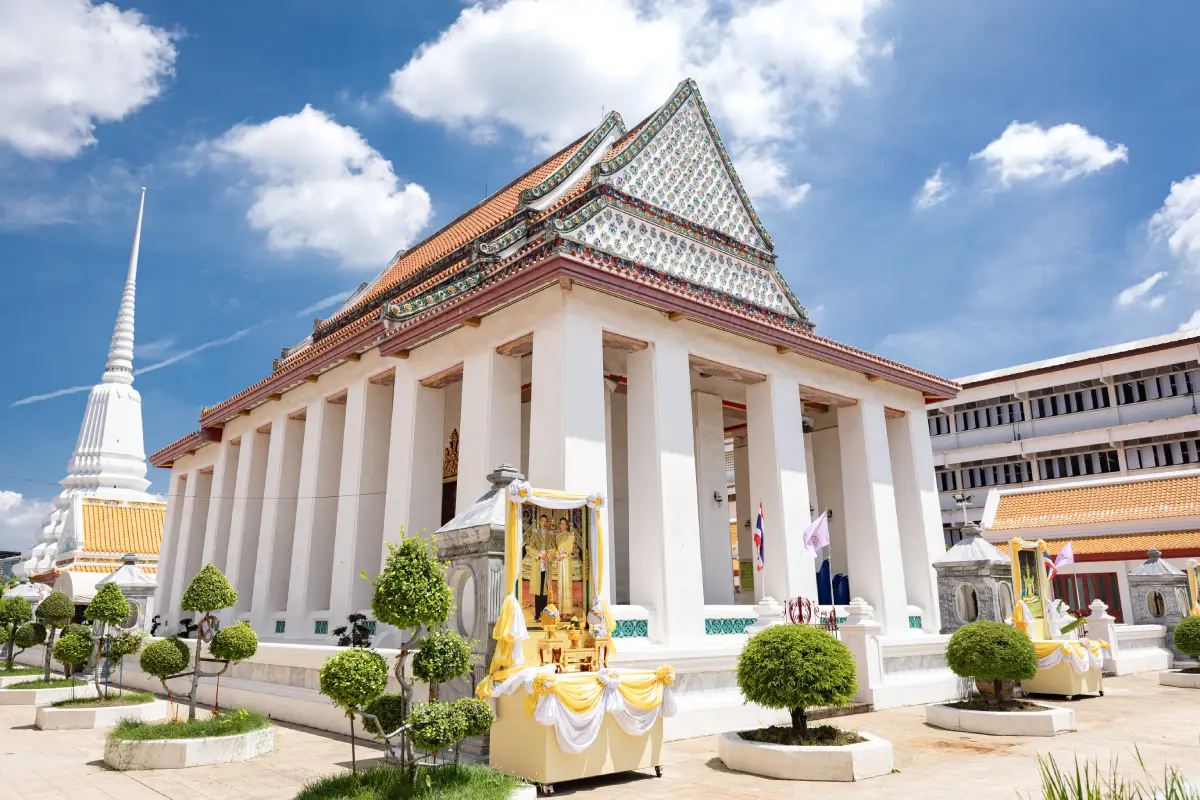
Open Days: Daily
Opening Hours: 08.00 – 17.00
Wat Nang Nong Worawihan is a third-class royal monastery of the Worawihan type under the Mahanikaya monastic order. The temple is located at 76 Wutthakat Road, Bang Kho Subdistrict, Chom Thong District, Bangkok. It is one of the most important old temples on the Thonburi side of Bangkok, with historical roots that are traditionally connected with the late Ayutthaya period. Wat Nang Nong is especially significant for its major restoration during the reign of King Rama III, when the temple was rebuilt in the royal-preferred Sino-Thai artistic style that characterizes several important Bangkok temples of the early Rattanakosin period.
Wat Nang Nong Worawihan is suitable for travelers who want to make merit, study early Rattanakosin Buddhist art, see a major crowned Buddha image, and explore historic temples around Chom Thong, Bang Kho, Talat Phlu, and the old canal-side communities of Thonburi. The temple is not only a place for worship. It is also a compact but highly valuable art-historical site, with an ordination hall, paired viharns, a principal chedi, murals from the Chomphubodi narrative, and one of the most notable crowned Buddha images associated with King Rama III’s reign.
The original founding date and founder of Wat Nang Nong are not clearly recorded. Temple history and art-historical studies connect the temple with the late Ayutthaya period, around the reign of King Suea between 1702 and 1709. In the past, this area was part of the Bang Nang Nong community near Khlong Dan, also known as Khlong Sanam Chai. The canal was an important waterway on the Thonburi side before modern roads became the main transport network. This explains why the temple’s historical orientation was connected with the canal and the everyday life of old riverside and canal-side communities.
The location of Wat Nang Nong helps visitors understand old Thonburi. The temple originally faced Khlong Dan because water transport was the main way people moved through the area. Later, road development changed the pattern of access, and Wutthakat Road became the principal modern approach to the temple. This change allows Wat Nang Nong to show the transition from a canal-based city to a road-based city. The temple therefore carries both religious meaning and urban historical meaning within the same site.
Wat Nang Nong became especially important in 1832, when King Rama III ordered a major restoration of the entire monastery. The older structures were removed or rebuilt, and the temple was reconstructed in a distinctive style that combined Thai Buddhist architecture with Chinese-inspired forms. The restoration took several years and resulted in a group of buildings that clearly express the royal-preferred art of King Rama III’s reign. The ordination hall, viharns, chedi, and entrance structures all display this artistic vocabulary.
The restoration of Wat Nang Nong was closely connected with Somdet Phra Sri Sulalai, also known as Chao Chom Manda Riam, the royal mother of King Rama III. The Bang Nang Nong area was associated with her former residence before her family later moved across the canal to the area around Wat Nang. The royal restoration of Wat Nang Nong therefore reflected not only Buddhist devotion but also the king’s connection with his mother’s former community and with the historical landscape of Thonburi.
After the restoration, Wat Nang Nong was established as a royal monastery. King Rama III traveled by royal barge to perform the consecration ceremony for the ordination hall boundary on 19 November 1842. As a third-class royal monastery of the Worawihan type, Wat Nang Nong has held an important place in the Buddhist and cultural landscape of Chom Thong and the canal-side communities of Thonburi.
The defining feature of Wat Nang Nong is the royal-preferred Sino-Thai art of King Rama III’s reign. This style often reduced the use of some traditional Thai roof ornaments and introduced Chinese-inspired masonry, ceramic decoration, auspicious motifs, and durable brick-and-plaster forms. At Wat Nang Nong, the result is a temple complex that feels different from many earlier Thai temples, but still remains deeply rooted in Thai Buddhist architecture. The buildings are strong, balanced, and highly decorative without losing their sacred function.
The temple compound can be understood through two principal zones: the Buddhavasa, or sacred worship zone, and the Sanghavasa, or monastic residential zone. The Buddhavasa includes the ordination hall, paired viharns, principal chedi, and key sacred structures. The Sanghavasa is used for monastic residence and daily temple life. Visitors should remain in areas open to the public and avoid entering monks’ residential areas without permission.
The ordination hall is the most important building at Wat Nang Nong. It is positioned in relation to the old canal-side landscape and reflects the Sino-Thai royal style of King Rama III. The exterior includes Chinese-influenced masonry and decorative details, while the doors and windows display refined craftsmanship. Visitors should pay attention to the building’s orientation, entrance, gables, doors, windows, and exterior decoration, because these elements explain how Thai and Chinese artistic ideas were combined in early Rattanakosin temple design.
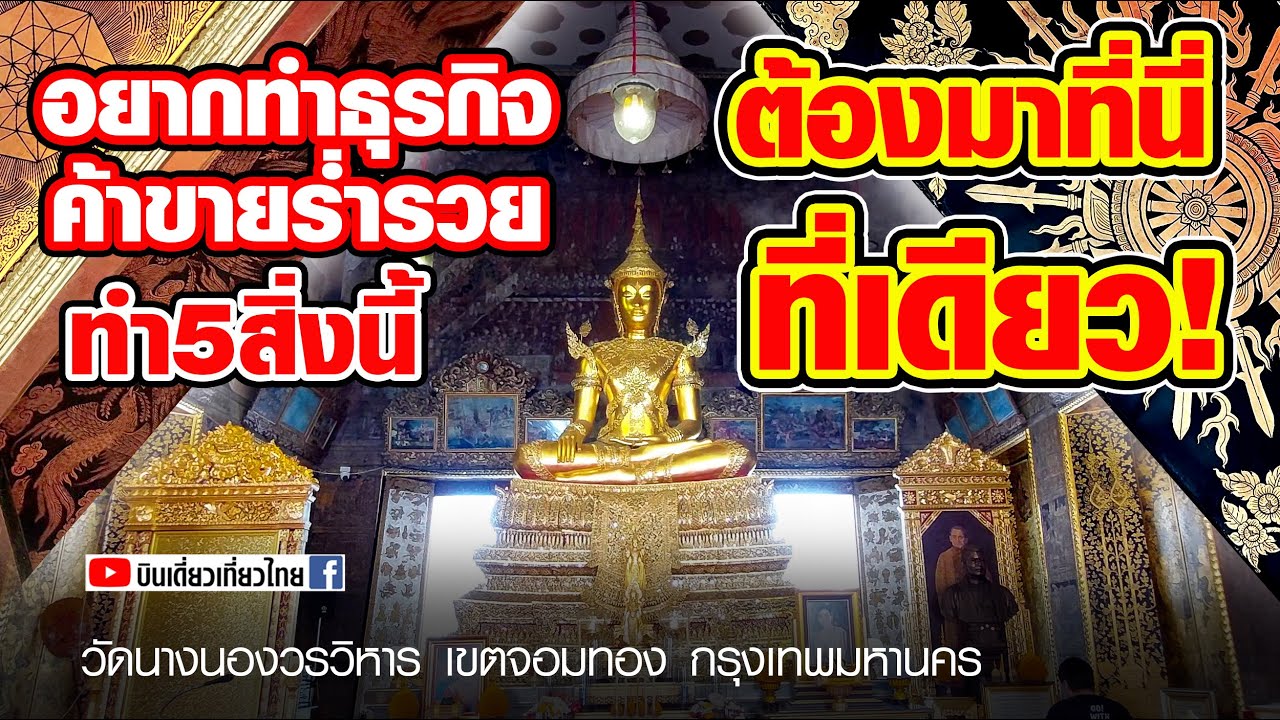
The principal Buddha image in the ordination hall is Phra Phuttha Maha Chakkraphat, a gilded bronze crowned Buddha image in the posture of subduing Mara. The image has a lap width of approximately 2.25 meters and is one of the most important crowned Buddha images associated with the reign of King Rama III. Its removable royal regalia and refined facial features make it a major work of Buddhist art. The image is not only the main object of worship; it is also the conceptual center of the ordination hall because it corresponds to the Chomphubodi narrative painted on the walls.
The Chomphubodi narrative tells of the Buddha manifesting in the form of a universal monarch to subdue the pride of King Jambupati, also known in Thai tradition as Chomphubodi. This story is directly connected with the idea of the crowned Buddha. In the ordination hall of Wat Nang Nong, the murals and the crowned principal image work together. They teach a Buddhist message about worldly power, pride, and the superior wisdom of the Buddha.
The murals inside the ordination hall are among the temple’s major highlights. The upper wall areas depict scenes from the Chomphubodi story. Other surfaces include Chinese-style painting, lacquer work, auspicious Chinese motifs, the Three Kingdoms, Hok Lok Siew, Ramakien imagery on the doors, and Hindu deities on window panels. This combination of Buddhist narrative, Chinese symbolism, Thai literature, and Brahmanical imagery shows the layered worldview of the Rama III period, when Thai Buddhist temples could incorporate multiple cultural systems into one coherent sacred space.
The principal chedi stands in front of the ordination hall. It is a large chedi with indented corners and serves as an important sacred and spatial element in the temple plan. Together with the ordination hall and paired viharns, the chedi helps create a balanced Buddhavasa zone. Its presence strengthens the ceremonial axis of the temple and confirms the completeness of Wat Nang Nong as a royal monastery.
The paired viharns are another important feature of Wat Nang Nong. Their architecture follows the same Sino-Thai royal style as the ordination hall, with Chinese-inspired gables, ceramic details, dragon motifs, and decorative landscape elements. The paired viharns create symmetry within the sacred zone and house important Buddha images. Visitors interested in Buddhist art should take time to view both viharns, because each one preserves different layers of artistic and devotional meaning.
The northern viharn houses Luang Pho Phut and Luang Pho Phat, both late Ayutthaya-style stucco Buddha images in the posture of subduing Mara. The southern viharn houses a smaller Buddha image created in the artistic style of King Rama III’s reign. The presence of Buddha images from different artistic periods gives Wat Nang Nong special value for understanding the continuity of Thai Buddhist art from late Ayutthaya into the early Rattanakosin period.
Other important structures in the temple include the sermon hall, riverside pavilion, royal reception pavilion, Chinese pavilion, monks’ residences, and bell tower. These buildings show that Wat Nang Nong was not designed only as a place of worship, but as a complete royal monastery with spaces for ritual, learning, reception, monastic life, and canal-side access. The variety of structures gives visitors a broader understanding of how important temples functioned in old Bangkok and Thonburi.
Wat Nang Nong was registered as a historic site in the Royal Gazette on 16 August 1977. This status confirms its national importance as a place of historical, architectural, and artistic value. Visitors should therefore view the temple with care and respect. The buildings and murals are not merely decorative; they are physical evidence of a major artistic period in Thai history.
The atmosphere of Wat Nang Nong is calm and suitable for worship. Although the temple is located in an urban district with roads, residences, and local traffic nearby, the temple compound still preserves the feeling of a royal Buddhist monastery. Visitors can pay respect to Phra Phuttha Maha Chakkraphat, study the murals, view the paired viharns, and walk through the main sacred areas. A visit of at least one hour is recommended for those who want to appreciate the architecture and murals in detail.
Wat Nang Nong remains an active royal monastery with resident monks and Buddhist activities throughout the year. Visitors may come for merit-making on Buddhist holy days, chanting, Dhamma listening, alms offering, and other temple activities. Proper temple etiquette is important. Visitors should dress modestly, speak quietly, avoid disturbing ceremonies, and refrain from touching murals, doors, windows, or historic architectural details.
The current abbot of Wat Nang Nong Worawihan is Phra Sirinanthamuni (An Panyasiri, Pali Grade 5). Public temple information lists contact numbers as 092-282-5249 and 02-476-2612. Visitors who plan to come in a group, ask about ceremonies, or visit during a special Buddhist festival should contact the temple directly before traveling.
Getting There is convenient by public transport. Travelers can take the BTS Silom Line to Wutthakat Station, then continue by a short taxi or motorcycle taxi ride to Wutthakat Road and the temple area. Public buses also serve Wutthakat Road and the surrounding Chom Thong district. Travelers who drive should allow extra time for traffic and parking, especially during morning and evening travel periods.
Wat Nang Nong can be combined with several important nearby places. Wat Nang Ratchaworawihan, Wat Ratcha Orasaram Ratchaworawihan, and Wat Paknam Bhasicharoen are all significant temples on the Thonburi side. Visitors interested in community art and canal-side life can continue to Baan Silapin Khlong Bang Luang. In the evening, travelers can continue to Asiatique The Riverfront for a riverside atmosphere on the Chao Phraya River.
The best time to visit Wat Nang Nong is in the morning or late afternoon, when the weather is more comfortable and the light is suitable for viewing architectural details. Visitors who want to study the murals should choose a calm period and follow temple rules inside the ordination hall and viharns. Flash photography and touching old surfaces should be avoided. The temple is both an active religious place and a protected historic site.
Wat Nang Nong Worawihan is worth visiting because it brings together late Ayutthaya heritage, King Rama III’s royal restoration, the memory of Bang Nang Nong, Khlong Dan, Sino-Thai Buddhist architecture, a major crowned Buddha image, Chomphubodi murals, and the status of a registered historic monument. For travelers who want to understand old Bangkok beyond the best-known landmarks, Wat Nang Nong offers a deep and rewarding view of Thonburi’s religious and artistic history.
| Name | Wat Nang Nong Worawihan |
| Location | Bang Kho Subdistrict, Chom Thong District, Bangkok, Thailand |
| Address | 76 Wutthakat Road, Bang Kho, Chom Thong, Bangkok 10150, Thailand |
| Coordinates | 13.703695, 100.466911 |
| Place Type | Third-Class Royal Monastery Of The Worawihan Type Under The Mahanikaya Order |
| Highlights | Sino-Thai ordination hall from King Rama III’s restoration, Phra Phuttha Maha Chakkraphat, Chomphubodi murals, paired viharns, principal chedi, and historic royal-monastery architecture beside the old Khlong Dan area |
| History | An old temple traditionally connected with the late Ayutthaya period around the reign of King Suea, between 1702 and 1709. King Rama III ordered a major restoration of the whole monastery in 1832 and later established it as a royal monastery. |
| Temple Foundation / Consecrated Boundary | Temple databases list the foundation year as 1757 and the Wisungkham Sima year as 1827. The consecration ceremony for the restored ordination hall was held on 19 November 1842 during the reign of King Rama III. |
| Historical Significance | The Bang Nang Nong area was associated with the former residence of Somdet Phra Sri Sulalai, the royal mother of King Rama III, making the restoration of the temple closely tied to royal devotion and family memory. |
| Distinctive Features | Royal-preferred art from King Rama III’s reign, combining Thai Buddhist architecture with Chinese-inspired brick-and-plaster forms, ceramic decoration, auspicious Chinese motifs, and Thai roof elements |
| Main Areas / Zones | Buddhavasa zone, Sanghavasa zone, ordination hall, paired viharns, principal chedi, sermon hall, riverside pavilion, royal reception pavilion, Chinese pavilion, monks’ residences, and bell tower |
| Important Sacred Objects | Phra Phuttha Maha Chakkraphat, a gilded bronze crowned Buddha image in the posture of subduing Mara with a lap width of about 2.25 meters, together with Luang Pho Phut, Luang Pho Phat, and other Buddha images in the paired viharns |
| Historic Site Status | Registered as a historic site in the Royal Gazette on 16 August 1977 |
| Travel Information | Take the BTS Silom Line to Wutthakat Station, then continue by taxi or motorcycle taxi to Wutthakat Road. Public buses also serve the area. Drivers should allow extra time for traffic and parking. |
| Current Status | Open as an active royal monastery for worship, merit-making, Buddhist ceremonies, and viewing important historic architecture in Chom Thong |
| Open Days | Daily |
| Opening Hours | 08.00 – 17.00 |
| Admission Fee | No Admission Fee |
| Facilities | Worship areas, ordination hall, viharns, pavilions, temple courtyard, Buddhist activity areas, and parking spaces provided by the temple where available |
| Abbot / Caretaker | Phra Sirinanthamuni (An Panyasiri, Pali Grade 5) |
| Main Contact Number | 092-282-5249, 02-476-2612 |
| Nearby Tourist Attractions | 1. Wat Nang Ratchaworawihan, about 1 km, Tel. 02-468-7984 2. Wat Ratcha Orasaram Ratchaworawihan, about 2 km 3. Wat Paknam Bhasicharoen, about 4 km, Tel. 02-457-9042, 02-467-0811 4. Baan Silapin Khlong Bang Luang, about 5 km 5. Asiatique The Riverfront, about 6 km, Tel. 02-108-4488 |
| Nearby Restaurants | 1. Sunsun Ahan Tam Sang Wutthakat 37, about 1 km, Tel. 096-383-0343 2. Railway Grilled Chicken Wutthakat Road, about 1 km, Tel. 095-050-8035 3. Dragon Noodle Wutthakat, about 1 km, Tel. 063-187-7058 4. Yum Station Wutthakat, about 2 km, Tel. 094-901-9144 5. KAEWTA Dimsum Wutthakat, about 2 km, Tel. 093-666-1765 |
| Nearby Accommodations | 1. Aqua Residences, about 2 km, Tel. 096-891-9063, 091-874-4895 2. Home@BTSWUTTAGAT, about 3 km, Tel. 089-488-7742, 089-005-5333 3. Anurak Guesthouse, about 5 km, Tel. 02-468-0881 4. 14 Resort, about 5 km, Tel. 02-454-9900 5. Bed by Tha-Pra, about 5 km, Tel. 02-868-6888 |
Frequently Asked Questions (FAQ)
Q: Where is Wat Nang Nong Worawihan located?
A: Wat Nang Nong Worawihan is located at 76 Wutthakat Road, Bang Kho Subdistrict, Chom Thong District, Bangkok 10150, near the old Khlong Dan or Khlong Sanam Chai area.
Q: What is the history of Wat Nang Nong Worawihan?
A: Wat Nang Nong is an old temple traditionally connected with the late Ayutthaya period around the reign of King Suea. King Rama III ordered a major restoration of the whole monastery in 1832 and later established it as a royal monastery.
Q: What are the main highlights of Wat Nang Nong Worawihan?
A: The main highlights are the Sino-Thai ordination hall from King Rama III’s restoration, Phra Phuttha Maha Chakkraphat, Chomphubodi murals, paired viharns, the principal chedi, and the temple’s registered historic architecture.
Q: Why is Phra Phuttha Maha Chakkraphat important?
A: Phra Phuttha Maha Chakkraphat is a gilded bronze crowned Buddha image in the posture of subduing Mara, with a lap width of about 2.25 meters. It is the principal Buddha image in the ordination hall and is conceptually linked with the Chomphubodi murals.
Q: What are the opening days and hours of Wat Nang Nong Worawihan?
A: Wat Nang Nong Worawihan is open daily from 08.00 to 17.00.
Q: Is there an admission fee for Wat Nang Nong Worawihan?
A: No. Wat Nang Nong Worawihan has no admission fee. Visitors may make donations according to their faith and should follow proper temple etiquette.
Q: Who is the abbot of Wat Nang Nong Worawihan?
A: The current abbot of Wat Nang Nong Worawihan is Phra Sirinanthamuni (An Panyasiri, Pali Grade 5).
Q: How can travelers get to Wat Nang Nong Worawihan?
A: Travelers can take the BTS Silom Line to Wutthakat Station, then continue by taxi or motorcycle taxi to Wutthakat Road. Public buses also serve the area, and drivers should allow extra time for traffic and parking.
 Category: ●Places of Worship
 Group: ●Temple
Last Update : 1 MonthAgo
 Last Update : 1 MonthAgo
 Click to Access the Navigation Map GPS
Wat Nang Nong Worawihan Map
Recommend

 Phra Nakhon(24)Dusit(17)Khlong San(7)Khlong Toei(3)Jatujak(2)Don Muang(5)Taling Chan(26)Thon Buri(23)Bangkok Noi(31)Bangkok Yai(13)Bang Kapi(5)Bang Kun Tien(15)Bang Khen(3)Bang Kholam(10)Bang Sue(9)Bang Plad(23)Bang Rak(6)Chom Thong(16)Bung Kum(5)Pra Wet(6)Patum Wan(6)Pom Prap Sattru Phai(11)Paya Thai(1)Pra Kanong(4)Pa Sri Charoen(23)Min Buri(7)Yan Na Wa(8)Ratchathewi(4)Rat Burana(6)Lat Krabang(13)Nong Chok(16)Lat Phrao(4)Sathorn(4)Sam Phan Tha Wong(12)Nong Khaem(7)Huai Khwang(3)Suan Luang(7)Din Daeng(2)Lak Si(1)Sai Mai(8)Khan Na Yao(2)Wang Thong Lang(1)Klong Sam Wa(10)Watthana(2)Bang Na(4)Thawi Watthana(3)Bang Khae(5)Thung Khru(4)Bang Bon(3)


