
lovethailand home >Central Travel Attractions >Sing Buri Travel Attractions > 20 Best Places to Visit in Sing Buri Central Thail..
TL;DR: 20 Best Places to Visit in Sing Buri Central Thailand.
20 Best Places to Visit in Sing Buri Central Thailand
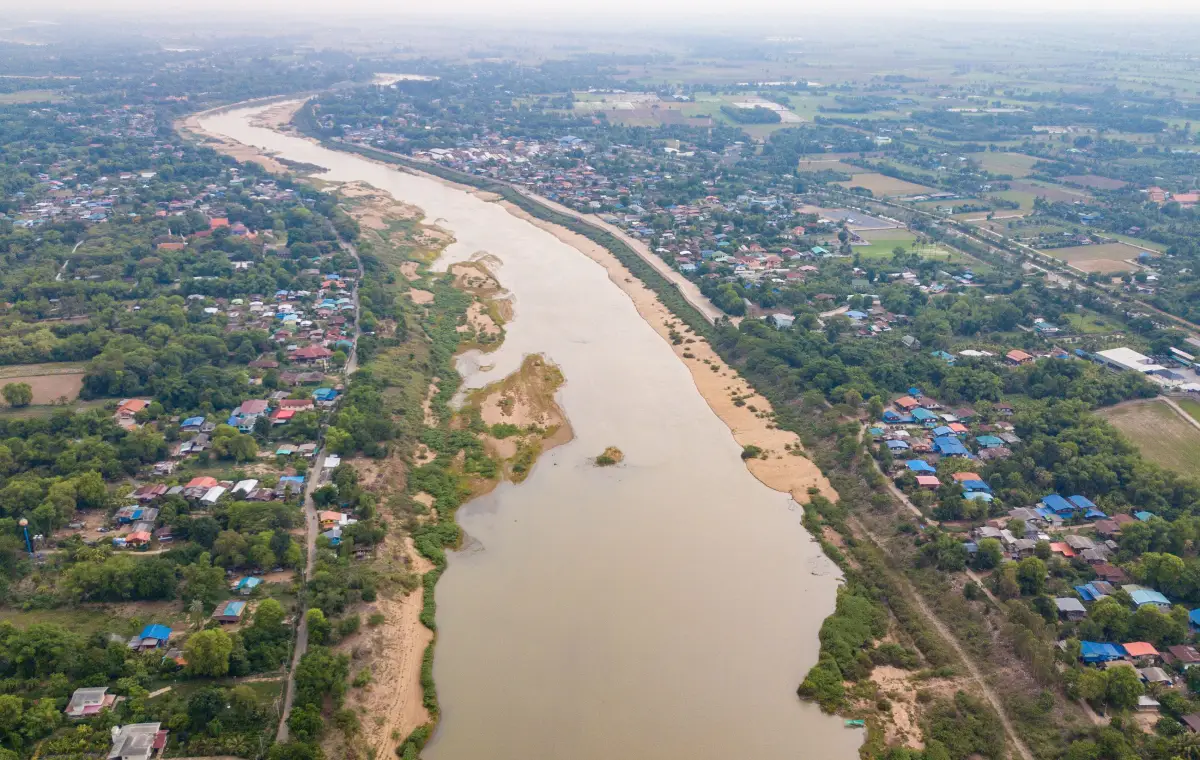
20 Best Places to Visit in Sing Buri, One of Central Thailand's Most Rewarding Provinces Sing Buri is a compact province in Central Thailand that is ideal for short trips from Bangkok. Its appeal goes far beyond the familiar story of the Bang Rachan heroes. The province is also home to historic monasteries, important Buddha images, archaeological sites, traditional pottery heritage, local museums, riverside communities, and ways of life closely connected with the Chao Phraya and Noi rivers. A trip to Sing Buri therefore suits travelers interested in history, religion, art and culture, local food, and slower journeys that allow time to understand each place.
Located about 140 kilometers from Bangkok, Sing Buri can be visited as a day trip, but staying for 1–2 nights makes it much easier to explore the province in greater depth. Important areas include Mueang Sing Buri, Khai Bang Rachan, Bang Rachan, In Buri, Tha Chang, and Phrom Buri districts. Each area offers a different travel experience, ranging from major royal temples and Ayutthaya-period archaeological sites to museums, old communities, and riverside landscapes.
The most recognizable historical identity of Sing Buri is the story of the villagers of Bang Rachan, who resisted Burmese forces before the fall of Ayutthaya in 1767. That memory remains visible in the provincial landscape through the Bang Rachan Heroes Monument and Park, Wat Pho Kao Ton, and several temples in the Khai Bang Rachan area. Visiting this zone is therefore more than taking photographs with a monument; it is an opportunity to understand the historical event, the surrounding communities, and the way collective memory became part of Sing Buri's identity. fileciteturn12file0L5-L8
Sing Buri is also an important destination for Buddhist pilgrims and travelers interested in religious art. Wat Phra Non Chakkrasi Worawihan houses a monumental reclining Buddha regarded as one of the province's most significant sacred images. Wat Phikun Thong is distinguished by the massive Phra Phuttha Suwan Mongkhon Mahamuni image and its association with Luang Pho Phae, while Wat Na Phra That preserves an ancient prang and archaeological remains that reflect the area's historic religious importance. Each temple offers a different combination of faith, architecture, art, and local history.
The province also preserves an important heritage of craftsmanship and production at the Mae Nam Noi Kiln Site. Archaeological evidence shows that the Noi River basin once supported large-scale ceramic production. Seeing surviving kiln structures and pottery evidence helps visitors understand that Sing Buri was not important only for warfare and religion, but also for craft production, trade, and the river-based economy of Central Thailand.
Food is another major part of the Sing Buri experience. “Pla Chon Mae La”, or snakehead fish associated with the Mae La waterways, is one of the best-known local specialties. The natural waterways of Mae La and the Noi River have long supported fishing communities, and fish-based dishes became an important part of local cuisine. Grilled snakehead fish, sour curry, tom yum, and other regional preparations are excellent additions to a Sing Buri itinerary and provide another way to understand the province beyond its temples and monuments.
If you have only 1 day, a practical route begins in Mueang Sing Buri at Wat Phra Non Chakkrasi Worawihan and Wat Na Phra That, continues to Wat Phikun Thong, and then heads toward the Bang Rachan Heroes Monument and Park and Wat Pho Kao Ton. This route combines Buddhism, history, and the province's best-known identity in a single day. With 2 days, add the In Buri and Noi River areas, including In Buri National Museum, the Mae Nam Noi Kiln Site, and Wat Phra Prang, giving the trip a stronger archaeological and artistic dimension.
Sing Buri can be visited throughout the year. The period from the end of the rainy season into the cool season is particularly comfortable for outdoor travel because temperatures are generally less intense. Temples and communities can become livelier during religious holidays and festivals. Travelers who prefer a quieter atmosphere should consider weekdays, while those interested in community events should check local festival schedules before traveling.
The following 20 places have been selected to cover Sing Buri's most important attractions, historical sites, temples, archaeological remains, museums, and locations that reveal local ways of life. The first 10 are especially recommended for first-time visitors and can be combined into practical 1–2 day itineraries.
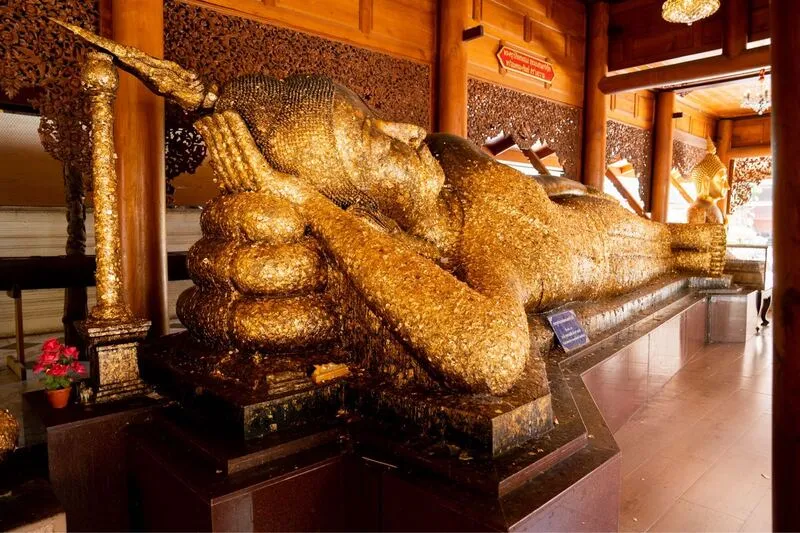
1. Wat Phra Non Chakkrasi Worawihan is one of the most important attractions and religious sites in Sing Buri. Located in Chak Si Subdistrict, Mueang Sing Buri District, it is a third-class royal temple of the Worawihan type and is best known for the revered reclining Buddha known as Luang Pho Phra Non Chakkrasi.
The reclining Buddha measures approximately 47.42 meters in length and displays elegant characteristics associated with Sukhothai-style Buddhist art. The face turns north while the head points east. Its scale and refined proportions make the interior of the viharn impressive, and visitors should allow enough time to appreciate the image and surrounding religious details rather than treating the temple as a quick stop.
Highlights: Luang Pho Phra Non Chakkrasi reclining Buddha, Phra Kan, Phra Kaeo, the old viharn, the sala tree, and the atmosphere of a major royal temple that remains an important center of local faith.
The temple also preserves other important Buddha images and sacred objects. These include Phra Kan, a gilded stone Buddha image, and Phra Kaeo, another image associated with historical royal ceremonies. Together with the reclining Buddha, these objects show how the temple connects Buddhist art, local faith, and broader historical traditions.
Wat Phra Non Chakkrasi is an excellent first stop when exploring Sing Buri because it lies close to the city and connects easily with Wat Na Phra That, Wat Phikun Thong, and the Khai Bang Rachan area. Weekends and religious holidays can be busier, so travelers who prefer a calmer visit should arrive earlier in the day.
Getting There: From central Sing Buri, take Highway 3032 toward Chak Si Subdistrict for approximately 4 kilometers. The temple is easily reached by private car, local transport, or hired vehicle from the city.

2. Bang Rachan Heroes Monument and Park is one of the most important historical landmarks in Sing Buri and a central symbol of the province's identity. It commemorates the villagers of Bang Rachan, remembered for resisting Burmese forces before the fall of Ayutthaya in the 18th century. Their story became a national symbol of unity, courage, and the defense of local communities.
The park combines a memorial landscape with spaces for historical learning. Visitors can walk around the monument, explore the surrounding grounds, and study interpretive material that places the Bang Rachan story within its historical context.
Highlights: The Bang Rachan Heroes Monument, landscaped park, historical learning center, and its close connection with Wat Pho Kao Ton, another site directly associated with Bang Rachan history.
Allow at least 1–2 hours if you want to understand the site properly. Reading the historical information before walking around the outdoor monument makes the experience more meaningful, particularly for students, families, and visitors interested in Thai history.
The Khai Bang Rachan area can be explored as a wider historical route together with Wat Pho Kao Ton, Wat Sing Sutthawat, and Wat Pho Rattanaram. Seeing these places together reveals the relationship between temples, communities, and the historical landscape rather than presenting the Bang Rachan story as an isolated event.
Getting There: From central Sing Buri, drive toward Khai Bang Rachan District for roughly 15 kilometers. The route is straightforward by private car and can easily be combined with Wat Pho Kao Ton in the same trip.

3. Wat Phikun Thong in Tha Chang District is one of Sing Buri's most popular temples for both merit-makers and travelers. Its most recognizable landmark is the enormous Phra Phuttha Suwan Mongkhon Mahamuni Buddha image, which dominates the temple grounds and can be seen from a considerable distance.
The temple is also closely associated with Phra Thamma Muni, better known as Luang Pho Phae Khemangaro, a highly respected monk. Areas within the temple preserve stories and objects connected with his life, making Wat Phikun Thong especially meaningful for visitors interested in Thai Buddhism and the history of influential monks in Central Thailand.
Highlights: Phra Phuttha Suwan Mongkhon Mahamuni, the legacy of Luang Pho Phae, religious exhibits, cloistered areas, meditation gardens, and quiet spaces for worship.
The temple combines monumental religious architecture with calmer corners suited to reflection. Visitors can admire the great Buddha image, walk through the temple complex, and spend time in the quieter garden areas. This combination makes it suitable for families, older travelers, and those planning a Buddhist pilgrimage route.
Allow approximately 1–2 hours for a relaxed visit. Wat Phikun Thong can be combined with Wat Phra Non Chakkrasi, Wat Na Phra That, the Mae Nam Noi Kiln Site, and Khai Bang Rachan in a full-day itinerary.
Getting There: From central Sing Buri, travel toward Tha Chang District and Wihan Khao Subdistrict. The temple is about 16 kilometers from the city. Private car is the most convenient option.
Map (GPS):Open Google Maps – Wat Phikun Thong

4. Wat Pho Kao Ton (Wat Mai Daeng) is closely associated with the history of Khai Bang Rachan. Located near the Bang Rachan Heroes Monument, it is an essential stop for travelers who want to explore the historical landscape beyond the memorial park itself.
The temple is linked with Phra Achan Thammachot, a monk remembered in connection with the Bang Rachan villagers. The temple setting helps visitors imagine the religious and community environment surrounding the historical episode and understand how local memory remains attached to real places.
Highlights: Its association with Phra Achan Thammachot, Bang Rachan history, the old temple atmosphere, and its convenient location close to the Heroes Monument.
Wat Pho Kao Ton and the Bang Rachan Heroes Monument should ideally be visited together. The monument presents the broader heroic narrative, while the temple adds a religious and community dimension to the same historical landscape.
Beyond history, the temple offers a calm atmosphere suitable for respectful exploration. Visitors should dress appropriately and maintain proper etiquette around sacred buildings and worship areas.
Getting There: Travel from central Sing Buri toward Khai Bang Rachan District. From the Bang Rachan Heroes Monument, the temple is only a short drive away and is easy to include in the same route.
Map (GPS):Open Google Maps – Wat Pho Kao Ton
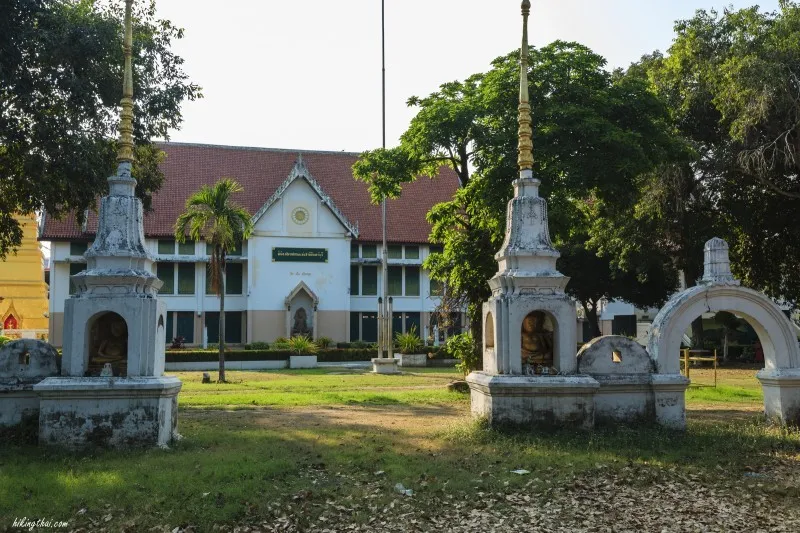
5. In Buri National Museum is one of the best places to understand Sing Buri beyond the Bang Rachan story. Located in historic In Buri District, the museum presents archaeological objects, religious art, and local historical material that reveal the area's long cultural development.
A museum visit is particularly useful before or after exploring old temples in In Buri. The exhibits help visitors understand periods, artistic styles, and the relationship between riverside communities and the development of historic settlements.
Highlights: Archaeological objects, Buddhist art, local history, and information about ancient communities in In Buri.
The museum is suitable for families, students, and archaeology enthusiasts. It can serve as an introduction before visiting nearby places such as Wat Bot and Wat Sutthawat, allowing travelers to view the architecture and murals with greater historical context.
Allow at least 1 hour. The museum is generally open Wednesday–Sunday from 09:00–16:00, so travelers should plan their In Buri route accordingly.
Getting There: From central Sing Buri, take Highway 311 north toward In Buri District. It can easily be combined with Wat Bot, Wat Sutthawat, and other attractions in the In Buri area.

6. Mae Nam Noi Kiln Site is one of Sing Buri's most important archaeological attractions and offers a very different perspective on the province's past. The Noi River basin once supported major ceramic production, and archaeological discoveries have revealed kilns and pottery fragments that demonstrate a sophisticated craft tradition.
Visitors can see surviving kiln structures protected beneath shelters designed to preserve the archaeological remains. Seeing the kilns in situ gives a much clearer sense of the scale and process of ceramic production than viewing finished objects alone.
Highlights: Original ancient kilns, pottery-related displays, archaeological evidence of craft production, and the historical relationship between manufacturing communities and river transportation.
The site shows that Sing Buri's history was shaped not only by conflict and religion but also by artisans, production networks, and trade. Rivers supplied resources, supported settlement, and served as transportation routes linking communities with wider markets.
The kiln site lies close to Wat Phra Prang, making the two places ideal to visit together. Start at the kiln site to understand local production and then continue to the temple to see the religious architecture of the same broader historical landscape.
Getting There: Follow the Sing Buri–Bang Rachan–Sankhaburi route along Highway 3251 toward the Chan Sut area. The site is close to Wat Phra Prang and is generally open during daytime hours.
Map (GPS):Open Google Maps – Mae Nam Noi Kiln Site
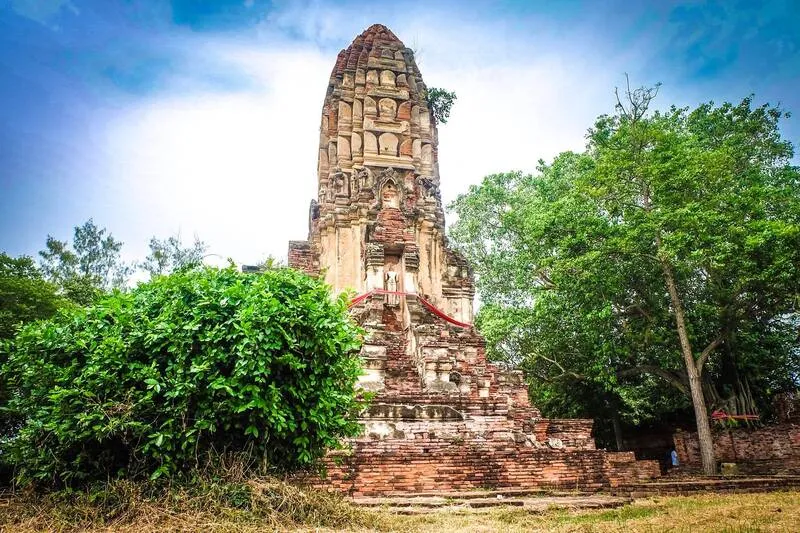
7. Wat Na Phra That is an old temple and archaeological site of considerable historical importance in Sing Buri. Located near Wat Phra Non Chakkrasi, it can easily be included in the same half-day route. Its most notable features are an ancient prang and surviving structural remains that reflect earlier religious architecture.
The temple area reveals evidence of a historic community that once supported substantial religious buildings. Brickwork, laterite foundations, and surviving architectural elements provide valuable material for understanding the development of settlement and sacred architecture in the area.
Highlights: Ancient prang, archaeological remains, and the atmosphere of an old temple complex close to Wat Phra Non Chakkrasi.
Wat Na Phra That is especially rewarding because it preserves visible traces of age rather than presenting only fully restored buildings. Visitors can observe original materials, structural layers, and surviving forms that help reconstruct the appearance of earlier religious sites.
To understand the area more clearly, visit Wat Phra Non Chakkrasi before or after Wat Na Phra That. The two sites lie close together yet reveal different aspects of Sing Buri's religious history.
Getting There: Located in Mueang Sing Buri District close to Wat Phra Non Chakkrasi Worawihan. The two sites can be connected easily by car and are ideal for a half-day Buddhist and archaeological route.
Map (GPS):Open Google Maps – Wat Na Phra That
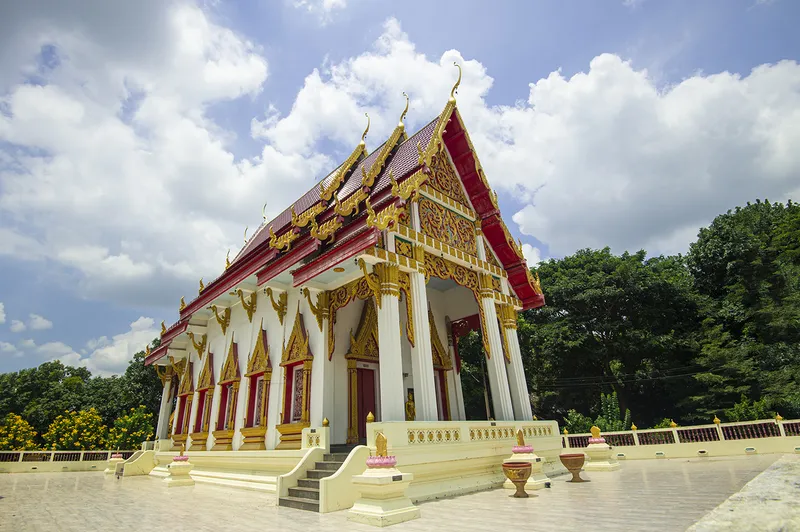
8. Wat Sawang Arom is a distinctive temple in Mueang Sing Buri because it is associated with the preservation and display of Nang Yai, Thailand's traditional large shadow-puppet art. Nang Yai combines leather carving, puppetry, music, performance, and classical literature.
Each shadow figure is intricately cut from leather to create characters and scenes. When performed against a lit screen, the large carved figures create dramatic silhouettes. Seeing the puppets up close allows visitors to appreciate the craftsmanship that can be difficult to observe during a full performance.
Highlights: Nang Yai museum, traditionally carved leather figures, and cultural knowledge connected with one of Thailand's important performing arts.
Wat Sawang Arom is particularly suitable for families, students, art lovers, and travelers looking for something beyond temples and monuments. It adds an important cultural dimension to a Sing Buri itinerary by highlighting performance traditions and traditional craftsmanship.
Travelers who enjoy photographing craft details should allow extra time. Each puppet has different patterns and can serve as an entry point for learning about the Ramakien and the role of Nang Yai in Thai cultural history.
Getting There: The temple is in Mueang Sing Buri District and is easily reached from the city center. It can be combined with Wat Phra Non Chakkrasi, the City Pillar Shrine, and other urban attractions.
Map (GPS):Open Google Maps – Wat Sawang Arom

9. Mae La Maharachanusorn Park offers a different side of Sing Buri beyond temples and war history. The Mae La area is closely connected with waterways, traditional fishing, and the famous Pla Chon Mae La snakehead fish that has become one of the province's culinary identities.
The landscape reflects a long relationship between people and water. Local waterways and wetland environments have supported food production, agriculture, travel, and settlement, making the area useful for understanding the environmental foundations of Sing Buri's local cuisine and community life.
Highlights: Mae La water landscapes, riverside community life, the connection with Pla Chon Mae La, and a setting very different from the province's temples and historical monuments.
For food-focused travelers, the area also helps explain why Mae La snakehead fish became so strongly associated with Sing Buri. It is not simply a famous dish but part of a wider story involving ecology, fishing knowledge, and community use of natural resources.
Conditions in natural areas can vary by season. Visitors should respect community spaces and avoid disturbing fishing activity or private property.
Getting There: The park lies in the Mae La area of Sing Buri and is most conveniently reached by private car. It can be combined with an In Buri route or a local-food itinerary.
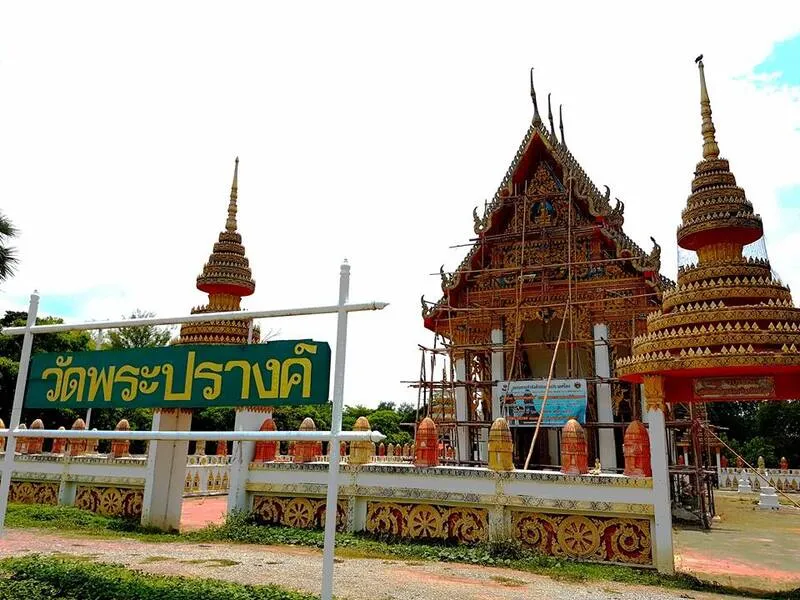
10. Wat Phra Prang (Chan Sut) is an old temple important for understanding the historic communities of the Noi River basin. Its close proximity to the Mae Nam Noi Kiln Site makes it particularly useful as part of a combined archaeological route.
The temple's ancient prang and architectural remains reflect Ayutthaya-period religious art. Its location near a major historic ceramic-production area also illustrates the relationship between sacred buildings, artisan communities, trade, and water-based transportation.
Highlights: Ancient prang, Ayutthaya-period architecture, old temple atmosphere, and its location near the Mae Nam Noi Kiln Site.
The temple is especially rewarding for visitors interested in architecture and archaeology. The prang's surviving details reveal aspects of historic craftsmanship and the transformation of religious architecture over time.
A good sequence is to visit the Mae Nam Noi Kiln Site first to understand craft production and the local economy, then continue to Wat Phra Prang to examine the religious landscape. This makes the area's history easier to understand as a connected whole.
Getting There: Located in the Chan Sut area near the Mae Nam Noi Kiln Site. Access is easiest by private car via the Sing Buri–Bang Rachan–Sankhaburi route.

11. Wat Bot is an important temple in In Buri District, located near the Chao Phraya River. It reflects local history, religious art, and distinctive craftsmanship and works especially well as part of an In Buri itinerary with the national museum and Wat Sutthawat.
The temple's appeal lies in architectural and craft details inside its ordination hall. One unusual feature is the use of railway rails as structural elements, reflecting an interesting period of adaptation in temple construction. Carved doors and windows add further artistic value.
Highlights: Historic ubosot, carved doors and windows, structural use of railway rails, and a riverside setting that reflects the old community of In Buri.
Visitors interested in architectural history should look closely at construction materials and decorative details. These features provide evidence of earlier craftsmanship and changing building techniques.
Because several historic sites lie close together in In Buri, a half-day or full-day route works well. Begin at In Buri National Museum for historical context, then continue to Wat Bot and Wat Sutthawat.
Getting There: From central Sing Buri, take Highway 311 toward In Buri District for about 16 kilometers. Private car is the most convenient way to explore the area.
Map (GPS):Open Google Maps – Wat Bot

12. Wat Sutthawat (Wat Mai) in Thap Ya Subdistrict, In Buri District, is an old temple particularly interesting for travelers who enjoy historic Buddhist art and Ayutthaya-period cultural heritage.
The temple's surviving old buildings and murals are among its main attractions. These artistic remains reveal how Buddhist stories were communicated visually and connect the temple with the broader artistic culture of Central Thailand's river basins.
Highlights: Old viharn, Buddhist murals, religious narratives, and the atmosphere of a historic temple in the In Buri community.
The value of Wat Sutthawat lies in its details. Visitors should take time to observe color, line, figures, and surviving compositions, all of which reflect belief, storytelling methods, and the skill of earlier painters.
For a complete In Buri route, combine Wat Sutthawat with In Buri National Museum and Wat Bot. Together, the three places present archaeology, architecture, and mural art in one coherent journey.
Getting There: From central Sing Buri, follow Highway 311 toward In Buri and continue into Thap Ya Subdistrict. Private car is recommended.
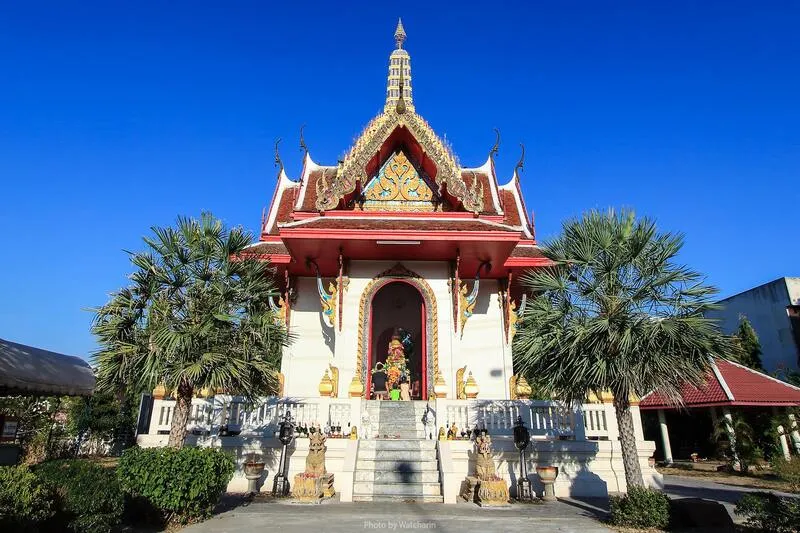
13. Sing Buri City Pillar Shrine is an important sacred site in the provincial capital and is frequently visited by local residents and travelers seeking blessings. Its central location makes it suitable as either the first or final stop of a Sing Buri itinerary.
The shrine serves as a center of local belief associated with the symbolic protection and foundation of the city. Visitors come not only for photographs but also to pay respect and participate in a tradition that remains meaningful to the local community.
Highlights: The city pillar, worship shrine, and Sala Kao Sing, which houses statues of respected monks associated with Sing Buri.
A visit does not require much time, but the shrine combines well with urban attractions such as Wat Sawang Arom, local markets, and areas near the Chao Phraya River.
Travelers planning a Buddhist pilgrimage route can start here before continuing to Wat Phra Non Chakkrasi, Wat Na Phra That, or Wat Phikun Thong.
Getting There: Located in Mueang Sing Buri District and easily reached from the city center. It is well connected to the province's main roads.

14. Wat Sing Sutthawat is another old temple connected with the historical landscape around Sing Buri and Khai Bang Rachan. Located in Pho Sang Kho Subdistrict, it is a useful stop for travelers extending their historical route beyond the main Bang Rachan sites.
The temple's earlier names and local stories connect it with the history of old settlements in the area. These traditions help reveal that Sing Buri's historical geography involved several communities and shifting centers over time.
Highlights: Luang Pho Nak, local stories related to old Sing Buri settlements, and traditions associated with clay lion figures remembered in the community.
Wat Sing Sutthawat is suitable for travelers who enjoy quieter secondary attractions with strong local character. Its calm atmosphere allows visitors to experience the relationship between a temple and its surrounding community.
Including this temple after Khai Bang Rachan and Wat Pho Kao Ton creates a more coherent route both geographically and historically.
Getting There: Located in Khai Bang Rachan District. It can be reached by private car from the Bang Rachan Heroes Monument and Wat Pho Kao Ton.
Map (GPS):Open Google Maps – Wat Sing Sutthawat
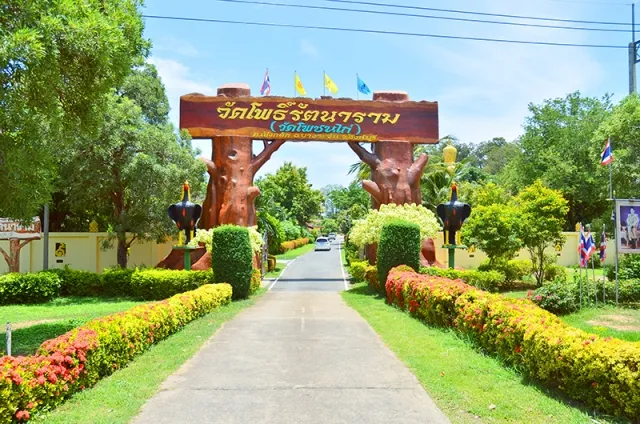
15. Wat Pho Rattanaram (Wat Pho Chon Kai) is located in Choeng Klat Subdistrict, Bang Rachan District. It offers a quieter religious stop for travelers extending their journey beyond the best-known historical attractions.
A major feature is the large Buddha image in the Pa Lelai posture. Its monumental scale gives the temple a strong visual identity while the surrounding community setting remains peaceful and distinctly local.
Highlights: Large Pa Lelai Buddha image, temple architecture, and the atmosphere of a Bang Rachan community temple.
Visitors can spend time paying respect, walking through the grounds, and taking a slower break from more information-heavy historical sites. The temple adds balance to a Khai Bang Rachan and Bang Rachan itinerary.
On a 2-day trip, Wat Pho Rattanaram fits well on the same day as the Bang Rachan Heroes Monument, Wat Pho Kao Ton, and Wat Sing Sutthawat.
Getting There: Located in Choeng Klat Subdistrict, Bang Rachan District, not far from the district center. Private car is the most practical option.
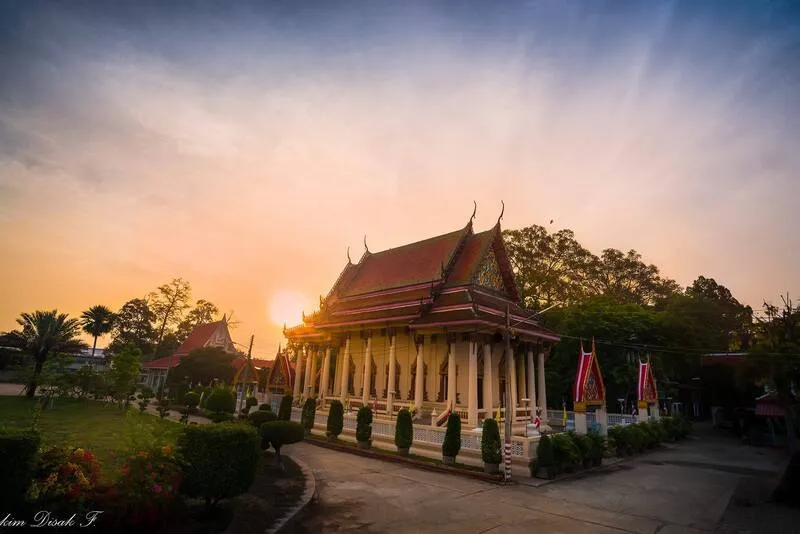
16. Wat Klang Tha Kham is an old temple in Khai Bang Rachan District near the Noi River. It reflects the importance of waterways to historic settlement patterns and is particularly interesting for visitors who appreciate old Buddha images, religious objects, and riverside temple communities.
The temple preserves Buddha images and older objects associated with local history. Such material demonstrates the temple's long role as a community center as well as a place of worship.
Highlights: Old Buddha images, preserved religious objects, Noi River atmosphere, and the history of the Tha Kham community.
Wat Klang Tha Kham is well suited to travelers who prefer quiet, highly local destinations rather than large tourist complexes. Its traditional community setting offers a different view of religious life in Sing Buri.
The nearby river also helps illustrate how waterways once functioned as transport routes, food sources, and links between settlements and markets.
Getting There: Located in Tha Kham Subdistrict, Khai Bang Rachan District. Private car is recommended, and the temple can be combined with other attractions in the Khai Bang Rachan or Noi River areas.
Map (GPS):Open Google Maps – Wat Klang Tha Kham
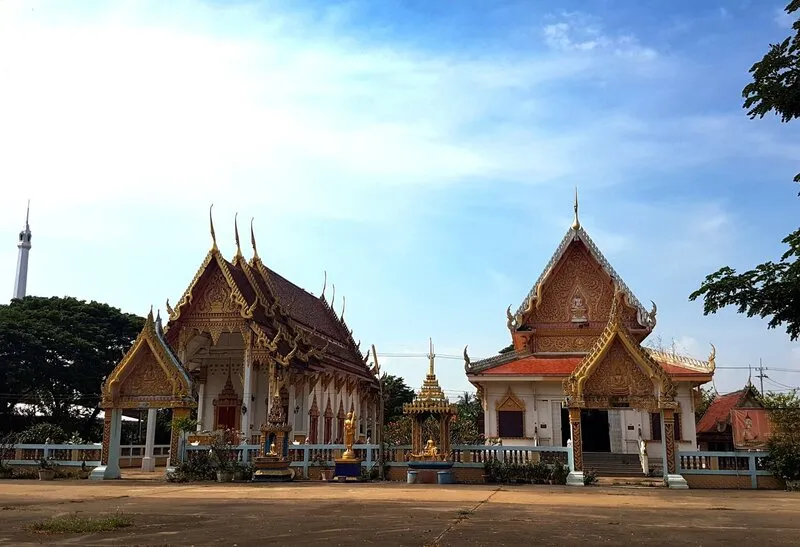
17. Wat Sathit Watthanaram is located in Bang Krabue Subdistrict, Mueang Sing Buri District, on the western side of the Chao Phraya River. The temple is closely connected with the surrounding riverside community and offers a quieter perspective on the province.
The temple was formerly known by a name associated with the Bang Krabue community. Such changes reveal the close relationship between temple names, settlement names, and local geography in old Chao Phraya communities.
Highlights: Chao Phraya riverside atmosphere, Bang Krabue community history, and a peaceful setting for worship and slow travel.
Although Wat Sathit Watthanaram does not have monumental structures on the scale of Wat Phra Non Chakkrasi or Wat Phikun Thong, its value lies in its role within the cultural landscape of river, temple, houses, and community.
Travelers who enjoy slow travel can include it in a riverside route and spend time observing local surroundings rather than simply collecting major check-in points.
Getting There: Located in Bang Krabue Subdistrict, Mueang Sing Buri District. Private car is the easiest option, and a daytime visit is recommended.

18. Wat Sathian Watthanadit is located in Bang Phutsa Subdistrict, Mueang Sing Buri District, on the eastern side of the Chao Phraya River near the area where the Lop Buri River connects with the Chao Phraya. It is an old temple that reflects the historical importance of riverside settlement in the provincial capital.
The temple formerly carried names related to old landing places and communities, illustrating how religious sites grew alongside water-based transportation. It also preserves locally revered Buddha images and sacred objects.
Highlights: Luang Pho Choei, the Chao Phraya riverside environment, and stories of old communities near the mouth of the Lop Buri River.
Travelers interested in historical geography will find the temple's location especially meaningful. River junctions often supported settlement, transport, trade, and religious institutions, helping explain why communities developed here.
The temple can be included in an urban Sing Buri route with the City Pillar Shrine, Wat Sawang Arom, and other riverside religious sites.
Getting There: Located in Bang Phutsa Subdistrict, Mueang Sing Buri District. It is easily reached by private car from central Sing Buri.
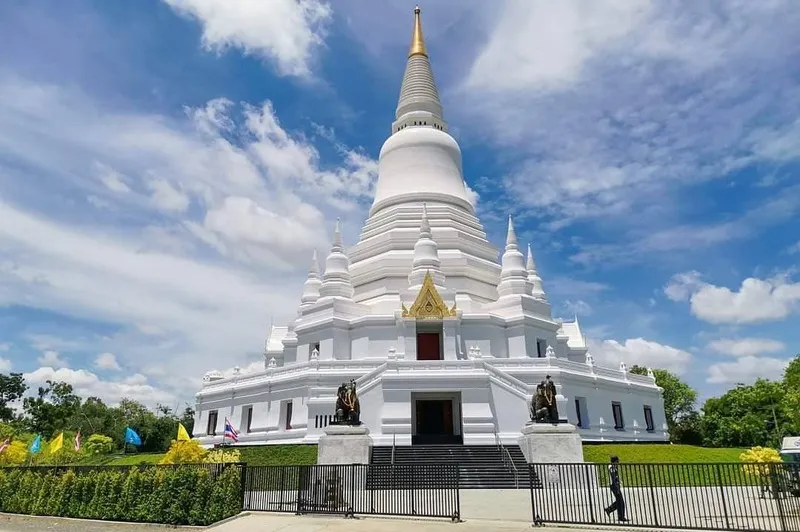
19. Wat Amphawan in Phrom Buri District is widely known as an important meditation center and is closely associated with Phra Thamma Singhaburachan, commonly known as Luang Pho Charan Thitathammo. He played a major role in teaching Vipassana meditation and the Four Foundations of Mindfulness.
Wat Amphawan differs from a conventional sightseeing temple because many visitors come specifically to practice meditation, seek calm, and remember Luang Pho Charan's teachings. The atmosphere should therefore be treated with particular respect.
Highlights: Vipassana practice, the Four Foundations of Mindfulness, the teachings and legacy of Luang Pho Charan, and the Phra Chedi Thamma Singhaburachariyanuson.
Visitors familiar with Luang Pho Charan's books or teachings may find the temple especially meaningful. Those new to meditation can also visit to pay respect, learn about mindfulness, and experience the calm setting.
Dress modestly and avoid loud behavior, particularly near meditation areas. Travelers who wish to join formal meditation programs should check the temple's current requirements in advance.
Getting There: Located in Phrom Buri District. From Bangkok or central Sing Buri, use the Asian Highway and follow local roads toward the temple. Private car is convenient.
Map (GPS):Open Google Maps – Wat Amphawan

20. Pak Bang Market is a local community market in Phrom Buri District that adds food and everyday life to a Sing Buri itinerary. After a day of temples, archaeological sites, and historical attractions, a local market offers a more contemporary view of the province.
Pak Bang Market is connected with the history of local communities and transportation. Like many markets in Central Thailand, it developed in an environment where water and road travel supported trade and daily exchange.
Highlights: Local market atmosphere, community food, everyday life in Phrom Buri, and a convenient location for combining with Wat Amphawan.
For travelers, the market is a good place to look for simple meals, snacks, and local products. Its value lies less in famous individual shops than in seeing ingredients, prepared foods, and goods purchased by local residents.
Morning to late morning is generally the most suitable period for experiencing a traditional community-market atmosphere, although individual shop hours may vary.
Pak Bang Market works well as the final stop on a Phrom Buri route after Wat Amphawan or as a break before returning to Bangkok, giving the trip a balance of history, religion, culture, and everyday life.
Getting There: Located in Phrom Buri District and accessible from Wat Amphawan or the Asian Highway. Private car is the most convenient option.
Map (GPS):Open Google Maps – Pak Bang Market
| By Zone / District | 1. Mueang Sing Buri – Wat Phra Non Chakkrasi Worawihan, Wat Na Phra That, Wat Sawang Arom, Sing Buri City Pillar Shrine, Wat Sathit Watthanaram, Wat Sathian Watthanadit 2. Khai Bang Rachan – Bang Rachan Heroes Monument and Park, Wat Pho Kao Ton, Wat Sing Sutthawat, Wat Klang Tha Kham 3. Bang Rachan – Wat Pho Rattanaram 4. Tha Chang – Wat Phikun Thong 5. In Buri – In Buri National Museum, Wat Bot, Wat Sutthawat 6. Noi River / Chan Sut Zone – Mae Nam Noi Kiln Site, Wat Phra Prang 7. Mae La Zone – Mae La Maharachanusorn Park 8. Phrom Buri – Wat Amphawan, Pak Bang Market |
| Top Highlights | 1. Wat Phra Non Chakkrasi Worawihan – monumental reclining Buddha and major royal temple 2. Bang Rachan Heroes Monument and Park – key historical site of the Bang Rachan story 3. Wat Phikun Thong – monumental Buddha image and Luang Pho Phae heritage 4. Wat Pho Kao Ton – temple closely linked with Phra Achan Thammachot and Bang Rachan history 5. In Buri National Museum – archaeology and local history 6. Mae Nam Noi Kiln Site – one of Central Thailand's important historic ceramic-production sites |
| Best for Families and Children | 1. Wat Phra Non Chakkrasi Worawihan 2. Bang Rachan Heroes Monument and Park 3. In Buri National Museum 4. Wat Sawang Arom 5. Wat Phikun Thong |
| Best for History Lovers | 1. Bang Rachan Heroes Monument and Park 2. Wat Pho Kao Ton 3. In Buri National Museum 4. Mae Nam Noi Kiln Site 5. Wat Na Phra That 6. Wat Phra Prang (Chan Sut) 7. Wat Sutthawat |
| Best for Buddhist Pilgrimage / Religion | 1. Wat Phra Non Chakkrasi Worawihan 2. Wat Phikun Thong 3. Wat Amphawan 4. Wat Pho Kao Ton 5. Wat Phra Prang (Chan Sut) 6. Wat Na Phra That 7. Wat Sing Sutthawat |
| Best for Nature Lovers | 1. Mae La Maharachanusorn Park – waterways and Mae La landscape 2. Noi River area – river communities and archaeological landscapes 3. Chao Phraya riverside areas – old temples and riverside communities |
| Best for Culture and Community Tourism | 1. Wat Sawang Arom – Nang Yai shadow-puppet heritage 2. Pak Bang Market – local market and food 3. Wat Klang Tha Kham – Noi River community atmosphere 4. Wat Sathit Watthanaram – old Chao Phraya riverside community 5. Mae La Maharachanusorn Park – community life and local river culture |
| Best for Photography | 1. Wat Phra Non Chakkrasi Worawihan 2. Wat Phikun Thong 3. Bang Rachan Heroes Monument and Park 4. Wat Na Phra That 5. Wat Phra Prang (Chan Sut) 6. Mae La Maharachanusorn Park |
| Local Food and Products | 1. Pla Chon Mae La – Sing Buri's best-known snakehead fish specialty 2. River-fish dishes – commonly found in local restaurants 3. Central Thai cuisine – traditional dishes reflecting river-basin communities 4. Community food and products – available at local markets and shops |
| Important Festivals and Cultural Traditions | 1. Bang Rachan Heroes commemorative events 2. Buddhist festivals and temple activities according to each temple's calendar 3. Local cultural events reflecting Sing Buri's community identity |
| Recommended Accommodation Areas | 1. Central Sing Buri – best for multi-district travel and dining convenience 2. Khai Bang Rachan area – best for historical routes 3. In Buri – convenient for museums, old temples, and northern attractions 4. Phrom Buri – convenient for travelers from Bangkok and visits to Wat Amphawan |
| 1-Day Itinerary – Main Highlights | Wat Phra Non Chakkrasi Worawihan → Wat Na Phra That → Wat Phikun Thong → Bang Rachan Heroes Monument and Park → Wat Pho Kao Ton |
| 1-Day Itinerary – History Route | In Buri National Museum → Wat Bot → Wat Sutthawat → Mae Nam Noi Kiln Site → Wat Phra Prang (Chan Sut) |
| 1-Day Itinerary – Buddhist / Culture Route | Wat Amphawan → Wat Phra Non Chakkrasi Worawihan → Wat Na Phra That → Wat Phikun Thong → Wat Sawang Arom → Sing Buri City Pillar Shrine |
| 2 Days 1 Night | Day 1: Wat Phra Non Chakkrasi → Wat Na Phra That → Wat Phikun Thong → Khai Bang Rachan → Wat Pho Kao Ton Day 2: In Buri National Museum → Wat Bot → Wat Sutthawat → Mae Nam Noi Kiln Site → Wat Phra Prang |
| 3 Days 2 Nights | Day 1: Main temples and Mueang Sing Buri Day 2: Khai Bang Rachan, In Buri, and Noi River archaeological sites Day 3: Wat Amphawan → Pak Bang Market → City Pillar Shrine → Wat Sawang Arom and Chao Phraya riverside attractions |
| Best Way to Get Around | A private car is the most convenient option because attractions are spread across several districts and many places are not directly connected by public transport. Planning by geographic zone helps reduce backtracking. |
| Best Time to Visit | Sing Buri can be visited year-round. The period from the end of the rainy season through the cool season is generally more comfortable for outdoor travel. Weekdays are preferable for quieter temple and archaeological visits. |
| Responsible Travel | Dress respectfully at religious sites, avoid touching archaeological structures or objects unnecessarily, keep quiet in meditation areas, support local businesses, and help keep attractions clean. |
Recommended Sing Buri 1-Day Itinerary Travelers with only one day can begin early at Wat Phra Non Chakkrasi Worawihan, continue to nearby Wat Na Phra That, then visit Wat Phikun Thong before spending the afternoon at the Bang Rachan Heroes Monument and Park and Wat Pho Kao Ton. This route works particularly well for first-time visitors because it combines major religious, historical, and cultural landmarks in one day.
Recommended Sing Buri 2 Days 1 Night Itinerary On Day 1, follow the route through Wat Phra Non Chakkrasi, Wat Na Phra That, Wat Phikun Thong, Khai Bang Rachan, and Wat Pho Kao Ton. On Day 2, travel north toward In Buri, beginning with In Buri National Museum, Wat Bot, and Wat Sutthawat before continuing to the Mae Nam Noi Kiln Site and Wat Phra Prang. Dividing the journey by area reduces backtracking and provides more time at each attraction.
Recommended Sing Buri 3 Days 2 Nights Itinerary With 3 days, spend the first day on the province's major highlights, the second on In Buri and the Noi River archaeological zone, and the third on Mueang Sing Buri and Phrom Buri. Possible stops include the City Pillar Shrine, Wat Sawang Arom, Wat Sathian Watthanadit, Wat Amphawan, and Pak Bang Market before returning to Bangkok. This schedule offers a balanced view of Sing Buri's history, Buddhism, art, riverside culture, and local food.
Frequently Asked Questions (FAQ)
Q: What are the must-visit attractions in Sing Buri?
A: First-time visitors should prioritize Wat Phra Non Chakkrasi Worawihan, the Bang Rachan Heroes Monument and Park, Wat Pho Kao Ton, Wat Phikun Thong, In Buri National Museum, the Mae Nam Noi Kiln Site, and Wat Na Phra That. Together, these places represent the province's strongest religious, historical, and archaeological identities.
Q: What can I visit in Sing Buri in 1 day?
A: A practical 1-day route is Wat Phra Non Chakkrasi Worawihan → Wat Na Phra That → Wat Phikun Thong → Bang Rachan Heroes Monument and Park → Wat Pho Kao Ton. A private car is the easiest way to complete this route efficiently.
Q: How long does it take to travel from Bangkok to Sing Buri?
A: Sing Buri is approximately 140 kilometers from Bangkok. Driving commonly takes around 1.5–2 hours depending on your starting point and traffic conditions, making the province suitable for both day trips and overnight stays.
Q: Is Sing Buri suitable for families?
A: Yes. Wat Phra Non Chakkrasi Worawihan, Wat Phikun Thong, the Bang Rachan Heroes Monument and Park, In Buri National Museum, and Wat Sawang Arom are particularly suitable for families because they combine religion, history, museums, and traditional arts.
Q: Where should history lovers go in Sing Buri?
A: Start with the Bang Rachan Heroes Monument and Park, Wat Pho Kao Ton, In Buri National Museum, the Mae Nam Noi Kiln Site, Wat Na Phra That, Wat Phra Prang, and Wat Sutthawat. Together, these places cover ancient settlements, craft production, religion, and late-Ayutthaya history.
Q: Are there attractions in Sing Buri other than temples?
A: Yes. Important non-temple attractions include the Bang Rachan Heroes Monument and Park, In Buri National Museum, the Mae Nam Noi Kiln Site, Mae La Maharachanusorn Park, and Pak Bang Market.
Q: What food is Sing Buri famous for?
A: Pla Chon Mae La, or Mae La snakehead fish, is one of the province's best-known specialties. Sing Buri is also a good destination for river-fish dishes and traditional Central Thai cuisine.
Q: When is the best time to visit Sing Buri?
A: Sing Buri can be visited throughout the year, but the period from the end of the rainy season through the cool season is usually more comfortable for outdoor sightseeing. Weekdays are preferable if you want a quieter atmosphere at temples and archaeological sites.
 Category: ●Travel Articles, Recipes
 Group: ●Travel Review, Food Review
Last Update : 3 WeekAgo
 Last Update : 3 WeekAgo

 Art, Culture and Heritage
 Historical Sites and Monuments(4)
 Landmarks and Memorials(3)
 Art, Craft Centres, Tradition(3)
 Museums(1)
 Educational Places
 Library(1)
 Places of Worship
 Temple(42)
 Church(1)
 Other Sacred Sites(2)
 Research and Development
 Royal Project(3)
 Suburban Living
 Village, Community(1)
 Local Market(1)
 Nature and Wildlife
 National Parks and Marine Reserves(1)
 River, Canal(7)
 Bays and Beaches(1)
 Other natural attractions(2)
 Entertainment and Agricultural
 Animal camps and shows(1)
 Farms, Parks and Ecotourism(1)
Travel Review, Food Review(1)


