
lovethailand home >Central Travel Attractions >Sing Buri Travel Attractions >Khai Bang Ra Chan >Tha Kham > Wat Klang Tha Kham
TL;DR: Wat Klang Tha Kham is located at No. 3, Village No. 3, Tha Kham Subdistrict, Khai Bang Rachan District, Sing Buri Province, Thailand, open Daily, hours Daytime and regular temple visiting hours.
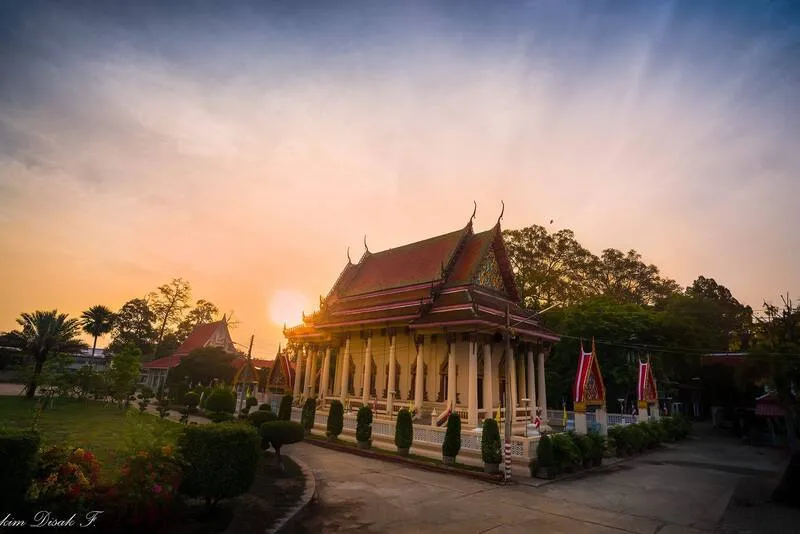
Wat Klang Tha Kham
Open Days: Daily
Opening Hours: Daytime and regular temple visiting hours
Wat Klang Tha Kham in Sing Buri Province is an old Buddhist temple in Tha Kham Subdistrict, Khai Bang Rachan District. Located at No. 3, Village No. 3, the temple was formerly known as Wat Tha Kham and is believed, based on inherited local evidence and old Buddha images, to date back to the Ayutthaya period. Today, the temple is valued for its old ordination hall, Ayutthaya-style Buddha images, a museum displaying temple history, and a remarkable story connected with King Chulalongkorn, Rama V, who once stayed overnight at the temple during a royal journey by water.
The temple stands on the eastern bank of the Noi River, a waterway that played an important role in local travel, trade, communication, and religious life in central Thailand. Before road transport became common, rivers and canals were the main routes linking communities. Temples located near the river therefore served not only as places of worship but also as resting points, community centers, and landmarks for travelers. Wat Klang Tha Kham reflects this riverside temple culture very clearly.
The former name, Wat Tha Kham, is closely connected with its location. The words “tha kham” refer to a crossing point or riverside landing where people crossed the water. The name preserves the memory of the temple’s role in the local transportation network along the Noi River. As the temple became known as Wat Klang Tha Kham, the name continued to reflect its position within the community and its importance as a local Buddhist center.
Although no exact construction date is known, the temple is regarded as an ancient temple. Important inherited evidence, especially its old Buddha images and artistic features, suggests that Wat Klang Tha Kham was founded during the Ayutthaya period. This gives the temple a strong historical identity. Even though many buildings have been renovated or maintained over time, the sacred images and oral traditions preserved inside the temple continue to connect the present community with the long Buddhist history of Sing Buri.
The ordination hall is one of the most important structures at Wat Klang Tha Kham. It measures approximately 8 meters wide and 24 meters long. Inside the hall is the principal Buddha image in the meditation posture, with artistic characteristics associated with the Ayutthaya period. The meditation posture represents stillness, concentration, and inner calm. This makes the image especially suitable for the sacred atmosphere of the ordination hall, where monastic rites and important Buddhist ceremonies take place.
The old wall surrounding the ordination hall was built in 1983. It helps define the sacred area and gives the ordination hall a calm, enclosed character. In Thai Buddhist architecture, the boundary around an ordination hall has both practical and symbolic meaning. It separates the area of religious rites from the general temple grounds. Visitors should therefore behave respectfully when entering this area, remove their shoes before entering sacred buildings, and maintain a quiet manner.
In addition to the principal Buddha image, Wat Klang Tha Kham is home to Luang Pho Si and Luang Pho Tham, 2 old Buddha images enshrined in the viharn. These sandstone Buddha images are in the Mara Vichai posture and are associated with the Ayutthaya period. The Mara Vichai posture symbolizes the Buddha’s victory over Mara and represents spiritual strength, determination, and the triumph of wisdom over obstacles. For local people, these images are not only religious artworks but also sacred images closely tied to community faith.
Luang Pho Si and Luang Pho Tham are considered important Buddha images of the temple. In many old temples of central Thailand, revered Buddha images serve as spiritual anchors for the community. Villagers visit them to make merit, ask for blessings, and return during important life events. This living relationship gives the images value beyond artistic beauty. They are part of the shared memory and spiritual continuity of Tha Kham community.
One of the most distinctive features of Wat Klang Tha Kham is its museum, which displays the history of the temple and important objects from the past. The museum includes a cast image of King Rama V, images of Luang Pho Phuean, portraits of former abbots, and monastic requisites presented to the temple by King Rama V. These displays make the temple especially interesting for travelers who want to understand not only Buddhist art but also the relationship between a local temple and Thai royal history.
The monastic requisites displayed in the museum include an alms bowl, a large tiered food carrier, a lamp, a ceremonial fan, a hot-water kettle made of nawa-loha alloy, a finely made leather shoulder bag, and a silk monk’s robe set. Each item reflects craftsmanship, religious use, and historical significance. Seeing these objects helps visitors understand the connection between Wat Klang Tha Kham and the royal visit of King Chulalongkorn in a more tangible way.
The most important historical story of Wat Klang Tha Kham concerns King Chulalongkorn, Rama V. During a royal journey by water to pay respect at Wat Phra Non Chak Si, the king arrived near Wat Tha Kham in the evening and stayed overnight at the temple. He did not reveal that he was the king. At that time, Luang Pho Phuean, the abbot, welcomed him warmly and treated him well. Before the king departed, the temple learned that the visitor was King Rama V. Afterward, the temple and the royal court maintained contact. This story remains one of the defining memories of Wat Klang Tha Kham.
This episode shows both the character of King Rama V’s journeys and the kindness of the temple community. The king’s travels allowed him to observe local life more closely, while the welcome given by Luang Pho Phuean reflected genuine hospitality without concern for status. When the visitor was later known to be the monarch, the event became a source of pride for the temple and the local community. It gives Wat Klang Tha Kham a warm and human connection with national history.
Luang Pho Phuean is therefore an important figure in the temple’s historical memory. The museum’s display of his image and the images of former abbots shows how the temple values the continuity of spiritual leadership. An abbot in a local temple is not only an administrator but also a moral guide, a caretaker of sacred places, and a link between generations. Visiting the museum helps travelers understand Wat Klang Tha Kham through its people as well as its objects.
Today, Wat Klang Tha Kham remains an active local temple. Recent temple activity information lists Phra Khru Satthathirakhun Chittasamvaro as the abbot. The temple continues to serve the local community through Buddhist ceremonies, merit-making events, Kathin ceremonies, robe-offering activities, Buddhist holy days, and community programs. Local administrative information also shows that the temple continues to be used as a venue for moral and ethical activities, confirming its ongoing role as a living community temple.
Wat Klang Tha Kham is suitable for travelers who want to experience a temple with real historical depth. Its importance does not come from monumental scale, but from the richness of its layered story: Ayutthaya-style Buddha images, the old ordination hall, the viharn, the museum room of former masters, King Rama V’s monastic requisites, and its riverside location along the Noi River. These elements make the temple a place where visitors can spend time slowly rather than simply stop for a short photo.
A good visit can begin with paying respect to the principal Buddha image in the ordination hall. Visitors can then move to the viharn to worship Luang Pho Si and Luang Pho Tham, followed by a visit to the museum to learn about King Rama V, Luang Pho Phuean, former abbots, and the temple’s inherited objects. This route allows visitors to experience the temple first through faith, then through history. When viewing museum objects, visitors should avoid unnecessary touching and treat the displays with respect.
For travelers interested in Thai Buddhist art, Wat Klang Tha Kham is worth careful observation. The principal Buddha image in the meditation posture and the sandstone Buddha images in the Mara Vichai posture reflect artistic traditions associated with the Ayutthaya period. Even casual visitors can appreciate the difference between older and newer images by observing facial features, body proportions, posture, material, and the atmosphere of enshrinement. This makes the temple educational as well as spiritual.
Wat Klang Tha Kham can also be included in a broader route through Khai Bang Rachan District and the Noi River area. Nearby places include Tha Kham Market, Wat Pho Kao Ton, the Bang Rachan Heroes Monument, Wat Phra Non Chak Si Worawihan, Wat Sadao, Wat Laem Khang, and Wat Phikun Thong. This route is suitable for travelers interested in history, old temples, community life, and local food in Sing Buri. With a full day, visitors can begin at Wat Klang Tha Kham in the morning and continue to historical and cultural sites in the afternoon.
Getting There is easiest by private car. Wat Klang Tha Kham is located in Tha Kham Subdistrict, Khai Bang Rachan District, Sing Buri Province. Travelers can drive from Sing Buri town toward Khai Bang Rachan District and continue to Tha Kham Subdistrict using a navigation app. Those without a private vehicle can first travel to Sing Buri town or Tha Kham Market, then arrange local transport to the temple. Planning the route in advance is useful for visitors who want to combine the temple with nearby attractions.
The best times to visit are in the morning or late afternoon, when the weather is more comfortable for walking around the temple grounds. Visiting on Buddhist holy days or during merit-making events allows travelers to see the living community role of the temple. Visitors should dress modestly, wear shirts with sleeves and appropriate trousers or skirts, remove shoes before entering sacred areas, speak quietly, and avoid disturbing monks or worshippers.
The temple has the basic facilities expected of a local community temple, including parking space, worship areas, an ordination hall, viharn, museum, religious activity spaces, and quiet areas for visitors. On hot days, bringing drinking water, a hat, or an umbrella is practical. Elderly visitors can visit comfortably with basic assistance, especially during crowded temple events or hot weather.
Restaurants and cafes near Wat Klang Tha Kham include local cafes around Tha Kham Market, food shops in Khai Bang Rachan District, and restaurants in Sing Buri town. Nearby options include Jungle Cafe at Tha Kham Market, Pattern Cafe in Pho Sangkho, local noodle and coffee shops, and well-known restaurants such as Phaibun Kai Yang and Ramphueng Restaurant. Combining a temple visit with local food makes the trip more complete for travelers.
For accommodation, visitors can stay near Tha Kham, Khai Bang Rachan, or Sing Buri town. Options include Ban Tha Kham Homestay, Metha Country View Homestay Sing Buri, Sumali Villa, Golden Dragon Resort, Chaisaeng Villa Hotel, and Chaisaeng Palace Hotel. Staying in Sing Buri town is convenient for travelers who need access to restaurants and services, while staying closer to Tha Kham offers a more local community atmosphere.
Overall, Wat Klang Tha Kham is one of Sing Buri’s most meaningful local temples. It combines old Buddhist art, Ayutthaya-period heritage, the story of King Rama V, Luang Pho Phuean, a temple museum, royal monastic requisites, and the riverside culture of the Noi River. The temple shows that Sing Buri is not only a province of famous battle history and major landmark temples, but also a province where small community temples preserve important stories in quiet and detailed ways.
For foreign travelers who want to explore Sing Buri beyond the better-known attractions, Wat Klang Tha Kham offers a calm, historically rich, and culturally authentic experience. A visit here is not only about worshipping Buddha images; it is also about walking into a living local history where Buddhism, royal memory, riverside travel, and community faith remain connected in one sacred place.
| Name | Wat Klang Tha Kham |
| Location | No. 3, Village No. 3, Tha Kham Subdistrict, Khai Bang Rachan District, Sing Buri Province, Thailand |
| Address | Village No. 3, Tha Kham Subdistrict, Khai Bang Rachan District, Sing Buri Province 16150 |
| Highlights | Old riverside temple on the eastern bank of the Noi River, with Ayutthaya-style Buddha images, Luang Pho Si, Luang Pho Tham, a museum of former masters, and monastic requisites presented by King Rama V |
| History | Formerly known as Wat Tha Kham, the temple is believed to date back to the Ayutthaya period based on inherited evidence and old Buddha images preserved inside the temple |
| Name Origin | The name Tha Kham refers to a river crossing or landing point used by local communities along the Noi River |
| Distinctive Features | Ordination hall measuring 8 meters wide and 24 meters long, old surrounding wall built in 1983, viharn with old Buddha images, and a temple history museum |
| Main Sacred Objects / Features | Principal Ayutthaya-style Buddha image in meditation posture, Luang Pho Si, Luang Pho Tham, sandstone Buddha images in Mara Vichai posture, Luang Pho Phuean image, and royal monastic requisites from King Rama V |
| Connection With King Rama V | King Rama V once traveled by water to worship at Wat Phra Non Chak Si and stayed overnight at Wat Tha Kham, where Luang Pho Phuean, the abbot at the time, welcomed him warmly |
| Travel Information | Best reached by private car from Sing Buri town toward Khai Bang Rachan District, then continuing to Tha Kham Subdistrict. Local transport can be arranged from Sing Buri town or Tha Kham Market |
| Current Status | An active local temple in Tha Kham Subdistrict, serving as a worship site, community activity space, and local history learning place in Khai Bang Rachan District |
| Open Days | Daily |
| Opening Hours | Daytime and regular temple visiting hours |
| Fees | No admission fee |
| Facilities | Parking area, ordination hall, viharn, museum, worship areas, religious activity spaces, and quiet areas inside the temple |
| Main Areas / Zones | Ordination hall, viharn of Luang Pho Si and Luang Pho Tham, museum room of former masters, royal monastic requisites display area, Noi River area, and religious activity spaces |
| Abbot / Caretaker | Phra Khru Satthathirakhun Chittasamvaro |
| Main Contact Number | +66 3653 5452 |
| Official Website / Related Page | Tourism Authority of Thailand, Thailand Tourism Directory, Tha Kham Subdistrict Administrative Organization, and temple activity listings |
| Nearby Tourist Attractions | 1. Tha Kham Market, about 1 km 2. Wat Pho Kao Ton, about 5 km 3. Bang Rachan Heroes Monument, about 5 km 4. Wat Phra Non Chak Si Worawihan, about 9 km 5. Wat Sadao, about 10 km 6. Wat Laem Khang, about 12 km 7. Wat Phikun Thong, about 12 km |
| Nearby Restaurants | 1. Jungle Cafe at Tha Kham Market, about 2 km, Tel. 064-934-7978 2. Pattern Cafe Sing Buri, about 2 km, Tel. 080-395-5428 3. Tiao Fae Ban Ta Joy, about 4 km 4. Krua Kho Sai, about 5 km 5. Phaibun Kai Yang, about 9 km, Tel. 09-9104-0362, 0-3651-2132 6. Ramphueng Restaurant, about 10 km, Tel. 0-3652-0757 |
| Nearby Accommodations | 1. Ban Tha Kham Homestay, about 2 km, Tel. 036-535-478, 08-7121-7605 2. Metha Country View Homestay Sing Buri, about 6 km 3. Sumali Villa, about 8 km 4. Golden Dragon Resort, about 10 km 5. Chaisaeng Villa Hotel, about 10 km 6. Chaisaeng Palace Hotel, about 11 km |
Frequently Asked Questions (FAQ)
Q: Where is Wat Klang Tha Kham located?
A: Wat Klang Tha Kham is located at No. 3, Village No. 3, Tha Kham Subdistrict, Khai Bang Rachan District, Sing Buri Province, on the eastern bank of the Noi River.
Q: What was the former name of Wat Klang Tha Kham?
A: The temple was formerly known as Wat Tha Kham, a name connected with the local river crossing point along the Noi River.
Q: Why is Wat Klang Tha Kham historically important?
A: The temple is believed to date back to the Ayutthaya period and is associated with King Rama V, who once stayed overnight at the temple during a royal journey by water.
Q: What sacred objects can visitors see at Wat Klang Tha Kham?
A: Visitors can see the Ayutthaya-style principal Buddha image in meditation posture, Luang Pho Si, Luang Pho Tham, sandstone Buddha images in Mara Vichai posture, and royal monastic requisites presented by King Rama V.
Q: What is displayed in the Wat Klang Tha Kham museum?
A: The museum displays temple history, a cast image of King Rama V, images of Luang Pho Phuean and former abbots, and royal monastic requisites such as an alms bowl, tiered food carrier, lamp, ceremonial fan, kettle, leather shoulder bag, and silk robe set.
Q: Is there an admission fee for Wat Klang Tha Kham?
A: There is no admission fee. Visitors can enter the temple to pay respect, make merit, and explore important areas during regular visiting hours.
Q: What should visitors wear when visiting Wat Klang Tha Kham?
A: Visitors should dress modestly, wear shirts with sleeves and appropriate trousers or skirts, remove shoes before entering sacred areas, and avoid touching museum objects unnecessarily.
Q: What nearby places can visitors see after Wat Klang Tha Kham?
A: Nearby places include Tha Kham Market, Wat Pho Kao Ton, Bang Rachan Heroes Monument, Wat Phra Non Chak Si Worawihan, Wat Sadao, Wat Laem Khang, and Wat Phikun Thong.
Tel : 036535452
 Tel : 036535452
 Category: ●Places of Worship
 Group: ●Temple
Last Update : 5 MonthAgo
 Last Update : 5 MonthAgo
 Click to Access the Navigation Map GPS
 Art, Culture and Heritage
 Historical Sites and Monuments(4)
 Landmarks and Memorials(3)
 Art, Craft Centres, Tradition(3)
 Museums(1)
 Educational Places
 Library(1)
Temple(42)
Library(1)
Temple(42)
 Church(1)
 Other Sacred Sites(2)
 Research and Development
 Royal Project(3)
 Suburban Living
 Village, Community(1)
 Local Market(1)
 Nature and Wildlife
 National Parks and Marine Reserves(1)
 River, Canal(7)
 Bays and Beaches(1)
 Other natural attractions(2)
 Entertainment and Agricultural
 Animal camps and shows(1)
 Farms, Parks and Ecotourism(1)
 Travel Articles, Recipes
 Travel Review, Food Review(1)


