
lovethailand home >Central Travel Attractions >Sing Buri Travel Attractions >Intha Buri >Intha Buri > Wat Bot
TL;DR: Wat Bot is located at In Buri Subdistrict, In Buri District, Sing Buri Province, open Daily, hours 08.00 – 16.30.
Wat Bot

Open Days: Daily
Opening Hours: 08.00 – 16.30
Wat Bot Royal Monastery is located in In Buri Subdistrict, In Buri District, Sing Buri Province, beside the Chao Phraya River. It is a royal monastery of the Dhammayut tradition and one of the most distinctive cultural temples in Sing Buri. From Sing Buri town, travelers can follow Highway 311 on the old Sing Buri–In Buri or Sing Buri–Chai Nat route for about 16 km. The temple is located around kilometer markers 14–15. Its most remarkable feature is the ordination hall, or ubosot, which is known for an unusual structural detail: railway rails were used as a central support beneath the building. The temple is also admired for the carved wooden doors and windows made by Chuen Hatthakoson, a skilled woodcarver from Sing Buri, and for its old principal Buddha image of graceful appearance.
Wat Bot is an ideal destination for travelers who want to explore Sing Buri beyond the best-known tourist attractions. It combines the story of an abandoned temple from the Ayutthaya period, the status of a royal monastery, remarkable temple architecture, local woodcarving craftsmanship, a revered Buddha image, and a peaceful riverside setting. A visit here is not only about paying respect to the Buddha, but also about reading layers of local history through architecture, sculpture, craftsmanship, and the temple’s relationship with the Chao Phraya River.
The temple was originally an abandoned temple dating back to the Ayutthaya period. This background gives Wat Bot strong historical significance. During the Ayutthaya period, the Chao Phraya basin was an important zone for settlement, trade, transportation, and religious life. Temples located along the river often served as community centers. Over time, some temples were abandoned because of social change, warfare, shifting settlements, or changes in river routes. When such temples were later revived, they became important symbols of the continuity of Buddhist faith from the past to the present.
Wat Bot’s status as a royal monastery reflects its importance within Thai Buddhism. A royal monastery is not merely a local temple; it has recognized significance in the monastic system and is often associated with long-standing religious, historical, or cultural value. Wat Bot is also part of the Dhammayut tradition, making it important for visitors interested in Thai monastic history and the diversity of Buddhist institutions in Central Thailand.
The most unique feature of Wat Bot is its ubosot. The building is said to be the only one of its kind constructed with railway rails used as a central support underneath. This makes the ubosot highly interesting from an architectural point of view. Railway rails are strong structural materials, suitable for bearing weight and reinforcing a building. Their use in a sacred Buddhist building shows how local builders adapted available materials with practical skill and creativity. The result is a temple structure that combines religious function with a distinctive construction story.
The ubosot is therefore valuable not only as a place for Buddhist ordination and monastic ceremonies, but also as a piece of architectural heritage. It shows how Thai builders could integrate faith, function, and engineering decisions in a local context. Visitors should view the building both as a sacred space and as an example of creative construction that reflects its historical period.
Another major highlight is the carved wooden doors and windows of the ubosot. These were carved by Chuen Hatthakoson, a noted craftsman of Sing Buri. Thai temple woodcarving requires high skill, patience, and control of line, depth, rhythm, and balance. Doors and windows are not only architectural elements; in a Buddhist temple, they become surfaces through which artisans express devotion, beauty, and local identity. At Wat Bot, the carved doors and windows are among the most important details to observe.
The work of Chuen Hatthakoson gives Wat Bot a strong connection to Sing Buri’s local craftsmanship. Carving an entire set of doors and windows requires time, concentration, and deep understanding of Thai decorative patterns. Visitors should spend time looking closely at the carving details, the flow of the lines, and the relationship between the motifs and the wooden surfaces. These details reveal the hand of a skilled local artisan and make the temple different from many other Buddhist sites.
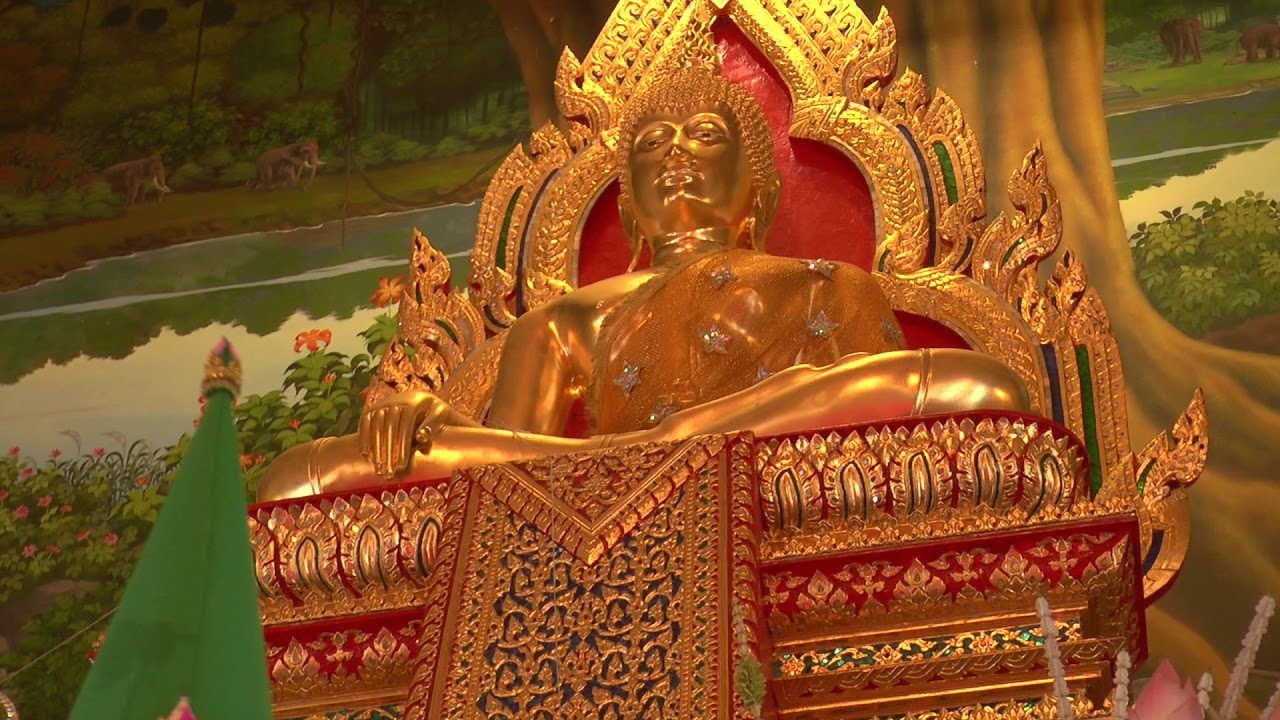
Inside the ubosot is an old principal Buddha image of beautiful form. The Buddha image remains the spiritual center of the temple and the main point where visitors come to pay respect. Its graceful appearance reflects both artistic skill and Buddhist values such as serenity, compassion, and auspiciousness. The atmosphere inside the ubosot encourages quiet reflection and respect, making it a meaningful space for worshippers and cultural travelers alike.
The principal Buddha image also shows the role of Buddha images in Thai temple life. They are not only works of art; they are spiritual centers for the community. Local people and visitors come to make merit, pray, listen to sermons, and participate in Buddhist ceremonies. The continued importance of the Buddha image at Wat Bot reflects the long continuity of faith that connects the temple’s past with the present day.
The ubosot has been restored, allowing the temple to continue functioning as a living religious site while also welcoming visitors interested in architecture and culture. Restoration of old temple buildings requires care because the original value must be preserved while the building is kept stable and usable. Wat Bot is therefore not a frozen historical ruin, but a living monastery where Buddhist practice continues alongside cultural preservation.
The riverside location adds another important dimension to the temple. In Central Thailand, river temples often reflect the old way of life in which waterways were the main routes for travel, trade, and communication. The Chao Phraya River connected communities, markets, temples, and agricultural areas. Because Wat Bot stands beside the river, visitors can still sense the older relationship between religious life and the water-based landscape of In Buri.
Visitors should allow at least 1 hour for Wat Bot. Begin by paying respect to the principal Buddha image, then spend time observing the ubosot, the carved doors and windows, and the peaceful riverside surroundings. Those interested in architecture or woodcarving may want to spend longer, because the most meaningful features of the temple are found in the details rather than in a quick general view.
Culturally, Wat Bot helps visitors understand the relationship between a temple, artisans, and the local community. The temple gathered faith, the artisan transformed devotion into carved wood and architectural beauty, and the community continued to preserve and use the temple. A visit here is therefore like reading a chapter of local history that is still alive, rather than simply looking at an old building.
Wat Bot can be included in a cultural itinerary around In Buri and Sing Buri Province. Nearby places that fit well with the temple include In Buri National Museum, Wat Muang, Wat Sutthawat, Wat Kradangnga Buppharam, Mae Nam Noi Kiln Site, and Wat Phra Prang Muni. This route is suitable for travelers interested in old temples, mural paintings, folk craftsmanship, Chao Phraya riverside history, and quiet cultural attractions away from crowded routes.
Getting There is easiest by private car. From Sing Buri town, follow Highway 311 on the old Sing Buri–In Buri or Sing Buri–Chai Nat route toward In Buri District for about 16 km. The temple is around kilometer markers 14–15 in In Buri Subdistrict. Travelers coming from In Buri can use local roads connected with the Chao Phraya riverside area. Public transport travelers can reach Sing Buri town or In Buri Market first, then continue by local transport or hired vehicle.
The best time to visit is in the morning or late afternoon, when the sun is not too strong and walking around the temple is more comfortable. Visitors should dress respectfully because Wat Bot is a royal monastery and an active religious site. Shoes should be removed before entering designated sacred areas, voices should be kept low inside the ubosot, and old wooden carvings or architectural details should not be touched unnecessarily.
For photography, Wat Bot offers several meaningful angles: the ubosot, the carved doors and windows, the riverside atmosphere, and the temple grounds. Photographs should be taken respectfully without disturbing monks or worshippers. The temple is suitable for documentary, cultural, and architectural photography rather than casual poses that may not fit the sacred atmosphere.
Overall, Wat Bot in In Buri is one of Sing Buri’s important cultural temples. It brings together an abandoned Ayutthaya-period origin, royal monastery status, a unique ubosot using railway rails as a central support, carved wooden doors and windows by Chuen Hatthakoson, an old principal Buddha image, and a peaceful setting on the Chao Phraya River. For travelers who want to pay respect, study Thai craftsmanship, and discover the quieter cultural side of In Buri, Wat Bot is a highly worthwhile destination.
| Name | Wat Bot Royal Monastery |
| Location | In Buri Subdistrict, In Buri District, Sing Buri Province |
| Address | In Buri Subdistrict, In Buri District, Sing Buri 16110, Thailand |
| Highlights | Unique ubosot using railway rails as a central support underneath, carved wooden doors and windows by Chuen Hatthakoson, an old principal Buddha image, and a Chao Phraya riverside setting |
| History | Originally an abandoned temple from the Ayutthaya period, later revived and recognized as a royal monastery of the Dhammayut tradition |
| Distinctive Features | The ubosot has a special structural feature using railway rails underneath and is decorated with carved wooden doors and windows throughout the building |
| Important Objects | Ubosot, old principal Buddha image, carved wooden doors and windows, and riverside religious grounds |
| Related Person | Chuen Hatthakoson, a skilled Sing Buri woodcarver who carved the doors and windows of the ubosot |
| Travel Information | From Sing Buri town, use Highway 311 on the old Sing Buri–In Buri or Sing Buri–Chai Nat route for about 16 km. The temple is around kilometer markers 14–15. |
| Current Status | Open as a royal monastery of the Dhammayut tradition and a cultural attraction in In Buri District |
| Open Days | Daily |
| Opening Hours | 08.00 – 16.30 |
| Main Areas / Zones | Ubosot Main Buddha worship area Carved doors and windows viewing area Chao Phraya riverside temple grounds Temple and community activity areas |
| Abbot / Caretaker | Phra Khru Phisan Thammasiri, Chantarangsi |
| Official Website / Official Page | Facebook: Wat Bot Royal Monastery, Sing Buri |
| Nearby Tourist Attractions | 1. In Buri National Museum, about 3 km 2. Wat Muang In Buri, about 4 km 3. Wat Sutthawat (Wat Mai), about 12 km 4. Wat Phra Prang Muni, about 13 km 5. Mae Nam Noi Kiln Site, about 14 km |
| Nearby Restaurants | 1. Rim Nam In Buri Restaurant, about 3 km, Tel. 098-923-7823, 036-581390 2. Chai Nam In Buri Restaurant, about 3 km 3. Krua In Buri Restaurant, about 4 km 4. De'champ Cafe, about 11 km 5. Ta Chin Garden & Cafe, about 14 km, Tel. 084-264-6391 |
| Nearby Accommodations | 1. Ing Mae La Resort, about 13 km 2. Route652 Resort Singburi, about 18 km, Tel. 096-0474652 3. Sumali Villa, about 20 km 4. Golden Dragon Resort, about 21 km 5. Chaisaeng Villa Hotel, about 22 km |
Frequently Asked Questions (FAQ)
Q: Where is Wat Bot in Sing Buri located?
A: Wat Bot is located in In Buri Subdistrict, In Buri District, Sing Buri Province, beside the Chao Phraya River.
Q: Why is Wat Bot important?
A: Wat Bot is a royal monastery of the Dhammayut tradition. It was originally an abandoned temple from the Ayutthaya period and is known for its unique ubosot built with railway rails as a central support underneath.
Q: What is special about the ubosot at Wat Bot?
A: The ubosot is special because railway rails were used as a central support beneath the structure, and its doors and windows were carved throughout by Chuen Hatthakoson.
Q: Who was Chuen Hatthakoson?
A: Chuen Hatthakoson was a skilled woodcarver from Sing Buri who carved the doors and windows of the ubosot at Wat Bot.
Q: What are the opening hours of Wat Bot?
A: Wat Bot is open daily from 08.00 to 16.30.
Q: How can travelers get to Wat Bot?
A: From Sing Buri town, follow Highway 311 on the old Sing Buri–In Buri or Sing Buri–Chai Nat route for about 16 km. The temple is around kilometer markers 14–15.
Q: What attractions can be visited together with Wat Bot?
A: Nearby attractions include In Buri National Museum, Wat Muang, Wat Sutthawat, Wat Phra Prang Muni, and Mae Nam Noi Kiln Site.
 Category: ●Places of Worship
 Group: ●Temple
Last Update : 5 MonthAgo
 Last Update : 5 MonthAgo
 Click to Access the Navigation Map GPS

 Art, Culture and Heritage
 Historical Sites and Monuments(4)
 Landmarks and Memorials(3)
 Art, Craft Centres, Tradition(3)
 Museums(1)
 Educational Places
 Library(1)
Temple(42)
 Church(1)
 Other Sacred Sites(2)
 Research and Development
 Royal Project(3)
 Suburban Living
 Village, Community(1)
 Local Market(1)
 Nature and Wildlife
 National Parks and Marine Reserves(1)
 River, Canal(7)
 Bays and Beaches(1)
 Other natural attractions(2)
 Entertainment and Agricultural
 Animal camps and shows(1)
 Farms, Parks and Ecotourism(1)
 Travel Articles, Recipes
 Travel Review, Food Review(1)


