
lovethailand home >Central Travel Attractions >Sing Buri Travel Attractions >Muang Sing Buri >Chakkrasi > Wat Na Phra That
TL;DR: Wat Na Phra That is located at Ban Phra Non Chakkrasi, Moo 1, Chaksi Subdistrict, Mueang Sing Buri District, Sing Buri Province, open Daily, hours 08.00 – 16.30.
Wat Na Phra That
Open Days: Daily
Opening Hours: 08.00 – 16.30
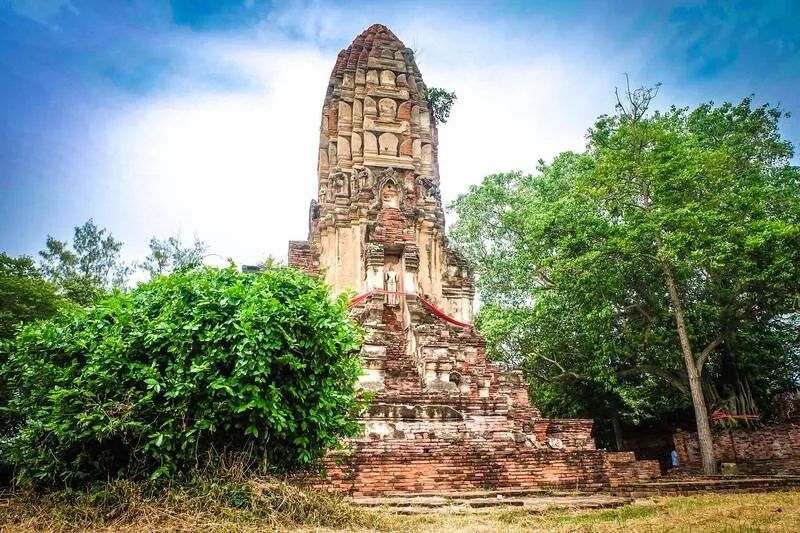
Wat Na Phra That in Sing Buri Province is an important ancient site located in Ban Phra Non Chakkrasi, Chaksi Subdistrict, Mueang Sing Buri District. It lies about 1.5 km from Wat Phra Non Chakkrasi Worawihan, one of the province’s most famous royal temples. Local people formerly called this site Wat Hua Mueang, and during the reign of King Rama IV its name was changed to Wat Na Phra That. The area is believed to be connected with the old city of Sing Buri, making the temple highly significant for travelers interested in ancient towns, Ayutthaya-period architecture, and the historical geography of central Thailand.
The most important feature of Wat Na Phra That is its ancient prang, standing about 8 wa high. The prang is the central structure of the site and clearly reveals several layers of construction and restoration. The lower part includes a laterite base, while the upper structure was built with brick in a recessed prang form. The monument was later enhanced in an early Ayutthaya architectural style, with brick additions forming niches on all 4 sides. Its remaining form allows visitors to study how sacred architecture in central Thailand developed through time and how older structures were modified within later artistic traditions.
Unlike a modern active temple with bright new buildings, Wat Na Phra That offers the quiet atmosphere of an archaeological site. The beauty here lies in traces, textures, foundations, and surviving architectural elements. The ancient brickwork, laterite base, niches, and surrounding stupas require slow observation. Visitors who take time to walk carefully around the prang will understand that this is not only a temple ruin, but a historical document made of brick, stone, and sacred space. It preserves the memory of an older Sing Buri landscape.
The temple’s location near Wat Phra Non Chakkrasi Worawihan adds to its historical importance. Travelers who visit the famous reclining Buddha can easily continue to Wat Na Phra That in the same trip. Together, these two sites help explain the religious and historical significance of Chaksi Subdistrict. Wat Phra Non Chakkrasi Worawihan represents a living royal temple centered on a monumental reclining Buddha, while Wat Na Phra That represents the archaeological memory of an older settlement and sacred architecture. Visiting both places gives a much fuller understanding of Sing Buri.
The prang itself deserves close attention. Its recessed brick form shows the technical skill required to build tall religious structures in the Ayutthaya period. The laterite base provided strength and stability, while the brick superstructure created the vertical sacred form. The 4 directional niches added depth and symbolic meaning. In Thai religious architecture, such niches often marked sacred directions and gave the monument a more complete ritual presence. Walking around the prang allows visitors to see how the structure was designed to be viewed from multiple sides.
One of the notable decorative elements mentioned in local descriptions is the presence of Garuda and club-bearing asura figures above the supporting tiers. Garuda is associated with power, protection, and sacred authority, while asura or guardian figures often mark the boundary of a holy place. These decorative elements are not merely ornamental. They express the idea that the sacred center is protected and separated from ordinary space. Even though the monument has weathered over time, such details help reveal the symbolic imagination behind the architecture.
To the east of the prang is the former main viharn, while to the west is the ubosot. Several round stupas are also arranged within the temple compound, showing characteristics associated with late Ayutthaya architecture. This spatial arrangement is important because it shows that the prang was part of a larger sacred plan. It was not an isolated monument. It stood in relation to the viharn, ubosot, stupas, and the wider temple grounds. This helps visitors understand how Buddhist sacred space was organized in the past.
The Fine Arts Department registered Wat Na Phra That as a national ancient monument on 8 March 1935. This official recognition confirms the site’s historical, artistic, and archaeological value. Registration as an ancient monument means that the site is not only locally important but also part of Thailand’s national heritage. Visitors should therefore treat the place with care and respect. The remaining structures are fragile and should not be climbed on, touched unnecessarily, or damaged in any way.
Historically, Wat Na Phra That is especially interesting because the surrounding area is believed to have been part of the old city of Sing Buri. Ancient towns in the central plains were often connected with waterways, religious centers, trade routes, and agricultural settlements. Chaksi Subdistrict and the area around Ban Phra Non Chakkrasi preserve several clues to this older landscape. By visiting Wat Na Phra That, travelers can begin to imagine how religion, settlement, and geography were connected in the formation of Sing Buri.
The former name Wat Hua Mueang is also meaningful. The phrase suggests a connection with a head or beginning of a town, or a place remembered by local people as important to the old settlement. When the name was later changed to Wat Na Phra That during the reign of King Rama IV, the temple gained another layer of meaning connected with sacred relics and formal recognition. The two names together preserve both local memory and historical identity.
A meaningful visit should begin at the ancient prang, the heart of the site. From there, visitors can walk to the eastern side to see the area of the former main viharn, then move to the western side to observe the ubosot area, and finally walk around the round stupas. This sequence helps visitors read the ancient temple plan clearly. Instead of viewing the ruins as disconnected remains, the site becomes understandable as a complete sacred landscape.
For travelers interested in Ayutthaya architecture, Wat Na Phra That is a valuable open-air classroom. The prang and its niches show features associated with early Ayutthaya-style architecture, while the round stupas reflect later Ayutthaya characteristics. The presence of different architectural layers within the same site shows that the temple was used, modified, and remembered over a long period. This makes the site especially useful for understanding how Thai temples evolved across generations.
The atmosphere of Wat Na Phra That is quiet and contemplative. It is not a place of spectacle, but a place where careful observation is rewarded. The weathered bricks, laterite foundations, and ancient forms create a sense of time that cannot be produced by modern construction. Visitors who enjoy archaeology, temple architecture, or historical photography will find the site particularly meaningful. It is a temple that asks visitors to slow down and look carefully.
Today, Wat Na Phra That remains connected with local religious life and community memory. Recent public information names Phra Maha Charan Brahmacharo as acting abbot of Wat Na Phra That. The site is also connected with merit-making activities and local ceremonies related to the old city of Sing Buri. This means the temple is not merely an abandoned monument. It remains a place of devotion, identity, and community meaning.
Local merit-making ceremonies are important because they reconnect people with the old city landscape. When ceremonies take place at Wat Na Phra That, the ancient site becomes a living cultural space again. Visitors who come during such events may see the community dimension of the temple more clearly. On ordinary days, the site is calmer and better suited for architectural study, photography, and quiet reflection.
Visitors should be careful when walking around the site. Do not climb onto the prang, stupa bases, brick walls, or remains of old buildings. Do not remove loose bricks or fragments. Do not write on any surface, and do not leave litter. Ancient monuments are irreplaceable. Their preservation depends not only on official conservation but also on the behavior of every visitor.
For photography, the best time to visit is in the morning or late afternoon, when the light is softer and the brick surfaces show more texture. Good photo angles include the prang against the sky, the side niches, the laterite base, the round stupas, and the view of the prang through nearby trees. Photography should be respectful and should not involve climbing on ancient structures or using the ruins as casual props.
Wat Na Phra That is suitable for several types of travelers. History enthusiasts can study the old city of Sing Buri. Architecture lovers can observe Ayutthaya-period prang and stupa forms. Cultural travelers can combine the site with nearby temples. Families and students can use the site as an outdoor classroom on archaeology, conservation, and temple etiquette. The temple is especially valuable for travelers who want a deeper understanding of Sing Buri beyond the most familiar attractions.
A recommended route is to visit Wat Phra Non Chakkrasi Worawihan first, then continue to Wat Na Phra That, which is only about 1.5 km away. After that, travelers can continue to Sing Buri City Pillar Shrine, Wat Sawang Arom, Wat Prachotikaram, or Wat Kradangnga Buppharam. This route combines a royal temple, a monumental reclining Buddha, an ancient city site, shadow-puppet heritage, and old community temples, giving a broad view of Sing Buri’s cultural landscape.
Getting There by private car is straightforward. From Mueang Sing Buri, take Highway 3032, the Sing Buri – Suphan Buri route, to around kilometer marker 4, then enter the road near Sing Buri Provincial Prison. Continue for about 1 km from the entrance to reach Wat Na Phra That. Another practical way is to travel first to Wat Phra Non Chakkrasi Worawihan, then continue to Wat Na Phra That nearby. Public buses use the same general route as Wat Phra Non Chakkrasi, followed by local transport to the site.
The best time to visit is in the morning or late afternoon because much of the site is outdoors. Travelers who want to study the architecture should allow at least 45 minutes to 1 hour. Visiting the site together with Wat Phra Non Chakkrasi Worawihan helps place the ancient monument within the broader religious and historical landscape of Chaksi Subdistrict.
Overall, Wat Na Phra That is one of Sing Buri’s most important ancient sites. It preserves an 8-wa-high prang, early and late Ayutthaya architectural traces, the memory of the old city of Sing Buri, and a sacred landscape that remains meaningful to the local community. A visit here is not only about seeing ancient bricks. It is a way to read the older layers of Sing Buri through architecture, religion, geography, and community memory.
| Name | Wat Na Phra That |
| Location | Ban Phra Non Chakkrasi, Moo 1, Chaksi Subdistrict, Mueang Sing Buri District, Sing Buri Province |
| Address | Moo 1, Chaksi Subdistrict, Mueang Sing Buri District, Sing Buri 16000, Thailand |
| Highlights | Ancient prang about 8 wa high, 4 directional niches, laterite base, recessed brick prang form, former main viharn, ubosot, and several round stupas |
| History | Formerly called Wat Hua Mueang, renamed Wat Na Phra That during the reign of King Rama IV. The area is believed to be associated with the old city of Sing Buri and includes early and late Ayutthaya architectural remains |
| Distinctive Features | A nationally registered ancient monument showing an old temple plan and Ayutthaya-period architecture, suitable for studying the historical roots of Sing Buri |
| Main Areas / Zones | 1. Ancient Prang 2. Four Directional Niches 3. Laterite Base and Recessed Brick Prang Structure 4. Former Main Viharn on the Eastern Side 5. Ubosot on the Western Side 6. Round Late-Ayutthaya-Style Stupas 7. Merit-Making and Community Sacred Area |
| Travel Information | By car, take Highway 3032, the Sing Buri – Suphan Buri route, around kilometer marker 4, then enter the road near Sing Buri Provincial Prison and continue about 1 km. Public transport follows the same general route as Wat Phra Non Chakkrasi, followed by local transport |
| Current Status | Open to visitors and registered as a national ancient monument |
| Open Days | Daily |
| Opening Hours | 08.00 – 16.30 |
| Fees | No admission fee |
| Abbot / Caretaker | Phra Maha Charan Brahmacharo, Acting Abbot of Wat Na Phra That The ancient site is also associated with local and heritage authorities |
| Main Contact Number | Chaksi Subdistrict Administrative Organization: 036-510927 |
| Official Website / Official Page | Facebook: Wat Na Phra That Sing Buri Local Website: Chaksi Subdistrict Administrative Organization |
| Nearby Tourist Attractions | 1. Wat Phra Non Chakkrasi Worawihan, about 1.5 km 2. Sing Buri City Pillar Shrine, about 5 km 3. Wat Sawang Arom, about 6 km 4. Wat Prachotikaram, about 7 km 5. Wat Kradangnga Buppharam, about 8 km |
| Nearby Restaurants | 1. Kuai Tiao Ruea Soda (Chama Kala), about 2 km 2. Khwai Art Sing Buri, about 2 km 3. Kanlaya Pla Chon Nam Tok, about 2 km 4. Sweet Tea House, about 2 km 5. Pad Thai Bang Mon, about 6 km, Tel. 062-329-3531 |
| Nearby Accommodations | 1. Sumali Villa, about 2 km 2. Golden Dragon Resort, about 5 km 3. Chaisaeng Villa Hotel, about 5 km 4. Pa Pun Resort, about 5 km 5. Baanbudsarin Apartment, about 6 km |
Frequently Asked Questions (FAQ)
Q: Where is Wat Na Phra That located?
A: Wat Na Phra That is located in Ban Phra Non Chakkrasi, Moo 1, Chaksi Subdistrict, Mueang Sing Buri District, Sing Buri Province, about 1.5 km from Wat Phra Non Chakkrasi Worawihan.
Q: What was the former name of Wat Na Phra That?
A: Local people formerly called it Wat Hua Mueang. During the reign of King Rama IV, the name was changed to Wat Na Phra That.
Q: Why is Wat Na Phra That important?
A: It is an important ancient site believed to be connected with the old city of Sing Buri. It contains an ancient prang, a former main viharn, an ubosot, and several round stupas.
Q: What is distinctive about the ancient prang?
A: The prang is about 8 wa high, with a laterite base, recessed brick structure, 4 directional niches, brick prang petals, and decorative elements such as Garuda and club-bearing guardian figures.
Q: When was Wat Na Phra That registered as an ancient monument?
A: The Fine Arts Department registered Wat Na Phra That as an ancient monument on 8 March 1935.
Q: What are the opening hours of Wat Na Phra That?
A: The site is open daily from 08.00 to 16.30.
Q: How can travelers get to Wat Na Phra That?
A: By car, take Highway 3032, the Sing Buri – Suphan Buri route, around kilometer marker 4, then enter the road near Sing Buri Provincial Prison and continue about 1 km. It can also be reached from Wat Phra Non Chakkrasi Worawihan nearby.
Q: What nearby attractions can be visited with Wat Na Phra That?
A: Nearby attractions include Wat Phra Non Chakkrasi Worawihan, Sing Buri City Pillar Shrine, Wat Sawang Arom, Wat Prachotikaram, and Wat Kradangnga Buppharam.
 Category: ●Places of Worship
 Group: ●Temple
Last Update : 4 MonthAgo
 Last Update : 4 MonthAgo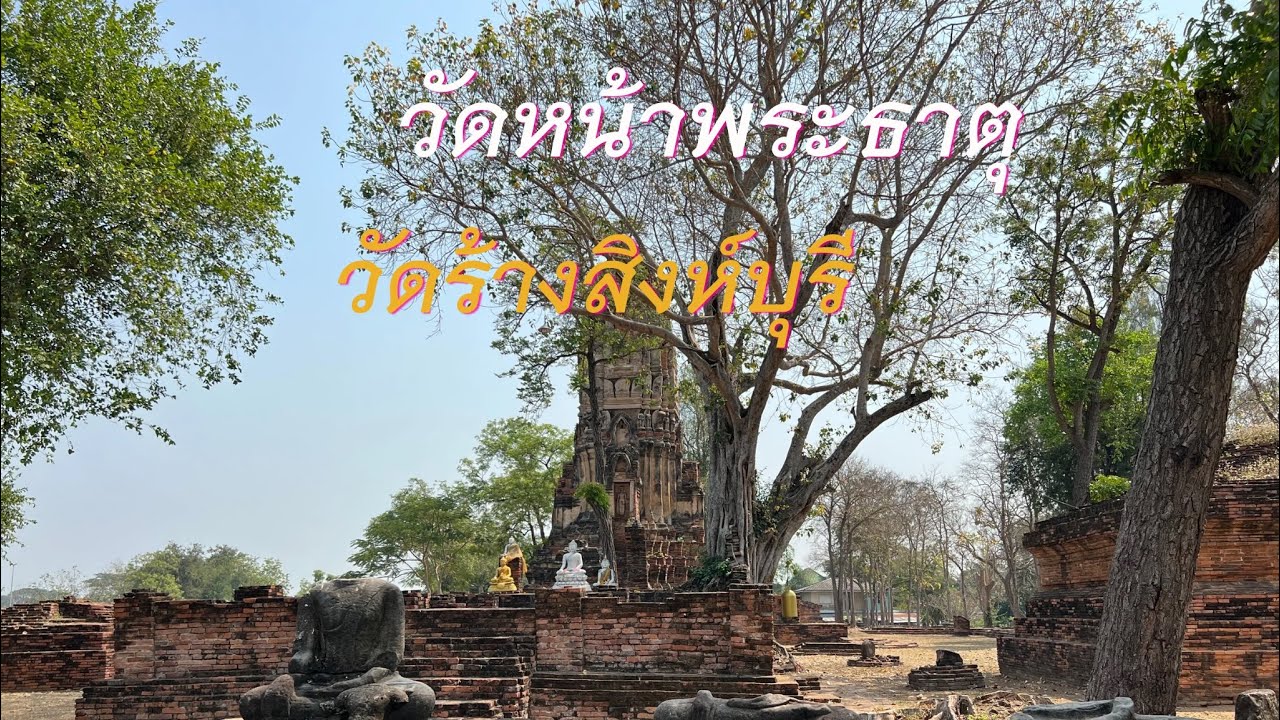
 Click to Access the Navigation Map GPS
 Art, Culture and Heritage
 Historical Sites and Monuments(4)
 Landmarks and Memorials(3)
 Art, Craft Centres, Tradition(3)
 Museums(1)
 Educational Places
 Library(1)
Temple(42)
Library(1)
Temple(42)
 Church(1)
 Other Sacred Sites(2)
 Research and Development
 Royal Project(3)
 Suburban Living
 Village, Community(1)
 Local Market(1)
 Nature and Wildlife
 National Parks and Marine Reserves(1)
 River, Canal(7)
 Bays and Beaches(1)
 Other natural attractions(2)
 Entertainment and Agricultural
 Animal camps and shows(1)
 Farms, Parks and Ecotourism(1)


