
lovethailand home >Central Travel Attractions >Sing Buri Travel Attractions >Muang Sing Buri >Bang Krabue > Wat Sathit Watthanaram
TL;DR: Wat Sathit Watthanaram is located at Moo 2, Ban Bang Krabue Nuea, Bang Krabue Subdistrict, Mueang Sing Buri District, Sing Buri Province, open Daily, hours Daytime Visits Are Recommended.
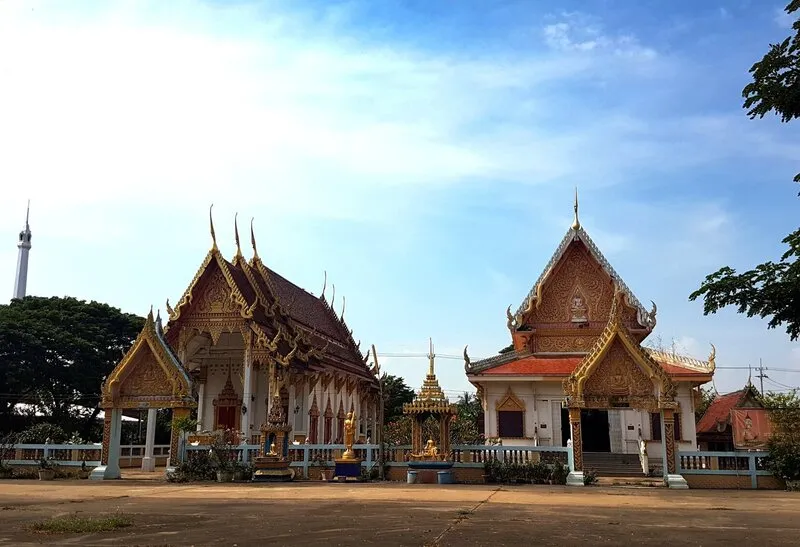
Wat Sathit Watthanaram
Open Days: Daily
Opening Hours: Daytime Visits Are Recommended
Wat Sathit Watthanaram in Sing Buri Province is an old local Buddhist temple in Ban Bang Krabue Nuea, Moo 2, Bang Krabue Subdistrict, Mueang Sing Buri District. The temple stands on the western side of the Chao Phraya River and was formerly known by local people as Wat Bang Krabue Nuea. This former name reflects its close relationship with the riverside community of Bang Krabue, an area known for several local temples and cultural sites. Wat Sathit Watthanaram is not a large tourist temple, but it is a meaningful community temple where local faith, river life, and Buddhist devotion remain closely connected.
The main highlight of the temple is Luang Pho Rueang, also referred to by some local sources as Luang Pho Rueang or Luang Pho Rueang according to Thai pronunciation variations. This sacred Buddha image is enshrined in a small viharn known locally as the Viharn of Luang Pho Rueang. Inside the viharn is a Buddha image in the posture of subduing Mara, with a lap width of 35 inches. The image has long been respected by local people. The Bang Krabue Subdistrict Administrative Organization describes Luang Pho Rueang as a sacred Buddha image about 100 years old, making it the spiritual heart of Wat Sathit Watthanaram.
The exact founding date of Wat Sathit Watthanaram is not clearly documented. Local memory records that a wandering monk once came to stay in the temple area, and the story became associated with Luang Pho Rueang. This kind of history is common among local Thai temples. Unlike royal temples or major historical monuments, many community temples preserve their past through oral tradition, annual merit-making, sacred images, and the memories of villagers. Wat Sathit Watthanaram is valuable precisely because it represents this living form of local Buddhist history.
The former name Wat Bang Krabue Nuea helps visitors understand the cultural geography of the area. Bang Krabue includes several communities and temples along the Chao Phraya River. Names such as Bang Krabue Nuea and Bang Krabue Tai preserve the way local people organized their riverside settlements. Temples in these communities served as centers for merit-making, ceremonies, education, community meetings, and spiritual support. Wat Sathit Watthanaram should therefore be understood as part of a wider network of Bang Krabue temples rather than as an isolated religious site.
Luang Pho Rueang is significant because the Buddha image is in the posture of subduing Mara. In Buddhist meaning, this posture represents the Buddha’s victory over temptation, fear, and inner disturbance before enlightenment. For worshippers, it symbolizes strength, determination, mindfulness, and the overcoming of obstacles. Visitors who come to pay respect often pray for stability, courage, success, and peace of mind. Although the image is not enormous, it carries deep devotional value for the local community.
A visit to the viharn of Luang Pho Rueang should be quiet and respectful. Visitors should remove shoes where required, dress modestly, and keep their voices low. The viharn is a sacred space used by local worshippers, not merely a photo spot. Foreign travelers should remember that small community temples often function as active religious spaces. A respectful attitude allows visitors to experience the temple in the way local people understand it: as a place of faith, peace, and continuity.
Another memorable feature mentioned by local visitors is the natural atmosphere around the viharn, including parrots that live in the temple area. This gives the temple a gentle and lively character. However, visitors should observe wildlife without disturbing it. Do not chase birds, make loud noises, or feed animals without permission. The charm of the temple comes from a balanced coexistence between people, Buddhist space, trees, animals, and the riverside environment.
The location of Wat Sathit Watthanaram beside the Chao Phraya River gives the temple additional cultural meaning. The river has shaped settlement, agriculture, transport, trade, and religious life throughout the central plains of Thailand. Temples along the river often became important community landmarks. Wat Sathit Watthanaram preserves this relationship between Buddhism and the river landscape of Sing Buri. A visit here helps travelers understand how temples and rivers have long supported community life in central Thailand.
Getting to the temple is convenient from Sing Buri town. From the City Pillar Shrine intersection, travel along the Sing Buri – Chai Nat road for about 2.5 km. The temple is located in Ban Bang Krabue Nuea, Bang Krabue Subdistrict, on the western side of the Chao Phraya River. A private car is the most convenient option, especially for travelers who want to combine the visit with other temples in Bang Krabue and Mueang Sing Buri.
Getting There from downtown Sing Buri is straightforward. Start from the Sing Buri City Pillar Shrine intersection and follow the Sing Buri – Chai Nat road for about 2.5 km. The temple is in Moo 2, Ban Bang Krabue Nuea, Bang Krabue Subdistrict, Mueang Sing Buri District. Visitors using public transport can arrive in Sing Buri town or at the bus station, then continue by local hired transport to the temple. It is useful to mention both names, Wat Sathit Watthanaram and Wat Bang Krabue Nuea, when asking local drivers for directions.
Recent public Kathin information lists Wat Sathit Watthanaram as a local temple with Phra Athikan Suphot Issaro as the abbot. This confirms that the temple remains active and continues to serve the community. It is used for merit-making, Buddhist ceremonies, Kathin, Pha Pa, annual events, and the worship of Luang Pho Rueang. The annual gilding ceremony for Luang Pho Rueang is an important local event that keeps the temple’s devotional identity alive.
The annual gilding ceremony is meaningful because it brings local people and devotees together to make merit and renew their relationship with the sacred Buddha image. Applying gold leaf to a Buddha image is a traditional act of devotion in Thai Buddhism. At Wat Sathit Watthanaram, this act is especially important because Luang Pho Rueang is the temple’s central sacred image. The ceremony helps transmit the temple’s story to younger generations and keeps the memory of the Buddha image alive within the community.
Travelers should allow enough time to pay respect to Luang Pho Rueang, walk through the temple grounds, observe the riverside atmosphere, and appreciate the quiet community setting. The temple does not have a large formal museum or modern tourist zones. Its value comes from being a real local temple. Visitors who slow down and look carefully will notice the relationship between the viharn, the river, the village, and the daily life of the temple.
Wat Sathit Watthanaram is suitable for many kinds of visitors. Buddhist devotees can come to make merit and ask for blessings. Cultural travelers can learn about community temples along the Chao Phraya River. Families can teach children about temple manners, Buddha postures, and respect for sacred spaces. Travelers exploring Sing Buri temple routes can include this temple with Wat Pho Langka, Wat Prachotikaram, Wat Kradangnga Buppharam, Wat Sawang Arom, and Wat Phra Non Chakkrasi Worawihan.
In a wider cultural context, Wat Sathit Watthanaram shows that the importance of Thai temples is not limited to royal status or grand architecture. Local temples can be equally meaningful because they preserve living faith. They are where villagers make merit, hold ceremonies, remember sacred images, and maintain community bonds. Wat Sathit Watthanaram is a good example of this quieter but essential form of Thai Buddhist heritage.
A recommended route from Sing Buri town can begin at Sing Buri City Pillar Shrine, continue to Wat Sathit Watthanaram, then visit Wat Pho Langka, Wat Prachotikaram, and Wat Kradangnga Buppharam. Travelers with more time can also visit Wat Sawang Arom and the Nang Yai Museum, or Wat Phra Non Chakkrasi Worawihan. This route offers a broad view of Sing Buri through riverside temples, sacred Buddha images, traditional performing arts, old community temples, and local Buddhist faith.
Photography should be done respectfully. Suitable subjects include the viharn of Luang Pho Rueang, the temple grounds, trees, the riverside atmosphere, and general scenes of the community temple. Visitors should avoid photographing monks or local worshippers without permission, should not use flash in sacred spaces where people are praying, and should not pose inappropriately in front of Buddha images. Public captions should emphasize the temple’s cultural and religious value.
Proper temple etiquette is important. Visitors should dress modestly, covering shoulders and knees. Shoes should be removed before entering the viharn or other sacred buildings. Voices should be kept low. Do not touch Buddha images or sacred objects unnecessarily. Do not enter monks’ private areas without permission. Donations should be made through official temple channels or by asking temple caretakers politely.
The best time to visit is during daylight hours, especially in the morning or afternoon. Since the temple is close to the Chao Phraya River, visitors should check local conditions during the flood season if planning a riverside visit. Those who wish to attend the annual gilding ceremony or other temple events should check current announcements from the temple or local community before traveling.
Overall, Wat Sathit Watthanaram is a meaningful local temple in Sing Buri. Its significance lies in its former identity as Wat Bang Krabue Nuea, its riverside location on the western bank of the Chao Phraya River, and its sacred Luang Pho Rueang Buddha image in the posture of subduing Mara. For foreign travelers seeking a quieter and more authentic understanding of community Buddhism in central Thailand, this temple offers a sincere view of faith, river culture, and local continuity.
| Name | Wat Sathit Watthanaram |
| Former Name / Local Name | Wat Bang Krabue Nuea |
| Location | Moo 2, Ban Bang Krabue Nuea, Bang Krabue Subdistrict, Mueang Sing Buri District, Sing Buri Province |
| Address | Moo 2, Bang Krabue Subdistrict, Mueang Sing Buri District, Sing Buri 16000, Thailand |
| Highlights | The viharn of Luang Pho Rueang, a sacred Buddha image in the posture of subduing Mara with a lap width of 35 inches, revered by local people |
| History | Formerly known as Wat Bang Krabue Nuea. The exact founding date is not clearly documented. Local tradition says a wandering monk once stayed in the area, and the temple became associated with Luang Pho Rueang, the sacred Buddha image in a small viharn |
| Distinctive Features | A quiet riverside community temple on the western bank of the Chao Phraya River, centered on local faith in Luang Pho Rueang and the daily religious life of Ban Bang Krabue Nuea |
| Main Areas / Zones | 1. Viharn of Luang Pho Rueang 2. Buddha Image in the Posture of Subduing Mara, 35-Inch Lap Width 3. Worship and Merit-Making Area 4. Sermon Hall and Temple Activity Area 5. Chao Phraya Riverside Temple Grounds 6. Annual Gilding Ceremony Area for Luang Pho Rueang 7. Ban Bang Krabue Nuea Community Area |
| Travel Information | From Sing Buri City Pillar Shrine intersection, follow the Sing Buri – Chai Nat road for about 2.5 km. The temple is in Ban Bang Krabue Nuea, Bang Krabue Subdistrict, on the western side of the Chao Phraya River |
| Current Status | Open as an active local Buddhist temple serving the Ban Bang Krabue Nuea community |
| Open Days | Daily |
| Recommended Visiting Time | Daytime, especially morning to afternoon |
| Fees | No admission fee; visitors may make merit according to personal faith |
| Abbot / Caretaker | Phra Athikan Suphot Issaro, Abbot of Wat Sathit Watthanaram |
| Main Contact Number | Bang Krabue Subdistrict Administrative Organization: 036-699-257 |
| Official Website / Official Page | Local Website: Bang Krabue Subdistrict Administrative Organization |
| Nearby Tourist Attractions | 1. Sing Buri City Pillar Shrine, about 2.5 km 2. Wat Pho Langka, about 1 km 3. Wat Sawang Arom and Nang Yai Museum, about 3 km 4. Wat Prachotikaram, about 4 km 5. Wat Kradangnga Buppharam, about 5 km 6. Wat Phra Non Chakkrasi Worawihan, about 6 km |
| Nearby Restaurants | 1. Pad Thai Bang Mon, about 3 km, Tel. 062-329-3531 2. Lueat Mu Hia Lek, about 3 km, Tel. 083-963-6577, 081-293-5861 3. Kuai Tiao Ruea Soda (Chama Kala), about 6 km, Tel. 097-951-9326 4. Khwai Art Sing Buri, about 6 km 5. Kanlaya Pla Chon Nam Tok, about 6 km |
| Nearby Accommodations | 1. Chaisaeng Villa Hotel, about 3 km 2. Baanbudsarin Apartment, about 3 km 3. Golden Dragon Resort, about 4 km 4. Heyday Singburi Hotel, about 5 km 5. Sumali Villa, about 6 km |
Frequently Asked Questions (FAQ)
Q: Where is Wat Sathit Watthanaram located?
A: Wat Sathit Watthanaram is located in Moo 2, Ban Bang Krabue Nuea, Bang Krabue Subdistrict, Mueang Sing Buri District, Sing Buri Province, on the western side of the Chao Phraya River.
Q: What was the former name of Wat Sathit Watthanaram?
A: Local people formerly called the temple Wat Bang Krabue Nuea because it is located in Ban Bang Krabue Nuea.
Q: What is Wat Sathit Watthanaram known for?
A: The temple is known for the viharn of Luang Pho Rueang, which enshrines a sacred Buddha image in the posture of subduing Mara with a lap width of 35 inches.
Q: Who is Luang Pho Rueang?
A: Luang Pho Rueang is the sacred Buddha image of Wat Sathit Watthanaram, about 100 years old, enshrined in a small viharn locally known as the Viharn of Luang Pho Rueang.
Q: Who is the abbot of Wat Sathit Watthanaram?
A: The abbot of Wat Sathit Watthanaram is Phra Athikan Suphot Issaro.
Q: Is there an admission fee for Wat Sathit Watthanaram?
A: No. There is no admission fee. Visitors may make merit according to personal faith.
Q: How can travelers get to Wat Sathit Watthanaram?
A: From Sing Buri City Pillar Shrine intersection, follow the Sing Buri – Chai Nat road for about 2.5 km. The temple is in Ban Bang Krabue Nuea, Bang Krabue Subdistrict, beside the Chao Phraya River.
Q: What nearby attractions can be visited with Wat Sathit Watthanaram?
A: Nearby attractions include Wat Pho Langka, Sing Buri City Pillar Shrine, Wat Sawang Arom, Wat Prachotikaram, Wat Kradangnga Buppharam, and Wat Phra Non Chakkrasi Worawihan.
 Category: ●Places of Worship
 Group: ●Temple
Last Update : 5 MonthAgo
 Last Update : 5 MonthAgo
 Click to Access the Navigation Map GPS
Wat Sathit Watthanaram Map

 Art, Culture and Heritage
 Historical Sites and Monuments(4)
 Landmarks and Memorials(3)
 Art, Craft Centres, Tradition(3)
 Museums(1)
 Educational Places
 Library(1)
Temple(42)
Library(1)
Temple(42)
 Church(1)
 Other Sacred Sites(2)
 Research and Development
 Royal Project(3)
 Suburban Living
 Village, Community(1)
 Local Market(1)
 Nature and Wildlife
 National Parks and Marine Reserves(1)
 River, Canal(7)
 Bays and Beaches(1)
 Other natural attractions(2)
 Entertainment and Agricultural
 Animal camps and shows(1)
 Farms, Parks and Ecotourism(1)
 Travel Articles, Recipes
 Travel Review, Food Review(1)


