
lovethailand home >Central Travel Attractions >Sing Buri Travel Attractions >Intha Buri >Thap Ya > Wat Sutthawat (Wat Mai)
TL;DR: Wat Sutthawat (Wat Mai) is located at Thap Ya Subdistrict, In Buri District, Sing Buri Province, open Daily, hours 08.00 – 16.30.
Wat Sutthawat (Wat Mai)

Open Days: Daily
Opening Hours: 08.00 – 16.30
Wat Sutthawat, also known locally as Wat Mai, is located in Thap Ya Subdistrict, In Buri District, Sing Buri Province. The temple stands along Highway 311 on the Sing Buri–In Buri route, around kilometer markers 11–12, about 5 km beyond Wat Kradangnga Buppharam. It is one of Sing Buri’s valuable old temples for travelers interested in Buddhist art, historic mural paintings, and quiet cultural sites. The temple is especially known for its old viharn from the Ayutthaya period and mural paintings depicting important scenes from the life of the Buddha, the Chulamani shrine, the Buddha’s passing into Parinirvana, the cremation ceremony, and the distribution of the Buddha’s relics.
Although the temple is commonly called Wat Mai, meaning “new temple,” its true cultural value lies in its old architecture and historic murals. Wat Sutthawat offers a different experience from Sing Buri’s larger and more famous temples. It is a calm local temple where visitors can slow down, look closely at old walls and paintings, and understand how Buddhist stories were once taught through visual art. For foreign travelers, the temple provides a meaningful introduction to Thai mural traditions outside major tourist centers.
Thap Ya Subdistrict and In Buri District are part of an old cultural landscape in Central Thailand. The area has long been connected with communities, roads, rivers, temples, and local religious life. Wat Sutthawat is therefore more than a village temple; it is a cultural site that preserves traces of faith, craftsmanship, and community memory. Its old viharn and mural paintings help visitors see how Buddhist art functioned in everyday religious life in the past.
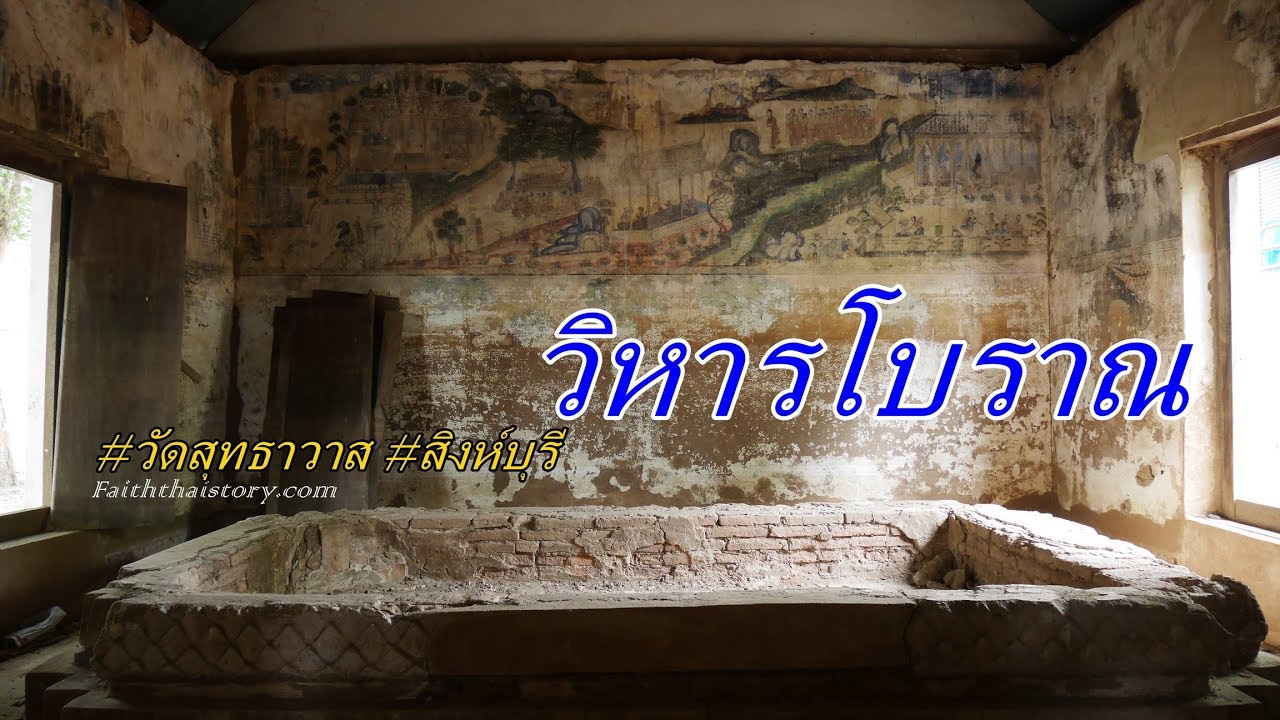
The most important feature of Wat Sutthawat is its old viharn, believed to have been built in the Ayutthaya period. The viharn is significant because it preserves the atmosphere of an old religious building used for worship, instruction, and community devotion. Even though time has caused some details to fade, the building still carries the dignity of a historic Buddhist structure. Visitors should take time to observe the walls, interior space, and remaining mural paintings rather than treating the site as a quick photo stop.
Inside the viharn are mural paintings related to the life of the Buddha and the Chulamani shrine. These murals were created by highly skilled artisans and represent an important form of Thai Buddhist visual storytelling. In traditional Thai temples, murals were never merely decorative. They helped communicate religious teachings to the community, especially at a time when many people learned Buddhist stories through sermons, oral tradition, and images rather than written texts.
One of the important scenes depicts Prince Siddhartha leaving worldly life to become a renunciant. This moment marks the beginning of his spiritual journey toward enlightenment. In Buddhist thought, the Great Renunciation symbolizes courage, detachment, and the decision to seek truth beyond wealth, power, and worldly comfort. Seeing this scene on the wall of an old temple allows visitors to connect with one of the most important turning points in the Buddha’s life.
Another major scene shows the Buddha confronting Mara. This episode represents the final obstacle before enlightenment, when Mara and his forces attempted to disturb the Buddha’s meditation. In symbolic terms, Mara represents temptation, fear, attachment, and mental defilements. The image of the Buddha overcoming Mara is therefore a powerful reminder of inner strength, mindfulness, and the victory of wisdom over ignorance.
The murals also include the episode in which the Buddha received and ate the meal offered by Cunda. After that meal, the Buddha became ill and traveled to rest between a pair of sal trees before entering Parinirvana. This part of the story belongs to the final phase of the Buddha’s life and carries a profound reflection on impermanence. It presents the Buddha not only as a great teacher, but also as a being whose physical body followed the natural conditions of life, aging, illness, and death.
The scene of the Buddha entering Parinirvana is one of the most moving subjects in Buddhist art. It is not simply a picture of death, but a visual teaching on the complete liberation from suffering and the end of the cycle of rebirth. In temple murals, this scene often carries a quiet and solemn feeling. At Wat Sutthawat, it contributes to the contemplative atmosphere of the old viharn and encourages visitors to reflect on the Buddhist teaching of impermanence.
Other scenes show the cremation of the Buddha and the distribution of his relics among kings and celestial beings. These events explain how devotion to the Buddha continued after his passing. The distribution of relics led to the creation of stupas and sacred places where people could pay respect and remember the Buddha’s teachings. For visitors, these murals help connect the story of the historical Buddha with the broader Buddhist tradition of relic worship and temple culture.
The pediment of the viharn once contained an image of the Buddha’s relics floating in water. Although this image has faded over time, its former presence remains important. It shows the religious imagination and symbolic language of the artisans who created the viharn. The fading of the image also reminds visitors that old murals and temple art are fragile. They need respectful care, conservation, and awareness from everyone who visits.
The murals of Wat Sutthawat are valuable because they tell a continuous sacred narrative. They guide viewers from the Buddha’s renunciation and victory over Mara to the final meal, illness, Parinirvana, cremation, and distribution of relics. Together, these scenes transform the viharn into a visual classroom of Buddhist history and doctrine. Even for visitors who are not Buddhist, the murals offer insight into how Thai communities used art to preserve and transmit spiritual knowledge.
The craftsmanship of the paintings reflects skill in composition, color, figure arrangement, and symbolic expression. Visitors who enjoy art history should look closely at line work, gestures, clothing, facial expressions, and architectural or natural background details. These elements reveal more than religious content; they also show the artistic taste, worldview, and cultural context of the period in which the murals were created.
Wat Sutthawat is best experienced as a place of learning rather than a quick sightseeing stop. The old viharn requires time and attention. The more slowly visitors look, the more they will notice how each mural scene carries meaning. The temple is especially suitable for cultural travelers, students, photographers, art historians, and anyone interested in Buddhist storytelling through Thai temple murals.
For families, Wat Sutthawat can also serve as an open-air cultural classroom. Children and young visitors can learn that history is not found only in books, but also in temples, old buildings, paintings, and local stories. Visiting a site like this helps build awareness of cultural heritage and the importance of preservation.
Visitors who wish to take photographs should do so carefully. The mural paintings and old architectural details are delicate. Avoid using flash close to the walls, do not touch the painted surfaces, and do not lean against old structures. Respectful behavior helps preserve the temple for future visitors and supports the continued protection of Sing Buri’s cultural heritage.
Getting There is easiest by private car. Use Highway 311 on the Sing Buri–In Buri route. Wat Sutthawat is located around kilometer markers 11–12 in Thap Ya Subdistrict. If using Wat Kradangnga Buppharam as a reference point, continue for about 5 km to reach the temple. The route connects easily with other attractions in In Buri and Sing Buri, making it suitable for a half-day or full-day cultural itinerary.
Travelers using public transport can first reach Sing Buri town or In Buri Market, then continue by local transport, hired car, or taxi to Thap Ya Subdistrict. A private vehicle is more convenient because it allows visitors to combine Wat Sutthawat with nearby places such as In Buri National Museum, Wat Muang, Wat Phra Non Chaksi Worawihan, Wat Phikun Thong Royal Monastery, and Mae Nam Noi Kiln Site.
The best time to visit is in the morning or late afternoon, when the light is softer and the temperature is more comfortable. These times also make it easier to observe the old viharn and mural details. Visitors should dress modestly, speak quietly inside the religious area, and show respect to monks, local residents, and people who come to make merit.
Overall, Wat Sutthawat (Wat Mai) is one of Sing Buri’s valuable cultural and historical temples. It combines an Ayutthaya-period viharn, masterful mural paintings, Buddhist narratives, the Chulamani theme, the Buddha’s Parinirvana, the cremation ceremony, and the distribution of relics. Although some painted details have faded with time, the temple remains a meaningful destination for travelers who want to discover the quieter and more artistic side of Sing Buri.
| Name | Wat Sutthawat (Wat Mai) |
| Location | Thap Ya Subdistrict, In Buri District, Sing Buri Province |
| Address | Moo 4, Thap Ya Subdistrict, In Buri District, Sing Buri 16110, Thailand |
| Coordinates | 14.9686204039, 100.347800352 |
| Highlights | Ayutthaya-period old viharn and masterful mural paintings depicting the life of the Buddha and the Chulamani theme |
| History | The temple contains an old viharn from the Ayutthaya period and remains an important cultural site in Thap Ya Subdistrict, In Buri District. |
| Alternative Name | Wat Mai |
| Distinctive Features | Murals show the Buddha’s renunciation, confrontation with Mara, final meal offered by Cunda, Parinirvana, cremation ceremony, and the distribution of relics. |
| Important Objects | Old viharn, mural paintings, Chulamani-related imagery, and the community religious area |
| Travel Information | Use Highway 311 on the Sing Buri–In Buri route, around kilometer markers 11–12. The temple is about 5 km beyond Wat Kradangnga Buppharam. |
| Current Status | Open as a Buddhist temple and cultural heritage site in Thap Ya Subdistrict |
| Open Days | Daily |
| Opening Hours | 08.00 – 16.30 |
| Main Areas / Zones | Ayutthaya-period old viharn Mural painting area Main Buddha worship area Temple religious grounds Surrounding Thap Ya community area |
| Abbot / Caretaker | Phra Khru Wisut Thaworntham |
| Main Contact Number | 0 3658 1064 |
| Official Website / Official Page | Facebook: Wat Sutthawat Wat Mai, Thap Ya |
| Nearby Tourist Attractions | 1. Wat Kradangnga Buppharam, about 5 km 2. In Buri National Museum, about 11 km 3. Wat Muang In Buri, about 12 km 4. Wat Phra Prang Muni, about 18 km 5. Wat Phikun Thong Royal Monastery, about 20 km |
| Nearby Restaurants | 1. Rim Nam In Buri Restaurant, about 11 km, Tel. 098-923-7823, 036-581390 2. Chai Nam In Buri Restaurant, about 11 km 3. Krua In Buri Restaurant, about 12 km 4. Ta Chin Garden & Cafe, about 18 km, Tel. 084-264-6391 5. Ban Suan Mae La Ka Rong Restaurant, about 24 km, Tel. 036-501047, 092-8024928 |
| Nearby Accommodations | 1. Ing Mae La Resort, about 12 km 2. Route652 Resort Singburi, about 18 km, Tel. 096-0474652 3. Sumali Villa, about 21 km 4. Golden Dragon Resort, about 22 km 5. Chaisaeng Villa Hotel, about 23 km |
Frequently Asked Questions (FAQ)
Q: Where is Wat Sutthawat (Wat Mai) located?
A: Wat Sutthawat (Wat Mai) is located in Moo 4, Thap Ya Subdistrict, In Buri District, Sing Buri Province.
Q: What is the main highlight of Wat Sutthawat?
A: The main highlight is the old Ayutthaya-period viharn with mural paintings about the life of the Buddha, the Chulamani theme, Parinirvana, cremation, and the distribution of relics.
Q: How can travelers get to Wat Sutthawat?
A: Use Highway 311 on the Sing Buri–In Buri route. The temple is around kilometer markers 11–12 and about 5 km beyond Wat Kradangnga Buppharam.
Q: What are the opening hours of Wat Sutthawat?
A: Wat Sutthawat is open daily from 08.00 to 16.30.
Q: What stories are shown in the mural paintings?
A: The murals show several important Buddhist scenes, including the Buddha’s renunciation, confrontation with Mara, the final meal offered by Cunda, Parinirvana, the cremation ceremony, and the distribution of relics.
Q: What type of travelers should visit Wat Sutthawat?
A: It is ideal for travelers interested in old temples, mural paintings, Buddhist art, historical sites, and cultural travel in Sing Buri.
Q: What attractions can be visited together with Wat Sutthawat?
A: Nearby attractions include Wat Kradangnga Buppharam, In Buri National Museum, Wat Muang, Wat Phra Prang Muni, and Wat Phikun Thong Royal Monastery.
 Category: ●Places of Worship
 Group: ●Temple
Last Update : 5 MonthAgo
 Last Update : 5 MonthAgo
 Click to Access the Navigation Map GPS
Wat Sutthawat (Wat Mai) Map

 Art, Culture and Heritage
 Historical Sites and Monuments(4)
 Landmarks and Memorials(3)
 Art, Craft Centres, Tradition(3)
 Museums(1)
 Educational Places
 Library(1)
Temple(42)
 Church(1)
 Other Sacred Sites(2)
 Research and Development
 Royal Project(3)
 Suburban Living
 Village, Community(1)
 Local Market(1)
 Nature and Wildlife
 National Parks and Marine Reserves(1)
 River, Canal(7)
 Bays and Beaches(1)
 Other natural attractions(2)
 Entertainment and Agricultural
 Animal camps and shows(1)
 Farms, Parks and Ecotourism(1)
 Travel Articles, Recipes
 Travel Review, Food Review(1)


