
lovethailand home >Central Travel Attractions >Sing Buri Travel Attractions >Phrom Buri >Phrom Buri > Wat Amphawan
TL;DR: Wat Amphawan is located at 53 Village No. 4, Phrom Buri Subdistrict, Phrom Buri District, Sing Buri Province, Thailand, open Daily, hours 08.00–17.00 for paying respect to Luang Pho Charan’s body at Phra Chedi.
Wat Amphawan
Open Days: Daily
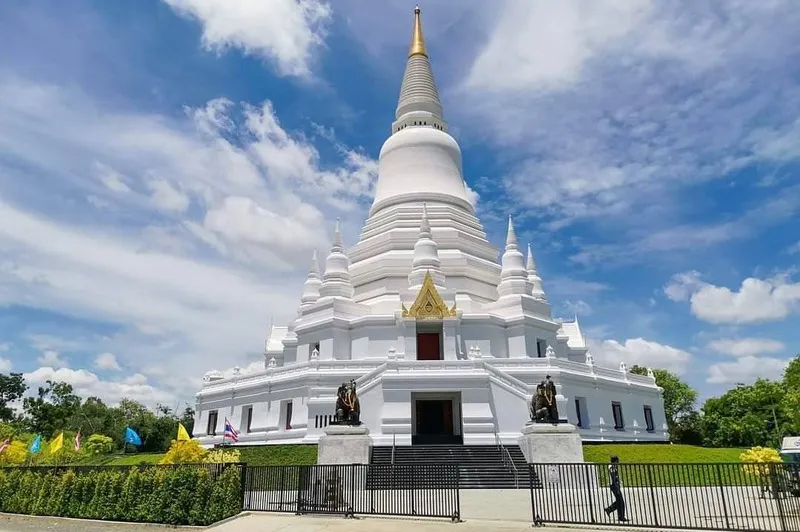
Opening Hours: 08.00–17.00 for paying respect to Luang Pho Charan’s body at Phra Chedi Thammasinghaburachanusorn
Wat Amphawan in Sing Buri Province is one of Thailand’s best-known temples for Vipassana meditation practice. Located at 53 Village No. 4, Phrom Buri Subdistrict, Phrom Buri District, Sing Buri Province, the temple is closely associated with Phra Thammasinghaburachan, better known as Luang Pho Charan Thitathammo. He was the former abbot of Wat Amphawan and one of the most respected Thai monks known for teaching mindfulness, Vipassana meditation, the law of karma, gratitude, and practical Dhamma for everyday life. For travelers and practitioners, Wat Amphawan is not merely a place to visit; it is a temple for serious inner training, discipline, and self-reflection.
Wat Amphawan is located near Highway 32 around kilometer marker 130, making it accessible from Bangkok, Sing Buri town, and nearby provinces. The temple is especially important for people interested in Satipatthana-based meditation, which trains mindfulness through the observation of body, feelings, mind, and mental phenomena. Practitioners at Wat Amphawan are guided to develop awareness in all postures, including standing, walking, sitting, and lying down. This makes the temple a place where meditation is not treated as a short ritual, but as a disciplined way of training the whole life.
Luang Pho Charan Thitathammo, or Phra Thammasinghaburachan, was the former abbot of Wat Amphawan and a central figure in the temple’s identity. His teachings were widely respected because they were direct, practical, and closely connected with real human problems. He often taught about karma, gratitude toward parents, moral conduct, mindfulness, and the importance of correcting oneself before blaming others. His Dhamma teachings made Wat Amphawan a destination for people seeking spiritual discipline, emotional healing, and a clearer direction in life.
Today, visitors can pay respect to Luang Pho Charan’s body at Phra Chedi Thammasinghaburachanusorn inside the temple. This sacred area is one of the most important places in Wat Amphawan. Devotees come to bow, reflect on his teachings, and remember the legacy of a monk who dedicated his life to meditation instruction and moral guidance. The atmosphere around the chedi is calm and respectful, and visitors should behave quietly and modestly.
Wat Amphawan continues to receive meditation practitioners throughout the year according to the temple’s schedule. General Thai-speaking practitioners can register on the designated entry days before 16.00. The temple provides accommodation, meals, and meditation clothing for practitioners without charging any fee. This reflects the temple’s long-standing role as a place of giving, training, and Dhamma practice. However, the official temple information states that foreign visitors who do not understand Thai are not yet accepted for formal meditation practice, because the instruction and discipline require clear understanding of Thai-language guidance.
The meditation practice at Wat Amphawan is serious and structured. Practitioners are expected to follow the temple rules, keep moral discipline, speak little, respect the daily schedule, and avoid unnecessary distractions. Walking meditation, sitting meditation, mindful movement, and awareness in daily activities are central parts of the training. Beginners may find the practice demanding at first, but the structure is designed to help practitioners see their thoughts, emotions, restlessness, and habits more clearly.
In addition to meditation practice, Wat Amphawan remains an important place of worship for Buddhists who come to make merit, listen to Dhamma, pay respect to Luang Pho Charan, and participate in Buddhist activities. During major Buddhist occasions such as Makha Bucha Day, Visakha Bucha Day, Asalha Bucha Day, Buddhist Lent, the end of Buddhist Lent, and Kathin season, many devotees visit the temple. Even when the temple is busy, the atmosphere remains strongly shaped by discipline and quietness because Wat Amphawan is primarily a meditation temple.
Important areas inside Wat Amphawan include Phra Chedi Thammasinghaburachanusorn, the ordination hall, meditation practice areas, registration areas, accommodation buildings for practitioners, the dining area, and spaces used for religious activities. Visitors who come only for a short visit should remain in public areas and avoid entering practitioner accommodation or meditation zones without permission. Practitioners should carefully follow the instructions given by temple staff and meditation teachers.
The main character of Wat Amphawan is not based on spectacular architecture or sightseeing entertainment. Its identity is based on practice. Visitors should therefore come with the right attitude. Those who come to pay respect should dress modestly, speak quietly, and avoid disturbing practitioners. Those who come for meditation should prepare themselves mentally for simplicity, discipline, and patient training. Wat Amphawan is best suited for people who want to step away from noise and return to direct awareness of body and mind.
For modern visitors, Wat Amphawan represents the continuing role of Thai temples as places of mental support. People do not come here only because they are elderly or deeply religious. Students, workers, officials, and people facing stress or life difficulties also come to learn mindfulness and regain inner balance. This makes the temple a living spiritual school where Buddhism is applied directly to everyday suffering, responsibility, and self-understanding.
Luang Pho Charan’s teachings often emphasized self-awareness, duty, gratitude, and the reality of karma. These teachings remain strongly associated with the temple. Many people return to Wat Amphawan repeatedly because they feel that the place helps them reorganize their mind and life. Even after Luang Pho Charan’s passing, the temple continues to preserve his meditation approach and Dhamma legacy.
Visitors who do not join a meditation course can still make a meaningful short visit. They can pay respect to Luang Pho Charan’s body, visit the ordination hall, walk quietly through public temple areas, and learn about future meditation practice. A short visit should still be done respectfully. Wat Amphawan is not the best place for casual loud sightseeing, because many people come here for meditation and inner work.
Getting There is convenient by private car. From Bangkok, travelers can take Highway 32 toward Sing Buri and enter Phrom Buri District around kilometer marker 130. The temple is well known locally and can be found easily with a navigation app. From Sing Buri town, visitors can travel toward Phrom Buri District by local road or highway connection.
Public transport is also possible. From Bangkok, travelers can take a bus on the Bangkok–Sing Buri route or the Bangkok–Wat Sing route and get off near the entrance to Wat Amphawan, then continue by motorcycle taxi to the temple. From Sing Buri town, travelers can take the Sing Buri–Wat Tra Chu local songthaew from the bus terminal and get off near the temple. Visitors using public transport should allow extra time, especially if they plan to register for meditation before the required time.
What visitors should prepare depends on the purpose of the visit. For a short visit, modest clothing, drinking water, and enough time to pay respect calmly are sufficient. For meditation practice, visitors should bring identification, necessary personal items, regular medication, and a mind ready to follow the temple rules. Expensive items and unnecessary distractions should be avoided. The purpose of staying at Wat Amphawan is simplicity, mindfulness, and discipline.
Temple etiquette is especially important here. Visitors should dress modestly, keep their phone silent, speak quietly, avoid inappropriate photography, and not enter restricted meditation or accommodation areas. Those who have questions should ask temple staff politely. This respectful behavior helps preserve the atmosphere for practitioners and worshippers.
Wat Amphawan can also be combined with nearby places in Phrom Buri and Sing Buri, such as Phra Chedi Thammasinghaburachanusorn within the temple, Ban Paeng old market, the Burmese Camp historical site, Wat Phra Prang Muni, Wat Kudi Thong, and Wat Phra Non Chak Si Worawihan. However, visitors who come for meditation should focus on staying at the temple rather than sightseeing, because meditation practice requires continuity and mental calm.
Food options are available near the temple and in Phrom Buri District, including local restaurants, small cafes, and food shops. For meditation practitioners, the temple provides meals according to its rules, so going outside for food is not necessary. Short-stay visitors can find nearby options such as local food shops, cafes, and restaurants along the route before continuing their journey.
Accommodation near Wat Amphawan includes small hotels and resorts in Phrom Buri and Sing Buri town. Options near the temple and in the wider area include Kwanruean Boutique Hotel, Rung Arun Resort, Ban Chid Chon Resort Sing Buri, Sumali Villa, Chaisaeng Villa Hotel, Chao Phraya Hotel Sing Buri, and Chaisaeng Palace Hotel. Meditation practitioners should follow the temple’s accommodation system, while relatives or companions who are not joining the practice may choose nearby hotels.
Overall, Wat Amphawan is one of the most important meditation temples in Sing Buri and Thailand. Its significance comes from Luang Pho Charan’s legacy, the Satipatthana-based Vipassana system, the disciplined temple environment, and the continuing faith of people who come from many parts of the country. It is a place for worship, meditation, self-reflection, and moral renewal.
For foreign travelers, Wat Amphawan offers a meaningful view of Thai Buddhist practice, even if formal meditation programs currently require Thai-language understanding. A respectful visit allows travelers to learn how meditation, gratitude, karma, and mindfulness continue to shape Thai Buddhist life. The temple is quiet, serious, and spiritually focused, making it one of the most important religious destinations in Sing Buri for those who want to understand Buddhism beyond architecture and sightseeing.
| Name | Wat Amphawan |
| Location | 53 Village No. 4, Phrom Buri Subdistrict, Phrom Buri District, Sing Buri Province, Thailand |
| Address | Wat Amphawan, 53 Village No. 4, Phrom Buri Subdistrict, Phrom Buri District, Sing Buri Province 16160 |
| Highlights | A major Vipassana meditation temple following Satipatthana practice and the temple of Luang Pho Charan Thitathammo, the former abbot known for teachings on mindfulness and karma |
| History | A major meditation center in Phrom Buri District where Luang Pho Charan Thitathammo taught Vipassana meditation and practical Dhamma to the public for many years |
| Distinctive Features | A meditation temple emphasizing discipline, mindfulness, walking meditation, sitting meditation, and awareness in daily life according to Satipatthana practice |
| Main Sacred Objects / Features | Phra Chedi Thammasinghaburachanusorn, Luang Pho Charan’s body, ordination hall, and meditation practice areas |
| Meditation Practice | Vipassana meditation based on Satipatthana 4, with mindfulness in standing, walking, sitting, lying down, and daily activities |
| Meditation Registration | Thai-speaking practitioners are accepted on Fridays and Wan Kon days. Registration is completed on the entry day before 16.00. Accommodation, meals, and meditation clothing are provided without charge |
| Travel Information | By private car, use Highway 32 around kilometer marker 130 toward Phrom Buri District. From Bangkok, buses on the Bangkok–Sing Buri or Bangkok–Wat Sing routes can stop near the temple entrance, followed by motorcycle taxi. From Sing Buri town, take the Sing Buri–Wat Tra Chu songthaew |
| Current Status | An active meditation temple where visitors can pay respect to Luang Pho Charan’s body, make merit, and register for meditation according to temple rules |
| Open Days | Daily |
| Opening Hours | 08.00–17.00 for paying respect to Luang Pho Charan’s body at Phra Chedi Thammasinghaburachanusorn |
| Fees | No admission fee. The temple meditation program provides accommodation, meals, and clothing without charge according to temple rules |
| Facilities | Parking area, chedi, ordination hall, meditation buildings, accommodation for practitioners, dining area, registration area, and quiet areas inside the temple |
| Main Areas / Zones | Phra Chedi Thammasinghaburachanusorn, ordination hall, meditation practice zones, registration area, practitioner accommodation, dining area, and religious activity spaces |
| Abbot / Caretaker | Phra Khru Palat Sitthiworawat (Kunchawisit Yosatharo) |
| Main Contact Number | 098-469-0597, 080-454-6277 |
| Official Website / Related Page | Wat Amphawan official website and Sing Buri provincial information sources |
| Nearby Tourist Attractions | 1. Phra Chedi Thammasinghaburachanusorn, inside the temple 2. Wat Amphawan Ordination Hall, inside the temple 3. Burmese Camp Historical Site, about 1 km 4. Ban Paeng Old Market, about 3 km 5. Wat Phra Prang Muni, about 4 km 6. Brahma Shrine, about 4 km 7. Wat Kudi Thong, about 5 km |
| Nearby Restaurants | 1. Yu Yen Pen Suk, about 200 m 2. Ban Khao Kaeng Pak Tai, about 300 m 3. Yiwa Bakery & Cafe Sing Buri, about 300 m 4. Rong Tiam Phrom Buri, about 400 m 5. Kung Phao Thong Chup Sing Buri Wat Tra Chu, about 8 km, Tel. 08-8090-2236 6. Phaibun Kai Yang, about 9 km, Tel. 09-9104-0362, 0-3651-2132 |
| Nearby Accommodations | 1. Kwanruean Boutique Hotel, about 300 m, Tel. 088-749-7945 2. Rung Arun Resort, about 3 km 3. Ban Chid Chon Resort Sing Buri, about 4 km 4. Sumali Villa, about 7 km 5. Chaisaeng Villa Hotel, about 8 km 6. Chao Phraya Hotel Sing Buri, about 9 km 7. Chaisaeng Palace Hotel, about 9 km |
Frequently Asked Questions (FAQ)
Q: Where is Wat Amphawan located?
A: Wat Amphawan is located at 53 Village No. 4, Phrom Buri Subdistrict, Phrom Buri District, Sing Buri Province 16160, near Highway 32 around kilometer marker 130.
Q: What is Wat Amphawan famous for?
A: Wat Amphawan is famous for Vipassana meditation practice based on Satipatthana 4 and for its association with Luang Pho Charan Thitathammo, the former abbot widely respected for teaching mindfulness and karma.
Q: Who was Luang Pho Charan of Wat Amphawan?
A: Luang Pho Charan Thitathammo, also known as Phra Thammasinghaburachan, was the former abbot of Wat Amphawan and a highly respected monk known for teaching Vipassana meditation, karma, gratitude, and mindfulness.
Q: When does Wat Amphawan accept meditation practitioners?
A: The temple accepts Thai-speaking practitioners on Fridays and Wan Kon days, with registration on the entry day before 16.00 according to temple rules.
Q: Is there a fee for meditation practice at Wat Amphawan?
A: There is no fee. The temple provides accommodation, meals, and meditation clothing for practitioners according to its rules.
Q: How can visitors travel to Wat Amphawan by public transport?
A: From Bangkok, take a Bangkok–Sing Buri or Bangkok–Wat Sing bus and get off near the temple entrance, then continue by motorcycle taxi. From Sing Buri town, take the Sing Buri–Wat Tra Chu songthaew.
Q: What should visitors wear when visiting Wat Amphawan?
A: Visitors should dress modestly, wear shirts with sleeves and appropriate trousers or skirts, keep their phone silent, speak quietly, and avoid disturbing meditation practitioners.
Q: What nearby places can visitors see after Wat Amphawan?
A: Nearby places include the Burmese Camp Historical Site, Ban Paeng Old Market, Wat Phra Prang Muni, the Brahma Shrine, Wat Kudi Thong, Wat Phra Non Chak Si Worawihan, and Wat Phikun Thong.
 Category: ●Places of Worship
 Group: ●Temple
Last Update : 5 MonthAgo
 Last Update : 5 MonthAgo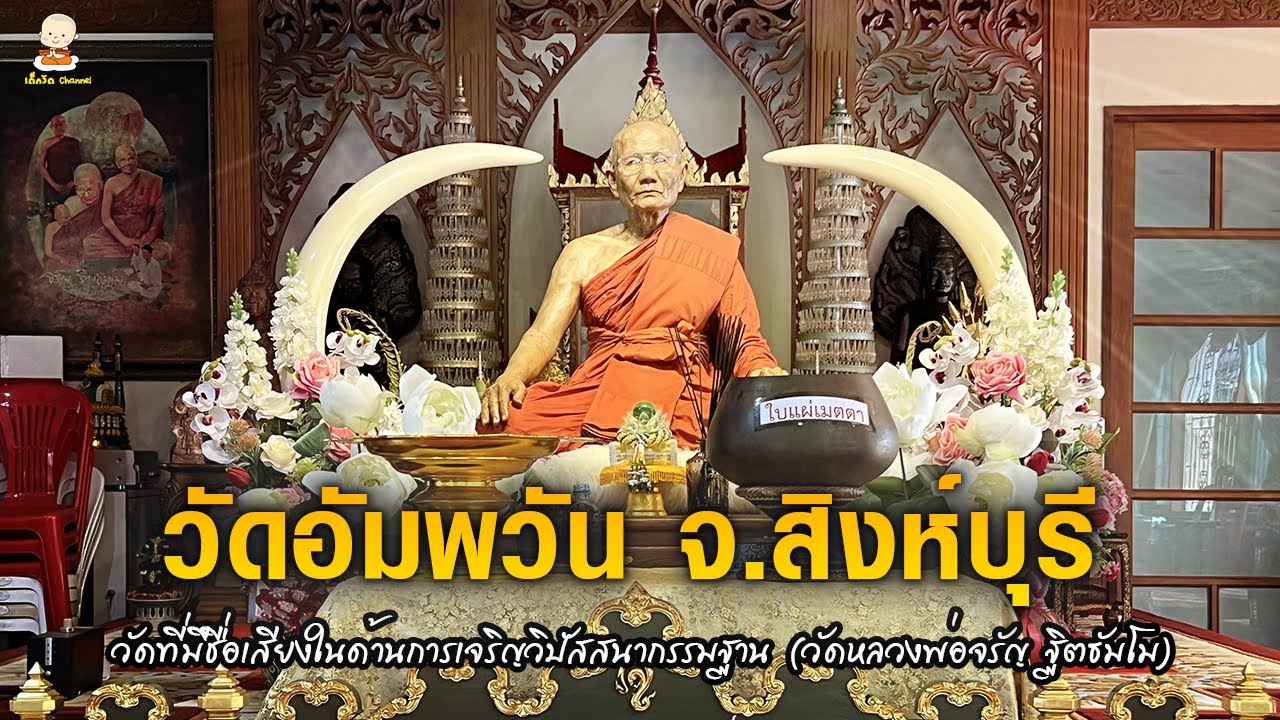
 Click to Access the Navigation Map GPS
 Art, Culture and Heritage
 Historical Sites and Monuments(4)
 Landmarks and Memorials(3)
 Art, Craft Centres, Tradition(3)
 Museums(1)
 Educational Places
 Library(1)
Temple(42)
Library(1)
Temple(42)
 Church(1)
 Other Sacred Sites(2)
 Research and Development
 Royal Project(3)
 Suburban Living
 Village, Community(1)
 Local Market(1)
 Nature and Wildlife
 National Parks and Marine Reserves(1)
 River, Canal(7)
 Bays and Beaches(1)
 Other natural attractions(2)
 Entertainment and Agricultural
 Animal camps and shows(1)
 Farms, Parks and Ecotourism(1)
 Travel Articles, Recipes
 Travel Review, Food Review(1)


