
lovethailand home >Central Travel Attractions >Sing Buri Travel Attractions >Muang Sing Buri >Bang Phutsa > Wat Sathian Watthanadit
TL;DR: Wat Sathian Watthanadit is located at Bang Phutsa Subdistrict, Mueang Sing Buri District, Sing Buri Province, open Daily, hours Daytime Visits Are Recommended.
Wat Sathian Watthanadit

Open Days: Daily
Opening Hours: Daytime Visits Are Recommended
Wat Sathian Watthanadit in Sing Buri Province is an old Buddhist temple in Bang Phutsa Subdistrict, Mueang Sing Buri District. It stands on the eastern bank of the Chao Phraya River, near the mouth of the Lop Buri River, within the municipal area of Sing Buri town. The temple was formerly known as Wat Tha Krabue or Wat Tha Khwai, names that reflect its riverside setting and the older way of life in the community. In the past, the flat riverside area was suitable for bringing cattle and buffaloes down to drink and bathe in the river. Today, the temple is best known for its important Sukhothai-style golden Buddha image and its connection with Luang Pho Choey, a respected former abbot and renowned monk of Sing Buri.
Wat Sathian Watthanadit is a meaningful destination for travelers interested in Thai Buddhist art, local temple history, and the spiritual heritage of central Thailand. Its most important sacred object is a Buddha image cast from bronze mixed with gold. Before it was recognized for its true material and artistic value, the image had been completely covered with plaster and enshrined as the principal Buddha image in an abandoned viharn located in an old cemetery behind the temple, to the west, for more than a century. This hidden history gives the temple a special sense of mystery and cultural importance.
The former names Wat Tha Krabue and Wat Tha Khwai are important because they preserve local memory. Thai temples were often named after villages, river landings, natural features, or everyday activities of the surrounding community. In this case, the old name points to a riverside landing used in ordinary agricultural life. When the temple later became known as Wat Sathian Watthanadit, its identity developed into that of an important town temple with a significant sacred image. Both the old and current names help visitors understand the temple’s layered relationship with community, river, and faith.
The golden Buddha image at Wat Sathian Watthanadit is the heart of the temple. It is a Sukhothai-style Buddha image with graceful proportions, a serene expression, and an elegant artistic form. Sukhothai Buddhist art is widely admired for its balance, softness, and spiritual calm. The image at this temple reflects those qualities through its refined face, gentle form, and quiet dignity. For visitors, it should not be seen only as a gold-related sacred object. It should also be appreciated as a work of Buddhist art that expresses the spiritual ideals of the Sukhothai tradition.
The story of the image being hidden under plaster is especially significant. In Thai history, valuable Buddha images were sometimes covered with plaster to protect them during periods of conflict, unrest, or danger. Once covered, the true nature of the image could be forgotten by later generations. For many years, people may have worshipped what appeared to be a plaster Buddha image without knowing that a valuable metal image existed inside. Such stories reveal both the vulnerability and resilience of sacred art in Thailand.
The abandoned viharn in the old cemetery behind the temple is closely connected with the period of Luang Pho Choey, the former abbot of Wat Sathian Watthanadit, also known locally as Luang Pho Choey of Wat Tha Khwai. He was a respected monk and spiritual teacher, remembered for his knowledge of sacred formulas, protective objects, and traditional spiritual practices. The quiet and secluded cemetery area behind the temple was associated with meditation, ritual practice, and the consecration of sacred objects. This background adds another layer of meaning to the Buddha image and the temple grounds.
Luang Pho Choey remains one of the important names connected with the temple. Among devotees and collectors of Thai amulets, he is remembered as a monk of strong discipline, spiritual power, and compassion. His amulets, especially certain Phra Pidta forms and commemorative medals, remain well known in devotional circles. This means that Wat Sathian Watthanadit is important not only because of its Buddha image, but also because of its association with a respected monk who shaped the faith memory of the community.
The golden Buddha image should be approached with respect. Visitors should dress modestly, remove shoes before entering sacred buildings, speak quietly, and avoid touching the image or its base unless temple rules clearly allow it. Ancient Buddha images are both sacred religious objects and cultural heritage. Respectful behavior helps preserve the image and maintains the sacred atmosphere for monks, local worshippers, and other visitors.
The temple’s location near the Chao Phraya River and the mouth of the Lop Buri River gives it geographical significance. Rivers shaped the settlement patterns, trade routes, agricultural life, and religious communities of the central plains. Temples located near river junctions often became important community landmarks. Wat Sathian Watthanadit preserves this relationship between Buddhism and the river landscape of Sing Buri. A visit here helps travelers understand how temples grew together with waterways and local settlement.
Wat Sathian Watthanadit is located about 145 km from Bangkok. Travelers coming from Bangkok can use the Asian Highway toward Sing Buri, then enter the town area for about 2 km. The temple lies on the eastern side of the Chao Phraya River within Sing Buri Municipality. This makes it convenient for a day trip from Bangkok or as a cultural stop on the way to northern Thailand.
Main areas of interest include the ordination hall, the area where the golden Sukhothai-style Buddha image is enshrined, the temple grounds associated with Luang Pho Choey, the riverside area along the Chao Phraya River, the sermon hall, and community activity spaces. The temple is not a large modern museum with formal exhibition zones. Its value lies in being a living temple where local worship, history, sacred art, and community memory remain connected.
The current abbot listed in recent public Kathin information is Phra Khru Phaisan Watthanathon Chutikamo. The abbot’s role is important in maintaining the temple, supporting religious activities, caring for sacred objects, and coordinating with the community. For an old temple with important Buddhist art and strong local faith, continuous monastic care is essential.
Wat Sathian Watthanadit can be included in a cultural route around Sing Buri town. Nearby attractions include Sing Buri City Pillar Shrine, Wat Sawang Arom and its Nang Yai Museum, Wat Phra Non Chakkrasi Worawihan, Wat Na Phra That, and Wat Pho Langka. This route offers a broad cultural experience: a golden Buddha image, a major reclining Buddha, ancient city remains, large shadow-puppet heritage, and riverside community temples. It is suitable for travelers who want to understand Sing Buri beyond a single attraction.
For art lovers, the temple is valuable because of the Sukhothai-style Buddha image. Sukhothai art is often described through its graceful lines, peaceful facial expression, and idealized spiritual form. The image at Wat Sathian Watthanadit allows visitors to see how this artistic ideal is preserved within a local temple setting. Observing the face, posture, proportions, and atmosphere around the image helps travelers understand why Sukhothai-style Buddha images remain highly respected in Thai culture.
For those interested in Thai monk traditions, the temple’s connection with Luang Pho Choey is equally meaningful. Thai temples often gain importance through the monks who lived, taught, practiced, and served their communities there. Luang Pho Choey’s memory continues through stories, devotional objects, and the temple’s local reputation. This shows how sacred places in Thailand are shaped not only by buildings, but also by respected monastic figures.
Photography should be done with care. The temple gate, ordination hall, Buddha image area, riverside surroundings, and general temple atmosphere may be suitable for photographs if permitted. Visitors should avoid using flash near sacred images, should not disturb worshippers, and should not use inappropriate poses in front of Buddha images. Photographs should present the temple with dignity and should reflect its religious and cultural significance.
Getting There is convenient by private car. From Bangkok, travel along the Asian Highway toward Sing Buri, a distance of about 145 km, then enter Sing Buri town for about 2 km. The temple is located in Bang Phutsa Subdistrict, on the eastern side of the Chao Phraya River, within Sing Buri Municipality. Travelers already in town can use local roads such as Sangharat Road to reach the temple. Those using public transport can arrive at Sing Buri town or the bus station and continue by local hired transport.
The best time to visit is during daylight hours, especially in the morning or afternoon. This allows visitors to pay respect, walk around the temple, and photograph the riverside atmosphere comfortably. Those who wish to attend temple events such as Kathin or other merit-making ceremonies should check current temple announcements in advance, as dates follow the Buddhist calendar and local arrangements.
Proper temple etiquette is important. Visitors should dress modestly, remove shoes before entering sacred buildings, speak softly, avoid touching Buddha images or sacred objects, and refrain from entering monks’ private areas without permission. Donations should be made through official temple channels or by asking temple caretakers politely.
Overall, Wat Sathian Watthanadit is one of Sing Buri’s meaningful temples. Its significance lies in its Sukhothai-style golden Buddha image, its old identity as Wat Tha Krabue or Wat Tha Khwai, its riverside location near the Chao Phraya and Lop Buri rivers, and its connection with Luang Pho Choey, a revered former abbot. For travelers seeking a deeper understanding of Sing Buri’s Buddhist heritage, the temple offers a quiet but important cultural experience.
| Name | Wat Sathian Watthanadit |
| Former Names | Wat Tha Krabue / Wat Tha Khwai |
| Location | Bang Phutsa Subdistrict, Mueang Sing Buri District, Sing Buri Province |
| Address | No. 1378, Moo 1, Sangharat Road, Bang Phutsa Subdistrict, Mueang Sing Buri District, Sing Buri 16000, Thailand |
| Highlights | A Sukhothai-style golden Buddha image cast from bronze mixed with gold, formerly covered completely with plaster and enshrined in an abandoned viharn in the old cemetery behind the temple for more than a century |
| History | An old riverside temple formerly known as Wat Tha Krabue or Wat Tha Khwai, located on the eastern bank of the Chao Phraya River near the mouth of the Lop Buri River, and associated with Luang Pho Choey, a respected former abbot and monk |
| Distinctive Features | A town temple that combines Sukhothai Buddhist art, the story of a hidden golden Buddha image, the memory of Luang Pho Choey, and the riverside life of Sing Buri |
| Main Areas / Zones | 1. Ordination Hall 2. Area Enshrining the Sukhothai-Style Golden Buddha Image 3. Area Associated with Luang Pho Choey of Wat Tha Khwai 4. Chao Phraya Riverside Temple Grounds 5. Sermon Hall and Temple Activity Area 6. Wat Sathian Watthanadit Community Area within Sing Buri Municipality |
| Travel Information | From Bangkok, use the Asian Highway toward Sing Buri, about 145 km, then enter Sing Buri town for about 2 km. The temple is on the eastern side of the Chao Phraya River in Sing Buri Municipality |
| Current Status | Open as an active local Buddhist temple and important worship site in Sing Buri town |
| Open Days | Daily |
| Recommended Visiting Time | Daytime, especially morning to afternoon |
| Fees | No admission fee; visitors may make merit according to personal faith |
| Abbot / Caretaker | Phra Khru Phaisan Watthanathon Chutikamo, Abbot of Wat Sathian Watthanadit |
| Main Contact Number | 036-512-293 |
| Official Website / Official Page | Sing Buri Provincial Tourism Information / Tourism Authority of Thailand / Ministry of Culture |
| Nearby Tourist Attractions | 1. Sing Buri City Pillar Shrine, about 2 km 2. Wat Sawang Arom and Nang Yai Museum, about 3 km 3. Wat Phra Non Chakkrasi Worawihan, about 5 km 4. Wat Na Phra That, about 6 km 5. Wat Pho Langka, about 3 km |
| Nearby Restaurants | 1. Paiboon Kai Yang Sing Buri, about 2 km 2. Kesara Bakery Sing Buri, about 3 km, Tel. 095-639-9779 3. Lueat Mu Hia Lek, about 3 km, Tel. 083-963-6577, 081-293-5861 4. Pad Thai Bang Mon, about 3 km, Tel. 062-329-3531 5. Kuai Tiao Ruea Soda (Chama Kala), about 5 km, Tel. 097-951-9326 |
| Nearby Accommodations | 1. Chaisaeng Villa Hotel, about 2 km, Tel. 036-510895, 095-2543174 2. Baanbudsarin Apartment, about 2 km 3. Golden Dragon Resort, about 3 km 4. Central Park Mansion, about 4 km 5. Heyday Singburi Hotel, about 5 km |
Frequently Asked Questions (FAQ)
Q: Where is Wat Sathian Watthanadit located?
A: Wat Sathian Watthanadit is located at No. 1378, Moo 1, Sangharat Road, Bang Phutsa Subdistrict, Mueang Sing Buri District, Sing Buri Province, on the eastern side of the Chao Phraya River within Sing Buri Municipality.
Q: What were the former names of Wat Sathian Watthanadit?
A: The temple was formerly known as Wat Tha Krabue or Wat Tha Khwai, names connected with its old riverside location where villagers brought cattle and buffaloes to the water.
Q: What is Wat Sathian Watthanadit known for?
A: The temple is known for its Sukhothai-style golden Buddha image, cast from bronze mixed with gold, which had once been completely covered with plaster and enshrined in an abandoned viharn behind the temple for more than a century.
Q: What is the artistic style of the golden Buddha image?
A: The golden Buddha image has Sukhothai-style features, with graceful proportions, a serene expression, and refined Buddhist artistic character.
Q: How is Luang Pho Choey connected with the temple?
A: Luang Pho Choey, also known as Luang Pho Choey of Wat Tha Khwai, was a former abbot and respected monk associated with the temple. He is remembered for sacred knowledge, protective objects, and devotional traditions.
Q: Who is the abbot of Wat Sathian Watthanadit?
A: The current abbot listed in recent public temple activity information is Phra Khru Phaisan Watthanathon Chutikamo.
Q: Is there an admission fee for Wat Sathian Watthanadit?
A: No. There is no admission fee. Visitors may make merit according to personal faith.
Q: What nearby attractions can be visited with Wat Sathian Watthanadit?
A: Nearby attractions include Sing Buri City Pillar Shrine, Wat Sawang Arom and Nang Yai Museum, Wat Phra Non Chakkrasi Worawihan, Wat Na Phra That, and Wat Pho Langka.
 Category: ●Places of Worship
 Group: ●Temple
Last Update : 5 MonthAgo
 Last Update : 5 MonthAgo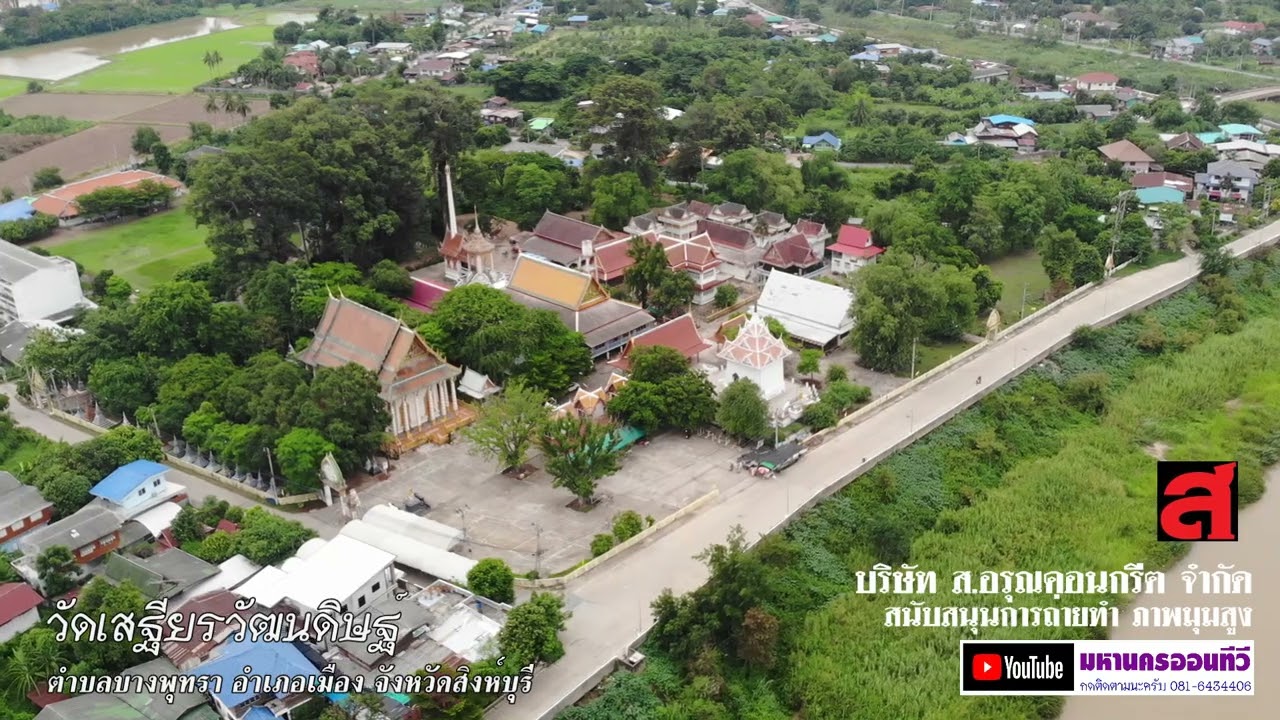
 Click to Access the Navigation Map GPS
Wat Sathian Watthanadit Map

 Art, Culture and Heritage
 Historical Sites and Monuments(4)
 Landmarks and Memorials(3)
 Art, Craft Centres, Tradition(3)
 Museums(1)
 Educational Places
 Library(1)
Temple(42)
Library(1)
Temple(42)
 Church(1)
 Other Sacred Sites(2)
 Research and Development
 Royal Project(3)
 Suburban Living
 Village, Community(1)
 Local Market(1)
 Nature and Wildlife
 National Parks and Marine Reserves(1)
 River, Canal(7)
 Bays and Beaches(1)
 Other natural attractions(2)
 Entertainment and Agricultural
 Animal camps and shows(1)
 Farms, Parks and Ecotourism(1)
 Travel Articles, Recipes
 Travel Review, Food Review(1)


