
lovethailand home >Central Travel Attractions >Sing Buri Travel Attractions >Bang Ra Chan >Choeng Klat > Wat Pho Rattanaram (Wat Pho Chon Kai)
TL;DR: Wat Pho Rattanaram (Wat Pho Chon Kai) is located at Choeng Klat Subdistrict, Bang Rachan District, Sing Buri Province, Thailand, open Daily, hours Daytime and regular temple visiting hours.
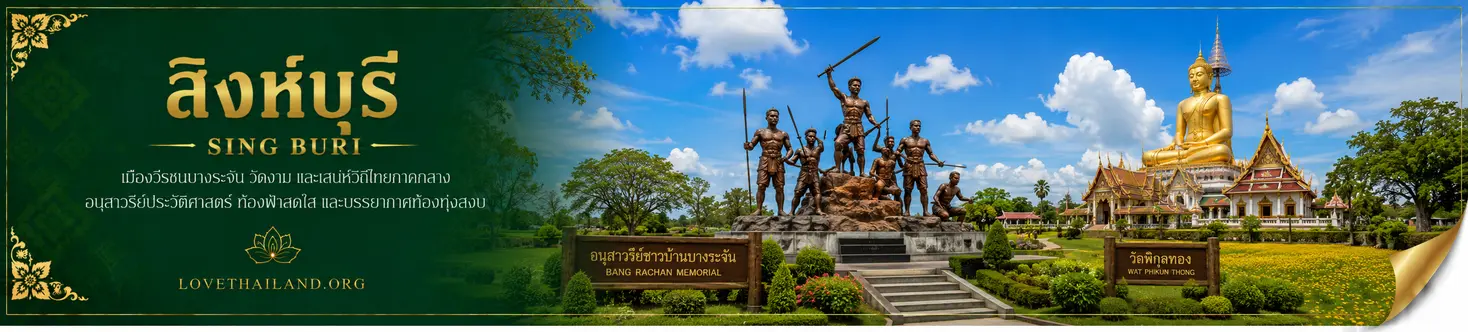
Wat Pho Rattanaram (Wat Pho Chon Kai)
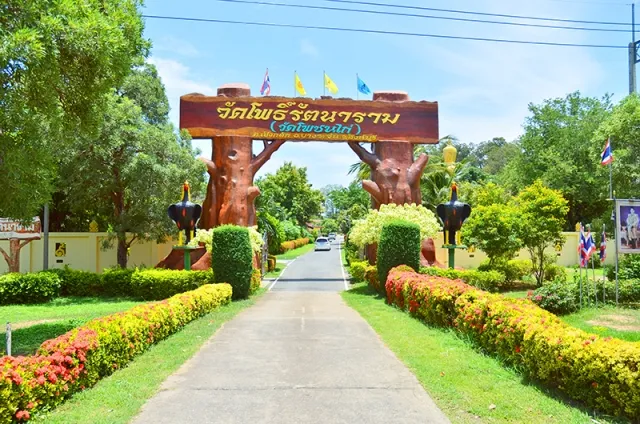
Open Days: Daily
Opening Hours: Daytime and regular temple visiting hours
Wat Pho Rattanaram, also known as Wat Pho Chon Kai, is an important Buddhist temple in Choeng Klat Subdistrict, Bang Rachan District, Sing Buri Province. The temple is best known for its large Buddha image in the Pa Lelai posture, a rare and meaningful posture in Thai Buddhist art. For visitors traveling through Bang Rachan, this temple is a worthwhile stop for worship, merit-making, local history, and a deeper understanding of Buddhist symbolism in central Thailand.
Wat Pho Rattanaram is located at No. 47, Village No. 1, Choeng Klat Subdistrict, Bang Rachan District, Sing Buri Province. It is a local community temple under the Mahanikaya order of Thai Buddhism and covers an area of about 28 rai and 3 ngan. The temple lies in the lowland landscape typical of central Thailand, surrounded by rural communities, waterways, fields, and local roads. It is also very easy to reach from Bang Rachan District, as the distance from the district area to the temple is approximately 2 km.
The main highlight of Wat Pho Rattanaram is its large Buddha image in the Pa Lelai posture. This posture shows the Buddha seated on a rock, usually accompanied by an elephant and a monkey. The image refers to an episode in the Buddha’s life when the Buddha withdrew into the Palileyyaka forest after monks in Kosambi became divided by conflict. While the Buddha stayed in solitude, an elephant offered water and a monkey offered honeycomb. The story carries a strong moral message about peace, patience, inner calm, and the importance of stepping away from conflict.
The Pa Lelai Buddha image at Wat Pho Rattanaram is described locally as the largest of its kind in Thailand today. Its size makes the temple visually memorable, while the meaning of the posture gives the site a deeper spiritual dimension. The presence of the elephant and monkey in this posture allows visitors to understand the Buddhist story more directly, even without detailed knowledge of Buddhist texts. For foreign travelers, this makes Wat Pho Rattanaram an accessible place to learn how Thai Buddhist art uses image, posture, and symbolic figures to communicate moral teachings.
In Thai Buddhist culture, the Pa Lelai posture is especially associated with peace and reflection. It is not a posture of triumph or power, but a posture connected with withdrawal from conflict and the restoration of harmony. Visitors who come to pay respect to the Buddha image often see it as a reminder to calm the mind, reduce anger, and live with patience. This makes the temple suitable not only for sightseeing but also for quiet contemplation and merit-making.
The history of Wat Pho Rattanaram is also significant. The temple was established in 1877 and was originally known as Wat Pho Chon Kai. During early restoration work, traces of old ruins were found, including remains of a chedi, which are believed to date from the early Rattanakosin period. Later, old votive tablets made of red brick material were discovered beneath a chan tree, including forms associated with Wat Rakhang and Wat Chaiyo styles. Local people then built a spirit shrine as a sign of respect and remembrance.
These historical traces give the temple more depth than a modern religious landmark. Wat Pho Rattanaram is not important only because of its large Buddha image; it is also a place where local memory, Buddhist devotion, old ruins, and community belief come together. The old name, Wat Pho Chon Kai, remains meaningful to residents and continues to be widely recognized by people in the area. The coexistence of the old name and the current name gives the temple a strong local identity.
The temple compound includes the large Pa Lelai Buddha image area, the ordination hall, old chedi remains, sermon hall, monks’ residences, merit-making areas, and open spaces used for religious and community activities. On important Buddhist days such as Makha Bucha Day, Visakha Bucha Day, Asalha Bucha Day, Buddhist Lent, the end of Buddhist Lent, and Kathin season, local residents come to make merit, offer food to monks, listen to sermons, and take part in temple ceremonies. This shows that Wat Pho Rattanaram remains an active Buddhist site rather than a purely tourist-oriented attraction.
The abbot of Wat Pho Rattanaram is Chao Athikan Wissanu Khemachitto. In recent years, the temple has also become known online because of a humorous local story about a sign setting “rules for spirits.” While this story attracted public attention, it should be understood as a local communication style and a light-hearted cultural detail rather than the main reason to visit the temple. The true value of Wat Pho Rattanaram lies in its Buddhist history, its large Pa Lelai Buddha image, and its role as a living community temple in Bang Rachan District.
Visitors should begin their visit by paying respect to the large Pa Lelai Buddha image. The front area of the image is the best place to appreciate the scale and posture of the Buddha, while side angles allow travelers to see how the image relates to the surrounding temple grounds. Photography is appropriate when done respectfully. Visitors should avoid inappropriate poses, loud behavior, or photographing people during religious activities without consideration.
The best times to visit are in the morning or late afternoon, when the weather is more comfortable and the light is softer. These times are suitable for worship, photography, and quiet walking around the temple. Visitors should dress modestly because Wat Pho Rattanaram is an active Buddhist temple. Shirts with sleeves, long trousers, or knee-covering skirts are recommended. Speaking quietly and behaving respectfully will help preserve the calm atmosphere of the temple.
Getting There is straightforward. From Bang Rachan District, the distance to Wat Pho Rattanaram is approximately 2 km. Travelers can reach the temple by private car, motorcycle, or local hired transport. Visitors coming from Sing Buri town can first travel toward Bang Rachan District and then continue to Choeng Klat Subdistrict. The temple can also be included in a one-day cultural route with Wat Pho Kao Ton, Bang Rachan Heroes Monument, Wat Muang Chum, Wat Phra Non Chak Si Worawihan, and the Mae Nam Noi Kiln Site.
For travelers interested in history, Bang Rachan District is one of Sing Buri’s most meaningful areas because of its connection with the story of the Bang Rachan villagers. A visit to Wat Pho Rattanaram can therefore be combined with historical attractions nearby. This gives travelers a richer experience that includes Buddhist worship, local history, community culture, and the rural landscape of central Thailand.
The facilities at Wat Pho Rattanaram are typical of a local temple. Visitors can expect parking space, worship areas, halls, merit-making areas, and quiet spaces within the compound. On hot days, bringing drinking water, a hat, or an umbrella is practical, especially if visitors plan to spend time outdoors near the large Buddha image. Elderly visitors can visit comfortably with basic care and assistance, particularly during hot weather or crowded temple events.
Overall, Wat Pho Rattanaram is a meaningful destination for Buddhist travelers, cultural visitors, and foreign travelers who want to experience a local temple beyond the main tourist routes. Its large Pa Lelai Buddha image gives the temple a strong visual identity, while its old name, Wat Pho Chon Kai, its early Rattanakosin traces, and its continuing role in community life make it a site with real cultural depth. For anyone visiting Sing Buri, especially Bang Rachan District, this temple is a valuable stop for worship, reflection, and learning about Buddhist symbolism in central Thailand.
| Name | Wat Pho Rattanaram, also known as Wat Pho Chon Kai |
| Location | Choeng Klat Subdistrict, Bang Rachan District, Sing Buri Province, Thailand |
| Address | No. 47, Village No. 1, Choeng Klat Subdistrict, Bang Rachan District, Sing Buri Province 16130 |
| Highlights | A large Buddha image in the Pa Lelai posture, locally described as the largest of its kind in Thailand today |
| History | Established in 1877. The temple was formerly known as Wat Pho Chon Kai and contains traces believed to relate to the early Rattanakosin period |
| Name Origin | The former name “Wat Pho Chon Kai” remains widely recognized by local residents before the temple became known by its present name, Wat Pho Rattanaram |
| Distinctive Features | Large Pa Lelai Buddha image, ordination hall, old chedi remains, temple halls, merit-making areas, and a local community temple atmosphere |
| Meaning Of The Pa Lelai Buddha | The posture refers to the Buddha’s retreat to the Palileyyaka forest and represents peace, patience, reflection, and withdrawal from conflict |
| Travel Information | From Bang Rachan District, the temple is about 2 km away and can be reached by private car, motorcycle, or local hired transport |
| Current Status | An active community temple under the Mahanikaya order and a worship site in Bang Rachan District |
| Open Days | Daily |
| Opening Hours | Daytime and regular temple visiting hours |
| Fees | No admission fee |
| Facilities | Parking area, worship areas, temple halls, merit-making areas, and quiet spaces inside the temple |
| Main Areas / Zones | Large Pa Lelai Buddha area, ordination hall, old chedi remains, sermon hall, monks’ residences, and community temple grounds |
| Abbot / Caretaker | Chao Athikan Wissanu Khemachitto |
| Main Contact Number | 036-591-851 |
| Official Website / Related Page | Local information from Bang Rachan Municipality, cultural databases, and public temple directories |
| Nearby Tourist Attractions | 1. Wat Pho Kao Ton, about 3 km 2. Bang Rachan Heroes Monument, about 3 km 3. Wat Muang Chum, about 4 km 4. Wat Sing Sutthawat, about 5 km 5. Wat Phra Non Chak Si Worawihan, about 10 km 6. Mae Nam Noi Kiln Site, about 12 km |
| Nearby Restaurants | 1. Rabiang Nam Bang Rachan, about 5 km 2. Krua Sitthiphet, about 6 km, Tel. 081-872-2559 3. Phaibun Kai Yang, about 11 km, Tel. 09-9104-0362, 0-3651-2132 4. Ramphueng Restaurant, about 10 km, Tel. 0-3652-0757 5. Charoen Thip Restaurant, about 10 km, Tel. 0-3651-2539 6. Ban Suan Mae La Ka Rong, about 13 km, Tel. 0-3658-7077, 06-4241-5388, 09-8558-5575 |
| Nearby Accommodations | 1. Metha Country View Homestay Sing Buri, about 5 km, Tel. 093-263-9119 2. Sing Buri Grand Bang Rachan, about 6 km, Tel. 083-152-5799 3. Golden Dragon Resort, about 13 km, Tel. 036-521-891, 089-801-9719 4. Chao Phraya Hotel Sing Buri, about 13 km, Tel. 036-511-776 5. Chaisaeng Palace Hotel, about 14 km, Tel. 036-520-904, 084-541-4466 |
Frequently Asked Questions (FAQ)
Q: Where is Wat Pho Rattanaram located?
A: Wat Pho Rattanaram is located at No. 47, Village No. 1, Choeng Klat Subdistrict, Bang Rachan District, Sing Buri Province, about 2 km from Bang Rachan District.
Q: What was the former name of Wat Pho Rattanaram?
A: The temple was formerly known as Wat Pho Chon Kai, a name that remains familiar to local residents.
Q: What is the main highlight of Wat Pho Rattanaram?
A: The main highlight is the large Buddha image in the Pa Lelai posture, locally described as the largest of its kind in Thailand today.
Q: What does the Pa Lelai Buddha posture mean?
A: It refers to the Buddha’s retreat to the Palileyyaka forest and symbolizes peace, patience, inner reflection, and withdrawal from conflict.
Q: What is the history of Wat Pho Rattanaram?
A: The temple was established in 1877. It was formerly called Wat Pho Chon Kai and contains old traces such as chedi remains and votive tablets found within the temple area.
Q: Is there an admission fee for Wat Pho Rattanaram?
A: There is no admission fee. Visitors can enter the temple to pay respect, make merit, and explore the temple during regular visiting hours.
Q: What should visitors wear when visiting Wat Pho Rattanaram?
A: Visitors should dress modestly. Shirts with sleeves, long trousers, or knee-covering skirts are recommended because the temple is an active Buddhist site.
Q: What nearby places can visitors see after Wat Pho Rattanaram?
A: Nearby places include Wat Pho Kao Ton, Bang Rachan Heroes Monument, Wat Muang Chum, Wat Sing Sutthawat, Wat Phra Non Chak Si Worawihan, and the Mae Nam Noi Kiln Site.
 Category: ●Places of Worship
 Group: ●Temple
Last Update : 4 MonthAgo
 Last Update : 4 MonthAgo
 Click to Access the Navigation Map GPS
Wat Pho Rattanaram (Wat Pho Chon Kai) Map

 Art, Culture and Heritage
 Historical Sites and Monuments(4)
 Landmarks and Memorials(3)
 Art, Craft Centres, Tradition(3)
 Museums(1)
 Educational Places
 Library(1)
Temple(42)
Library(1)
Temple(42)
 Church(1)
 Other Sacred Sites(2)
 Research and Development
 Royal Project(3)
 Suburban Living
 Village, Community(1)
 Local Market(1)
 Nature and Wildlife
 National Parks and Marine Reserves(1)
 River, Canal(7)
 Bays and Beaches(1)
 Other natural attractions(2)
 Entertainment and Agricultural
 Animal camps and shows(1)
 Farms, Parks and Ecotourism(1)


