
lovethailand home >Central Travel Attractions >Sing Buri Travel Attractions >Muang Sing Buri >Bang Phutsa > Sing Buri City Pillar Shrine (Pillar)
TL;DR: Sing Buri City Pillar Shrine (Pillar) is located at Mueang Sing Buri District, Sing Buri Province, open Daily, hours 08.00 – 16.30.
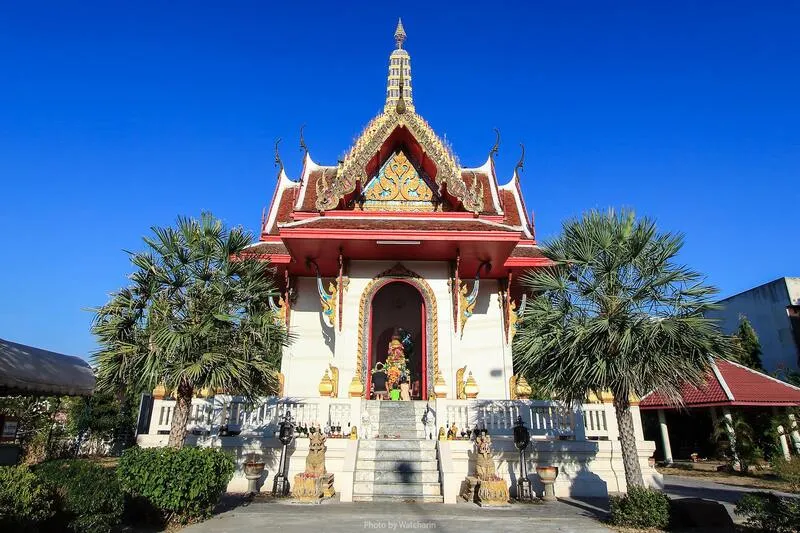
Sing Buri City Pillar Shrine (Pillar)
Open Days: Daily
Opening Hours: 08.00 – 16.30
Sing Buri City Pillar Shrine is one of the most meaningful sacred landmarks in Sing Buri Province. For Thai visitors, it is a place to pay respect to the city pillar, ask for blessings, and connect with the spiritual identity of the province. For foreign travelers, it offers a compact but deeply symbolic introduction to local belief, Buddhist devotion, provincial history, and the strong cultural memory of Sing Buri, a central Thai province known for its heroic heritage, temples, river culture, and long-standing religious traditions.
The shrine is located in Mueang Sing Buri District and serves as a spiritual center for local residents. In Thai tradition, a city pillar represents the foundation, stability, and auspicious protection of a town or province. People visit city pillar shrines before important life events, when beginning a new journey, starting a new job, opening a business, taking examinations, or simply seeking peace of mind. Sing Buri City Pillar Shrine carries this same meaning, but it is especially distinctive because the same compound also includes the Hall of the Nine Venerated Sing Buri Monks, known in Thai as Sala Kao Singha Kechi Achan.
The main city pillar shrine reflects traditional Thai architecture. Its structure is designed as a Thai-style mondop with four porches, doors on all 4 sides, a layered Thai roof, and decorative elements such as chofa, bai raka, hang hong, and a central prang-like spire. These architectural details are not merely ornamental; they create a sacred visual language that signals dignity, reverence, and ceremonial importance. Inside the shrine stands the city pillar made from golden teak, carved and lacquered in a traditional style. The lotus-bud top of the pillar symbolizes purity, growth, and spiritual elevation.
The current Sing Buri City Pillar Shrine was completed in 1982. The city pillar itself is about 2.70 meters high from the shrine floor to the top of the pillar, with carved decorative sections that emphasize auspiciousness and permanence. The use of teakwood also reflects traditional Thai ideas of strength and endurance. Visitors who step into the shrine will find a calm devotional atmosphere where local people light incense, offer flowers, and silently make wishes before the city pillar. The space is modest in size, yet it carries strong symbolic weight for the people of Sing Buri.
Within the same sacred area, visitors can also pay respect to Phra Phuttha Mongkhon Nopparat Phatthara Patimakon, the principal Buddha image associated with Sing Buri City Pillar Shrine. This standing Buddha image in the gesture of forbidding the ocean is 369 centimeters high and was cast in dark bronze-colored brass. It enshrines Buddha relics and was created on significant religious and royal occasions. For Buddhist visitors, this image is an important focus of devotion; for international travelers, it offers a useful point for understanding how Thai sacred places often combine civic identity, Buddhist faith, and royal commemoration in one setting.
The most distinctive part of the compound is the Hall of the Nine Venerated Sing Buri Monks, located to the west of the main city pillar shrine. This hall enshrines a principal Buddha image in the Naga-protected posture, reflecting Lopburi-period artistic influence, together with statues of 9 highly respected monks connected with Sing Buri Province. The hall allows visitors to pay respect not only to the city pillar but also to a lineage of local Buddhist masters whose reputations remain important in the religious memory of the province.
The Hall of the Nine Venerated Sing Buri Monks was officially opened on August 9, 2001, at 09.09. The number 9 is highly auspicious in Thai culture because it is associated with progress, advancement, and good fortune. The foundation stone was also laid on August 9, 2000, at 09.09, giving the hall a strong symbolic association with auspicious timing. For visitors interested in Thai cultural numerology, this hall is a clear example of how dates, numbers, ceremonies, and sacred architecture are carefully arranged to reinforce a sense of blessing and spiritual continuity.
The 9 venerated monks enshrined in the hall are Phra Achan Thammachot of Wat Pho Kao Ton, Phra Khru Si Wiriya Sophit or Luang Pho Si Kesaro of Wat Phra Prang, Luang Pho Won of Wat Pho Kaeo Nopphakhun, Phra Khru Singharat Muni Wor Nayok or Luang Pho Phun Sakharo of Wat Sangharachawat, Phra Khru Intharakhananusit or Luang Pu Chek Acharasupho of Wat Ranam, Luang Pu Butda Thawaro of Wat Klang Chu Si Charoen Suk, Luang Pho Chuang Aphayo of Wat Chipakhao, Phra Thammamuni or Luang Pho Phae Khemangkaro of Wat Phikun Thong, and Phra Khru Suchittanurak or Luang Pho Chuan Suchitto of Wat Nong Sum. Together, they represent different temple communities across Sing Buri and preserve the province’s Buddhist heritage in one devotional space.
Among these figures, Phra Achan Thammachot holds special historical significance because of his connection with Ban Rachan, one of the most important heroic narratives in Sing Buri’s local history. He is remembered as a revered monk who gave spiritual strength to the villagers of Bang Rachan during their struggle to defend their homeland. His presence in the hall connects religious devotion with the province’s identity as a land of courage and loyalty. This makes the shrine especially meaningful for travelers who want to understand Sing Buri beyond surface-level sightseeing.
Luang Pho Phae Khemangkaro of Wat Phikun Thong is another highly respected monk associated with Sing Buri. He is widely remembered for his compassion, Buddhist teaching, and spiritual reputation. Luang Pu Butda Thawaro of Wat Klang Chu Si Charoen Suk is also highly respected among Thai Buddhists for his simple way of life and deep commitment to Buddhist practice. The other monks enshrined in the hall are similarly important to local temple communities. For foreign travelers, the hall shows that Thai religious tourism is not only about architecture or statues, but also about memory, lineage, moral influence, and the relationship between monks and local communities.
A meaningful visit to Sing Buri City Pillar Shrine usually begins with paying respect to the city pillar. Visitors may then continue to the principal Buddha image and finally to the Hall of the Nine Venerated Sing Buri Monks. The visit does not require a long time, but it is best experienced slowly and respectfully. Travelers should dress modestly, speak quietly, and avoid treating the shrine as a casual photo stop. This is an active place of worship for local people, so respectful behavior is essential.
The shrine is also connected with annual provincial ceremonies, especially merit-making and worship ceremonies held around April in several years. These events reflect the role of the city pillar shrine as a living civic and spiritual center. During ceremonial periods, the atmosphere becomes more active, with local officials, monks, and residents participating in rites for the prosperity and well-being of the province. Travelers who are interested in local ritual culture may find this period especially interesting, while those seeking a quieter devotional visit may prefer ordinary weekdays or early morning hours.
Sing Buri City Pillar Shrine is well placed for a half-day or full-day cultural itinerary. From the shrine, travelers can continue to the old provincial hall and old courthouse area, Wat Sawang Arom, Wat Phra Non Chakkrasi Worawihan, Wat Amphawan, Wat Phikun Thong, and Ban Rachan Retro Market. These nearby attractions help visitors understand the province through several themes: sacred places, heroic history, traditional communities, and central Thai food culture. Sing Buri is compact and easy to navigate, making it suitable for a day trip or an overnight stop on the way to northern Thailand.
Getting There is convenient by private car, interprovincial bus, or local transport. From Bangkok, travelers can take Highway 32, also known as the Asian Highway, toward Sing Buri and enter the city center near the City Pillar intersection. Those arriving by bus can get off at Sing Buri Bus Terminal and continue by local vehicle or hired transport to the shrine. Because the shrine is located in the urban area, restaurants, hotels, shops, and other attractions are easy to reach.
The best time to visit is in the morning or early afternoon, when the weather is more comfortable and there is enough time to continue to nearby temples or restaurants. During weekends, holidays, or annual ceremonies, visitors should allow extra time for parking and crowds. The shrine is especially suitable for travelers interested in Thai Buddhism, local belief, city pillar traditions, sacred architecture, and lesser-known cultural destinations in central Thailand.
For a well-rounded trip, visitors may begin the morning at Sing Buri City Pillar Shrine, have lunch at a local restaurant in town, and continue to Wat Phra Non Chakkrasi or Wat Sawang Arom. Those with more time can add Wat Phikun Thong, Ban Rachan Retro Market, and restaurants specializing in freshwater fish from the Chao Phraya River and Mae La area. In this way, a visit to the city pillar shrine becomes more than a short act of worship; it becomes a gateway to the history, faith, and everyday culture of Sing Buri.
| Name | Sing Buri City Pillar Shrine And Hall Of The Nine Venerated Sing Buri Monks |
| Location | Mueang Sing Buri District, Sing Buri Province |
| Address | Sing Buri City Pillar Shrine Area, Mueang Sing Buri District, Sing Buri Province 16000, Thailand |
| Highlights | Pay respect to the city pillar, Phra Phuttha Mongkhon Nopparat Phatthara Patimakon, a Naga-protected Buddha image, and statues of 9 revered Sing Buri monks |
| History | The city pillar shrine was completed in 1982. The Hall of the Nine Venerated Sing Buri Monks was officially opened on August 9, 2001, at 09.09. |
| Name Origin | The city pillar represents the spiritual foundation and stability of the province. The hall’s name refers to the 9 important monks of Sing Buri enshrined inside. |
| Distinctive Features | Thai-style mondop architecture with 4 entrances, traditional roof decorations, and a central prang-like spire |
| Main Areas / Zones | 1. Main city pillar shrine and city pillar 2. Phra Phuttha Mongkhon Nopparat Phatthara Patimakon 3. Hall of the Nine Venerated Sing Buri Monks 4. Naga-protected Buddha image in Lopburi-style art 5. Statues of 9 revered monks of Sing Buri |
| The 9 Venerated Monks | 1. Phra Achan Thammachot of Wat Pho Kao Ton 2. Phra Khru Si Wiriya Sophit or Luang Pho Si Kesaro of Wat Phra Prang 3. Luang Pho Won of Wat Pho Kaeo Nopphakhun 4. Phra Khru Singharat Muni Wor Nayok or Luang Pho Phun Sakharo of Wat Sangharachawat 5. Phra Khru Intharakhananusit or Luang Pu Chek Acharasupho of Wat Ranam 6. Luang Pu Butda Thawaro of Wat Klang Chu Si Charoen Suk 7. Luang Pho Chuang Aphayo of Wat Chipakhao 8. Phra Thammamuni or Luang Pho Phae Khemangkaro of Wat Phikun Thong 9. Phra Khru Suchittanurak or Luang Pho Chuan Suchitto of Wat Nong Sum |
| Travel Information | From Bangkok, take Highway 32 toward Sing Buri and enter the city center near the City Pillar intersection. Travelers arriving by bus can continue from Sing Buri Bus Terminal by local transport. |
| Current Status | Open for worship and still used as a venue for provincial worship and annual city pillar ceremonies |
| Open Days | Daily |
| Opening Hours | 08.00 – 16.30 |
| Caretaker | Sing Buri City Pillar Shrine Foundation Committee and relevant provincial authorities |
| Facilities | Worship area, nearby parking area, and ceremonial space for merit-making and prayer |
| Nearby Tourist Attractions | 1. Old Sing Buri Provincial Hall And Old Courthouse, about 1 km 2. Wat Sawang Arom, about 3 km 3. Wat Phra Non Chakkrasi Worawihan, about 5 km 4. Wat Amphawan, about 7 km 5. Wat Phikun Thong, about 13 km 6. Ban Rachan Retro Market, about 15 km |
| Nearby Restaurants | 1. Ramphueng Restaurant, about 1 km, Tel. 036-520-757 2. Tha Phra Chan Restaurant, about 2 km, Tel. 086-513-5610, 089-827-9495, 036-511-540 3. Kang Han Lom Restaurant, about 4 km, Tel. 085-813-6424, 036-507-044 4. Paiboon Kai Yang, about 5 km, Tel. 099-104-0362, 036-512-132 5. Ban Suan Mae La Ka Rong, about 12 km, Tel. 036-501-047, 081-448-3678 |
| Nearby Accommodations | 1. Baanbudsarin, about 0.1 km, Tel. 036-522-789, 083-699-2224 2. The Room Residence Singburi, about 0.4 km, Tel. 095-935-2888 3. Chaisaeng Palace Hotel, about 0.5 km, Tel. 036-520-904 4. Golden Dragon Resort, about 1 km, Tel. 036-521-891, 085-666-3363 5. Chaisaeng Villa Singburi, about 2 km, Tel. 036-510-895, 095-254-3174 |
Frequently Asked Questions (FAQ)
Q: Where is Sing Buri City Pillar Shrine located?
A: Sing Buri City Pillar Shrine is located in Mueang Sing Buri District, Sing Buri Province, close to the city center.
Q: What is the Hall of the Nine Venerated Sing Buri Monks?
A: It is a sacred hall within the shrine compound that enshrines a Naga-protected Buddha image and statues of 9 important monks connected with Sing Buri Province.
Q: What do people usually pray for at Sing Buri City Pillar Shrine?
A: Visitors commonly pray for stability, success, safe travel, good fortune, career progress, and auspicious beginnings.
Q: What are the opening hours of Sing Buri City Pillar Shrine?
A: The shrine is open daily from 08.00 to 16.30.
Q: Is there an admission fee?
A: The shrine is a public worship place. Visitors may prepare flowers, incense, candles, or offerings according to their personal faith.
Q: Which nearby attractions can be visited on the same trip?
A: Nearby attractions include the old provincial hall and courthouse, Wat Sawang Arom, Wat Phra Non Chakkrasi Worawihan, Wat Amphawan, Wat Phikun Thong, and Ban Rachan Retro Market.
Q: When is the best time to visit?
A: Morning or early afternoon is recommended because the weather is more comfortable and visitors can continue to nearby temples or restaurants afterward.
 Category: ●Places of Worship
 Group: ●Other Sacred Sites
Last Update : 4 MonthAgo
 Last Update : 4 MonthAgo
 Click to Access the Navigation Map GPS
Sing Buri City Pillar Shrine (Pillar) Map

 Art, Culture and Heritage
 Historical Sites and Monuments(4)
 Landmarks and Memorials(3)
 Art, Craft Centres, Tradition(3)
 Museums(1)
 Educational Places
 Library(1)
 Temple(42)
 Church(1)
Other Sacred Sites(2)
Church(1)
Other Sacred Sites(2)
 Research and Development
 Royal Project(3)
 Suburban Living
 Village, Community(1)
 Local Market(1)
 Nature and Wildlife
 National Parks and Marine Reserves(1)
 River, Canal(7)
 Bays and Beaches(1)
 Other natural attractions(2)
 Entertainment and Agricultural
 Animal camps and shows(1)
 Farms, Parks and Ecotourism(1)


