
lovethailand home >Central Travel Attractions >Sing Buri Travel Attractions >Muang Sing Buri >Ton Pho > Wat Sawang Arom
TL;DR: Wat Sawang Arom is located at Ban Bang Mon, Ton Pho Subdistrict, Mueang Sing Buri District, Sing Buri Province, open Monday – Friday / Saturday – Sunday, hours Monday – Friday 09.00 – 16.00 / Saturday – Sunday 08.30 – 17.00.
Wat Sawang Arom
Open Days: Monday – Friday / Saturday – Sunday
Opening Hours: Monday – Friday 09.00 – 16.00 / Saturday – Sunday 08.30 – 17.00
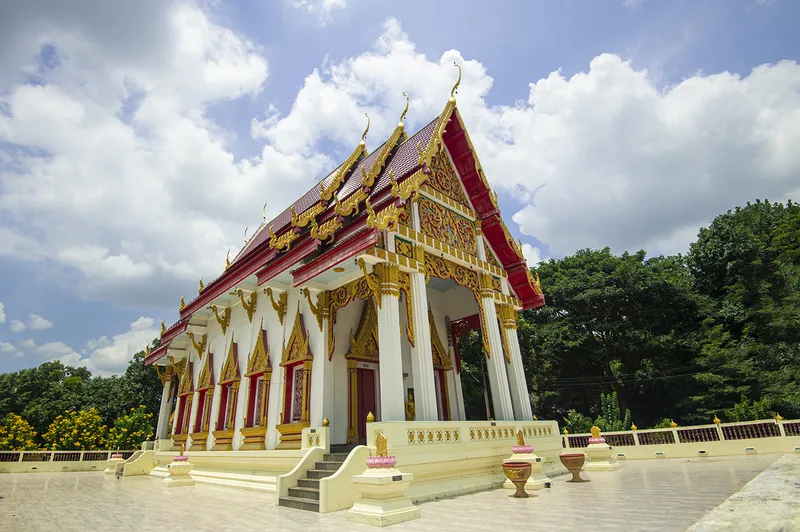
Wat Sawang Arom in Sing Buri Province is an old Buddhist temple located in Ban Bang Mon, Ton Pho Subdistrict, Mueang Sing Buri District. It lies about 2 km from the old provincial hall toward the Chao Phraya River. The temple is one of the most important cultural learning sites in Sing Buri because it brings together several forms of Thai art: Buddhist education, temple architecture, ordination halls, viharns, pavilions, Buddha image sculpting, and especially the Nang Yai Museum, which preserves more than 300 large shadow-puppet figures that remain complete and usable for performance. For foreign travelers, this temple offers a rare opportunity to understand Thai traditional performing arts within a living temple community.
Wat Sawang Arom is not only a place for worship. It is also a cultural archive of local craftsmanship and classical Thai performance. Many travelers know Sing Buri for historical sites, royal temples, and riverside food, but Wat Sawang Arom reveals another important side of the province: the world of Nang Yai, large shadow puppetry. This traditional art form combines carved leather figures, light and shadow, Thai classical music, narration, movement, Buddhist temple culture, and stories from the Ramakien. The temple therefore helps visitors see how literature, music, visual art, performance, and religious community can exist together in one place.
The temple was formerly known as Wat Bang Mon, after the old community of Ban Bang Mon along the Chao Phraya River. The name reflects the close relationship between the temple and the local settlement. Wat Sawang Arom is said to have been established in 1856 by Phra Khru Singhamuni, also known as Luang Pho Rueang, a former abbot who played a crucial role in the temple’s cultural development. The name Sawang Arom suggests brightness, peacefulness, and clarity of mind, which suits the atmosphere of a temple that combines religious practice with cultural preservation.
Luang Pho Rueang is one of the most important figures in the history of Wat Sawang Arom. He was not only a monk and temple leader, but also a cultural preserver who collected Nang Yai figures and supported Thai arts within the temple. His name remains closely associated with the large shadow-puppet tradition of Wat Sawang Arom. In Thailand, monks who preserve local knowledge often play a role beyond religious leadership. They help protect community memory, transmit skills, and keep traditional arts from disappearing.
Today, Wat Sawang Arom remains an active Buddhist temple under the Mahanikaya order. The current abbot listed in recent temple activity information is Phra Khru Baidika Watthana Ariyawongso. The temple continues to serve the local community through religious activities, merit-making, annual ceremonies, and cultural learning. This living role is important because Wat Sawang Arom is not a museum separated from religious life. It is a temple where worship, community memory, craftsmanship, and performance heritage remain connected.
The main highlight of the temple is the Nang Yai Museum of Wat Sawang Arom. The museum is housed on the upper floor of the sermon hall. The shadow-puppet figures are mounted on large white cloth panels inside wooden display cases with light shining from behind. This display method allows visitors to clearly see the pierced leather patterns, painted details, character forms, and artistic composition. It is a highly effective way to present Nang Yai because the art depends on the interaction of leather, light, shadow, movement, and storytelling.
The museum was established in 2002 to preserve and present the temple’s Nang Yai collection more systematically. It holds more than 300 large shadow-puppet figures, many of which remain complete and usable for performance. This number is important because Nang Yai performance requires many different figures: heroes, heroines, demons, monkeys, soldiers, battle scenes, travel scenes, and narrative elements. A large collection makes it possible to preserve not only individual artworks but also the structure of entire performance episodes.
The Nang Yai collection at Wat Sawang Arom is closely connected with Phra Khru Singhamuni, or Luang Pho Rueang, who gathered many figures made by craftsmen from the late Ayutthaya period. Another important part of the collection was received from Khru Pia, the leader of a traveling shadow-puppet troupe skilled in puppetry and narration. This history shows that the collection is not merely decorative. It is a living heritage passed through monks, craftsmen, performers, teachers, and local communities across generations.
Nang Yai is one of Thailand’s most sophisticated traditional performing arts. It combines leather carving, painting, puppet manipulation, narration, classical Thai music, dramatic rhythm, and the Ramakien epic. A single puppet figure is both a carved artwork and a performance instrument. When placed in front of a lighted screen and moved by skilled performers, the figure becomes a character within a dramatic world. This is why Nang Yai should be understood as sculpture, theatre, music, literature, and ritualized movement at the same time.
The performance figures at Wat Sawang Arom are grouped into 4 major sets: the Great Battle or Thotsakan Battle set, the Mongkut-Bhutlop Battle set, the Nakabat set, and the Wirun Chambang Battle set. These sets are connected with important episodes from the Ramakien, Thailand’s version of the Ramayana. The grouping helps visitors understand that Nang Yai is not a random display of beautiful figures. It is a complete narrative system with characters, battle scenes, magical weapons, dramatic conflict, and sequence.
The Great Battle set, or Thotsakan Battle set, represents large-scale conflict in the Ramakien and requires many figures and complex movement. The Mongkut-Bhutlop Battle set contains intense narrative relationships and dramatic structure. The Nakabat set involves magical power, weaponry, and supernatural struggle. The Wirun Chambang Battle set highlights strategy, conflict, and the role of demon characters. Together, these 4 sets reveal the richness of Nang Yai storytelling and the deep connection between Thai performance and classical literature.
The museum also offers demonstrations of Nang Yai performance. This is highly valuable because Nang Yai becomes complete only when seen in motion. Displayed figures allow visitors to appreciate the carving and design, but demonstrations show how the figures become living characters through light, shadow, music, narration, and movement. Puppeteers must use strength, rhythm, body control, and knowledge of the story. Even a short demonstration can help visitors understand the physical discipline and artistic complexity behind this traditional performance.
Another important feature of Wat Sawang Arom is its tradition of Buddha image sculpting. The temple inherited the knowledge of sculpting realistic Buddha images from the Ban Chang Lo artisan lineage of Thonburi. Ban Chang Lo is historically known as an important community of craftsmen skilled in casting and sculpting Buddha images. This connection gives Wat Sawang Arom another layer of artistic importance. The temple is not only a center of Nang Yai, but also a place connected with Thai Buddhist sculptural knowledge.
Buddha image sculpting requires more than manual skill. It demands understanding of proportion, sacred expression, Buddhist iconography, and the calm dignity of the Buddha image. The temple’s role in preserving this craft shows how traditional knowledge can be transmitted through religious spaces. In many Thai communities, temples functioned as informal art schools where skills were learned through practice, observation, apprenticeship, and devotion. Wat Sawang Arom preserves this kind of learning environment.
A good visit to Wat Sawang Arom should begin with paying respect inside the temple before entering the museum. This sequence helps visitors understand that the site is first a Buddhist temple and then a cultural museum. After paying respect, visitors can continue to the Nang Yai Museum on the upper floor of the sermon hall. This creates a natural transition from faith to cultural learning, which reflects the real character of the temple.
When viewing the Nang Yai figures, visitors should observe the carved details carefully. Hero and heroine figures often show graceful lines and elegant proportions. Demon figures are powerful, dense, and highly decorated. Monkey figures communicate energy and agility. These visual codes help tell the story even before the performance begins. Like Khon masks or Thai mural paintings, Nang Yai uses shape, color, gesture, and ornament as a language of character and emotion.
Wat Sawang Arom is especially useful for educational trips. The museum connects Thai literature through the Ramakien, music through the piphat ensemble, visual art through leather carving, theatre through shadow performance, history through late Ayutthaya-era craftsmanship, and social studies through the role of the temple in community preservation. Students can learn that Thai culture is not a single subject, but an interconnected system of knowledge.
For general travelers, the museum opens a new perspective on Sing Buri. The province is often associated with the Bang Rachan heroes, important temples, and freshwater fish cuisine. Wat Sawang Arom adds performing arts and craftsmanship to that picture. A visit here helps complete the cultural identity of Sing Buri by showing that the province also preserves rare and delicate forms of Thai traditional performance.
The temple also has an annual gilding ceremony dedicated to Luang Pu Rueang, the former first ecclesiastical head of Sing Buri Province and former abbot of Wat Sawang Arom. This event expresses gratitude to the temple’s spiritual lineage and helps connect the community with its past. During festival periods, the atmosphere becomes lively, and Nang Yai demonstrations may be included. Travelers who wish to see a performance should check current announcements from the temple or local authorities before visiting.
Visitors should allow at least 1 hour for the museum. More time is recommended if a demonstration is available or if traveling with a group. Group visitors should contact the museum in advance so that the staff or local custodians can prepare properly. Guided explanation is especially helpful because it can identify the characters, explain the Ramakien episodes, and show how each figure functions in performance.
Proper etiquette is important. Visitors should dress modestly, behave respectfully, and avoid touching the puppets or display cases without permission. Flash photography should be avoided near old objects if it may affect the materials or disturb other visitors. Nang Yai figures are delicate cultural materials made from carved leather and carefully preserved over time. Respectful viewing is part of helping conserve this heritage.
For photography, Wat Sawang Arom offers several strong visual subjects: the temple buildings, the sermon hall, backlit Nang Yai figures, and the atmosphere of Ban Bang Mon near the Chao Phraya River. Photographs of the puppets should show the carved details, shadow effect, and character forms respectfully. They should not reduce the figures to casual props, because each figure is part of a larger performance tradition and carries cultural meaning.
The temple is suitable for many types of visitors. Elderly visitors can make merit and enjoy a peaceful temple atmosphere. Families can introduce children to the Ramakien and traditional Thai performance. Students can study art, music, literature, and cultural heritage. Foreign travelers can learn about a rare form of Thai performing art that is less commonly encountered on mainstream tourist routes. Nang Yai is one of the clearest examples of how Thai culture brings together craftsmanship, literature, music, and spiritual space.
The location close to downtown Sing Buri makes Wat Sawang Arom easy to combine with nearby attractions. Travelers can visit the museum, then continue to Sing Buri City Pillar Shrine, Wat Phra Non Chakkrasi Worawihan, Wat Prachotikaram, Wat Kradangnga Buppharam, or the Bang Rachan Heroes Monument. This route provides a broader view of Sing Buri through temple art, sacred images, traditional performance, local history, and community identity.
Getting There is convenient from downtown Sing Buri. Wat Sawang Arom is located in Ban Bang Mon, Ton Pho Subdistrict, within Mueang Sing Buri District. It is about 2 km from the old provincial hall toward the Chao Phraya River. Visitors using a private car can search for Wat Sawang Arom, Ton Pho Subdistrict, Mueang Sing Buri District, Sing Buri Province on online maps. Local transport within the city can also be used to reach the Ban Bang Mon area.
The best time to visit is from the morning to early afternoon, allowing enough time to see the temple and museum without rushing. Visitors who want to see a Nang Yai demonstration or who travel as a group should contact the museum in advance. Weekend opening hours are longer, making Saturday and Sunday convenient for families and cultural travelers who want a more detailed visit.
Overall, Wat Sawang Arom is one of Sing Buri’s most valuable cultural temples. It is a Buddhist temple, a center of Thai craftsmanship, a place connected with Buddha image sculpting, and home to a rare Nang Yai collection of more than 300 figures. A visit here helps travelers understand that Sing Buri is not only a province of historical memory and sacred temples, but also a province that preserves sophisticated performing arts and traditional craftsmanship. For anyone seeking a deeper cultural experience in central Thailand, Wat Sawang Arom is a highly meaningful destination.
| Name | Wat Sawang Arom / Wat Sawang Arom Nang Yai Museum |
| Location | Ban Bang Mon, Ton Pho Subdistrict, Mueang Sing Buri District, Sing Buri Province |
| Address | Wat Sawang Arom, No. 1, Moo 5, Ton Pho Subdistrict, Mueang Sing Buri District, Sing Buri 16000, Thailand |
| Highlights | A Nang Yai museum preserving more than 300 complete and usable large shadow-puppet figures, together with Buddha image sculpting, Thai craftsmanship, and temple art in Ban Bang Mon |
| History | Formerly known as Wat Bang Mon, the temple was established in 1856 by Phra Khru Singhamuni or Luang Pho Rueang, a former abbot who played an important role in collecting Nang Yai figures and supporting temple arts. The Nang Yai Museum was established in 2002 |
| Distinctive Features | A temple that brings together Buddhist education, ordination hall and viharn architecture, pavilion construction, Buddha image sculpting, and Nang Yai, one of Thailand’s classical performing arts |
| Main Areas / Zones | 1. Nang Yai Museum on the Upper Floor of the Sermon Hall 2. Display Area for More Than 300 Nang Yai Figures 3. Great Battle or Thotsakan Battle Set 4. Mongkut-Bhutlop Battle Set 5. Nakabat Set 6. Wirun Chambang Battle Set 7. Nang Yai Demonstration Area 8. Buddha Image Sculpting and Temple Art Area |
| Travel Information | From downtown Sing Buri, travel about 2 km from the old provincial hall toward the Chao Phraya River. The temple is in Ban Bang Mon, Ton Pho Subdistrict, within Mueang Sing Buri District, and can be reached by private car, local taxi, or city transport |
| Current Status | Open to visitors and recognized as a cultural learning site for Nang Yai and Thai traditional arts in Sing Buri Province |
| Open Days | Monday – Friday / Saturday – Sunday |
| Opening Hours | Monday – Friday 09.00 – 16.00 Saturday – Sunday 08.30 – 17.00 |
| Fees | No admission fee |
| Abbot / Caretaker | Phra Khru Baidika Watthana Ariyawongso, Abbot of Wat Sawang Arom Museum Coordination: Wat Sawang Arom Nang Yai Group |
| Main Contact Number | 036-543-150 09 1761 8034 |
| Official Website / Official Page | Facebook: Wat Sawang Arom, Ton Pho Subdistrict, Mueang Sing Buri District, Sing Buri Province |
| Nearby Tourist Attractions | 1. Sing Buri City Pillar Shrine, about 2 km 2. Wat Phra Non Chakkrasi Worawihan, about 4 km 3. Wat Prachotikaram, about 4 km 4. Wat Kradangnga Buppharam, about 5 km 5. Bang Rachan Heroes Monument, about 14 km |
| Nearby Restaurants | 1. Pad Thai Bang Mon, about 0.5 km, Tel. 062-329-3531 2. Lueat Mu Hia Lek, about 1 km, Tel. 083-963-6577, 081-293-5861 3. Kuai Tiao Ruea Soda (Chama Kala), about 4 km 4. Khwai Art Sing Buri, about 4 km 5. Kanlaya Pla Chon Nam Tok, about 4 km |
| Nearby Accommodations | 1. Chaisaeng Villa Hotel, about 2 km 2. Golden Dragon Resort, about 3 km 3. Baanbudsarin Apartment, about 3 km 4. Sumali Villa, about 4 km 5. Heyday Singburi Hotel, about 5 km |
Frequently Asked Questions (FAQ)
Q: Where is Wat Sawang Arom located?
A: Wat Sawang Arom is located at No. 1, Moo 5, Ban Bang Mon, Ton Pho Subdistrict, Mueang Sing Buri District, Sing Buri Province, about 2 km from the old provincial hall toward the Chao Phraya River.
Q: What is Wat Sawang Arom famous for?
A: The temple is famous for its Nang Yai Museum, which preserves more than 300 complete and usable large shadow-puppet figures, as well as its Buddha image sculpting and Thai temple arts.
Q: What are the opening hours of Wat Sawang Arom Nang Yai Museum?
A: The museum is open Monday to Friday from 09.00 to 16.00 and Saturday to Sunday from 08.30 to 17.00.
Q: Is there an admission fee for the Nang Yai Museum?
A: No. There is no admission fee. Visitors may make merit or support the conservation of Nang Yai according to personal faith.
Q: What are the main Nang Yai performance sets at Wat Sawang Arom?
A: The main sets are the Great Battle or Thotsakan Battle set, the Mongkut-Bhutlop Battle set, the Nakabat set, and the Wirun Chambang Battle set.
Q: Who collected the Nang Yai figures at Wat Sawang Arom?
A: Phra Khru Singhamuni or Luang Pho Rueang, a former abbot, collected many figures made by late Ayutthaya-period craftsmen, while another part came from Khru Pia, a leader of a traveling shadow-puppet troupe.
Q: Who is the abbot of Wat Sawang Arom?
A: The abbot of Wat Sawang Arom is Phra Khru Baidika Watthana Ariyawongso.
Q: What nearby attractions can be visited with Wat Sawang Arom?
A: Nearby attractions include Sing Buri City Pillar Shrine, Wat Phra Non Chakkrasi Worawihan, Wat Prachotikaram, Wat Kradangnga Buppharam, and the Bang Rachan Heroes Monument.
 Category: ●Places of Worship
 Group: ●Temple
Last Update : 5 MonthAgo
 Last Update : 5 MonthAgo
 Click to Access the Navigation Map GPS
 Art, Culture and Heritage
 Historical Sites and Monuments(4)
 Landmarks and Memorials(3)
 Art, Craft Centres, Tradition(3)
 Museums(1)
 Educational Places
 Library(1)
Temple(42)
Library(1)
Temple(42)
 Church(1)
 Other Sacred Sites(2)
 Research and Development
 Royal Project(3)
 Suburban Living
 Village, Community(1)
 Local Market(1)
 Nature and Wildlife
 National Parks and Marine Reserves(1)
 River, Canal(7)
 Bays and Beaches(1)
 Other natural attractions(2)
 Entertainment and Agricultural
 Animal camps and shows(1)
 Farms, Parks and Ecotourism(1)
 Travel Articles, Recipes
 Travel Review, Food Review(1)


