
lovethailand home >North Travel Attractions >Phichit Travel Attractions > 20 Best Places to Visit in Phichit City of Chalawa..
TL;DR: 20 Best Places to Visit in Phichit City of Chalawan, open Daily Opening Hours: The public area around the lake is accessible daily / The.
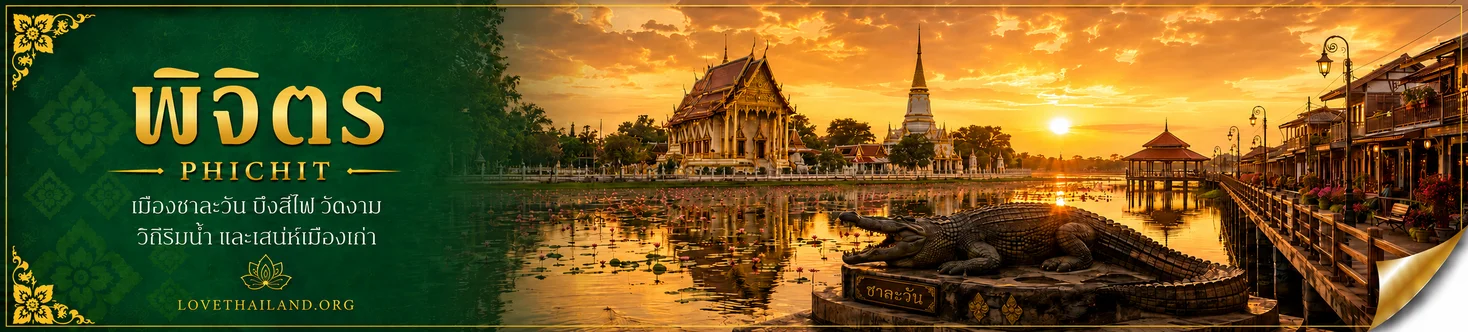
20 Best Places to Visit in Phichit City of Chalawan
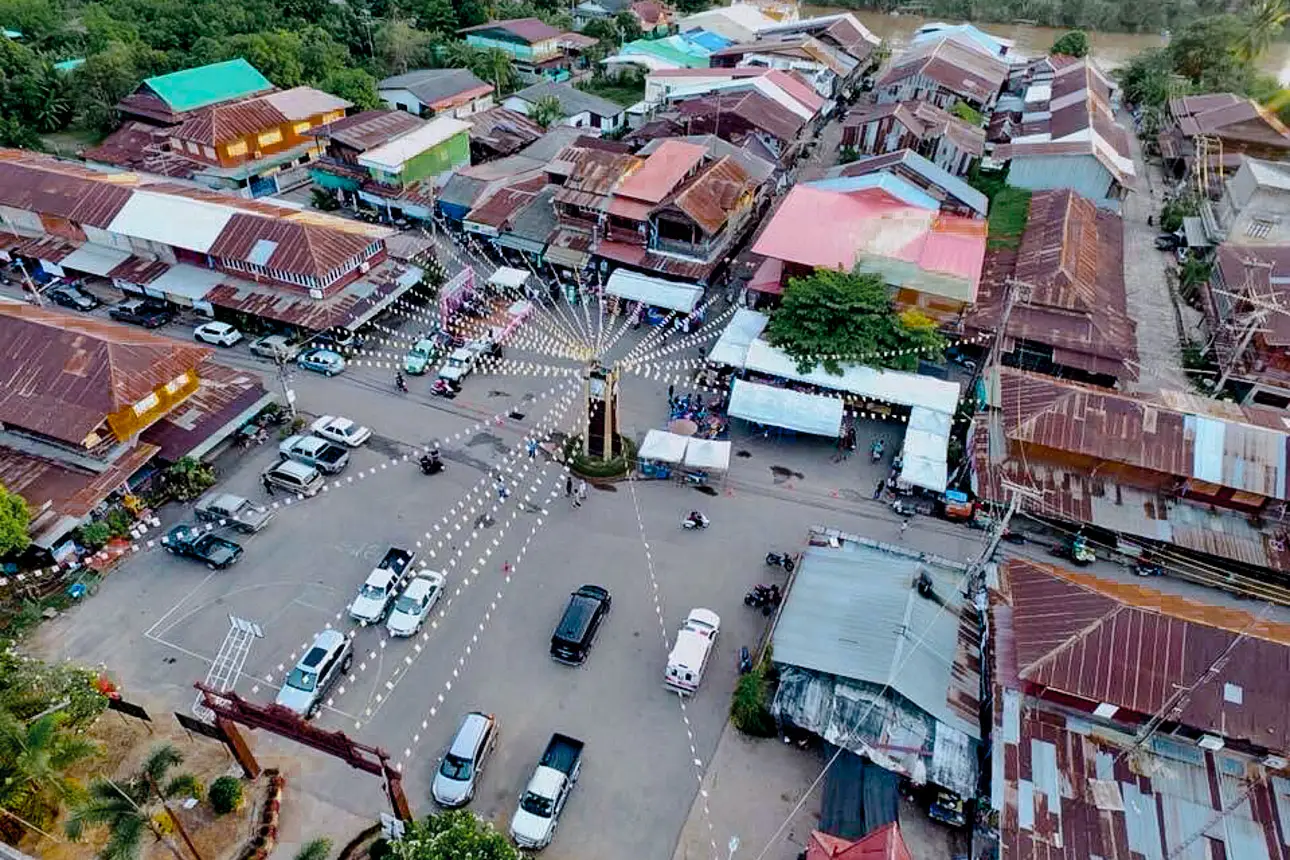
20 Best Places to Visit in Phichit: Explore the City of Chalawan Through Nature, History, Temples, and Local Communities Phichit is a relatively small province in lower northern Thailand, yet it has a distinctive identity shaped by its river-basin landscape, ancient city history, the legend of Chalawan, Buddhism, riverside communities, and a simple local way of life that remains visible today. Travelers who once regarded Phichit merely as a province to pass through will discover a surprisingly diverse range of attractions, from a large freshwater lake near the provincial center and ancient Ayutthaya-period temples to historic Chinese shrines and one of the remaining natural forest areas on the plains of the province.
One of the strongest images associated with Phichit is its reputation as the “City of Chalawan,” a cultural identity connected with the Thai literary story of Krai Thong, the legend of the crocodile king Chalawan, and the landscape of old Phichit. Bueng Si Fai and Chalawan Cave are particularly important because they connect literary stories with real places. These legends are more than tales for tourists; they have become part of the province’s identity and appear in public sculptures, traditional events, provincial symbols, and cultural activities.
Historically, Phichit contains traces of settlements and cultural development extending through the Sukhothai, Ayutthaya, and later periods. Several areas preserve ancient monuments, historic temples, and architecture that reveal different stages in the development of the province. Important examples include Wat Nakhon Chum, Phichit Old Town Park, Wat Pho Prathap Chang, and Wat Khao Rup Chang. Wat Hiranyaram, commonly known as Wat Bang Khlan, is especially famous as a major center of devotion associated with Luang Pho Ngoen Phutthachoti, one of the most respected Buddhist masters connected with Phichit.
Phichit also has notable cultural diversity created by different communities that settled along its rivers and transportation routes. The Hainanese Chinese community of Tha Lo on the Nan River continues to maintain Chao Mae Tubtim Tha Lo Shrine as an important spiritual center. The Thai-Vietnamese community at Ban Dong is represented today by Ban Dong Ho Chi Minh Museum, which introduces visitors to Thai-Vietnamese history and the regional connections of Southeast Asia. Traveling through Phichit therefore involves more than temples and ancient ruins; it also offers an opportunity to understand community history, migration, cultural exchange, and regional relationships.
In terms of nature, Phichit does not have high mountain ranges or numerous waterfalls like some other northern provinces, but its lowland river basin and wetland landscapes are distinctive. Bueng Si Fai functions as a natural freshwater resource, an ecosystem, a public recreational area, and one of the province’s most recognizable landmarks. Nakhon Chai Bowon Forest Park represents another side of Phichit that many travelers do not expect to find: a substantial stand of natural yang forest that helps preserve biodiversity within an overwhelmingly agricultural lowland landscape.
If you have only 1 day, a practical route can include Bueng Si Fai, Wat Tha Luang, Phichit Old Town Park, and Wat Nakhon Chum. Travelers with 2–3 days should consider adding Wat Pho Prathap Chang, Wat Bang Khlan, Wat Khao Rup Chang, Ban Dong Ho Chi Minh Museum, Chao Mae Tubtim Tha Lo Shrine, and Nakhon Chai Bowon Forest Park. This broader itinerary provides a more complete view of Phichit through nature, history, Buddhist faith, local communities, and regional stories.

1. Bueng Si Fai is one of the most important landmarks in Phichit Province and one of the places that best represents the identity of the City of Chalawan. This large freshwater lake is located close to the provincial center and includes recreational areas, viewpoints, exercise paths, a freshwater fish exhibition, public gardens, and a large sculpture of the legendary crocodile king Chalawan that has become one of the most recognizable symbols of Phichit.
Highlights: A freshwater lake covering approximately 5,000 rai, sunset viewpoints, the Chalawan crocodile sculpture, the freshwater fish exhibition, Queen Sirikit Park Phichit, walking and exercise areas, and a freshwater wetland ecosystem.
Bueng Si Fai is more than a tourist attraction. It is an important water resource that has long been connected with the lives of people in Phichit through fishing, agriculture, and the local ecosystem. The wetlands around the lake provide habitat for fish, waterbirds, aquatic plants, and many other organisms, allowing visitors to observe the relationship between the urban community and the natural environment within the same landscape.
One of the most popular photography landmarks is the giant Chalawan sculpture, which directly connects the lake with the Thai literary story of Krai Thong and with Phichit’s reputation as the city of the legendary crocodile king. The large sculpture transforms the literary story into a visible part of the public landscape and gives Bueng Si Fai a distinctive identity unlike that of an ordinary lake or urban park.
For families, the freshwater fish exhibition adds an educational dimension to the visit. Children and young travelers can learn about freshwater fish species and ecosystems associated with the river basins of lower northern Thailand. Bueng Si Fai can therefore be enjoyed both as a recreational destination and as an informal outdoor learning environment.
Late afternoon and early evening are among the best times to visit Bueng Si Fai. Temperatures begin to cool and the setting sun reflects across the broad surface of the lake, creating a peaceful atmosphere for walking, photography, exercise, or simply relaxing after a day of visiting temples and historic sites. Bueng Si Fai works particularly well as the final stop on a sightseeing route through central Phichit.
Open Days: Daily Opening Hours: The public area around the lake is accessible daily / The freshwater fish exhibition is open Tuesday – Friday 09:30 – 16:30 and Saturday – Sunday 09:00 – 17:30.
Getting There: Bueng Si Fai is located in Mueang Phichit District, only a short distance from the provincial center. Travelers arriving by train can get off at Phichit Railway Station and continue by local transport or hired vehicle. Visitors using a private car can easily combine the lake with Wat Tha Luang and Phichit Old Town Park.
Map (GPS):Open Google Maps – Bueng Si Fai
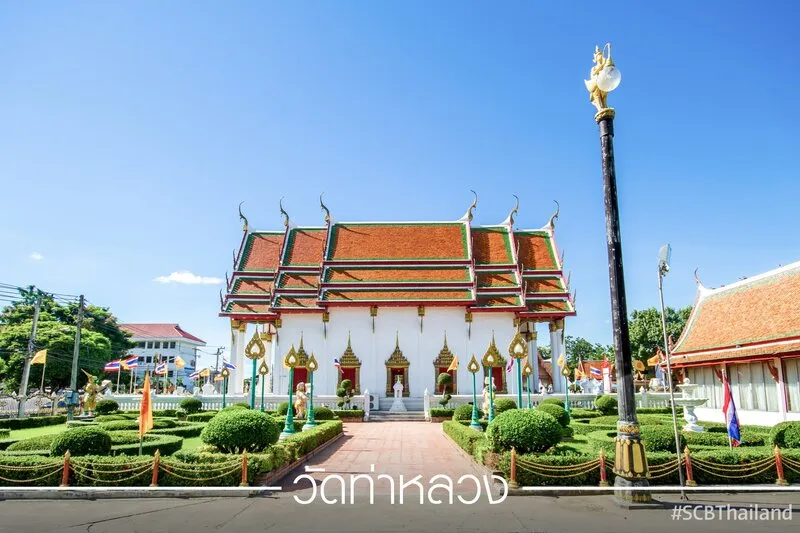
2. Wat Tha Luang is an important royal Buddhist monastery in Phichit, located beside the Nan River in the provincial center. The temple is home to Luang Pho Phet, a highly revered Buddha image respected by residents of Phichit and Buddhist devotees from many other provinces. For this reason, Wat Tha Luang is one of the first religious destinations many travelers choose to visit when arriving in Phichit.
Highlights: Luang Pho Phet, the ordination hall, a royal Buddhist monastery beside the Nan River, Phichit’s traditional long-boat racing festival, and the temple’s role as an important spiritual center for local residents.
Wat Tha Luang was established in 1845 during the reign of King Rama III and was later elevated to the status of a third-class royal monastery. Its riverside location reflects the traditional pattern of Thai settlements, where temples, markets, communities, and water transportation routes often developed together.
Luang Pho Phet is a bronze Buddha image in the Maravijaya posture and is widely regarded as one of the most important sacred Buddha images in Phichit. Stories about the image being brought from another area to Phichit have been passed down through generations, strengthening its role as a spiritual focus for local people.
Beyond its religious significance, Wat Tha Luang plays an important role in Phichit’s cultural identity, particularly through the traditional long-boat racing festival associated with the Nan River and riverside communities. During the festival, the area around the temple and river becomes lively and provides one of the clearest expressions of the province’s relationship with its waterways.
For photographers, morning and late afternoon generally provide better light and a more pleasant atmosphere than midday. The temple can easily be combined with Bueng Si Fai and other attractions in central Phichit within a half-day itinerary.
Open Days: Daily Opening Hours: 06:30 – 18:00
Getting There: Wat Tha Luang is located on Busaba Road, Nai Mueang Subdistrict, Mueang Phichit District. It is easily accessible by private car, local transport, or hired vehicle from Phichit Railway Station.
Map (GPS):Open Google Maps – Wat Tha Luang

3. Phichit Old Town Park is one of the province’s most important historical areas, combining the remains of an ancient city, ruined temples, Phichit City Pillar Shrine, the Krai Thong legend, Chalawan Cave, old moats, city walls, and green recreational areas within the same landscape. It is particularly suitable for travelers who want to understand Phichit as an old city with a long history extending far beyond the modern image of Bueng Si Fai.
Highlights: Phichit City Pillar Shrine, Wat Mahathat, Chalawan Cave, Ko Si Mala, the old moat and city wall, and Kanchanakuman Arboretum.
The old city area is associated with the local legend of Phraya Khotrabong and with the early establishment of Phichit. The surviving ancient monuments provide evidence of earlier communities and religious centers. Wat Mahathat is especially significant because archaeological work by the Fine Arts Department revealed structural evidence associated with both the Sukhothai and Ayutthaya periods.
Phichit City Pillar Shrine is another important point within the park. The building has 2 levels. The upper level houses the city pillar, while the lower level contains an image of Phraya Khotrabong, locally respected as “Pho Pu.” Beginning a visit at the city pillar shrine provides useful cultural context before exploring the surrounding archaeological sites.
Chalawan Cave is one of the best-known attractions within the old city because of its connection with the Thai literary story of Krai Thong and the legend of the crocodile king Chalawan. Although the cave has become shallower over time because of natural sedimentation, the entrance and nearby sculptures continue to give physical form to the literary story. The area is especially useful for families and young travelers who want to experience Thai literature through a real location.
Large trees and shaded green areas give the old city park a relaxed atmosphere that distinguishes it from a conventional archaeological site. Visitors can spend around 2–3 hours exploring Phichit City Pillar Shrine, Wat Mahathat, Chalawan Cave, and sections of the old moat without rushing. Morning and late afternoon are generally more comfortable for walking than midday.
Open Days: Daily Opening Hours: Approximately 08:00 – 18:00
Getting There: From Phichit city, take the Phichit–Wang Chik route or Highway 1068 for approximately 7 km. A private car is the most convenient option, and Wat Nakhon Chum can easily be included in the same itinerary.
Map (GPS):Open Google Maps – Phichit Old Town Park
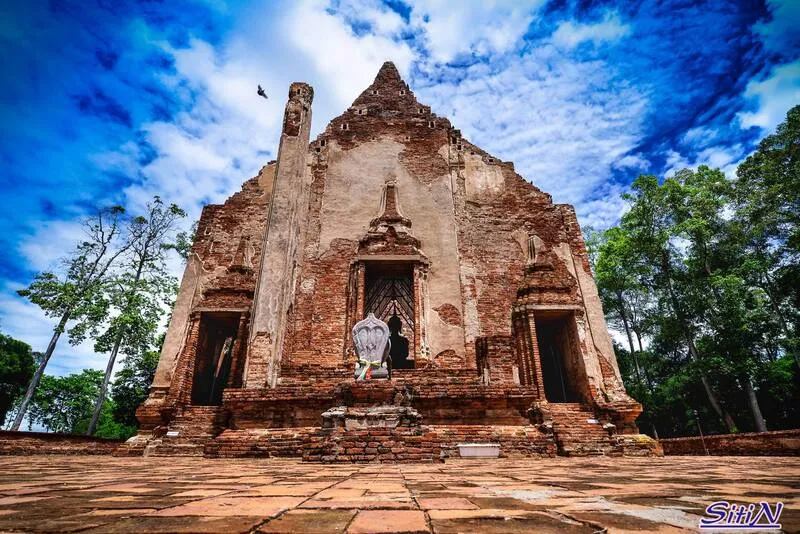
4. Wat Pho Prathap Chang is one of the most important historical monuments in Phichit Province. Located in Pho Prathap Chang District, the temple is directly associated with King Sanphet VIII, better known as King Suea of Ayutthaya. It was constructed between 1699 and 1701 as a memorial in an area connected with the king’s early life.
Highlights: A large historic viharn, Ayutthaya-period architecture, double temple walls, ancient entrance gateways, Luang Pho To or Luang Pho Yim, an old takhian tree, and a tranquil setting near the old Phichit River.
The architecture reflects Ayutthaya artistic traditions, particularly in the temple layout, enclosing walls, and substantial brick-and-plaster structures. Although more than 300 years have passed, the surviving architectural remains still allow visitors to imagine the scale and importance of the original temple complex.
Wat Pho Prathap Chang was officially registered as an ancient monument in 1935, demonstrating its national significance in terms of history, architecture, and local memory. It is particularly valuable for travelers interested in Ayutthaya history who want to see important architectural evidence outside the present-day province of Ayutthaya.
Large trees and a peaceful atmosphere surround the temple, allowing the historic structures to remain part of a living landscape rather than appearing isolated from the present-day community. Visitors should allow enough time to walk slowly around the viharn, walls, gateways, and surrounding grounds instead of treating the temple only as a brief photography stop.
Wat Pho Prathap Chang can easily be combined with Wat Hiranyaram or Wat Bang Khlan, making the area suitable for a full-day historical and spiritual route through the southern part of Phichit Province.
Open Days: Daily Opening Hours: 08:00 – 17:00
Getting There: Driving from Phichit city to Pho Prathap Chang District is the most practical option. The route can continue onward to Pho Thale District within the same day.
Map (GPS):Open Google Maps – Wat Pho Prathap Chang

5. Wat Hiranyaram (Wat Bang Khlan) is one of the most important temples in Pho Thale District and is known throughout Thailand because of its association with Luang Pho Ngoen Phutthachoti, a highly revered Buddhist master. The temple stands in the Ban Wang Tako area near the old Nan River and was formerly known as “Wat Wang Tako.”
Highlights: The image of Luang Pho Ngoen, Nakhon Chai Bowon Museum, sacred objects, Buddha images, historical artifacts, the atmosphere of an old riverside temple, and the story of Luang Pho Ngoen Phutthachoti.
Luang Pho Ngoen is deeply connected with the identity of Phichit. He is remembered for his disciplined monastic practice, compassion, and strict observance of Buddhist principles. Local communities regarded him as an important spiritual refuge, and over time his reputation spread far beyond Phichit to Buddhist devotees throughout Thailand.
One of the most important places within the temple is Nakhon Chai Bowon Museum, a 2-storey mondop-style building. The upper floor contains a life-size image of Luang Pho Ngoen, while the lower floor displays Buddha images, votive tablets, ceramics, traditional objects, and items donated by devotees. The museum therefore has value both as a religious place and as a source of local historical knowledge.
Travelers interested in Thai amulets and sacred objects will find Wat Bang Khlan particularly significant because objects associated with Luang Pho Ngoen are widely known among collectors and devotees. However, a meaningful visit should also include an understanding of his life, religious discipline, and contribution to Buddhism rather than focusing only on amulets.
Wat Bang Khlan can be included in the same route as Wat Pho Prathap Chang and Nakhon Chai Bowon Forest Park, allowing travelers to explore the Pho Thale–Pho Prathap Chang area efficiently without repeatedly returning to Phichit city.
Open Days: Daily Opening Hours: 08:00 – 17:00
Getting There: The temple is located in Bang Khlan Subdistrict, Pho Thale District. A private car is the most convenient option, particularly when continuing from Wat Pho Prathap Chang or traveling onward to Nakhon Chai Bowon Forest Park.
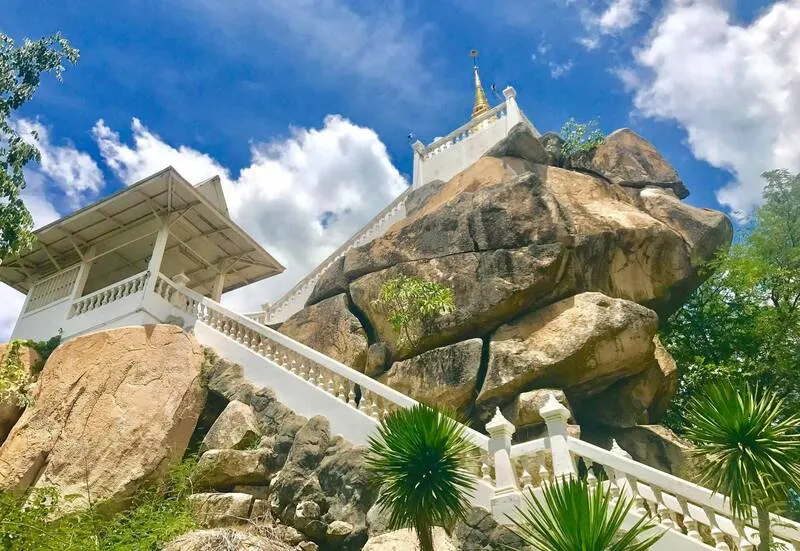
6. Wat Khao Rup Chang is a historic temple in Dong Pa Kham Subdistrict, Mueang Phichit District. Unlike most temples in the province, it occupies a hill formed by pale rocks that appear to resemble an elephant, with a chedi rising above the summit. The site combines Buddhist faith, history, and elevated views in a province otherwise dominated by lowland river-basin landscapes.
Highlights: Pale rocks resembling an elephant, a chedi on the hilltop, a 136-step naga staircase, panoramic views over Phichit, and the atmosphere of a Buddhist sanctuary on elevated terrain.
The temple is historically associated with the Ayutthaya period and is believed to have been established around 1701, approximately the same period as Wat Pho Prathap Chang. Constructing temples on hills or other elevated locations was common in many historic Buddhist landscapes because higher ground could be interpreted as sacred and suitable for important religious structures.
Visitors climb approximately 136 naga-flanked steps to reach the upper terrace. Along the way, there are opportunities to pause and look back across the surrounding plains. At the top, the chedi and broad views offer a perspective very different from Phichit’s typical wetland and agricultural landscapes.
The name “Khao Rup Chang” refers to the pale rock formations that resemble an elephant. These rocks have become the temple’s distinctive visual identity. For photographers, morning and late afternoon are the most comfortable periods because temperatures are lower and the light is generally softer.
Wat Khao Rup Chang can be combined with attractions in central Phichit or with the route toward Wat Pho Prathap Chang. Visitors should wear suitable walking shoes and carry drinking water, especially during hot weather.
Open Days: Daily Opening Hours: 06:00 – 18:00
Getting There: The temple is on the Phichit–Taphan Hin route, approximately 15 km from central Phichit. Private car or motorcycle is the most convenient form of transportation.
Map (GPS):Open Google Maps – Wat Khao Rup Chang
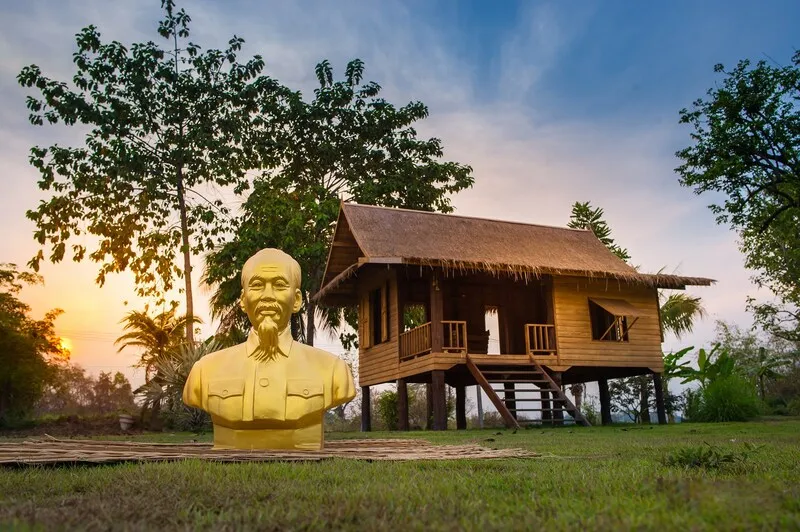
7. Ban Dong Ho Chi Minh Museum is a historical and cultural learning center that differs significantly from most other attractions in Phichit. It connects the Ban Dong community with the story of President Ho Chi Minh and with the history of Thai–Vietnamese relations, giving the site importance beyond local history alone.
Highlights: Exhibitions on Thai–Vietnamese history, the story of Ho Chi Minh in Thailand, reconstructed buildings, the Thai-Vietnamese community, and learning spaces connected with wider ASEAN history.
The museum was developed through cooperation among organizations in Phichit Province, Pa Makhap Subdistrict Administrative Organization, the National Discovery Museum Institute, and the Ho Chi Minh Museum in Hanoi. Its main purpose is to preserve the memory of the Ban Dong community and explain the relationship between people in Thailand and Vietnam through local-level history.
The museum covers approximately 6,400 square meters and was developed on land that had formerly served as a cemetery for Thai people of Vietnamese descent. The 2-storey museum presents exhibitions on community life, Ho Chi Minh’s movements in Thailand, and wider themes relating to geopolitics and Southeast Asian history.
The museum is particularly suitable for students, historians, and travelers who want to see a side of Phichit that extends beyond the Chalawan legend and Buddhist temples. Allowing approximately 1–2 hours provides enough time to read the displays and understand the exhibitions without rushing.
Ban Dong Ho Chi Minh Museum can easily be combined with Bueng Si Fai, Wat Tha Luang, or markets and communities around Phichit city, creating an itinerary that includes Thai history, local culture, and an international historical connection within a single day.
Open Days: Tuesday – Sunday Opening Hours: 09:00 – 16:00
Getting There: The museum is located at Village No. 5, Pa Makhap Subdistrict, Mueang Phichit District. From the provincial center, visitors can reach the museum by private car, rental car, or local hired transport.
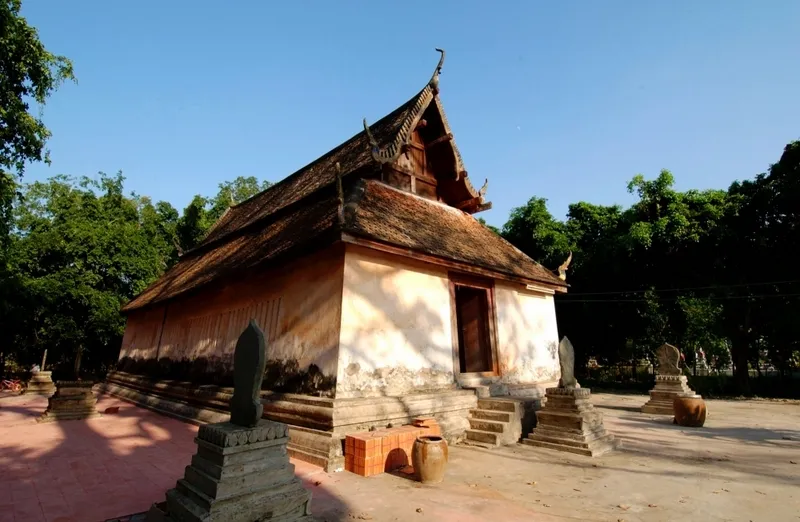
8. Wat Nakhon Chum is an old temple in the historic city area of Phichit and is highly important for understanding the development of the old settlement. Its main architectural feature is an ancient ordination hall that retains many traditional construction characteristics, making the temple particularly valuable for visitors interested in history and architecture.
Highlights: An old brick-and-plaster ordination hall, wooden roofing, traditional wooden joints using pegs rather than nails, ventilation openings instead of conventional windows, and a historic temple atmosphere connected with ancient Phichit.
Wat Nakhon Chum lies within the broader old city landscape and is closely associated with the historical development of Phichit. The name “Nakhon Chum” suggests a place where people gathered, and the temple historically served as an important community center and site for major ceremonies, including the traditional oath-of-allegiance ceremony.
The ancient ordination hall is the architectural heart of the temple. Its brick-and-plaster walls, wooden roof structure, and peg-based joinery demonstrate traditional craftsmanship. Ventilation openings used in place of conventional windows also reveal older approaches to the design of Buddhist religious buildings.
Another interesting aspect is the way the temple changed over time. When nearby temples were abandoned, some religious structures and objects were incorporated into Wat Nakhon Chum, allowing the present site to preserve elements representing more than one historical period.
Wat Nakhon Chum is best visited together with Phichit Old Town Park because both belong to the same historical landscape. Travelers can examine the temple architecture before continuing to the city pillar shrine, Wat Mahathat, and Chalawan Cave.
Open Days: Daily Opening Hours: 09:00 – 17:00
Getting There: The temple is located along Highway 1068, the Phichit–Sam Ngam–Wang Chik route, in Mueang Kao Subdistrict. It is easily accessible from central Phichit by private car.
Map (GPS):Open Google Maps – Wat Nakhon Chum

9. Nakhon Chai Bowon Forest Park is located around Ban Nong Dong in Tha Sao Subdistrict, Pho Thale District. It is one of Phichit’s important natural areas and is notable for preserving a large stand of yang forest and mature trees that create a cool, shaded environment unlike the agricultural landscapes surrounding much of the province.
Highlights: Yang forest, large mature trees, an approximately 2,188-meter nature trail, birdwatching areas, biodiversity, and a peaceful lowland forest environment.
The forest park lies within Nong Dong National Reserved Forest and contains a lowland forest ecosystem with some wetter areas. Mature trees create habitat for birds, insects, reptiles, and understory vegetation, giving the site both conservation and tourism value.
The nature trail contains several learning stations where visitors can observe plant species, forest conditions, signs of wildlife, and relationships between organisms within the ecosystem. The trail is suitable for families, school groups, and travelers interested in an accessible introduction to forest walking.
The cool season is particularly suitable for birdwatching because birds are more active and easier to observe in the area. Early morning generally offers the best opportunities. Visitors should walk quietly and avoid loud sounds that could disturb wildlife.
Morning and late afternoon are the most comfortable times for walking because temperatures are lower and sunlight filtering through the tree canopy creates attractive forest scenery. Nakhon Chai Bowon Forest Park can be visited after Wat Bang Khlan, creating a balanced Pho Thale itinerary combining Buddhist heritage and nature within the same day.
Open Days: Daily Opening Hours: 08:30 – 16:30
Getting There: The forest park is located at Ban Nong Dong, Tha Sao Subdistrict, Pho Thale District, approximately 17 km from central Pho Thale. A private car is the most convenient option.
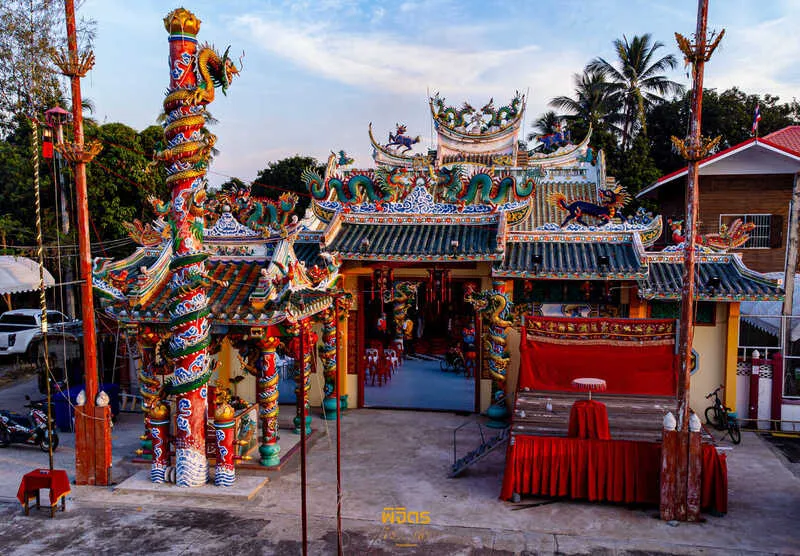
10. Chao Mae Tubtim Tha Lo Shrine is an old Chinese shrine in Tha Lo Subdistrict, Mueang Phichit District. Located on the eastern bank of the Nan River, it reflects the heritage of the Hainanese Chinese community that historically settled and traded along the river.
Highlights: Chao Mae Tubtim or Tui Buai Teng Niang, Guan Yu, Pun Thao Kong and Pun Thao Ma, a carved wooden palanquin, symbols of the Eight Immortals, and historic Chinese shrine architecture beside the Nan River.
Devotion to Chao Mae Tubtim is deeply associated with water and the protection of people traveling by boat. For the Tha Lo community, where the Nan River once served as a major route for transportation and trade, the shrine functioned both as a place of worship and as a spiritual center for families and people whose livelihoods depended on the river.
According to local tradition, the images of Chao Mae Tubtim and Guan Yu were brought from Hainan Island in China around 1867, during a period when the Hainanese Chinese community was growing in Ban Tha Lo. Teak logs were later donated for the construction of a large shrine where the community could worship the deities.
The shrine was not important only for religion and belief. In the past, it also served as a place where children in the community learned both Thai and Chinese writing. This educational role shows how Chinese shrines often functioned as broader social and cultural institutions for overseas Chinese communities.
Visitors can discover a different side of Phichit here, one that extends beyond Thai Buddhist temples and the old city. Chao Mae Tubtim Tha Lo Shrine reveals the history of trade, migration, settlement, and Hainanese Chinese culture. It can be combined with Ban Dong Ho Chi Minh Museum and attractions in central Phichit to create a more diverse community-history itinerary.
Open Days: Contact the shrine before visiting Opening Hours: Contact the shrine before visiting
Getting There: The shrine is located in Tha Lo Subdistrict, Mueang Phichit District, beside the Nan River and close to the Northern Railway line. It can be reached conveniently by private car from central Phichit.

11. Dong Klang Riverside Floating Market is a community market beside Khao Tok Canal in front of Wat Dong Klang, Mueang Phichit District. The market brings together canal-side life, local food, agricultural produce, handicrafts, and a nostalgic market atmosphere in one place. It is particularly suitable for travelers who want to experience community life rather than focusing only on temples and historical monuments.
Highlights: A canal-side market, traditional atmosphere, local food, community produce, OTOP products, water-based alms giving, and cultural activities around Wat Dong Klang.
The market was developed around the idea of using the cultural resources of the canal-side community to create tourism activities and additional opportunities for local residents to sell their products. Many stalls are therefore closely connected with everyday local life, selling vegetables, fruit, freshly prepared food, Thai desserts, herbal drinks, basketry, and community-made souvenirs.
The market intentionally maintains a simple local appearance through bamboo structures, traditional roofing materials, local-style serving containers, and places to sit beside the canal. This creates an atmosphere quite different from a large commercial market. The close interaction between visitors and local vendors is an important part of the experience.
Food is one of the strongest reasons to visit. Dishes reflect Phichit’s local food culture and include freshwater fish, chili dips, local vegetables, Thai desserts, and dishes prepared with ingredients grown or produced in the community. Eating beside the canal helps visitors understand food culture as something connected directly with place and community.
Sunday morning is particularly distinctive because of the water-based alms-giving activity, which brings together community life, Buddhism, and the canal landscape. Saturday evening is better for walking through the market, sampling food, and enjoying the atmosphere around sunset. Visitors who want the fullest experience should plan their trip according to the market’s operating days.
Open Days: Saturday – Sunday Opening Hours: Saturday 15:00 – 20:00 / Sunday water-based alms giving begins at approximately 07:30
Getting There: The market is in front of Wat Dong Klang, Dong Klang Subdistrict, Mueang Phichit District. A private car is the most convenient option, and the visit can be combined with central Phichit or Bueng Si Fai.

12. Wat Thap Khlo (Suan Phothisat) is an important temple in Thap Khlo District, distinguished by its peaceful atmosphere, large green area, and strong connection with Buddhist meditation practice. The site began with the concept of creating a natural environment for meditation before gradually developing into a temple and provincial meditation center.
Highlights: Suan Phothisat, a meditation area of more than 111 rai, walking-meditation paths, Vipassana practice areas, large trees, and a tranquil forest-monastery atmosphere.
The site began developing as “Suan Phra Phothisat” in 1977 under Phra Maha Koson Chantawanno together with Buddhist supporters. The original objective was not to construct large buildings but to create an environment suitable for meditation, mindfulness, and Buddhist practice in natural surroundings.
As the site developed and attracted increasing numbers of practitioners, it was officially established as a temple in 1992 and received royal permission to establish its formal monastic boundary in 1998. Its development therefore reflects a gradual transformation from a small meditation garden into an important Buddhist center for the surrounding community.
In 2002, Wat Thap Khlo was selected as the first official provincial meditation center in Phichit, reflecting its facilities, meditation teachers, and suitable environment. Travelers interested in meditation and Vipassana can therefore experience a functioning practice environment rather than simply visiting a conventional sightseeing temple.
With extensive grounds and many mature trees, Wat Thap Khlo is suitable for visitors who want to slow down, walk in meditation, sit quietly, or take a break from a busy travel schedule. Visitors should dress politely, maintain a quiet atmosphere, and avoid disturbing people engaged in meditation practice.
Open Days: Daily Opening Hours: 06:00 – 18:00
Getting There: The temple is located in Thap Khlo Subdistrict near Thap Khlo Municipality Soi 5. It is easily reached by car from Taphan Hin District or Highway 11.
Map (GPS):Open Google Maps – Wat Thap Khlo
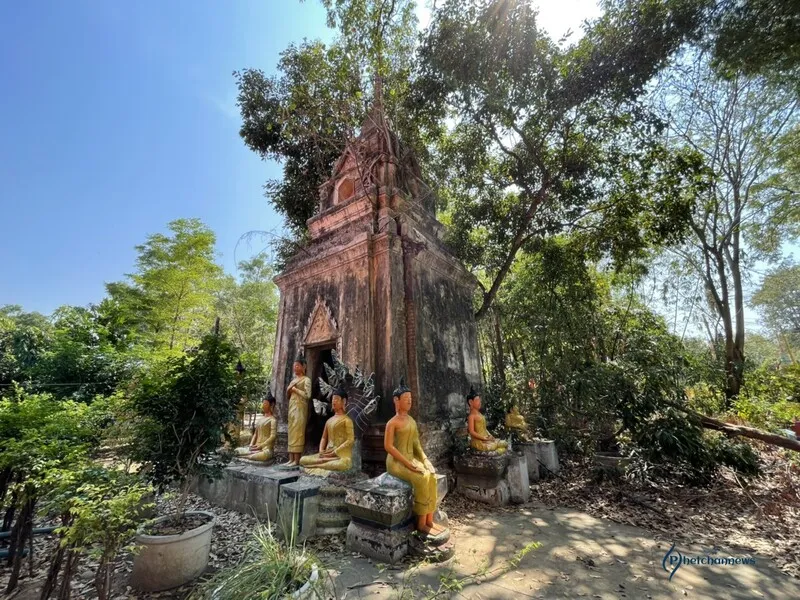
13. Wat Tha Chang is a community Buddhist temple in Noen Makok Subdistrict, Bang Mun Nak District. It is easily recognized by 2 large elephant sculptures at the entrance and by an old sandstone Buddha image respected by local residents. The temple retains the simple atmosphere of a riverside community and is located only a short distance from central Bang Mun Nak.
Highlights: Two large elephant sculptures, an old sandstone Buddha image, a religious site beside the Nan River, and a living community-temple atmosphere.
The name “Tha Chang” corresponds with the elephant imagery that has become the temple’s most visible symbol. Visitors immediately encounter the large elephant sculptures when entering the temple grounds, making the site easy to recognize and creating an interesting photography point alongside the religious visit.
The temple’s riverside position reflects the traditional settlement pattern in which Buddhist temples were often located near waterways. Rivers once served simultaneously as transportation routes, trading corridors, water sources, and centers of settlement, so temples became both religious spaces and gathering places for local communities.
The temple contains an ordination hall, preaching hall, prayer hall, and monks’ residences. These are active religious buildings rather than structures created specifically for tourism, allowing visitors to observe a temple that remains part of the daily life of the surrounding community.
Wat Tha Chang is suitable for travelers exploring Bang Mun Nak who want to visit a local temple with a distinctive identity. It can be combined with Wat Huai Khen or attractions in the Pho Thale area.
Open Days: Daily Opening Hours: Daytime visits recommended
Getting There: The temple is in Noen Makok Subdistrict, approximately 2 km from central Bang Mun Nak. It is easily accessible by private car or motorcycle.
Map (GPS):Open Google Maps – Wat Tha Chang

14. Wat Ban Noi is an important temple in Pho Thale District known for a distinctive work of devotional art associated with Luang Pho Ngoen Phutthachoti. Its most unusual feature is a large image of Luang Pho Ngoen created by weaving and shaping brass wire, a technique rarely seen in Buddhist religious sculpture.
Highlights: A brass-wire woven image of Luang Pho Ngoen, devotional artwork that required more than 1 year and 9 months to complete, and a location that connects naturally with the wider Luang Pho Ngoen pilgrimage route around Wat Bang Khlan.
The principal image of Luang Pho Ngoen measures approximately 4 sok across the lap and 5 sok 9 inches in height. Instead of conventional casting or sculpting, brass wire was bent, woven, and assembled into the form of the revered monk. The process required craftsmanship, patience, structural understanding, and careful attention to proportion.
The woven brass sculpture demonstrates how devotional art can use contemporary materials while maintaining deep respect for the religious figure being represented. Each length of wire must be arranged systematically so that the structure remains stable while accurately preserving the form and character of Luang Pho Ngoen.
Wat Ban Noi lies in the Pho Thale area, which is deeply connected with the story and legacy of Luang Pho Ngoen. It is therefore particularly suitable for visitors creating a Luang Pho Ngoen pilgrimage route. The visit can easily continue to Wat Hiranyaram or Wat Bang Khlan.
Although many visitors are interested in amulets and sacred objects, Wat Ban Noi reveals another dimension of devotion: the use of craftsmanship and creative art to express respect for a revered Buddhist master. Travelers interested in local art should take time to examine the details of the brass-wire work closely.
Open Days: Daily Opening Hours: Daytime visits recommended
Getting There: Take Highway 1067 and continue onto a local road approximately 3 km before reaching Wat Bang Khlan. A private car is the most convenient option.
Map (GPS):Open Google Maps – Wat Ban Noi
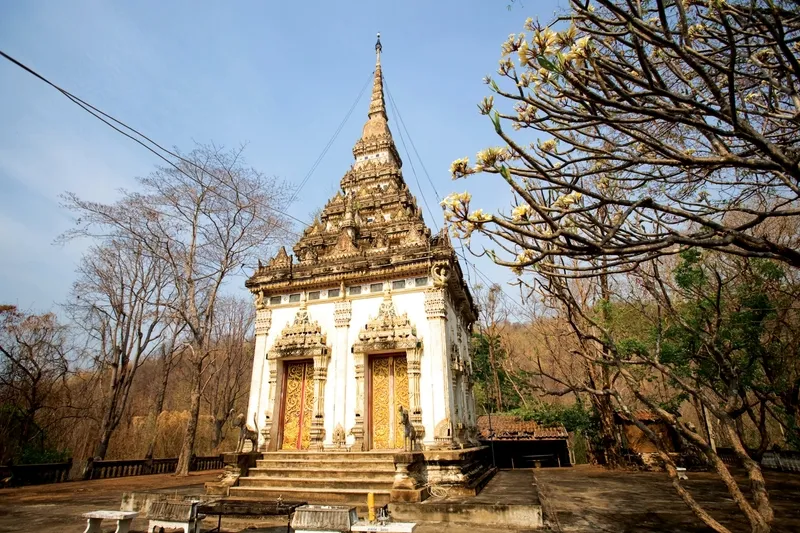
15. Wat Phra Phutthabat Khao Ruak is located in Wang Lum Subdistrict, Taphan Hin District. The temple combines religion, local history, old sacred objects, and educational features within the same grounds. Important attractions include a replica Buddha footprint, an image of Luang Pu Ngon Sorayo, and a large drum made from pradu wood.
Highlights: A replica Buddha footprint, Luang Pu Ngon Sorayo, a giant pradu-wood drum, an old laterite hermit sculpture, and educational areas within the temple.
The replica Buddha footprint was modeled after the famous footprint at Wat Phra Phutthabat in Saraburi Province and is respected by local Buddhist devotees. Worshipping a Buddha footprint symbolizes remembrance of the Buddha and serves as a reminder to follow Buddhist teachings in daily life.
Another notable feature is the large pradu-wood drum, which provides an opportunity to learn about traditional woodworking and the cultural use of drums in religious activities. An old laterite hermit sculpture, said locally to be several centuries old, adds an archaeological dimension to the site.
The story of Luang Pu Ngon Sorayo also gives the temple importance for travelers interested in respected Buddhist monks and the history of Buddhist teaching in Phichit. Visitors can worship, examine important religious objects, and explore local history during the same visit.
The temple is suitable for families and travelers looking for a religious destination with broader educational value. Individual attractions within the grounds can introduce visitors to Buddhism, craftsmanship, and local history.
Open Days: Daily Opening Hours: Daytime visits recommended
Getting There: The temple is at Village No. 5, Wang Lum Subdistrict, approximately 10 km from central Taphan Hin. A private car is the most convenient option.

16. Wat Yang Sam Ton Wanaram (Wat Tri Yang) is an important temple in Nong Phra Subdistrict, Wang Sai Phun District. Its location beside Highway 11 makes it a convenient Buddhist stop for travelers passing through Phichit. The principal attractions are a large viharn dedicated to Luang Pho Ngoen and images of several respected Buddhist masters.
Highlights: A large Luang Pho Ngoen viharn, images of 25 respected Buddhist masters, a convenient roadside location, and its place on the broader Luang Pho Ngoen pilgrimage route.
The temple’s formal name is Wat Tri Yang Wanaram, although local people commonly call it “Wat Yang Sam Ton” after the village. It was previously known as Wat Rat Bamrung before developing into an important spiritual center for the Wang Sai Phun community.
Its location beside Highway 11 gives the temple a slightly different role from a conventional village temple. It serves both local residents and long-distance travelers, many of whom stop to pay respect and ask for blessings for safety before continuing their journeys.
The large Luang Pho Ngoen viharn is the most important feature within the temple. Luang Pho Ngoen Phutthachoti is deeply connected with Phichit, and the presence of a large image has established Wat Yang Sam Ton as another destination for devotees following the Luang Pho Ngoen pilgrimage route.
The collection of images representing several respected Buddhist masters also gives the temple an educational dimension. Visitors interested in important Thai monks can explore the images and pay respect in sequence.
Open Days: Daily Opening Hours: 08:00 – 17:00
Getting There: The temple stands beside Highway 11 at Ban Yang Sam Ton, Nong Phra Subdistrict, Wang Sai Phun District, making it an easy stop directly from the main road.
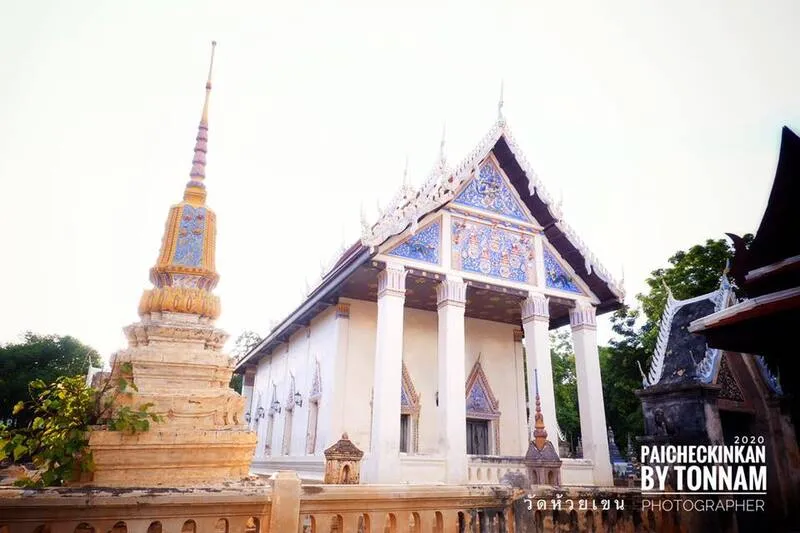
17. Wat Huai Khen is an old temple in Bang Mun Nak District with particular importance for traditional architecture and folk mural painting. Its main attraction is an old ordination hall that has been recognized for conservation and still preserves historic mural paintings, even though some sections have deteriorated naturally over time.
Highlights: An old ordination hall, historic mural paintings, scenes from the life of the Buddha, the Ten Great Birth Stories, the Vessantara Jataka, and folk art retaining many original characteristics.
The old ordination hall is constructed from brick and plaster with a wooden roof structure covered by traditional tiles. Its appearance is not as elaborate as royal court architecture, but its importance lies in its age, community craftsmanship, and surviving original details. The walls, doorways, windows, and aged surfaces allow visitors to experience the passage of history directly.
The murals inside the ordination hall are the artistic heart of the temple. Their subjects include the life of the Buddha, the Ten Great Birth Stories, and the Vessantara Jataka. Paintings such as these historically functioned as visual tools for teaching Buddhist principles at a time when books and formal educational materials were not widely available.
The charm of the murals lies in their lines, compositions, and folk-art character. They do not follow the refinement of royal court painting but instead reveal how local communities understood and visually communicated Buddhist stories. Areas of deterioration should therefore be viewed as evidence of age rather than as a weakness of the site.
Visitors should examine the paintings carefully without touching the walls or mural surfaces. Wat Huai Khen is particularly suitable for travelers interested in folk art, local history, traditional architecture, and the conservation of historic Buddhist buildings.
Open Days: Daily Opening Hours: Daytime visits recommended
Getting There: The temple is located in Huai Khen Subdistrict, Bang Mun Nak District, approximately 8 km from central Bang Mun Nak along the Bang Mun Nak–Wang Ngio route.
Map (GPS):Open Google Maps – Wat Huai Khen

18. Wat Hua Dong is an old temple in Hua Dong Subdistrict, Mueang Phichit District, that has served its community for more than 150 years. It became particularly well known after an image of Luang Pho Ngoen was discovered near an Inthanin tree within the temple grounds in 1995.
Highlights: A temple established in 1870, an image of Luang Pho Ngoen, the Inthanin tree connected with local religious belief, and a peaceful community-temple atmosphere.
The temple was established in 1870 and received its formal monastic boundary in 1925. Covering approximately 40 rai, the grounds retain the atmosphere of a traditional community temple with large trees and shaded spaces used for religious activities.
An event that brought additional attention to the temple took place on February 17, 1995, when a Luang Pho Ngoen image approximately 5 inches across the lap was discovered near an Inthanin tree. The event became part of the collective memory and religious devotion of the local community.
The Inthanin tree is therefore not regarded simply as an old tree but as a place connecting nature, religious belief, and the temple’s history. Some devotees visit the temple to pay respect and see the place associated with the discovery.
Wat Hua Dong is suitable for travelers interested in the Luang Pho Ngoen pilgrimage route and in understanding how devotion spreads across multiple communities rather than being limited to Wat Bang Khlan. It can be combined with Wat Khao Rup Chang because both lie along the Phichit–Taphan Hin travel corridor.
Open Days: Daily Opening Hours: 08:00 – 17:00
Getting There: The temple is in Hua Dong Subdistrict on the Phichit–Taphan Hin route, approximately 10 km from central Phichit.
Map (GPS):Open Google Maps – Wat Hua Dong

19. Khajorn Farm (Ostrich Farm) is an agricultural tourism attraction in Wang Ngio Subdistrict, Dong Charoen District. Its main feature is the raising of ostriches together with several other animal species. The farm is particularly suitable for families, children, students, and visitors interested in livestock and farm management.
Highlights: Ostriches, a working animal farm, other animals such as crocodiles, peacocks, deer, and wild boars, and the rural agricultural landscape of Dong Charoen.
Ostriches attract particular attention because of their large size, unusual appearance, and ability to run at high speed. Seeing the animals in person allows visitors to understand their physical characteristics, behavior, and basic management much more clearly than learning from photographs or books alone.
The farm also introduces visitors to the concept of economic livestock. Ostrich farming requires careful management of space, feed, animal health, enclosures, and safety, giving the visit educational value in addition to entertainment.
Dong Charoen District is characterized by rural landscapes and agricultural land, so the journey to the farm differs considerably from visiting attractions in the provincial city. Travelers pass rice fields, local roads, and small communities before reaching the farm.
Families should allow at least 1–2 hours so that children can observe the animals without rushing. Visitors should follow farm regulations, avoid placing hands near animals without permission, and ask staff before feeding any animals.
Open Days: Daily Opening Hours: 08:00 – 17:00
Getting There: The farm is in Wang Ngio Subdistrict, Dong Charoen District, approximately 57 km from central Phichit. A private car is recommended, and travelers should check the route before departure.
Map (GPS):Open Google Maps – Khajorn Farm

20. Wat Thewaprasat is one of the most important temples in Taphan Hin and is best known for Phra Phuttha Ket Mongkhon, locally called “Luang Pho Yai” or “Luang Pho To Taphan Hin.” This enormous golden Buddha image in the blessing posture can be seen from a considerable distance and has become one of the defining landmarks of Taphan Hin District.
Highlights: Phra Phuttha Ket Mongkhon, a monumental golden Buddha image with a lap width of approximately 20 meters, a total height including the base of approximately 33 meters, and a construction history shaped by strong community faith.
Phra Phuttha Ket Mongkhon is a reinforced-concrete Buddha image in the blessing posture. The Buddha image itself is approximately 29 meters high, with a base of approximately 4 meters. From the open courtyard, the image rises prominently above the surrounding buildings and can be appreciated from a considerable distance.
The interior of the Buddha image is hollow and includes space used as monks’ living quarters. This demonstrates a design combining Buddhist religious art with practical use rather than functioning only as a monumental sculpture viewed from outside.
Construction began on January 12, 1965 under Phra Khru Suthep Sitthikan, the abbot at that time, together with the support of the people of Taphan Hin. The project required substantial funding, labor, and community cooperation, transforming the Buddha image into a symbol of both Buddhist devotion and collective effort.
King Bhumibol Adulyadej, Rama IX, bestowed the name “Phra Phuttha Ket Mongkhon,” adding further auspicious significance to the image. Today, the temple attracts both Buddhist worshippers and travelers passing through Taphan Hin. It can conveniently be combined with Wat Phra Phutthabat Khao Ruak and Wat Hua Dong.
Open Days: Daily Opening Hours: 06:00 – 18:00
Getting There: The temple is located in Taphan Hin District. Travelers from central Phichit can arrive by private car, train, or local transport to Taphan Hin and then continue to the temple.
Map (GPS):Open Google Maps – Wat Thewaprasat
| Topic | Details |
| Mueang Phichit District and Nearby Areas | 1. Bueng Si Fai 2. Wat Tha Luang 3. Phichit Old Town Park 6. Wat Khao Rup Chang 7. Ban Dong Ho Chi Minh Museum 8. Wat Nakhon Chum 10. Chao Mae Tubtim Tha Lo Shrine 11. Dong Klang Riverside Floating Market 18. Wat Hua Dong This zone is suitable for travelers who want to see Phichit’s major landmarks, understand old-city history and the Chalawan legend, visit temples, experience local communities, and discover life along the Nan River. |
| Pho Prathap Chang–Pho Thale Zone | 4. Wat Pho Prathap Chang 5. Wat Hiranyaram (Wat Bang Khlan) 9. Nakhon Chai Bowon Forest Park 14. Wat Ban Noi Best for travelers interested in Ayutthaya-period history, the Luang Pho Ngoen pilgrimage route, Buddhist art, religious craftsmanship, and nature walks through a remaining yang forest. |
| Taphan Hin–Thap Khlo–Wang Sai Phun Zone | 12. Wat Thap Khlo (Suan Phothisat) 15. Wat Phra Phutthabat Khao Ruak 16. Wat Yang Sam Ton Wanaram (Wat Tri Yang) 20. Wat Thewaprasat Suitable for Buddhist pilgrimage, meditation, learning about respected monks, viewing important Buddha images, and creating a merit-making route around Taphan Hin and Highway 11. |
| Bang Mun Nak–Dong Charoen Zone | 13. Wat Tha Chang 17. Wat Huai Khen 19. Khajorn Farm (Ostrich Farm) Best for community temples, traditional mural painting, local architecture, regional history, and family-oriented agricultural tourism. |
| Best for Families and Children | 1. Bueng Si Fai 2. Phichit Old Town Park 3. Ban Dong Ho Chi Minh Museum 4. Nakhon Chai Bowon Forest Park 5. Dong Klang Riverside Floating Market 6. Wat Phra Phutthabat Khao Ruak 7. Khajorn Farm (Ostrich Farm) Suitable for family trips combining recreation, history, culture, nature education, local food, and animals. |
| Best for Buddhist and Spiritual Travel | 1. Wat Tha Luang 2. Wat Pho Prathap Chang 3. Wat Hiranyaram (Wat Bang Khlan) 4. Wat Khao Rup Chang 5. Wat Nakhon Chum 6. Wat Thap Khlo 7. Wat Tha Chang 8. Wat Ban Noi 9. Wat Phra Phutthabat Khao Ruak 10. Wat Yang Sam Ton Wanaram 11. Wat Huai Khen 12. Wat Hua Dong 13. Wat Thewaprasat |
| Luang Pho Ngoen Pilgrimage Route | 1. Wat Hiranyaram (Wat Bang Khlan) – the principal center of devotion associated with Luang Pho Ngoen 2. Wat Ban Noi – the brass-wire woven image of Luang Pho Ngoen 3. Wat Yang Sam Ton Wanaram – the large Luang Pho Ngoen viharn 4. Wat Hua Dong – connected with the story of the Luang Pho Ngoen image discovered near an Inthanin tree This route shows how devotion to Luang Pho Ngoen developed across several communities in Phichit rather than remaining centered only at Wat Bang Khlan. |
| Best for History and Ancient Sites | 1. Phichit Old Town Park 2. Wat Pho Prathap Chang 3. Wat Nakhon Chum 4. Wat Khao Rup Chang 5. Wat Huai Khen 6. Ban Dong Ho Chi Minh Museum 7. Chao Mae Tubtim Tha Lo Shrine These sites introduce visitors to ancient Phichit, Sukhothai and Ayutthaya heritage, Hainanese Chinese settlement, and Thai–Vietnamese history. |
| Best for Art and Architecture | 1. Wat Pho Prathap Chang – Ayutthaya-period architecture and ancient walls 2. Wat Nakhon Chum – old ordination hall and traditional wooden joinery 3. Wat Huai Khen – historic murals and local folk art 4. Wat Ban Noi – brass-wire woven image of Luang Pho Ngoen 5. Chao Mae Tubtim Tha Lo Shrine – Chinese shrine art and architecture 6. Wat Thewaprasat – monumental Phra Phuttha Ket Mongkhon Buddha image |
| Best for Nature and Green Spaces | 1. Bueng Si Fai 2. Nakhon Chai Bowon Forest Park 3. Wat Khao Rup Chang 4. Wat Thap Khlo (Suan Phothisat) 5. Khajorn Farm (Ostrich Farm) Bueng Si Fai is suitable for waterfront recreation, Nakhon Chai Bowon Forest Park for nature walks and birdwatching, Wat Khao Rup Chang for elevated views, and Wat Thap Khlo for its peaceful forest-style meditation environment. |
| Best for Culture and Community Life | 1. Chao Mae Tubtim Tha Lo Shrine 2. Dong Klang Riverside Floating Market 3. Ban Dong Ho Chi Minh Museum 4. Wat Tha Chang 5. Wat Hua Dong Best for understanding Hainanese Chinese culture, the Thai-Vietnamese community, canal-side life, local temples, and relationships between religious sites and local communities. |
| Best for Photography | 1. Bueng Si Fai and the Chalawan sculpture 2. Wat Khao Rup Chang and its hilltop viewpoint 3. Wat Pho Prathap Chang and ancient architecture 4. Chao Mae Tubtim Tha Lo Shrine 5. Dong Klang Riverside Floating Market 6. Wat Thewaprasat and the monumental golden Buddha 7. Wat Tha Chang and its elephant sculptures 8. Nakhon Chai Bowon Forest Park and mature yang forest Morning and late afternoon generally provide more comfortable temperatures and softer light than midday. |
| Best Educational Attractions for Students | 1. Freshwater fish exhibition at Bueng Si Fai 2. Phichit Old Town Park 3. Ban Dong Ho Chi Minh Museum 4. Nakhon Chai Bowon Forest Park 5. Wat Phra Phutthabat Khao Ruak 6. Khajorn Farm (Ostrich Farm) These places cover freshwater ecology, Thai literature, ancient-city history, Thai–Vietnamese relations, forest ecosystems, Buddhism, craftsmanship, and livestock management. |
| Local Food to Try | Phichit’s local food is closely connected with freshwater landscapes and community-grown ingredients. Common local choices include freshwater fish dishes, chili dips, local vegetables, Thai desserts, and dishes prepared with seasonal agricultural products. Dong Klang Riverside Floating Market is a useful place to sample community food and locally produced goods. |
| Recommended Souvenirs | 1. OTOP and community products 2. Thai desserts and local snacks 3. Seasonal agricultural produce 4. Basketry and community handicrafts 5. Locally made products from markets and communities around Phichit |
| Distinctive Culture and Identity | The Chalawan and Krai Thong legends, traditional long-boat racing on the Nan River, devotion to Luang Pho Phet and Luang Pho Ngoen Phutthachoti, Hainanese Chinese heritage along the Nan River, the Thai-Vietnamese community at Ban Dong, local market and riverside traditions, and folk art preserved in historic temples. |
| Recommended Accommodation Areas | 1. Phichit City – convenient for Bueng Si Fai, Wat Tha Luang, Phichit Old Town Park, Wat Nakhon Chum, and Ban Dong Ho Chi Minh Museum 2. Taphan Hin – convenient for Wat Thewaprasat, Wat Phra Phutthabat Khao Ruak, Wat Hua Dong, and onward travel to Thap Khlo 3. Pho Thale – suitable for Wat Bang Khlan, Wat Ban Noi, and Nakhon Chai Bowon Forest Park A 1-day trip can be based in Phichit city, but at least 2 days are recommended for travelers who want to explore several districts. |
| 1-Day Itinerary – Phichit City and Old Town | Morning: Wat Tha Luang – pay respect to Luang Pho Phet Late Morning: Phichit Old Town Park – Wat Nakhon Chum Afternoon: Ban Dong Ho Chi Minh Museum or Chao Mae Tubtim Tha Lo Shrine Evening: Bueng Si Fai – sunset and the Chalawan sculpture |
| 1-Day Itinerary – History and Faith | Morning: Wat Pho Prathap Chang Late Morning: Wat Hiranyaram (Wat Bang Khlan) Afternoon: Wat Ban Noi Evening: Return toward Phichit city or visit another attraction along the route if time allows |
| 1-Day Itinerary – Taphan Hin and Buddhist Route | Morning: Wat Thewaprasat – pay respect to Phra Phuttha Ket Mongkhon Late Morning: Wat Phra Phutthabat Khao Ruak Afternoon: Wat Thap Khlo (Suan Phothisat) Evening: Wat Yang Sam Ton Wanaram before returning |
| 1-Day Itinerary – Nature and Family | Morning: Nakhon Chai Bowon Forest Park Midday: Explore Pho Thale or stop for a local meal Afternoon: Khajorn Farm (Ostrich Farm) Travelers returning to Phichit city can finish the day at Bueng Si Fai if time allows. |
| 2 Days 1 Night in Phichit | Day 1: Wat Tha Luang – Phichit Old Town Park – Wat Nakhon Chum – Ban Dong Ho Chi Minh Museum – Bueng Si Fai Day 2: Wat Pho Prathap Chang – Wat Hiranyaram (Wat Bang Khlan) – Wat Ban Noi – Nakhon Chai Bowon Forest Park |
| 3 Days 2 Nights in Phichit | Day 1: Bueng Si Fai – Wat Tha Luang – Phichit Old Town Park – Wat Nakhon Chum – Ban Dong Ho Chi Minh Museum Day 2: Wat Pho Prathap Chang – Wat Hiranyaram – Wat Ban Noi – Nakhon Chai Bowon Forest Park Day 3: Wat Hua Dong – Wat Thewaprasat – Wat Phra Phutthabat Khao Ruak – Wat Thap Khlo – Wat Yang Sam Ton Wanaram |
| Best Way to Get Around | A private car is the most practical option for exploring several districts because the 20 attractions are spread across Mueang Phichit, Pho Prathap Chang, Pho Thale, Taphan Hin, Thap Khlo, Wang Sai Phun, Bang Mun Nak, and Dong Charoen. Travelers arriving by train can use Phichit or Taphan Hin railway stations and continue by local transport or hired vehicle. A private or rental car is much more convenient for visiting several attractions in the same day. |
| Best Time to Visit | Phichit can be visited throughout the year. Morning and late afternoon are generally more comfortable for temples, historical sites, Bueng Si Fai, and outdoor attractions. The cooler season is particularly suitable for nature walks and birdwatching at Nakhon Chai Bowon Forest Park. Dong Klang Riverside Floating Market should be planned for Saturday or Sunday according to its operating schedule. |
Frequently Asked Questions (FAQ)
Q: Where should first-time visitors go in Phichit?
A: First-time visitors should consider Bueng Si Fai, Wat Tha Luang, Phichit Old Town Park, Wat Nakhon Chum, and Wat Hiranyaram or Wat Bang Khlan. Together, these attractions introduce travelers to the City of Chalawan, ancient history, Buddhism, and the distinctive local identity of Phichit.
Q: Can Phichit be visited in one day?
A: Yes. The most practical approach is to select one travel zone. Visitors staying in the provincial center can visit Wat Tha Luang, Phichit Old Town Park, Wat Nakhon Chum, and finish at Bueng Si Fai. Wat Bang Khlan and Wat Pho Prathap Chang are better grouped into a separate route to reduce unnecessary driving.
Q: How should travelers plan a 2-day, 1-night trip to Phichit?
A: On the first day, explore central Phichit and the old city, including Wat Tha Luang, Phichit Old Town Park, Wat Nakhon Chum, Ban Dong Ho Chi Minh Museum, and Bueng Si Fai. On the second day, visit Wat Pho Prathap Chang, Wat Hiranyaram, Wat Ban Noi, and Nakhon Chai Bowon Forest Park.
Q: What are the best historical attractions in Phichit?
A: Important historical attractions include Phichit Old Town Park, Wat Nakhon Chum, Wat Pho Prathap Chang, Wat Khao Rup Chang, Wat Huai Khen, Ban Dong Ho Chi Minh Museum, and Chao Mae Tubtim Tha Lo Shrine. Together, they cover ancient-city history, Ayutthaya heritage, folk art, Chinese migration, and Thai–Vietnamese historical connections.
Q: Where should visitors go for the Luang Pho Ngoen pilgrimage route?
A: The route should begin at Wat Hiranyaram or Wat Bang Khlan, the most important spiritual center associated with Luang Pho Ngoen Phutthachoti. Visitors can then continue to Wat Ban Noi, Wat Yang Sam Ton Wanaram, and Wat Hua Dong to see how devotion to Luang Pho Ngoen developed across several communities in Phichit.
Q: What natural attractions are worth visiting in Phichit?
A: Bueng Si Fai is the most important wetland and recreational landscape near the provincial center. Nakhon Chai Bowon Forest Park is suitable for nature walks, birdwatching, and forest ecology, while Wat Khao Rup Chang offers elevated views that contrast with the province’s predominantly flat river-basin landscape.
Q: Are there attractions in Phichit suitable for children and families?
A: Yes. Family-friendly attractions include Bueng Si Fai, Phichit Old Town Park, Ban Dong Ho Chi Minh Museum, Nakhon Chai Bowon Forest Park, Wat Phra Phutthabat Khao Ruak, Dong Klang Riverside Floating Market, and Khajorn Farm. Together, they provide educational activities involving history, nature, food, culture, and animals.
Q: When should travelers visit Dong Klang Riverside Floating Market?
A: The market operates on Saturday and Sunday. Saturday afternoon and evening are suitable for walking through the market and sampling local food, while Sunday morning is known for the water-based alms-giving activity. Visitors should plan according to the weekend schedule.
Q: Where is the best place to watch the sunset in Phichit?
A: Bueng Si Fai is one of the best sunset locations in the province because of its broad water surface and open public areas for walking, photography, and relaxation. It is particularly suitable as the final stop on a sightseeing day around central Phichit.
Q: Which important temples in Phichit should not be missed?
A: Wat Tha Luang is home to the revered Luang Pho Phet Buddha image. Wat Hiranyaram or Wat Bang Khlan is closely associated with Luang Pho Ngoen Phutthachoti. Wat Pho Prathap Chang is important for Ayutthaya-period history, Wat Khao Rup Chang features a hilltop chedi, and Wat Thewaprasat is known for the monumental Phra Phuttha Ket Mongkhon Buddha image.
Q: Can travelers explore Phichit without a private car?
A: Yes. Travelers can arrive by train at Phichit or Taphan Hin Railway Station and continue by local transport or hired vehicle. However, because the 20 attractions are spread across several districts, a private or rental car is considerably more convenient for travelers planning to visit multiple places within 1–3 days.
Q: What is the best time of year to visit Phichit?
A: Phichit can be visited throughout the year, but cooler weather is generally more comfortable for temples, historic sites, wetlands, and nature attractions. Morning and late afternoon are particularly suitable for outdoor sightseeing, while the cooler season is a good period for walking and birdwatching at Nakhon Chai Bowon Forest Park.
Q: What cultural traditions and identities is Phichit known for?
A: Phichit is strongly associated with the Chalawan and Krai Thong legends, traditional long-boat racing, devotion to Luang Pho Phet and Luang Pho Ngoen Phutthachoti, Hainanese Chinese heritage in Tha Lo, the Thai-Vietnamese community at Ban Dong, and local communities whose lives remain connected with the Nan River and other waterways.
Q: Which places in Phichit are best for photography?
A: Bueng Si Fai is suitable for sunset views and the Chalawan sculpture, Wat Khao Rup Chang offers elevated views, Wat Pho Prathap Chang features historic architecture, Wat Thewaprasat is dominated by a monumental golden Buddha image, Dong Klang Riverside Floating Market provides canal-side community scenes, and Nakhon Chai Bowon Forest Park is suitable for nature and forest photography.
Q: How many days are needed to visit all 20 attractions in Phichit?
A: Travelers who want to visit all 20 attractions without rushing should allow at least 3–4 days. The destinations are distributed across Mueang Phichit, Pho Prathap Chang, Pho Thale, Taphan Hin, Thap Khlo, Wang Sai Phun, Bang Mun Nak, and Dong Charoen districts. Organizing the trip by geographic zone will reduce driving time and provide more time at each attraction.
 Category: ●Travel Articles, Recipes
 Group: ●Travel Review, Food Review
Last Update : 3 WeekAgo
 Last Update : 3 WeekAgo
Recommend

 Art, Culture and Heritage
 Historical Sites and Monuments(1)
 Art, Craft Centres, Tradition(1)
 Museums(1)
 Places of Worship
 Temple(32)
 Other Sacred Sites(5)
 Research and Development
 Royal Project(1)
 Suburban Living
 Floating Market(1)
 Nature and Wildlife
 National Parks and Marine Reserves(1)
 Dam, Reservoir, Lake(3)
 River, Canal(2)
 Other natural attractions(1)
 Entertainment and Agricultural
 Animal camps and shows(1)
 Farms, Parks and Ecotourism(4)
Travel Review, Food Review(1)


