
lovethailand home >North Travel Attractions >Phichit Travel Attractions >Muang Phichit >Mueang Kao > Wat Nakhon Chum
TL;DR: Wat Nakhon Chum is located at Village No. 8, Mueang Kao Subdistrict, Mueang Phichit District, Phichit Province, open Daily, hours 09.00 – 17.00.
Wat Nakhon Chum
Open Days: Daily
Opening Hours: 09.00 – 17.00
Wat Nakhon Chum in Phichit Province is one of the most historically important temples in the old city area of Phichit. Located in Village No. 8, Mueang Kao Subdistrict, Mueang Phichit District, the temple stands along the Phichit – Sam Ngam – Wang Chik Road, or Highway 1068, around kilometer marker 9. With a history dating back to the Sukhothai period, Wat Nakhon Chum preserves an ancient ordination hall, traditional Buddhist art, and local memories connected with the early development of Phichit. For foreign travelers interested in Thai history, old temples, Buddhist architecture, and quiet cultural destinations, this temple is one of the most meaningful places to visit in Phichit.
Local people also call Wat Nakhon Chum “Wat Yai,” meaning the large or important temple. This name reflects its former role as a major religious center in the old city area. The road in front of the temple is associated with the old city landscape, making the journey to the temple feel like entering a historical zone rather than simply visiting a modern village temple. Unlike many ancient sites that have become deserted ruins, Wat Nakhon Chum remains a living temple with monks in residence, local people making merit, and religious activities continuing in the community.
The name Nakhon Chum suggests a place where people gathered. This meaning fits the historical role of the temple as a center of community life and ceremonial practice. In the past, the temple was associated with important official and religious ceremonies, including the oath-taking ceremony known in Thai as the Ceremony of Drinking the Water of Allegiance. This kind of ritual reflected loyalty, duty, and the relationship between rulers and officials in traditional Thai society. As a result, Wat Nakhon Chum is important not only as a Buddhist temple, but also as a historical site connected with governance, faith, and public ceremony.
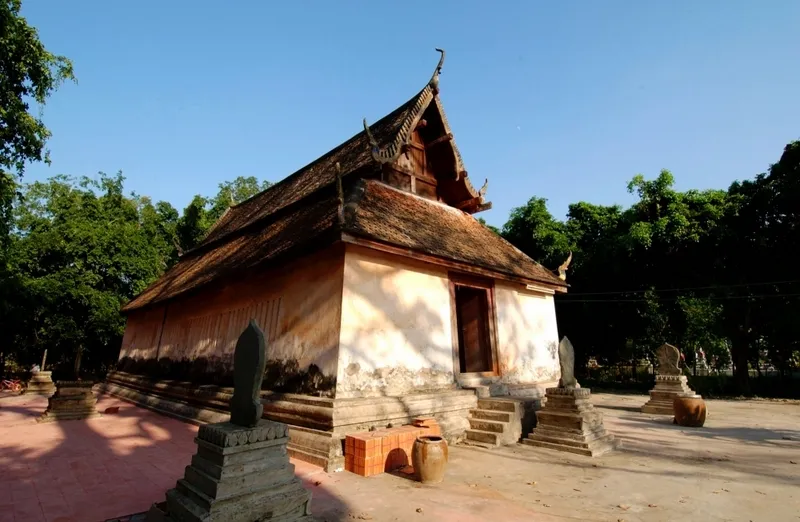
The most important feature of Wat Nakhon Chum is its ancient ordination hall. This structure is believed to be at least 800 years old and reflects the architectural character of the Sukhothai period. The building is constructed with brick and plaster, while the roof structure uses wood joined with wooden pegs rather than modern nails. The walls have ventilation openings instead of conventional windows, a feature commonly associated with older temple architecture. These details show the skill of ancient craftsmen who understood materials, climate, structure, and sacred space in a refined and practical way.
The old ordination hall also has a layered history. Wat Nakhon Chum was later combined with the nearby deserted temple of Wat Khemabhirataram. The ancient ordination hall that had belonged to Wat Khemabhirataram then became the important ordination hall of Wat Nakhon Chum. This makes the temple especially interesting, because it preserves traces of more than one historical religious site within the same living temple area. Visitors can therefore see how sacred spaces in Thailand have been preserved, adapted, and carried forward by local communities.
Inside the ordination hall is a large principal Buddha image made of brick and plaster in the Sukhothai style. The image has been restored and gilded, but it still preserves the calm and dignified character of ancient Buddhist art. Its presence inside the old hall creates a quiet atmosphere that feels very different from newer and more decorative temples. The beauty here lies in age, simplicity, faith, and the survival of historical form. For visitors, this is a place to slow down, observe carefully, and appreciate the spiritual atmosphere of an old Thai temple.
Wat Nakhon Chum is also closely connected with Luang Pho Phet, the revered Buddha image that is now enshrined at Wat Tha Luang Royal Monastery in Phichit town. In the past, the old ordination hall of Wat Nakhon Chum was one of the places where Luang Pho Phet had been enshrined. This connection gives Wat Nakhon Chum an important role in the religious history of Phichit. The temple is not only an ancient site; it is also part of the sacred route and memory surrounding one of the province’s most respected Buddha images.
The story of Luang Pho Phet helps visitors understand the network of historic temples in Phichit. Wat Nakhon Chum, Wat Tha Luang, and the old city area are all connected through faith, memory, and local Buddhist culture. A visit to Wat Nakhon Chum can therefore be combined with a visit to Wat Tha Luang, where Luang Pho Phet is currently enshrined. This route is especially suitable for travelers who want to understand how sacred images, temples, and communities are linked in Thai provincial history.
The surrounding atmosphere of Wat Nakhon Chum is peaceful and shaded. The temple grounds are not crowded, allowing visitors to walk slowly and observe the old architecture, trees, worship areas, and the living rhythm of a local temple. This is not a destination designed for quick sightseeing alone. It rewards travelers who are willing to spend time looking at details, reading the space, and understanding how history still exists within daily religious life.
Architecturally, the temple is valuable because it preserves practical details of ancient construction. The ventilation openings in the walls show how older buildings were adapted to the local climate. The wooden roof structure joined by pegs reflects traditional carpentry knowledge. The brick-and-plaster walls reveal the use of local materials and long-lasting construction methods. These features make Wat Nakhon Chum a useful learning site for anyone interested in Sukhothai architecture, Thai temple conservation, or traditional building techniques.
From the perspective of religious history, Wat Nakhon Chum shows how temples functioned in old Thai society. Temples were not only places for monks and worship. They were also gathering places, ceremonial centers, educational spaces, and community landmarks. Because Wat Nakhon Chum remains active today, it is not merely a ruin of the past. It is a living heritage site where old architecture, Buddhist faith, and local community life continue to exist together.
For travelers exploring old Phichit, Wat Nakhon Chum can be included in the same route as Phichit Old City Park, Wat Mahathat, Phichit City Pillar Shrine, Bueng Si Fai, and Wat Tha Luang. These attractions together help visitors understand different dimensions of the province: ancient city history, Buddhist art, local legends, riverside culture, and the continuing role of temples in community life. Starting a cultural route at Wat Nakhon Chum gives travelers a strong sense of the historical roots of Phichit.
The temple is also suitable for educational visits. Students, researchers, and cultural travelers can study Sukhothai-style architecture, the conservation of old religious buildings, the role of temples in local society, and the importance of Buddhist ritual in traditional Thai communities. Seeing the actual ordination hall and the brick-and-plaster Buddha image makes the history more tangible than reading about it in a classroom or book.
Visitors should follow proper temple and heritage-site etiquette. Dress modestly, speak quietly, avoid touching ancient structures unnecessarily, and do not climb on old buildings or sacred objects. Photography should be done respectfully, especially inside religious areas. By visiting carefully, travelers help protect the temple and allow future generations to appreciate this important part of Phichit’s cultural heritage.
Getting There is straightforward from Phichit town. Travelers can drive along Highway 1068, the Phichit – Sam Ngam – Wang Chik route, to around kilometer marker 9 in Mueang Kao Subdistrict. The temple is about 9 kilometers from the town area. Travelers without a private car can arrive in Phichit by train or bus and continue to the old city area by local transport or hired vehicle.
The best time to visit is in the morning or late afternoon when the weather is more comfortable. These times are also suitable for photography because the light helps reveal the texture of brick, plaster, and old wood. Visitors who want a fuller experience can combine the temple with Phichit Old City Park or Bueng Si Fai on the same day, creating a balanced itinerary of history, religion, and local scenery.
Wat Nakhon Chum is therefore a destination that should not be overlooked by anyone who wants to understand Phichit as an old historical city. It offers more than an ancient ordination hall or a Buddha image. It tells the story of community, ceremony, Sukhothai art, Luang Pho Phet, and the ongoing effort of local people to keep an old temple alive. Visiting Wat Nakhon Chum is a journey into the historical roots of Phichit and a meaningful encounter with Thailand’s ancient Buddhist heritage.
| Name | Wat Nakhon Chum |
| Location | Village No. 8, Mueang Kao Subdistrict, Mueang Phichit District, Phichit Province |
| Address | 146 Moo 8, Phichit – Sam Ngam – Wang Chik Road, Mueang Kao Subdistrict, Mueang Phichit District, Phichit 66000 |
| Highlights | Ancient Sukhothai-period ordination hall, large brick-and-plaster Buddha image, and historical connection with Luang Pho Phet |
| History | An ancient temple from the Sukhothai period, closely connected with old Phichit and the historical Ceremony of Drinking the Water of Allegiance |
| Name Origin | The name Nakhon Chum suggests a gathering place of people; local residents also call it Wat Yai, meaning the large temple |
| Distinctive Features | Brick-and-plaster ordination hall, wooden roof structure joined with pegs, and ventilation openings instead of conventional windows |
| Key Sacred Objects | Ancient ordination hall, Sukhothai-style principal Buddha image, Luang Pho Phan, and historical connection with Luang Pho Phet |
| Travel Information | Use Highway 1068, the Phichit – Sam Ngam – Wang Chik route, around kilometer marker 9; accessible by private car or local transport from Phichit town |
| Current Status | An active Buddhist temple and cultural-historical attraction in Phichit Province |
| Open Days | Daily |
| Opening Hours | 09.00 – 17.00 |
| Fees | No admission fee |
| Facilities | Temple grounds, parking area, merit-making area, ancient ordination hall, and shaded space for walking around the historical site |
| Abbot / Caretaker | Phra Khru Phithun Nakhon Aphirak, Abbot of Wat Nakhon Chum |
| Main Contact Number | 056-655105, 081-972-4644 |
| Nearby Tourist Attractions | 1. Phichit Old City Park, about 2 km 2. Phichit City Pillar Shrine, about 3 km 3. Wat Mahathat, Old Phichit, about 3 km 4. Bueng Si Fai, about 8 km 5. Wat Tha Luang Royal Monastery, about 9 km 6. Phichit Railway Station, about 9 km |
| Nearby Restaurants | 1. Wila Krua Nai Soi, about 4 km, Tel. 094-698-9931 2. Chamcha Cafe, about 7 km 3. Black Ground Cafe & Dining, about 7 km 4. Lung Waen Pla Mae Nam, about 8 km 5. Tiaw Pinto Tai Ha, Wang Krot Old Area, about 16 km, Tel. 082-603-5018 |
| Nearby Accommodations | 1. Rabeang Nam Resort, about 8 km, Tel. 081-859-4907 2. Kason Place Hotel, about 9 km 3. The Nest Hotel Phichit, about 10 km, Tel. 056-033662 4. Fahluang Residence, about 10 km, Tel. 056-611780 5. Lanna Bali Resort, about 10 km |
Frequently Asked Questions (FAQ)
Q: Where is Wat Nakhon Chum located?
A: Wat Nakhon Chum is located in Village No. 8, Mueang Kao Subdistrict, Mueang Phichit District, Phichit Province, along Highway 1068 around kilometer marker 9.
Q: Why is Wat Nakhon Chum important?
A: It is an ancient temple from the Sukhothai period, at least 800 years old, and was an important temple in the old city area of Phichit.
Q: What is the main highlight of Wat Nakhon Chum?
A: The main highlight is the ancient ordination hall built with brick and plaster, a wooden roof joined with pegs, ventilation openings instead of windows, and a Sukhothai-style principal Buddha image inside.
Q: How is Wat Nakhon Chum connected with Luang Pho Phet?
A: The old ordination hall of Wat Nakhon Chum was once associated with Luang Pho Phet, the revered Buddha image of Phichit, before the image was enshrined at Wat Tha Luang.
Q: What are the opening hours of Wat Nakhon Chum?
A: Wat Nakhon Chum is open daily from 09.00 to 17.00.
Q: How can travelers get to Wat Nakhon Chum?
A: Travelers can drive from Phichit town along Highway 1068, the Phichit – Sam Ngam – Wang Chik route, to around kilometer marker 9, or take local transport from Phichit town.
Q: What nearby attractions can be visited with Wat Nakhon Chum?
A: Nearby attractions include Phichit Old City Park, Phichit City Pillar Shrine, Wat Mahathat, Bueng Si Fai, Wat Tha Luang, and Phichit Railway Station.
 Category: ●Places of Worship
 Group: ●Temple
Last Update : 5 MonthAgo
 Last Update : 5 MonthAgo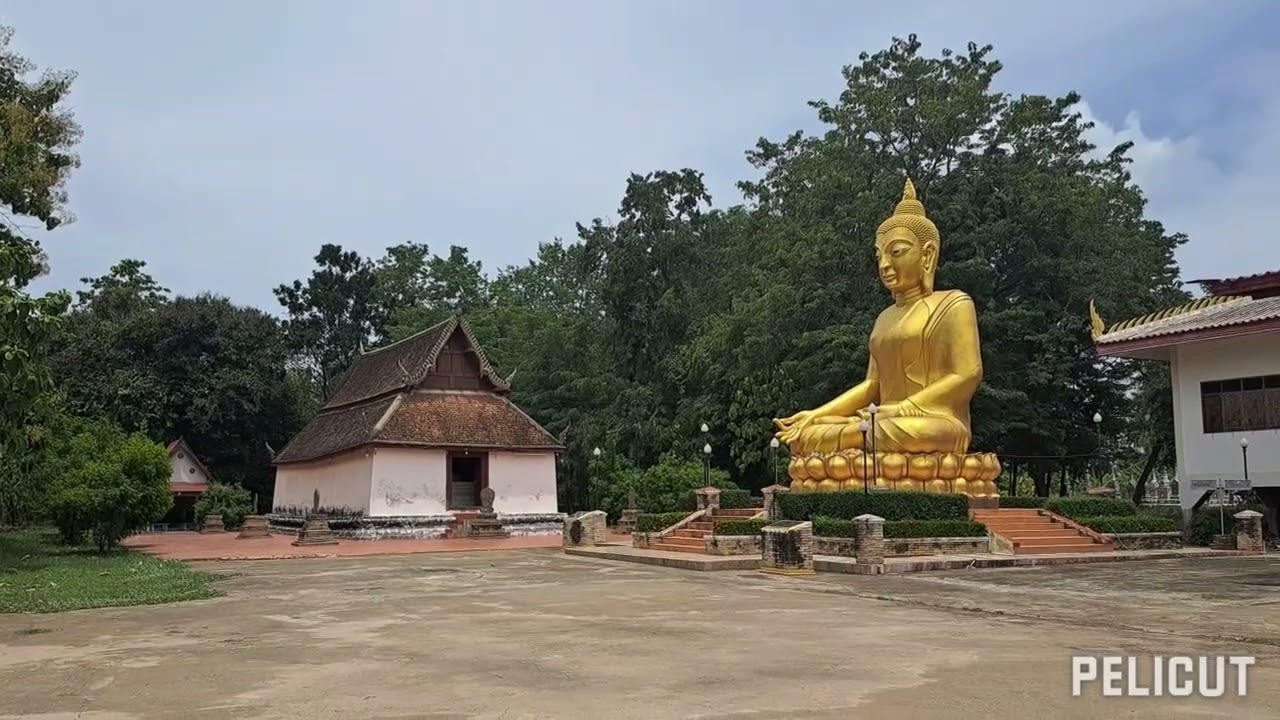
 Click to Access the Navigation Map GPS
Wat Nakhon Chum Map
Recommend

 Art, Culture and Heritage
 Historical Sites and Monuments(1)
 Art, Craft Centres, Tradition(1)
 Museums(1)
Temple(32)
Museums(1)
Temple(32)
 Other Sacred Sites(5)
 Research and Development
 Royal Project(1)
 Suburban Living
 Floating Market(1)
 Nature and Wildlife
 National Parks and Marine Reserves(1)
 Dam, Reservoir, Lake(3)
 River, Canal(2)
 Other natural attractions(1)
 Entertainment and Agricultural
 Animal camps and shows(1)
 Farms, Parks and Ecotourism(4)
 Travel Articles, Recipes
 Travel Review, Food Review(1)


