
lovethailand home >North Travel Attractions >Phichit Travel Attractions >Muang Phichit >Tha Lo > Chao Mae Tubtim Tha Lo Shrine
TL;DR: Chao Mae Tubtim Tha Lo Shrine is located at Tha Lo Subdistrict, Mueang Phichit District, Phichit Province, open Contact The Shrine Before Visiting, hours Contact The Shrine Before Visiting.
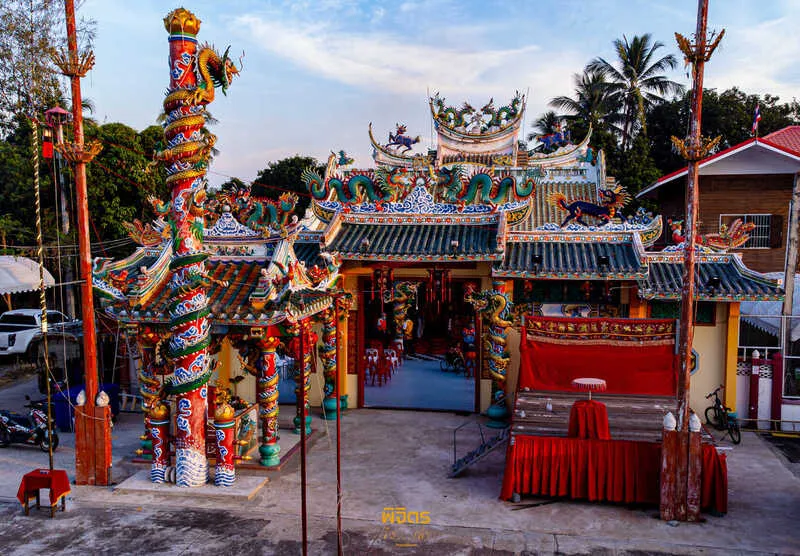
Chao Mae Tubtim Tha Lo Shrine
Open Days: Contact The Shrine Before Visiting
Opening Hours: Contact The Shrine Before Visiting
Chao Mae Tubtim Tha Lo Shrine is an old and highly respected Chinese shrine in Tha Lo Subdistrict, Mueang Phichit District, Phichit Province. It stands on the eastern bank of the Nan River, with the Northern Railway line running nearby behind the shrine. The shrine is dedicated to Chao Mae Tubtim, known in Hainanese belief as Tui Buai Teng Niang, who is enshrined as the principal deity. On the right side is Guan Yu, while on the left side are Pun Thao Kong and Pun Thao Ma. Together, these sacred figures make the shrine an important spiritual center for the local Hainanese Chinese community and for devotees from Phichit and beyond.
For foreign travelers interested in Chinese-Thai heritage, riverside communities, and local sacred places outside major tourist cities, Chao Mae Tubtim Tha Lo Shrine offers a meaningful cultural experience. It is not only a place for worship but also a historical landmark connected with migration, river trade, shipbuilding, education, and the development of Tha Lo community. The shrine reflects how Chinese settlers brought their beliefs, craftsmanship, language, and community values to the Nan River basin and made them part of local life in Phichit.
Chao Mae Tubtim, or Tui Buai Teng Niang, is associated with water, riverside settlements, and protection for those who travel or make a living by water. This belief was especially meaningful in the past when the Nan River was a major route for transport and commerce. For the people of Tha Lo, the shrine became a spiritual anchor for safety, prosperity, family life, and good fortune. Its riverside location is therefore not accidental; it expresses the close relationship between faith, the river, and the livelihood of the community.
According to local history, the images of Chao Mae Tubtim and Guan Yu were brought from Hainan Island in Guangdong Province, China, around 1867. At that time, Chinese settlers were active in trade and shipbuilding in Ban Tha Lo. A shipyard owner in the village played an important role in bringing the sacred images from China. After the deities arrived in Tha Lo, he donated 2 rafts of teak logs to build a large shrine dedicated to Chao Mae Tubtim and Guan Yu, allowing local residents and devotees from near and far to pay respect.
The establishment of the shrine shows both deep faith and the economic importance of Tha Lo community in earlier times. The Nan River was a vital transportation route, and people depended on water for travel, trade, and communication. A shrine dedicated to a water-related protective goddess naturally became central to community life. It offered spiritual reassurance to merchants, boatmen, families, and travelers who lived with the river as part of their daily world.
Beyond worship, Chao Mae Tubtim Tha Lo Shrine also had an educational role in the community. It was used as a place to teach Thai and Chinese writing to children in the village. This function shows that the shrine was not only a sacred place but also a social and cultural institution. It helped preserve language, knowledge, and Hainanese Chinese identity among younger generations while supporting the wider development of the local community.
As trade and family life in Tha Lo expanded, the shrine remained closely connected with the community’s growth. People came to ask for blessings for prosperity, safety, business success, peaceful family life, and protection from danger. Stories of the shrine’s sacred power have been passed down through generations. Even today, devotees continue to visit the shrine with respect, especially during the annual worship festival in December.
Inside the shrine, Chao Mae Tubtim is enshrined as the principal deity. Devotees often pray for family happiness, health, safe travel, success, and fertility. The shrine is particularly well known among those who come to pray for children. Many devotees return to make offerings after their wishes are fulfilled, especially during the annual festival. This belief connects the shrine deeply with hopes for family continuity, fulfillment, and domestic well-being.
Guan Yu, enshrined on the right side of Chao Mae Tubtim, is widely respected in Chinese culture as a symbol of loyalty, righteousness, courage, and integrity. Visitors often pay respect to Guan Yu for protection, moral strength, career stability, and perseverance. On the left side, Pun Thao Kong and Pun Thao Ma are associated with protection of the locality, households, and community life. The presence of these deities together gives the shrine a broad spiritual meaning that covers family, livelihood, travel, justice, and local protection.
One of the most valuable historical objects at the shrine is the palanquin used for Chao Mae Tubtim. It was brought from China and is made of strong carved wood, decorated with floral patterns and animal motifs in traditional Chinese artistic style. The craftsmanship of the palanquin reflects both religious devotion and the skill of Chinese artisans of that period. It is also an important object in ritual and festival contexts, linking the sacred image with public processions and community participation.
Another important treasure is a set of sacred objects representing the Eight Immortals, known in Chinese as symbols of blessing and auspicious power. The shrine preserves 2 sets, totaling 16 pieces, made specially in Guangzhou during that period. These objects add historical and cultural value to the shrine and show the strong connection between Tha Lo community and southern Chinese religious traditions.
Chao Mae Tubtim Tha Lo Shrine is also an important place for understanding Hainanese Chinese heritage in Phichit. Tha Lo has long been associated with Chinese settlement, riverside commerce, local food culture, and community traditions. Visiting the shrine allows travelers to connect the story of the Nan River, the old market, Chinese migration, shipbuilding, and the Northern Railway into one cultural landscape. This makes the shrine especially valuable for those who enjoy local history rather than only sightseeing.
Every December, the shrine holds its annual worship festival and Chinese opera event. During this period, the shrine becomes especially lively, attracting devotees from many areas. People come to pay respect, make offerings, ask for blessings, fulfill vows, and participate in cultural activities. The annual event is not only a religious gathering but also a community reunion and a continuation of Hainanese Chinese traditions in Phichit.
The belief in praying for children is one of the most distinctive aspects of the shrine. Many devotees visit Chao Mae Tubtim to ask for fertility and family blessings. When their wishes are fulfilled, they return to make offerings as an expression of gratitude. For foreign visitors, this practice should be understood as part of a living devotional culture in which faith, family, hope, and gratitude are closely connected.
Visitors should behave respectfully inside the shrine. Modest clothing, quiet behavior, and sensitivity to worshippers are recommended. Chinese shrine worship may involve incense, candles, offerings, and a specific order of paying respect. Travelers unfamiliar with these customs can observe local devotees or politely ask shrine committee members or caretakers for guidance. Entering the shrine with humility helps make the visit both respectful and culturally meaningful.
The location of the shrine is one of its most attractive features. It stands on the eastern side of the Nan River, near the Northern Railway line. The combination of river, railway, old market, and Chinese shrine gives Tha Lo a distinctive historical atmosphere. Travelers who enjoy walking through old communities, taking photographs of local architecture, and learning about riverside life will find the area around the shrine rewarding.
Getting There is convenient by private car. From Phichit, take Highway No. 111 on the Phichit–Sak Lek route, turn into the lane near Wat Wichitraram, pass Tha Lo Market, and then turn left toward the shrine. Travelers can combine the shrine with Tha Lo Market, Wat Tha Lo, Wat Wichitraram, Bueng Si Fai, and other attractions in Mueang Phichit District. Those traveling by train can use stations in the Phichit area and continue by local transport depending on their schedule.
Food is also part of the Tha Lo experience. The area near the shrine has local restaurants, riverside-style food, cafés, and community eateries. Visitors can plan a slow trip that includes worship at the shrine, a walk around Tha Lo Market, a local meal, and a short cultural route through nearby temples and historical places. This approach gives a fuller understanding of Tha Lo as a living community rather than just a single tourist stop.
Overall, Chao Mae Tubtim Tha Lo Shrine is one of Phichit’s most culturally significant Chinese shrines. Its story of sacred images brought from Hainan, the donation of teak logs by a shipyard owner, its role in local education, its carved Chinese palanquin, the sacred symbols of the Eight Immortals, the December annual festival, and the belief in fertility blessings all make it a valuable destination for travelers interested in Chinese-Thai heritage, riverside history, and local faith in central Thailand.
| Name | Chao Mae Tubtim Tha Lo Shrine |
| Location | Tha Lo Subdistrict, Mueang Phichit District, Phichit Province |
| Address | 299 Moo 5, Phichit-Bang Krathum Road, Tha Lo Subdistrict, Mueang Phichit District, Phichit Province 66000 |
| Place Type | Hainanese Chinese Shrine On The Nan River |
| Highlights | Worship Chao Mae Tubtim or Tui Buai Teng Niang, Guan Yu, Pun Thao Kong and Pun Thao Ma, see the carved Chinese palanquin, and experience the annual December worship festival |
| History | The images of Chao Mae Tubtim and Guan Yu were brought from Hainan Island, Guangdong Province, China, around 1867 by a Chinese shipyard owner in Ban Tha Lo |
| Name Origin | The shrine is named after Chao Mae Tubtim, or Tui Buai Teng Niang, a water-related goddess respected by Hainanese Chinese communities for protection of travelers and riverside people |
| Distinctive Features | Located on the eastern bank of the Nan River, near the Northern Railway, and closely connected with Tha Lo old market, Hainanese Chinese heritage, and river trade history |
| Important Objects | Chao Mae Tubtim, Guan Yu, Pun Thao Kong, Pun Thao Ma, carved wooden palanquin from China, and 2 sets of sacred Eight Immortals symbols totaling 16 pieces |
| Tradition / Annual Event | Annual Chao Mae Tubtim worship festival and Chinese opera event in December, with many devotees visiting to pray, make offerings, and fulfill vows, especially for fertility blessings |
| Travel Information | Take Highway No. 111 on the Phichit–Sak Lek route, turn into the lane near Wat Wichitraram, pass Tha Lo Market, then turn left toward the shrine |
| Current Status | Active community shrine and important worship place in Tha Lo Subdistrict, Mueang Phichit District |
| Open Days | Contact The Shrine Before Visiting |
| Opening Hours | Contact The Shrine Before Visiting |
| Facilities | Worship area, main shrine hall, annual festival area, and parking space according to the local community setting |
| Main Areas / Zones | Chao Mae Tubtim altar, Guan Yu altar, Pun Thao Kong and Pun Thao Ma altar, carved palanquin and sacred object area |
| Caretaker | Chao Mae Tubtim Tha Lo Shrine Committee, Phichit Province |
| Nearby Tourist Attractions | 1. Yok Eng School Tha Lo, about 300 m 2. Tha Lo Market, about 500 m 3. Wat Wichitraram, about 700 m 4. Wat Tha Lo, about 1 km 5. Bueng Si Fai, about 8 km 6. Wat Pho Prathap Chang, about 20 km |
| Nearby Restaurants | 1. Krua Khun Pho Tha Lo, about 500 m, Tel. 056-614925, 082-9482576, 083-4110465, 094-6252683 2. Mellow & Co., about 500 m 3. Krua Naphat, about 600 m 4. Black Ground Cafe & Dining, about 7 km 5. Chamcha Cafe, about 8 km 6. Lung Waen Pla Mae Nam, about 8 km |
| Nearby Accommodations | 1. Minimal Hotel, Mueang Phichit District, about 8 km 2. Modern Resort, Mueang Phichit District, about 9 km 3. Orchid Place Hotel, Mueang Phichit District, about 10 km 4. Fahluang Residence Hotel, Mueang Phichit District, about 10 km 5. Rabiangnam Resort Phichit, about 11 km 6. Barli at Lanna Bali Boutique Hotel, about 11 km |
Frequently Asked Questions (FAQ)
Q: Where is Chao Mae Tubtim Tha Lo Shrine located?
A: The shrine is located at 299 Moo 5, Phichit-Bang Krathum Road, Tha Lo Subdistrict, Mueang Phichit District, Phichit Province, on the eastern bank of the Nan River.
Q: Why is Chao Mae Tubtim Tha Lo Shrine important?
A: It is an old Hainanese Chinese shrine in Phichit and has long served as a spiritual center for Tha Lo community and devotees from surrounding areas.
Q: Which deities are enshrined at Chao Mae Tubtim Tha Lo Shrine?
A: The principal deity is Chao Mae Tubtim, or Tui Buai Teng Niang. Guan Yu is enshrined on the right, while Pun Thao Kong and Pun Thao Ma are enshrined on the left.
Q: Where were the sacred images originally brought from?
A: According to local history, the images of Chao Mae Tubtim and Guan Yu were brought from Hainan Island, Guangdong Province, China, around 1867.
Q: When is the annual worship festival held?
A: The annual worship festival and Chinese opera event are held in December, when many devotees come to pray, make offerings, and fulfill vows.
Q: What do devotees commonly pray for at the shrine?
A: Devotees commonly pray for family blessings, good fortune, safe travel, prosperity, and fertility.
Q: How can travelers get to Chao Mae Tubtim Tha Lo Shrine?
A: Take Highway No. 111 on the Phichit–Sak Lek route, turn into the lane near Wat Wichitraram, pass Tha Lo Market, and then turn left toward the shrine.
Q: What nearby places can be visited together with the shrine?
A: Nearby places include Yok Eng School Tha Lo, Tha Lo Market, Wat Wichitraram, Wat Tha Lo, Bueng Si Fai, and Wat Pho Prathap Chang.
 Category: ●Places of Worship
 Group: ●Other Sacred Sites
Last Update : 5 MonthAgo
 Last Update : 5 MonthAgo
 Click to Access the Navigation Map GPS
Chao Mae Tubtim Tha Lo Shrine Map
Recommend

 Art, Culture and Heritage
 Historical Sites and Monuments(1)
 Art, Craft Centres, Tradition(1)
 Museums(1)
 Temple(32)
Other Sacred Sites(5)
Temple(32)
Other Sacred Sites(5)
 Research and Development
 Royal Project(1)
 Suburban Living
 Floating Market(1)
 Nature and Wildlife
 National Parks and Marine Reserves(1)
 Dam, Reservoir, Lake(3)
 River, Canal(2)
 Other natural attractions(1)
 Entertainment and Agricultural
 Animal camps and shows(1)
 Farms, Parks and Ecotourism(4)
 Travel Articles, Recipes
 Travel Review, Food Review(1)


