lovethailand home >North Travel Attractions >Phichit Travel Attractions >Pho Thale >Bang Khlan > Wat Hiranyaram
TL;DR: Wat Hiranyaram is located at Moo 5, Bang Khlan Subdistrict, Pho Thale District, Phichit Province, open Daily, hours 08.00 – 17.00.
Wat Hiranyaram
Open Days: Daily
Opening Hours: 08.00 – 17.00
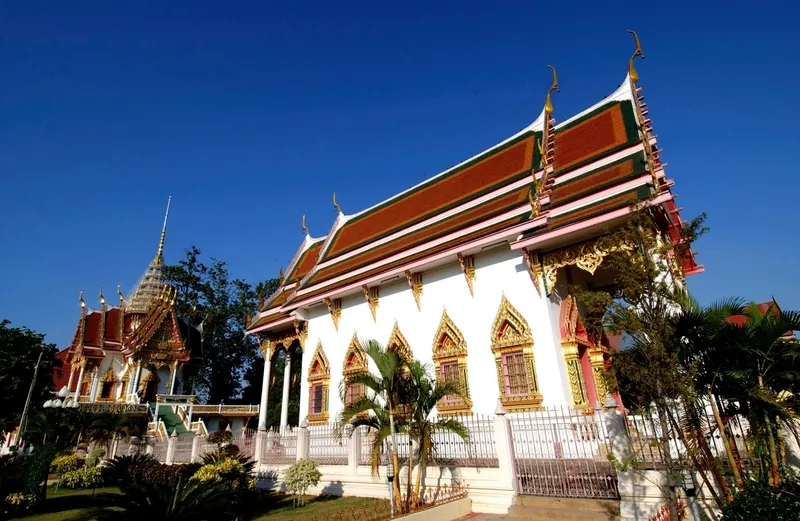
Wat Hiranyaram in Phichit Province, widely known as Wat Bang Khlan, is one of the most important Buddhist temples in Pho Thale District. The temple is located at 71 Ban Wang Tako, Moo 5, Bang Khlan Subdistrict, Pho Thale District, Phichit Province, along the old Nan River. Formerly known as Wat Wang Tako, the temple is deeply associated with Luang Pho Ngoen Phutthachoti, one of Thailand’s most revered Buddhist masters. For Thai devotees, Wat Bang Khlan is not only a temple but also a spiritual center, a place of memory, and one of the key destinations for understanding faith in Luang Pho Ngoen.
The significance of Wat Hiranyaram begins with its connection to Luang Pho Ngoen, who once stayed at the temple during his monastic life. He is remembered for his compassion, strict practice, discipline, and spiritual influence. His name has become part of Phichit’s religious identity, and Wat Bang Khlan has become a major destination for people who wish to pay respect, make merit, learn about his life, or experience the atmosphere of a temple that remains strongly tied to local devotion.
The most outstanding feature of Wat Hiranyaram is Nakhon Chai Bowon Museum, a distinctive 2-story mondop-style building. The upper floor enshrines a life-size statue of Luang Pho Ngoen, allowing visitors to pay respect in a calm and dignified setting. The lower floor displays a large collection of antiquities and art objects preserved by the temple over many years. These include Buddha images, votive tablets, pottery, ancient utensils, and other objects donated by devotees and local people.
Nakhon Chai Bowon Museum is more than a place to display old objects. It functions as a cultural memory bank for the community. Each object inside the museum reflects faith, local identity, religious practice, and ways of life from different periods. For visitors, the museum offers a valuable opportunity to understand Phichit not only through temples and rituals, but also through physical objects that reveal how people in the past lived, worshipped, created art, and preserved sacred traditions.
The upper floor of the museum is especially important for devotees. The life-size statue of Luang Pho Ngoen creates a strong sense of closeness to the revered monk. Many visitors come here to bow, pray, and reflect on his teachings and reputation. The atmosphere is quiet and respectful. For foreign travelers, this floor offers insight into how respected monks continue to play an important spiritual role in Thai society long after their lifetime.
The lower floor of the museum is valuable for cultural learning. The Buddha images and votive tablets show Buddhist faith and artistic expression. Pottery and old utensils help reveal daily life and local craftsmanship. Other ancient objects show the diversity of beliefs and artistic styles preserved through community donations. Walking through this floor is like reading a local history book through objects rather than text. Each item contributes to the wider story of religion, community, and heritage in Phichit.
Wat Hiranyaram is also important as an old riverside temple. Its location along the old Nan River reflects the historical pattern of Thai settlements, where rivers served as routes for travel, trade, agriculture, and community life. Temples built near rivers often became centers of both spiritual and social life. Wat Bang Khlan continues to reflect this cultural landscape, connecting the river, the village, Buddhism, and the memory of Luang Pho Ngoen in one place.
The temple’s former name, Wat Wang Tako, is meaningful because it preserves an older layer of local identity. Many old temples in Thailand have several names: a formal name, a local name, and a name connected with an important monk or community memory. This temple is known as Wat Wang Tako in older local memory, Wat Bang Khlan in popular usage, and Wat Hiranyaram as its formal name. These names together reveal the layered history of the site.
Luang Pho Ngoen Phutthachoti is the central figure behind the temple’s wide recognition. He is one of the most respected monks associated with Phichit. Devotees honor him for his Dhamma practice, compassion, and spiritual reputation. Sacred objects connected with Luang Pho Ngoen have long been highly valued by believers, especially for auspiciousness, protection, kindness, and good fortune. Yet the deeper value of visiting Wat Bang Khlan lies not only in sacred objects but in understanding the ethical and spiritual legacy of the monk himself.
Faith in Luang Pho Ngoen extends far beyond Phichit Province. Visitors from many parts of Thailand come to Wat Bang Khlan to pay respect and connect with his memory. For many devotees, the temple remains a place where the presence of the revered master can still be felt through the statue, museum, temple atmosphere, and continuing acts of worship. For cultural travelers, this shows how the memory of a Buddhist teacher can shape a region’s religious identity for generations.
Wat Hiranyaram is also a strong educational site. Visiting the museum helps travelers understand that a temple is not only a place for ceremonies. It can also preserve community knowledge, historical objects, religious art, and collective memory. The museum’s collection allows visitors to see how Buddhism, local craftsmanship, folk belief, and everyday life were connected in the past. This makes Wat Bang Khlan especially suitable for students, families, researchers, and travelers interested in Thai culture.
Visitors should allow enough time to experience both the temple and the museum. A meaningful visit may begin with paying respect to the life-size statue of Luang Pho Ngoen on the upper floor, followed by a slow walk through the lower-floor exhibition of antiquities. After that, visitors can spend time around the temple grounds and the old Nan River setting. A visit of at least 1 hour is recommended for those who want to understand the place properly rather than simply stop for a quick photograph.
For travelers interested in the Luang Pho Ngoen pilgrimage route, Wat Hiranyaram can be combined with Wat Ban Noi, Wat Thai Nam, and other important sites in Pho Thale District. Wat Bang Khlan represents the historical and spiritual center of Luang Pho Ngoen devotion. Wat Ban Noi offers a contemporary brass-wire woven sculpture of Luang Pho Ngoen. Wat Thai Nam is another nearby temple often included in local religious routes. Visiting these places together helps travelers understand Luang Pho Ngoen from historical, devotional, artistic, and community perspectives.
From the perspective of religious tourism, Wat Hiranyaram is suitable for many types of visitors: Buddhist pilgrims, history lovers, families, students, cultural travelers, and people interested in sacred objects related to Luang Pho Ngoen. The temple offers a place to worship, learn, and rest in a calm setting. It is accessible by road and can be included in a one-day trip from Phichit town or nearby provinces.
Getting There is convenient by private car, rental car, or local transport. Travelers can take Highway 1067 toward Pho Thale District and turn left into Bang Khlan Subdistrict for about 8 km. The temple is located along Tha Bua–Bang Khlan Road in Bang Khlan Subdistrict. Visitors using navigation apps can search for Wat Hiranyaram or Wat Bang Khlan in Pho Thale District, Phichit Province.
The best time to visit is from morning to late afternoon, especially during the museum’s general opening period from 08.00 to 17.00. Morning visits are peaceful and suitable for merit-making, while the afternoon is good for exploring the museum and photographing the exterior of the mondop-style building. Visitors who wish to see both floors of the museum should arrive with enough time before closing.
Visitors should dress modestly, speak quietly, and behave respectfully. Ancient objects and museum displays should not be touched unless permission is clearly given. Photography should be done politely and without disturbing worshippers. Following temple and museum guidance helps preserve the collection and maintain the sacred atmosphere of the site.
Wat Hiranyaram is valuable in religion, history, culture, and tourism. Visitors can pay respect to Luang Pho Ngoen, explore Nakhon Chai Bowon Museum, learn from a large collection of religious and historical objects, and experience the quiet riverside atmosphere of an old Phichit temple. The temple tells not only the story of a revered monk, but also the story of a community that has preserved its faith and cultural heritage for future generations.
Overall, Wat Hiranyaram or Wat Bang Khlan is one of the most important destinations in Phichit Province for anyone interested in Luang Pho Ngoen and Thai Buddhist culture. A visit here offers blessings, historical understanding, cultural learning, and a deeper appreciation of local faith. Through the life-size statue of Luang Pho Ngoen, the museum, the antiquities, and the riverside setting, the temple gives visitors a meaningful view of Phichit’s spiritual heritage.
| Name | Wat Hiranyaram, also known as Wat Bang Khlan, Phichit Province |
| Location | Moo 5, Bang Khlan Subdistrict, Pho Thale District, Phichit Province |
| Address | 71 Ban Wang Tako, Moo 5, Tha Bua–Bang Khlan Road, Bang Khlan Subdistrict, Pho Thale District, Phichit Province 66130, Thailand |
| Highlights | Nakhon Chai Bowon Museum, a 2-story mondop-style museum; the upper floor enshrines a life-size statue of Luang Pho Ngoen, while the lower floor displays antiquities and art objects |
| History | Formerly known as Wat Wang Tako, the temple is an old riverside temple along the old Nan River and is closely associated with Luang Pho Ngoen Phutthachoti |
| Name Origin | The temple is locally known as Wat Bang Khlan or Wat Wang Tako, while its formal name is Wat Hiranyaram |
| Distinctive Features | A major temple on the Luang Pho Ngoen faith route, featuring Nakhon Chai Bowon Museum, antiquities, art objects, a life-size statue of Luang Pho Ngoen, and the atmosphere of an old riverside temple |
| Travel Information | Take Highway 1067 and turn left into Bang Khlan Subdistrict for about 8 km. The temple is located along Tha Bua–Bang Khlan Road in Pho Thale District |
| Current Status | An active Buddhist temple open for worship, merit-making, and visits to Nakhon Chai Bowon Museum |
| Open Days | Daily |
| Opening Hours | 08.00 – 17.00 |
| Fees | No admission fee |
| Facilities | Parking area, Luang Pho Ngoen worship area, Nakhon Chai Bowon Museum, merit-making areas, antiquity exhibition area, and sacred-object worship area according to the temple system |
| Main Areas / Zones | Nakhon Chai Bowon Museum; upper floor with life-size Luang Pho Ngoen statue; lower floor with Buddha images, votive tablets, pottery, antiquities, and art objects |
| Abbot / Caretaker | Phra Khru Phibun Thammawet |
| Main Contact Number | 056-669-030, 056-669-031 |
| Nearby Tourist Attractions | 1. Wat Ban Noi, about 4 km 2. Wat Thai Nam, about 10 km 3. Wat Pa Sri Wilai, about 12 km 4. Pho Thale community area, about 8 km 5. Wat Tha Luang Royal Monastery, about 40 km 6. Bueng Si Fai, about 42 km |
| Nearby Restaurants | 1. Apirom Cafe, about 3 km, Tel. 082-628-4888 2. Kuai Tiao Ruea Sud Yod near Wat Bang Khlan, about 5 km 3. New York Café, Pho Thale District, about 8 km, Tel. 056-619-865, 099-225-1168 4. 8 Resort & Cafe, Pho Thale District, about 10 km, Tel. 098-754-3891 5. Restaurants and cafes in Pho Thale District, about 8–12 km |
| Nearby Accommodations | 1. Ruean Pingjai Dormitory, Tha Bua Subdistrict, Pho Thale District, about 10 km, Tel. 083-065-3388 2. 8 Resort & Cafe, Pho Thale District, about 10 km, Tel. 098-754-3891 3. Pingjai House / Rai Pingjai, about 15 km, Tel. 089-960-1132 4. Accommodations in Pho Thale District and nearby subdistricts, about 8–20 km 5. Accommodations in Phichit town, about 40–45 km |
Frequently Asked Questions (FAQ)
Q: Where is Wat Hiranyaram or Wat Bang Khlan located?
A: Wat Hiranyaram is located at 71 Ban Wang Tako, Moo 5, Bang Khlan Subdistrict, Pho Thale District, Phichit Province, along the old Nan River.
Q: How is Wat Hiranyaram connected with Luang Pho Ngoen?
A: Wat Hiranyaram, also known as Wat Bang Khlan, is the temple where Luang Pho Ngoen Phutthachoti once stayed. It remains a major spiritual center for devotees of Luang Pho Ngoen.
Q: What can visitors see at Nakhon Chai Bowon Museum?
A: The museum is a 2-story mondop-style building. The upper floor enshrines a life-size statue of Luang Pho Ngoen, while the lower floor displays Buddha images, votive tablets, pottery, antiquities, and art objects.
Q: What are the opening hours of Wat Bang Khlan?
A: The temple and Nakhon Chai Bowon Museum are generally open daily from 08.00 to 17.00.
Q: Is there an admission fee at Wat Hiranyaram?
A: No. Visitors can enter the temple, pay respect to Luang Pho Ngoen, and visit the museum during opening hours without an admission fee.
Q: How can travelers get to Wat Hiranyaram?
A: Travelers can take Highway 1067 and turn into Bang Khlan Subdistrict for about 8 km. The temple is located along Tha Bua–Bang Khlan Road in Pho Thale District.
Q: What nearby places can be visited with Wat Hiranyaram?
A: Nearby places include Wat Ban Noi, Wat Thai Nam, Wat Pa Sri Wilai, Pho Thale community area, Wat Tha Luang, and Bueng Si Fai.
Q: How should visitors behave at Wat Bang Khlan?
A: Visitors should dress modestly, speak quietly, avoid touching antiquities or museum displays without permission, and take photographs respectfully without disturbing worshippers.
Tel : 056669030-1
 Tel : 056669030-1
 Category: ●Places of Worship
 Group: ●Temple
Last Update : 5 MonthAgo
 Last Update : 5 MonthAgo

 Click to Access the Navigation Map GPS
Wat Hiranyaram Map
Recommend

 Art, Culture and Heritage
 Historical Sites and Monuments(1)
 Art, Craft Centres, Tradition(1)
 Museums(1)
Temple(32)
 Other Sacred Sites(5)
 Research and Development
 Royal Project(1)
 Suburban Living
 Floating Market(1)
 Nature and Wildlife
 National Parks and Marine Reserves(1)
 Dam, Reservoir, Lake(3)
 River, Canal(2)
 Other natural attractions(1)
 Entertainment and Agricultural
 Animal camps and shows(1)
 Farms, Parks and Ecotourism(4)
 Travel Articles, Recipes
 Travel Review, Food Review(1)


